
Wolf Cut Hairstyles for Straight, Wavy and Curly Hair, by Face Shape
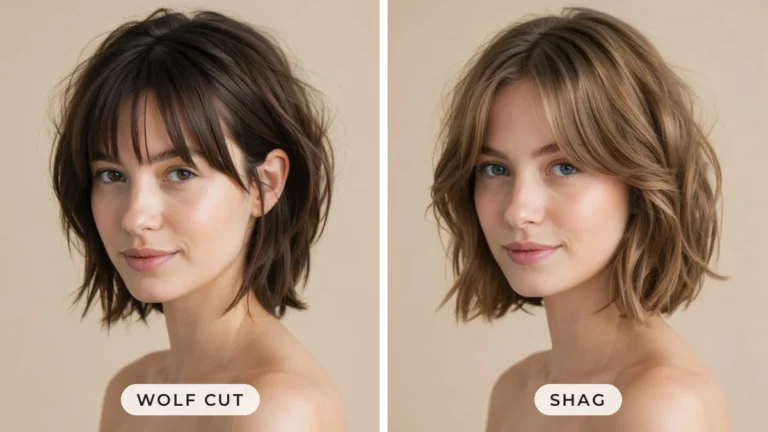
What is a wolf cut? A wolf cut is a heavily layered haircut with short, choppy layers at the crown that get gradually longer toward the back and sides, finished with wispy, razor-cut or point-cut ends and face-framing pieces at the front. It sits between a shag and a mullet: choppier than a shag, but without the sharp short-to-long line of a mullet.
Because so much depends on how those layers are placed, the same request can turn out very differently on fine straight hair and thick curls. This guide covers how the cut changes with your hair type and face shape, how to style it, and what to tell your stylist. If you want it above the shoulders, see our 12 short wolf cuts sorted by length.
Wolf Cut, Shag or Mullet?
| Wolf cut | Shag | Mullet | |
|---|---|---|---|
| Layers | Heavy and choppy, building up from the crown | Softer and more blended | Few; the contrast does the work |
| Crown | Short and full | Full | Short |
| Front to back | Gradual change in length | Gradual change in length | Sharp jump from short to long |
| Ends | Wispy, razor-cut or point-cut | Feathered | Can be blunt |
| Bangs | Usually curtain or choppy | Usually | Optional |
Our wolf cut vs shag comparison shows how to spot each in a photo, and our shag haircuts cover the softer option.
By Hair Type
Straight and Fine Hair

This is the hardest texture for a wolf cut, because the cut is all about visible, separated layers, and fine straight hair wants to lie flat and blend back together. It still works, but the layering needs to be shorter and more deliberate at the crown, where volume is hardest to fake. The front pieces are usually left a little longer and softer so the face is not framed too harshly.
Ask your stylist: “Short, choppy layers concentrated at the crown for lift, softer face-framing at the front, and point-cut rather than heavily thinned ends, because my hair is fine.”
Wavy and Curly Hair

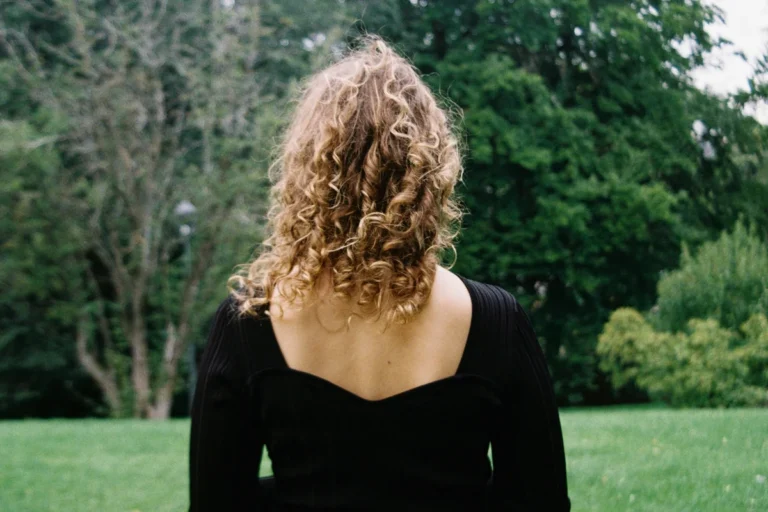
Waves and curls suit a wolf cut most easily, because the texture separates the layers on its own. The risk runs the other way: too much layering lets each layer spring up separately and creates a triangle shape at the sides. Looser waves can take layering close to that used on straight hair. Tighter curls and coils usually look better with the layering placed more toward the ends, since the curls already supply the volume at the crown.
Ask your stylist: “Please cut it dry, curl by curl, so you can see where each layer sits.” Cutting curly hair wet is one of the most common reasons a curly wolf cut comes out uneven. Our guide to curly hairstyles by curl type explains how curl pattern changes the cut.
Thick Hair
Thick hair holds the shape well but can feel heavy at the crown. Ask for extra texturizing inside the cut, not just on the surface, so the layers move and the top does not puff up into a helmet.
By Face Shape

Layered cuts in general suit more face shapes than blunt ones, but where the shortest pieces land still makes a difference.
| Face shape | Where to place the layers | Avoid |
|---|---|---|
| Round | Face-framing pieces that end at or below the chin, height at the crown | Short pieces at the cheeks, which add width |
| Square | Soft, wispy ends around the jaw | Blunt ends right at the jawline |
| Heart | Fullness lower down, near the jaw | Heavy volume at the crown, which widens the forehead |
| Oval | Almost any placement | Nothing in particular |
| Long | Curtain bangs and fullness at the sides | Too much height at the crown |
Not sure of your shape? Our face shape calculator takes about a minute.
How to Style a Wolf Cut

The undone look in wolf cut photos is almost always styled. Without these steps, the cut tends to look great leaving the salon and flat a week later.
Straight or fine hair:
- Spray a texturizing or root-lift spray into damp roots.
- Blow-dry upside down until almost dry for lift.
- Bend only the ends of a few pieces with a flat iron or a one-inch wand, not the whole length.
- Work a little dry shampoo or texture spray through the crown to separate the layers.
Wavy or curly hair:
- Apply curl cream or mousse to soaking-wet hair and scrunch.
- Diffuse on low heat or air-dry without touching.
- Once dry, shake the roots with your fingers and separate a few front pieces.
Choppy ends dry out quickly with daily heat, so use a heat protectant and, as the American Academy of Dermatology suggests, the lowest heat setting that works. Our heat damage guide covers the rest.
Upkeep
A wolf cut depends on layers sitting at set lengths, and the short crown layers grow out first. Most people need a trim every six to eight weeks to keep the shape, which is more often than most layered cuts. Our trim schedule guide compares it with other cuts, and our layered haircuts guide covers softer layered options that grow out more gently.
Frequently Asked Questions
Is a wolf cut the same as a shag or a mullet?
They are related but not the same. A shag has smoother, more blended layers; a mullet has a sharp contrast between short front and long back; a wolf cut sits between them, with heavy, choppy layers that build up gradually instead of one obvious short-to-long line.
Does a wolf cut work on short hair?
Yes, though the proportions change. At bob or even pixie length, the wolf effect comes mainly from texturizing and choppy ends, since there is less length for the layers to build through. Longer hair shows the gradual layering more.
How much length do you lose with a wolf cut?
It depends on your starting length, but you lose most at the crown, where the shortest layers are. The overall length at the back may only be trimmed a little.
Can fine hair handle this much layering?
Yes, if the layers are concentrated at the crown to create the look of more hair, and you are happy to style it most days. Spread thinly all over, heavy layering can make fine hair look sparse.
What hair type is best for a wolf cut?
Wavy and curly hair suit a wolf cut most easily, because the natural texture fills out the choppy layers without much styling. Straight hair works too, but it usually needs texture spray or a quick bend with a flat iron to show the shape, and thick hair benefits from extra texturizing so the crown doesn’t feel heavy.
Who should not get a wolf cut?
A wolf cut may be harder to live with if you want a sleek, polished look every day, if you prefer a cut that needs no styling at all, or if your hair is very fine and flat and you don’t want to style it daily. In those cases, soft long layers or a gentle shag give movement with less upkeep.
Taking It to the Salon
Bring two or three photos, but also tell your stylist your hair type, your face shape and how much time you will spend styling. Those three facts let them adapt the cut to your hair instead of copying a photo that was cut for someone else’s. For keeping choppy ends healthy between trims, see our hair care tips.