Wolf Cut vs Shag: How to Tell the Short Versions Apart (and Which to Ask For)
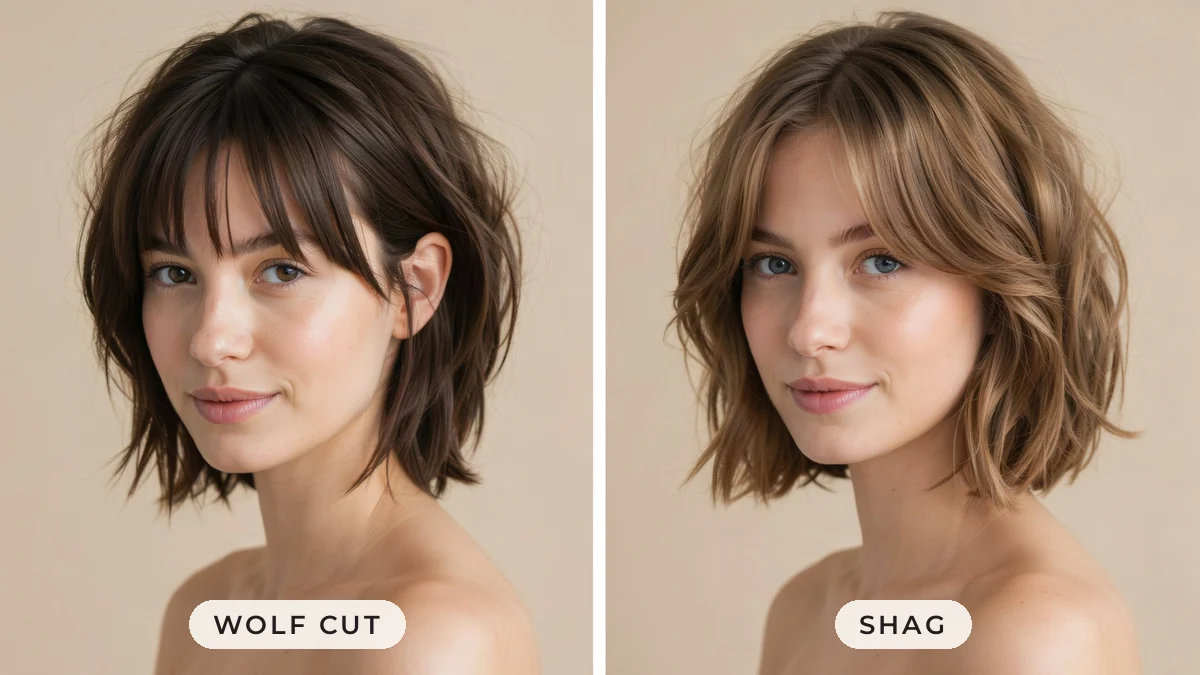
A short wolf cut and a short shag share so much that stylists and search results often use the names interchangeably. Both are heavily layered, both have a fuller crown, and both are meant to look a little undone. Ask for one and you can easily walk out with the other.
The difference shows up in three places: the outline of the cut, the way the ends are finished, and how much length is left at the back of the neck. Once you know where to look, you can tell them apart in any photo and ask for the right one.
Quick answer: A short shag spreads soft, blended layers evenly around the head for a rounded, feathery shape. A short wolf cut stacks shorter, choppier layers at the crown and leaves longer, wispy pieces at the nape, so the shape is bigger on top and trails off at the back. The wolf cut is the bolder, higher-contrast version; the shag is softer and easier to grow out. If the wolf shape is the one you want, our short wolf cut guide shows a dozen versions from pixie length to the neck.
Wolf Cut vs Shag at a Glance
| Short Wolf Cut | Short Shag | |
|---|---|---|
| Overall outline | Big, round crown that tapers into longer pieces at the back | Rounded and even all the way around |
| Layers | Short and stacked at the crown, longer below | Blended evenly from crown to ends |
| Ends | Jagged and wispy (razor or point-cut) | Soft and feathered |
| Back of the neck | Noticeably longer pieces, a slight mullet influence | Follows the rest of the shape, no extra length |
| Bangs | Choppy curtain or wispy bangs that blend into the sides | Feathered curtain bangs or a soft fringe |
| Best hair density | Medium to thick (the crown needs hair to hold volume) | Works on fine to thick hair |
| Daily styling | Texture spray or curl cream, 5–10 minutes | Often air-dries into shape, 0–5 minutes |
| Trim schedule | Every 6–8 weeks to keep the contrast | Every 8–10 weeks |
| Growing it out | Harder: the long back and short crown need evening out | Easier: layers grow out into a longer shag |
How to Spot the Difference in a Photo
Most confusion starts with a saved picture. Before you take a photo to the salon, check these three things.
1. Trace the outline
Imagine drawing around the whole haircut. A shag makes a soft circle or oval, with the same fullness at the sides as on top. A wolf cut makes a shape that is widest at the crown and narrows toward the neck, a little like an upside-down teardrop. If the widest point is at the top of the head, you are looking at a wolf cut.
2. Zoom in on the ends
Shag ends are feathered: they taper gently and blend into each other. Wolf cut ends are separated into distinct, pointed pieces, the result of a razor or point-cutting technique. If you can see individual spiky pieces around the face and neck, it is almost certainly a wolf cut.
3. Look at the nape
Check the back of the neck, or the side profile if the photo is taken from the front. A short shag keeps the nape in line with the rest of the cut. A short wolf cut leaves a few longer, wispy pieces trailing down the neck. That extra length is the mullet influence, and it is the single easiest way to tell the two apart.
Same Hair, Two Cuts: How Each One Looks by Texture
Your hair type changes how dramatic each cut looks, often more than the cut itself. Here is how each one behaves on the three most common textures.
Fine, Straight Hair
On fine, straight hair, the short wolf cut needs very short, stacked layers at the crown to create any lift at all. The payoff is instant volume on top, but the choppy pieces can fall flat by the afternoon without a texture spray at the roots and a quick blow-dry. Our wolf cut guide covers the styling routine for this hair type step by step.
The short shag is usually the easier choice here. Soft, blended layers make fine hair look thicker without asking you to rebuild the shape every morning, and feathered ends hide the thinness at the bottom that blunt or choppy ends can expose.


Thick, Wavy Hair
Thick, wavy hair is where the short wolf cut looks its best. The waves separate the choppy layers on their own, so you get the full, textured shape with little more than a scrunch of mousse and air-drying. The only risk is too much bulk at the sides, so ask your stylist to remove weight there while keeping the crown full.
A short shag on the same hair looks softer and more relaxed. Because the layers are spread evenly, the waves fall into a rounded shape instead of a top-heavy one. It is the better pick if you like texture but want something less edgy.


Curly Hair
For curly hair, both cuts should be shaped dry, curl by curl, so the stylist can see where each curl sits. Cutting curls wet is the most common reason either cut ends up lopsided or triangle-shaped once it dries.
A curly short wolf cut has defined curls stacked high on the crown and looser, longer curls at the nape. It is bold and full, and it works best on loose to medium curls. A curly short shag keeps the curls at a more even length all over, which gives a rounded, balanced shape and suits tighter curl patterns better. For wash-day routines that keep either shape defined, see our guide to curly hairstyles by curl type.


Which One Should You Get?
Choose the short wolf cut if:
- You have medium to thick hair, or natural wave that adds body
- You want a bold, edgy shape with lots of contrast
- You don’t mind 5–10 minutes of styling and trims every 6–8 weeks
- You like the idea of a slightly longer nape
Choose the short shag if:
- You have fine or thinning hair and want fullness without daily effort
- You prefer a soft, feathered look over choppy texture
- You want a cut that air-dries well and grows out without an awkward stage
- You may want to grow your hair longer within the next year
Still unsure? Start with a short shag. A stylist can turn a shag into a wolf cut at your next appointment by shortening the crown and leaving length at the nape. Going the other way means waiting for the choppy layers to grow out.
Face shape matters too. Both cuts soften strong jawlines, but the wolf cut’s volume at the top can make a long face look longer, while a shag’s even width is more forgiving. Our guide to choosing a haircut for your face shape explains how to check yours.
What to Tell Your Stylist
The names alone are not enough, because every stylist draws the line between these cuts in a slightly different place. Describe the shape instead.
For a short wolf cut, say:
“Short, choppy layers stacked at the crown for volume, razor-cut or point-cut ends, curtain bangs that blend into the sides, and a few longer, wispy pieces left at the nape.”
For a short shag, say:
“Soft layers blended evenly all around so the shape stays rounded, feathered ends, curtain bangs or a soft fringe, and no extra length at the back of the neck.”
Bring two photos: one of the cut you want and one of something you don’t want. Showing what to avoid is often clearer than any description. If you have curly hair, ask directly whether they cut curls dry.
FAQ
Is a wolf cut just a type of shag?
In a way, yes. A wolf cut borrows the shag’s heavy layering and adds choppy, mullet-style length at the back. Most stylists treat it as a bolder, higher-contrast variation of the shag rather than a completely separate haircut.
Which is easier to maintain, a wolf cut or a shag?
The shag. Its blended layers grow out evenly and often need a trim only every 8–10 weeks. A short wolf cut loses its contrast faster as the crown layers grow, so it usually needs a trim every 6–8 weeks.
Can you get a wolf cut on fine hair?
You can, but it takes more styling to hold its shape. The crown layers need to be cut short to create lift, and you will need a texture spray or root-lifting product on most days. If you want low effort, a short shag is usually the better match for fine hair.
How do I grow out a short wolf cut?
Ask your stylist to trim the longer pieces at the nape while the crown grows, so the two lengths even out. After a few months, the cut becomes a longer shag, and from there it grows out like any layered haircut.
Both cuts come from the same family, so neither one is the wrong choice. The difference is how much contrast you want and how much styling you are willing to do. Browse our full list of shag haircuts by length and texture for more shag ideas, see how the wolf cut adapts to your hair in our wolf cut hairstyles guide, or explore more layered haircuts if you want texture without the full shag.