
Curly Hairstyles: Which One Actually Works for Your Curl Type
Most curly hair advice treats “curly” as one category — pick a style, follow the steps, hope for the best. But a wash-and-go that looks perfect on a 3A curl pattern can fall completely flat on 4B hair, and a technique built for tight coils can strip the definition right out of looser waves.
The real variable isn’t the style. It’s your curl pattern — how tightly your hair coils, how it clumps, and how much shrinkage it has. Once you know your pattern, the right styles (and the mistakes to avoid) become obvious. This guide breaks down 18 real styles across every curl type, why each one works, and the products that actually match your hair’s needs.
Know Your Curl Pattern First
Curl patterns are grouped into three main types, each with three sub-types:
- Type 2 (Wavy): 2A, 2B, 2C — loose S-shaped waves, minimal shrinkage, prone to going flat at the roots
- Type 3 (Curly): 3A, 3B, 3C — springy, well-defined curls ranging from loose loops to tight corkscrews
- Type 4 (Coily): 4A, 4B, 4C — tightly coiled or zig-zag pattern, high shrinkage, needs the most moisture
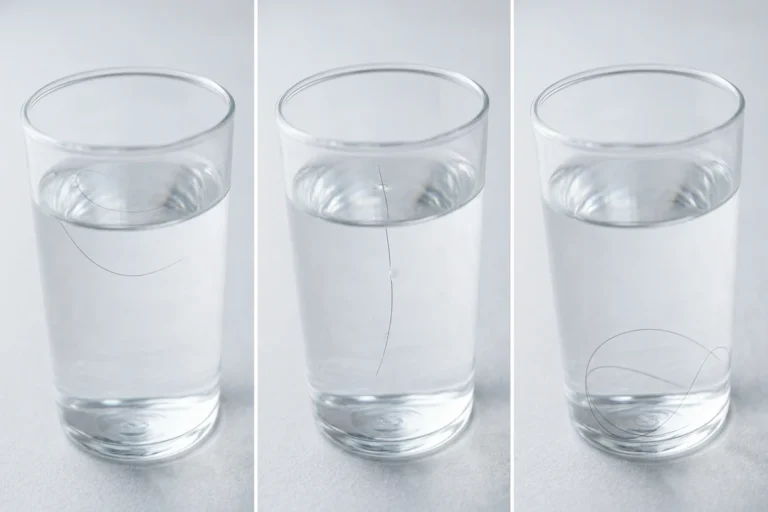
A quick way to check: take a strand of clean, product-free hair and look at its shape when wet. A loose “S” is Type 2. A defined spiral you can wrap around a pencil is Type 3. A tight zig-zag or coil with little visible curl definition when dry is Type 4.
Curl pattern isn’t the only variable that decides how a style turns out — your hair’s porosity affects how much moisture and product it can actually hold, which is why the same routine can work for one curl type and fail for another with the same pattern but different porosity.
Styles for Type 2 (Wavy) Hair
The problem: Wavy hair is the most prone to looking limp or losing its pattern by midday, because the wave itself isn’t strong enough to hold shape without help.
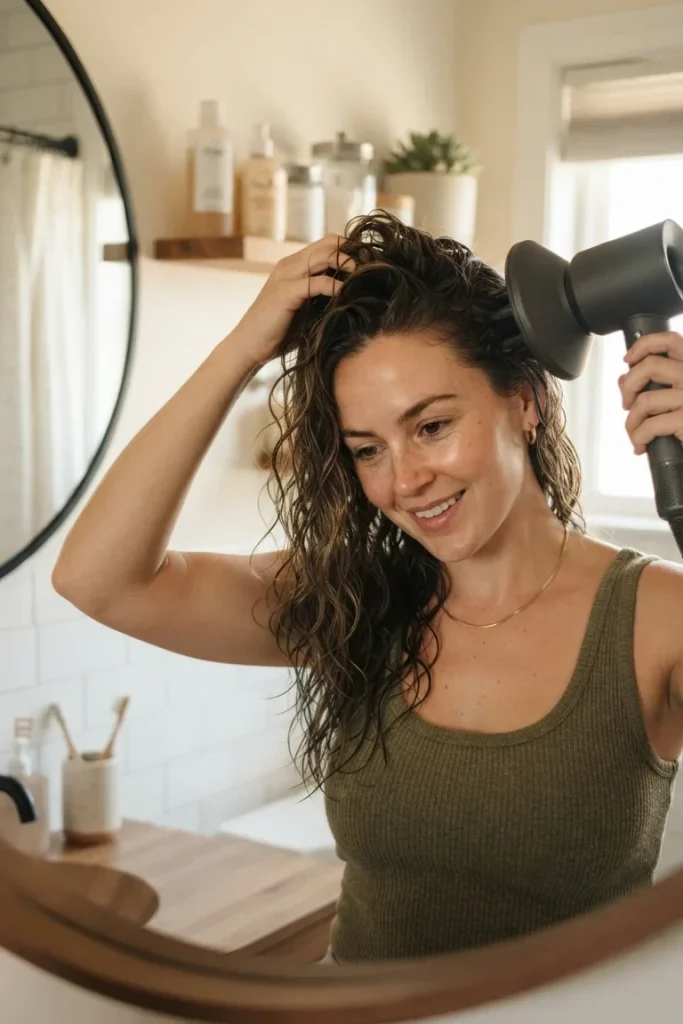
1. Scrunch-and-Diffuse
Apply a lightweight mousse to soaking wet hair, scrunch upward from the ends, then diffuse on low heat while cupping sections in the diffuser bowl. This is the single most effective technique for 2A–2B hair because it encourages the wave to clump without weighing it down.
2. Sea Salt Texture Spray
Best for 2B–2C hair that already has some natural bend. Applied to damp hair and air-dried, it roughs up the cuticle slightly so waves grip together instead of separating into frizz.
3. Root-Clipped Beach Waves
Clip sections of hair upward at the root while drying to prevent the classic “flat crown, wavy ends” look that plagues fine wavy hair. Remove clips once fully dry for lift that lasts all day.
4. Half-Up Wave Twist
Two small front sections twisted back and pinned, left loose over natural waves. Works well on 2C hair with enough natural texture to hold the twist shape without extra product.
5. Overnight Braid Waves
Loosely braid damp hair into two or three sections before bed. Undone in the morning, this creates soft waves on hair too fine for a diffuser to hold shape.
Product type to use: lightweight mousse or texturizing spray — avoid anything cream or butter-based.
Avoid: heavy creams and butters. They’re formulated for higher-porosity, coilier hair and will just flatten a loose wave under their own weight.
Styles for Type 3 (Curly) Hair
The problem: Type 3 curls have the most bounce and definition potential, but they’re also the most sensitive to humidity and over-manipulation, which is why curls look great on wash day and frizzy by day three.

6. Praying Hands Wash-and-Go
Smooth curl cream between flat palms and glide down sections of hair in a praying-hands motion before scrunching in gel. This keeps curls clumped together rather than separating into individual frizzy strands — the main cause of “curl fade.”
7. Plopped Curls
After applying product, flip hair into a microfiber towel or cotton T-shirt and let it sit for 10–20 minutes. This removes excess water without the friction of rubbing, which is what breaks curl clumps apart in the first place.
8. Curly High Puff
Curls gathered at the crown with a soft scrunchie, leaving front curls loose to frame the face. Ideal for 3B–3C hair on second or third-day curls when roots need lift but ends are still defined.
9. Curly Bangs Twist-Back
Front curls twisted back off the face and pinned, rest of the curls left in a natural wash-and-go. Solves the common complaint of curls constantly falling into the eyes.
10. Pineapple Updo (Overnight Preservation)
Gather curls loosely at the very top of the head with a silk scrunchie before bed. Sleeping on curls directly crushes the pattern; this preserves it for day two or three.
11. Curl Refresh Twist-Outs
For curls that have lost definition by day three, small sections re-twisted with a spray bottle of water and leave-in conditioner revive clumping without a full rewash.
Product type to use: curl cream followed by a light-hold gel for “cast” definition.
Avoid: brushing dry curls. It doesn’t redistribute the pattern — it just breaks up clumps into a frizzy halo. Detangle only on soaking wet hair with conditioner in it.
Styles for Type 4 (Coily) Hair
The problem: Type 4 hair has the highest shrinkage and the least natural oil distribution (oil has the longest, most coiled path to travel from scalp to ends), so moisture retention — not styling technique — is the real challenge.
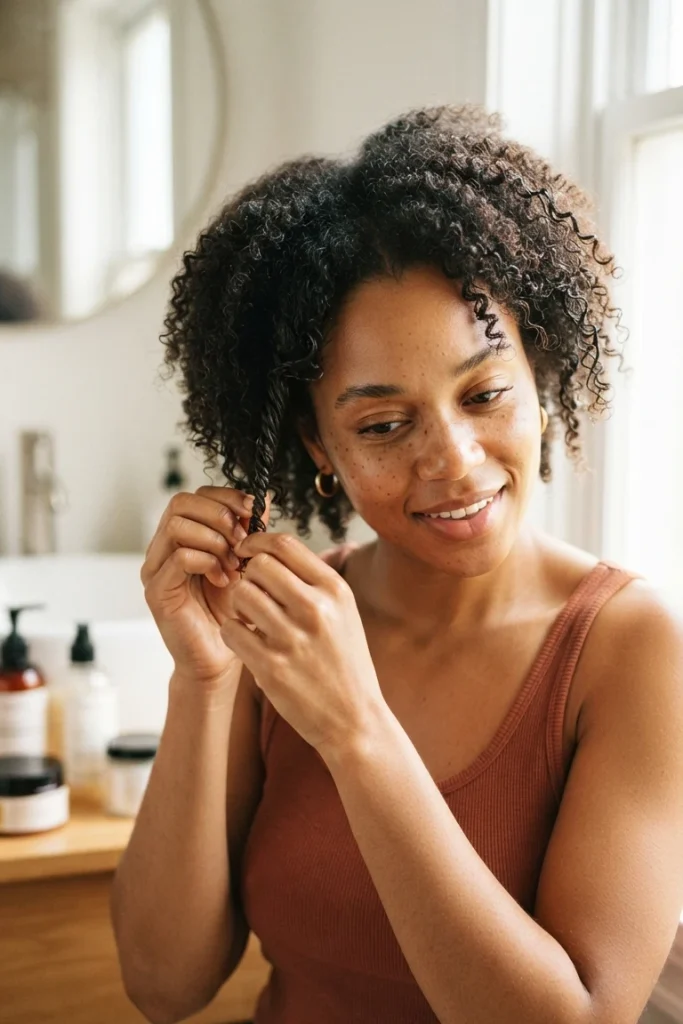
12. Twist-Outs
Two-strand twists set on damp, product-saturated hair and unraveled once fully dry create defined, elongated curl patterns without heat. The key is drying completely before unraveling — undoing a twist while even slightly damp collapses the definition.
13. Braid-Outs
Similar principle to twist-outs but using three-strand braids, which produce a looser, more zig-zag wave pattern once undone. Better suited to 4A hair that wants more stretch and less tight coil.
14. Bantu Knots
Small, wound sections pinned to the scalp that create tight, defined coils when released — one of the few heatless methods that works even on the tightest 4C patterns.
15. Wash-and-Go with LOC Layering
Layering Liquid (water-based leave-in), Oil, and Cream seals moisture into the hair shaft before styling. Skipping this step is the most common reason 4A–4C wash-and-gos look dry within hours.
16. Flat Twist Updo
Twists worked flat against the scalp in sections, then gathered into a bun at the crown or nape. A protective style that lasts up to a week with minimal daily manipulation.
17. Chunky Twist Half-Up
Four to six large twists at the crown, pinned back, with the rest worn loose in its natural coily state. Adds shape without the time commitment of a full twist-out.
18. Finger Coils
Individual small sections coiled around a finger with styling cream, best for shorter 4B–4C hair where twist-outs may unravel too quickly to hold shape.
Product type to use: water-based leave-in, followed by a sealing oil, then a curl butter or cream (LOC method).
Avoid: styling on dry hair. Type 4 hair should be worked with in sections while damp and coated in product; dry manipulation increases breakage significantly.
Quick-Reference: Curl Type to Technique
| Curl Type | Best Styling Methods | Key Mistake to Avoid |
|---|---|---|
| 2A–2B | Scrunch-and-diffuse, root clipping | Heavy creams/butters |
| 2C | Sea salt spray, half-up wave twist | Skipping root lift |
| 3A–3B | Praying hands + plopping | Brushing dry hair |
| 3C | Curly puff, pineapple for sleep | Over-touching curls while drying |
| 4A–4B | Twist-outs, braid-outs, LOC method | Styling on dry, unmoisturized hair |
| 4C | Bantu knots, finger coils, LOC/LCO layering | Unraveling twists before fully dry |
Frequently Asked Questions
How often should curly hair be washed?
Most curl types do best on a 5–7 day wash cycle. Washing too often strips natural oils that curls rely on for definition, while too infrequent washing causes product buildup that weighs curls down.
Why do my curls frizz no matter what I do?
Frizz usually comes from one of three sources: brushing or touching curls while dry, insufficient moisture (especially in Type 3C–4C hair), or humidity lifting the outer cuticle layer. Using an anti-humidity product on top of a proper LOC or LCO routine addresses all three.
Can heat styling ruin curl pattern permanently?
Occasional low-heat diffusing generally doesn’t cause lasting damage, but frequent high-heat styling (flat irons, uncontrolled blow-drying) can loosen or permanently damage the curl pattern over time by weakening the hair’s protein structure.
Do I need different products for different curl types?
Yes — this is the single biggest reason curly styling “doesn’t work” for some people. Lightweight mousses suit Type 2 hair, curl creams and gels suit Type 3, and heavier butters and oils suit Type 4. Using a Type 4 product on Type 2 hair (or vice versa) is the most common mismatch.
The One Rule That Applies to Every Curl Type
Regardless of pattern, curls are shaped by water and product while wet — not by heat or manipulation once dry. Any technique that asks you to “fix” a curl after it’s already dried usually does more damage than good. Work with wet or damp hair, let it dry undisturbed, and the curl pattern you’re born with will do most of the work for you.
3 Comments