Scalp Care Routine for Oily, Dry, Combination and Sensitive Scalps
Most scalp care advice reads like a generic checklist — cleanse, exfoliate, moisturize, repeat — without explaining why any of it matters or how it changes based on what’s actually happening on your scalp. An oily scalp and a dry, flaky one don’t need the same routine, and doing the wrong version of a “good habit” can make things worse instead of better.
The real question isn’t which products to buy — it’s understanding what each step in a scalp routine is actually doing, so you can adjust it to your specific scalp instead of following a generic sequence that was never built for you. If heat styling is part of your routine, our Heat Damage: Repair and Prevention guide covers how to protect your hair and scalp from styling tools specifically.
First, Know Your Scalp Type: The Two Decisions Behind Every Scalp Routine
1. What’s your scalp type, actually? Oily scalps produce excess sebum and need routines built around controlling buildup without stripping the scalp bare, which triggers even more oil production. Dry or flaky scalps lack sufficient natural moisture and need routines built around adding hydration back, not removing more of what little oil is there. Combination scalps (oily at the roots, dry at the ends or edges) need a routine that treats different zones differently instead of one blanket approach. Sensitive or reactive scalps need a routine built around minimizing irritation first, before anything else.
2. What’s the actual goal? Oil control, hydration, flake reduction, and growth support are four different goals that sometimes pull in different directions — a routine built for maximum oil control (frequent washing, lightweight products) can actively work against a hydration goal, and a heavy hydrating routine can make an oily scalp worse. Know which problem you’re actually solving before adding steps.
Step 1: Cleanse
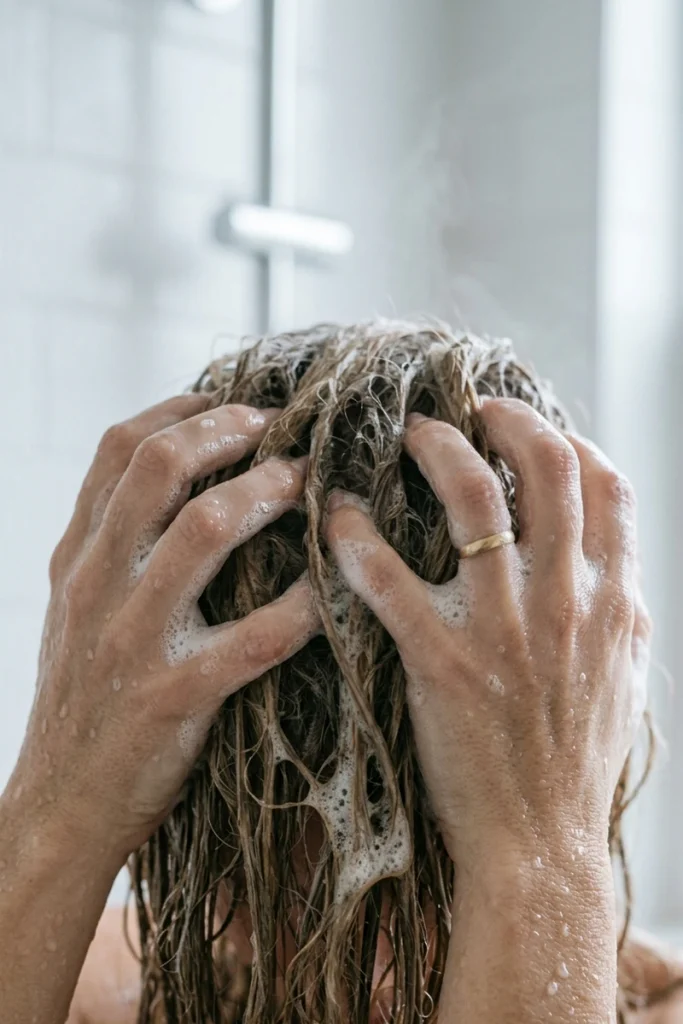
Cleansing removes the buildup of oil, product residue, and dead skin cells that accumulates on the scalp between washes — but how often and with what depends entirely on scalp type. Oily scalps generally do better washing every 1-2 days, since sebum builds up fast and a longer gap just means more buildup sitting on the scalp. Dry or sensitive scalps usually do better stretching to every 2-4 days, since over-washing strips the limited natural oil that’s already in short supply and can make dryness worse.
A clarifying shampoo (one formulated to strip buildup more thoroughly) is useful periodically for anyone using heavy styling products or dry shampoo regularly, but using it too often on a dry or sensitive scalp defeats the purpose of the rest of the routine. The step that actually matters: match wash frequency and shampoo strength to scalp type, not to a fixed schedule. If your roots get oily while your ends stay dry or frizzy, our frizz and humidity guide explains how porosity changes the routine.
Step 2: Treat
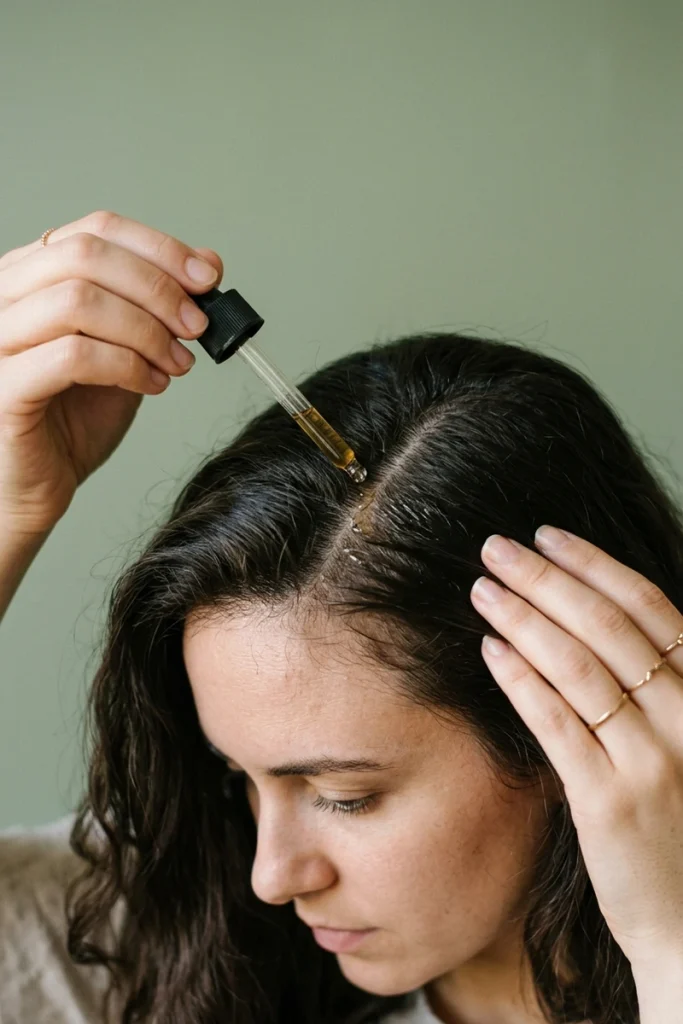
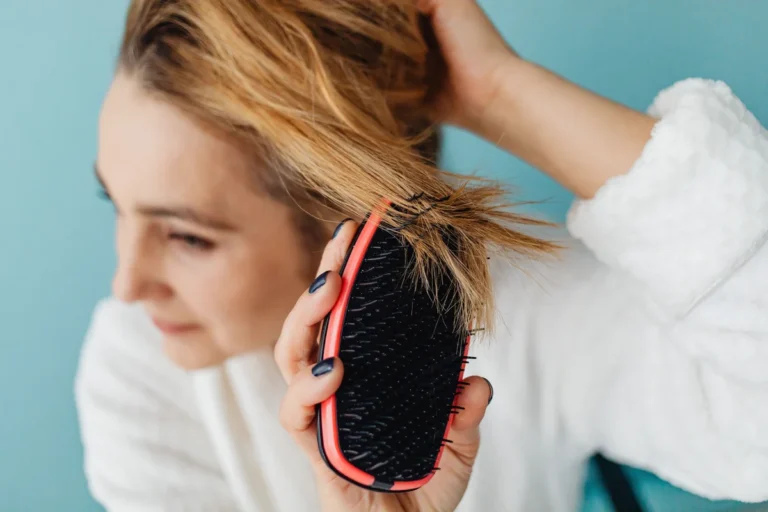
Treating addresses the specific issue — buildup, flakes, or dryness — that plain cleansing doesn’t fully resolve. Scalp exfoliation, done with a gentle scrub or a brush with soft silicone bristles, lifts dead skin cells and product buildup that shampoo alone leaves behind, which matters most for oily and flaky scalps where buildup is the core problem. Overdoing this on a sensitive scalp causes irritation rather than helping, so once a week is usually enough, and daily exfoliation is rarely necessary for anyone.
Lightweight scalp serums or oils target specific concerns: a balancing serum for oily scalps controls sebum without adding more oil on top, while a nourishing oil (like jojoba or argan applied sparingly at the roots) adds moisture back for dry scalps specifically. The step that actually matters: treat the specific issue you have, not every issue at once — an oily scalp doesn’t need a heavy nourishing oil, and a dry scalp doesn’t need a stripping balancing serum.
Step 3: Protect
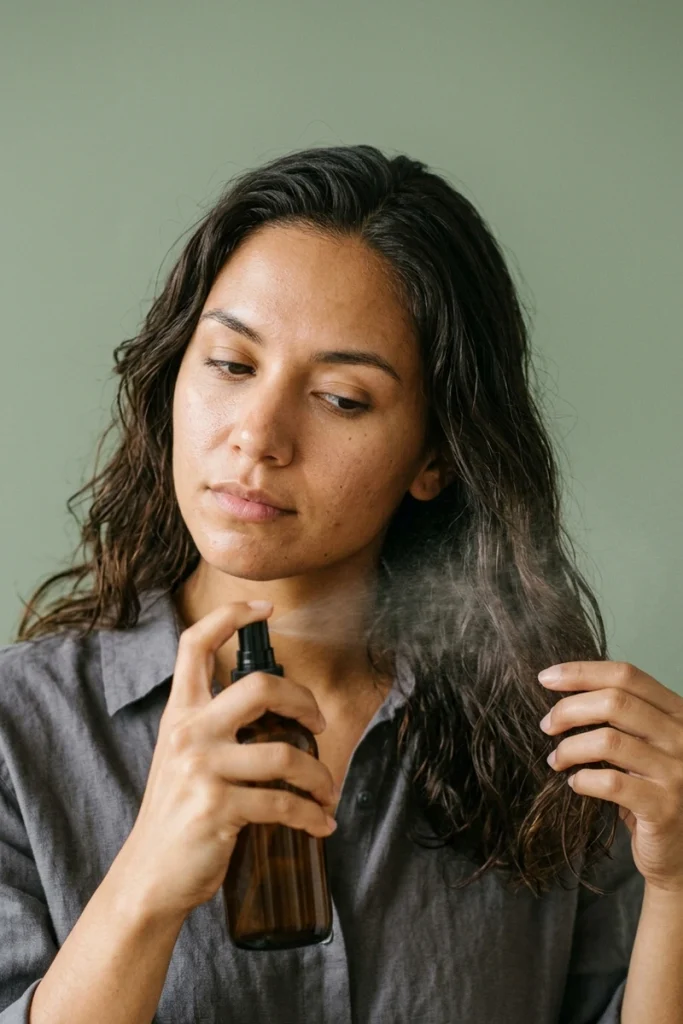
Protecting the scalp from everyday damage matters as much as the active care steps, since a lot of scalp irritation and buildup comes from external stress rather than the scalp itself. Heat styling tools held close to the roots can irritate the scalp directly, not just damage the hair — using a heat protectant that reaches the roots, not just the lengths, matters more than most routines account for. Tight hairstyles (high ponytails, tight braids, slicked-back buns) pulled repeatedly at the same tension point can cause traction stress at the hairline and along the part, so rotating part placement and avoiding maximum tension daily protects against this over time.
Product buildup from heavy styling products, dry shampoo, or leave-in treatments sits directly on the scalp if it’s not cleared regularly, which is part of why the clarifying step above exists — protecting isn’t just about avoiding new damage, it’s about not letting yesterday’s products become today’s buildup. The step that actually matters: treat scalp protection as part of styling decisions, not a separate category from them. Our box braids guide shows how braid size and tension affect the hairline.
Step 4: Weekly or Monthly Extras
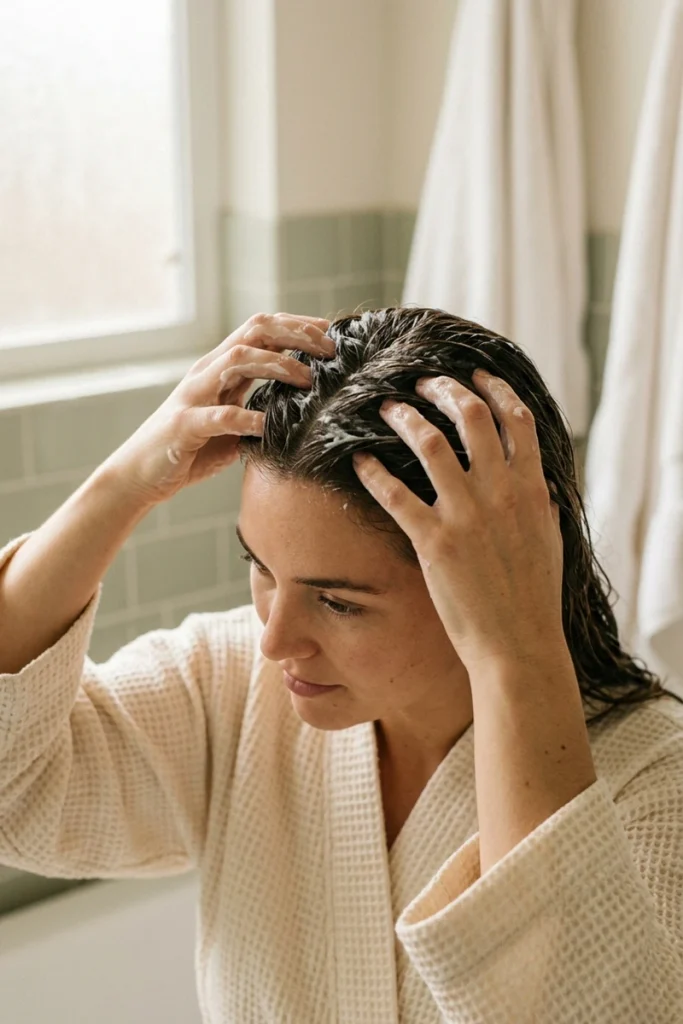
Beyond the daily and twice-weekly steps, a few things matter on a longer cycle. A deep-conditioning scalp mask or treatment, done weekly for dry scalps (if your scalp is sensitive, patch-test first or skip it) or biweekly for oily ones, delivers a concentrated dose of whatever the scalp needs most — hydration, soothing ingredients, or gentle exfoliation — without the daily-use formulation trade-offs regular products have to make.
Scalp massage, done for a few minutes during any shampoo step, increases blood circulation to the scalp, which supports the follicle environment hair grows from — it’s not a magic growth trigger on its own, but it’s a genuinely useful five minutes that most routines skip entirely. A periodic professional scalp treatment or consultation is worth it if a specific issue (persistent flaking, unexplained shedding, ongoing irritation) isn’t resolving with an at-home routine. The step that actually matters: treat these as genuine maintenance, not optional extras — they’re what keeps a good daily routine from plateauing. Gray and silver hair often needs a gentler version of this routine; see our gray hair care guide.
If Your Scalp Is Sensitive or Reactive
A sensitive scalp reacts to products, heat or friction with itching, stinging, redness or tightness, often within minutes. The routine above still applies, but every step gets gentler:
- Cleanse: choose a fragrance-free, sulfate-free shampoo and lukewarm water. Rinse longer than you think you need to, because leftover shampoo is a common trigger.
- Treat: introduce one new product at a time and patch-test it behind the ear or on the inner arm for 24–48 hours before using it on your scalp.
- Exfoliate: once a week at most, with a soft brush or a mild product, never a gritty scrub.
- Protect: keep hot tools moving and away from the roots, and avoid tight ponytails or braids for days in a row.
- Skip: strong essential oils such as tea tree or peppermint on broken or irritated skin, and heavy weekly masks until the scalp has settled.
Keeping a short note of what you used before a flare-up is the fastest way to find a trigger.
Quick Reference: Match Your Scalp Type
| Scalp Type | Wash Frequency | Cleanse Priority | Treat Priority | Weekly Extra |
|---|---|---|---|---|
| Oily | Every 1-2 days | Lightweight shampoo, root-focused | Balancing serum, avoid heavy oils | Light mask, biweekly |
| Dry / Flaky | Every 2-4 days | Gentle, sulfate-free cleanser | Nourishing oil (jojoba/argan) at roots | Deep mask, weekly |
| Combination | Every 2-3 days | Root-focused wash, don’t over-cleanse ends | Different product at roots vs. lengths | Zone-specific mask, weekly |
| Sensitive / Reactive | Every 2-4 days | Fragrance-free, minimal ingredients | Patch-test new products first | Gentle massage only, skip heavy treatments |
This isn’t a replacement for the full steps above — it’s a fast lookup if you already know your scalp type and just need the gist.
When to See a Dermatologist Instead
A routine helps with everyday oiliness, dryness and buildup. It isn’t a treatment for a medical condition. See a dermatologist or doctor if you notice any of these:
- Flaking or itching that doesn’t improve after 3–4 weeks of a consistent routine
- Thick, yellow or crusty patches, or redness that spreads past the hairline
- Pain, swelling, open sores or bumps that ooze
- Sudden shedding, round bald patches, or thinning along the part or hairline
- A reaction after a hair dye or chemical treatment, such as burning or swelling
Dandruff, scalp psoriasis, eczema and fungal infections can look similar but need different treatments, which is why a diagnosis matters more than trying another product.
FAQ
How often should I exfoliate my scalp?
Once a week is enough for most scalp types, including oily and flaky scalps where buildup is the main concern. Sensitive scalps may do better sensitive scalps should stay at once a week or less, and many do better every other week, and daily exfoliation isn’t necessary for anyone — it’s more likely to cause irritation than added benefit.
Should I apply scalp oil before or after shampooing?
Before, as a pre-wash treatment, works best for most dry-scalp routines — the oil sits on the scalp for 20-30 minutes (or overnight) before being shampooed out, which gives it time to absorb without leaving a greasy residue behind. Leave-in scalp serums, by contrast, are designed to stay in and are usually applied to a clean, dry or towel-dried scalp after washing.
Is second-day (unwashed) hair bad for scalp health?
Not inherently — for dry or sensitive scalps, stretching wash days actually helps by preserving natural oils. For oily scalps, letting buildup sit for multiple days can contribute to clogged follicles and irritation, so the “is it bad” answer depends entirely on scalp type, not a universal rule. If you want to stretch the time between washes, our braided bun styles hide day-two roots well.
How do I tell the difference between dandruff and a simply dry scalp?
Dandruff typically involves larger, oilier flakes and is often accompanied by itching or mild redness, since it’s linked to a yeast-related scalp condition rather than pure dryness. A simply dry scalp tends to produce smaller, drier flakes without the same inflammation, and usually responds well to added moisture alone. Persistent flaking that doesn’t improve with a moisture-focused routine is worth checking with a dermatologist rather than continuing to guess.
Can a scalp routine actually help with hair growth?
Indirectly — a healthy scalp environment (good circulation, minimal buildup, no ongoing irritation) supports the conditions hair grows in, but no scalp routine on its own reverses genetic hair loss or dramatically speeds up growth rate. Scalp massage and reduced buildup are genuinely useful supporting habits, not standalone growth treatments. Regular trims help you keep the length you grow; our trim schedule guide explains how often.
Do I need different products for my scalp versus my hair?
Often yes, especially for combination scalps — a lightweight, oil-controlling product at the roots and a heavier moisturizing product on the lengths address two different needs that a single all-purpose product usually can’t solve well for both zones at once.
Bottom Line
A scalp routine isn’t about following every step available — it’s about matching the right steps to your actual scalp type and goal, since the wrong version of a “good habit” can undo the rest of the routine. If breakage is more of your concern than scalp health specifically, our Hair Breakage: Causes and Fixes guide covers that in more depth, and our general Hair Care Tips guide covers the broader daily habits that support healthy hair overall.