Braided Bun Styles That Hold All Day, and Why Some Slip by Lunch
If you’ve ever had a braided bun slide loose by mid-afternoon, the problem usually isn’t your hair — it’s the bun. Most tutorials show you the same smooth, tightly wound version and stop there, which means if that particular shape doesn’t sit right on your hair type or hold through your day, you’re left thinking you’re doing something wrong. You’re not. A braided bun is really just a braid coiled and pinned, and the specific way you braid it, where you place it, and how you pin it all change how long it lasts and who it actually looks good on. Below are sixteen versions, starting with the fix for the most common slipping problem and moving through the length, texture, and occasion variations that rarely make it into the basic tutorials.
Why Braided Buns Slip
The short version: a braided bun holds better than a smooth bun for one simple reason — the plait gives the pins something textured to grip onto instead of sliding across a slick surface. But that only works if you braid tightly enough before you coil it. A loosely plaited braid coiled into a bun behaves almost exactly like smooth hair, which is the most common reason people say braided buns “don’t work” on their hair. Braid firmly from root to tip, coil the braid around itself rather than just twisting it into a lump, and pin in an X pattern (two pins crossing each other) rather than parallel — that X is what actually locks the coil in place. Get that part right and almost every version below will hold for a full day.
How to Make a Basic Braided Bun
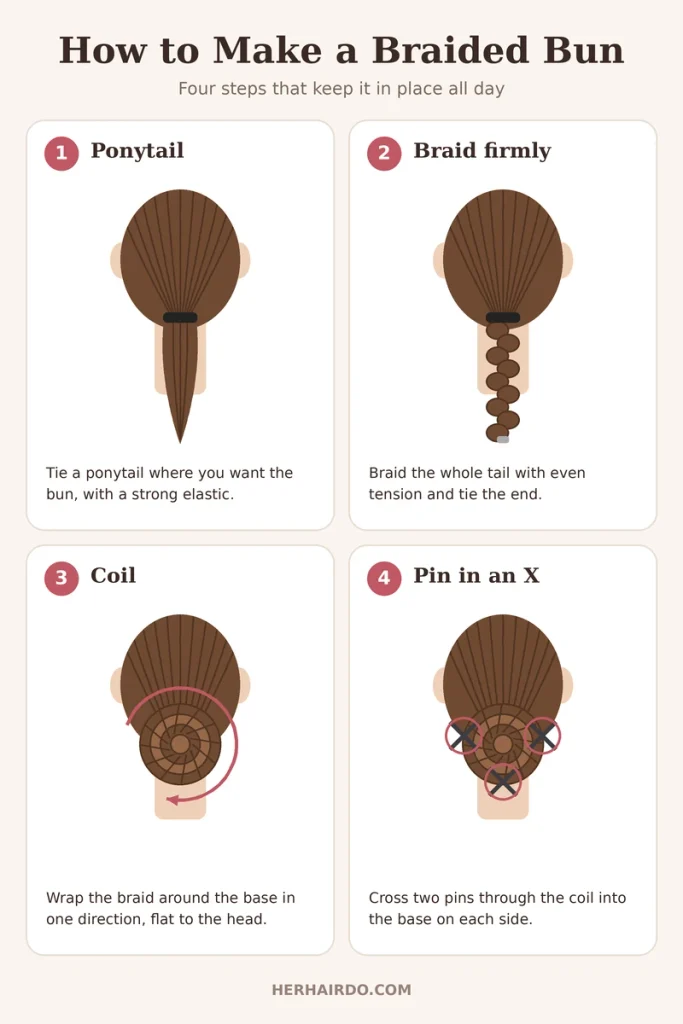
Every style below starts from the same four moves: a secure ponytail, a firm braid, a tight coil and pins set in an X. Learn this version first and the rest are small changes to it.
- Tie a ponytail where you want the bun to sit. Low at the nape for work and events, at the crown for workouts. Use a strong fabric-covered elastic.
- Braid the whole tail firmly. A three-strand braid works for most hair. Keep the tension even from top to bottom; a loose braid slips like smooth hair.
- Secure the end with a small clear elastic.
- Coil the braid around the base of the ponytail in one direction, keeping it flat against the head.
- Tuck the end under the coil and hold it with one pin.
- Pin in an X. Push one bobby pin through the edge of the coil into the base, then cross a second pin over it. Repeat on each side of the bun, usually 4 to 6 pins in total.
| Your hair or plan | Start with | Why |
|---|---|---|
| First braided bun | 1. Classic Braided Bun | One braid, one coil, easy to pin |
| Long, heavy hair | 2. Low Braided Bun or 16. Bun With a Braid Wrapped Around It | Weight sits low and spreads across two parts |
| Thin or fine hair | 7. Braided Bun for Thin Hair | Pancaked braid looks fuller and gives pins grip |
| Bob or shoulder length | 8. Braided Bun for Short or Bob-Length Hair | Small sections that reach the base |
| Curly or coily hair | 12. Braided Bun for Curly Hair | Braids on damp, product-set hair hold shape |
| Gym or sport | 14. Workout or Gym Braided Bun | High, tight to the head, extra pins |
| Wedding or event | 13. Bridal Braided Bun | Built to hold flowers and pins all day |
1. Classic Braided Bun
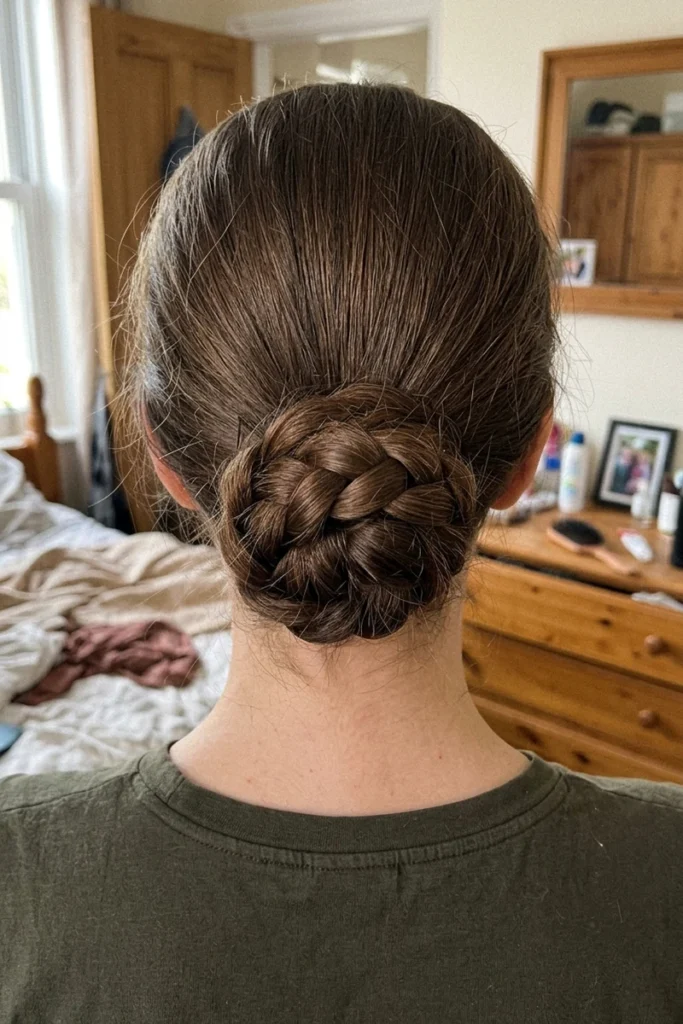
Braid your hair in a standard three-strand braid, then coil the braid around itself starting from the base and working outward, tucking the end underneath and pinning it flat. This is the version worth learning first, since every other style on this list is a variation on where you place it or which braid you start with. Braiding before coiling — rather than coiling loose hair — is what gives this bun its texture and its grip.
2. Low Braided Bun
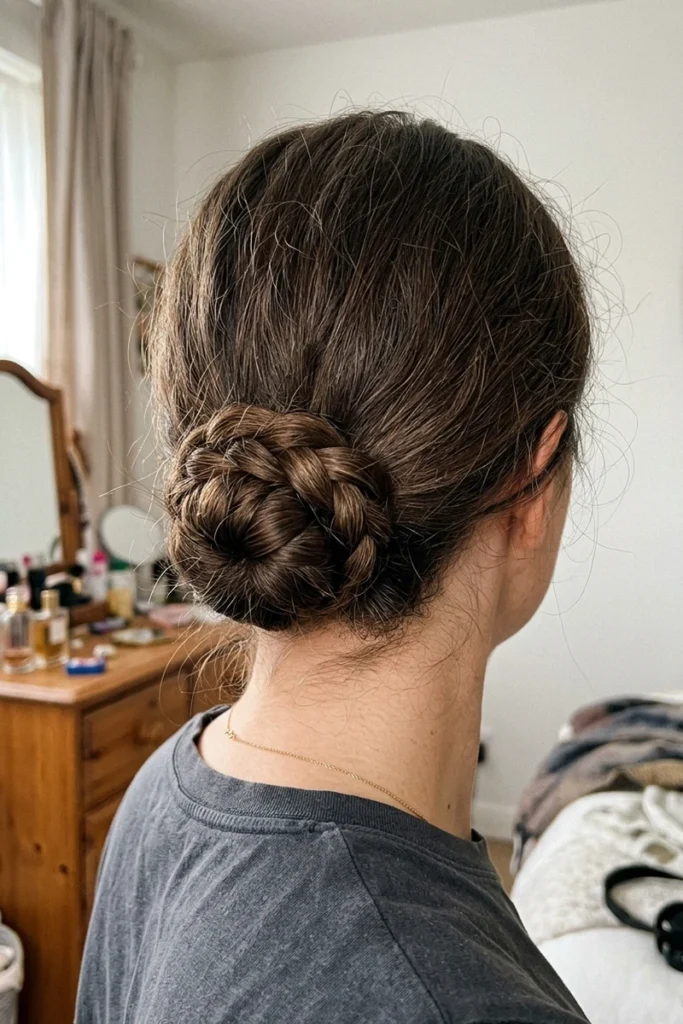
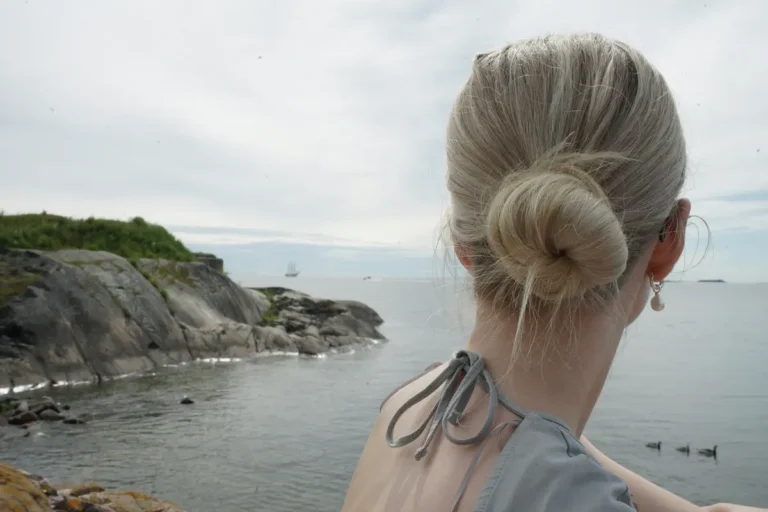
Position the base of the braid at the nape of your neck rather than higher up, and coil it there. This sits close to the head and reads as understated rather than styled, which makes it one of the more versatile options here — it works equally well for the office, running errands, or dressing up with the right accessories. It’s also the most comfortable version for sleeping in or wearing under a hood, since there’s no bulk sitting at the crown to press against.
3. High Braided Bun
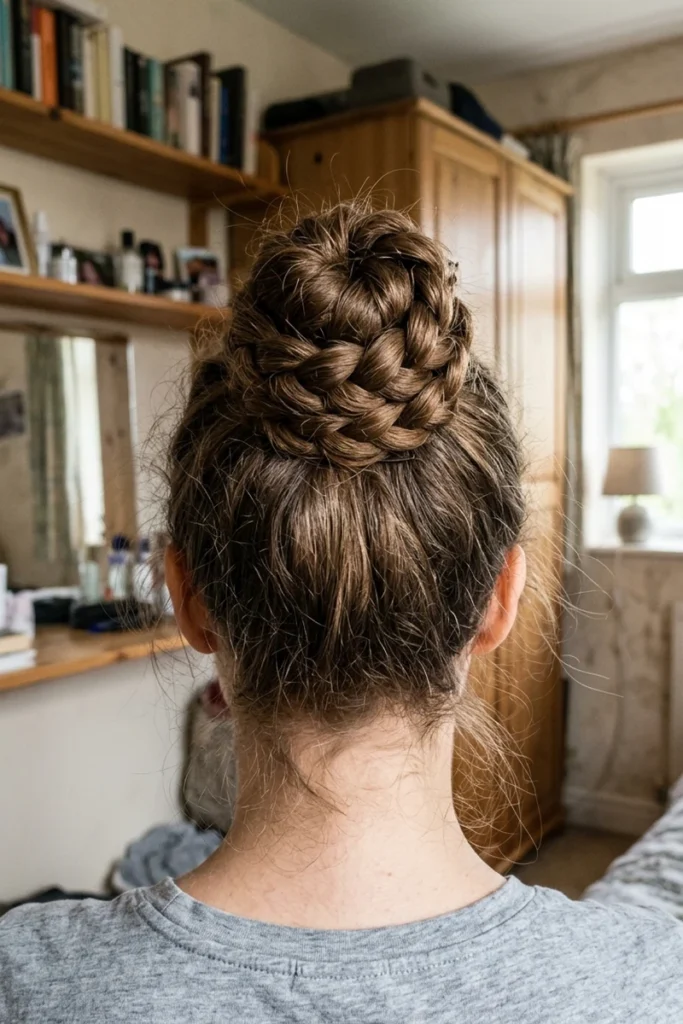
Gather your hair at the crown before braiding, then coil the braid into a bun sitting on top of your head. Because the weight sits higher, this version tends to hold slightly longer than a low bun on fine hair, since gravity isn’t working against the pins the same way. It also elongates the neck and works well if you want a style that photographs cleanly from every angle, which is part of why it shows up so often in dance and gymnastics.
4. Double Braided Buns (Space Buns)
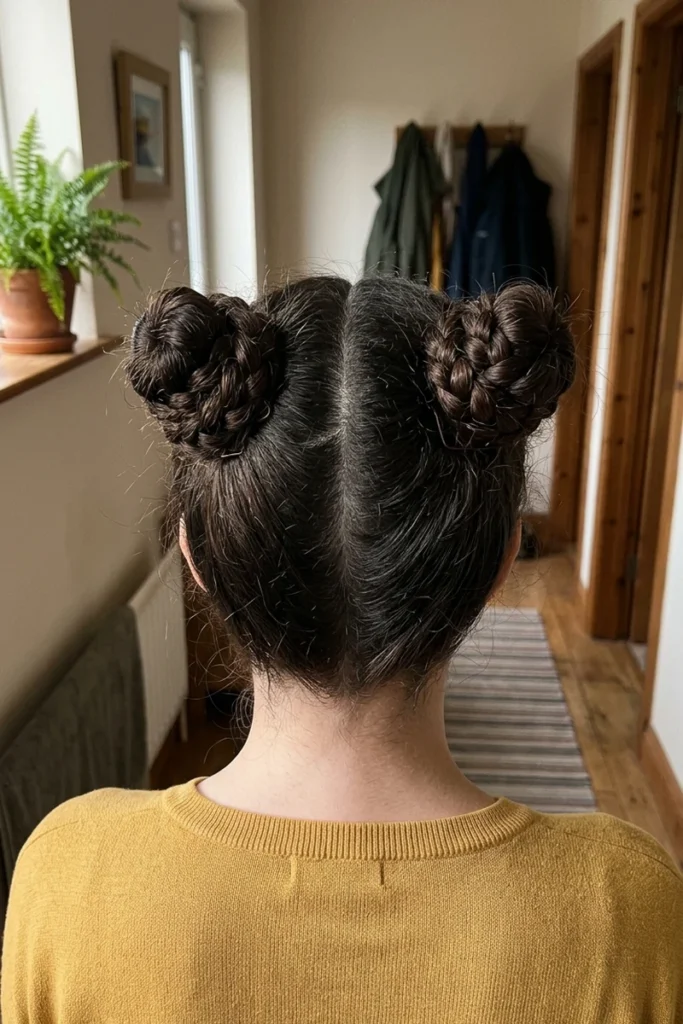
This is the version most people picture as “cute” rather than “practical” — but it’s actually one of the most secure options here.
Part your hair down the middle, braid each side separately, and coil each braid into its own bun on either side of your head. Splitting the hair in half means less weight on each bun, so they tend to hold through more movement than a single large bun does, which is why this version turns up so often in workout and festival contexts. The symmetry does take a steady part down the center to look intentional rather than lopsided, so take a moment to check it in a mirror before you start braiding either side.
5. Fishtail Braided Bun
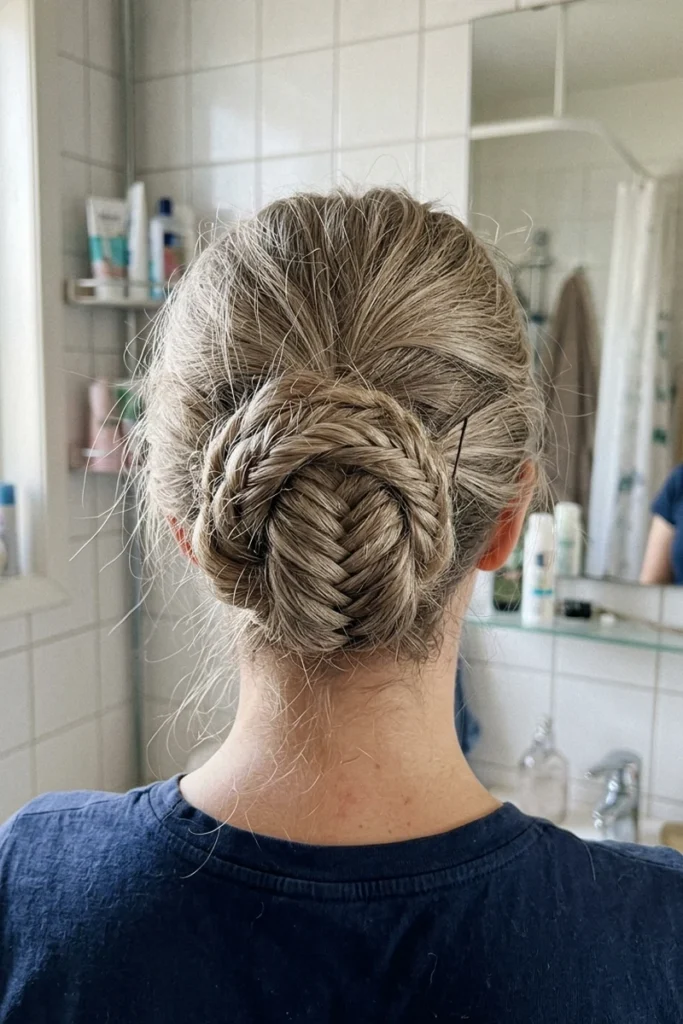
Braid a fishtail instead of a standard three-strand braid before coiling it into a bun. Fishtails are thinner and more textured, so once coiled, the bun reads as more delicate and detailed than a classic braided bun, with visible ridges rather than a smooth spiral. It takes longer to braid than a three-strand section, since you’re working with two sections and thin pulled strands rather than three thick ones, but the payoff is a bun that looks noticeably more finished for the same basic technique. Our fishtail braid hairstyles guide shows the two-strand crossing step by step.
6. Dutch Braided Bun
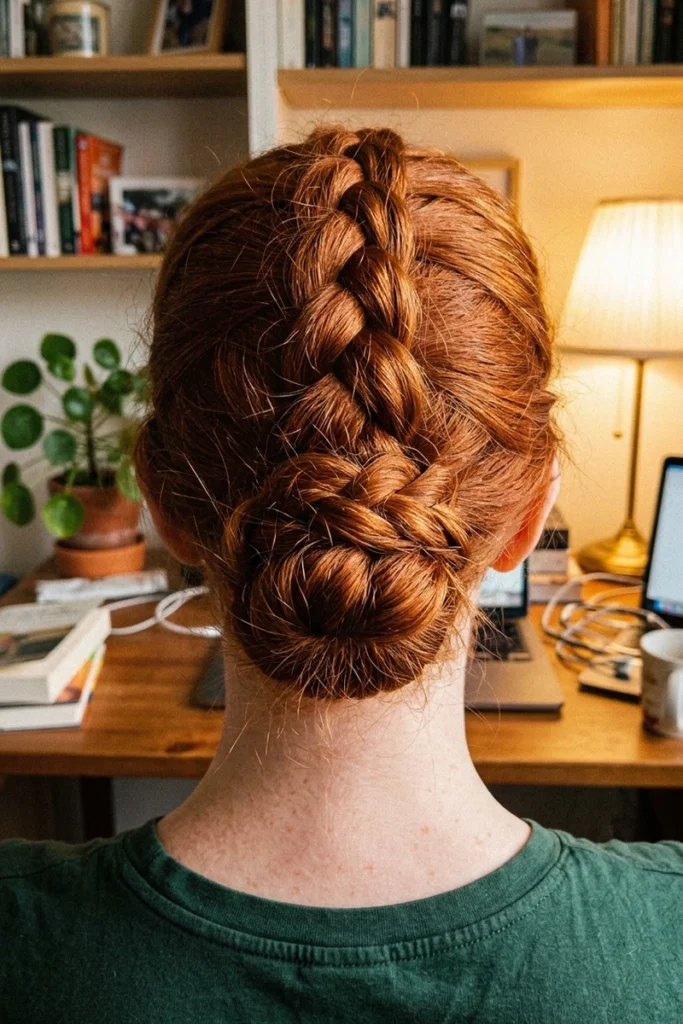
Braid a Dutch braid — crossing strands under instead of over — before coiling it. Because Dutch braids sit raised rather than flat, the coiled bun ends up looking fuller and more textured than one made from a French-style three-strand braid, which is useful if your hair is naturally fine and a plain braided bun tends to look thin once it’s coiled. The raised weave also makes the coil itself easier to see once it’s pinned, so the bun reads as more deliberately braided rather than just messily wound. New to the under-crossing? Start with our Dutch braid hairstyles.
7. Braided Bun for Thin Hair
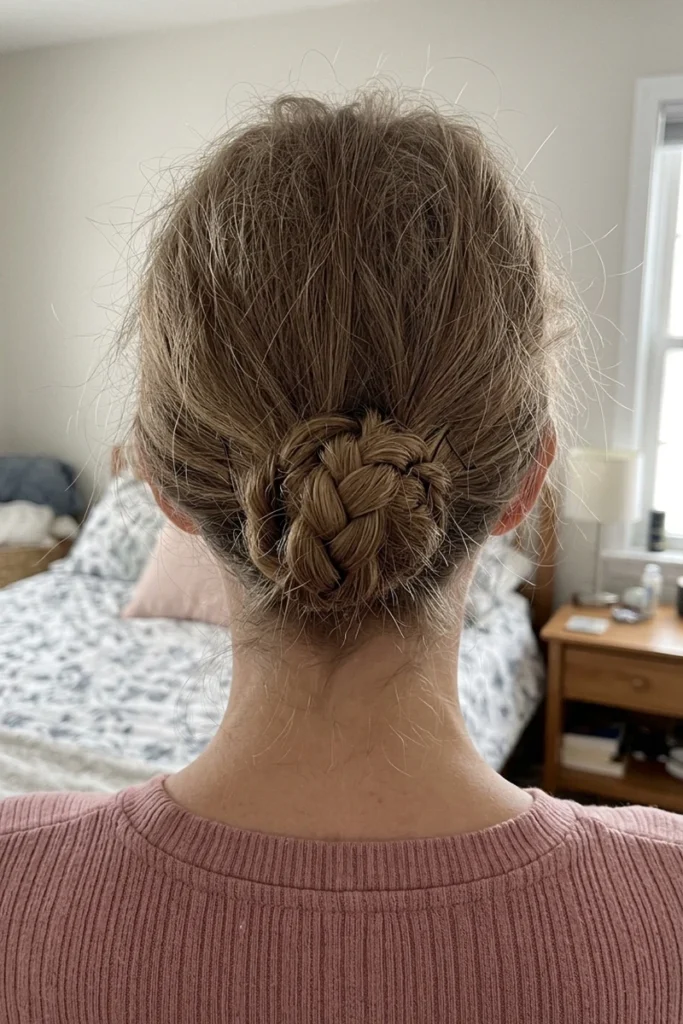
Fine hair is where braided buns most often disappoint, not because the technique changes, but because a thin braid coiled into a bun can end up looking more like a small knot than a full style. Backcomb the section lightly at the root before you braid it, and don’t pull the braid too tight as you coil — a very tight coil on thin hair often looks smaller once it’s pinned than a slightly looser one does, since tension flattens the texture that’s giving the bun its visual size in the first place. A few bobby pins tucked underneath for extra volume, rather than just around the edges, also helps it read as fuller from the front.
8. Braided Bun for Short or Bob-Length Hair
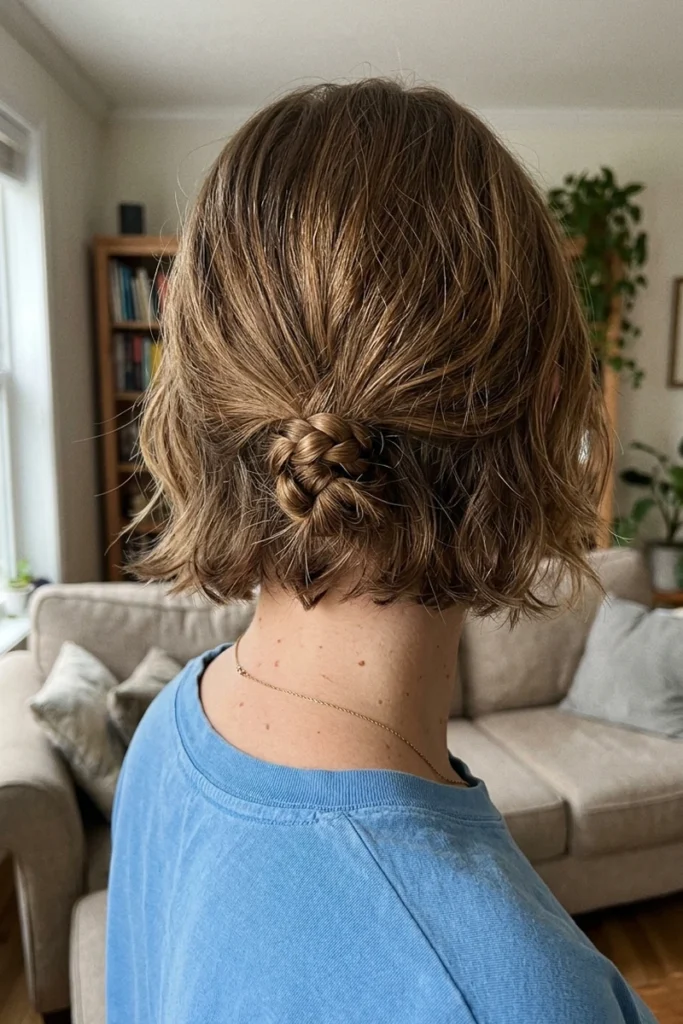
On hair that doesn’t reach past the shoulders, a full braided bun in the traditional sense usually isn’t possible, but a small braided knot at the nape works on surprisingly short hair — down to around chin length in many cases. Braid whatever length you have starting close to the base of the skull rather than higher up, since starting higher leaves you with a longer unbraided tail that’s harder to coil neatly. Texture spray or a light gel on the shorter ends beforehand helps keep flyaways from working their way loose throughout the day, which happens more easily on short hair than long. For more ideas at this length, see our updos for short hair.
9. Loose, Undone Braided Bun
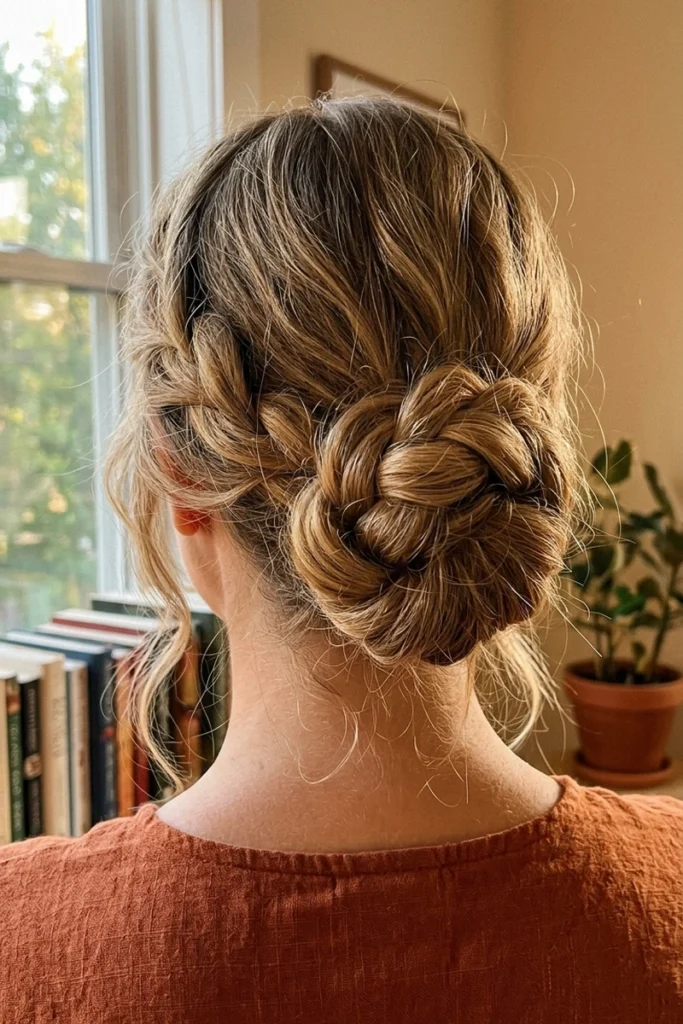
Braid loosely rather than tightly, then coil the braid without pulling it fully taut, letting some volume stay in the loops instead of flattening them against the head. Once it’s pinned, gently pull a few pieces free around the hairline and at the crown of the bun itself to soften the shape further. This version is meant to look effortless rather than polished, and — somewhat counterintuitively — it often holds up just as long as a tight version, since the slight give in the braid means it doesn’t fight against natural movement the way an overly tight coil sometimes does.
10. Braided Bun with Face-Framing Pieces
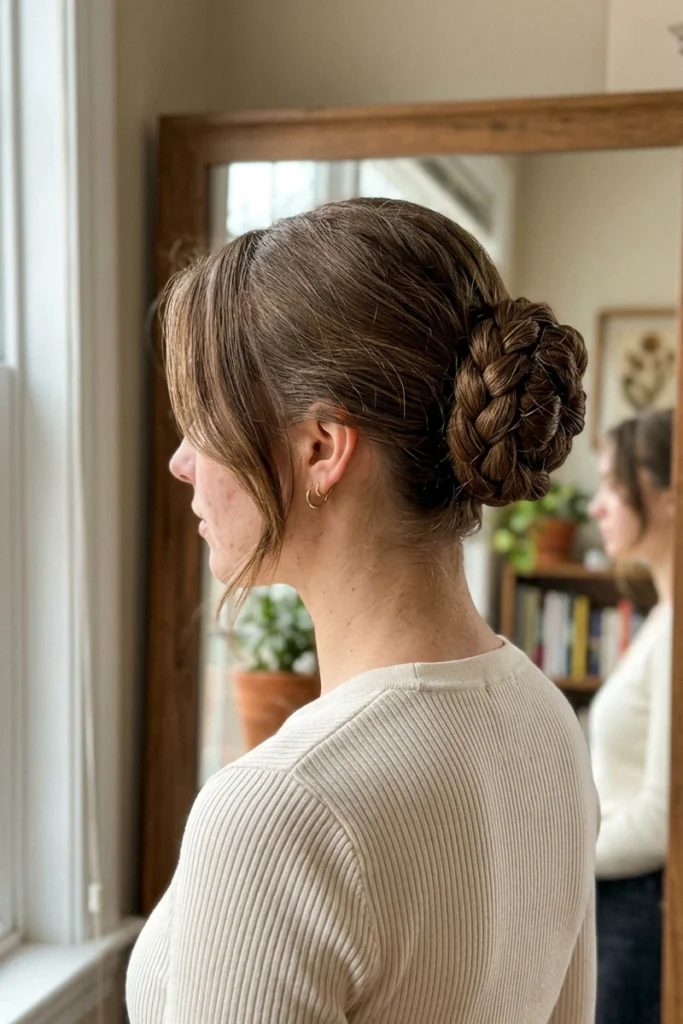
Leave an inch or so of hair out around your hairline before you start braiding the rest back, letting those pieces fall loose around your face. It softens what can otherwise be a fairly severe, pulled-back look, especially if you have shorter layers that would slip out of the braid anyway. This is worth doing deliberately rather than letting stray pieces escape on their own, since intentionally left-out pieces tend to sit more evenly than ones that work themselves free over the course of the day.
11. Half-Up Braided Bun
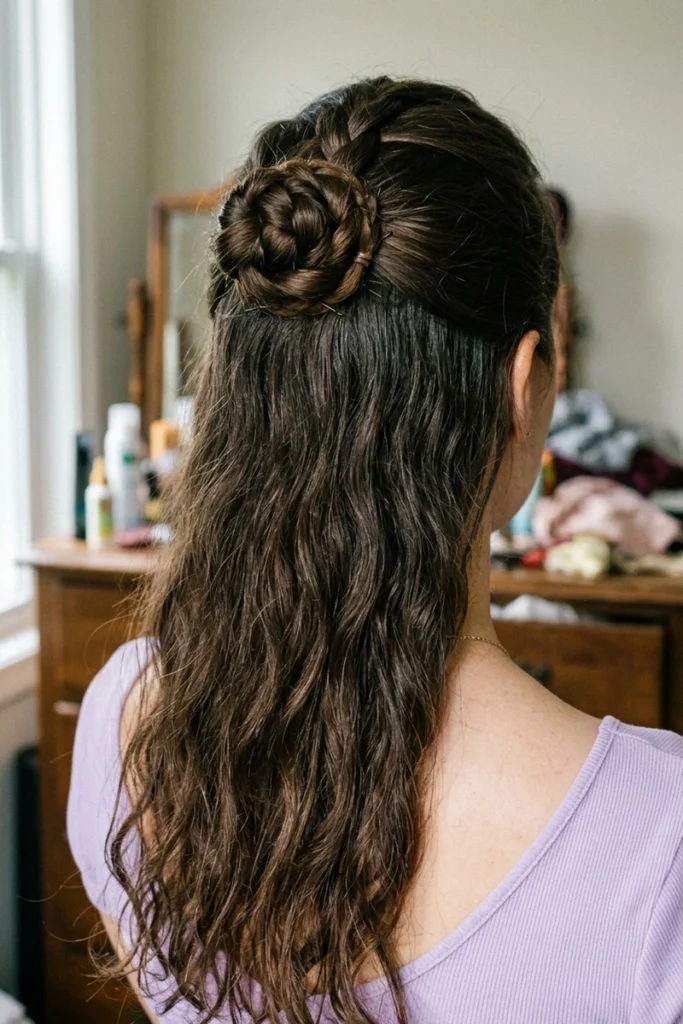
Take only the top section of your hair, braid it, and coil it into a small bun at the crown, leaving the rest of your hair down. It gives you the neatness of a bun without fully committing to an updo, and it’s a good middle-ground option if your hair is textured or wavy, since the loose hair underneath keeps its natural movement instead of getting compressed the way it would in a full updo. This version also needs noticeably less hair than a full braided bun, since you’re only working with a fraction of your total length.
12. Braided Bun for Curly Hair
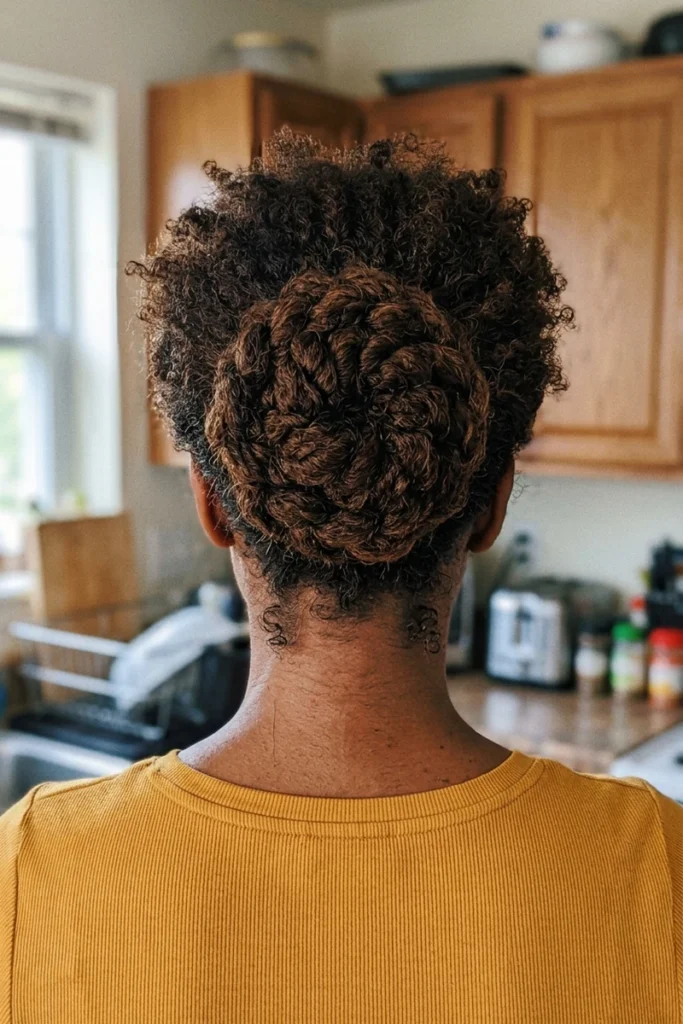
Curly hair actually holds a braided bun especially well, since the natural texture grips against itself and helps the coil stay put with fewer pins than straight hair typically needs. Braid on dry, detangled curls rather than wet ones — wetting curly hair before braiding tends to stretch the curl pattern out, and once the braid comes down, you lose some of the texture that made the bun sit so securely in the first place. If your curls are especially voluminous, you may find you need to braid a bit more tightly than usual just to keep the finished bun from sitting oversized. Our guide to curly hairstyles by curl type explains which styles suit your pattern.
13. Bridal Braided Bun with Flowers or Pins
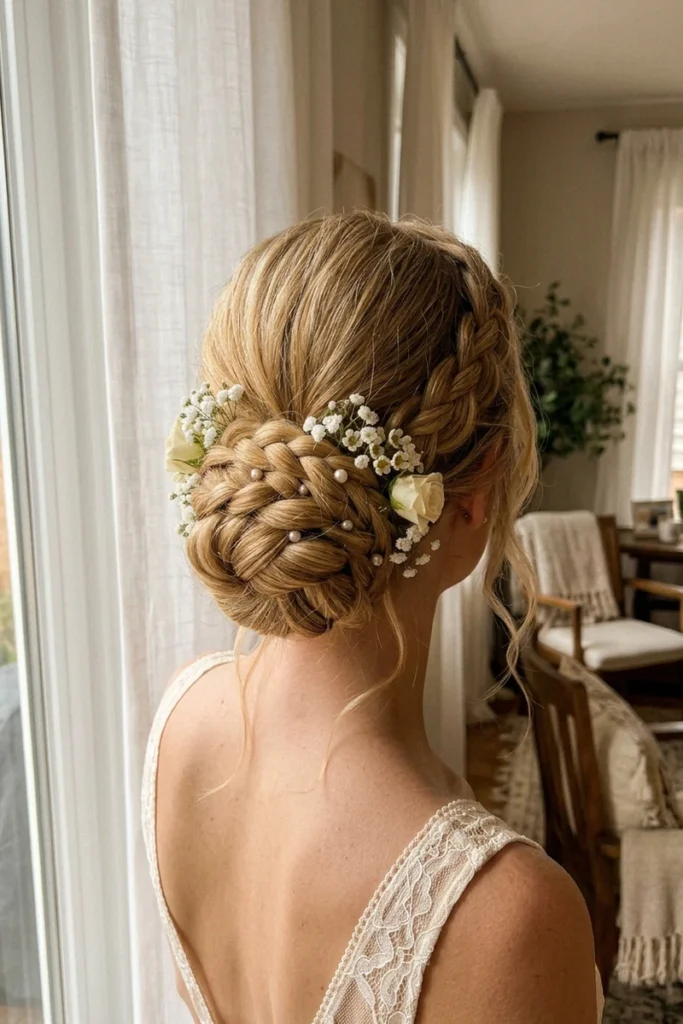
Once the bun is coiled and pinned, tuck small flowers, pearl pins, or a delicate hair vine directly into the gaps between the braid’s rows rather than scattering them across the surface. Because the braid already has texture and structure, the pins and stems have somewhere secure to anchor into, so they’re far less likely to slip loose during a long event than they would be pushed into smooth hair. This is one of the most reliable bridal updos precisely because it’s already secure before you add any decoration — the flowers are finishing touches, not what’s holding the style together. If you’re still choosing your wedding-day look, our bridal hairstyles guide compares 15 styles by what they need to survive, from a veil to a full night of dancing. Our bridal updo guide covers more wedding buns, plus a pin kit and a trial-to-wedding timeline.
14. Workout or Gym Braided Bun
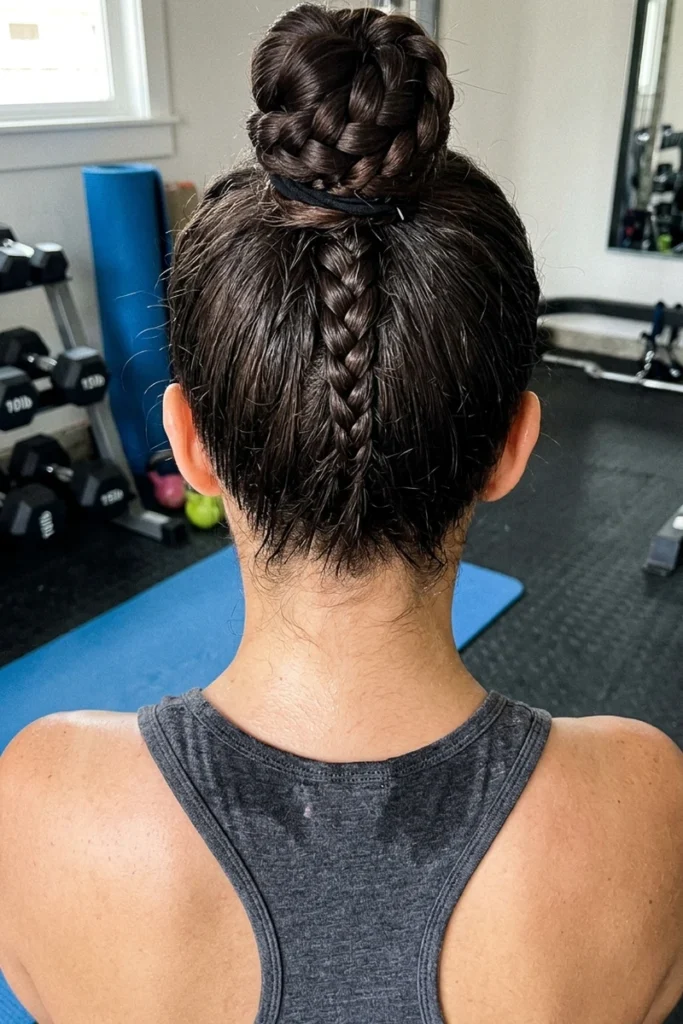
Braid tightly, close to the scalp, and coil the bun higher up toward the crown rather than at the nape, where it would rub against a collar or the back of a hood during exercise. Secure it with several bobby pins in an X pattern plus a small hair tie wrapped around the base of the braid before you even start coiling, which gives you a second layer of hold underneath the pins. This version prioritizes staying put through movement and sweat over looking especially polished, and it holds up through a full workout better than almost any other style on this list. For more styles that stay put during exercise, see our athletic hairstyles.
15. Kids’ Braided Bun
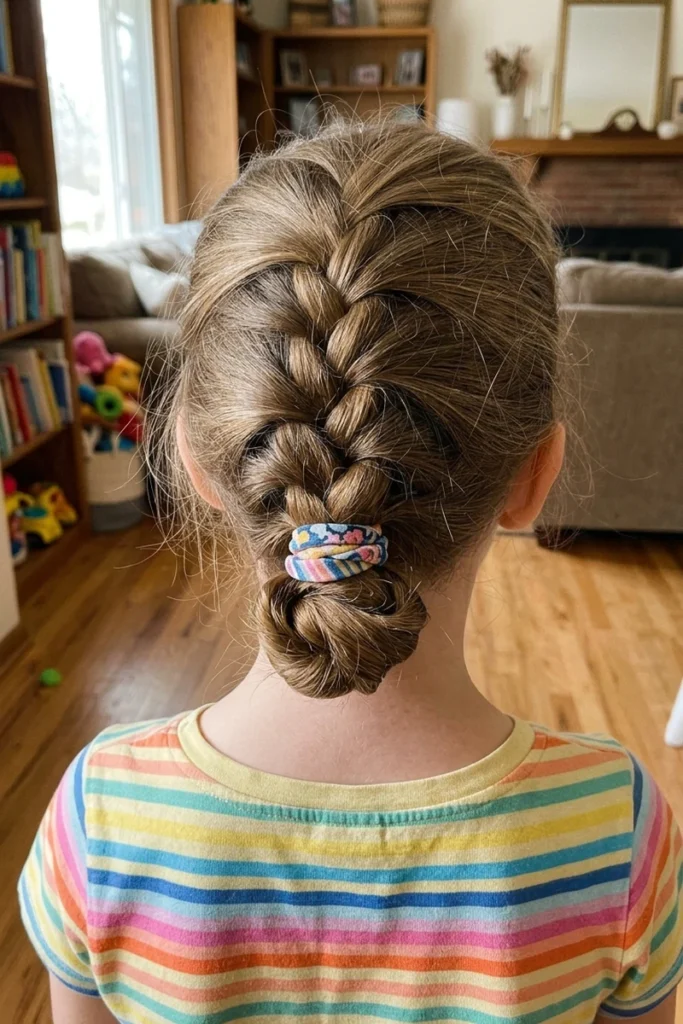
Braid more loosely than you would on adult hair, and secure both the braid and the bun with soft, snag-free elastics rather than tight ones or metal-clasped bobby pins, since children’s scalps are more sensitive to tension and small pins can be uncomfortable — or come loose and end up somewhere they shouldn’t. Keep the bun small and close to the head rather than styled for height, since a smaller, lower bun is both more comfortable for a full school day and less likely to get caught on jacket hoods or playground equipment.
16. Bun With a Braid Wrapped Around It
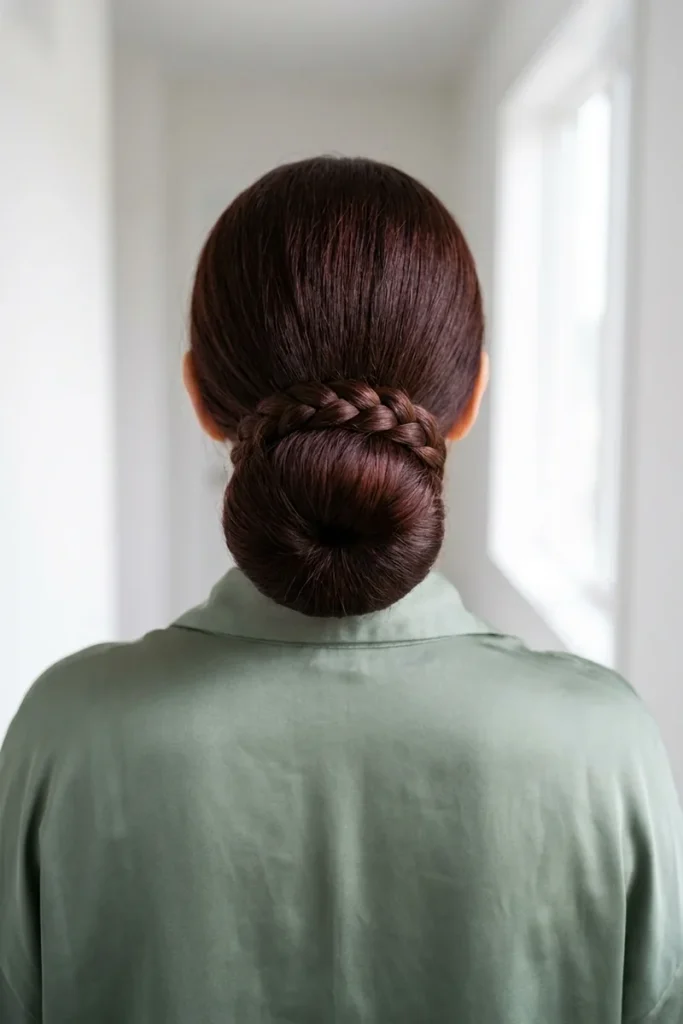
This version looks the most finished of all the braided buns. Instead of braiding the whole tail, you make a plain bun from most of the hair and use one braid as a band around its base, hiding the elastic and the pins.
- Tie a ponytail and take a section about an inch wide from the underside of the tail.
- Twist the rest of the tail into a bun, or wrap it around a donut, and pin it.
- Braid the section you set aside firmly to the ends.
- Wrap the braid around the base of the bun, covering the elastic, and tuck the end underneath.
- Pin the braid in an X at the back and at each side.
On long, thick hair, use two braids, one from each side, crossing at the back. For a fuller look on fine hair, gently pull the edges of the braid wider before you wrap it.
FAQ
Why does my braided bun always come loose?
Almost always because the braid itself was braided too loosely before it was coiled. A loose braid behaves like smooth hair once it’s wound into a bun, giving the pins nothing to grip. Braid firmly, coil the braid rather than just wrapping loose hair, and pin in an X pattern rather than parallel pins for the most secure hold.
Do I need long hair for a braided bun?
Not necessarily. Chin-length hair is usually enough for a small braided knot at the nape, and a half-up version needs even less, since you’re only working with a section of your hair rather than all of it. Full-head braided buns do generally need at least shoulder-length hair to have enough to coil into a visible shape.
How long does a braided bun typically last?
Done correctly — tight braid, proper coil, X-pattern pins — a braided bun often holds through a full day of normal activity without needing to be redone, and workout versions can hold through exercise if secured with an elastic underneath the coil in addition to pins.
Can I do a braided bun on myself without help?
Yes, more easily than most other updos on this list, since coiling and pinning both happen at a spot you can reach and often see in a mirror, unlike styles that require pinning at the very center back of your head by feel.
What’s the difference between a braided bun and a regular bun?
A regular bun is loose hair gathered and wound into shape, while a braided bun is braided first and then coiled. The braid gives the finished bun more texture, more visual detail, and — because of the grip the plaited texture provides — generally a longer-lasting hold than a smooth bun offers.
How do I put a braid around a bun?
Take a one-inch section from under the ponytail before you make the bun, braid it firmly, then wrap it around the base of the bun and pin the end underneath. Style 16 above has the full steps.
How many bobby pins does a braided bun need?
Usually 4 to 6, set in crossed pairs around the bun. Heavy or very long hair may need 8. If the bun still moves, the braid is usually too loose rather than the pins too few.
Closing
Most braided bun tutorials show you one version and assume it’ll work the same way on every hair type, which is exactly why so many people end up thinking the style just doesn’t hold on their hair. It’s rarely the hair — it’s usually the braid tension, the pin pattern, or the specific variation you’re trying. If mid-back length crown braids interest you as well, our 15 crown braid and halo braid styles guide covers a related wrapped-braid technique that works on a similar range of hair lengths and textures. For other ways to build a bun, from sock buns to figure-eights, see our guide to bun hairstyles.