Athletic Hairstyles Matched to Your Workout and Sweat Level
Athletic hairstyles get judged by how they look in a locker-room mirror, but that’s not the test that matters. The real test is what happens once sweat starts and your head is actually moving — and that’s a construction problem, not a styling one. A style that holds through a slow yoga flow can be sliding by minute ten of a HIIT class, not because the technique was wrong, but because it was never built to survive that much sweat or that much motion in the first place.
That’s the real decision behind every athletic hairstyle: not which look you want, but which build survives the specific combination of sweat and movement your workout produces. Below are 20 styles, grouped by workout type and explained by how they’re actually constructed, so you can pick the one built for what you’re about to do — not just the one that photographed well standing still.
These 20 mechanisms assume you have enough length to braid, twist, or gather — if you’re working with a pixie, bob, or lob that’s still too short for that, our Short Hair Workout Styles guide covers the same problem built for shorter length instead.
Before You Start: The Two Decisions Behind Every Athletic Hairstyle
1. Is the style anchored at the scalp, or just at the ends? A ponytail or a claw clip has exactly one point of tension holding the whole thing on — the elastic or the clip itself — so once sweat or movement tests that point, it’s the only thing standing between you and a redo. A braid spreads that tension across every cross along its length instead of concentrating it in one place, which is why braided-at-the-root styles consistently outlast single-point styles once a workout gets going. Decide this before you pick a look, because no amount of product fixes a single point of failure once you’re moving.
2. How much sweat and movement will this specific session actually produce? Not your hardest imaginable workout — the one you’re doing today. A style engineered for an hour of contact sport is more structure than a 20-minute walk needs, and a style built for a slow stretch class will not survive a spin class no matter how tightly you pin it beforehand.
Athletic Hairstyles by Workout Type
Twenty builds, grouped by what they actually have to survive. Find your workout type below, then pick the mechanism that matches it — not just the shape you liked in a photo.
Low-Sweat, Steady Movement
Yoga, walking, most weight training, a slow bike ride — sweat stays light and your head barely moves, so even single-point mechanisms hold up fine here.
1. Simple High Ponytail
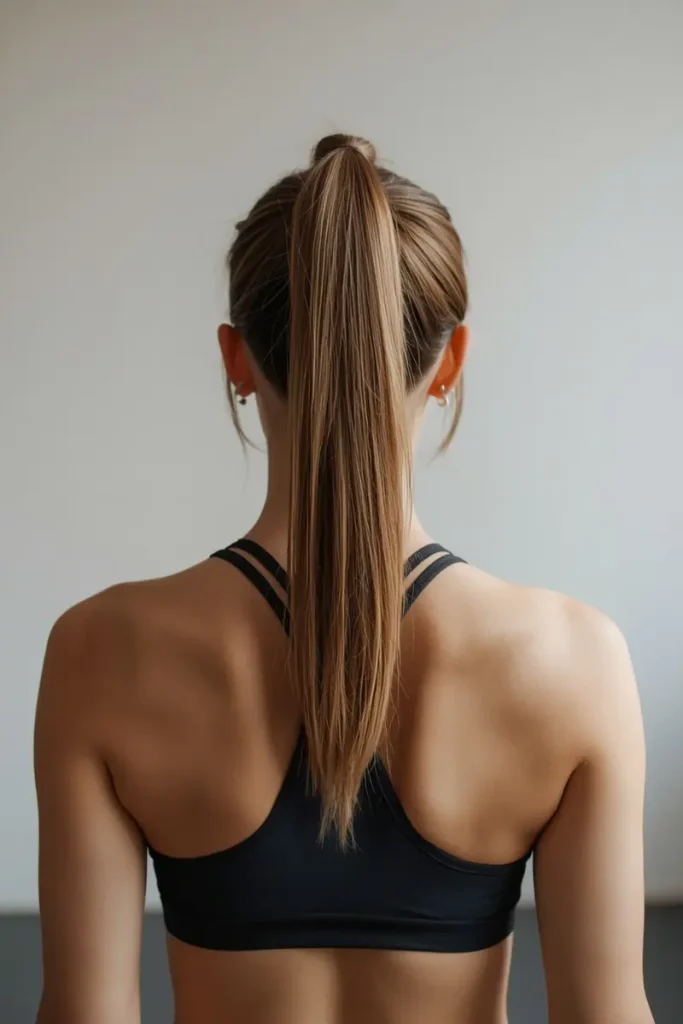
Gather all the hair at the crown with a single elastic — one point of tension, nothing sectioned or pinned. It’s the fastest mechanism on this list to build, and also the first to fail once heavy sweat or repetitive bounce shows up, which is exactly why it belongs in the low-sweat category rather than anywhere higher up this list. When the head barely moves, that single point of tension never actually gets tested. For ways to lift a high ponytail so it does not droop, see our guide to ponytail hairstyles. Best for: yoga, Pilates, or a casual walk.
2. Classic Low Bun
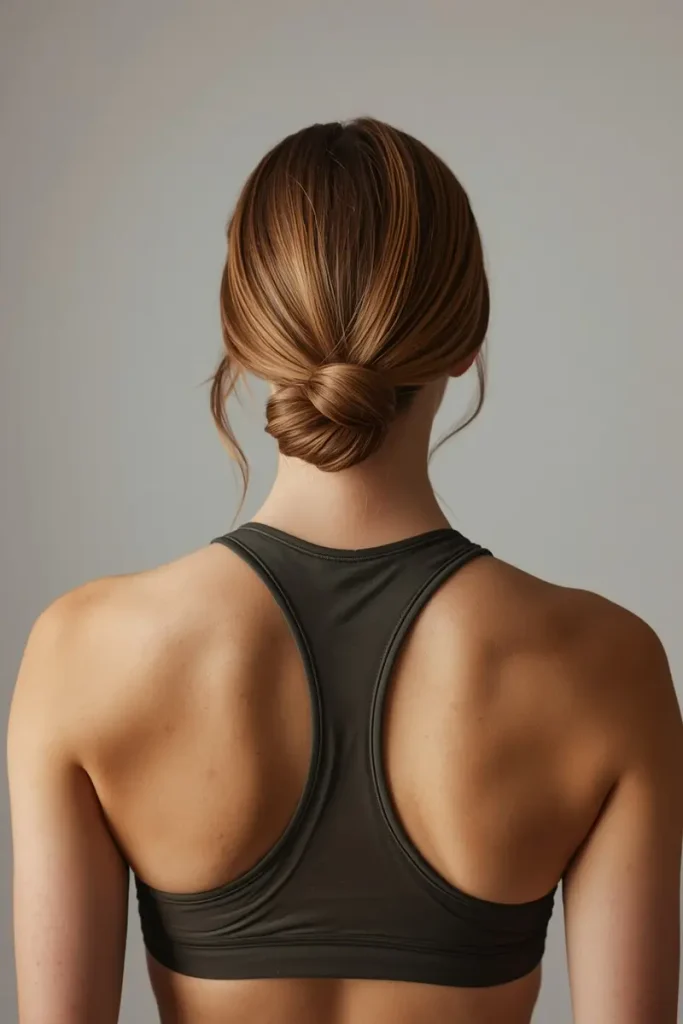
Twist the gathered ponytail into a rope and wrap it around its own base, pinning the tail underneath — a tighter, more compact version of a standard twist-and-wrap bun. Sitting low and close to the head means it doesn’t add height that gets in the way during floor work or lying positions. The wrap gives it a second point of contact against the scalp that a plain ponytail doesn’t have, which is why it holds slightly longer once light sweat starts, even though it’s still not built for real movement. Best for: strength training or seated workouts like rowing.
3. Half-Up Claw Clip
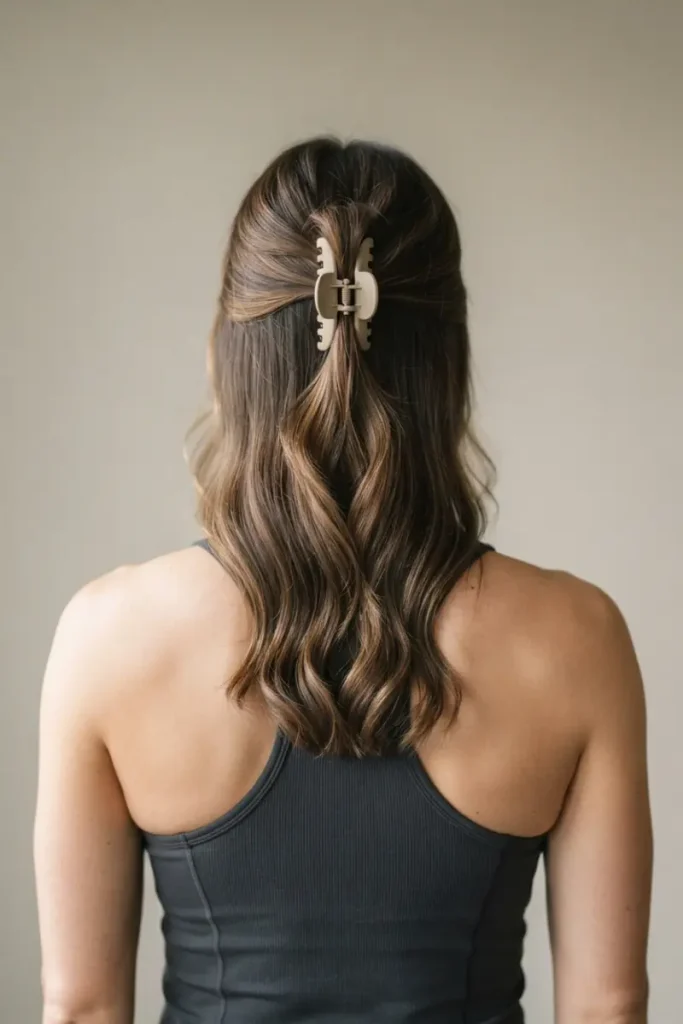
No braiding or twisting at all — just the top section gathered and clamped with a claw clip, the rest left down. It’s the lowest-commitment mechanism here, with a single clip doing the entire job. That’s fine when nothing is testing the clip’s grip, but any real bounce or rotation works it loose within minutes, which is why this stays confined to the steadiest sessions on the list. Best for: light cardio, stretching, or a quick home workout.
4. Loose Side Braid
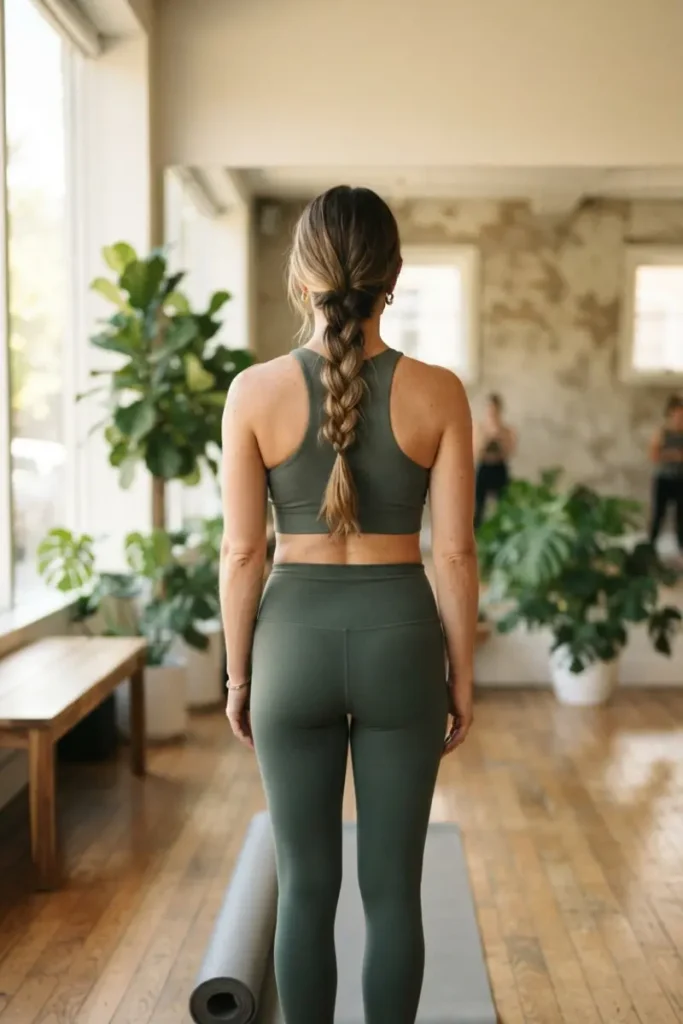
A three-strand braid worked loosely rather than pulled tight at each cross, left to drape over one shoulder. Because the strands aren’t pulled taut, the braid is holding its own shape more than it’s gripping the scalp — which is exactly right for gentle movement, but wouldn’t survive anything with real bounce. Best for: walking, easy cycling, or barre.
5. Sleek Low Ponytail
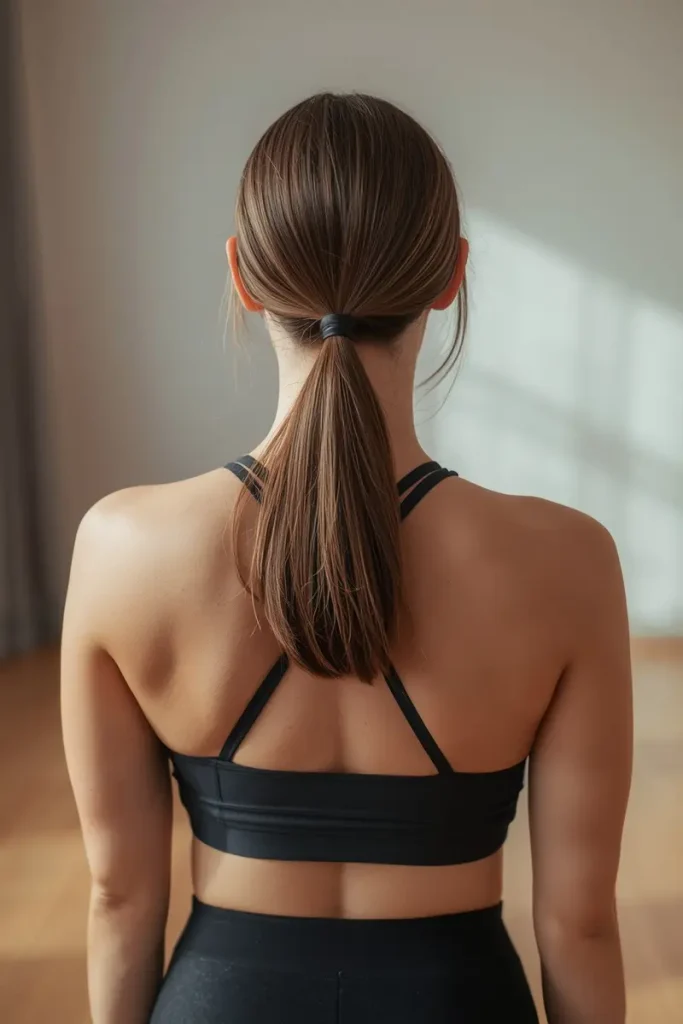
Smoothed back with a light styling product and secured low at the nape instead of high on the crown — the same single-elastic mechanism as a high ponytail, just repositioned. Sitting lower means less leverage for the tail to swing, so it stays smoother through gentle movement, though it’s no more sweat-resistant than its high counterpart — a ponytail is still a ponytail regardless of height. Best for: Pilates or a studio class where you want to look put-together before and after.
6. Twisted Half-Up
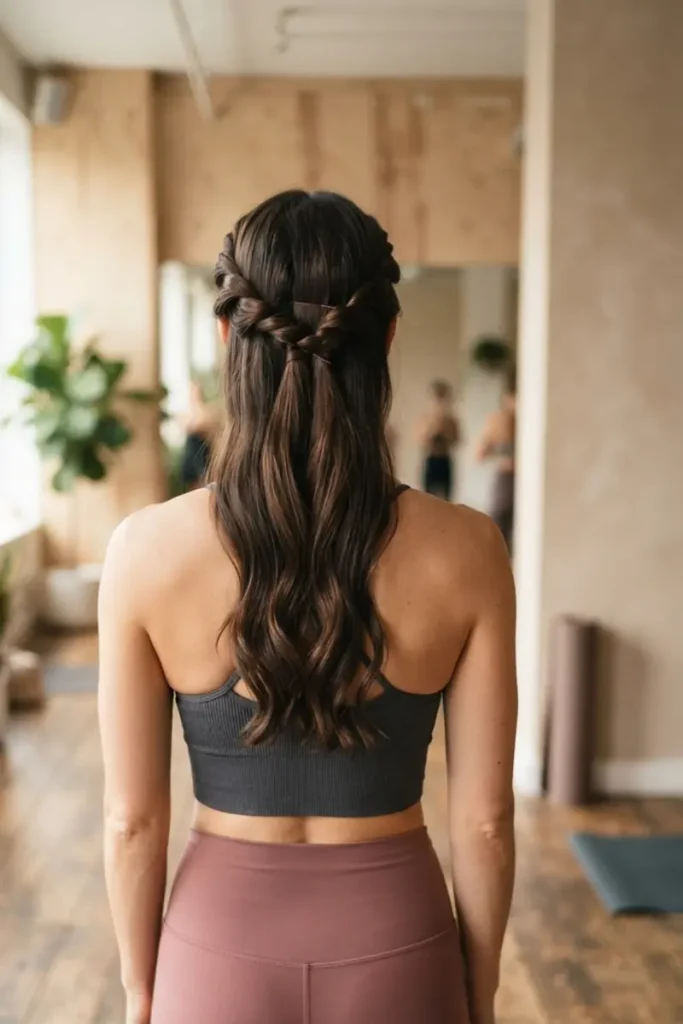
Two small sections twisted back from the temples and pinned together at the crown, with the rest of the hair left hanging. The twists add just enough grip at the pin point to outlast a plain claw clip, without the time investment of a full braid. Best for: light weights or a slow flow yoga class.
High-Sweat Cardio
Running, HIIT, spin, dance cardio — hairline sweat is the real enemy here, not the workout itself. Every mechanism in this section anchors at the root instead of relying on a single elastic.
7. Braided Top Knot
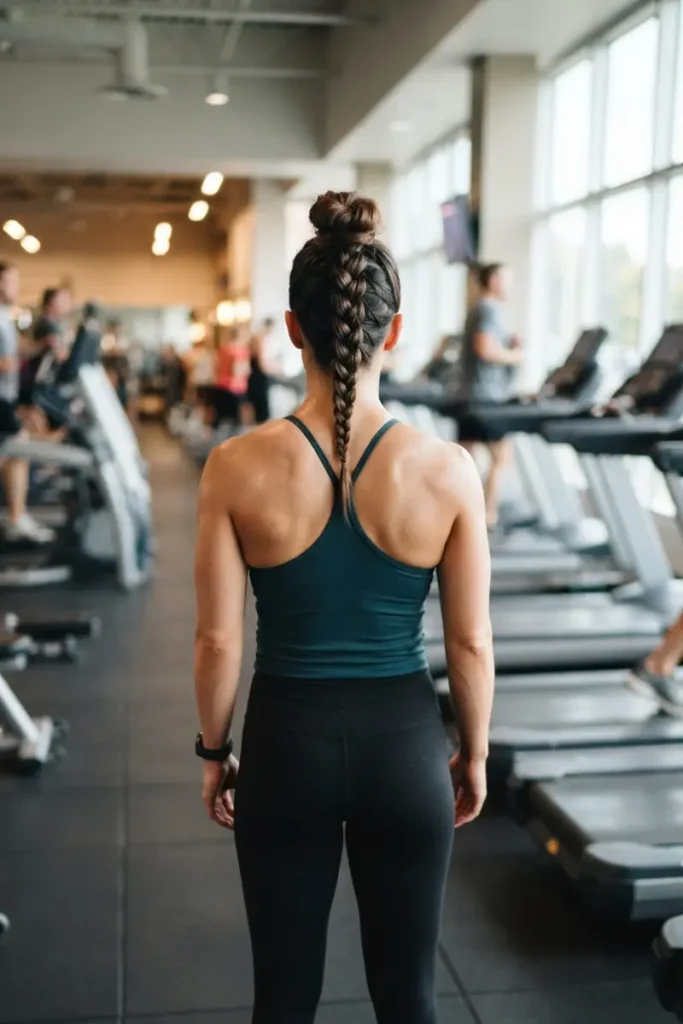
A single braid worked from the hairline back, then gathered into a bun at the crown instead of left loose. Braiding at the root is what changes everything: the hairline itself is anchored, not just the ends, so hairline sweat has nothing loose to slide against. Best for: running, HIIT, or spin over 30 minutes.
8. Double Dutch Braids into a Ponytail
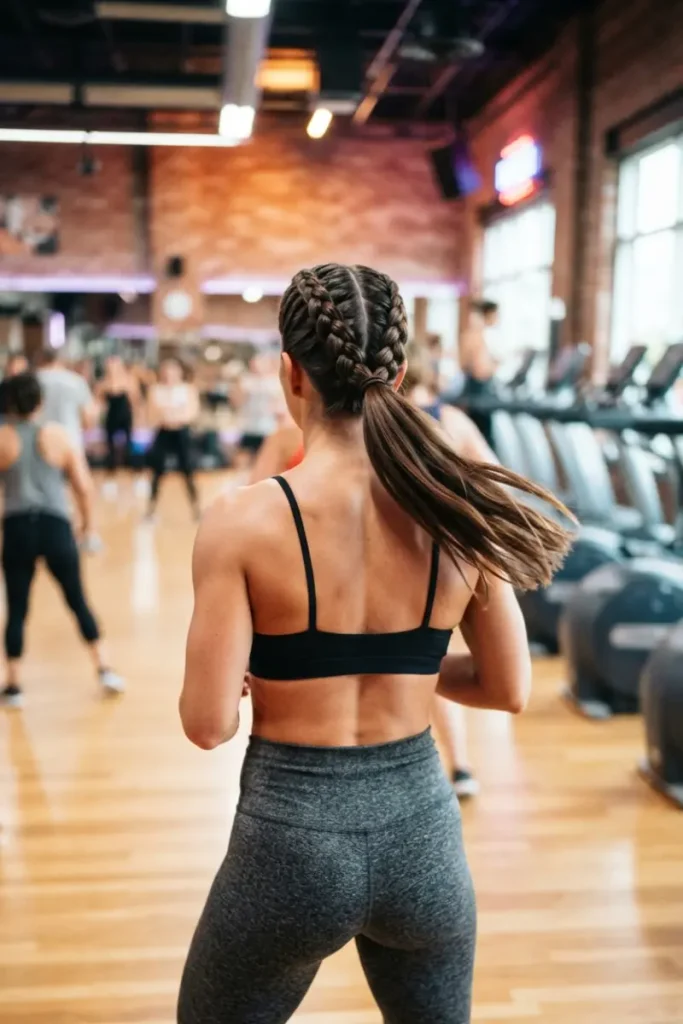
Two Dutch braids — the kind that sit raised on top of the hair rather than sunk into it — worked from each side of the hairline and joined into a single ponytail at the back. Because Dutch braids sit proud of the scalp instead of flat against it, they hold their shape even as the hair underneath gets damp, unlike a flat French braid that can start looking limp under sweat. Best for: dance cardio or interval training with a lot of head movement.
9. Fishtail Braid Pulled Back
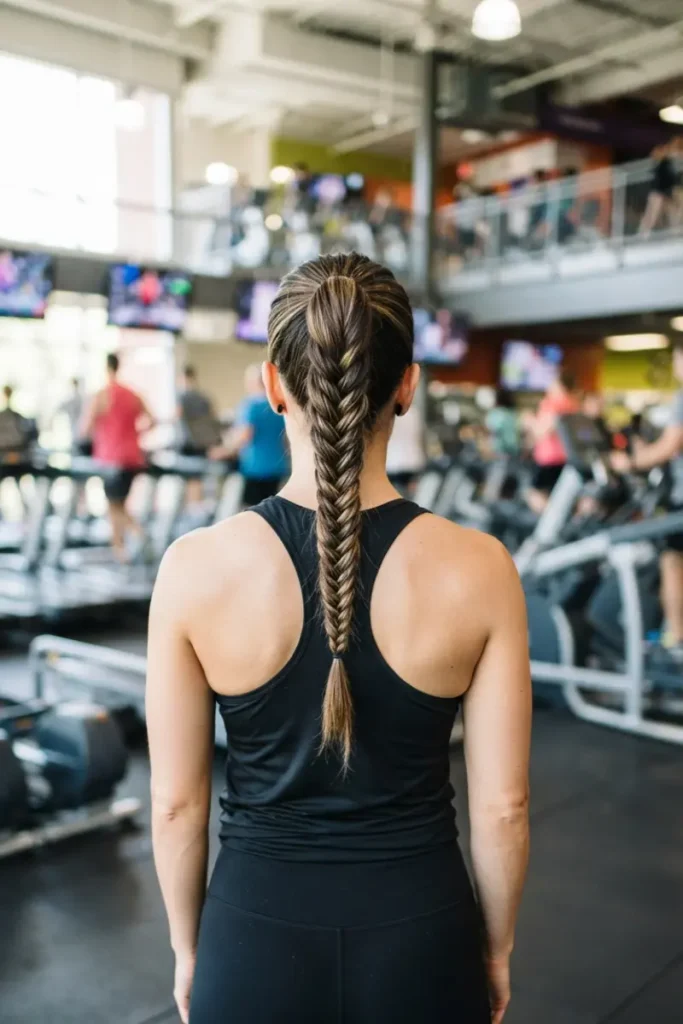
A two-strand fishtail, tighter and more textured than a standard three-strand braid, worked from a high ponytail base rather than straight off the scalp. Because it starts from an already-secured ponytail, it’s reinforcing the ponytail rather than replacing it — which is why it keeps its shape through longer sessions even after individual flyaways start to show. Best for: longer cardio sessions that need to still look intentional afterward.
10. Twisted Space Buns
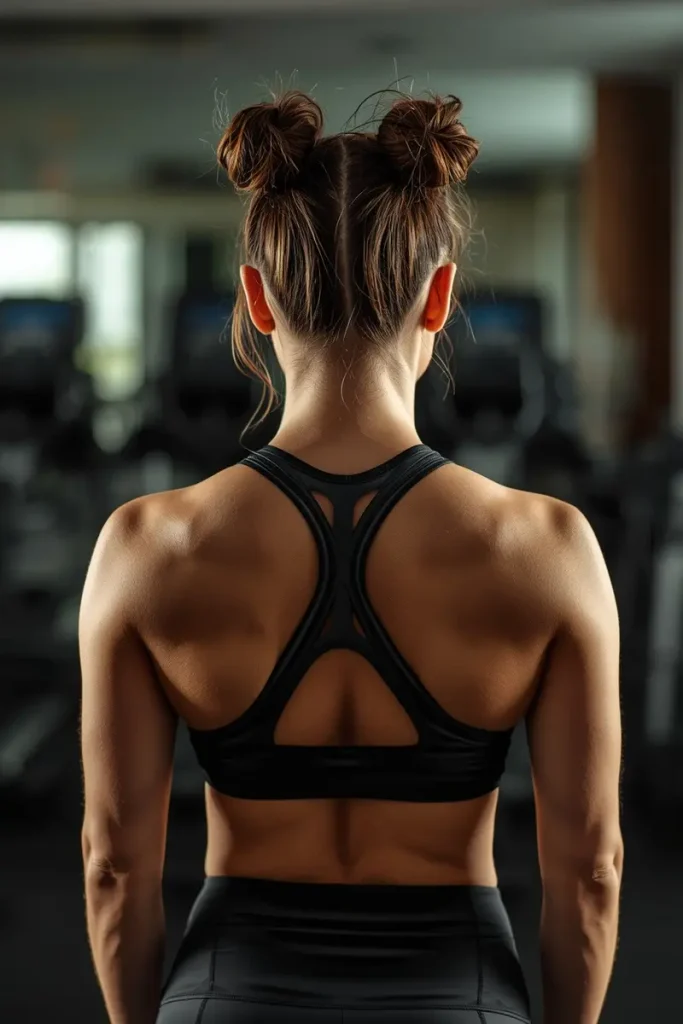
Hair is center-parted into two sections, each one twisted into a rope and wrapped into a small bun on either side of the crown. The twist grips tighter under sweat than a plain wrap would, and splitting the hair into two smaller buns means each one carries less weight and sags less than a single large bun would. Best for: HIIT or circuit training with a lot of up-and-down movement.
11. French Braid into a High Bun
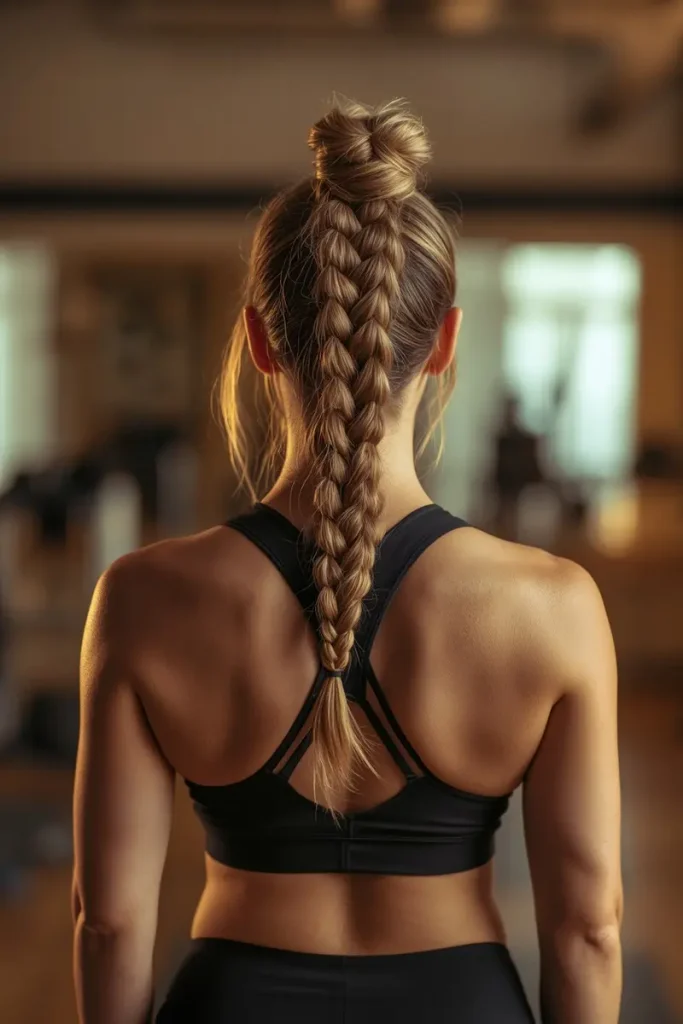
A French braid — picking up new sections from the scalp as the braid progresses — worked from the crown down into a ponytail, then coiled into a bun at the top of the head. Picking up sections as you go is what anchors this to the scalp in a way a plain braid can’t, and finishing high keeps the whole structure clear of a sweaty neck. Best for: hot yoga or sessions where nape heat is the main complaint.
12. Braided Half-Up Ponytail
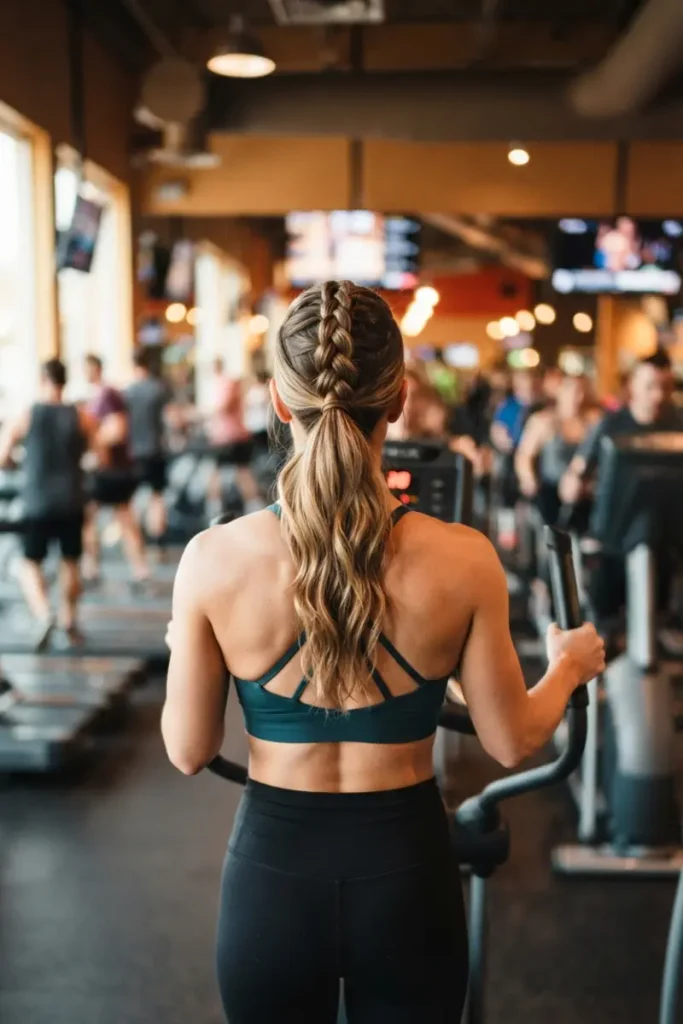
Only the top section is braided, feeding directly into the base of a high ponytail, while the rest of the hair hangs free from that same point. The braid does the anchoring work at the hairline; the loose length below is just along for the ride and doesn’t need reinforcing of its own. Best for: running or elliptical sessions under 45 minutes.
13. Slicked-Back Bun with a Braid Wrap
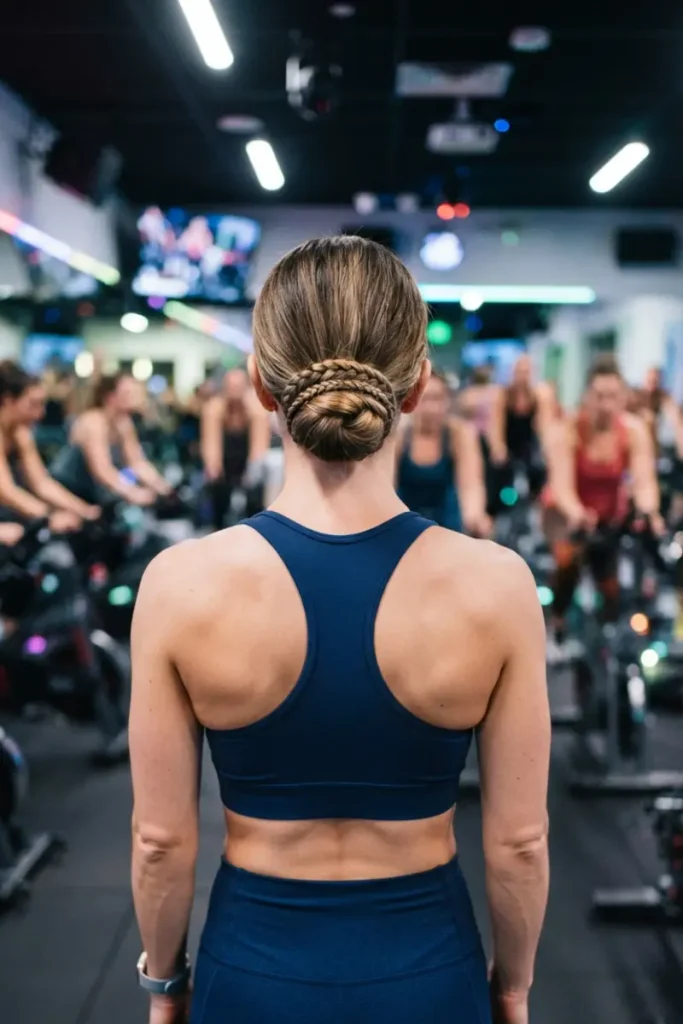
A standard low or mid bun, but instead of a plain hair tie showing at the base, a thin separate braid is wrapped around it and tucked in. The braid wrap adds a second layer of grip exactly where a plain bun typically loosens first — the base — without changing how the rest of the bun is built. Best for: spin class, where constant forward lean puts pressure on the nape.
Contact and High-Rotation Sports
Soccer, basketball, martial arts, gymnastics — multi-directional pulling means a single tie or clip is the first thing to fail. Every mechanism here removes loose ends and anchors as close to the scalp as possible.
14. Double Dutch Braids (Full Length)
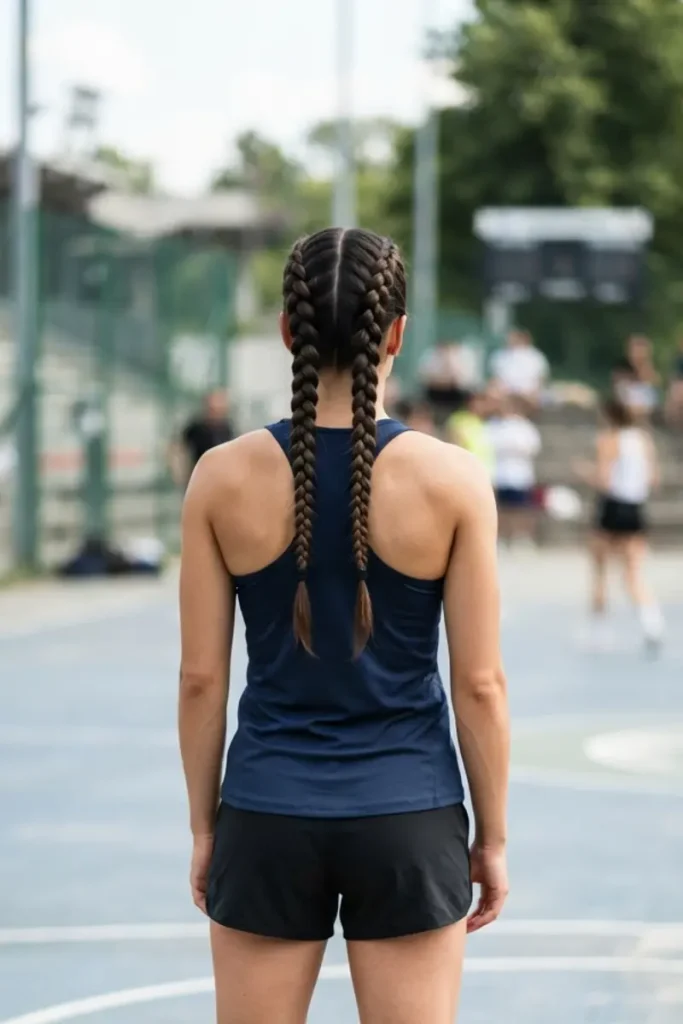
The same raised Dutch-braid mechanism as above, but taken all the way to the ends instead of gathered into a ponytail partway down. With no loose length left dangling, there’s nothing for an opponent’s hand, a ball, or a helmet strap to catch on — the entire structure is braided, not just the section nearest the scalp. Best for: soccer, basketball, or sports with sudden direction changes.
15. Cornrows into a Low Bun
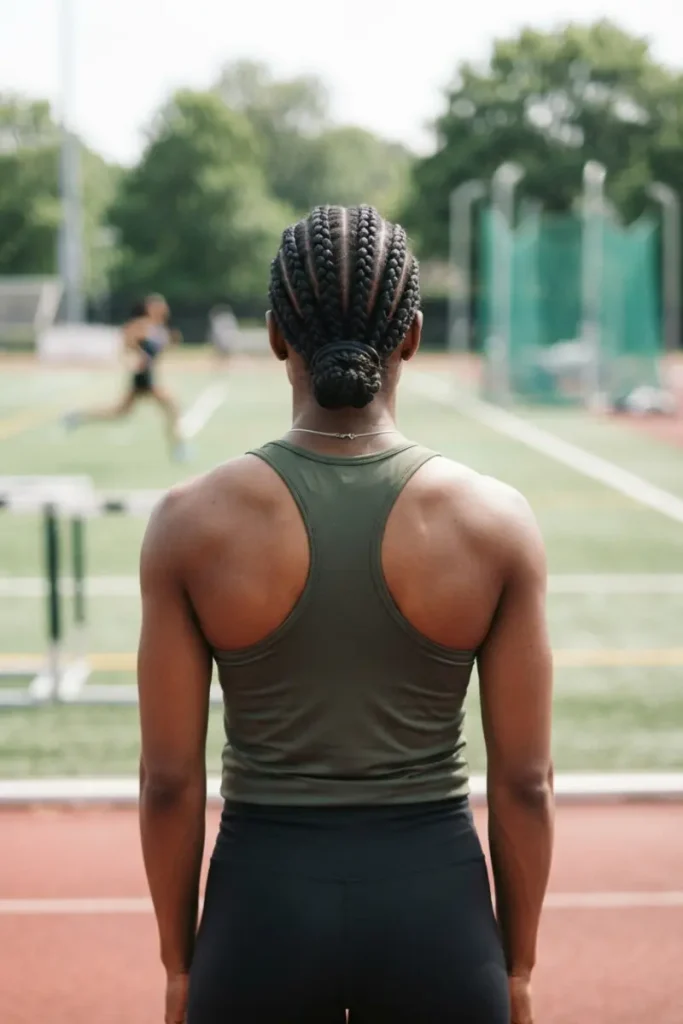
Cornrows braided directly against the scalp in straight or curved rows, with the ends gathered into a small low bun once the rows are finished. Because cornrows sit flatter against the head than any raised braid, this is the lowest-profile option on the entire list — which matters specifically for sports involving helmets, headgear, or frequent head-to-head contact. Best for: martial arts, wrestling, or gymnastics.
16. Braided Crown
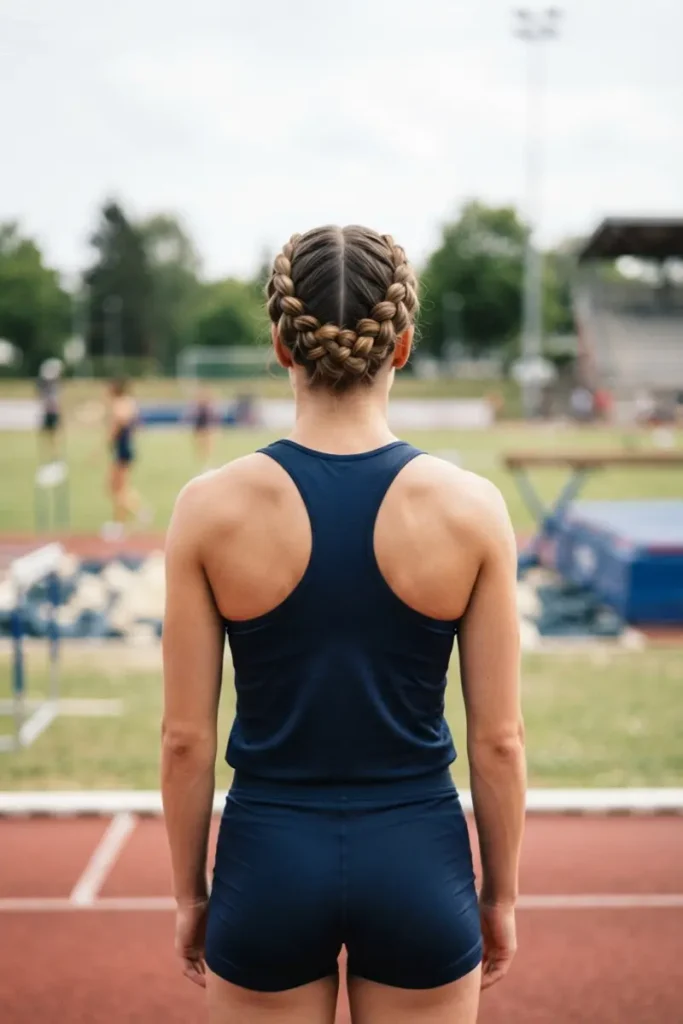
A braid — or two, meeting in the middle — wrapped around the head like a halo instead of gathered at the back at all. Removing the gathering point removes the single weakest spot most updos share: there’s no base for tension to concentrate on, since the braid anchors into itself the entire way around. Best for: gymnastics or dance where the head moves upside-down or sideways.
17. French Braid Pigtails
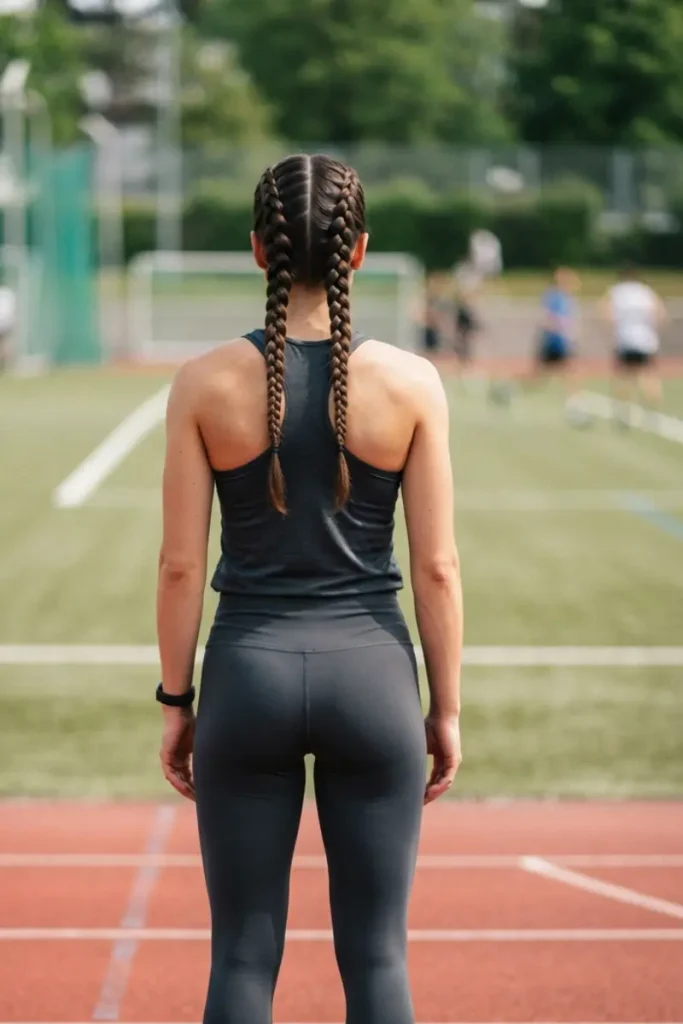
Two separate French braids, one from each side of the front hairline, running down either side of the head rather than one braid down the back. Splitting the hair into two braids means each one carries half the tension a single braid would, so a hard pull on one side doesn’t strain hair the way it would in a single center braid. Best for: youth sports or activities with a lot of ducking and lateral movement.
18. Braided Bun with Pin Reinforcement
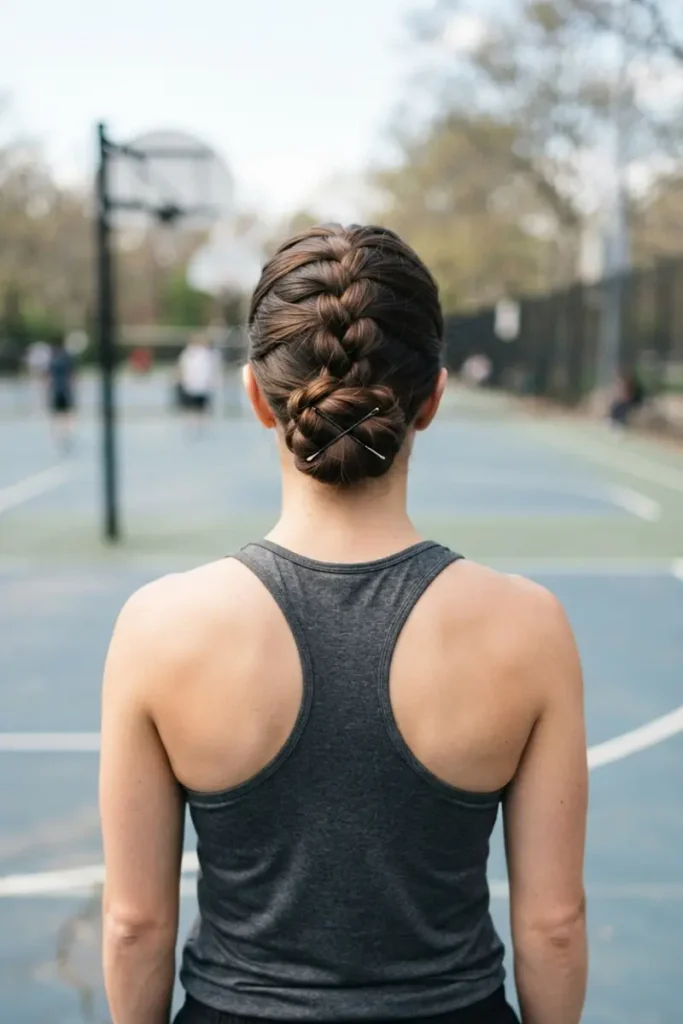
A standard braided bun, but finished with two or three bobby pins crossed directly through the base rather than relying on the braid and elastic alone. The pins are doing real structural work here, not just tidying flyaways — they’re what stops the bun from loosening under the specific up-and-down force that jumping puts on a base. Best for: basketball or volleyball, where repeated jumping tests the base.
19. Triple Braid Bun
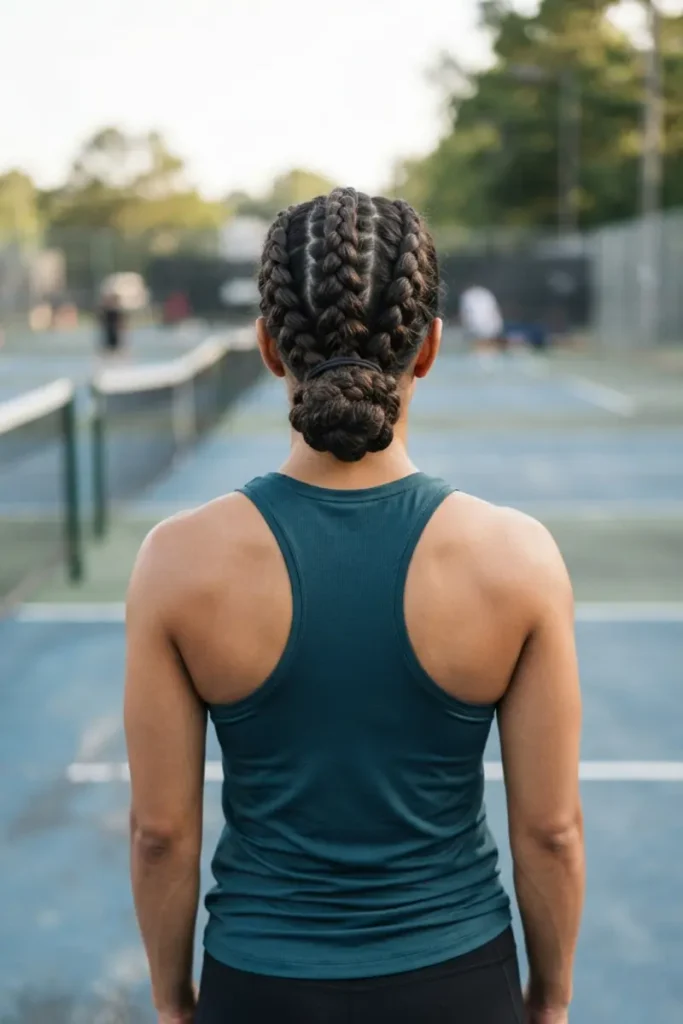
Hair divided into three separate sections, each braided on its own, then the three braids wound together into a single bun. Because three independent braids are holding the structure rather than one, a single braid loosening doesn’t unravel the whole bun the way it would in a one-braid style — it’s redundancy built into the construction itself. Best for: longer matches or tournaments needing hours of hold.
20. Underbraid into a Ponytail
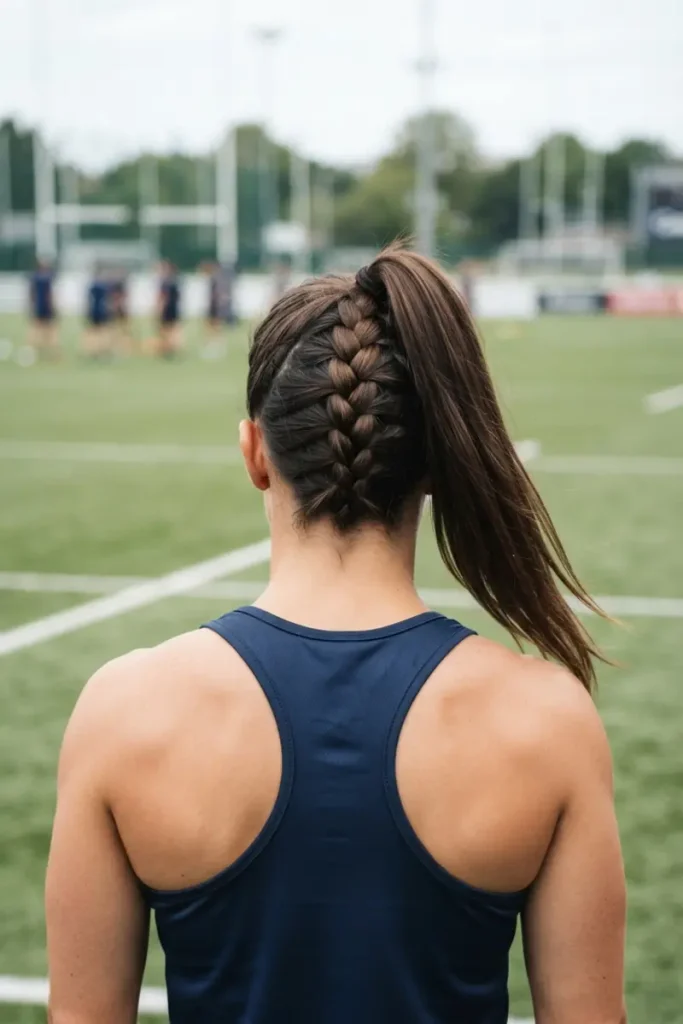
A braid worked from underneath sections of hair rather than picking up from on top, finishing into a high ponytail. From the front it looks like an ordinary braid, but sitting underneath means it lies flatter against the scalp with less texture standing proud — which gives an opponent’s hand less to actually grab during close contact. Best for: rugby, martial arts, or grabbing near the head.
FAQ
Does braiding actually make you sweat less?
Not less overall, but braiding at the root keeps sweat from making loose hair stick to the neck and face, which is usually what feels unbearable mid-workout, not the sweat itself.
Why does a ponytail loosen faster than a braid under the same workout?
A ponytail has exactly one point of tension — the elastic. A braid distributes tension across every cross along its length, so no single point is doing all the holding, which is why it consistently outlasts a ponytail under the same sweat and movement.
Is it bad to work out with hair that’s already damp before you style it?
It won’t damage the hair, but a style built on damp hair loosens further as it finishes drying during the workout — that shows up as slipping partway through the session rather than right at the start.
Do outdoor sports need a different style than an indoor gym class?
Not because of the setting itself, but outdoor sessions often add wind and longer duration on top of sweat and movement, and both of those favor braided-at-the-root styles over anything relying on a single elastic.
Can a workout style go straight into the shower without redoing it?
Braided styles generally hold up fine under water. Twist-and-wrap buns and loose braids typically loosen enough that they need to be rebuilt anyway once they’re wet.
Bottom Line
However sweaty or high-contact the session, the style that survives it is decided by where it’s anchored — at the scalp or just at the ends — not by how good it looked in the mirror beforehand. If you want to build any of the braided options above from scratch, our French Braid Hairstyles and Dutch Braid Hairstyles guides cover the base techniques these workout styles borrow from. And if a bun feels like the right finish but you want more build options, our Bun Hairstyles guide covers 15 mechanisms to choose from instead.