Waterfall Braid Hairstyles: The One French Braid Change That Creates the Cascade
People treat the waterfall braid like it’s a different species from a French braid. It isn’t. It’s a French braid with one deliberate change: instead of picking up the bottom strand at each stitch, you let it go. That released strand hangs free while a fresh piece from the scalp takes its place — and that hanging strand is the entire “waterfall” effect. Nothing else about the technique changes. If you can French braid, you already know how to do this; you’re just choosing not to catch one strand each time.
Below are 14 waterfall braid hairstyles built around real technique differences — not the same braid photographed from 14 angles.
Before You Start
Texture decides whether this works in ten minutes or forty. Freshly washed, silky hair has almost nothing for the dropped strands to grip, so they slide back into the braid as fast as you release them. Second-day hair, a texturizing spray, or even a light dusting of dry shampoo gives each strand enough friction to actually hang where you put it. This matters more for a waterfall braid than for almost any other style, because the whole point is strands staying out of the braid on purpose.
Direction changes the entire look, not just the angle. A waterfall running horizontally across the back of the head reads as a headband. The same braid angled diagonally from temple to opposite shoulder reads as an off-duty, undone style. Decide the direction before you start sectioning — recovering from the wrong angle halfway through means starting over.
1. The Straight-Across Classic
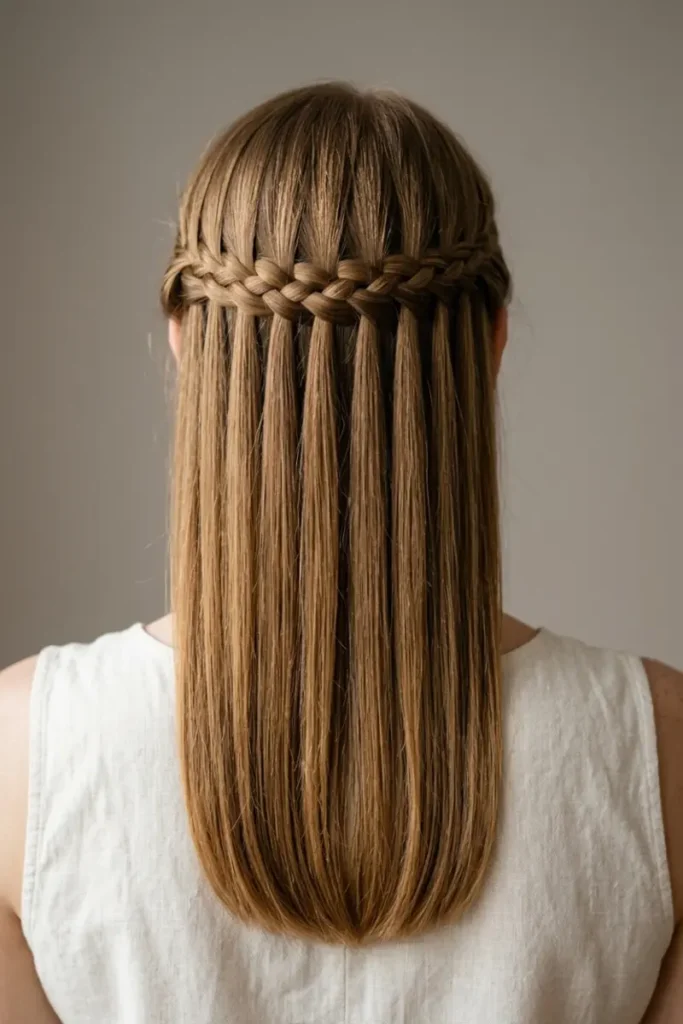
Start at one temple and braid horizontally toward the opposite ear, dropping a fresh strand at every stitch. This is the version most people picture, and it earns that status honestly: the dropped strands fall in a clean, even curtain because gravity pulls them straight down along a level braid line. Pin the tail behind the ear it ends near.
2. The Diagonal Drop
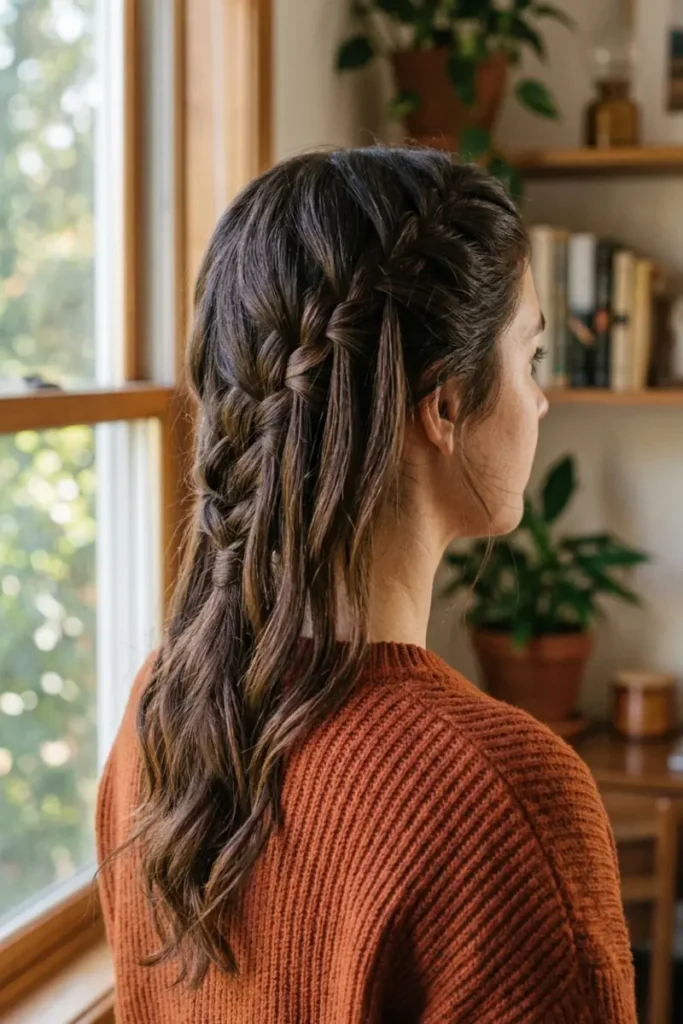
Same technique, completely different silhouette: instead of braiding level across the head, angle it from a high temple down toward the opposite low nape. The cascade strands fall at a slant instead of straight down, which reads far less “tutorial” and far more like you just happen to have great hair. This is the version that photographs best from a three-quarter angle rather than straight-on from behind.
3. Two Rows, Doubled Cascade
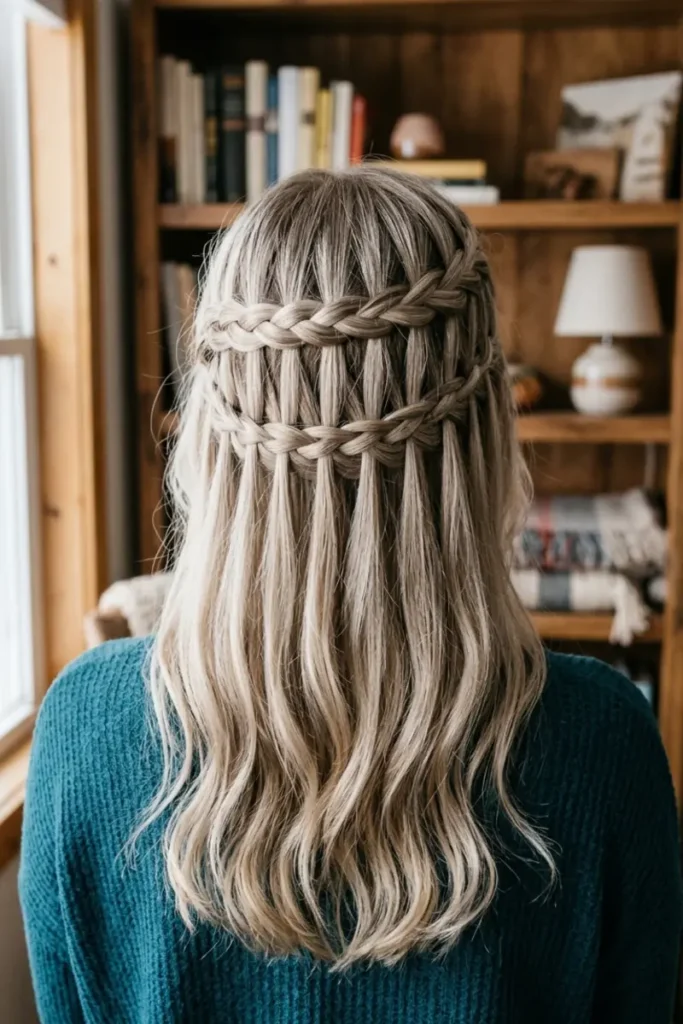
Finish one waterfall braid across the head, then start a second row directly beneath it — using the strands the first braid just dropped as the source hair for the second. The result is two parallel curtains instead of one. Section the space between the rows with a clip before you start the second braid, or the two rows blur into each other instead of reading as distinct layers.
4. Full Crown, No Beginning or End

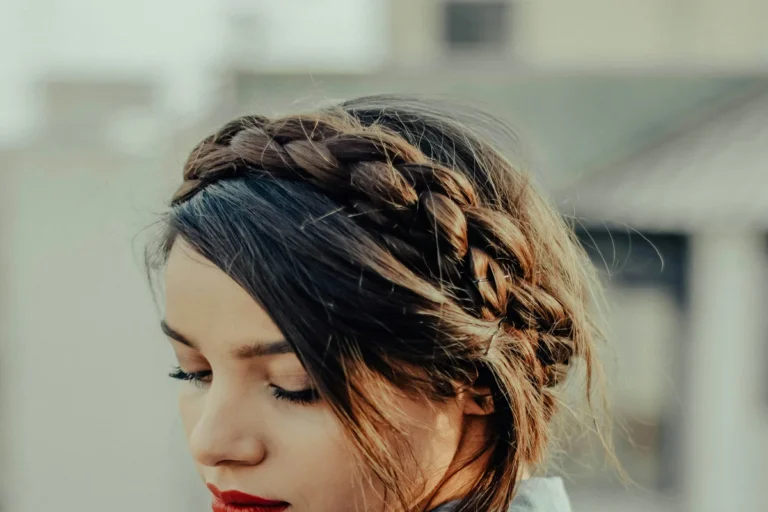
Work the waterfall braid all the way around the head until it meets its own starting point, so there’s no visible “start” or “end” — just a continuous ring of cascading hair. This one takes real patience with tension consistency, since any spot where you braid tighter or looser than the rest will show as an obvious seam once the circle closes.
5. Braid That Becomes a Ponytail
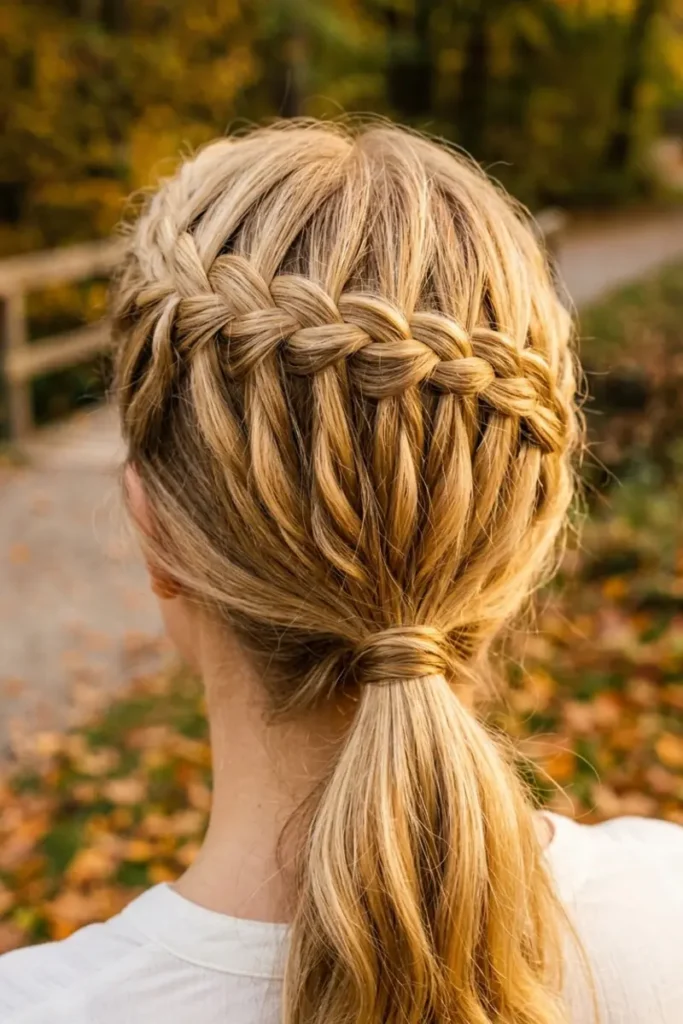
Complete a full waterfall braid across the crown, then gather everything — the braid, the dropped strands, all of it — into a low ponytail at the nape. The braid sits across the top like a textured band, and from the front it looks like a completely different, more polished hairstyle than a simple ponytail, for maybe two extra minutes of effort.
6. Pancaked for Maximum Drama
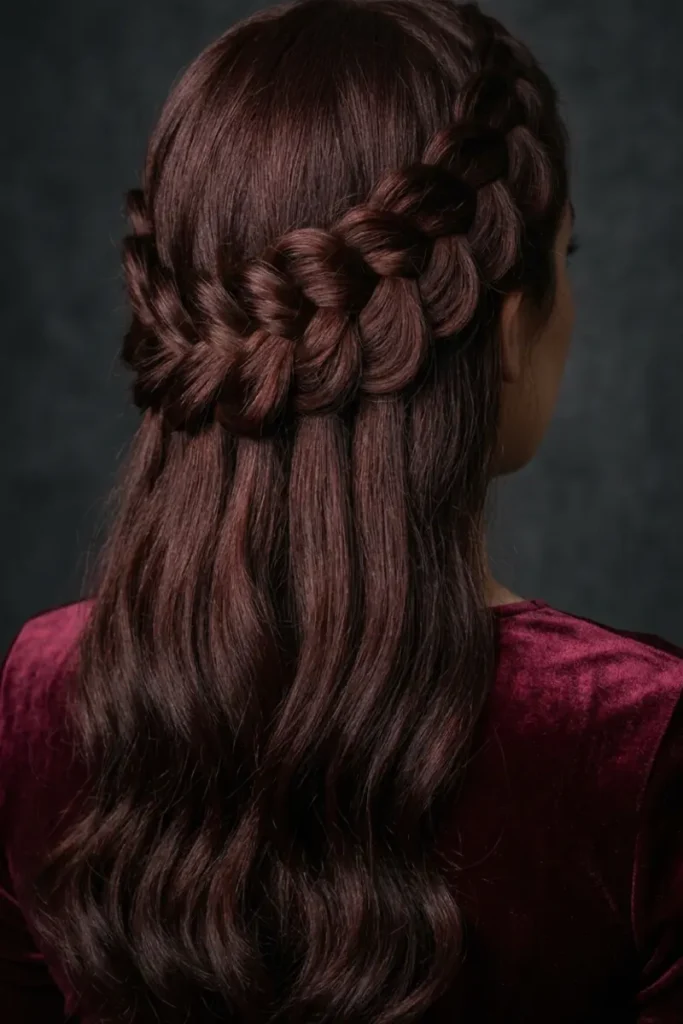
After finishing the braid, gently pull each stitch outward from both sides — the same “pancaking” trick used to widen fishtail braids. A pancaked waterfall braid can end up nearly double its original width, which makes the cascade strands look proportionally larger and the whole style read as more dramatic without adding a single extra step to the technique itself.
7. The Waterfall-Fishtail Hybrid
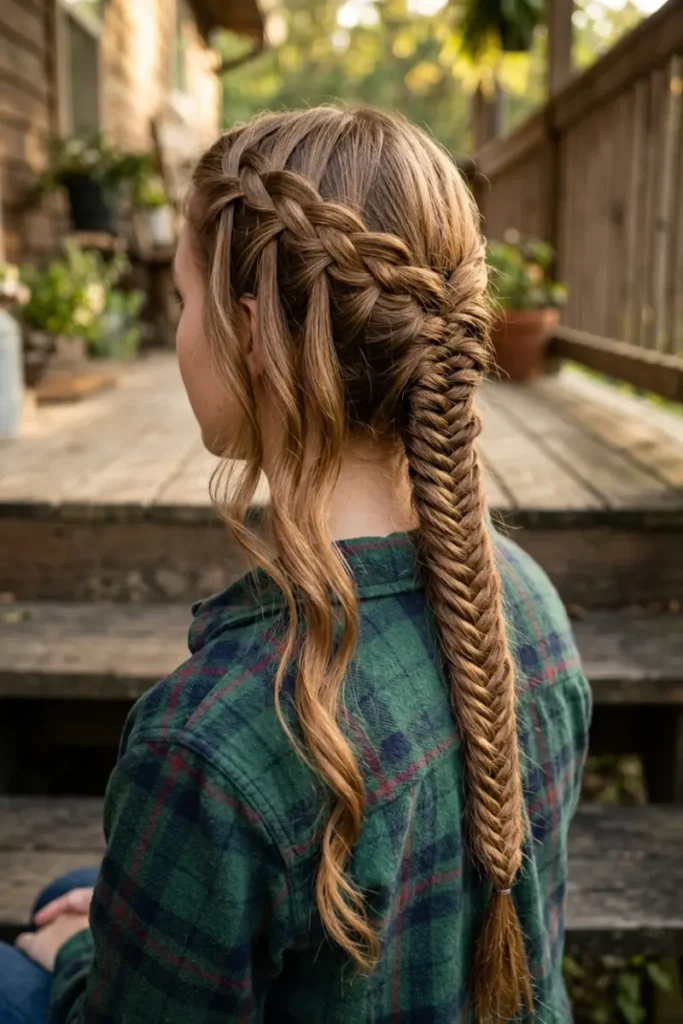
Braid a standard waterfall from one temple toward the center back, then switch techniques entirely and finish the remaining length as a fishtail braid. The dropped waterfall strands frame the fishtail section like a border, and you end up with two genuinely different braid textures in one style instead of one technique stretched to look like variety.
8. Waterfall Wrapped Into a Bun
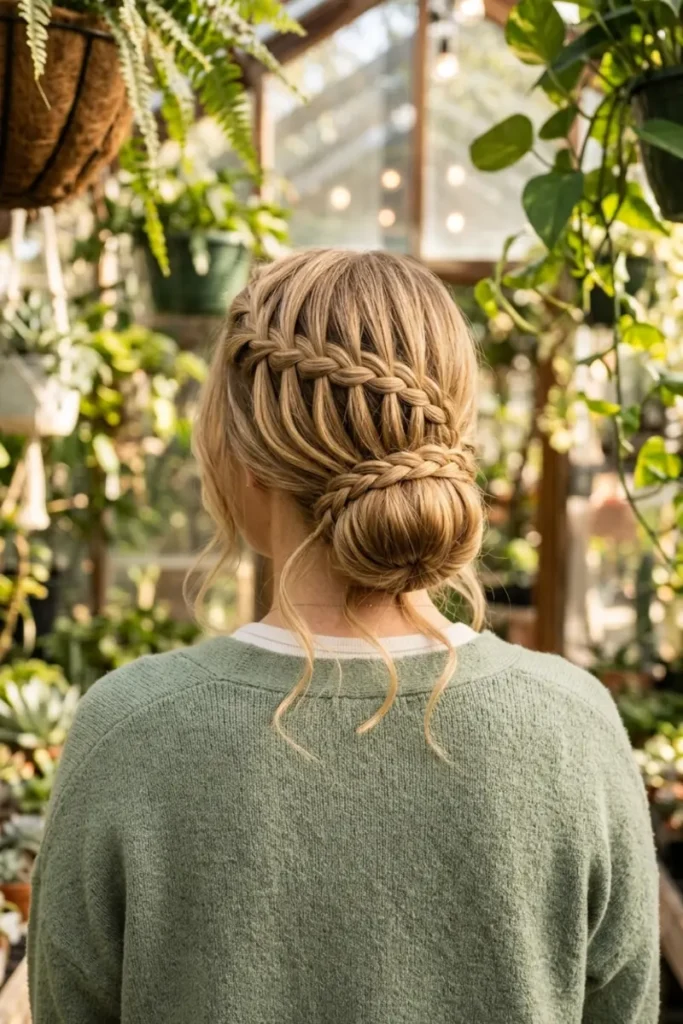
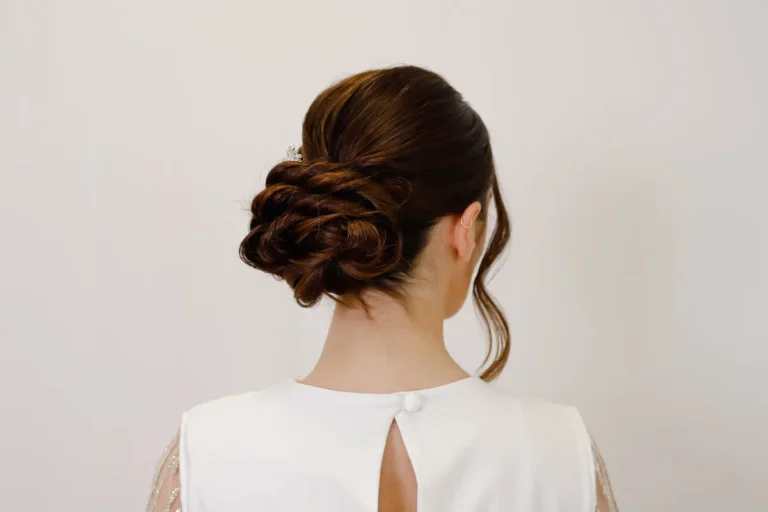
Braid a side waterfall as usual, but instead of pinning the tail flat, wrap it around the base of a low bun and secure with pins. The cascade strands drape around and just beneath the bun, softening what would otherwise be a fairly severe, structured shape.
9. Built for Curly Hair
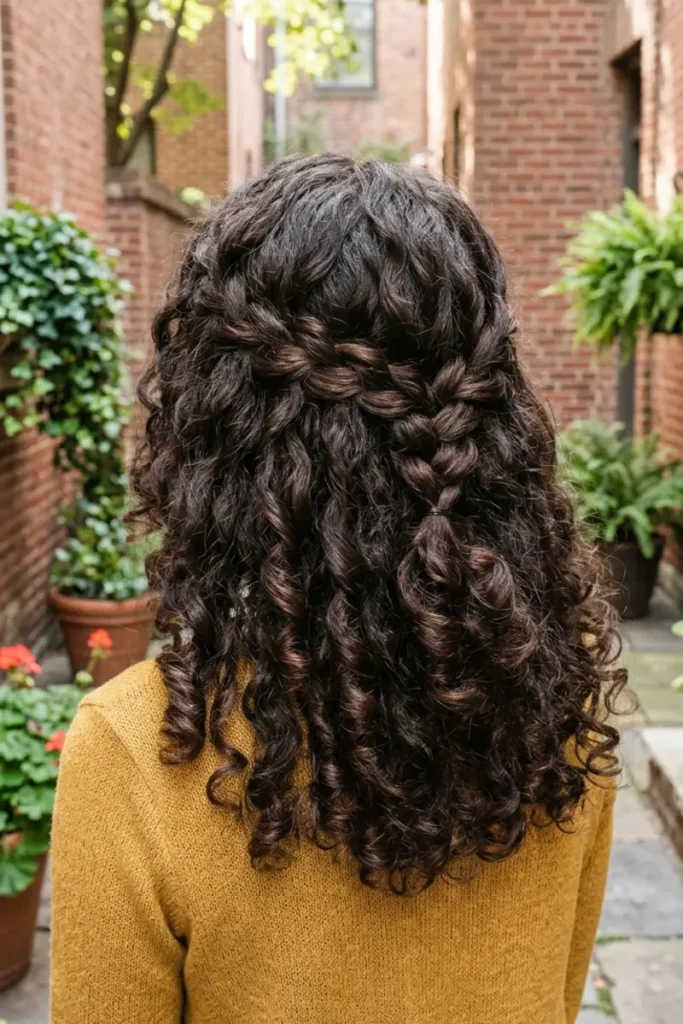
On curly or coily hair, work the braid on fully dry, defined curls — never damp ones, which stretch and frizz as they dry inside the braid. Keep the braid looser than you would on straight hair, since curl pattern already adds volume the technique doesn’t need to fake. The payoff is a cascade that springs and holds shape in a way straight hair’s waterfall never quite manages.
10. Compact Version for Short Hair
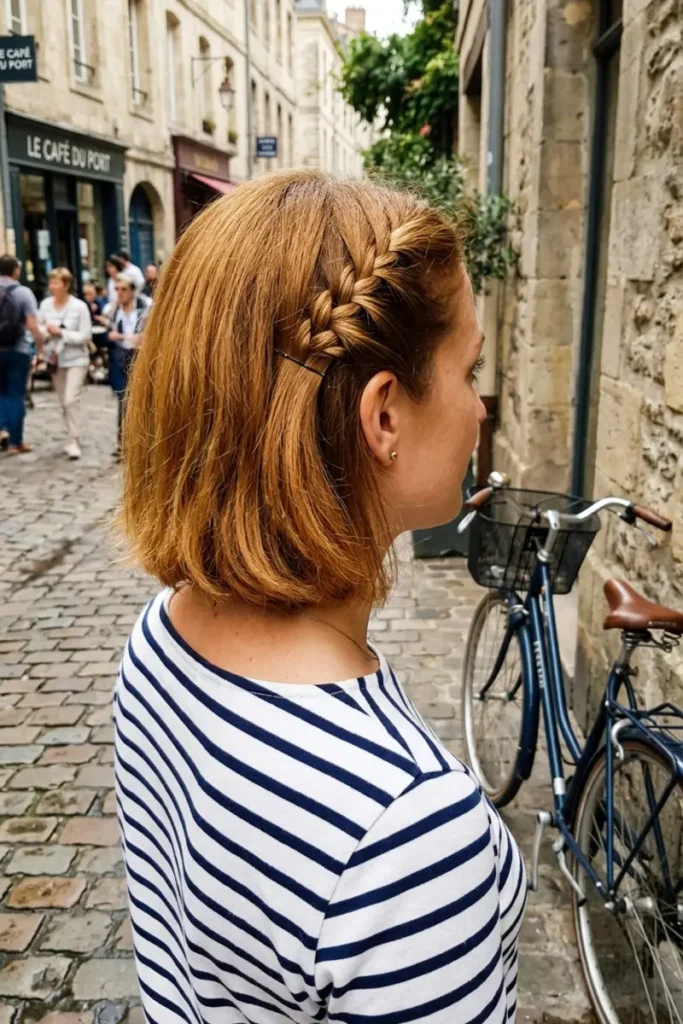
On hair at or just past the jaw, work four to five stitches from the temple toward the back, then pin the tail immediately under the rest of the hair. The cascade is short by definition, but it still reads clearly at that scale — the mistake people make on short hair is trying to stretch the braid too far and running out of length to secure it properly.
11. Threaded With Metal and Thread
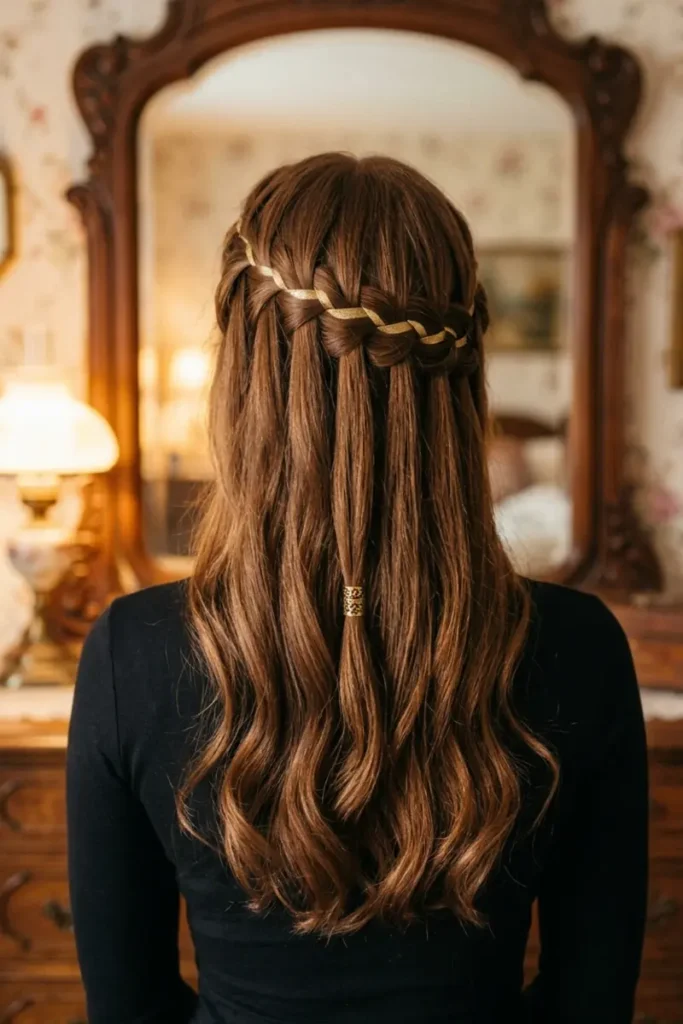
Slide one or two thin metal cuffs onto the cascade strands partway down, or weave a ribbon through every other stitch as you braid so it drapes out with the tail. The accessory needs to go in during the braiding, not after — trying to add it once the braid is finished usually means disturbing the strands around it.
12. Under-Braided for Extra Lift
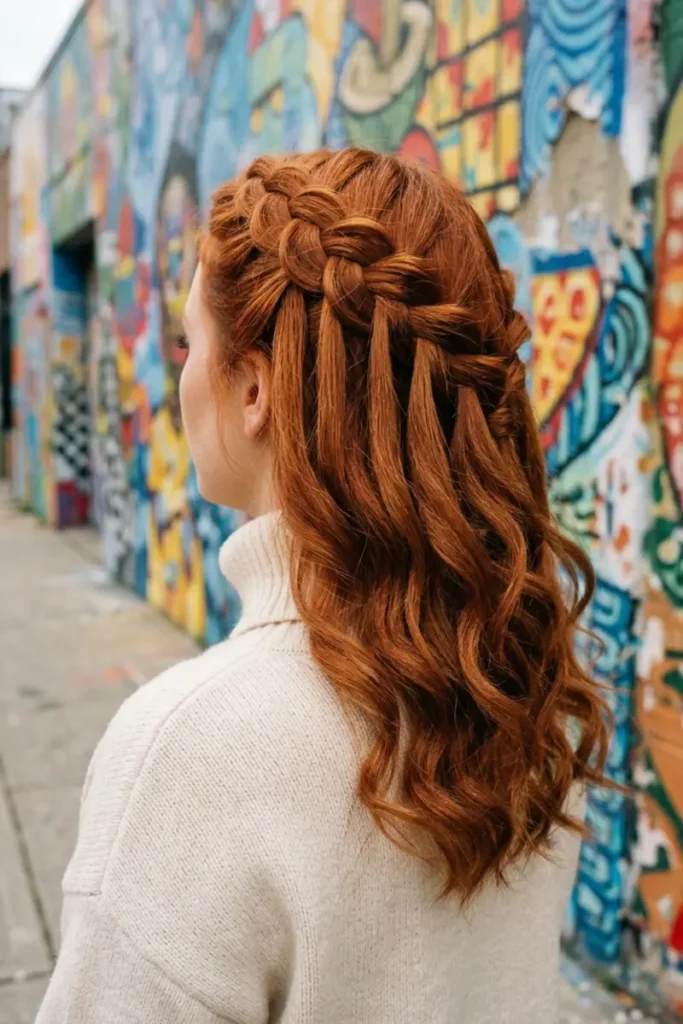
Cross the strands underneath each other instead of over, the same reversal that turns a French braid into a Dutch braid. The braid body sits raised off the scalp instead of flat against it, which pushes the cascade strands outward at a slight angle rather than letting them hang straight down — a more three-dimensional version of the same technique.
And if you want to try the Dutch braid version of this same reversal throughout the whole braid instead of just one section, see our Dutch Braid Hairstyles guide.
13. Half-Up, Cascade Hidden Below
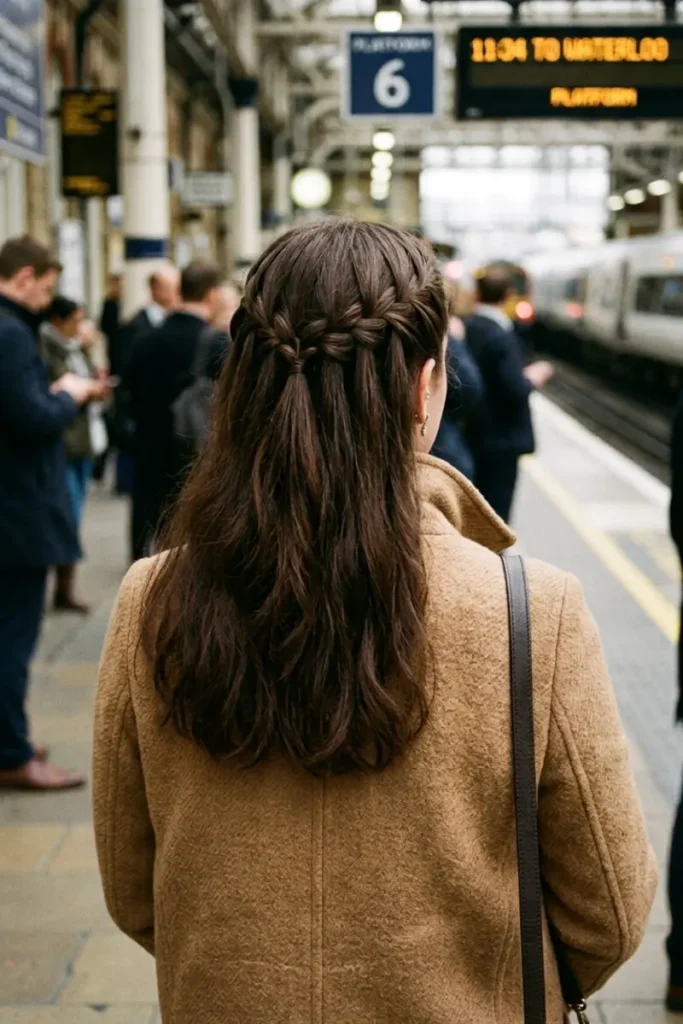
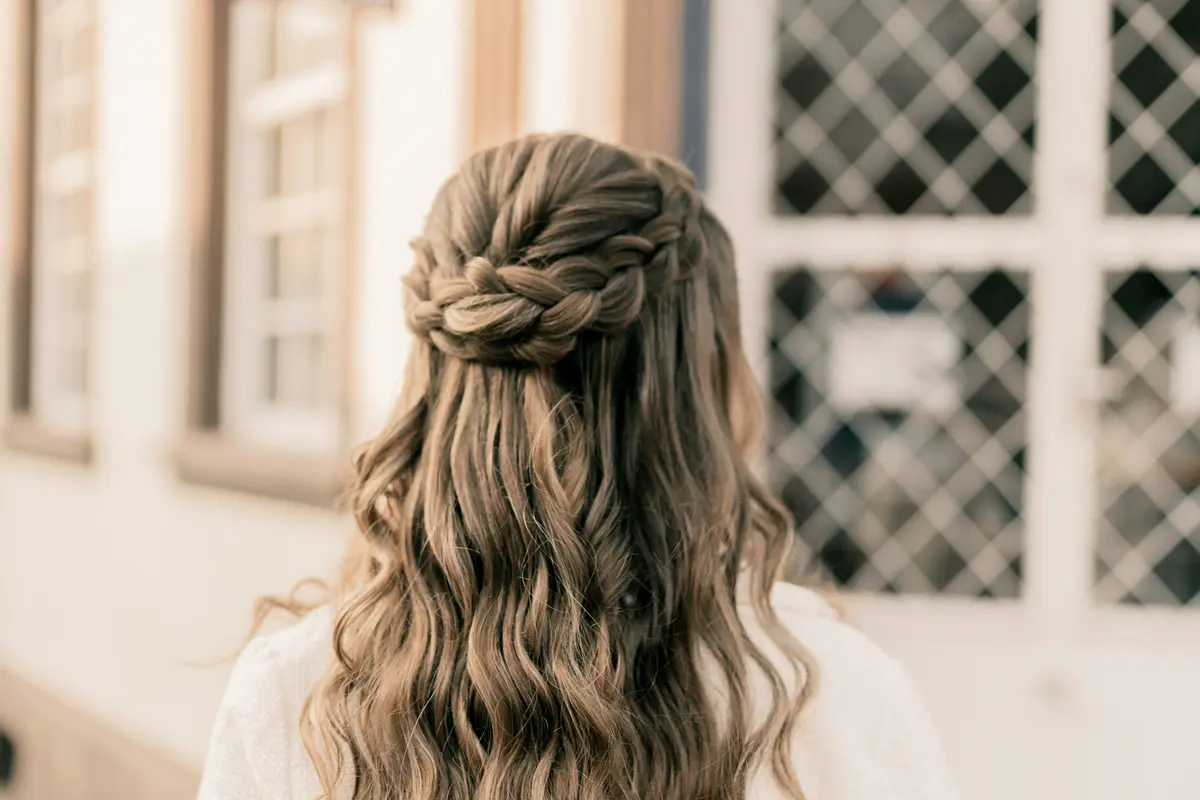
Section off only the top half of the hair for the waterfall braid, and let the released strands drop straight into the loose hair underneath instead of hanging visibly free. From the front, you only see a neat braided crown; from the back, the cascade all but disappears into the rest of the hair. It’s the version to use when you want the technique’s structure without its visual busyness.
14. Bridal Crown With a Twisted Finish
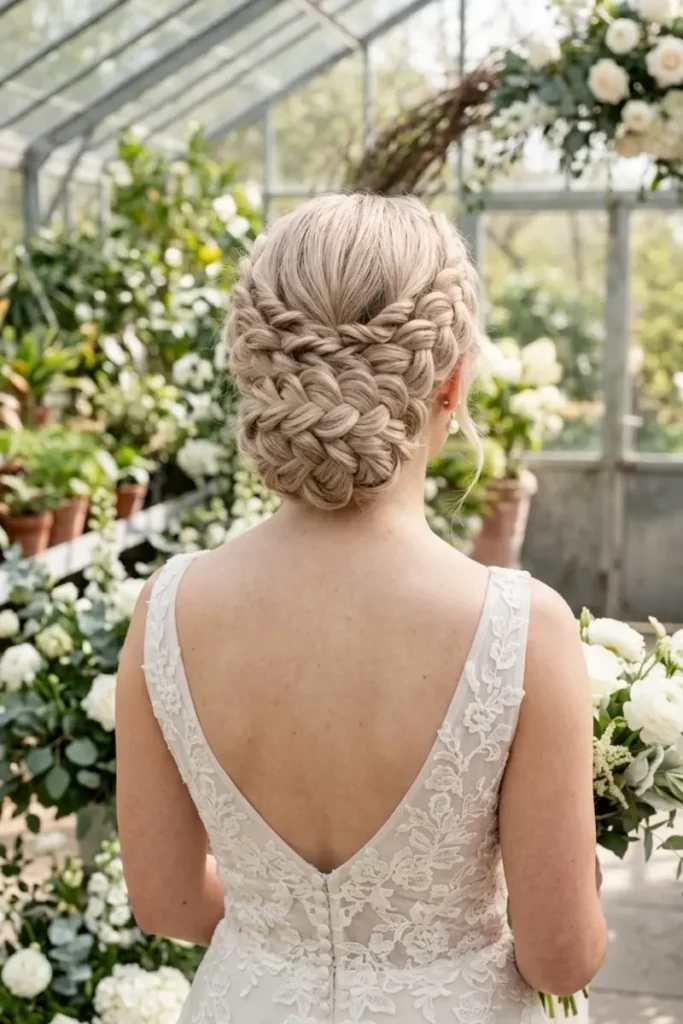
Work a full waterfall crown around the head, pancake both the braid and the dropped strands for volume, and tuck the tail invisibly under the braid where it closes. Finish by twisting a few loose sections into the crown for texture rather than leaving everything smooth. This is the version built to survive a full day of photos, hugging, and dancing without needing a mid-event fix.
FAQ
What’s the actual difference between a waterfall braid and a French braid?
A French braid incorporates every strand into the braid as it goes. A waterfall braid deliberately drops the bottom strand at each stitch instead of picking it up, leaving it to hang free — that dropped strand is the entire source of the cascade effect. The hand motion is otherwise identical.
Does a waterfall braid work on short hair?
Yes, down to chin length. Work fewer stitches — four to six is usually enough — and pin the tail under the rest of your hair right away rather than trying to stretch the braid further than the length allows.
How long does a waterfall braid actually last?
It’s not built for overnight wear; the open, strand-dropping structure is inherently looser than a closed braid. For an event that needs to last, finish the last few inches as a standard three-strand braid instead of continuing the waterfall stitch to the very end, and set the braid body (not the cascade strands) with a fine-mist hairspray.
Can you do a waterfall braid on curly hair?
Yes, and it often looks better than on straight hair — curl pattern adds volume to the cascade that straight hair has to fake with pancaking. Braid on fully dry, defined curls rather than damp ones, since wet curls stretch and frizz as they set inside the braid.
Is a waterfall braid harder than a French braid?
Not mechanically — it’s the same three-strand motion with one change. What makes it feel harder at first is the discipline of not picking up the bottom strand out of habit. Most of the learning curve is unlearning the French braid reflex, not learning a new skill.
Closing
The waterfall braid gets treated like an advanced style because it looks intricate, but the actual skill gap between it and a French braid is almost nothing — one strand, released instead of caught, repeated across the head. If you’ve already got a French braid’s rhythm down, you’re one small, deliberate change away from a completely different look. And if fishtails are more your rhythm, our Fishtail Braid Hairstyles guide covers the two-strand version of this same idea: different mechanics, same principle of technique-first over guesswork.