Box Braids 101: How Size and Length Decide Whether They Damage Your Edges (15 Styles)
If you’ve ever taken out a set of box braids and noticed your edges looking thinner than before you started, the braids themselves usually aren’t the problem — the size, the length, and how close to your hairline they were installed usually are. Most box braid guides show you rows of finished looks without mentioning any of that, which is exactly why so many people end up with the same avoidable damage. Below are fifteen ways to wear box braids, starting with the size and tension decisions that actually protect your hair, then moving through the length, texture, and occasion variations that rarely get covered together in one place.
Before You Start: Size, Tension, and Protecting Your Edges
The short version: bigger braids put less tension on any single section of hair, which is why jumbo box braids are generally safer for fine or already-stressed edges than micro braids are. Smaller braids mean more partings, and more partings near the hairline mean more repeated pulling in the same spots — that’s what thins edges over time, not the braiding itself. If you have a choice, keep the braids starting at least a quarter-inch back from your actual hairline rather than braiding directly into your baby hairs, and ask your braider to leave slightly looser tension in the first inch closest to the scalp. A box braid that’s snug along its length but relaxed at the root will hold its shape just as well as one braided tight from root to tip, without the same pulling on the follicle. Get the size and root tension right and almost every version below will be safe to wear for its full lifespan. If your edges are already thinning, our guide to hair breakage causes and fixes explains what helps.
1. Classic Medium Box Braids
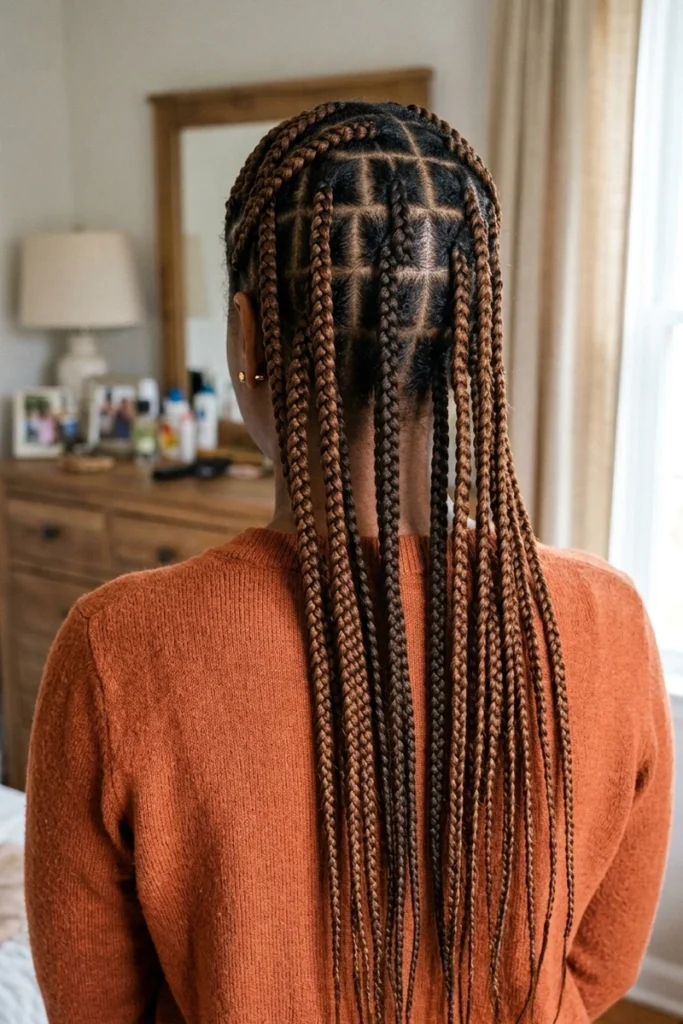
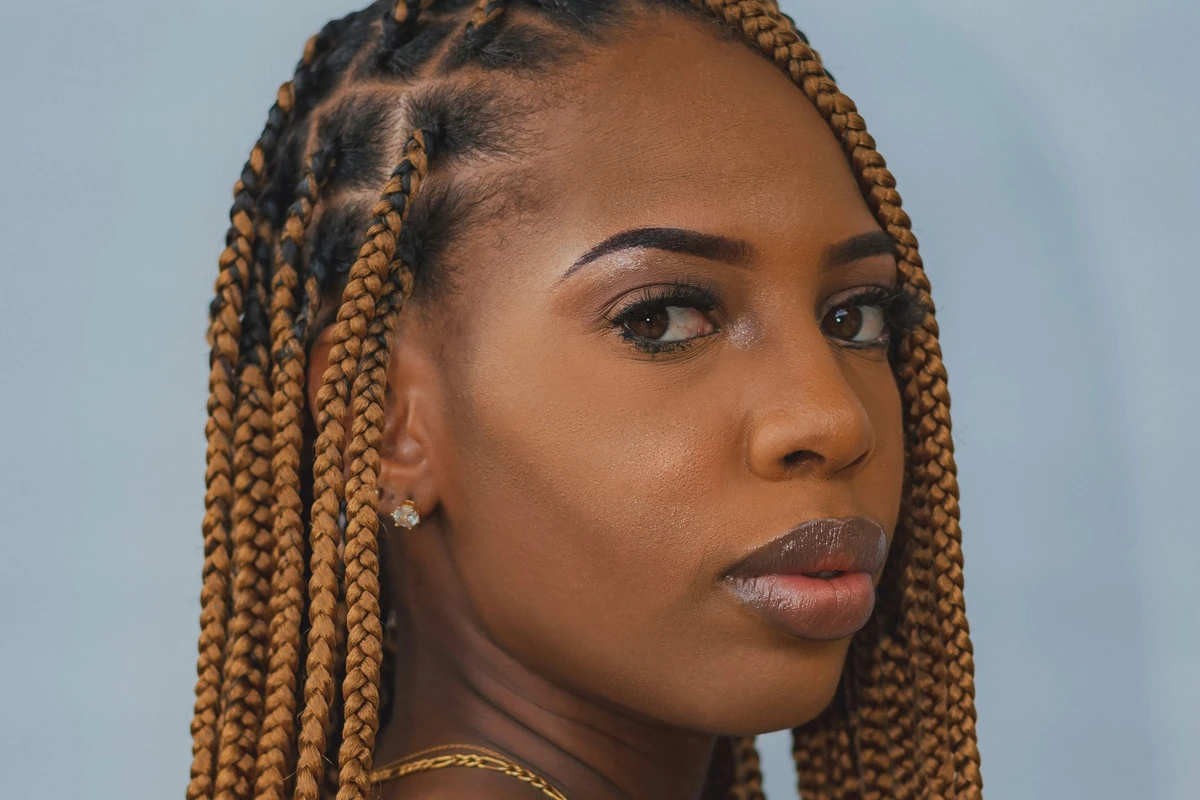
Sectioned in even squares roughly the width of a pencil eraser, then braided in a standard three-strand technique down the full length. This is the size most people picture when they hear “box braids,” and it’s a reasonable middle ground — small enough to look deliberate and neat, large enough that you’re not doing hundreds of individual partings. It’s worth learning as your baseline before trying a smaller or larger variation, since the install technique is identical across every size on this list.
2. Jumbo Box Braids
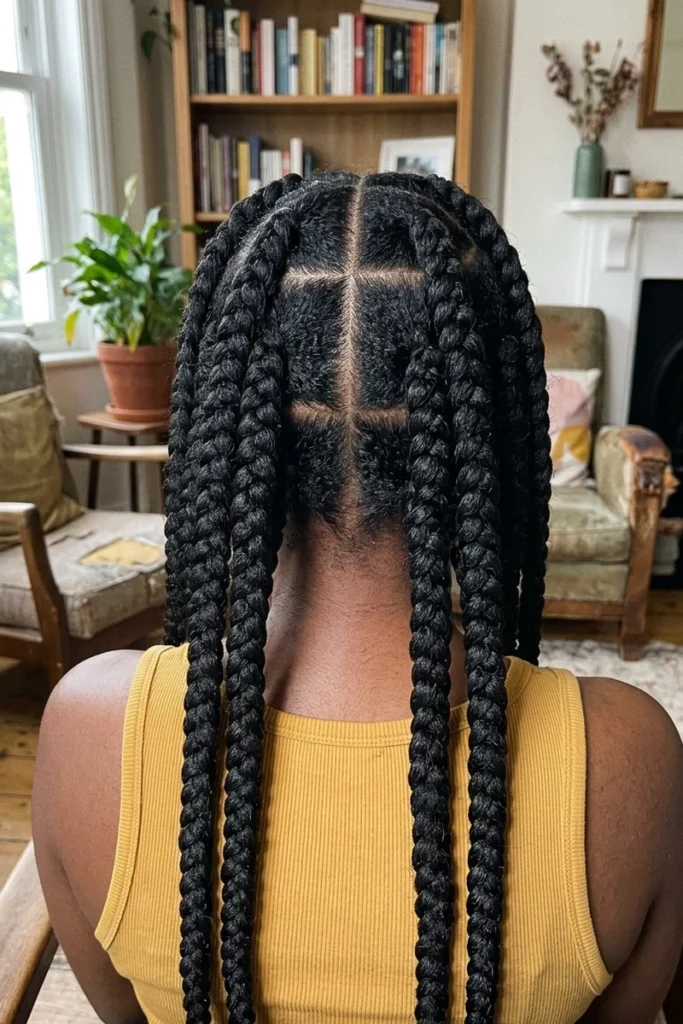
Sectioned in squares roughly an inch and a half to two inches wide, which means far fewer total braids and far fewer partings pulling on your scalp. This is the size to choose if your edges are already thin or if you’ve had tension damage from smaller braids before, since fewer partings directly means less repeated stress in any one spot. The trade-off is a chunkier, more casual look and less versatility for intricate updos, but the install time is dramatically shorter — often half the time of a medium set.
3. Small or Micro Box Braids
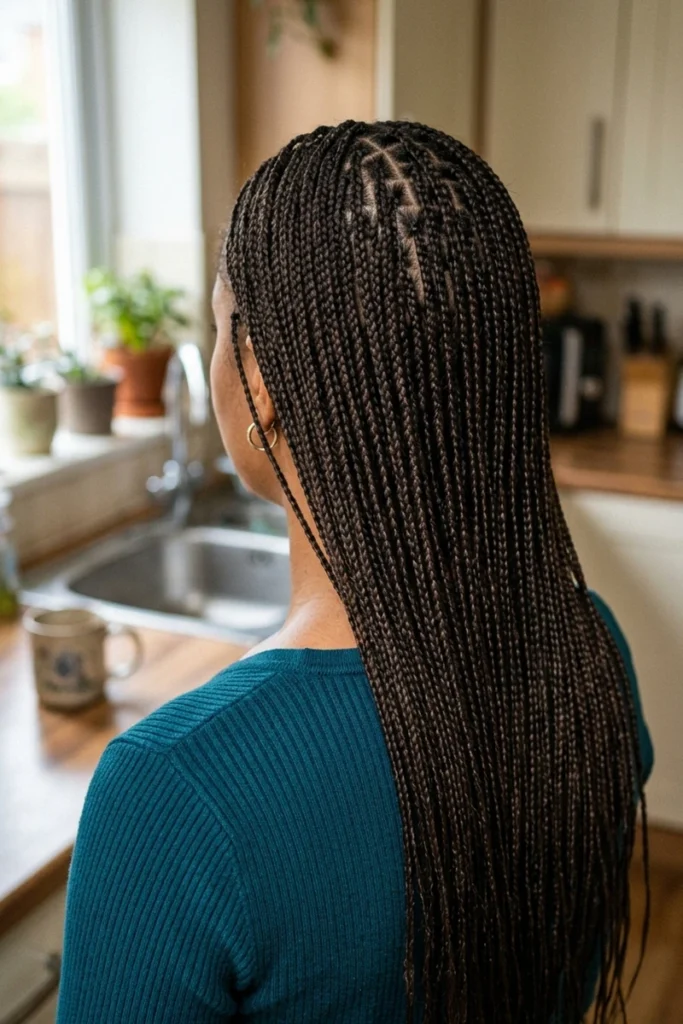
Sectioned in tiny squares, sometimes just a few millimeters wide, for a fine, dense finish that moves and lies flatter than larger sizes. This is the size that needs the most care around the hairline specifically, since the sheer number of partings concentrated in a small area is what causes traction alopecia over repeated installs — if you choose this size, insist on looser tension in the first inch of new growth and don’t wear it back-to-back with another tight set. The payoff is styling versatility few other sizes offer, since the braids are thin enough to part, twist, or pin in ways jumbo braids can’t.
4. Knotless Box Braids
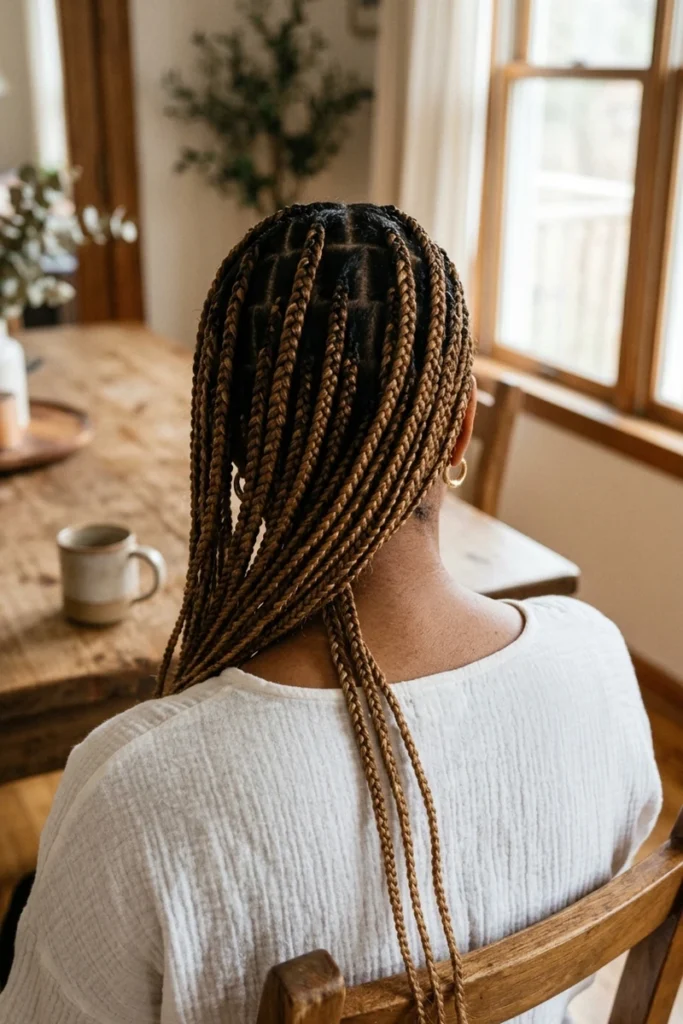
Started with your natural hair only, with the extension hair fed in gradually as the braid progresses, rather than knotted at the root the way traditional box braids are. This is currently the safest widely-used technique for hairlines, since there’s no knot sitting at the root pulling on the follicle from day one — the weight is distributed along the braid instead of concentrated at a single point. It takes longer to install than a knotted set of the same size, but it’s the version to specifically ask for if edge damage is your main concern going in.
5. Bob-Length Box Braids
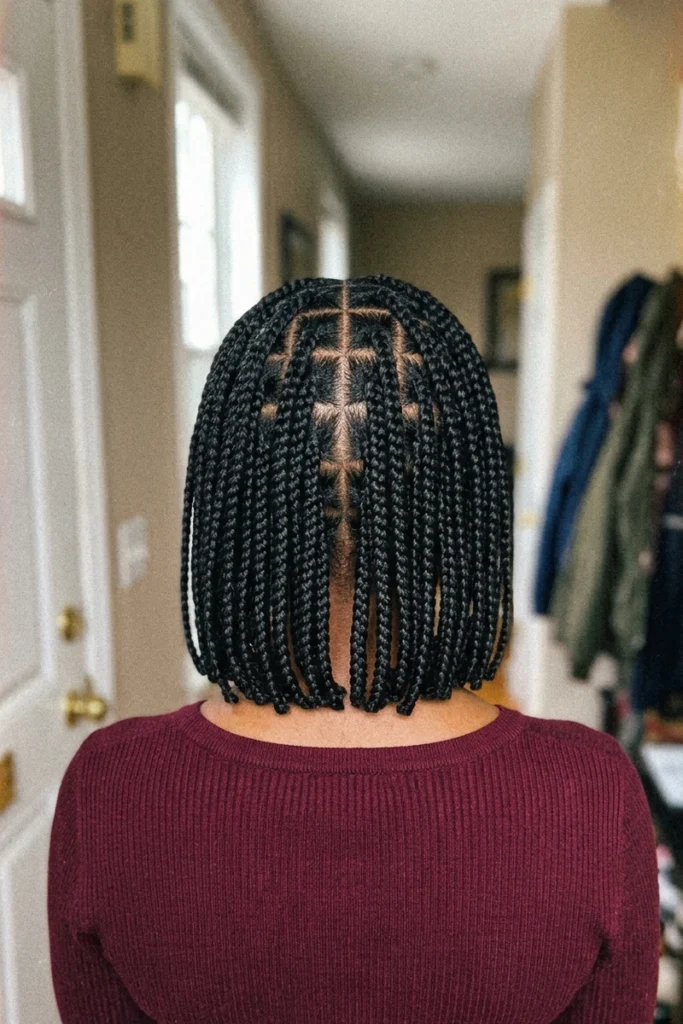
Braided to just above or below the shoulder rather than the full length of the extension hair, which cuts the total weight hanging from each root by a significant margin. Less weight per braid means less pull on the scalp over the weeks you wear it, so this length is worth considering even if you’d normally want longer braids, simply because it’s gentler on hair that’s already been through previous protective styles. It also styles into buns and updos more easily than waist-length braids do, since there’s less bulk to gather.
6. Waist-Length Box Braids
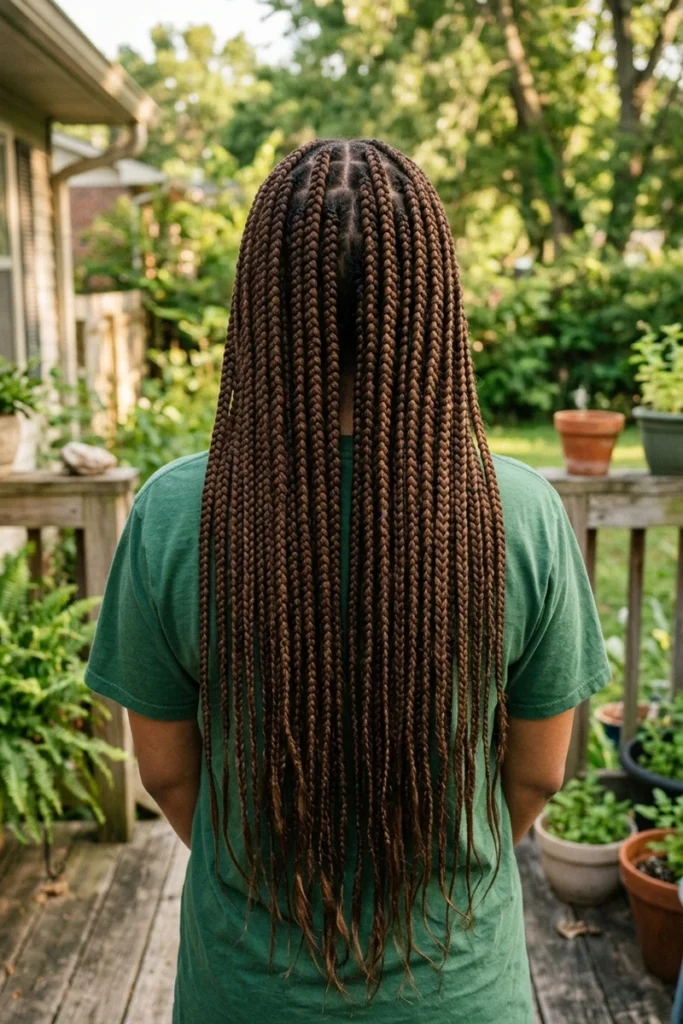
The longest common length, and the one that needs the most active weight management — sleep with them in a loose braid or pineapple rather than loose, since the length makes them more likely to tangle and pull against your scalp overnight. Ask your braider about reducing the amount of extension hair per braid slightly at this length; a thinner, longer braid puts less strain on the root than a full, thick one of the same length. This is also the length that shows the most breakage at the ends if not moisturized regularly, since the tips are the oldest and most fragile part of the hair.
7. Box Braids with Curly Ends
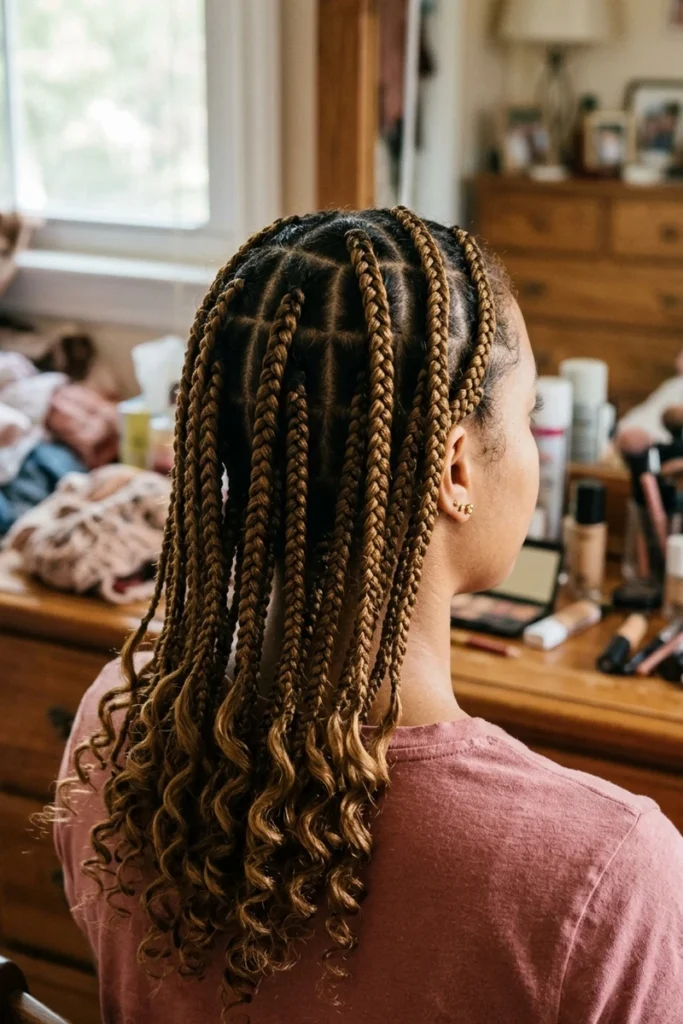
Braided normally for most of the length, then the last few inches left unbraided and set with perm rods or curling wands for a curled or wavy finish instead of a blunt end. It softens what can otherwise be a fairly graphic, severe look, and it’s a low-effort way to change the style partway through wearing a set without redoing the whole install. The curled ends do need occasional re-setting as humidity or sleep flattens them, more upkeep than a blunt end requires.
8. Colored or Ombré Box Braids
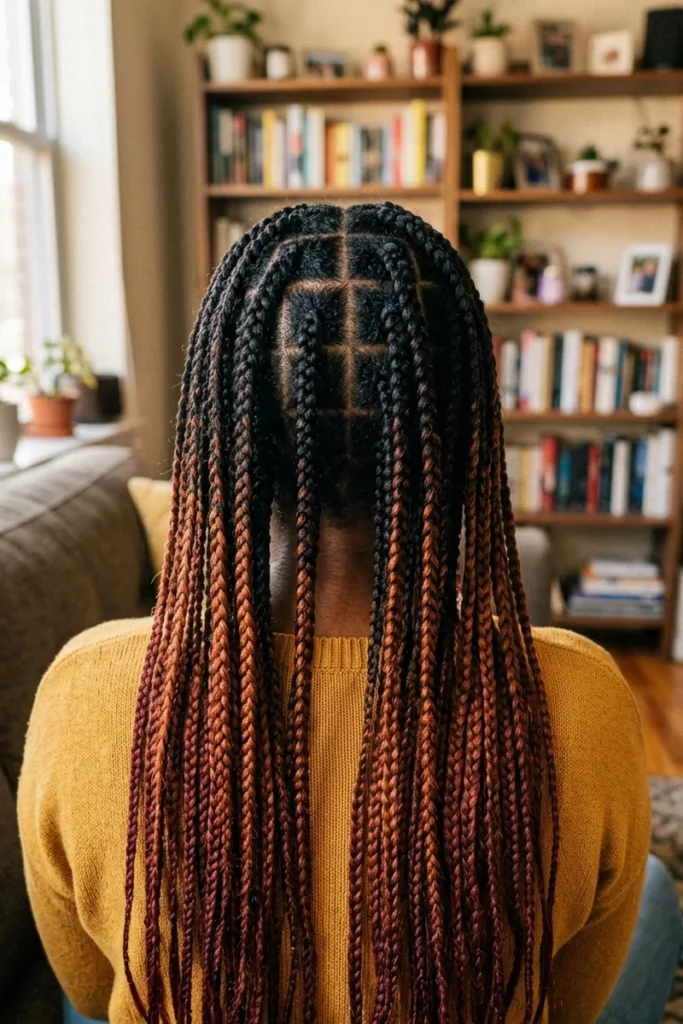
Uses pre-colored braiding hair — solid color, ombré, or highlighted pieces mixed through — rather than a single natural shade throughout. Because the color lives in the synthetic extension hair rather than your own strands, you get the visual change without any chemical processing on your natural hair, which matters if you’re trying to avoid additional stress on hair that’s also carrying braid tension. Lighter or brighter colors show root shrinkage and regrowth more visibly than natural shades do, so this version tends to need a slightly earlier takedown if you want it looking fresh throughout.
9. Box Braid Half-Up
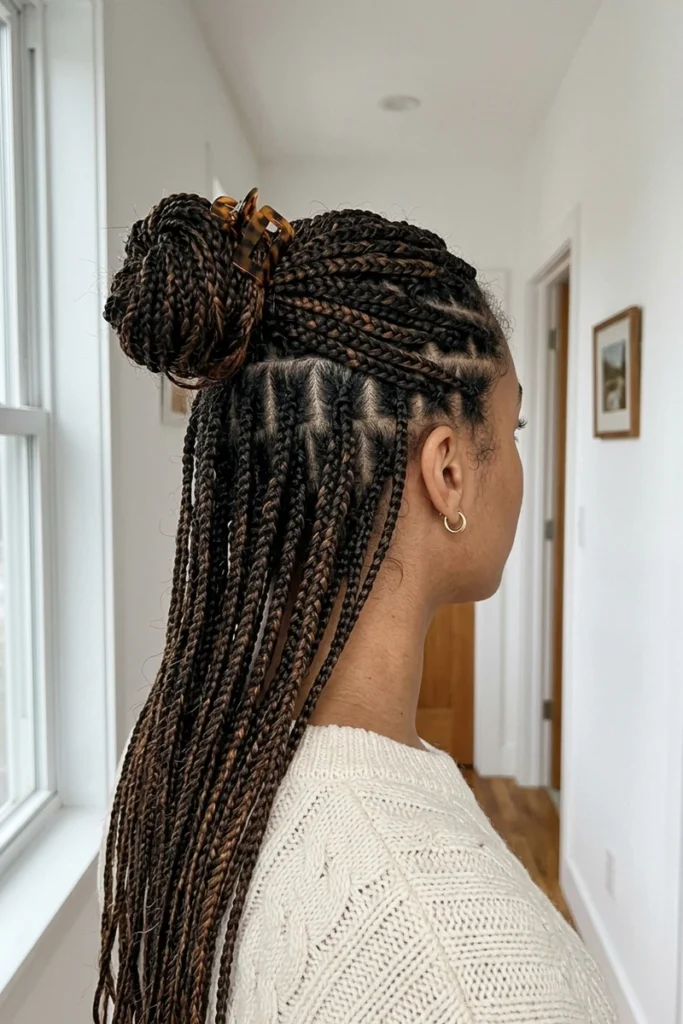
Only the top section is gathered and secured, usually with the crown braids twisted or pinned back, while the rest of the braids hang loose. It gives you a change from wearing the full set down every day without committing to a full updo, and it takes weight off the crown area specifically for stretches of the day, which some people find more comfortable during the first few days after a fresh, tighter install. For more versions, see our half up half down hairstyles.
10. Box Braid Ponytail
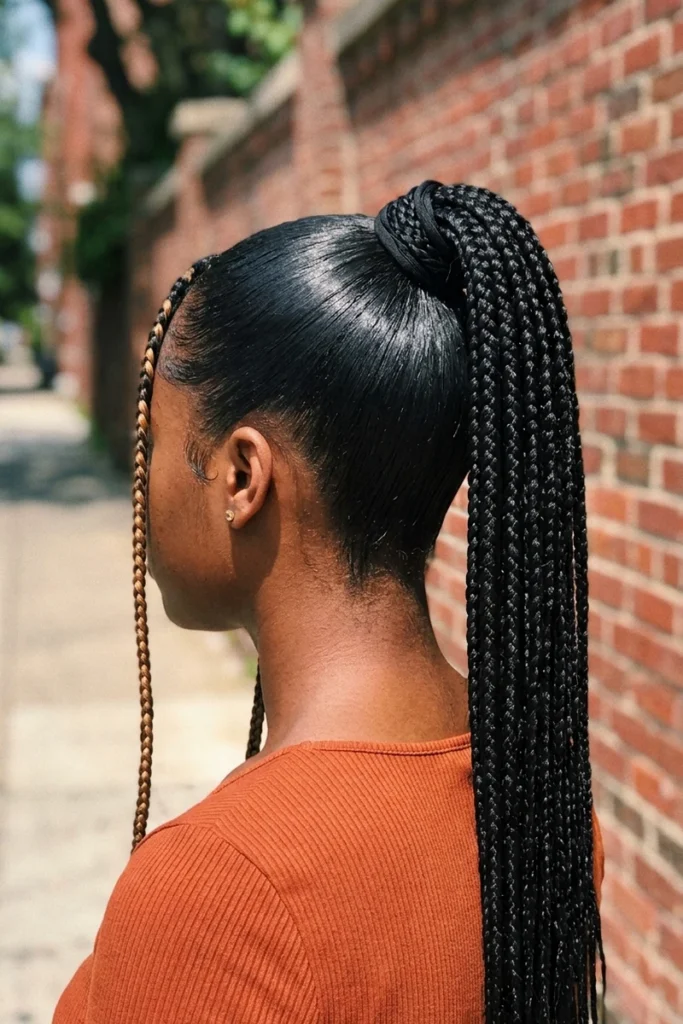
All the braids gathered into a single ponytail, usually wrapped at the base with a section of loose braid to hide the elastic. This redistributes weight away from sitting fully on the scalp and onto the elastic and wrap instead, which some people find more comfortable for long-term wear, though it does concentrate stress at the base of the ponytail — check that the wrap and elastic aren’t sitting so tight that they’re creating a new tension point of their own.
11. Box Braids with Beads
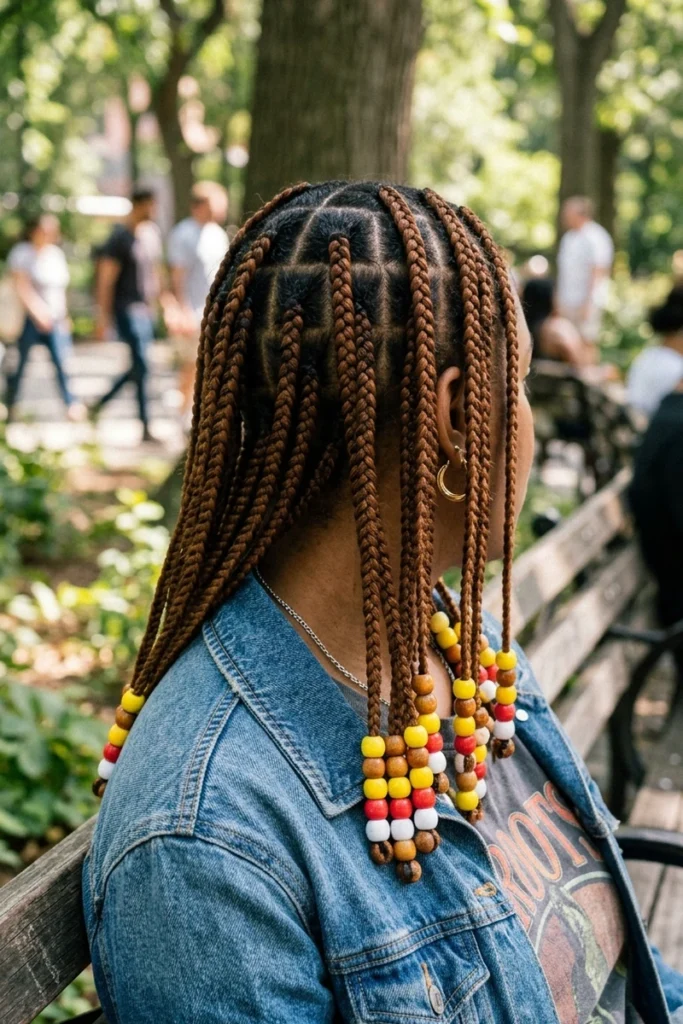
Small beads threaded onto individual braids, usually clustered at the ends or spaced along the length. The added weight from beads is minor per braid but adds up across a full head, so this version is worth avoiding on an already-heavy jumbo or waist-length set, and better suited to medium or smaller braids where the total weight stays manageable. Beads at the very ends also tend to click and catch less than ones placed mid-length, which matters if you’re wearing this for an extended period.
12. Goddess Box Braids
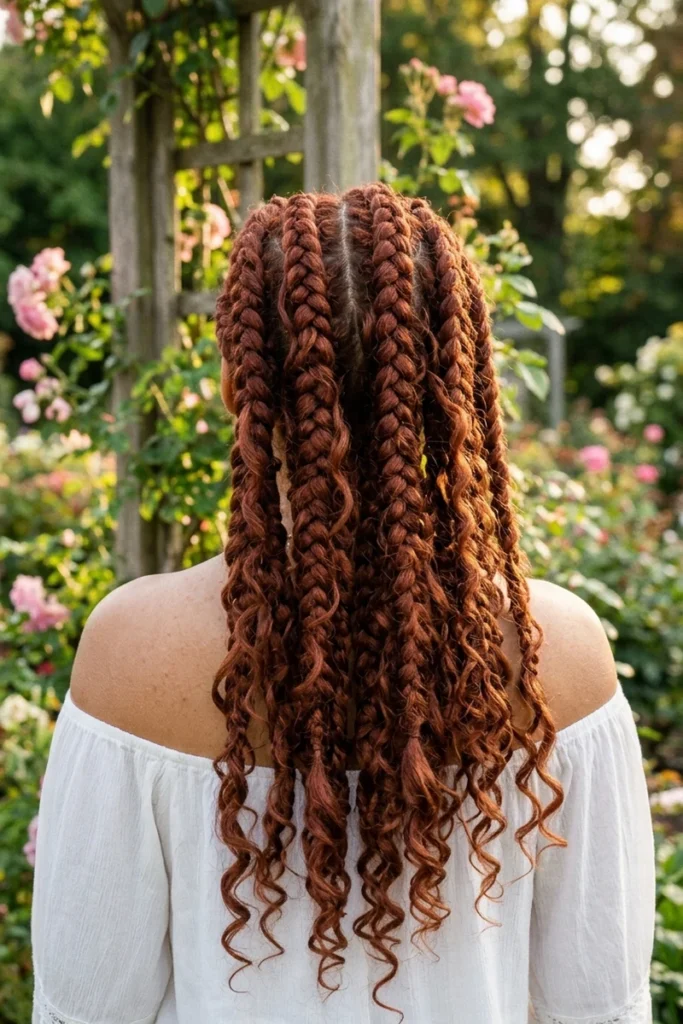
Thicker than a standard box braid, made by wrapping a section of smooth hair around the braid itself for a fuller, more polished finish rather than the visible plaited texture of a regular box braid. Because each section is heavier than a same-sized regular box braid, this version benefits the most from the jumbo or medium sizing discussed earlier rather than a small parting — a small, thin section wrapped this thick puts more strain on the root than the same size done as a plain braid.
13. Box Braids Updo for Special Occasions
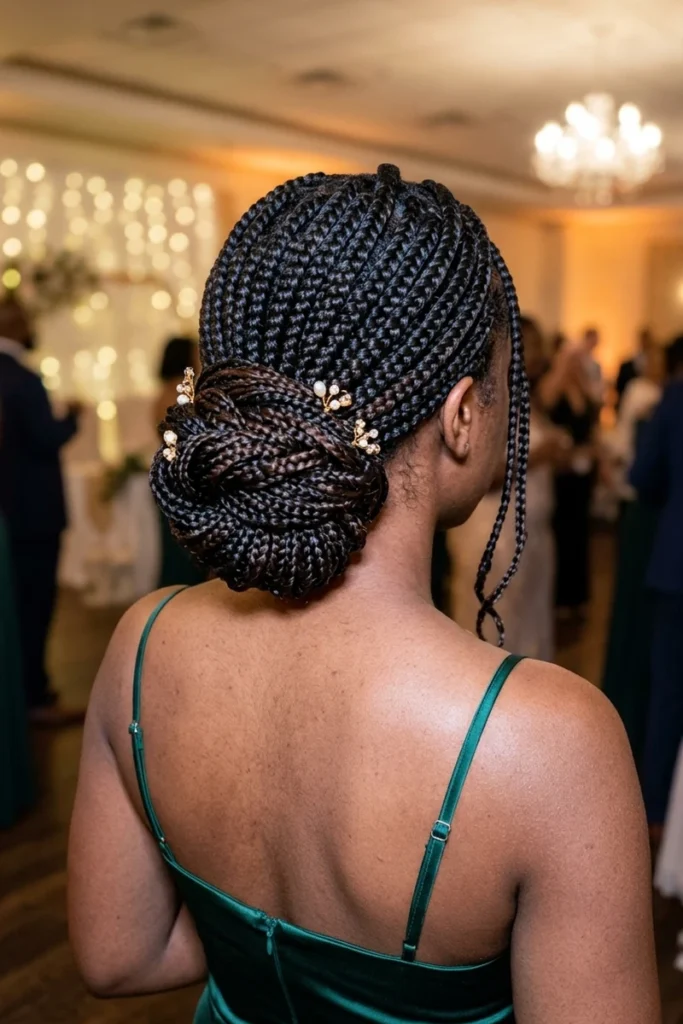
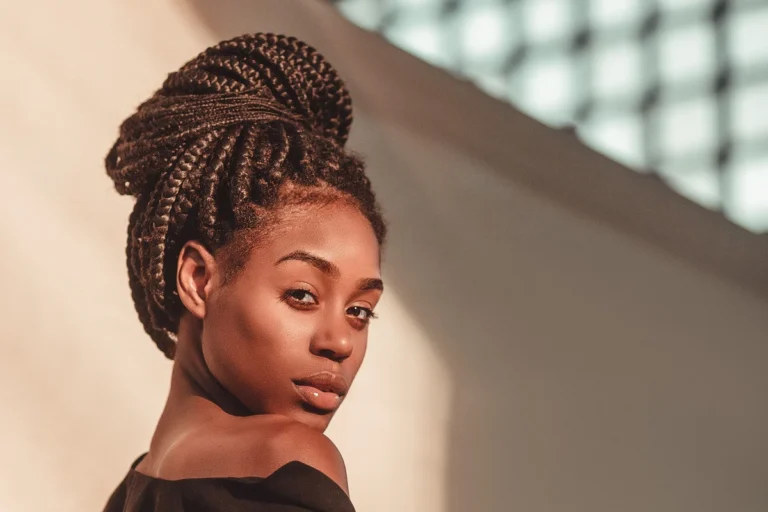
The full set gathered, twisted, and pinned into a formal updo — a high bun, a low chignon, or a wrapped style — rather than worn down. Braids that are already a few days old and slightly settled hold an updo shape better than a fresh, stiff install does, so this is worth planning for the middle of your wear time rather than day one. Because the style is fully gathered and pinned, avoid leaving it up overnight repeatedly, since that concentrates tension at the pin points the same way a tight ponytail would. Our bun hairstyles guide shows gentler ways to build the bun.
14. Box Braids for Swimming or Workouts
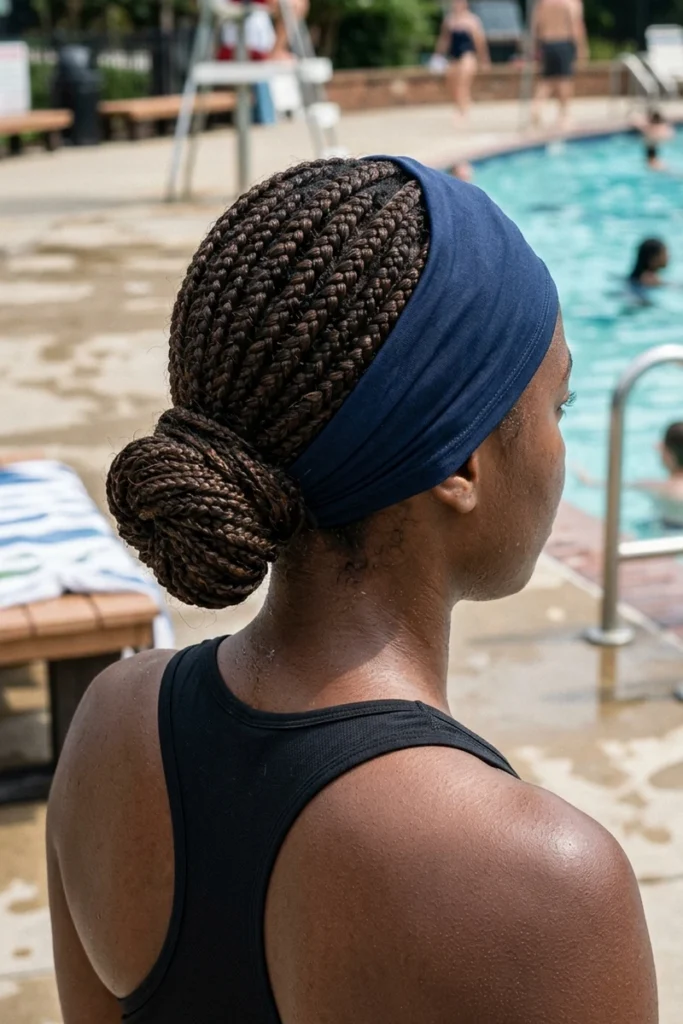
No different in the braiding itself, but requires a specific approach to moisture: rinse braids with fresh water before swimming in chlorine or salt water to reduce how much your hair absorbs, and always dry them fully — root to tip — after getting wet rather than letting them air dry slowly under a cap or scarf. Braids that stay damp at the root for extended periods are more prone to mildew smell and product buildup than ones that dry quickly, which is more of a maintenance issue than a styling one, but it’s the detail most guides skip. For more workout-proof options, see our athletic hairstyles.
15. Box Braids for Kids
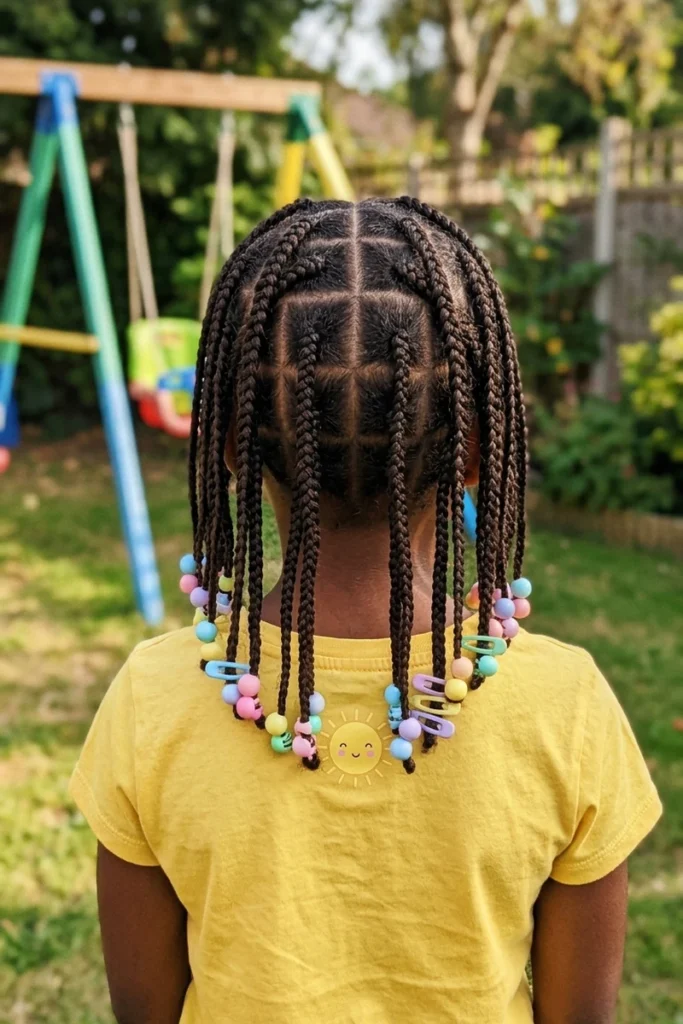
Sectioned larger than an adult set would be, and braided with noticeably looser tension throughout, not just at the root — children’s scalps are more sensitive to sustained pulling, and a set that feels fine on an adult can be uncomfortable within hours on a child. Keep the overall wear time shorter than you would for an adult set as well, since kids are less likely to report low-grade discomfort until it’s already become irritation, and a shorter install is easier to redo before that happens. You’ll find more gentle styles in our kids hairstyles guide.
FAQ
How long can I keep box braids in?
Most box braids last four to eight weeks depending on size — jumbo braids often need to come out sooner since new growth becomes visible faster with fewer, larger partings. Regardless of size, if your scalp feels persistently sore or itchy rather than just occasionally, that’s a sign to take them down early rather than push through to a planned date.
How do I keep box braids from damaging my edges?
Choose a larger size if your edges are already fragile, ask for looser tension specifically in the first inch of hair closest to your scalp, and avoid having braids start directly at your hairline. Knotless braids are currently the gentlest widely-available technique, since the weight doesn’t concentrate at a single knotted root point the way traditional box braids do.
Why does my scalp itch so much with box braids in?
Some itching in the first few days is normal as your scalp adjusts to the tension and the extension hair. Persistent itching beyond that is usually product buildup or a drying scalp rather than the braids themselves — a diluted witch hazel or tea tree spray between braids can help, but if it’s severe or accompanied by bumps, that’s a sign the install was too tight and needs to come down.
How long does it take to install box braids?
Jumbo braids can take as little as two to three hours since there are far fewer sections. Medium braids typically take four to six hours, and small or micro braids can take eight hours or more depending on your hair’s length and density — factor that into which size you choose if you’re working around a tight schedule.
What’s the difference between box braids and knotless braids?
Traditional box braids start with a small knot of your natural hair tied to the extension hair at the root, which sits right at the follicle from the first day. Knotless braids instead feed the extension hair in gradually as the braid grows, so there’s no knot creating concentrated tension at the root — it’s a newer technique specifically developed to reduce the scalp stress older box braid methods are known for.
Closing
Most box braid guides show you the finished looks and skip the decisions that actually determine whether your edges come out of the style in the same condition they went in. Size, root tension, and install technique matter more than which look you pick, and getting those right means you can reasonably wear almost any version on this list without the damage that gives box braids an unfair reputation. If you’re working with shorter or finer hair and want a related technique with a lower length requirement, our 15 Braided Bun Styles That Actually Hold All Day guide covers a coiled-braid approach that works on a similar range of hair types.