Half Up Half Down Hairstyles: 15 Ways to Split, Secure and Style
Half up half down hairstyles get treated like a single look, but they’re really a category with dozens of versions inside it — and almost every guide skips the two decisions that actually separate one version from another. The first is how much hair goes up versus stays down. The second, and the one most people never think about, is what’s actually holding the top section in place: an elastic, a braid, a twist, a bun, or a clip. Change that second decision and you get a completely different style out of the exact same amount of hair pulled back — that’s why “half up half down” covers everything from a five-second ponytail to a braided crown-style wrap, and why picking the right one starts with picking a mechanism, not just a mood.
Below are 15 half up half down hairstyles organized around what’s actually securing the top section — not the same ponytail restyled with different adjectives. If none of these securing mechanisms hold well on hair too short to reach a proper section, our Updos for Short Hair guide covers techniques built for bob, lob, and shoulder-length hair instead.
Two Choices Behind Every Half-Up Style
The ratio decides how formal the style reads before you’ve done anything else to it. A small top section with most of the hair left down reads casual and soft. A larger top section — closer to half — reads more structured and pulled-together, even with the same securing method. Decide the ratio first, because sectioning too little or too much hair changes every style below.
The securing mechanism is the actual style, not a finishing detail. An elastic, a braid, a twist, a bun, and a clip all hold hair up in fundamentally different ways, and each one changes how the style moves, how long it holds, and how dressed-up it looks. Picking “half up half down” isn’t a finished decision — picking what secures the top section is.
1. Classic Half-Up Ponytail
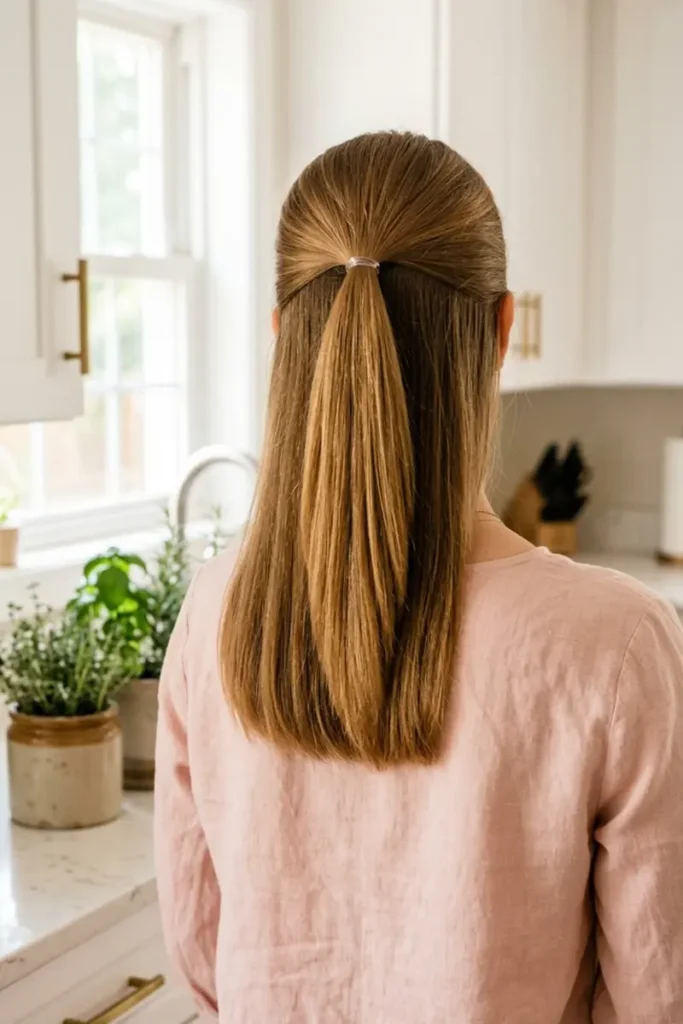
Gather the top section from temple to temple and secure it with a small elastic, letting the rest fall naturally below. This is the baseline mechanism everything else on this list modifies — no braiding, no twisting, just a clean section lifted and tied. It’s the fastest version and the one most people already know, but it’s worth naming explicitly because every other style here is a deliberate change to this one. If you would rather pull all of your hair back, see our ponytail styles grouped by how they’re built.
2. Braided Half-Up
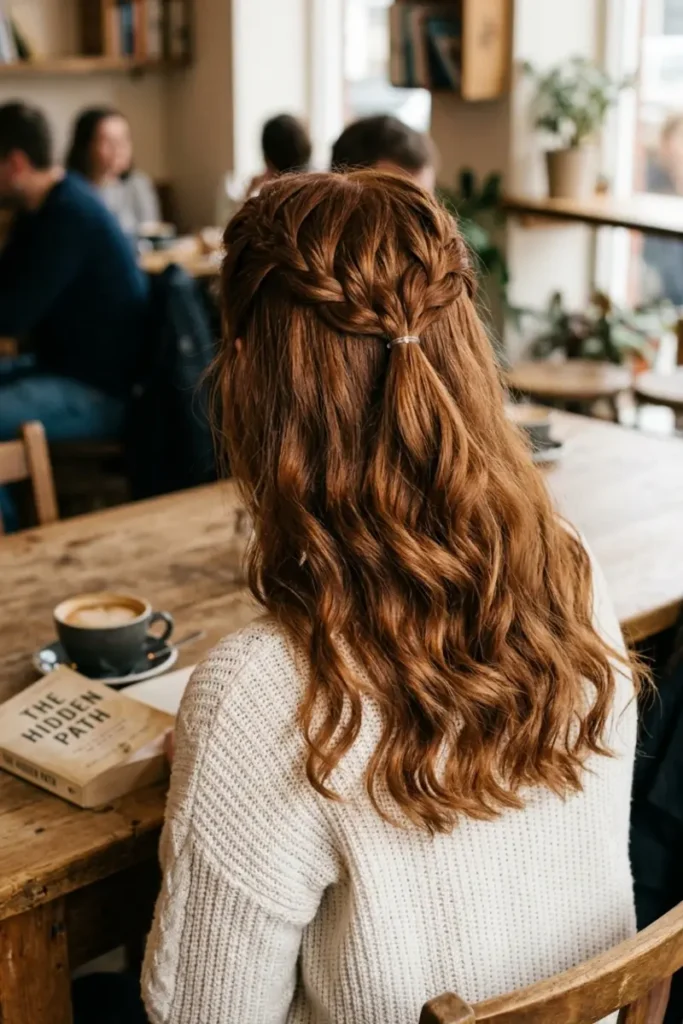
Section the top portion and French or Dutch braid it back toward the crown instead of tying it with an elastic, then secure the end with a small clear elastic before letting the rest of the hair fall loose. The braid does the same job as the elastic in the classic version — holding the top section up — but adds visible texture that reads as more finished without adding any extra step. If you want the raised, dimensional version of this texture, our Dutch Braid Hairstyles guide covers the technique behind it.
3. Twisted Half-Up
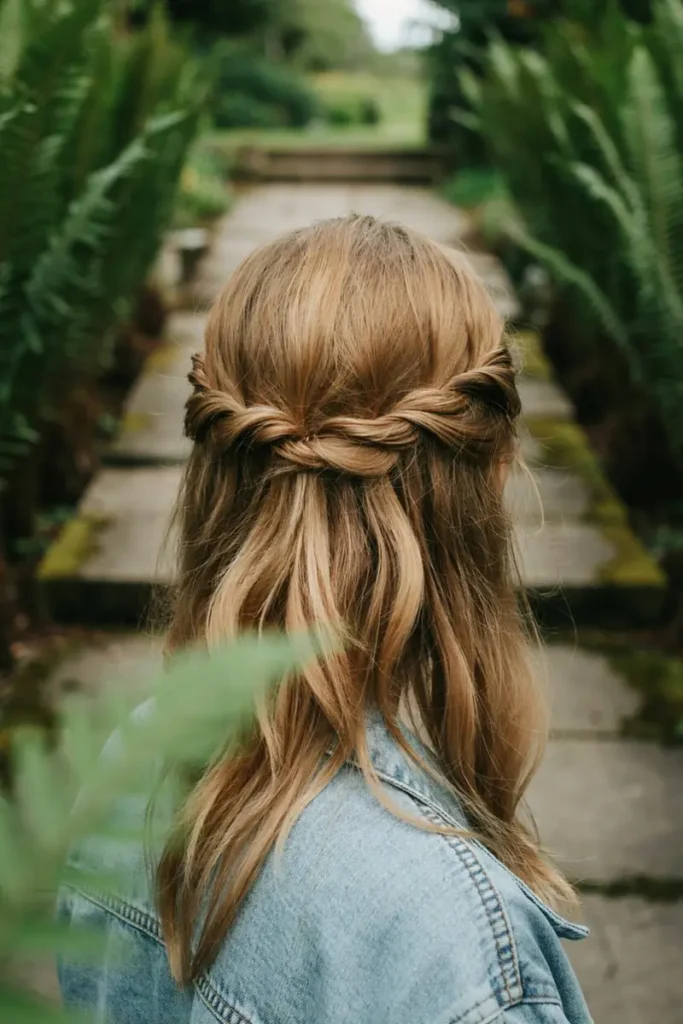
Take two small sections near the front, twist each one back toward the crown, and pin them together where they meet instead of using an elastic. The twist mechanism holds less securely than a braid but takes a fraction of the time, which makes it the version most people actually reach for on a regular morning. Twist tightly for a sleeker look or loosely for something softer — the tension is the only variable that changes the finish.
4. Bubble Half-Up Ponytail
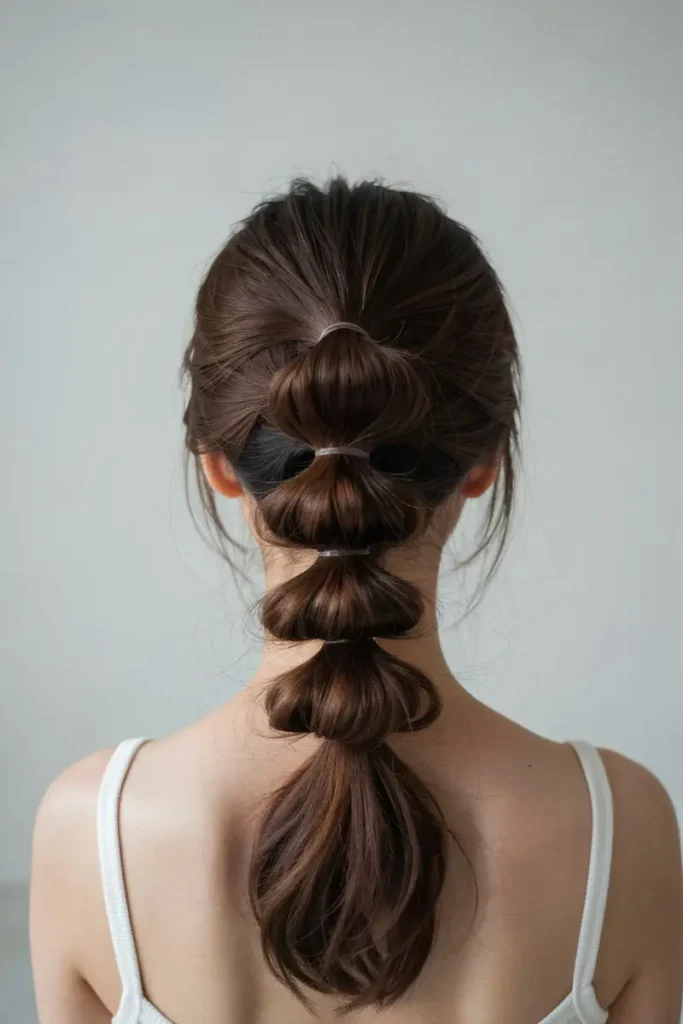
Section and tie the top half into a ponytail as usual, then add three or four more small elastics spaced evenly down the length of the tail, gently pulling each section outward to create rounded “bubbles” between them. This mechanism takes the simplest possible base — one elastic — and multiplies it, which is what makes the style look considerably more done despite using zero braiding or twisting technique.
5. Half-Up Into a Bun

Gather the top section and instead of leaving the tail loose, twist or braid it and coil it into a small bun at the crown, pinning it flat. Swapping a loose tail for a bun changes the entire silhouette of the style — from cascading to compact — using the identical amount of sectioned hair as the classic version above.
6. Double Half-Up Pigtails

Part the top section down the center and gather each side into its own small ponytail instead of one central one, leaving the rest of the hair down. Splitting the secured section in two rather than gathering it into one point changes the symmetry of the whole style and works especially well on hair with a natural center part, since it follows a line that’s already there.
7. Face-Framing Braids Into Half-Up
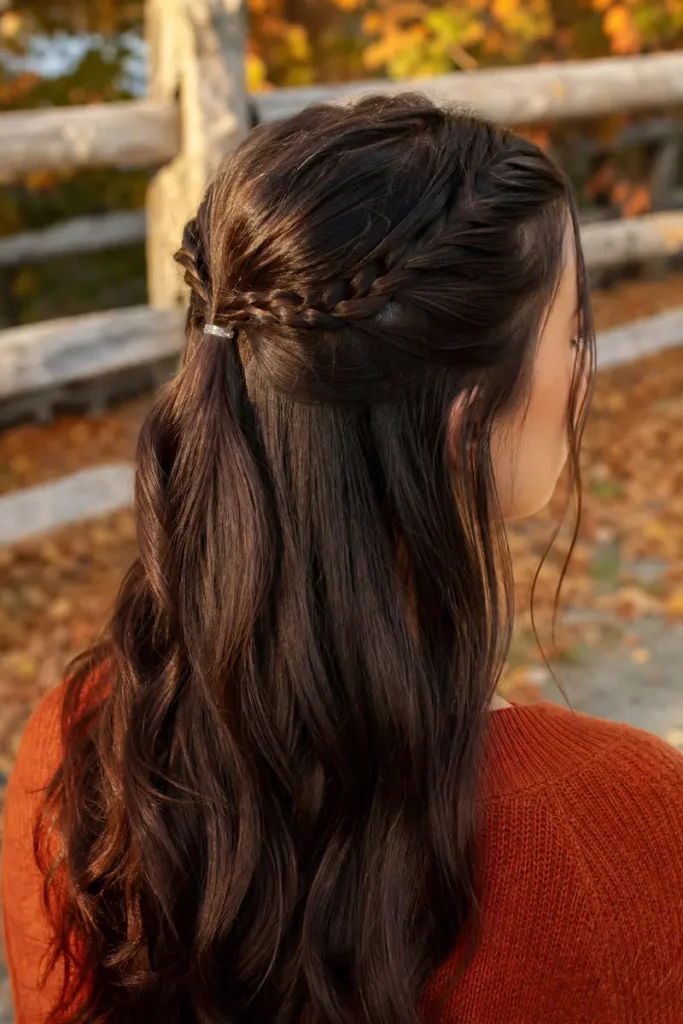
Braid two thin sections from each temple back toward the crown, then gather them together with the rest of the top section into a single elastic. The thin braids act as the securing detail for just the front pieces, while the elastic handles the bulk of the top section — a hybrid mechanism that frames the face without committing to braiding the entire top.
8. Half-Up French Twist
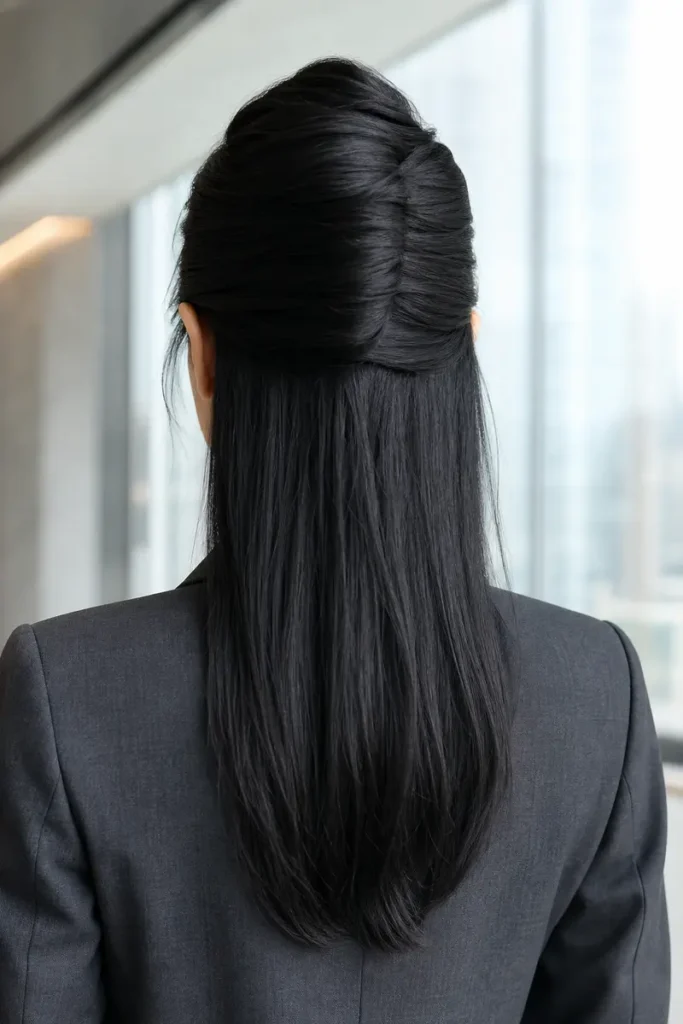
Gather the top section, roll it inward and upward into a vertical twist against the head, and pin it flat instead of leaving a ponytail or braid trailing down. Unlike every other entry here, this version tucks the secured hair against the scalp rather than letting it hang, which makes it read noticeably more formal for the same size of top section.
9. Half-Up for Curly Hair
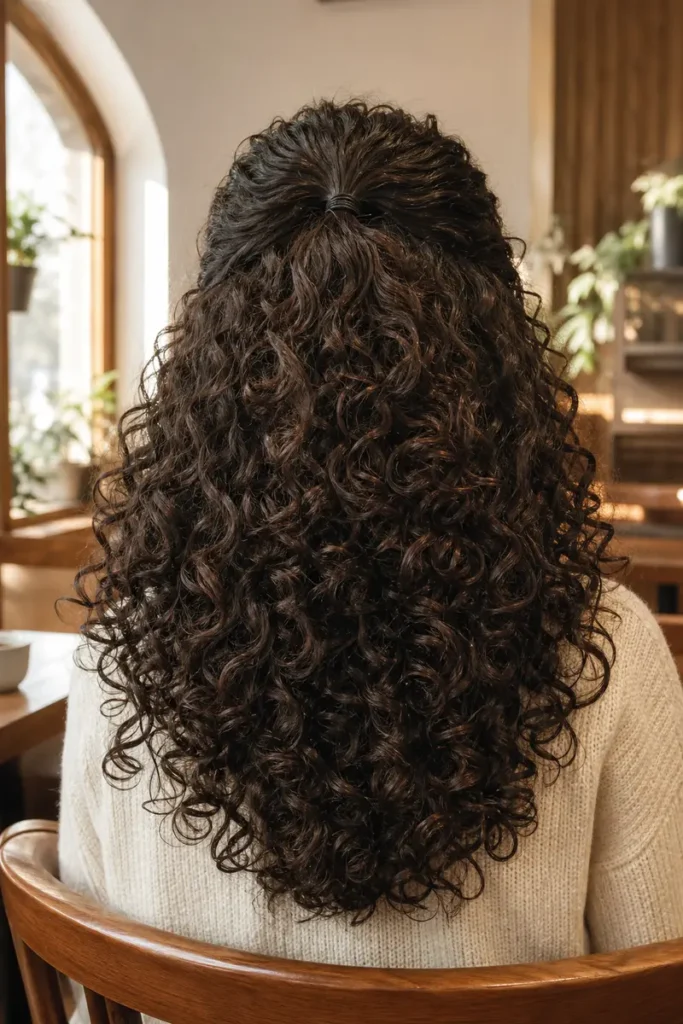
On curly or coily hair, section the top portion on fully dry curls to avoid disrupting the curl pattern, and secure loosely with a soft elastic or a few bobby pins rather than a tight braid or twist. The mechanism matters less here than the tension — curly hair holds a loose gather well on its own, and over-securing it tends to flatten the curl definition in the sectioned part.
10. Half-Up for Short or Bob-Length Hair
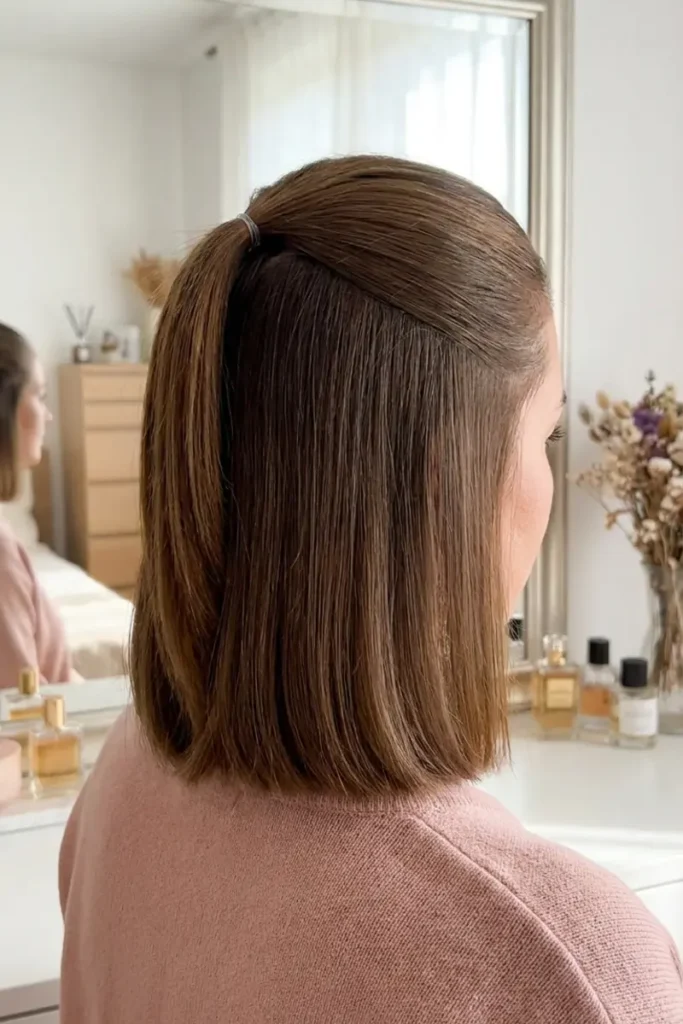
On hair that barely reaches the shoulders, section a smaller portion than you would on long hair — closer to a two-inch strip at the crown — and secure with a single small elastic or a flat clip rather than a braid, which needs more length to read clearly. Short hair actually holds a half-up section more securely than long hair does, since there’s less weight pulling the elastic loose. If your hair reaches the shoulders or collarbone, our medium length hairstyles include more half-up options.
11. Claw Clip Half-Up
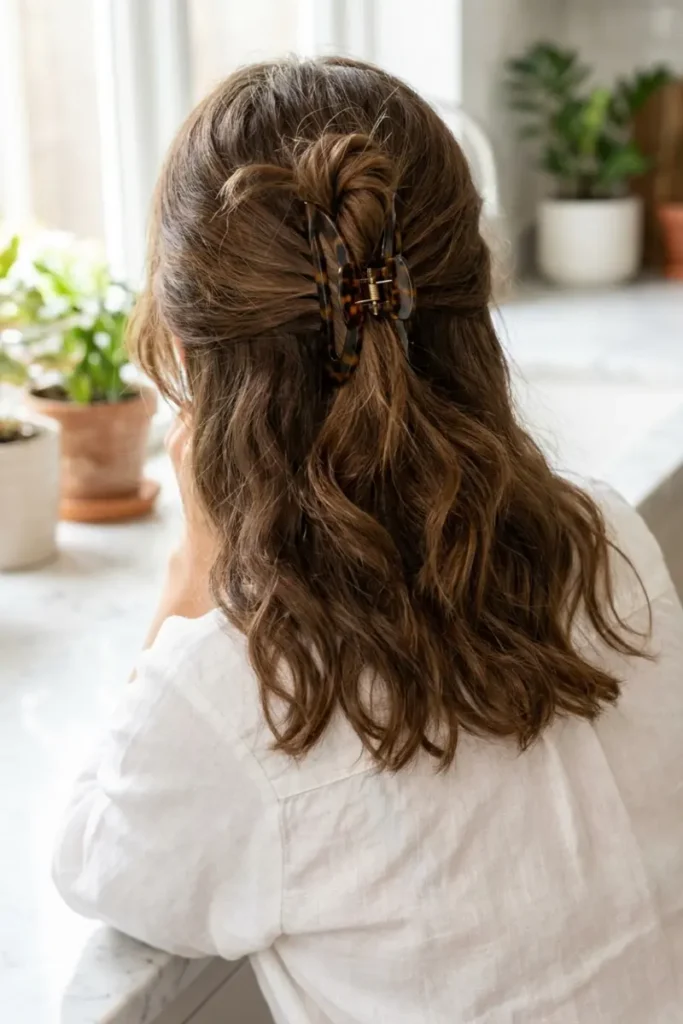
Gather the top section and clip it in place with a claw clip instead of using an elastic, twist, or braid at all. This is the only mechanism on the list that requires no manipulation of the hair itself — the clip does all the securing — which makes it the fastest version here and the reason it’s become the default for anyone who wants the silhouette without any of the technique.
12. Half-Up With Barrette or Decorative Pins
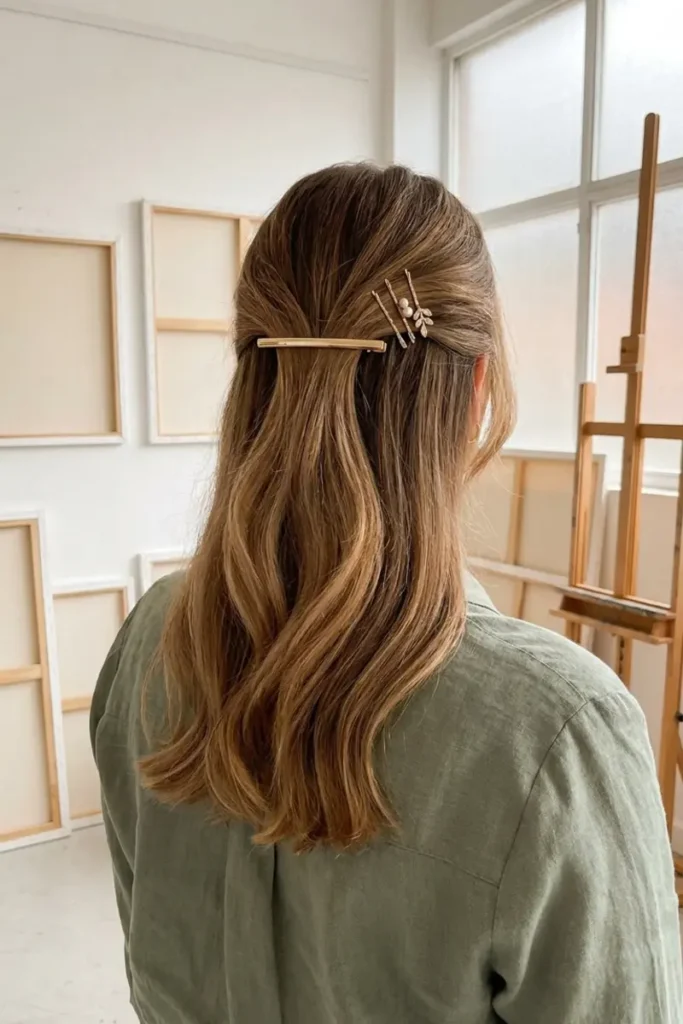
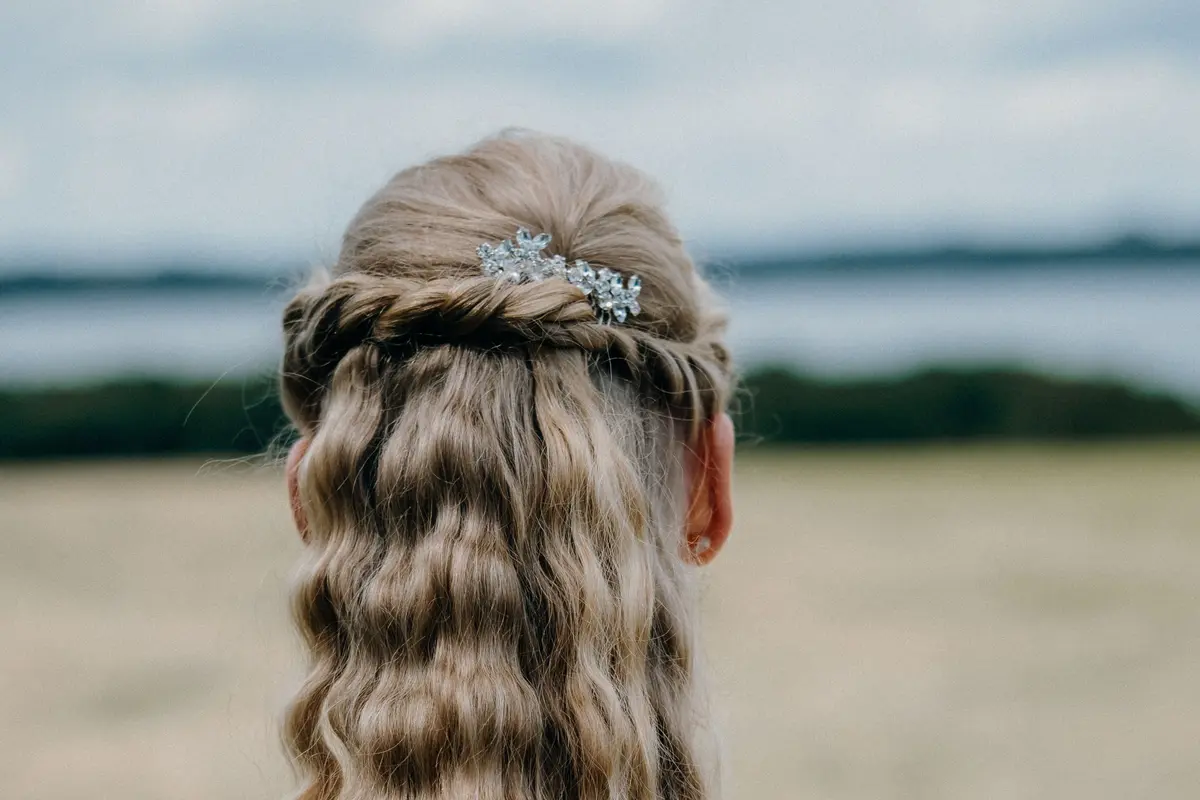
Section the top portion and secure it flat against the head with a barrette or a cluster of decorative pins instead of gathering it into a tail. Because the hair lies flat rather than pulling into a ponytail shape, this mechanism keeps more volume in the crown and works well on hair that’s too fine to hold a twist or braid cleanly.
13. Bridal Half-Up With Florals
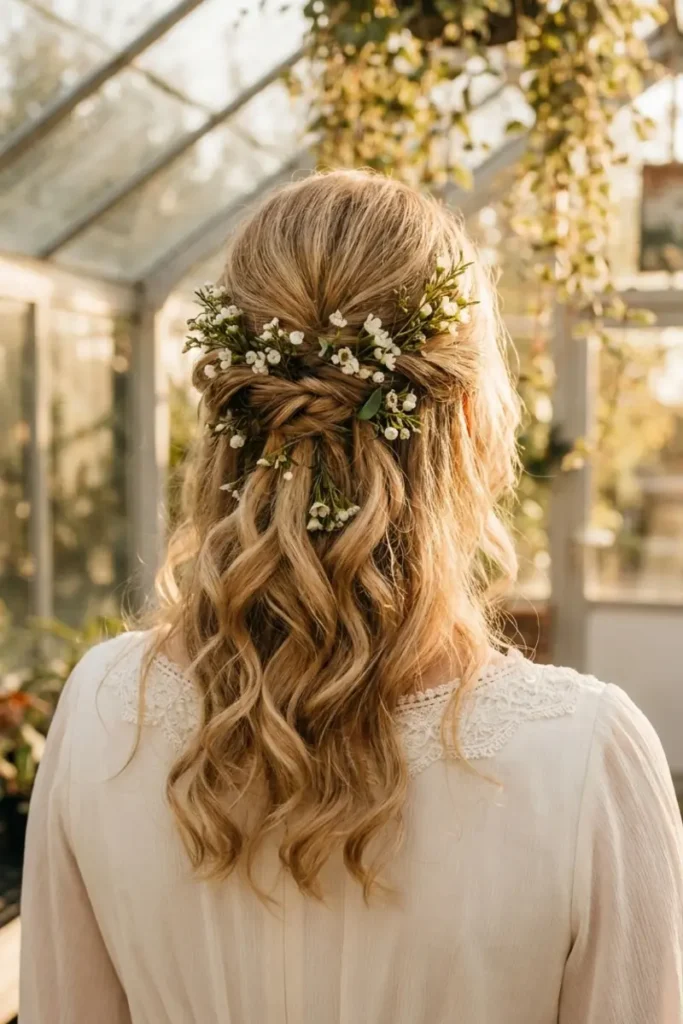
Section a slightly larger top portion than the everyday ratio, twist or loosely braid it back, and tuck small fresh or fabric flowers into the secured section as you pin it. The larger ratio and added florals are what shift this from an everyday style into an event one — the underlying mechanism can be as simple as a twist, but the proportions and detailing do the formal work. The same half-up works well for a bridal party, and our guide to bridesmaid hairstyles shows how to match it across different hair lengths.
14. Half-Up Space Buns
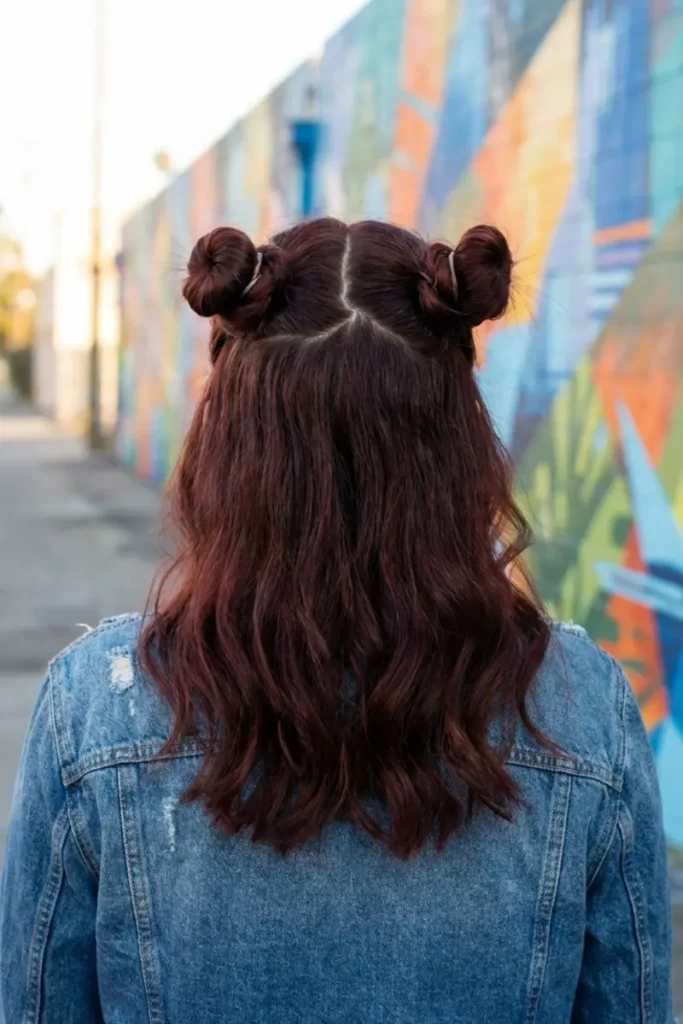
Part the top section in two and instead of one central gather, twist or braid each side into its own small bun near the crown, leaving the rest down. This applies the same “split the section” logic as the double pigtails above, but swaps loose tails for buns — a small mechanism change that shifts the style from soft and youthful to more structured and trend-forward.
15. Crown Braid Wrap Half-Up
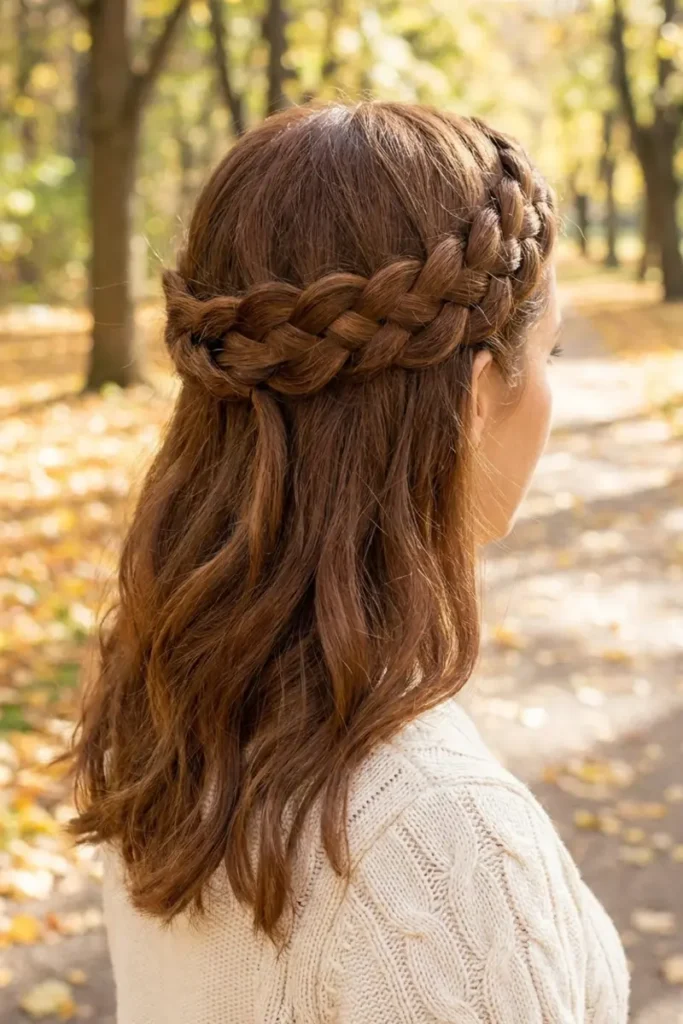
Braid a thin section from each side of the head and wrap them across the crown so they meet and overlap slightly at the center, pinning them flat, then leave the rest of the hair down. Instead of gathering the top section into a single point like most of the styles above, this version distributes it across the head in a wrapped line — the most structured mechanism on the list, and the one that most resembles a crown braid without committing to a full one. For the technique behind a continuous crown, see our Waterfall Braid Hairstyles guide.
FAQ
What’s the actual difference between all these half up half down styles?
Two things: how much hair is sectioned into the top portion, and what secures that portion — an elastic, braid, twist, bun, clip, or pins. Everything else is a variation built on top of those two choices.
How much hair should I take for the top section?
For a casual, everyday look, a smaller section from temple to temple works best. For something more formal or structured, take closer to half the hair. There’s no fixed rule — it’s the single biggest factor in how dressed-up the style reads.
Which mechanism holds the longest — elastic, braid, twist, or clip?
Braids generally hold longest since the hair is locked into itself rather than relying on friction or grip. Twists come next, followed by elastics. Clips hold the least securely over a full day but are the fastest to redo if they slip.
Can I do a half-up style on short or fine hair?
Yes. Short hair holds a half-up section more securely than long hair, since there’s less weight pulling it loose — just section less hair than you would on longer lengths. Fine hair does better with a flat clip or barrette than a twist or braid, which can slip out of thinner strands.
Why does my half-up ponytail always slide down through the day?
Almost always tension and section size — sectioning too much hair for the elastic to hold firmly, or not pulling it tight enough at the base, lets gravity win by midday. A smaller, tighter section secured close to the scalp holds significantly longer than a loose, large one.
Bottom Line
Half up half down isn’t one hairstyle — it’s a decision about how much hair goes up, followed by a decision about what holds it there, and every style above is really just those two choices answered differently. Once you’ve picked a mechanism, you can borrow technique from elsewhere on the site: our French Braid Hairstyles guide and Fishtail Braid Hairstyles guide both work as the braided securing option for any style on this list that calls for one.