
Winter Hair Care: What to Change From the Shower to Bedtime
Winter hair care has more to do with your day than with the weather report. Cold air outside holds little moisture, indoor heating dries the air further, and hats, scarves and coat collars rub against the ends for hours. Hair that felt fine in September starts to look dull, crackle with static and split at the nape by December.
This winter hair care guide follows a day from the shower to bedtime, because each stage does a different kind of damage and needs a different fix. You’ll find a quick table of what to change from your summer routine, the most common winter hair problems and their causes, and adjustments for fine, thick, curly, color-treated and gray hair.
What to Change From Your Summer Routine
| Step | Summer | Winter |
|---|---|---|
| Water temperature | Whatever feels good | Lukewarm, with a cool final rinse |
| Washing | As often as sweat and oil need | One wash fewer per week if your scalp allows it |
| Conditioner | Light, rinse-out | Richer rinse-out plus a leave-in on the lengths |
| Mask | Every two weeks or as needed | Once a week |
| Drying | Air-dry outside | Dry fully indoors before going out |
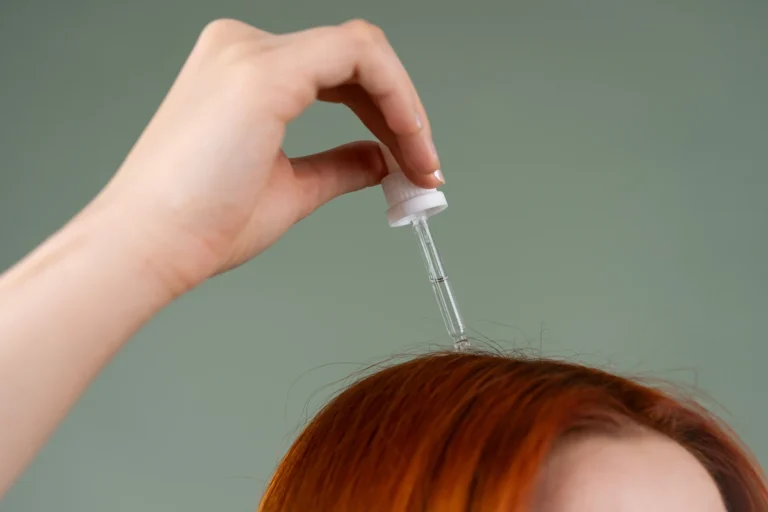
| Finishing | Lightweight spray | A drop of oil or serum on the ends |
| At night | Hair down | Loose braid or bun on a silk or satin pillowcase |
In the Shower
Turn the Water Down
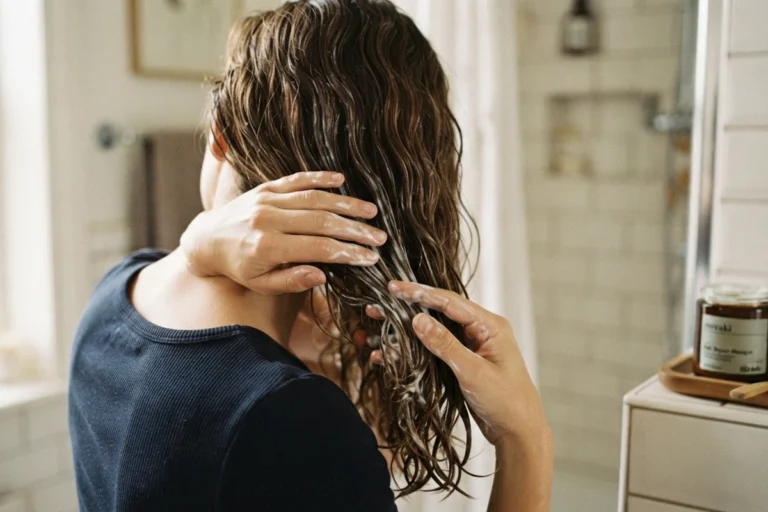
A hot shower feels best on a cold morning, but very hot water lifts the outer layer of the hair and strips the natural oils from the scalp faster. Wash and condition in lukewarm water, then finish with a short cool rinse over the lengths to help the cuticle lie flat and reflect more light.

Wash a Little Less Often
Most scalps produce less oil in cold, dry weather, so many people can stretch the time between washes by a day. If your roots still get oily, keep your usual schedule and focus on moisture for the lengths instead. Our guide to scalp care for oily, dry and sensitive scalps explains how to match washing to your scalp type.
Condition the Lengths, Not the Roots
Use a richer conditioner than in summer and work it from mid-length to the ends, where hair is oldest and most worn. Once a week, swap it for a mask and leave it on for the time on the label. Very dry, brittle hair may need a protein treatment some weeks and a moisture mask others; our hair breakage guide explains how to tell which one your hair needs.
Drying and Styling
Blot, Don’t Rub
Wet hair stretches and snaps more easily than dry hair. Squeeze the water out with a microfiber towel or a soft cotton T-shirt instead of rubbing, and detangle with a wide-tooth comb from the ends upward.
Dry Fully Before You Go Out
Damp hair outside in freezing air can stiffen, and it stays wet much longer under a hat, which leaves it fragile and flattened. Give yourself time to dry your hair completely indoors, at least at the roots and through the lengths that sit under a collar.
Use Heat Protectant Every Time
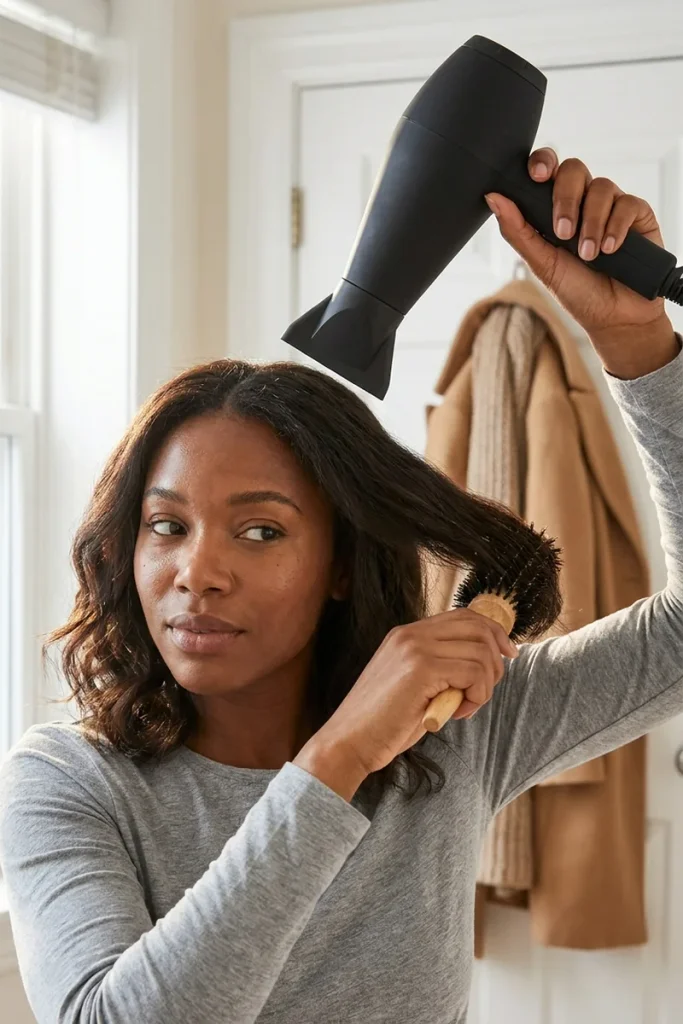
More blow-drying in winter means more heat on the same strands. Apply a heat protectant to towel-dried hair, not soaking-wet hair, use a medium setting, and point the nozzle down the hair shaft. Our heat damage guide covers temperatures for fine and thick hair.
Getting Dressed and Out the Door
Mind the Collar and Scarf
Wool scarves and coat collars rub against the nape all day, which roughs up the ends and causes the breakage many people notice at the back of the neck. Wear long hair in front of the coat, braid the lengths, or tuck the ends inside a silk scarf. A smooth lining under a wool scarf helps too.

Choose a Hat That’s Kind to Hair
A hat that fits comfortably and has a satin or silk lining protects hair from wind and cuts friction and static. If you wear one most days, our guide to hairstyles for hats and beanies shows which styles hold up underneath and how to fix flat roots once the hat comes off.
Outside in the Cold
Keep the Ends Covered on Windy Days
Wind tangles loose hair and whips the ends against coats and bags. On windy days, wear a low braid, a low bun or a ponytail with the length tucked inside your coat. Our ponytail hairstyles include low, wrapped styles that sit neatly under a collar.
Protect Your Scalp and Part
Winter sun is weaker but still reaches the scalp along a center part, especially in snow, which reflects light. A hat covers it, and moving your part from time to time stops one line from getting the most exposure.
Indoors With the Heating On
Add Moisture to the Air
Central heating can make indoor air very dry, which is a major cause of static and brittle ends. A humidifier in the bedroom or living room helps hair and skin alike; many people aim for indoor humidity around 40 to 50 percent. A bowl of water near a radiator adds a little moisture if you don’t have one.
Calm Static Without Weighing Hair Down
Static builds when dry hair rubs against wool, synthetic fabrics and plastic brushes. Smooth a pea-size amount of leave-in conditioner or a drop of oil between your palms and press it lightly over the lengths. A wooden or boar-bristle brush creates less static than plastic, and a dryer sheet rubbed gently over flyaways works in a pinch. If frizz is the bigger problem, our guide to frizz and hair porosity explains which routine suits your hair.

At Night
Sleep on Silk or Satin
Cotton pillowcases absorb moisture and create friction as you turn over. A silk or satin pillowcase, or a satin bonnet for curly and coily hair, lets hair glide and keeps more moisture in the strands.
Wear a Loose Braid or Bun
Loose hair tangles overnight, and tangles mean more breakage when you brush in the morning. A loose braid or a soft bun held with a scrunchie keeps hair together without pulling. Never go to bed with wet hair in winter; it stays damp for hours in a cool room and is easy to stretch and tangle.

Winter Hair Problems and Fixes
| Problem | Usual cause | Fix |
|---|---|---|
| Static and flyaways | Dry indoor air, wool and synthetic fabrics | Leave-in or a drop of oil, humidifier, wooden or boar-bristle brush |
| Dull, rough-looking hair | Hot water and heat styling lifting the cuticle | Lukewarm wash, cool final rinse, weekly mask |
| Breakage at the nape | Scarves and coat collars rubbing the ends | Hair in front of the coat, silk scarf, braid the lengths |
| Dry, split ends | Low humidity plus more blow-drying | Richer conditioner, heat protectant, a dusting trim |
| Itchy or flaky scalp | Dry air, hot showers, or dandruff | Lukewarm water, gentle shampoo; see a dermatologist if it lasts |
| Faded color | Hot water and frequent washing | Cooler water, fewer washes, color-safe shampoo |
Dry winter flakes and dandruff can look alike but need different care. If flaking, itching or redness lasts more than a few weeks or keeps getting worse, see a dermatologist rather than switching products again.
Winter Hair Care by Hair Type
| Hair type | Watch out for | Winter change |
|---|---|---|
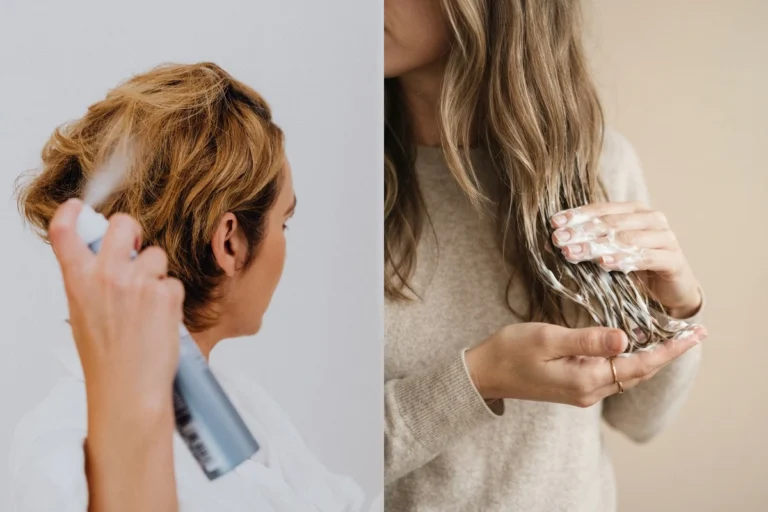
| Fine or straight | Static, flat roots under hats | Light leave-in spray, not heavy oils; dry shampoo at the roots |
| Thick or coarse | Dry, rough ends | Richer mask weekly; a few drops of oil on damp ends |
| Curly or coily | Moisture loss, frizz, tangles | Layer leave-in and a sealing oil or butter; satin bonnet at night |
| Color-treated | Faster fading, dryness | Lukewarm water, color-safe shampoo, a gloss mid-season |
| Gray or silver | Wiry texture, yellow tones | Moisture mask weekly; toning shampoo only as needed |
For year-round routines, see our hair care tips by hair type. For curl-specific routines, see our curly hairstyles by curl type; for keeping silver bright, see our gray hair care routine; and if you’re changing color for the season, our winter hair color ideas include tips to keep it glossy.
Winter Hair Care FAQ
Why is my hair so staticky in winter?
Dry air lets electric charge build up on the hair, and rubbing against wool hats, scarves and synthetic fabrics adds more. A little leave-in conditioner or oil on the lengths, a humidifier at home and a satin-lined hat all reduce it.
Should I wash my hair less in winter?
Many people can wash one day less often because the scalp tends to produce less oil in cold, dry weather. If your roots still get oily, keep your usual schedule and put the extra moisture on the lengths.
Is it bad to go outside with wet hair in winter?
It’s best to avoid it. Wet hair is more fragile, can stiffen in freezing air and stays damp for a long time under a hat. Dry it at least at the roots and through the lengths before you leave.
How often should I trim my hair in winter?
Your usual schedule is fine, but a small dusting can help if winter leaves the ends dry and split. Our hair trim schedule lists timings for every cut.
Do I need a different shampoo in winter?
Not always. If your scalp feels tight or itchy, a gentler, sulfate-free shampoo and lukewarm water often help. Keep a clarifying shampoo for occasional use if you add more leave-ins and oils in winter.
Can winter weather cause hair loss?
Cold weather itself doesn’t cause hair loss, but dry, brittle hair breaks more easily, which can look like thinning. Some people also notice seasonal shedding. If you see sudden shedding, bald patches or thinning at the hairline, see a dermatologist.
A Winter Routine in Five Changes
A good winter hair care routine comes down to a few habits. Turn the water down, put richer conditioner on the lengths, dry fully before going out, keep wool and collars off the ends, and sleep on silk or satin. Add a humidifier if your home runs dry, and adjust the rest to your hair type. Those changes cover most of what winter does to hair.