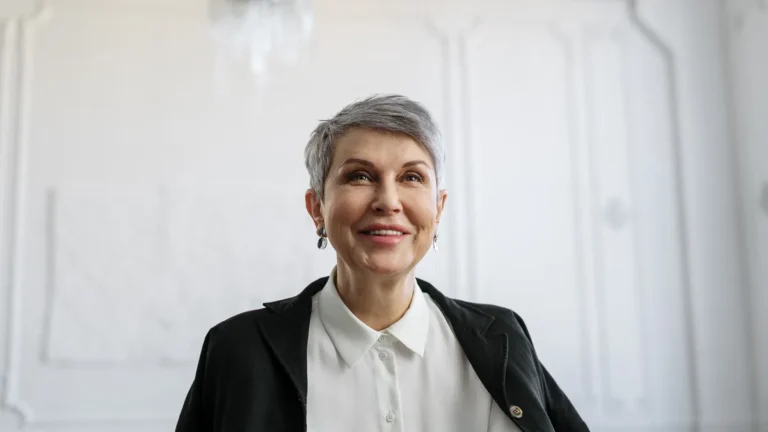

Gray and Silver Hair: Cuts and a Care Routine for Every Texture
Many people find their gray hair does not behave like the hair it replaced. It can feel coarser or wirier, turn yellow more easily, look dull under indoor light and refuse to hold a style the way it used to. Not everyone notices all of this, and some gray hair stays soft and fine. But if yours has changed, the right cut and a short care routine make a big difference.
This guide covers cuts by texture, the two ways to grow out dyed hair, and a simple weekly routine for keeping silver hair bright.
Why Gray Hair Can Feel and Look Different
Gray hair grows in when the follicle stops making pigment. That change tends to come with other age-related changes: some people’s strands become coarser or wirier, the scalp often makes less oil, so hair feels drier, and without pigment there is less built-in protection from sunlight. Researchers are still working out exactly how much of the texture change comes from the loss of pigment itself and how much from aging hair follicles in general, but the practical result is the same: gray hair usually wants more moisture and gentler heat.
The yellow cast many people notice has outside causes. Sun exposure, smoke and pollution, minerals in hard water, heat styling and some products can all leave white and gray hair looking yellow. On darker hair the same tint is hidden; on silver hair it shows. Purple and blue shampoos help because those colors sit opposite yellow and orange on the color wheel and cancel them out.
Cuts for Straight and Fine Gray Hair
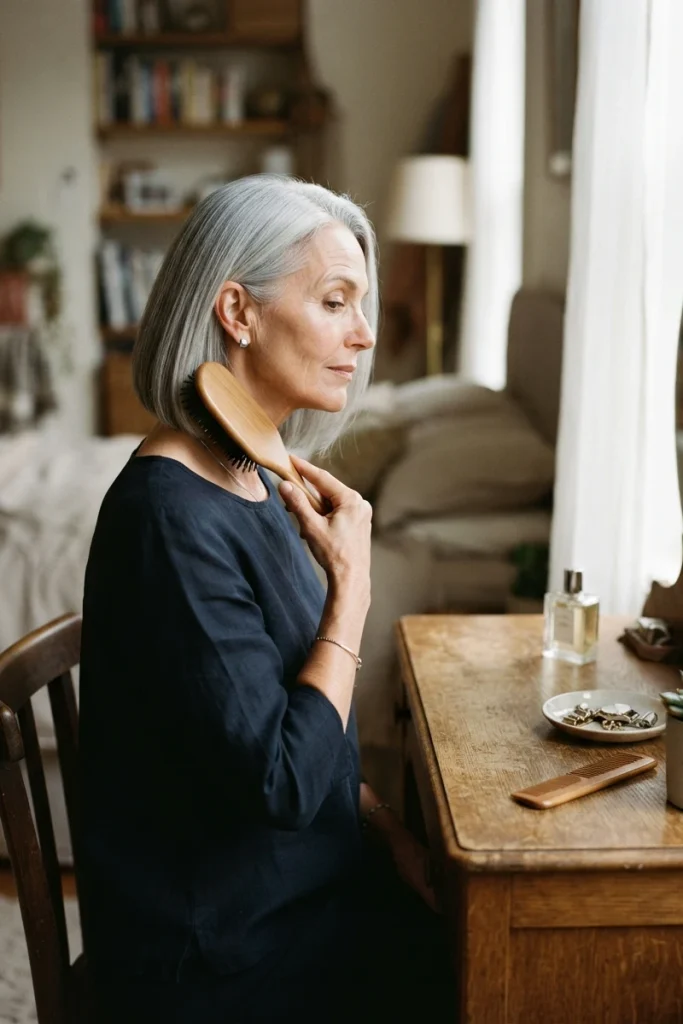
Straight, fine hair shows every unevenness, especially the line between gray roots and dyed ends, and it rarely looks thick on its own. Three cuts work well:
- A silver pixie. Short enough that no dyed length is left, so the color is even from the start. Our pixie cuts for women over 50 cover the shapes.
- A sleek chin-length bob. One clean line makes fine hair look fuller and shows off the shine of healthy silver hair. It looks best with a gloss treatment now and then. See our bob haircuts for women over 50.
- Long layers with face-framing pieces. For more length, layers add movement and help hide thinning at the crown, which becomes more common with age. Browse our layered haircut ideas.
Cuts for Wavy and Curly Gray Hair
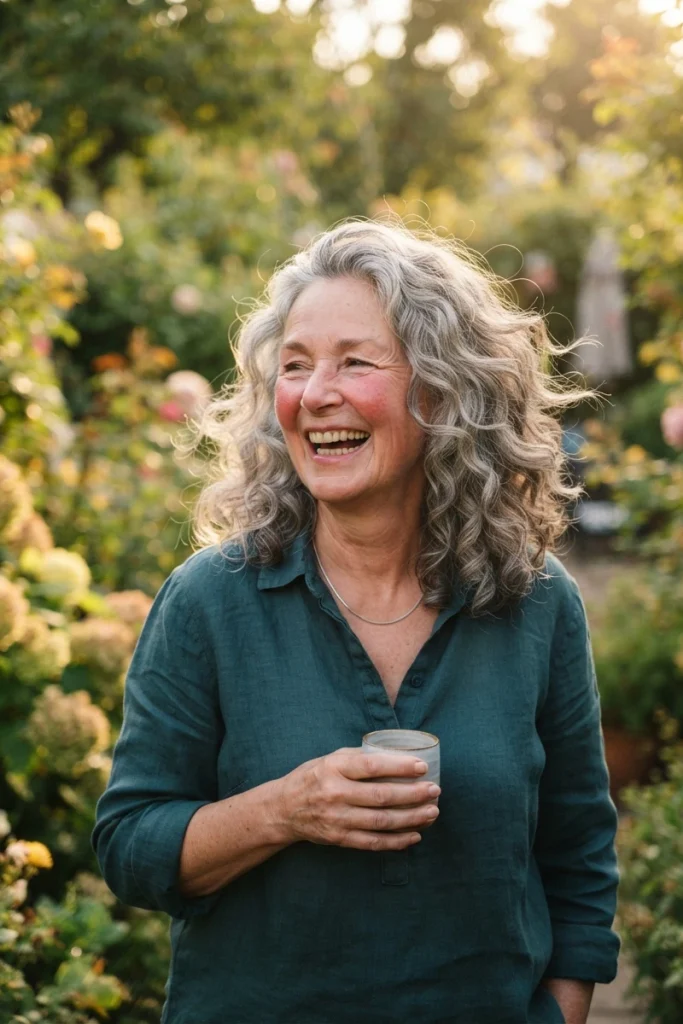
Natural texture is an advantage with gray hair. Waves and curls catch light at different angles, so a mix of white, silver and darker strands looks like dimension rather than patchiness, which is often how the same mix reads on straight hair.
- A curly crop cut dry, curl by curl, so the stylist can see where each curl sits. This works at any age and especially well on silver curls.
- Shoulder-length waves styled with a light sea-salt or texture spray and air-dried. Less heat means less dryness.
- Loose, full curls during a salt-and-pepper phase. Volume makes mixed color look deliberate.
For more on cutting and caring for each curl type, see our curly hairstyles by curl type.
Growing Out Dyed Hair to Gray
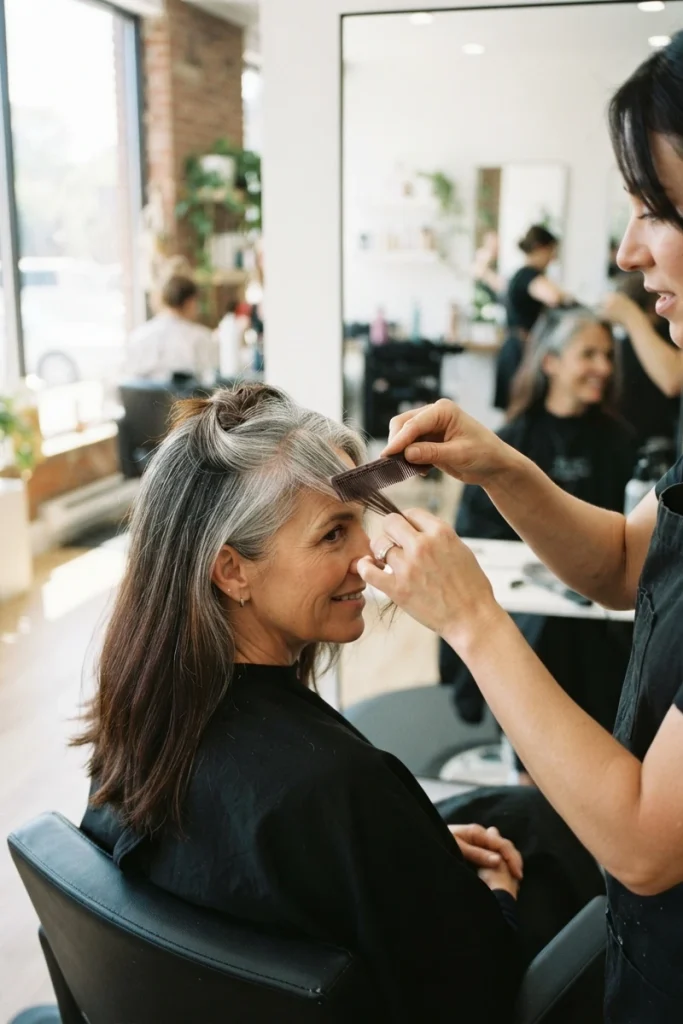
The hardest part of going gray is usually the line where new gray growth meets the old dyed ends. There are two main ways through it:
| Cut it out | Blend it | |
|---|---|---|
| How | Go shorter at each appointment until the dyed length is gone | A colorist adds silver, white or ash highlights or lowlights to soften the line |
| Speed | Fastest route to fully gray | Slower |
| Length | You will have short hair for a while | You keep your length |
| Cost | Mostly haircuts | More colorist visits |
Many people combine the two: one big cut to a bob or pixie, then blending to soften what is left. Whichever you choose, the in-between hair is part colored, part new growth and often dry, so deep condition weekly during the transition.
A Simple Weekly Routine for Silver Hair
| How often | What to do | Why |
|---|---|---|
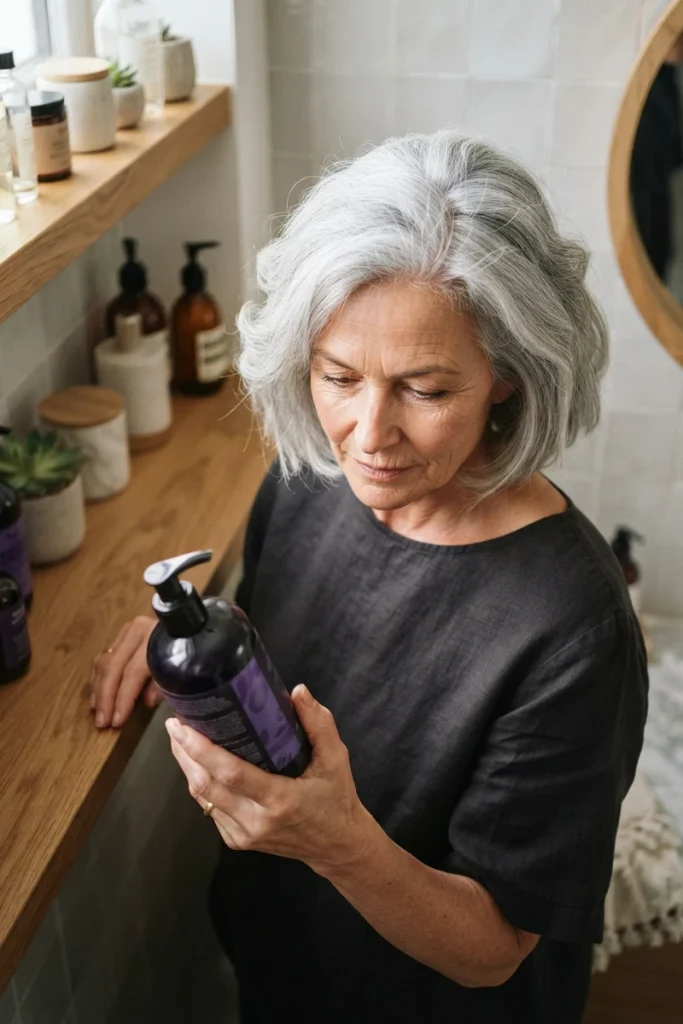
| Once or twice a week | Purple or blue shampoo instead of your regular one | Cancels yellow; using it every wash can leave a lilac tint |
| Once a week | Deep conditioner or hair mask | Dryness is what makes gray hair look dull and straw-like |
| Every time you use heat | Heat protectant, and the lowest temperature that works | High heat can yellow and roughen light hair |
| On sunny days | A hat or a hair product with UV filters | Sun is one of the main causes of yellowing |
| Every few months | A clarifying wash, or a filter on the shower head if your water is hard | Removes mineral and product buildup that dulls silver |
Leave purple shampoo on for only a minute or two at first. If your hair takes on a lavender tint, use it less often or mix it with your regular shampoo.
FAQ
Does gray hair need different products?
Mostly the same products, with more focus on moisture and shine. A purple or blue shampoo is the one gray-specific product most people find worth having.
Why is my gray hair turning yellow?
Usually sun, heat styling, hard water minerals, smoke or product buildup. Purple shampoo once or twice a week, a clarifying wash every few months and less heat usually bring it back to silver.
Should I cut off the dyed length or blend it?
Cutting is faster and cheaper but means shorter hair for a while. Blending keeps your length but takes longer and costs more in salon visits. Many people do a bit of both.
Does gray hair feel different?
Often, yes. Many people notice their gray strands feel coarser, wirier or drier than their old hair, though it varies from person to person and some gray hair stays fine and soft.
Can I use regular heat tools on gray hair?
Yes, with a heat protectant and lower settings. Very high heat can leave silver hair looking yellow and rough.
For easy everyday styles once you have your cut, see our easy hairstyles for women over 60. If frizz is your main problem, our guide to frizz and porosity explains how to choose products, and for heat, see our heat damage guide.