
Haircuts for Women Over 50: 14 Cuts Matched to How Your Hair Has Changed
The best haircuts for women over 50 are not about looking younger. They are about working with hair that has changed. Many women notice their hair getting finer, thinner at the crown, drier, grayer, or suddenly wavier somewhere in their late forties and fifties, and a cut that suited them at 35 can start to look flat or frizzy without anything being wrong with it.
So this guide starts from the change you have noticed, not from a list of trends. Pick the section that sounds like your hair, and each cut includes the words to use at the salon. Any length can work after 50, including long hair, as long as the cut matches what your hair is doing now.
Why Hair Changes After 50
The biggest driver is hormonal. Lower estrogen around menopause shortens the hair’s growth phase, so strands grow for less time and new ones come in finer. Follicles also shrink with age, which reduces density, and the scalp makes less oil, which leaves hair drier and more prone to breakage. Some women find their texture changes too, with straight hair turning coarser or developing a wave. Breastcancer.org’s overview of menopausal hair changes explains these effects in more detail.
Gray hair adds its own twist. Unpigmented strands often feel wirier and drier than the hair around them, and they can stick out from a smooth style. None of this means you need short hair. It means the shape, weight and layering of the cut matter more than before.
Find Your Starting Point
| What you’ve noticed | What the cut needs to do | Start with |
|---|---|---|
| Hair looks thin at the ends | Keep weight at the hemline | Cuts 1–3 |
| Scalp shows at the crown or part | Move volume and coverage to the top | Cuts 4–5 |
| Texture turned coarse, frizzy or wavy | Remove bulk and let the texture show | Cuts 6–8 |
| Going gray or growing out color | Make the transition faster or softer | Cuts 9–10 |
| You want to keep your length | Add movement without losing fullness | Cuts 11–12 |
| You want minimal styling | A shape that dries into place | Cuts 13–14 |

If Your Hair Has Become Thinner or Finer
Fine hair looks fullest when the ends are kept thick. Heavy layering and thinning shears take away the little weight there is, so these cuts keep a solid line.
1. Blunt Bob at the Chin or Collarbone
A one-length bob with a crisp hemline makes fine hair look denser, because every strand ends at the same point. Chin length shows off the line most; collarbone length keeps more versatility for tucking and half-ups. Our bob haircuts for women over 50 cover twelve variations.

Ask for: “A blunt line with no thinning and only invisible layers inside, if any.”
2. Textured Pixie With a Longer Top
When fine hair feels limp at any length, going short can make it look thicker. Keep the top two to three inches long and point-cut so it can be pushed up for volume, with the sides close. See our guide to pixie cuts for women over 50 for more versions.
Ask for: “Length on top for lift, tapered sides, and texture cut into the top only.”
3. Long Bob With Hidden Layers
A lob that ends between the chin and shoulders, with a few long internal layers cut underneath, so the outline stays solid while the hair moves. It suits women who want a little more length than a bob without the ends going see-through.
Ask for: “A lob with internal layers under the top section, keeping the outside line full.”
If Your Crown or Part Shows More
When the scalp shows at the crown or along the part, the goal is to bring volume and coverage to the top of the head and avoid a flat center part.
4. Side-Swept Pixie With a Deep Part
A deep side part moves more hair over the top of the head, and a longer, side-swept fringe covers the hairline. Layers at the crown lift the roots so the scalp is less visible.
Ask for: “Crown layers for lift and a long fringe that sweeps to one side. I’d like to wear a deep part.”
5. Bob With Soft Curtain Bangs
Curtain bangs cover a wider part or a receding front hairline without the commitment of blunt bangs. Paired with a bob, they add fullness around the face. Our curtain bangs guide shows which length suits your face. For more fringe styles matched to grown-up cuts, see our hairstyles for women over 40 with bangs.
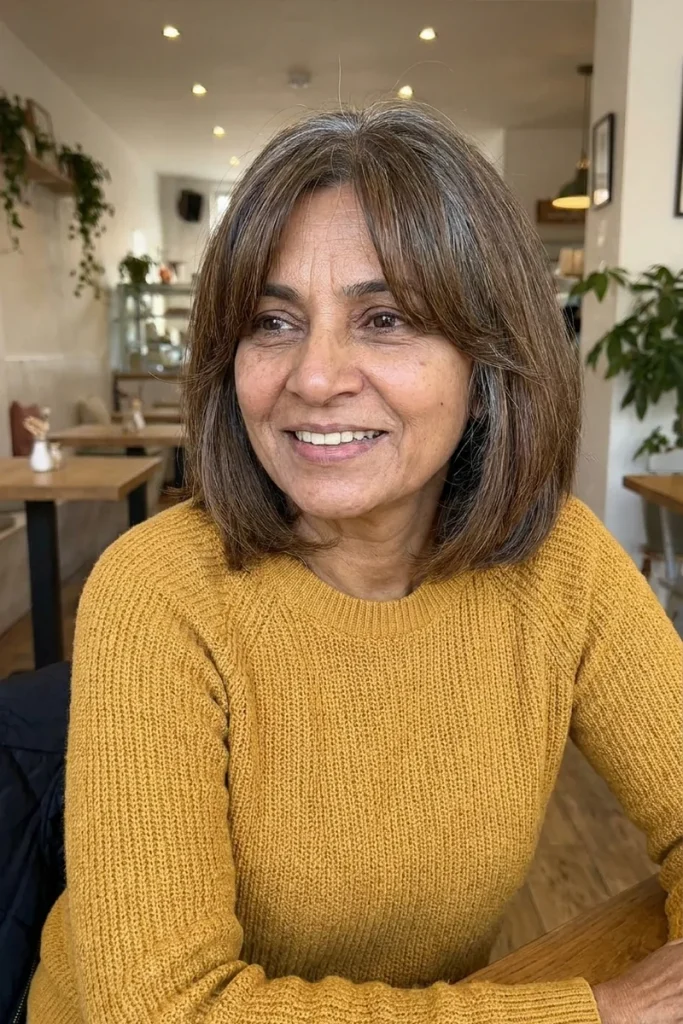
Ask for: “Long, wispy curtain bangs starting at the brow, cut dry so they fall naturally.”
If you are not sure where your volume should sit, our face shape calculator helps you match the cut to your face as well as your hair.
If Your Texture Turned Coarse, Frizzy or Wavy
Hair that has become coarser or developed a wave fights a one-length cut. These cuts remove bulk and let the new texture work for you.
6. Soft Shag
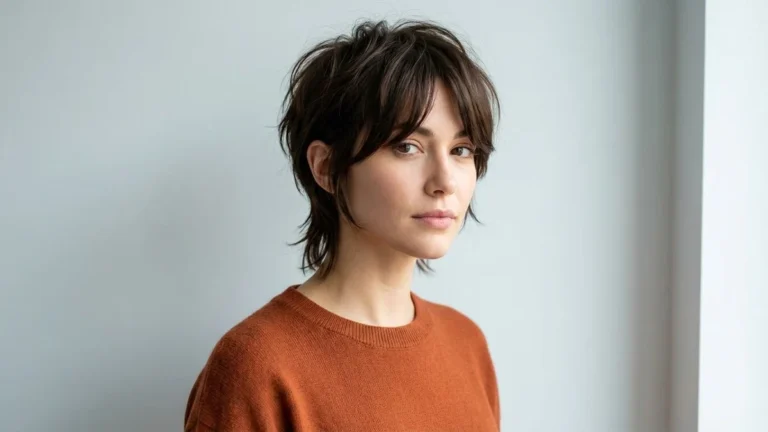
A shag uses layers throughout to remove weight and give coarse or wavy hair a shape it can fall into on its own. Keep the layers soft rather than choppy for a polished finish. Our shag haircuts guide compares short, medium and long versions.
Ask for: “Soft, blended layers that remove bulk, cut so my natural wave shows.”
7. Shoulder-Length Layers for New Waves
If your hair has started to wave, a shoulder-length cut with long layers lets the waves form instead of being weighed down. Scrunch in a little mousse and let it air-dry. Our guide to curly hairstyles by curl type explains how to style waves and curls.
Ask for: “Long layers starting below the chin, cut to work with my wave, not against it.”
8. Bixie
Between a bob and a pixie, the bixie is short and layered, so coarse hair sits close to the head instead of puffing out. It needs very little styling and grows out evenly.
Ask for: “A bixie with debulked sides and soft texture through the top.”
If You Are Going Gray
9. Short Crop to Speed Up the Transition
Cutting short is the fastest way to remove old color while the gray grows in. A cropped pixie can clear most dyed ends in a single cut, and regular trims remove the rest in a few months. Our gray hair cuts and care routine covers the transition step by step.
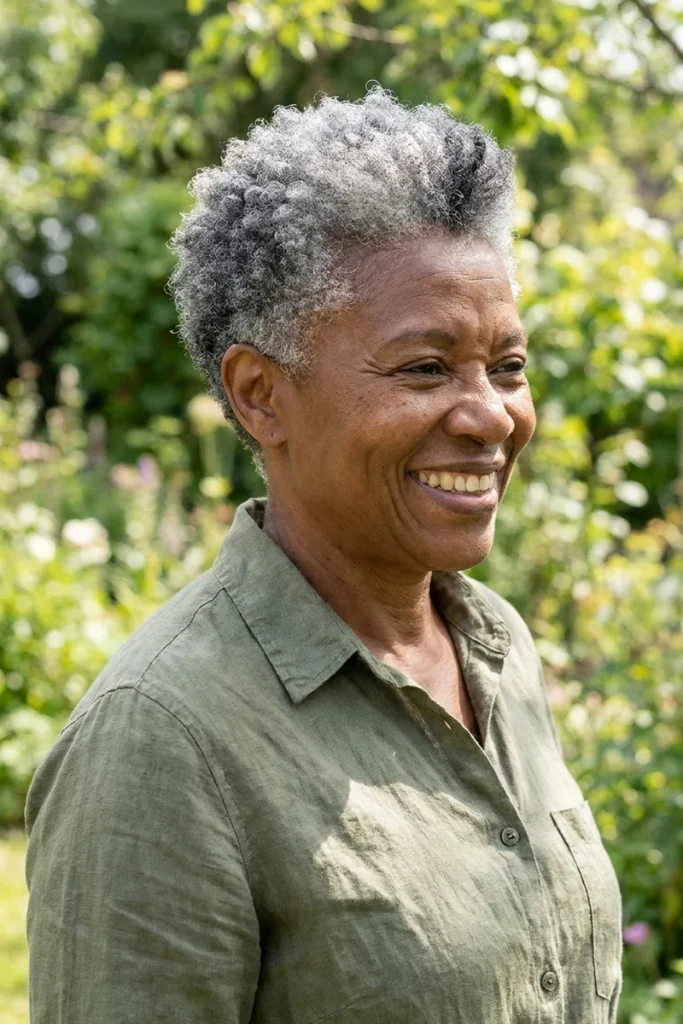
Ask for: “A short crop that takes off as much of the old color as possible.”
10. Silver Lob With Soft Layers
If you prefer to keep length while going gray, a lob with soft layers lets you trim away colored ends gradually. Wiry gray strands lie flatter in a cut with some weight, so avoid heavy thinning.
Ask for: “A lob I can trim an inch at a time as the gray grows in, with soft layers and no thinning.”
If You Want to Keep It Long
Long hair after 50 works well as long as the ends stay healthy and the cut has movement. Keep the length where your hair still looks full at the ends.
11. Long Layers That Start Below the Chin
Long layers add movement and keep long hair from hanging flat. Starting them below the chin keeps fullness around the face. Compare short, medium and long layers in our guide to layered haircuts by length.
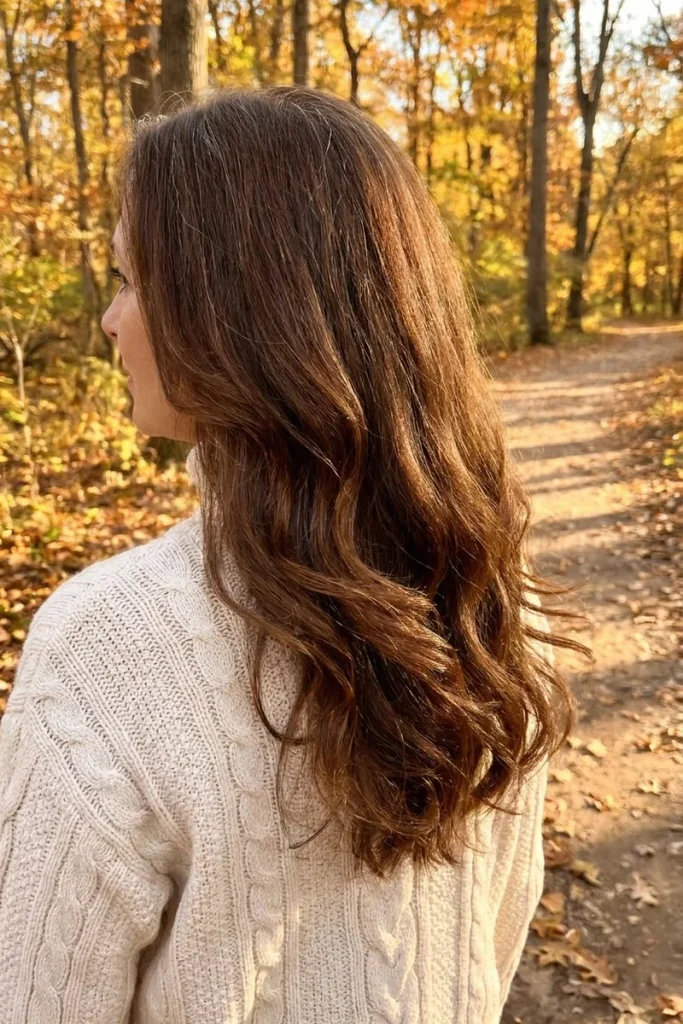
Ask for: “Long layers starting below the chin, with the ends kept full.”
12. Long Hair With Face-Framing Pieces
Face-framing pieces that fall around the cheekbones and jaw give long hair a finished look and brighten the face, even on days you wear it up.
Ask for: “Face-framing pieces starting at the cheekbones, blended into the length.”
If You Want the Least Styling
13. Wash-and-Wear Layered Bob
A chin-to-collarbone bob with light layers that dries into shape with your fingers. It suits wavy or slightly coarse hair especially well, because the texture does the styling.
Ask for: “A layered bob I can air-dry, cut so it falls into place without a round brush.”
14. Classic Short Crop
A short, tapered crop needs only a little paste in the morning. It also shows off cheekbones and earrings, and suits gray hair well.
Ask for: “A short tapered crop with enough length on top to push in different directions.”
Questions to Settle Before the Appointment
- How often will you get a trim? Pixies and blunt bobs need a trim about every four to eight weeks; long layers can go eight to twelve weeks. Our hair trim schedule lists every cut.
- How much styling will you do? Be honest. A cut that needs a round brush daily won’t suit someone who air-dries.
- Do you wear glasses? Bring them. Frames change where bangs and face-framing pieces should fall.
- Are you coloring or going gray? It changes how much length to keep.
- Bring two photos: one you like and one you don’t. The second is often more useful to the stylist.
When Hair Changes Need a Doctor, Not a Haircut
Gradual thinning with age is common, but some changes deserve a medical check. See a dermatologist or your doctor if you notice sudden or heavy shedding, round bald patches, a part that widens quickly over a few months, or itching, redness or pain on the scalp. Thyroid problems, low iron, medications and some scalp conditions can all cause hair loss, and several of these are treatable. A haircut can make thinning less visible, but it cannot tell you why it is happening.
Haircuts for Women Over 50 FAQ
What is the most flattering haircut for a woman over 50?
There is no single best cut. The most flattering haircuts for women over 50 are the ones matched to how the hair has changed: a blunt bob for fine hair, a soft shag for coarse or wavy hair, and a cut with lift at the crown if the scalp shows on top.
Should women over 50 have short hair?
Not necessarily. Short cuts are easy to care for and can make fine hair look fuller, but long hair works well after 50 if the ends are healthy and the cut has movement.
What haircut makes thin hair look thicker after 50?
A blunt bob that ends at the chin or collarbone usually makes thin hair look thickest, because all the strands end at one line. Avoid heavy thinning and choppy layers.
Which haircut hides a thinning crown?
Cuts with layers at the crown and a deep side part, such as a side-swept pixie or a layered bob, lift the roots and move more hair over the top of the head.
Why has my hair texture changed after menopause?
Lower estrogen affects the growth cycle and the scalp’s oil production, which can leave hair finer, drier and sometimes coarser or wavier. A cut that removes bulk or keeps weight, depending on the change, helps the hair look its best.
Choosing Your Cut After 50
Start with what your hair is doing now, not what it did ten years ago. Keep weight at the ends if it has thinned, add lift at the crown if your scalp shows, and remove bulk if it has turned coarse or wavy. Then pick the length you enjoy wearing. If you like the idea of an easy morning, our easy hairstyles for women over 60 work for every cut in this guide.
Sources
- Breastcancer.org, Menopausal Hair Changes: how lower estrogen affects hair growth, density, dryness and texture.
- Trim intervals and cut recommendations reflect HerHairdo’s research across professional stylist guidance; see our editorial policy for how guides are researched.