Bob Haircut Guide: How to Choose Your Bob by Length, Texture and Upkeep
A bob haircut is any cut that ends somewhere between the earlobes and the collarbone. That covers a lot of ground: a French bob that skims the cheekbones and a long bob that brushes the shoulders are both bobs, but they look, grow and behave very differently. Picking a style from photos alone is how many people end up with a bob that looked great on someone else and flat or puffy on them.
Three choices decide almost everything: where the cut ends, how your hair’s texture will treat that shape, and how much time you want to spend on it each morning. This guide walks through those three in order, then shows 16 bobs grouped by the hair they suit best.
The Bob in Three Choices
| Choice | What it decides | Ask yourself |
|---|---|---|
| 1. Length | Which features the cut frames, and how often you trim | Do I want to show my jaw and neck, or soften them? |
| 2. Perimeter (blunt or layered) | Whether the ends look thick and solid or light and moving | Is my hair fine and flat, or thick and full? |
| 3. Upkeep | Daily styling time and how fast the shape grows out | Do I blow-dry, air-dry, or reach for a curling iron? |
Step 1: Choose Your Length
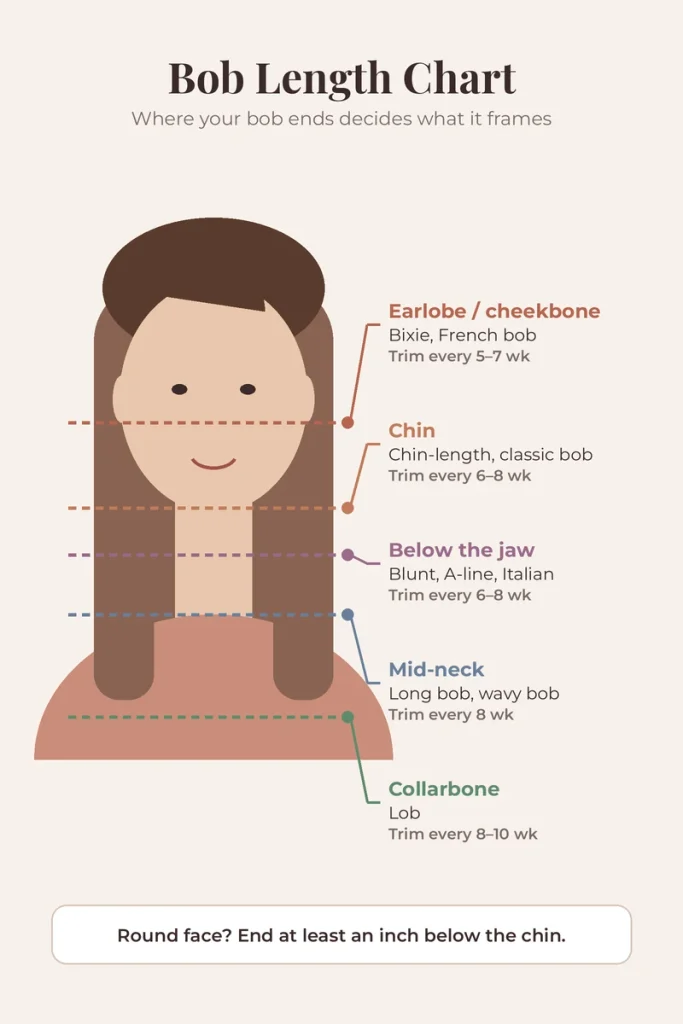
Length matters more than any other detail, because the place where the hair ends draws the eye. A line at the cheekbone highlights the cheekbones; a line at the jaw squares or sharpens the jaw; a line below the chin lengthens the face and neck. If you are unsure of your face shape, our face shape calculator takes about a minute.
| Where it ends | Common name | Flatters | Trim every |
|---|---|---|---|
| Earlobe to cheekbone | Bixie, French bob | Oval and heart faces, long necks | 5–7 weeks |
| Chin | Chin-length or classic bob | Oval, heart and long faces | 6–8 weeks |
| Just below the jaw | Blunt, A-line, Italian bob | Most face shapes, including square | 6–8 weeks |
| Mid-neck | Long bob, wavy bob | Round and square faces | 8 weeks |
| Collarbone | Lob | Round faces, and anyone nervous about going short | 8–10 weeks |
A simple rule for round faces: keep the line at least an inch below the chin, or choose an A-line that is longer in front. For square jaws, avoid a blunt line that ends exactly at the jaw corner; a little longer or softly layered works better. Oval faces can wear almost any length, so let texture and routine decide. Our full haircut guide for each face shape covers the rest.
Step 2: Match the Bob to Your Hair Texture
The same cut can look completely different on fine straight hair and on thick wavy hair. Fine hair needs weight at the ends to look full; thick hair needs weight taken out so it doesn’t turn into a triangle; wavy and curly hair need a cut that allows for shrinkage. If you are torn between a solid line and a softer one, our blunt bob vs textured bob comparison breaks down the trade-offs. Under each style below you’ll find where it ends, how often it needs a trim and roughly how long it takes to style.
Bobs for Fine or Straight Hair
1. Classic Blunt Bob
Ends at: chin to jaw · Trim: every 6–8 weeks · Daily styling: 5 minutes
All the hair is cut to one length with no layers, so every strand ends on the same line. That solid edge is what makes this one of the cuts that make thin hair look fuller. Style it straight with a flat iron, or run a round brush under the ends for a slight bend. A drop of shine serum keeps the line looking polished.
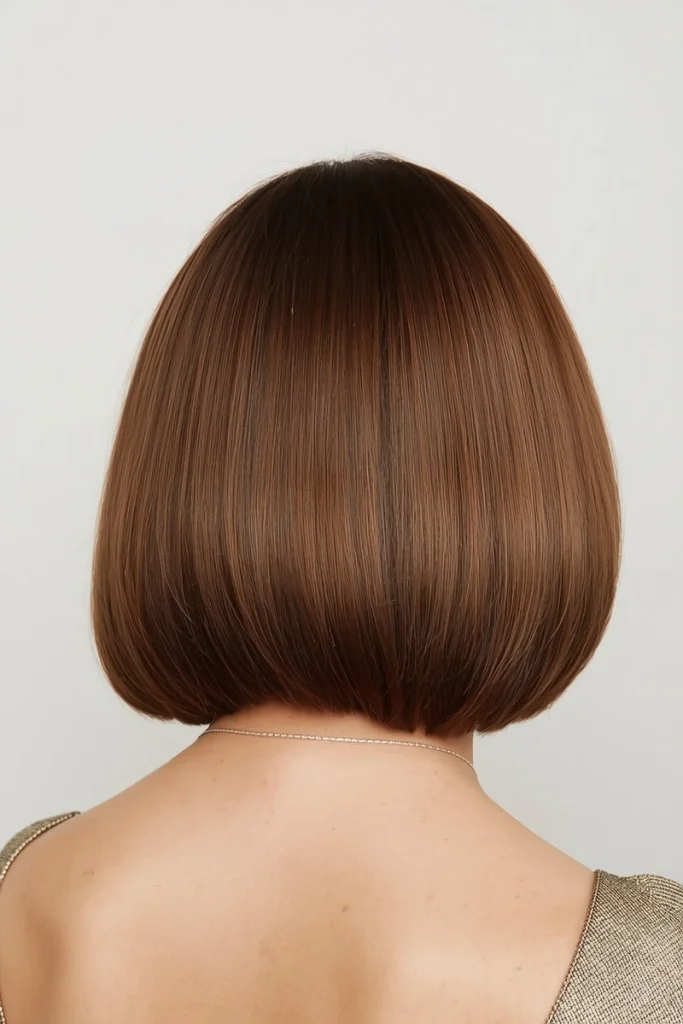
2. French Bob
Ends at: cheekbone to jaw · Trim: every 5–7 weeks · Daily styling: 5 minutes
Short, slightly rounded and usually worn with brow-length bangs, the French bob is meant to look a little undone. It works best on fine to medium hair with some natural movement. Air-dry with a light texture spray and push the bangs to the side with your fingers rather than brushing them flat.

3. Chin-Length Bob
Ends at: chin · Trim: every 6–8 weeks · Daily styling: 5–10 minutes
The chin-length bob sits between the short French bob and the longer blunt cut. It shows off the jaw and neck, suits oval and heart faces especially well, and keeps enough length to tuck behind the ears. Ask for a few hidden layers inside if your hair is medium thickness, so the ends don’t bulge out.

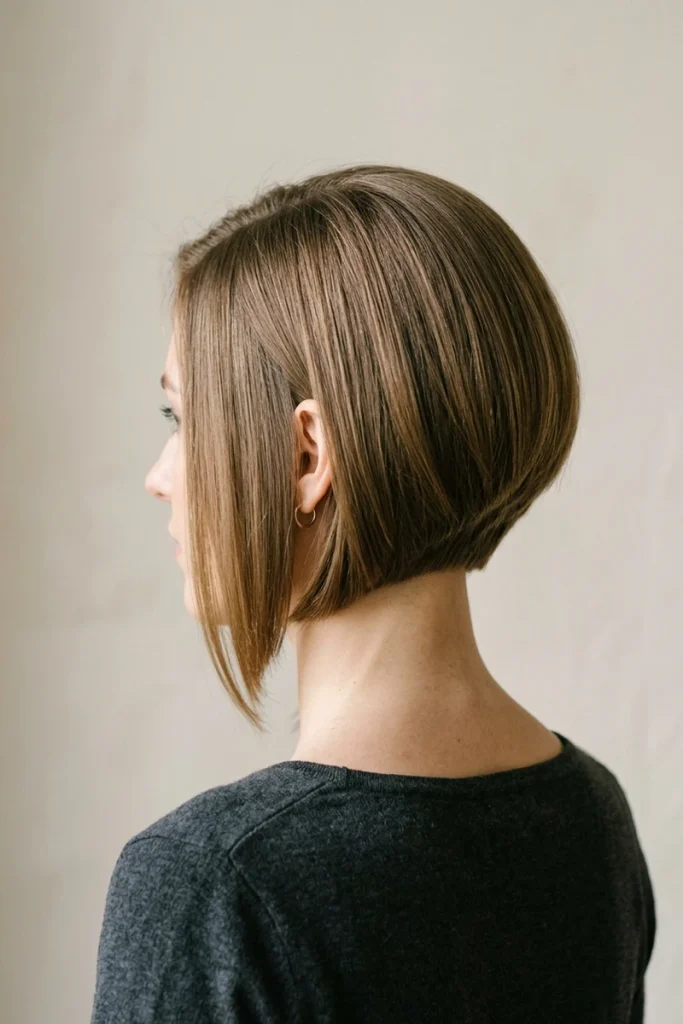
4. A-Line Bob
Ends at: jaw in back, below chin in front · Trim: every 6–8 weeks · Daily styling: 10 minutes
The A-line is shorter at the back and gradually longer toward the face, so the front pieces form a gentle angle along the jaw. The longer front lengthens round faces and lets the back stay light. It looks sharpest on straight hair; on wavy hair, keep the angle subtle so the front doesn’t flip outward.
Bobs for Thick Hair
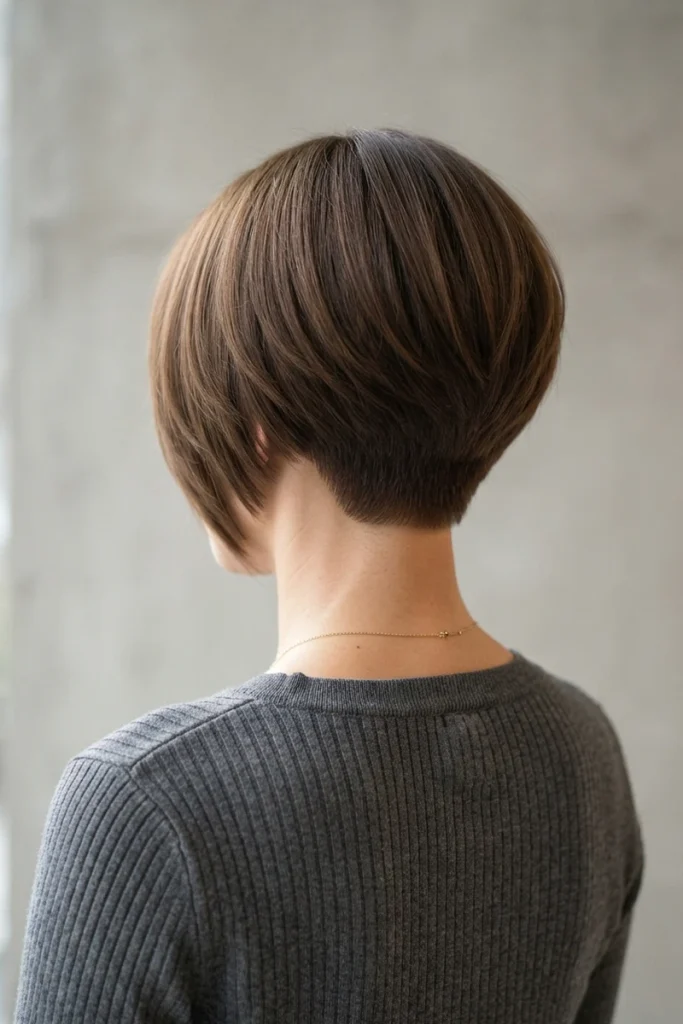
5. Stacked Inverted Bob
Ends at: nape in back, chin in front · Trim: every 5–6 weeks · Daily styling: 10–15 minutes
An inverted bob is very short at the nape and longer at the front. “Stacked” means short layers are built up at the back of the head, creating a rounded shape at the crown. The stacking removes bulk from thick hair, so the cut sits close to the head instead of widening. It needs a round brush and blow-dryer to look its best, and it loses its shape fastest of all the bobs.
6. Layered Bob
Ends at: jaw to mid-neck · Trim: every 6–8 weeks · Daily styling: 5–10 minutes
Layers through the mid-lengths and ends take out weight and add movement, which keeps a thick bob from looking heavy or triangular. Long, soft layers work on medium-thick hair; shorter layers suit very dense hair. For more on choosing the right layering, see our guide to layered haircuts.
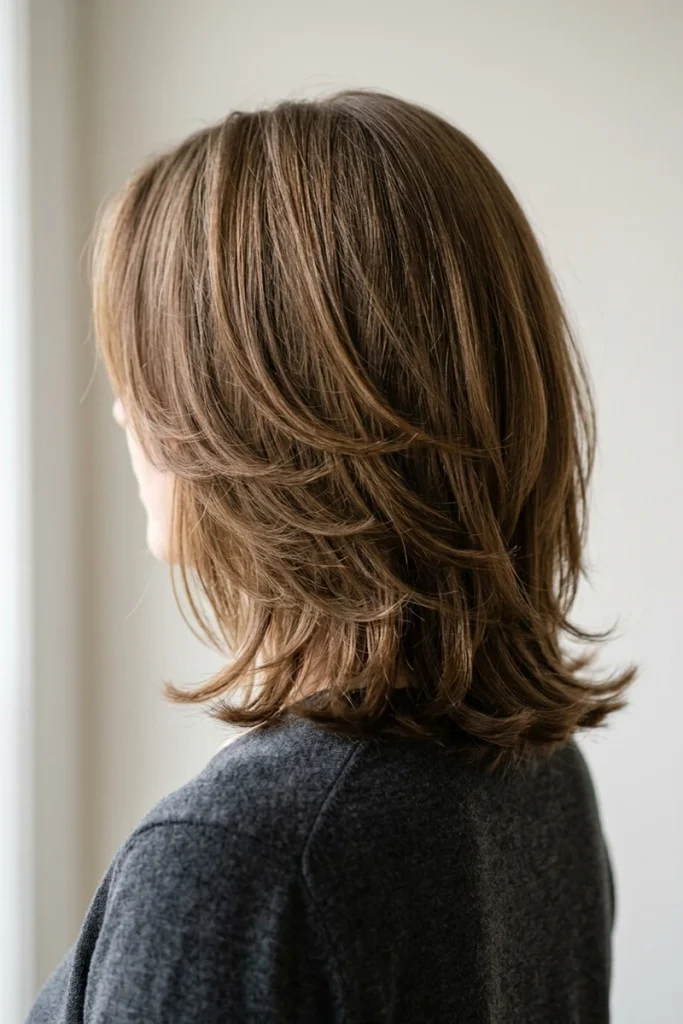
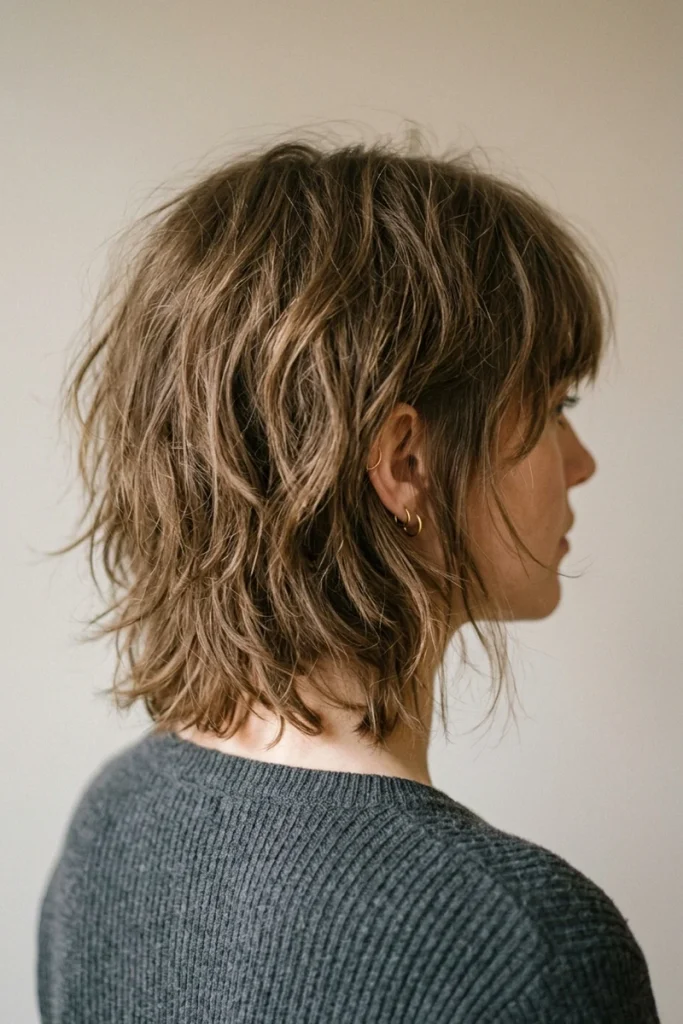
7. Shaggy Bob
Ends at: jaw to mid-neck · Trim: every 6–8 weeks · Daily styling: 2–5 minutes
The shaggy bob uses choppy layers all over the head, often cut with a razor, plus a fringe. It is made for thick, wavy hair that already has body, and it looks better a little messy than perfectly smooth. Scrunch in texture spray and let it dry on its own. If you want even more choppy movement, the short wolf cut pushes the same idea further.
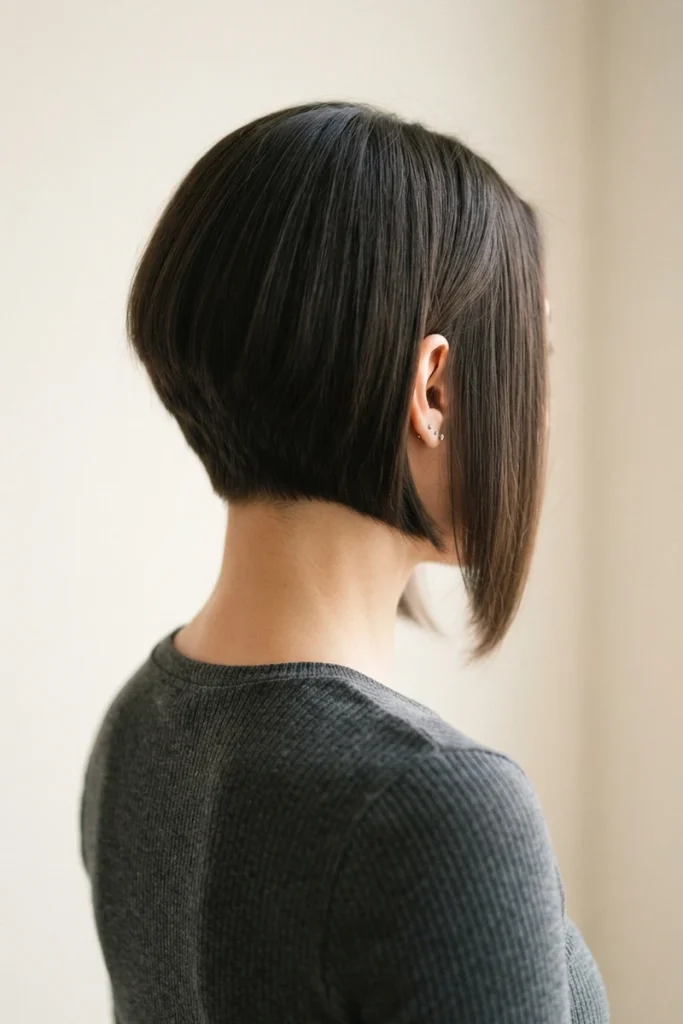
8. Asymmetrical Bob
Ends at: jaw on one side, below chin on the other · Trim: every 6 weeks · Daily styling: 10 minutes
One side is cut noticeably longer than the other, usually with a deep side part. The uneven line breaks up a round or square face and makes thick hair look sleek and deliberate. It needs straightening or a round-brush blow-dry, because waves blur the difference between the two sides.
Bobs for Wavy or Curly Hair
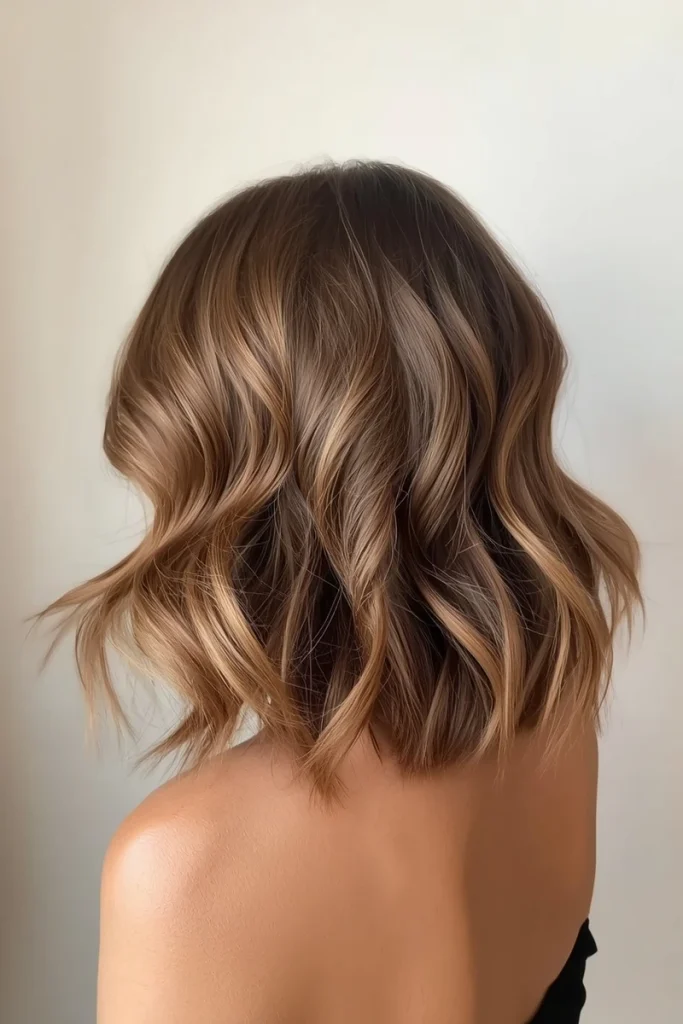
9. Wavy Bob
Ends at: chin to mid-neck · Trim: every 8 weeks · Daily styling: 5 minutes
Cut a little longer than you want it to sit, because waves pull the length up as they dry. Light layers at the ends help the wave form instead of lying flat. Apply a curl or wave cream to damp hair, scrunch, and dry with a diffuser or let it air-dry. Straight hair can get the same look with a curling wand, twisting sections in alternating directions.
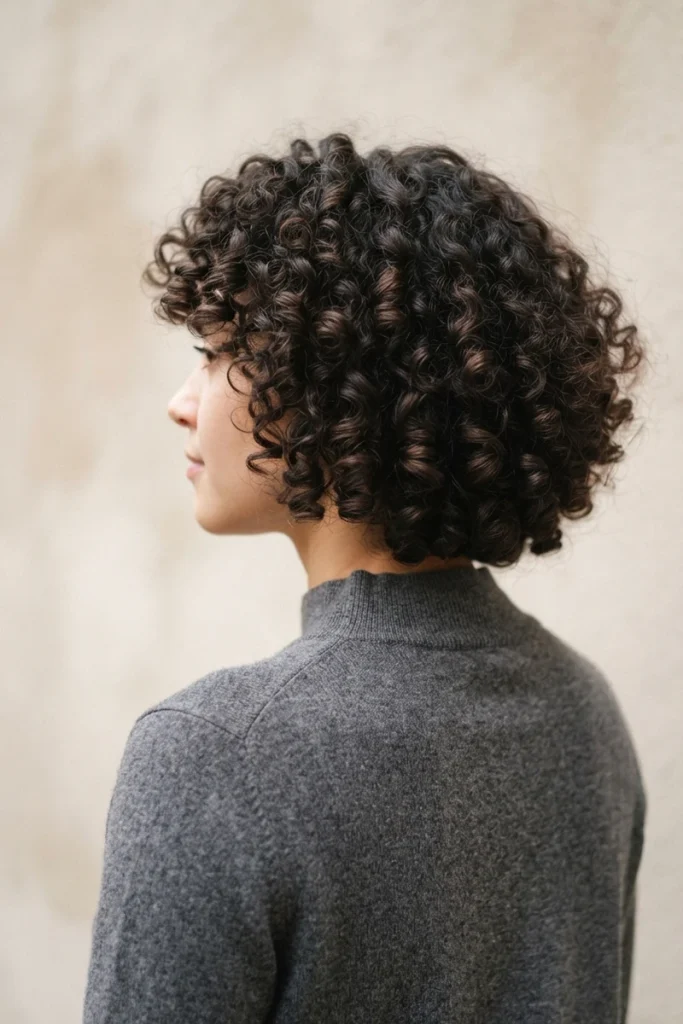
10. Curly Bob
Ends at: chin to collarbone (when dry) · Trim: every 8–12 weeks · Daily styling: 10 minutes on wash day
Curly bobs are best cut dry, curl by curl, so the stylist can see where each curl falls. A rounded shape with longer pieces around the face keeps it from looking like a triangle. Use curl-defining cream on soaking wet hair, then diffuse on low heat. Our guide to curly hairstyles by curl type helps you match the shape to your curl pattern.
11. Italian Bob
Ends at: jaw · Trim: every 6–8 weeks · Daily styling: 10 minutes
The Italian bob is a slightly longer, fuller version of the French bob, with a thick perimeter and soft, bouncy volume. It looks best on medium to thick hair with a natural bend. Blow-dry with a large round brush, lifting at the roots, and finish with a little serum on the ends for shine.
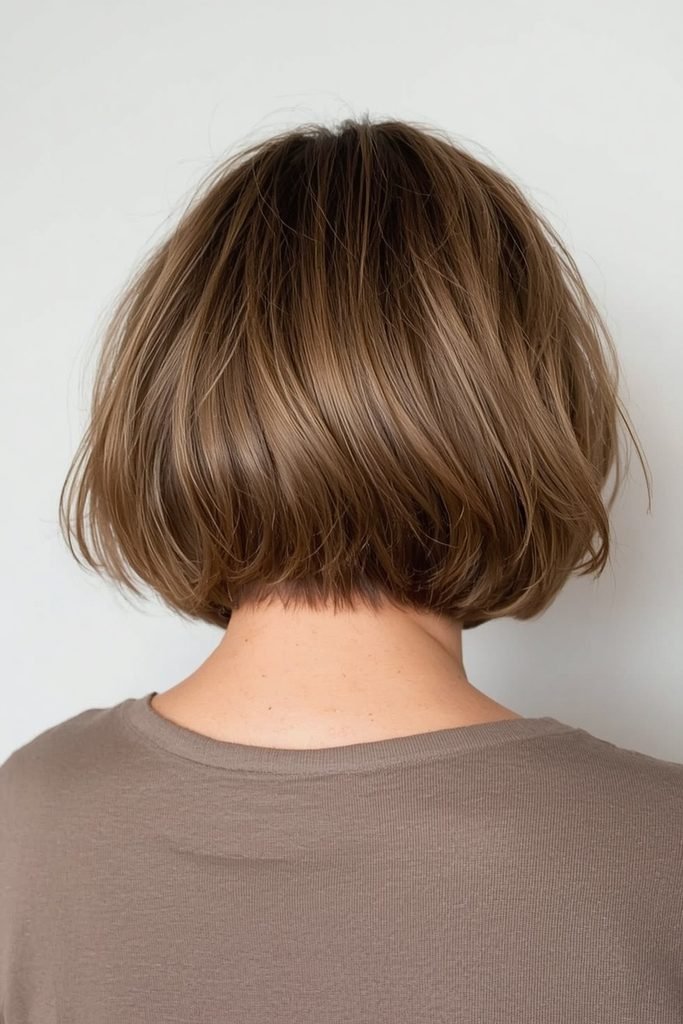
12. Textured Bob With Wispy Bangs
Ends at: jaw · Trim: every 6–8 weeks, bangs every 3–4 weeks · Daily styling: 5 minutes
Point-cut ends and a light, see-through fringe give this bob a soft, lived-in shape. It suits wavy hair that has some natural texture, and the wispy bangs soften a long forehead or a strong brow. Dry the bangs first with a flat brush, then rough-dry the rest.

Low-Commitment Bobs
These are the easiest way into a bob if you have long hair now, or a way to change your look without a big chop. If you are coming from long hair, our guide to cutting long hair into a bob explains what to expect in the chair and in the first week.
13. Long Bob (Lob)
Ends at: collarbone · Trim: every 8–10 weeks · Daily styling: 5 minutes
The lob keeps enough length for a ponytail and grows out without an awkward stage. It flatters round faces and works on every texture. Wear it straight, with loose waves, or tucked behind one ear.
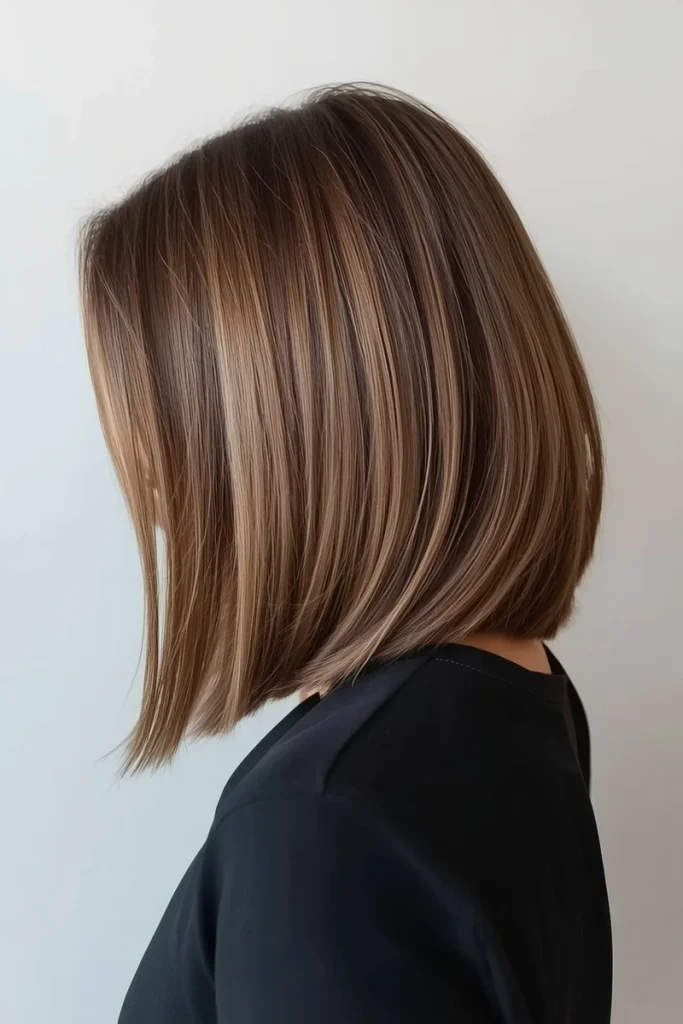
14. Curtain Bang Bob
Ends at: jaw to mid-neck · Trim: every 6–8 weeks, bangs every 4–6 weeks · Daily styling: 5–10 minutes
Bangs parted in the middle sweep to either side and blend into the length, framing the cheekbones. They grow out gracefully and can be pinned back on busy days. See our curtain bangs guide for how to style them with a round brush.

15. Money-Piece Bob
Ends at: any bob length · Trim: every 6–8 weeks, color every 8–10 weeks · Daily styling: 5 minutes
Two bright front pieces lighten the face without coloring the whole head. It is a low-commitment way to refresh a bob you already have, and the color grows out softly because only the front sections are lightened.
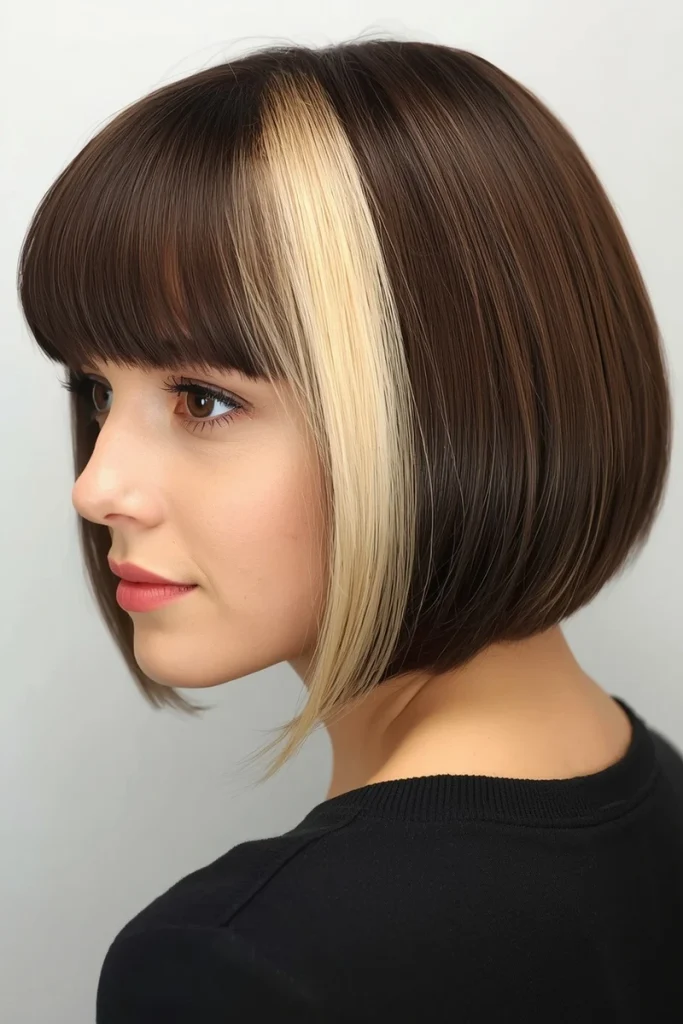
16. Bixie
Ends at: earlobe · Trim: every 5–7 weeks · Daily styling: 2–5 minutes
The bixie mixes a short bob’s length with a pixie’s layered texture. It is the shortest bob and a good test if you are thinking about a pixie cut, because it can grow back into a regular bob within a few months.
Step 3: Match the Bob to Your Routine
| Your mornings | Best bobs | Tools you’ll use |
|---|---|---|
| Wash and go, no heat | Shaggy, wavy, curly, textured with wispy bangs | Texture spray, curl cream, diffuser |
| 5 minutes with one tool | Classic blunt, French, lob, bixie | Flat iron or round brush |
| 10–15 minutes, polished finish | Stacked inverted, Italian, asymmetrical, A-line | Blow-dryer, round brush, shine serum |
| Rare salon visits | Lob, curly, wavy | Trim every 8–12 weeks |
Even a bob that needs a blow-dry can be styled without heat on most days. Our guide to styling a bob without heat covers air-drying, scrunching and overnight braids for each hair type.
What to Say at the Salon
Bring two or three photos of the bob you want on hair that looks like yours, then cover three points:
- Length: “I want it to end at my chin / jaw / collarbone when dry.” Point to the spot, because a few inches can mean very different things to you and your stylist.
- Perimeter: “Keep the ends blunt” for fine hair, or “take weight out inside” for thick hair.
- Back: “Same length all around,” “slightly shorter in back,” or “stacked at the nape.”
If your hair is wavy or curly, ask for a dry cut or at least a final check once your hair is dry.
Bob Haircut FAQ
What face shapes suit a bob?
Almost every face shape suits some kind of bob; the length is what changes. Oval faces can wear any length. Round faces look best with a bob that ends below the chin or is longer in front. Square faces suit soft layers or a length just past the jaw, and heart faces suit chin-length bobs that add width near the jaw.
What is the difference between a bob and a lob?
A bob ends between the earlobes and the neck. A lob, or long bob, ends at or just above the collarbone. A lob is easier to tie back and grows out more gently, while a shorter bob gives a sharper, more defined shape.
How often should you trim a bob?
Short bobs, such as French bobs and bixies, need a trim every 5–7 weeks. Chin and jaw-length bobs last 6–8 weeks, and lobs or curly bobs can go 8–12 weeks. Our hair trim schedule lists timings for every cut.
Can a bob work on thick or curly hair?
Yes. Thick hair needs internal layers or stacking to remove bulk, and curly hair needs a dry cut that leaves room for shrinkage. A layered, shaggy or curly bob is usually a better choice than a one-length blunt cut on very dense hair.
Is a bob high-maintenance?
It depends on the style. Shaggy, wavy and textured bobs need very little daily styling. Stacked, inverted and asymmetrical bobs need a blow-dry and frequent trims to keep their shape. Most bobs need a trim more often than long hair does.
How do you grow out a bob without it looking messy?
Keep trimming the back slightly so it doesn’t overtake the front, and switch to longer, softer layers as it grows. Our guide to growing out a bob has a stage-by-stage plan.
Choosing Your Bob
Start with where you want the cut to end, then let your texture choose between a blunt and a layered edge, and finally check that the styling time fits your mornings. If you are over 50 and want styles that suit gray or changing hair, see our bob haircuts for women over 50.