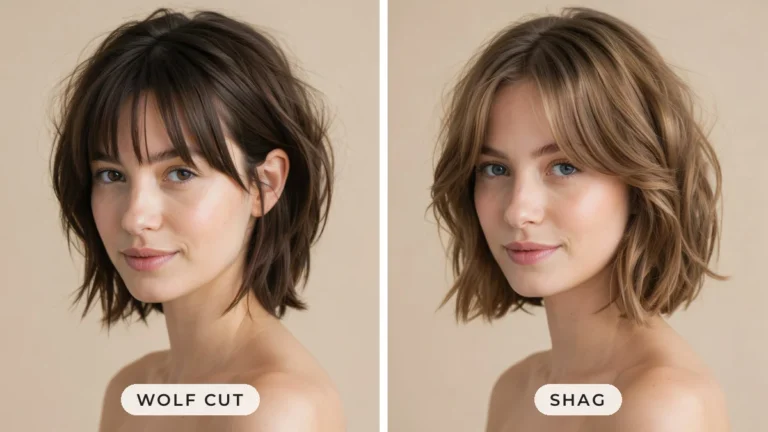

Layered Haircuts by Length: Short, Medium and Long Layers Compared
Most guides to layered haircuts by length sort photos by color or texture and let you scroll until something looks nice. They skip the variable that actually determines how the cut behaves day to day: length. The same layering technique produces a completely different result — and a completely different maintenance routine — depending on whether it’s cut into short, medium, or long hair.
Layering, as a cutting technique, has been used by hairstylists for decades to add movement without changing the overall length.
Here’s what actually changes at each length, so you know what you’re signing up for before you sit in the chair.
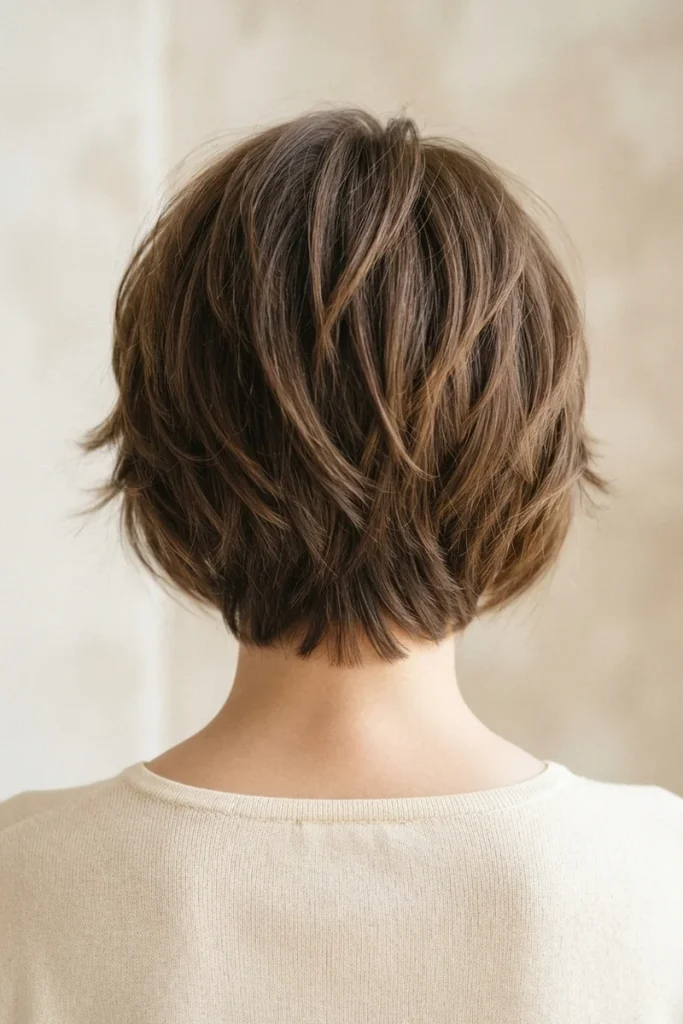
Short Layered Cuts (Chin-Length and Above)
Short layers do one thing better than any other length: they create volume without needing product or heat styling to fake it.
What you gain:
- Instant lift at the crown, since there’s less hair weight pulling layers flat
- Faster air-dry time — often the biggest practical win for anyone who doesn’t want a daily styling routine
- Layers read more visibly since there’s less length to disguise where one layer ends and the next begins
What you give up:
- Styling versatility. You can’t pull short layers into a ponytail or updo the way you can with more length, so if you like switching between down and pulled-back styles, this is limiting
- Grow-out patience. Short layers show growth faster because the shape depends on precise length — an extra inch changes the silhouette more than it would on longer hair
- Trim frequency. Expect to visit the salon every 6-8 weeks to keep the shape; short layered cuts lose their structure faster than longer ones. Our trim schedule guide breaks this down by cut.
Best fit: Fine to medium hair density where volume is the main goal, and a low daily-styling routine matters more than versatility. Our bob haircut guide shows layered versions at chin length.
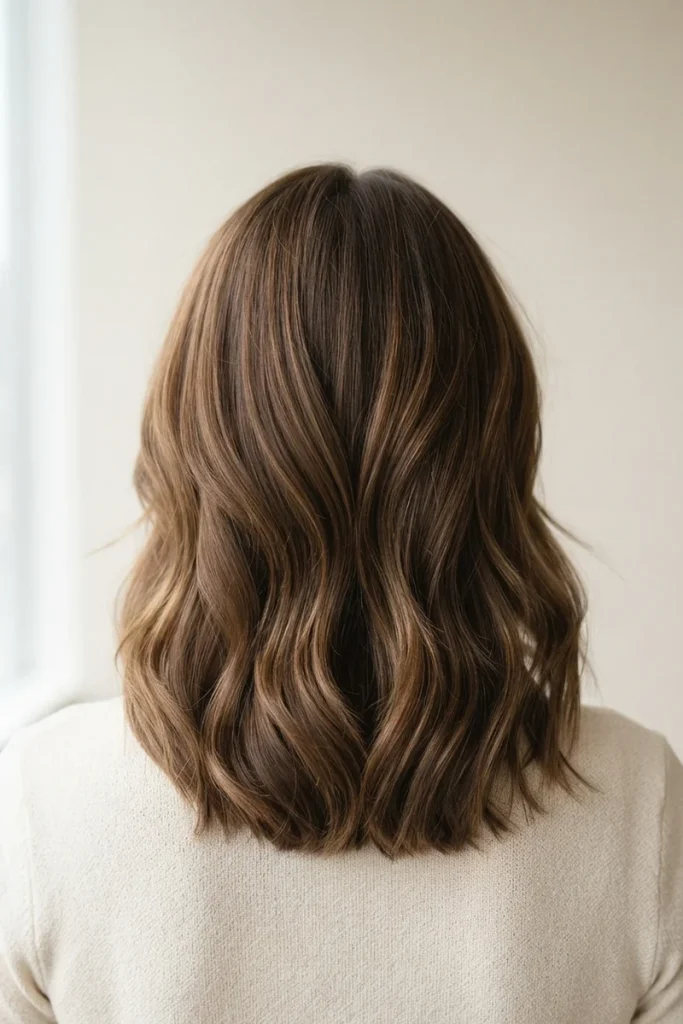
Medium-Length Layers (Shoulder to Collarbone)
This is the length most galleries default to — not because it’s universally “better,” but because it’s the safest middle ground. It’s worth knowing why, instead of just seeing it repeated in every photo. For ways to wear this length day to day, see our guide to hairstyles for medium length hair.
What you gain:
- The most forgiving length for layer placement. There’s enough hair to blend layers smoothly, but not so much that they need heavy thinning to avoid bulk
- Styling flexibility — long enough for a low ponytail or half-up style, short enough to air-dry in a reasonable time
- The longest stretch between trims for keeping the layered shape, typically 8–10 weeks before the shape starts to lose definition
What you give up:
- It’s the least dramatic transformation if you’re coming from very long or very short hair — the change reads as “healthier version of what you had” rather than a new look
- Face-framing layers are less pronounced here than on longer hair, since there’s less length for them to move independently
Best fit: Anyone who wants layering’s benefits (movement, reduced bulk) without committing to a high-maintenance schedule or losing updo options entirely. Adding curtain bangs is an easy way to give medium layers more face-framing.
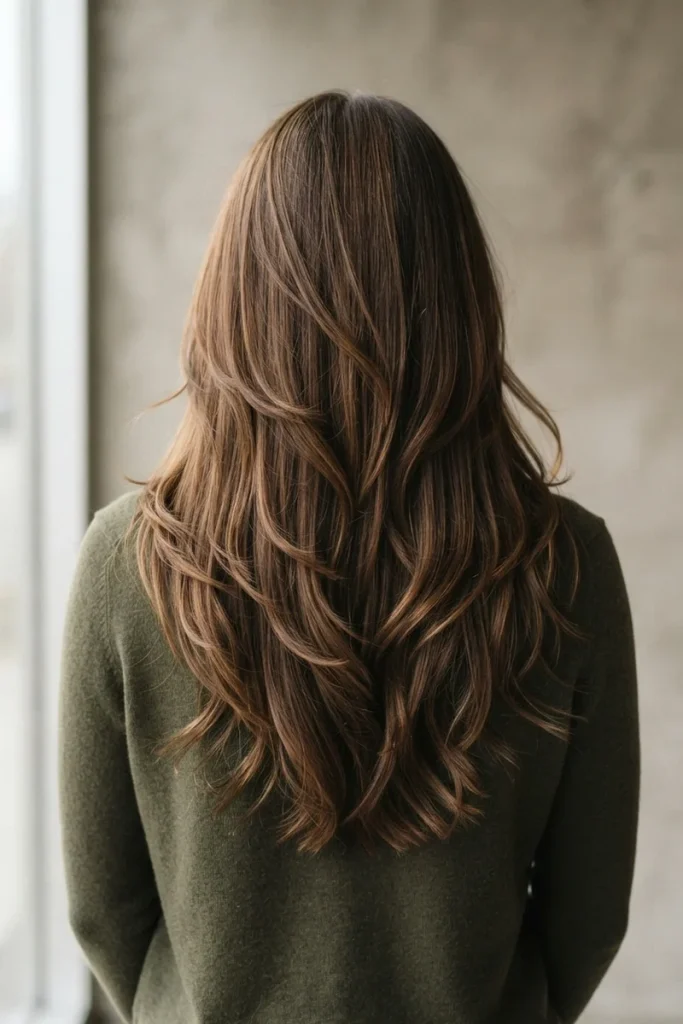
Long Layered Cuts (Past the Collarbone)
Long hair is where layering solves a specific structural problem: without layers, long hair often falls in one flat sheet, especially if it’s thick. Layers reintroduce movement that length alone removes.
What you gain:
- The most dramatic layer visibility when curled or waved — long layers catch light and show dimension in a way short layers can’t
- The option to keep length while still removing bulk, which matters most for thick or coarse hair that feels heavy without any layering
- The longest gap between trims for the overall length, often 10–12 weeks, although the internal layers usually need a refresh sooner, around 8–10 weeks
What you give up:
- Air-dry time. Long layered hair takes the longest to dry naturally, and layers don’t change that
- Layer visibility when hair is pulled back — most of the layering effect disappears in a ponytail or bun, so if you wear your hair up often, you’re paying for a detail you won’t see daily
- Precision. Long layers require a stylist who cuts them dry or checks the cut both wet and dry, since minor unevenness is far more visible over long length than short
Best fit: Thick or coarse hair that needs weight removed without losing length, or anyone who wears hair down often enough to see the layer movement. Long layers also show off well in half up half down hairstyles.
Short vs Medium vs Long Layers at a Glance
This table puts the three lengths side by side, so the trade-offs are easier to compare before your appointment.
| Short (chin and above) | Medium (shoulder to collarbone) | Long (past the collarbone) | |
|---|---|---|---|
| Volume | Most lift at the crown | Balanced | Movement through the ends |
| Daily styling | Quick, but bedhead shows | Moderate | Longest drying time |
| Trims for the shape | Every 6–8 weeks | Every 8–10 weeks | Layers every 8–10 weeks; length every 10–12 |
| Updos and ponytails | Limited | Most styles work | All styles, but short layers can poke out |
| Best hair type | Fine to medium density | Most hair types | Thick or coarse hair |
Hair that sits between the chin and the shoulders, often called a lob, behaves like a mix of short and medium: it gets more lift than medium layers but still has enough length for a small ponytail.
How Many Layers Is Too Many?
This is the question most people don’t think to ask until they’re already in the chair — and it depends entirely on length.
On short hair: More layers generally means more volume, and it’s hard to overdo it unless your hair is already fine. Fine, short hair with too many layers can end up looking sparse rather than voluminous, because there’s not enough hair left in each section to hold shape.
On medium hair: Medium length is forgiving about where the layers sit, but not about how many: this is where “too many” becomes a real risk. Heavy layering on medium-length hair can create a triangular silhouette — short and full at the crown, thin and stringy at the ends — especially on fine to medium hair density. Ask your stylist for layers concentrated in the interior rather than throughout, so the outer shape stays smooth.
On long hair: Long hair can handle the most layers before looking thin, simply because there’s more length to distribute the cuts across. The risk here is the opposite of short hair — too few layers on long, thick hair leaves it heavy and shapeless, while the right number removes bulk without sacrificing length.
The rule of thumb: the finer your hair, the fewer layers you want relative to your length. Thickness can absorb more layering; fine hair needs it used sparingly and strategically. Our guide to haircuts for thin hair shows where a few layers help most.
What to Tell Your Stylist Based on Length
Instead of bringing a photo and hoping it translates, describe these three things — they matter more than the reference image:
- How you wear your hair most days — down, half-up, or fully pulled back. This alone should influence whether you go shorter (visible layers daily) or accept that longer layers will mostly show on the days you leave it down.
- Your actual hair density — not just texture. Two people with the same length hair can need completely different layer counts if one has fine hair and the other has thick hair.
- How long you’re willing to go between trims. If 6-8 week salon visits aren’t realistic for you, say so — your stylist can adjust the layering approach to grow out more gracefully, even if it means slightly less dramatic movement at first. It also helps to know your face shape first; our face shape calculator takes a minute.
The One Question That Cuts Through All Three
Before deciding on length, ask: how often do you actually wear your hair down versus pulled back?
If the answer is “down, almost always” — long or medium layers are worth it, since you’ll see the effect daily. If the answer is “up more days than not” — the layering detail is mostly invisible in daily life, and a shorter length might serve you better simply because it’s less maintenance for an effect you won’t consistently see.
If you’re dealing with fine or thick hair specifically, our guide on layering techniques by texture covers which cuts work best for your hair type.
Layered Haircuts by Length: FAQ
Which length of layers is best for thin hair?
Short to medium lengths usually suit thin hair best, with only a few long layers. Lots of short layers on thin hair remove too much weight from the ends, which can make the hair look sparse rather than fuller.
Do layers make hair look thinner?
They can if there are too many. Layers remove weight, which adds movement to thick hair but can leave fine hair looking wispy at the ends. Ask for fewer, longer layers if your hair is fine.
Can you get layers on curly hair?
Yes, and they often help curly hair avoid a triangle shape. Curls shrink as they dry, so many stylists cut curly layers dry or leave extra length. Our guide to curly hairstyles by curl type covers how the cut changes with the curl pattern.
How long does it take to grow out layers?
It depends on how short the shortest layer is. Hair grows roughly half an inch a month on average, so layers cut a few inches shorter than the rest can take several months to blend in. Regular small trims keep the ends even while they grow.
What’s the difference between layers, a shag and a wolf cut?
Classic layers blend softly from short to long. A shag adds choppier layers and usually bangs, and a wolf cut pushes the contrast further, with a lot of volume at the crown and thinner ends. Our wolf cut vs shag comparison shows the difference.
Bottom Line
The technique your stylist uses — face-framing, feathered, dimensional — matters less than the length you’re starting from. Short layers trade versatility for low-maintenance volume. Medium layers trade drama for the easiest upkeep. Long layers trade drying time for the most visible movement. Match the length to how you actually wear your hair, not to a photo of someone else’s.