
How Often Should You Trim Your Hair? A Schedule for Every Haircut
“Trim every six to eight weeks” is the rule most people hear, and it fits only some haircuts. A pixie can lose its shape in four weeks. Long, one-length hair can go three months without anyone noticing. The right timing depends on two things: how much shape your cut has to hold, and how healthy your ends are.
Quick answer: Short, precise cuts need a trim every 4–6 weeks. Bobs and short layered cuts need one every 6–8 weeks. Long hair, long layers, and curly hair can usually go 8–12 weeks. Damaged hair with split ends should be trimmed every 8–10 weeks until the damage is gone, whatever the length.
Trim Schedule by Haircut
| Haircut | Trim every | What goes first |
|---|---|---|
| Pixie | 4–6 weeks | Neckline and the hair over the ears |
| Bixie | 5–7 weeks | Shape at the crown and around the ears |
| French bob | 5–7 weeks | The jaw-length line and the bangs |
| Blunt bob | 6–8 weeks | The straight line at the bottom turns uneven |
| Stacked or A-line bob | 6–8 weeks | Lift at the back and the angle to the front |
| Wolf cut | 6–8 weeks | Contrast between short crown and longer nape |
| Textured bob or lob | 8–10 weeks | Ends start to look heavy |
| Shag | 8–10 weeks | Layers blend into one length |
| Long layers | 8–10 weeks | Face-framing pieces lose their angle |
| Long, one-length hair | 10–12 weeks | Thin, see-through ends |
| Curly hair (any length) | 8–12 weeks | Shape turns triangular; dry, frizzy ends |
| Bangs only | 2–4 weeks | They start to touch your lashes |
These are starting points. Fast-growing hair, fine hair, and hair that’s colored or heat-styled often needs the shorter end of the range.
Why Short Cuts Need Trims So Often
Hair grows about half an inch (around 1.25 cm) a month for most people. On long hair, half an inch is hard to see. On a pixie, it’s a big change: the hair over the ears starts to cover them, the neckline gets fuzzy, and a cut that looked deliberate begins to look grown out.
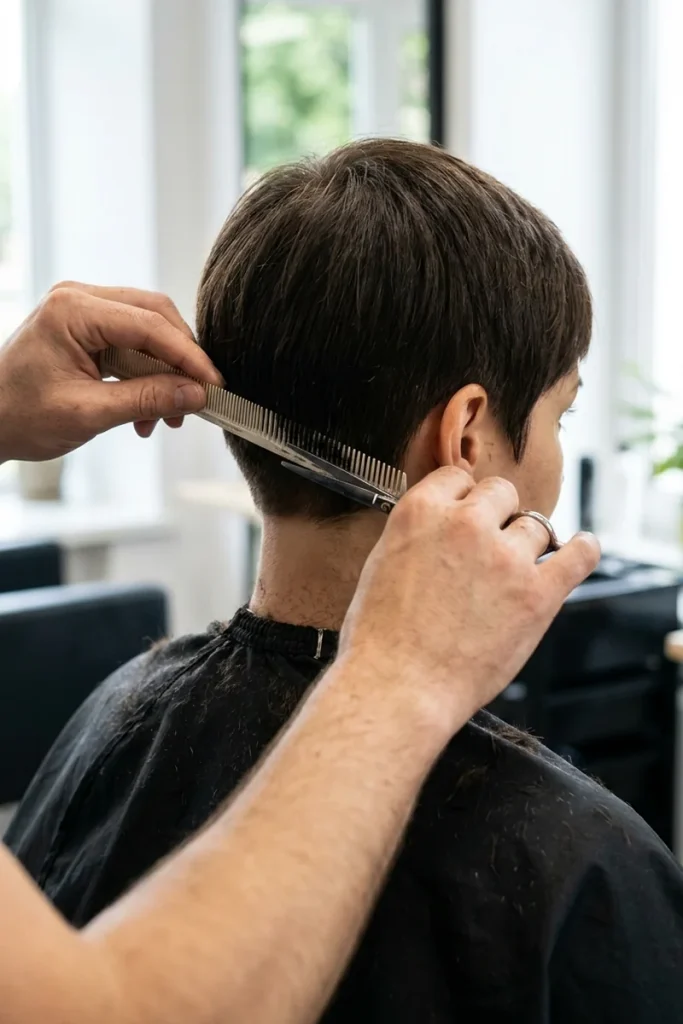
That’s why short, precise styles sit at the top of the table. The cut depends on exact proportions, so small amounts of growth change the shape. If you love a pixie but want fewer appointments, a softer, longer pixie or a bixie grows out more gracefully than a very short, tapered one. Our guide to pixie cuts that suit your face and texture shows the lower-maintenance versions.
Signs Your Hair Needs a Trim Now
The calendar is a guide. Your hair gives clearer signals:

- Your ends look thin or see-through. Hold the ends up to the light. If the last inch looks wispy compared with the rest, the ends have thinned out.
- The ends tangle or knot more than usual. Split, rough ends catch on each other.
- Your usual styling stops working. Waves won’t hold, a blowout falls flat, or the cut won’t sit the way it used to.
- You see white dots or splits at the tips. Split ends travel upward over time, so trimming them early saves length later.
- The shape has changed. A bob that tipped forward, layers that blended together, or curls that formed a triangle all mean the cut has grown out of its shape.
If two or more of these apply, book a trim even if the calendar says it’s early.
How to Stretch the Time Between Trims
You can go longer between appointments by protecting the ends you have.

Use less heat, and protect it when you do. Heat is the main cause of split ends. Apply a heat protectant on towel-dried hair, not soaking wet, and use the lowest temperature that works for your hair. Our heat damage guide has the settings by hair type.
Detangle from the ends up. Start brushing at the bottom and work upward. Ripping a brush from the roots down snaps the ends.
Sleep on silk or satin. A smooth pillowcase or a loose silk scrunchie reduces friction on the ends overnight.
Avoid tight elastics. Styles pulled tight in the same spot every day create breakage at that line. Switch your ponytail position and use soft ties. Our guide to hair breakage causes and fixes explains the patterns to look for.
Ask for a “dusting.” A dusting removes only the very tips, often a quarter inch or less. It’s a good option if you’re growing your hair but still want healthy ends.
Trimming When You’re Growing Your Hair Out
It sounds backward, but skipping trims rarely gets you longer hair faster. Hair grows from the scalp at the same rate whether you cut the ends or not. What changes is how much length you keep: unchecked split ends break off and travel upward, so the hair ends up shorter and thinner at the bottom.
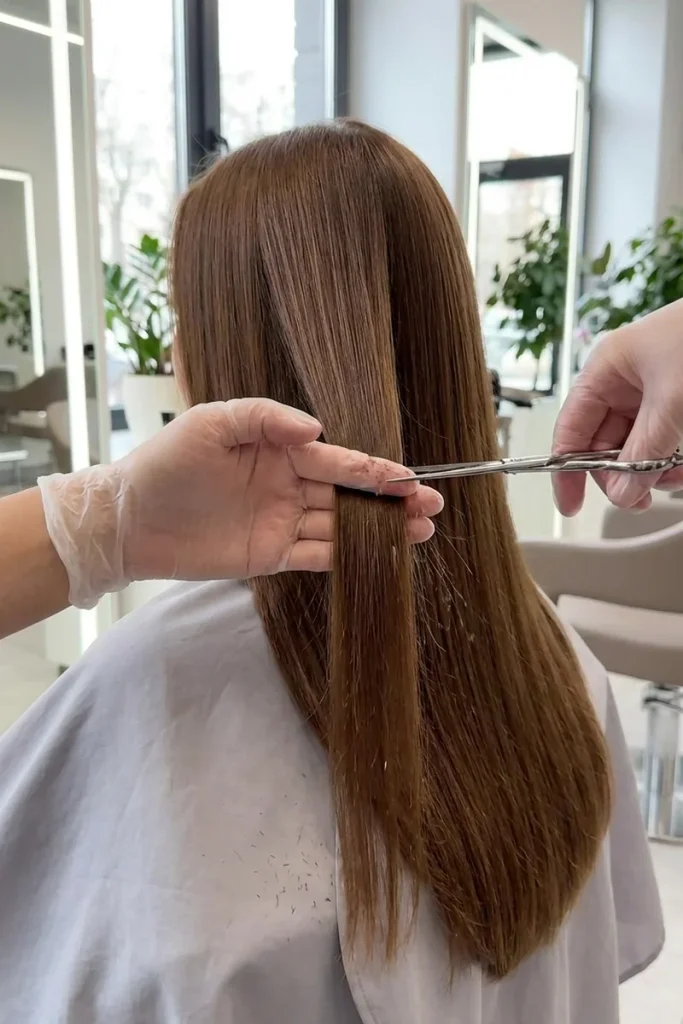
When growing out a cut, ask for a shape trim every 8–10 weeks that removes as little length as possible, and tell your stylist your goal clearly. If you’re growing out a short cut, the trims are about guiding the shape through each awkward stage. Our guide to growing out a bob walks through each stage.
Bangs, Curls, and Damaged Hair
Bangs grow into your eyes fast. Most salons offer quick bang trims between full haircuts, often for a small fee or free. Curtain bangs are more forgiving and can go 4–6 weeks, since they’re meant to sweep to the sides.
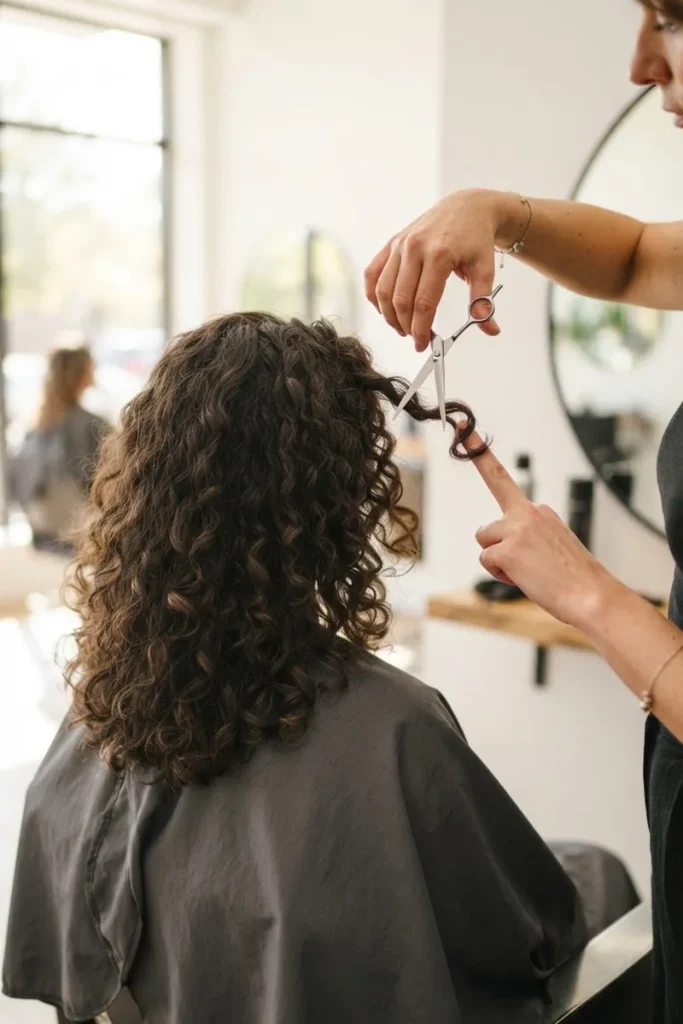
Curly hair is best trimmed dry. Curls shrink when they dry, so a cut done on wet, stretched hair can end up shorter than planned and uneven. Many curly-haired people can go up to 12 weeks if the shape still looks balanced. See our guide to curly hairstyles by curl type for routines that keep curls defined between cuts.
Damaged hair needs a plan, not one big chop. If your ends are heavily split from bleach or heat, trimming a little every 8–10 weeks removes the damage gradually while you keep most of your length.
FAQ
Does trimming your hair make it grow faster?
No. Hair grows from the follicle in the scalp, so cutting the ends doesn’t change the growth rate. Regular trims do help you keep more length, because healthy ends are less likely to split and break.
How often should you trim long hair?
Every 10–12 weeks for long, one-length hair in good condition, and every 8–10 weeks for long layers. If you heat-style or color often, aim for the shorter end.
Can I trim my own hair at home?
A small bang trim or dusting is manageable with sharp hair-cutting scissors. Full haircuts, especially bobs, pixies, and layered cuts, are much harder to keep even, so they’re best left to a stylist.
How much should a trim take off?
Usually a quarter inch to an inch. A dusting takes off less than a quarter inch. Tell your stylist exactly how much length you want to keep before they start.
Pick your cut in the table, watch for the signs that the shape or ends are slipping, and adjust from there. For cut-specific advice, compare blunt and textured bobs, see the differences in upkeep between a wolf cut and a shag, or browse our hair care tips for routines matched to your hair type.