12 Bob Haircuts for Women Over 50 That Look Modern, Not Dated
Most lists of bob haircuts for women over 50 show the same thing: one sleek chin-length bob, repeated in twelve hair colors. The advice underneath is usually “go shorter, add layers,” as if every woman over 50 had the same hair. She doesn’t. By this point, many women are dealing with at least one real change: hair that’s going gray and feels coarser, hair that’s gotten finer or thinner, or simply less patience for a 30-minute blow-dry.
A bob works beautifully after 50, but only when the cut is built around the hair you have now, not the hair you had at 30. So instead of a gallery, this guide sorts 12 bobs by the problem each one solves: fine or thinning hair, gray and silver hair, low-maintenance mornings, and a few polished statement cuts for when you want the bob to be the point.
Before You Start: The Two Decisions Behind Every Bob After 50
Decision one: where the bob ends. The length line matters more than the style name. A bob that ends at the jaw draws the eye to the jawline and cheekbones, which is great if you like that area and less flattering if the jawline has softened and you’d rather not frame it. A bob that ends an inch or two below the jaw shifts attention down to the neck and collarbone and tends to feel softer. If you’re not sure, start longer. It’s easy to take off an inch at the next appointment; it takes months to grow it back. Our guide to choosing a haircut for your face shape walks through how length and face shape work together.
Decision two: how much styling you’ll actually do. Be honest here. A precise, glossy bob looks incredible on the day you leave the salon, but it needs a round brush and a flat iron to look that way again. A textured or wavy bob is designed to air-dry and look intentional with a little product. Neither is better, but the wrong choice for your routine is the number one reason a bob “stops working” a few weeks after the cut. If you’re torn between the two finishes, our comparison of blunt vs. textured bobs breaks down the upkeep for each.
Bobs for Fine or Thinning Hair
Fine hair is the most common change after 50, and it’s where a bob does its best work. The goal is simple: keep weight where it makes hair look fuller, and take it away only where it drags hair flat.
1. Blunt Chin-Length Bob
When hair gets finer, the ends are usually the first place it shows. Long, thin ends look wispy and see-through. A blunt bob fixes that by cutting everything to one solid line, so the hair at the bottom is as thick as it can possibly be. That strong edge reads as density, even when there isn’t much of it. At chin length, the cut also sits right where fine hair has the most natural body, before gravity pulls it flat.
The trick is keeping layers out of it. Many stylists add “a few layers for movement” by habit, and on fine hair that’s exactly what removes the fullness you came in for. Style it with a volumizing mousse at the roots on damp hair and a quick blow-dry, lifting at the crown. If you want to skip heat entirely, our guide to styling a bob without heat covers air-drying methods that suit blunt cuts.
Salon ask: “A one-length blunt bob right at my chin, cut on dry or straightened hair so the line is exact, with no layers or thinning.”

2. Stacked Bob With Crown Lift
If your hair goes flat on top, a stacked bob puts the volume back where you want it. The back is cut in short, graduated layers that stack on top of each other at the nape, which pushes the hair above them up and out. The result is a rounded shape with lift at the crown, while the front stays longer around the face. It’s one of the most effective cuts for fine hair that lies flat against the head.
Graduation should be soft, not severe. A steep, sharply angled stack can look dated fast, while a gentle one looks current and is easier to grow out. Stacked bobs need a trim roughly every six to eight weeks to keep the back from collapsing, so they suit someone who’s already in the salon regularly.
Salon ask: “Soft graduation at the nape to build lift at the crown, with the front falling just below my jaw. Keep the stacking gentle, not a sharp wedge.”
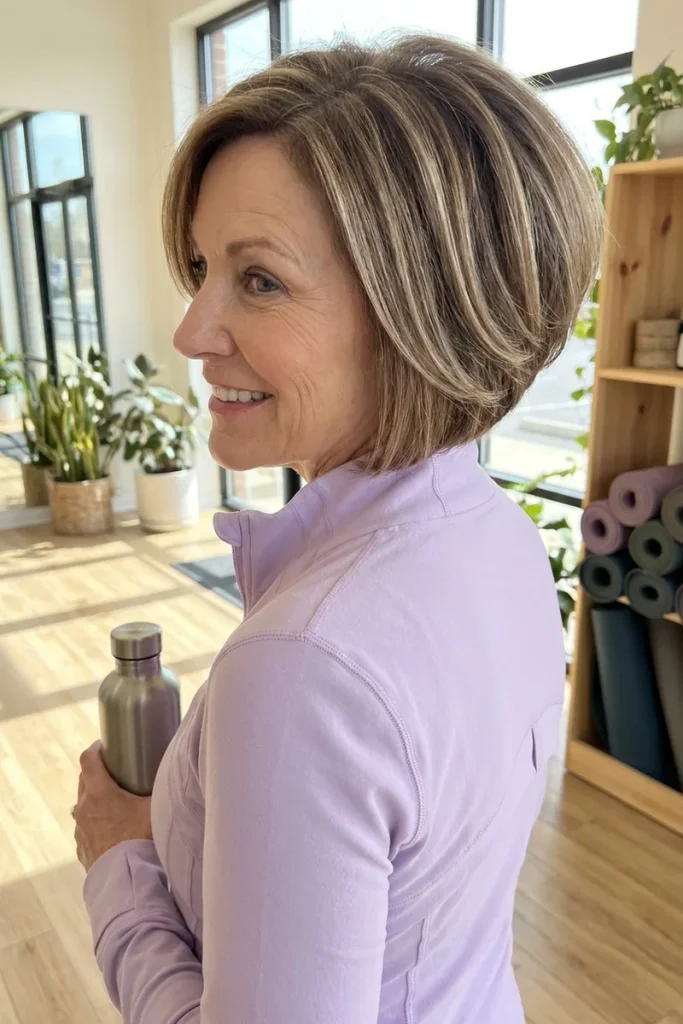
3. Collarbone Bob With Curtain Bangs
For fine hair that’s thinning slightly at the temples or through the part, curtain bangs are a soft, flattering fix. They’re parted in the center and swept to either side, so they blend the front hairline instead of drawing a hard line across it. Paired with a bob that grazes the collarbone, they give fine hair a fuller, more face-framing shape without the commitment of a short cut.
One honest caveat: bangs borrow hair from the front. If your hairline is noticeably thin right at the front, heavy bangs can make it more obvious, not less. Light, wispy curtain bangs work in most cases, but ask your stylist to check the density before cutting. A round brush and 30 seconds of heat at the root are usually enough to set them.
Salon ask: “A collarbone-length bob with light curtain bangs that start at the bridge of my nose and blend into the sides. Please check my hairline density before cutting the bangs.”
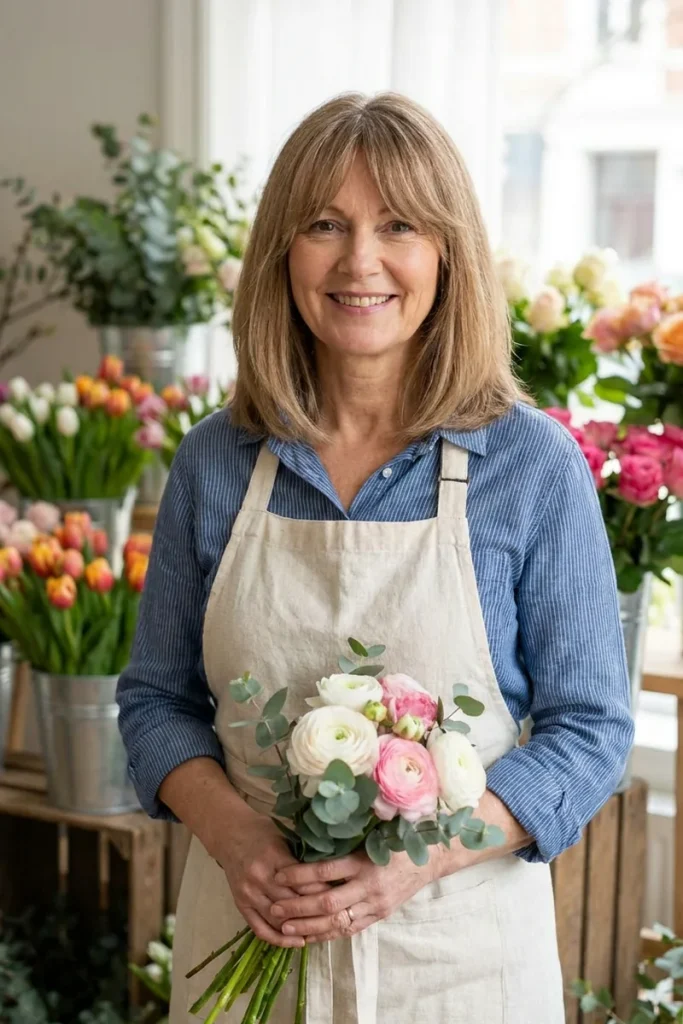
Bobs for Gray and Silver Hair
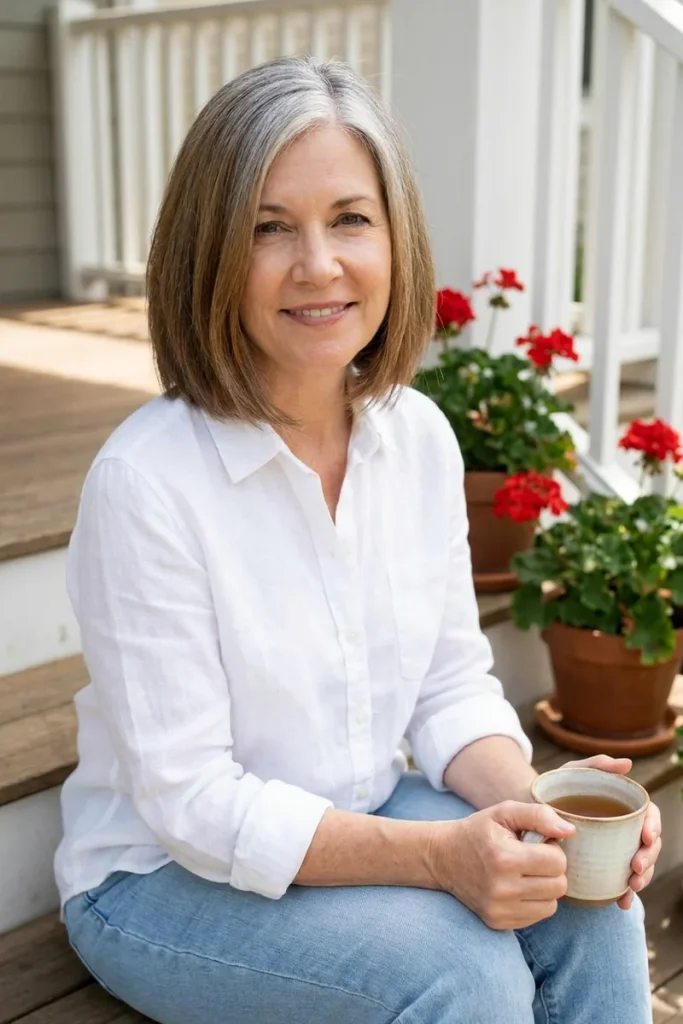
Gray hair isn’t just hair without color. It often grows in coarser, drier, and more wiry, and it can pick up a yellow cast from minerals, sun, and heat. The right bob shows off silver as a choice rather than an afterthought. For the full care side, including toning, see our guide to gray hair cuts and care.
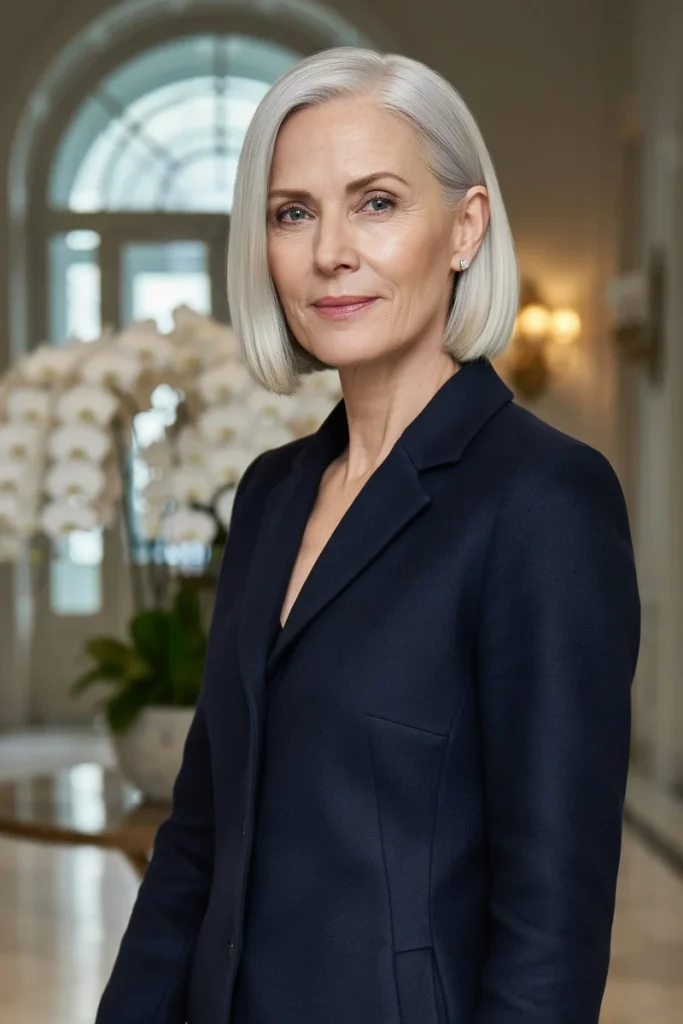
4. Sleek Silver Bob
Silver hair reflects light more than almost any other color, and a sleek, one-length bob makes the most of that. When the surface is smooth, gray reads as bright and polished instead of frizzy. This is the bob that makes people ask whether you colored your hair silver on purpose.
The work here is in the finish. Coarse gray strands tend to stick up along the surface, so a smoothing cream or light oil on damp hair makes a real difference. Protect it before any heat, applied to towel-dried hair rather than soaking-wet hair, and keep the flat iron on a moderate setting, since gray hair shows heat damage as yellowing. A purple shampoo once a week keeps brassiness away.
Salon ask: “A sleek jaw-length bob with a clean, polished line, smoothed with a paddle brush, and a gloss or clear shine treatment if my gray looks dull.”
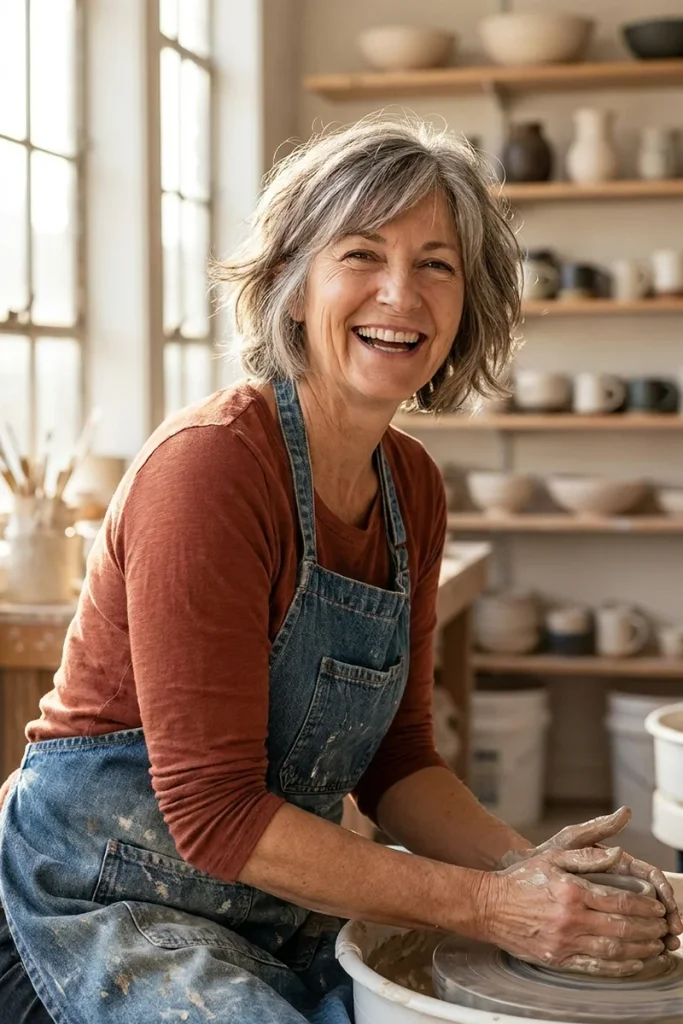
5. Layered Salt-and-Pepper Bob
If your hair is a mix of dark and gray, layers are your best friend. They break up the surface so the silver and darker strands move and blend, instead of the gray sitting in stripes or patches. This gives salt-and-pepper hair a soft, dimensional look, a bit like natural highlights.
Keep the layers long and internal rather than choppy on top. Long layers let the color blend while keeping the outline of the bob intact. This is also one of the most forgiving bobs to wear while you decide whether to go fully gray, because the mix looks deliberate at every stage.
Salon ask: “A chin-to-jaw bob with long, soft internal layers so my salt-and-pepper color blends and moves. Keep the outline full, no short choppy layers on top.”
6. The Going-Gray Transition Bob
Growing out color to go gray is hard. The line between dyed ends and silver roots is what makes most women give up. A bob shortens that stage dramatically, because each cut removes a big chunk of the old color. Go a little shorter than you normally would, and every trim takes more of the dyed length with it.
Ask your stylist whether a few soft highlights or lowlights near the root line would help blend it. It’s also worth planning trims every six weeks during the transition rather than waiting for the bob to lose its shape. If you’re heading even shorter, our list of pixie cuts for women over 50 includes several silver and salt-and-pepper options that finish the transition fastest.
Salon ask: “A slightly shorter bob to cut out as much dyed length as possible, and your advice on soft blending near my root line. Let’s book trims every six weeks until the color is gone.”
Low-Maintenance Bobs for Easy Mornings
These are cut to look good with minimal styling: wash, a bit of product, and go. They’re the answer if you want a bob that looks intentional without a blow-dry.
7. Air-Dry Wavy Bob
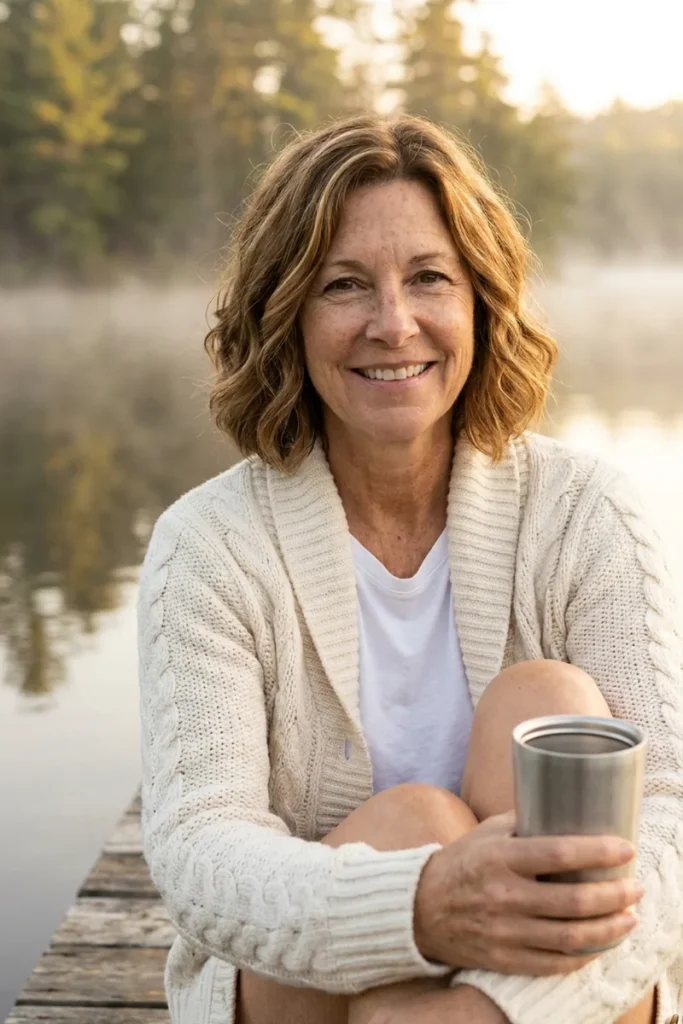
If your hair has any natural bend, this bob is built to use it. The cut removes just enough weight so the waves can form on their own, and the length stays at the jaw or just below, where waves look full rather than frizzy. On wash days, a little mousse or curl cream scrunched into damp hair, then left alone to dry, is usually all it takes.
The main mistake with a wavy bob is touching it while it dries, which breaks the waves up and causes frizz. Let it dry completely, then scrunch out any stiffness. If frizz is a regular issue, it may be about your hair’s porosity rather than the cut; our guide to frizz and porosity explains how to tell. For no-heat styling ideas, see how to style a bob without heat.
Salon ask: “A jaw-length bob cut to work with my natural wave, with light weight removal so it can air-dry. Please show me how it dries without a blow-dry.”
8. Textured Shaggy Bob
A shaggy bob is designed to look a little undone, which makes it one of the most forgiving cuts you can get. Choppy, piece-y layers run through the whole shape, so there’s no single line to keep perfect. It looks just as good on day three as on day one, and it hides uneven growth between trims.
It works best on medium to thick hair; on very fine hair, too much texturizing can make it look sparse. A texture spray or a light paste, worked through dry hair with your fingers, brings out the pieces. It’s also an easy bob to grow out, since the layers blend as they get longer; our guide to growing out a bob covers the stages.
Salon ask: “A textured, shaggy bob at the jaw with piece-y layers throughout and soft, wispy ends. Keep enough weight so it doesn’t look thin.”

9. Curly Bob
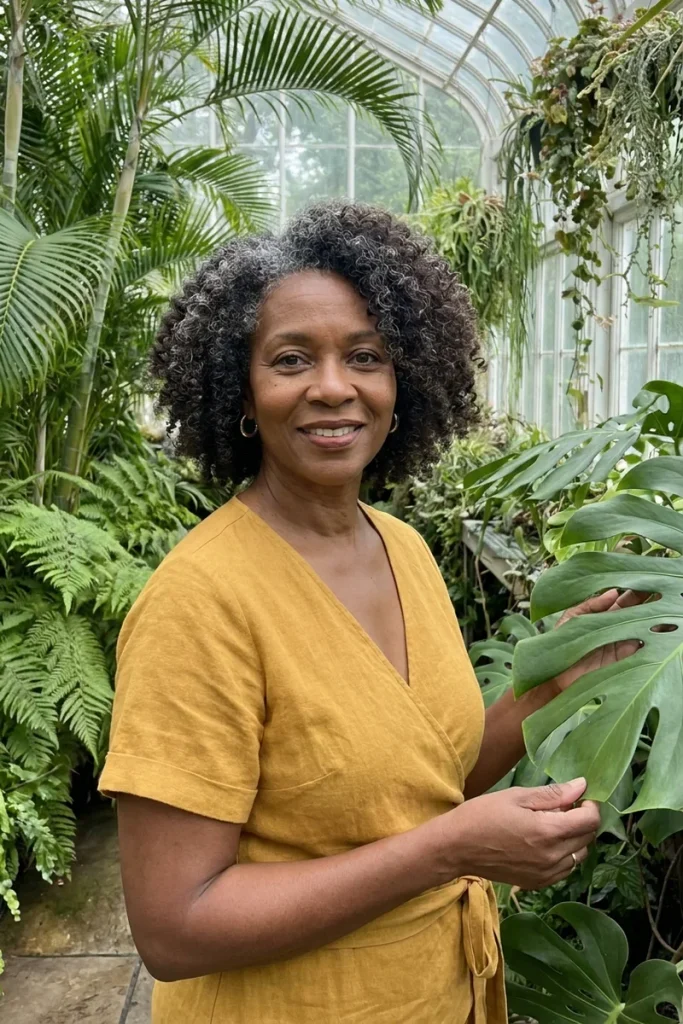
Curly hair often changes after 50: the pattern can loosen, the curls can feel drier, and gray curls may grow in with a different texture from the rest. A curly bob shaped for your current curls gives them room to form without being weighed down by length. The shape should be rounded and even, never a triangle that’s flat on top and wide at the bottom.
Find a stylist who cuts curls in their natural state, since curly hair can shrink a lot and a bob cut on stretched hair may end up much shorter than planned. At home, shape your curls while your hair is wet and let them dry without touching. Curl products should match your curl type; our guide to curly hairstyles by curl type explains which ones to use.
Salon ask: “A rounded curly bob shaped curl by curl in my natural pattern, with room for shrinkage, and no triangle shape.”
Polished and Statement Bobs
These bobs are about shape and style. They take a little more upkeep, but they’re the ones that make people notice your haircut.
10. A-Line Bob
An A-line bob is shorter at the back and gradually longer toward the front, so the front pieces angle down past the jaw. That angle draws the eye forward and down, creating a longer, slimmer line around the face and neck. It’s one of the most flattering bobs if you’d like to soften a rounder face or a jawline that’s less defined than it used to be.
The angle should be subtle: an inch or two of difference between the back and front looks modern and polished, while a steep drop can look severe. A flat iron or round brush, used on the front pieces only, keeps the shape crisp in about five minutes.
Salon ask: “A soft A-line bob, slightly shorter at the nape and about two inches longer at the front, falling just past my jaw. Keep the angle subtle.”

11. French Bob With Soft Bangs
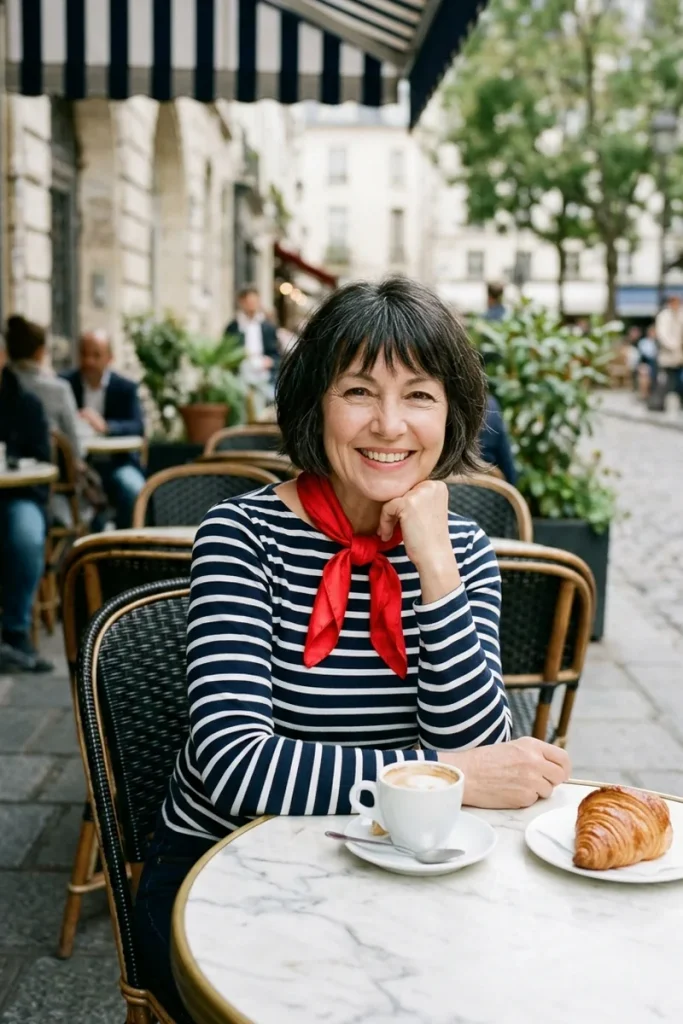
The French bob is short and a little bit bold: it sits between the cheekbone and the jaw, often with bangs that graze the eyebrows. It has a relaxed, lived-in finish rather than a sharp, perfect edge, which keeps it feeling effortless instead of severe. On women over 50, it looks confident and a little artsy.
Because it’s short, it draws attention to the eyes and cheekbones, so it’s great if those are features you love. The bangs should be soft and textured rather than a heavy, blunt fringe. It’s best on straight to slightly wavy hair and needs a trim every five to seven weeks to keep its shape.
Salon ask: “A French bob between my cheekbone and jaw, with soft, textured bangs that graze my eyebrows. Keep the finish relaxed, not razor-sharp.”
12. Long Bob (Lob)
If you’re not ready to go short, a lob is the easiest way to get the benefits of a bob without losing your length. It lands between the jaw and the collarbone, long enough to tuck behind your ears or pull into a small ponytail, but short enough to cut away tired, thin ends. That makes it a smart first step for anyone cutting long hair for the first time in years.
Add long, face-framing layers at the front to soften the look, or keep it one length for fine hair. If you’re nervous about the big cut, our guide to cutting long hair into a bob walks through what to expect. For more ideas across all lengths, see our full list of bob haircut ideas.
Salon ask: “A long bob that ends just above my collarbone, with a few soft face-framing layers in front. Cut off my thin ends but keep enough length to tuck behind my ears.”

FAQ
What is the most flattering bob for women over 50?
There isn’t one best bob for everyone. It depends on your hair and face. For fine or thinning hair, a blunt chin-length bob or a stacked bob adds the most visible fullness. For gray hair, a sleek bob shows off the shine, while a layered bob blends salt-and-pepper color. If you want the easiest option, go for an air-dry wavy bob or a textured shaggy bob.
Should a bob for women over 50 be above or below the chin?
It depends on what you want to highlight. A bob at or above the chin draws attention to the cheekbones and jawline. A bob that ends just below the jaw or at the collarbone softens the jawline and neck. If you’re unsure, start with the longer option: it’s easy to go shorter at your next appointment.
Do bobs make older women look younger?
A bob can make you look fresher and more modern, mostly because it removes dry, thin ends and adds shape and movement. That said, the goal isn’t to look younger. It’s to have a haircut that suits your hair as it is now. A well-cut bob that matches your texture and routine will always look better than a trendy cut that fights your hair.
How often should I trim a bob after 50?
Most bobs need a trim every six to eight weeks to keep their shape. Shorter and more precise cuts, like the French bob or a stacked bob, may need trims every five to six weeks. Textured, shaggy, and long bobs can often go eight to ten weeks, since they grow out more gracefully.
Is a bob good for thin hair over 50?
Yes, a bob is one of the best cuts for thin hair, because shorter hair weighs less and has more natural lift. A blunt, one-length bob makes the ends look thicker, while a stacked bob adds volume at the crown. Avoid heavy thinning or lots of short layers, which can make fine hair look sparse. If your hair is thinning because of breakage, our guide to hair breakage causes and fixes can help.
The best bob haircut for women over 50 is the one that fits how your hair behaves now and how much time you want to spend on it. Pick your length line first, then the finish, and use the “Salon ask” notes to tell your stylist exactly what you want. For more short options, browse our pixie cuts for women over 50, compare blunt and textured bobs, or find all our bob haircut ideas in one place. Once you have the cut, these 2- to 15-minute styles show easy ways to wear a bob after 60.