
How to Grow Out a Pixie Cut: The 5 Cuts Between a Pixie and a Bob
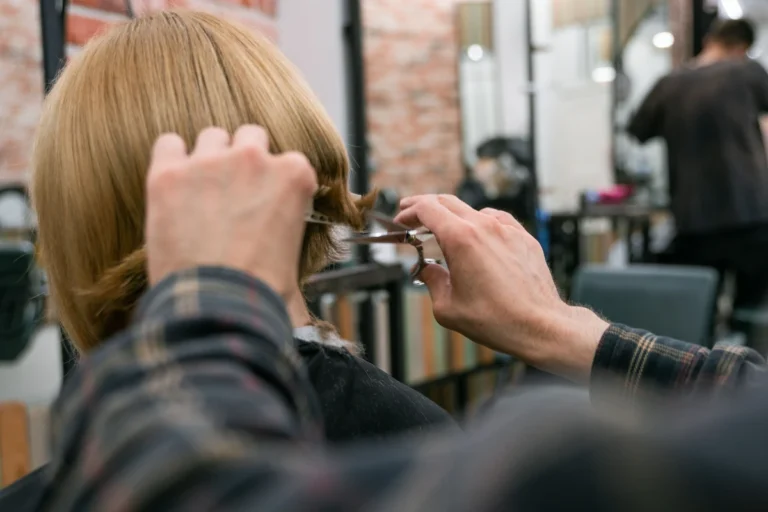
It usually happens around month three. You look in the mirror and the pixie is gone, but nothing has replaced it. The back curls over your collar, the sides puff out over your ears, the top is still too short to tuck, and you start wondering whether to book a short cut and start again. That moment is the reason most people never finish growing out a pixie.
Knowing how to grow out a pixie cut is less about waiting and more about planning. The way through is to move through a series of planned in-between cuts, each one a real haircut that looks intentional, until you reach the length you want. This guide maps those five cuts, explains how long each takes, solves the six problems almost everyone runs into, and covers the trims, tools and habits that keep the process moving. If you are still choosing a pixie rather than leaving one, start with our pixie cut guide.
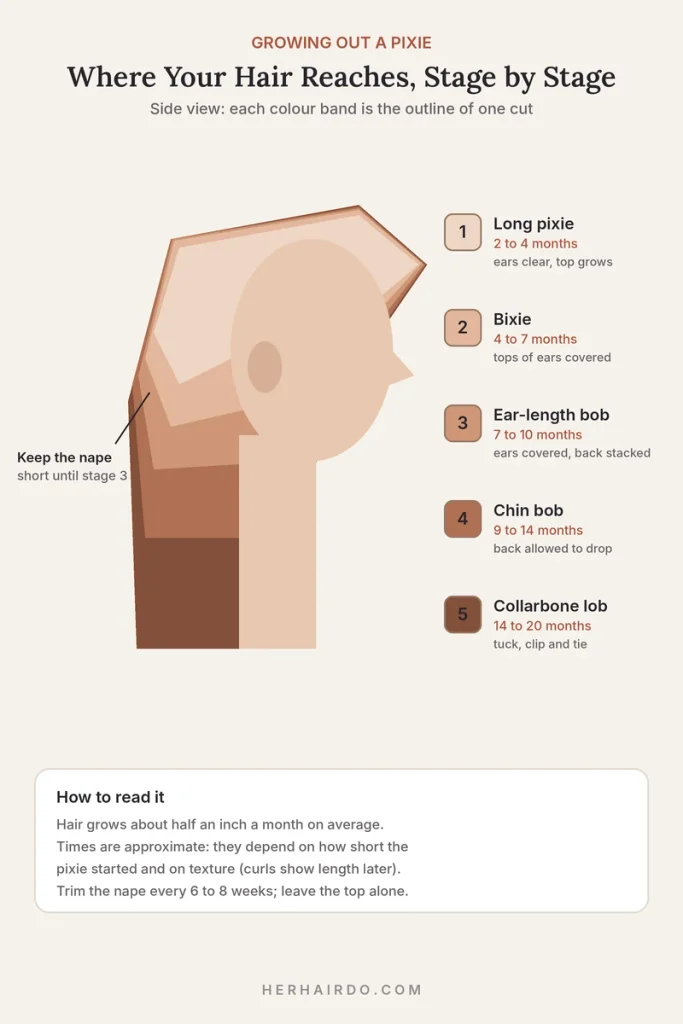
How Long It Takes, Honestly
Scalp hair grows about half an inch a month on average (Healthline, medically reviewed), which is roughly six inches a year. That number varies from person to person, and the time it takes to reach a new length depends on how short your pixie started and which part of your head you measure from. The nape is often the shortest part of a pixie, while the top is the longest, so the back and the top reach a bob at different times.
The table below is a planning guide, not a promise. It assumes a classic pixie with about two to three inches on top and short sides and nape.
| From the last pixie cut | Cut you can ask for | What it looks like |
|---|---|---|
| Around 2 to 4 months | Long pixie | Still a pixie, softer, with longer pieces on top and around the face |
| Around 4 to 7 months | Bixie | A cross between a pixie and a bob, with the ears partly covered |
| Around 7 to 10 months | Ear-length bob | A short bob that covers the ears, often with a side part |
| Around 9 to 14 months | Chin-length bob | A full bob at the jaw or chin |
| Around 14 to 20 months | Collarbone lob | A long bob that skims the collarbone or shoulders |
Thick and straight hair usually reaches each stage on the early side, because it shows length sooner. Curly and coily hair takes longer to look longer, since curls shrink as they dry, even though the hair itself grows at a similar rate.
Pick Your Route First
Before your first grow-out appointment, decide roughly where you want to end up. The end point changes what gets cut along the way, especially at the back.
- Pixie to bob. The most common route, and the quickest to a finished look. You follow the five cuts below and stop at the chin or collarbone. The nape is kept short almost the whole way, because a bob is shortest at the back.
- Pixie to long hair. Same first four cuts, but from the chin bob onward the stylist stops shortening the back and lets everything catch up. Expect a lob phase that lasts several months, and plan small trims rather than shape changes.
- Pixie to shag or curly shape. Layers are kept through the whole process, so the hair moves and the uneven lengths blend in. This route suits wavy and curly hair, and suits anyone who likes texture more than clean lines. Our shag haircuts guide shows the shapes you can aim for.
The 5 Cuts Between a Pixie and a Bob
Each stage below is a haircut in its own right. Ask for it by name, bring a photo, and you will leave the salon with a shape that looks chosen rather than overgrown.
1. The Long Pixie
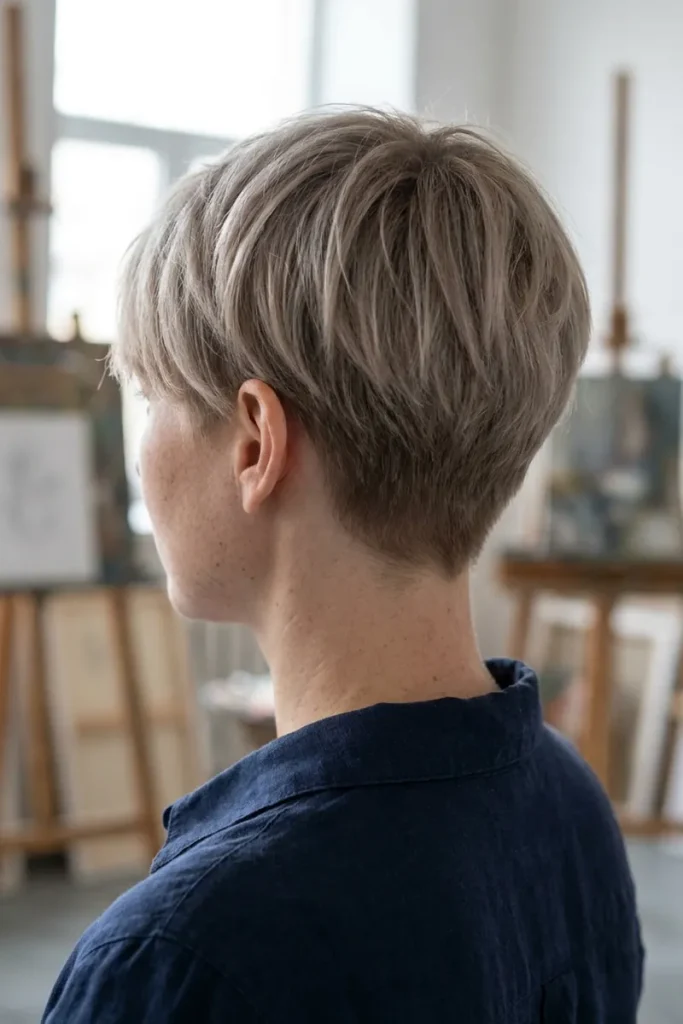
For the first couple of months, leave the top alone. Every bit of length there is length you will need later. What gets trimmed is the back and the area around the ears, which grow faster visually and are the first parts to look messy. Trimming them keeps the cut looking like a pixie on purpose, just a softer one with longer pieces at the front.
Tell your stylist: “Please leave the top and the fringe, and only clean up the nape and around my ears.” Style it with a small amount of texture paste rubbed through dry hair, pushing the top forward or to one side. If you are used to a very short, tidy cut, this stage feels loose at first, so give it a week before you judge it.
2. The Bixie

The bixie is the stage that saves most grow-outs. Somewhere between four and seven months the sides start to cover the top of your ears and the top is long enough to sweep. Instead of fighting that, a stylist shapes it into a bixie: fuller and longer on top like a bob, still neat and tapered at the nape like a pixie. Our pixie cuts for women over 50 includes softer bixie versions you can bring as references.
At the salon, the words to use are “a bixie”: the nape kept short, the length on top left intact, and the sides blended so they no longer stick out. This is also a good time to change your part. A deep side part makes the longer top fall over one side and hides the uneven sides better than a center part.
3. The Ear-Length Bob

Once the sides cover your ears and the top reaches roughly the cheekbone, the shape can become a very short bob. The back is still kept short and slightly stacked, which stops the mullet shape that appears when the nape is left to grow at the same speed as the rest. From the front it reads as a bob; from behind it is still close to the head.
Ask for a short, slightly stacked bob that covers the ears, with the nape kept tight. Styling gets easier from here. You can tuck one side behind your ear, add a bend with a flat iron on low heat, or use soft texture on air-dried hair. If you prefer to skip heat, our no-heat bob styling guide works at this length too.
4. The Chin-Length Bob

This is the first stage where many people stop, because it feels finished. The back has been allowed to drop, the sides meet the jaw, and the stylist can even out the line so it looks like a full bob rather than a grown-out pixie. You will choose between a blunt line, which looks thicker, and a textured, layered line, which moves more; our blunt bob vs textured bob comparison helps with that decision.
The request here is a chin-length bob with the length kept as long as possible at the front, and only the minimum taken off the back to even it out. If you plan to keep growing, tell the stylist now, so they shape the bob without taking away length you will want later. From here, the next steps are the same as growing out any bob, which our growing out a bob guide covers in detail.
5. The Collarbone Lob

The lob is the point where the pixie is fully behind you. The hair reaches the collarbone or shoulders, it can be tucked, clipped and tied back, and there is no longer any short section that needs special treatment. Most people reach it somewhere after a year, depending on starting length and texture.
Choose long layers for movement or a one-length lob for weight, and switch to small maintenance trims. At this point you can also try styles that were impossible through the whole grow-out, such as a low ponytail or a half-up section held with a small clip.
The 6 Problems Almost Everyone Hits
These are the moments that make people give up. Each one has a fix that does not involve cutting everything off.
Why does the back look like a mullet?
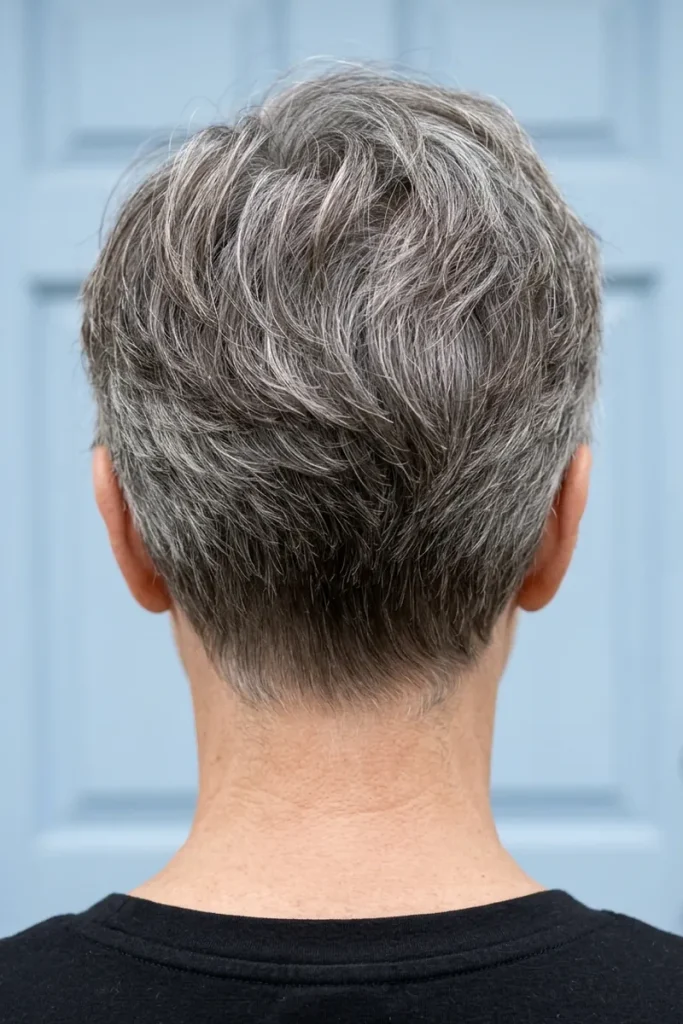
A bob is shortest at the nape, but the nape of a pixie grows at the same speed as the top. So the back reaches your collar while the top is still too short to fall into a bob shape. The fix is the most important rule of the whole process: keep the nape trimmed short while the top grows. A five-minute nape trim every six to eight weeks prevents the mullet shape completely, and many salons offer it as a quick appointment between full cuts.
Why do the sides puff out over my ears?
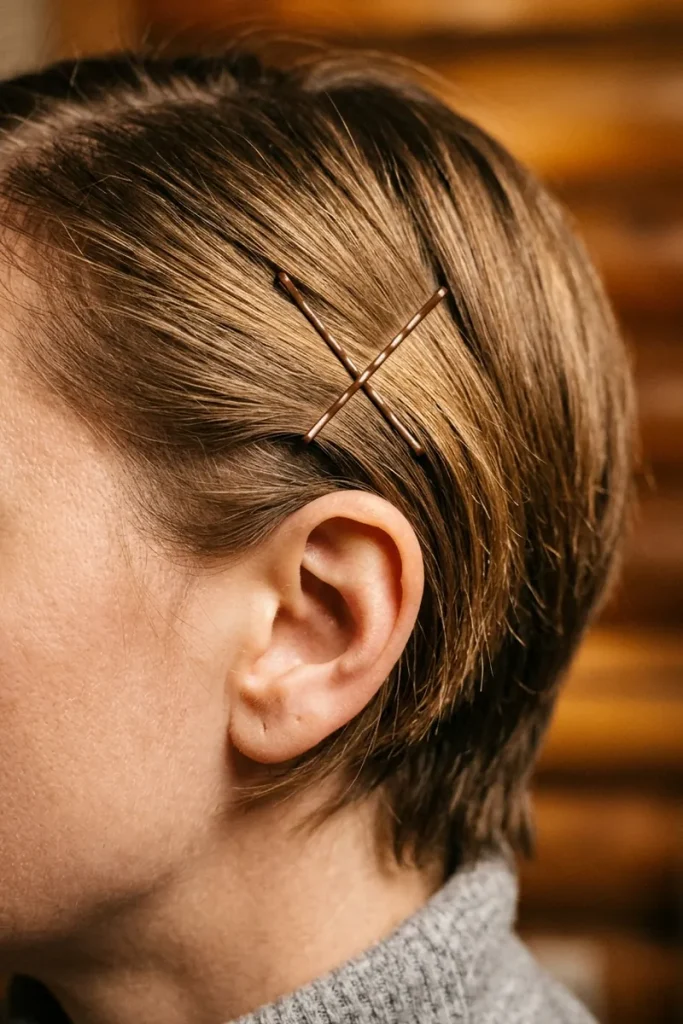
The hair above the ears grows out sideways before it is heavy enough to fall down. Until it gains weight, tuck it behind your ears with a small amount of pomade, or pin it flat with two matching bobby pins crossed in an X just above each ear. Ask your stylist to remove a little bulk from this area at each visit, rather than cutting it shorter.
What do I do about a cowlick at the crown?
Short hair often hides a cowlick, and growing it out reveals it. Do not try to flatten it by cutting it shorter. Blow-dry the crown in the opposite direction to the way the cowlick grows while the roots are damp, then let it settle. A longer layer over the crown, left at the bixie and bob stages, adds enough weight to lay it down over time.
My fringe keeps falling into my eyes. Should I cut it?
Not straight across. A short fringe sets you back by months on the front. Sweep it to the side with a deep part instead, or pin it back with a slim clip. Once it reaches the cheekbone it starts to work as a curtain fringe, and our curtain bangs guide shows how to style that length. If you wear glasses, keep it off the lenses so it does not smudge them or sit in your line of sight.
My curls grow out into a round puff. What helps?

Curls grow outward before they hang down, so a curly pixie can turn into a round shape at the sides and top. Keep the layers rather than letting the hair grow to one length, ask for a dry cut so the stylist can see where each curl sits, and define the curls with a cream or gel to give them weight. Our curly hairstyles by curl type guide matches products and techniques to your curl pattern.
I am growing out gray or color at the same time. How do I handle two colors?

Growing out a pixie is a good time to go gray, because each trim removes old color. The contrast line is most visible at the bixie and ear-length bob stages. A colorist can soften it with fine highlights or lowlights near the line, so the change looks blended rather than banded. Our gray hair cuts and care routine covers the care side once the silver comes through.
Your Styling Kit, Stage by Stage
You need fewer products than you think, and different ones at different stages.
| Stage | Most useful tools | Why |
|---|---|---|
| Long pixie and bixie | Texture paste or matte pomade, a small round brush | Lets you push the top in one direction and hide uneven lengths |
| Bixie to ear-length bob | Two or three bobby pins, slim headband, small clips | Hold the sides flat while they gain weight |
| Ear-length and chin bob | Heat protectant, flat iron on low heat, or a no-heat method | Adds a bend so the bob looks shaped instead of flat |
| Collarbone lob | Soft scrunchies, a small claw clip, a wide-tooth comb | The first stage where you can tie your hair back |
Keep clips, pins and headbands loose enough to be comfortable. The American Academy of Dermatology notes that hairstyles which pull constantly can break hair and, with enough tension over time, lead to permanent hair loss, so move pins and clips to different spots from day to day rather than wearing them tight in one place (AAD styling tips). For heat, the same advice applies: use a flat iron on dry hair, low or medium heat, and not every day. Our guide to heat damage explains how to tell when hair has had too much.
Accessories also give you options on difficult days. A soft beanie or a hat hides an awkward week completely in cold weather; our beanie hairstyles work at short lengths. For workouts, our short hair workout styles keep in-between lengths off your face.
Trims: Less Often Than You Think, But Not Never
The common advice to “just stop cutting it” is the one that makes the awkward stage worst. Growing out a pixie well means trimming the right areas and leaving the rest. Book a quick nape and ear tidy every six to eight weeks, leave the top untouched until the bixie stage, and have the overall shape adjusted roughly every two to three months. Our guide on how often to trim your hair gives the schedule for each length once you reach a bob.
When you book, say at the start of the appointment that you are growing it out and where you want to end up. A stylist who knows your end point will take length only from the places that are ahead, and leave every inch you will need later.
What Grow-Out Will Not Speed Up
No shampoo, oil or brushing routine makes healthy hair grow dramatically faster. What you can control is breakage: hair that snaps at the ends never shows its full length. Gentle handling, less heat, a weekly conditioner and regular small trims keep the length you grow. Losing between 50 and 100 hairs a day is normal shedding, according to the American Academy of Dermatology (AAD hair loss overview). If your hair seems to be thinning, falling out in patches or not growing at all, see a dermatologist rather than waiting it out.
The Week It Stops Feeling Awkward
For most people, it is the week the sides finally sit behind the ears without pins. Until then, keep the nape short, leave the top alone, ask for each in-between cut by name, and give every new stage a week before deciding you hate it. If you decide halfway that you love the bixie or the ear-length bob, you are allowed to stop there. Many of the best short cuts started as a grow-out stage. When you are ready to compare finished bob shapes, our bob haircut guide is the next place to look.