Crown Braid Styles for Every Length, Including Hair Above Mid-Back (15 Styles)
If you’ve looked up crown braids before, you’ve probably read some version of “you need hair below mid-back for this to work.” That advice isn’t wrong, exactly — the original two-braid crown, wrapped fully around the head, does need length to meet at the back. But it’s also the only version most tutorials show you, which makes crown braids seem a lot less accessible than they actually are. There are single-braid versions, half-wrap versions, and pinned versions that use far less hair, and several of them look just as finished. Below are fifteen ways to wear one, starting with the classic version and working through the shorter-hair and thinner-hair alternatives that rarely get covered.
Before You Start: A Quick Refresher
The full crown braid is really just two French braids that meet. Part your hair down the middle, French braid each side down to the nape, then cross both braids around the back of your head — left braid to the right side, right braid to the left — and pin the ends so they tuck out of sight under the opposite braid. The main thing that trips people up isn’t the braiding itself, it’s judging whether you have enough length before you start; if the ends don’t comfortably reach past the opposite ear with a few inches to spare, you’ll be pinning short, visible tails instead of tucking them away neatly. That’s the exact problem most of the styles further down this list solve.
1. Classic Two-Braid Crown
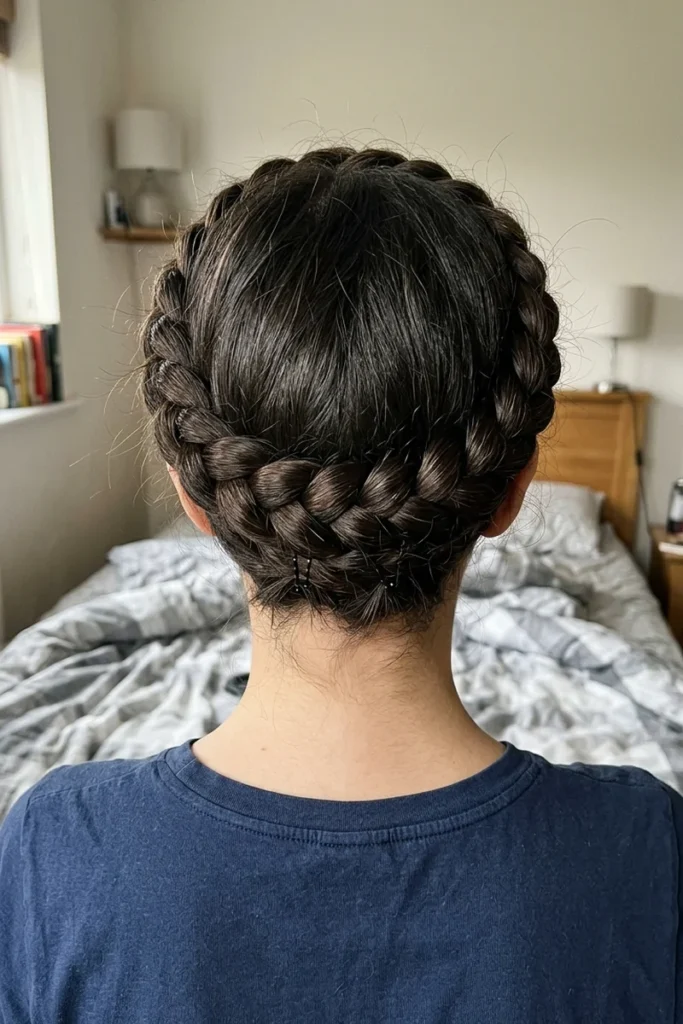
French braid both sides and wrap them to meet at the back, as described above. This is the version most people picture when they hear “crown braid,” and it’s worth learning first even if you end up using a shorter variation more often, since the wrapping technique carries over to almost every style on this list.
2. Halo Braid (Single-Braid Version)

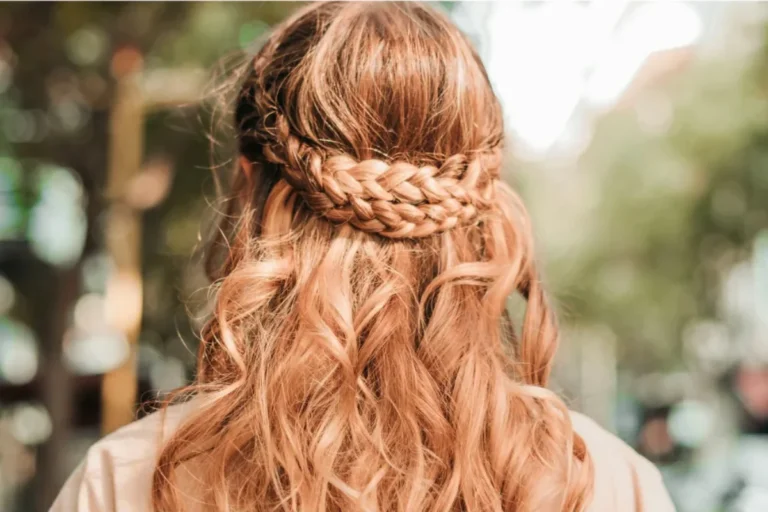
Instead of two French braids, this uses one Dutch braid that starts above one ear, travels around the entire head, and ends by tucking in above the other ear — no meeting point at the back needed. Because it’s one continuous braid rather than two joined together, it actually needs slightly less length than the classic crown, and it’s the version to try first if mid-back length sounds intimidating.
3. Crown Braid for Medium-Length Hair
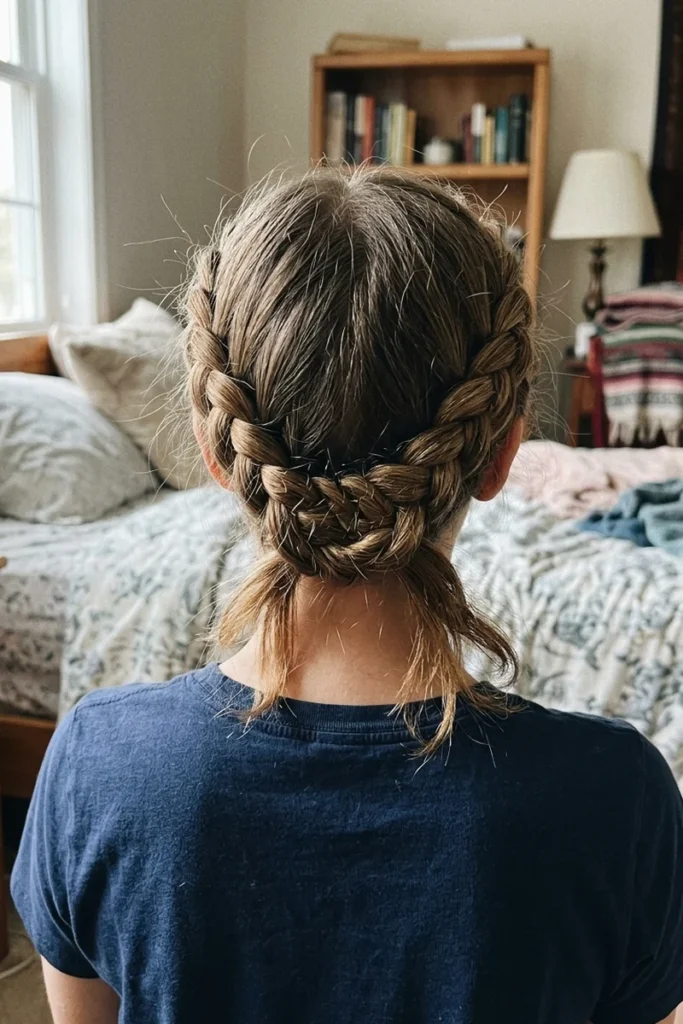
Here’s the length myth in practice: on hair that sits between the shoulders and mid-back, a full crown braid is genuinely doable, it just wraps around less of the head. Start the braids lower, near the ears rather than at the very front hairline, and let them meet toward the back rather than the very top. The result covers less of the crown but still reads clearly as a crown braid, not a half-hearted attempt at one.
4. Mini Crown Braid for Bob-Length Hair
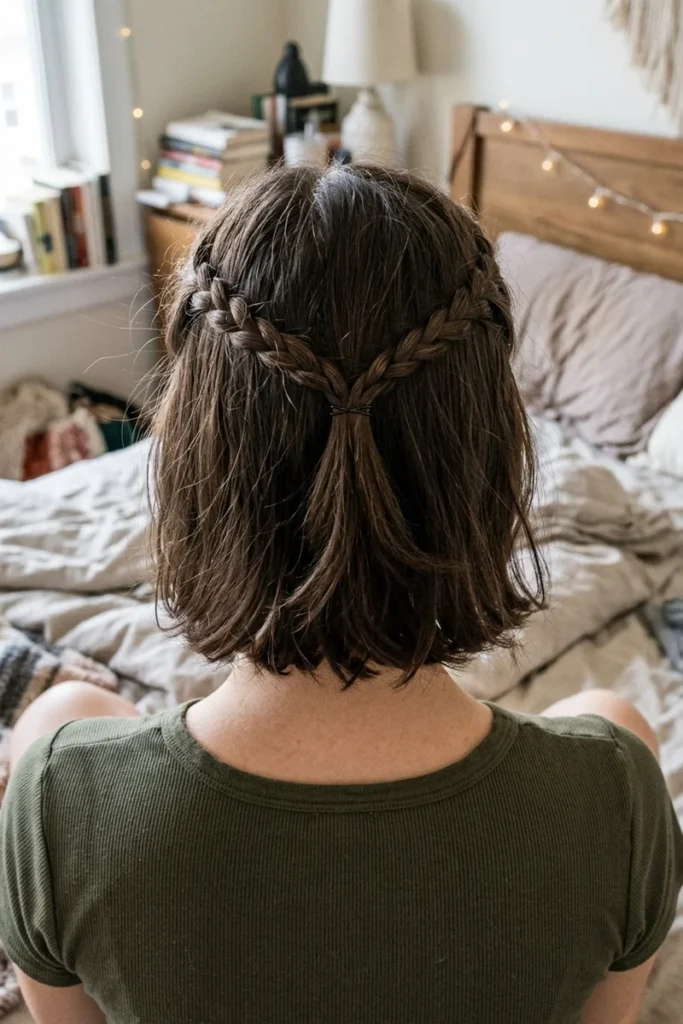
This is the version nobody shows you when they say you need mid-back length.
On a bob or lob, skip the full wrap entirely and braid two very short sections just above each ear, then cross them at the back and pin — the braided part only travels a few inches, and the rest of your hair covers the join. It won’t circle the whole head, but from the front it reads the same, and it’s the only realistic crown option for hair that doesn’t pass the collarbone. For more ways to put bob-length hair up, see our updos for short hair.
5. Fishtail Crown Braid
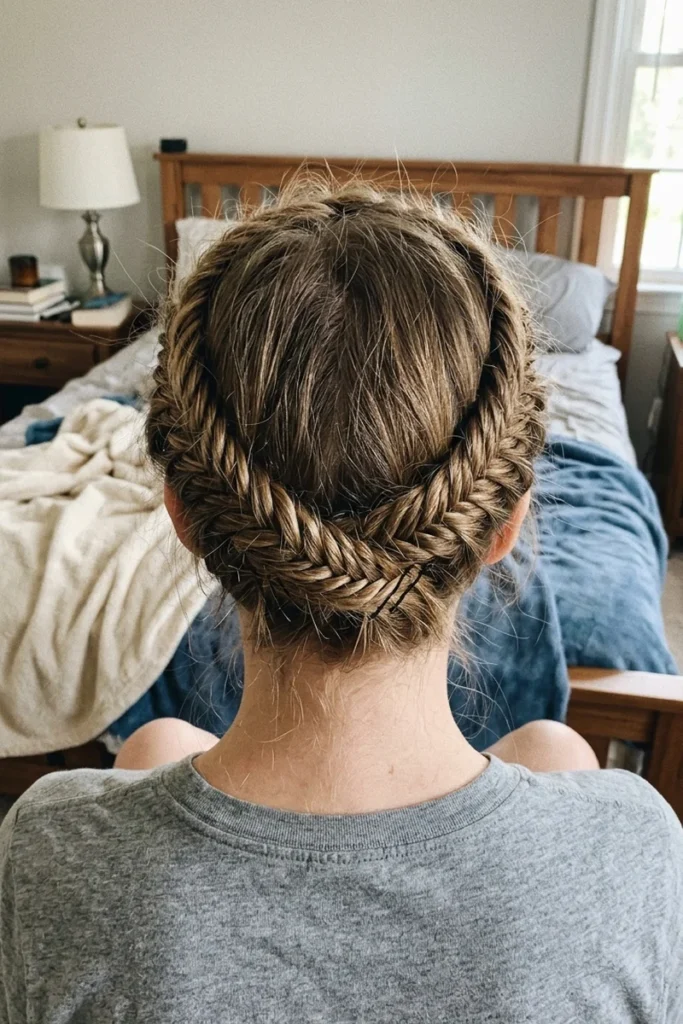
Swap the French braids for fishtail braids before wrapping them around. Fishtails are thinner and more textured than a standard three-strand braid, so the finished crown looks more delicate and less bulky — a good option if you found the classic version made your head look wider than you wanted. Our fishtail braid hairstyles guide breaks down the two-strand technique.
6. Dutch Crown Braid
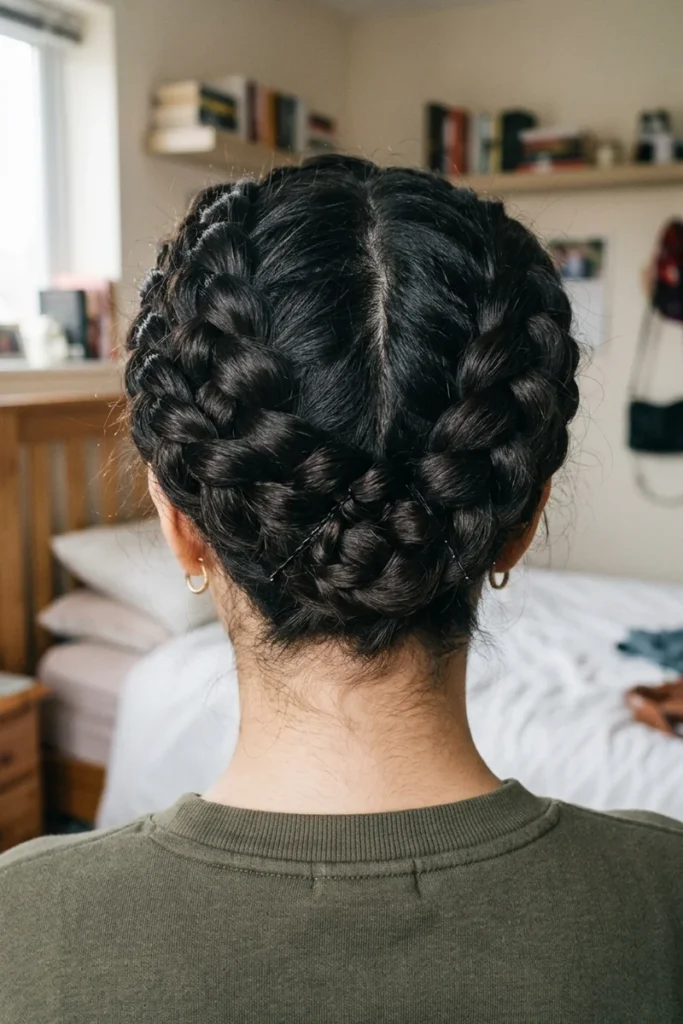
Braid both sides as Dutch braids instead of French, crossing strands under instead of over, then wrap them as usual. Because Dutch braids sit raised rather than flat, the crown ends up looking noticeably fuller once it’s wrapped, which is useful if your hair is fine and a flat crown braid tends to look thin against your scalp. If you’re new to braiding under instead of over, start with our Dutch braid hairstyles.
7. Loose, Undone Crown Braid
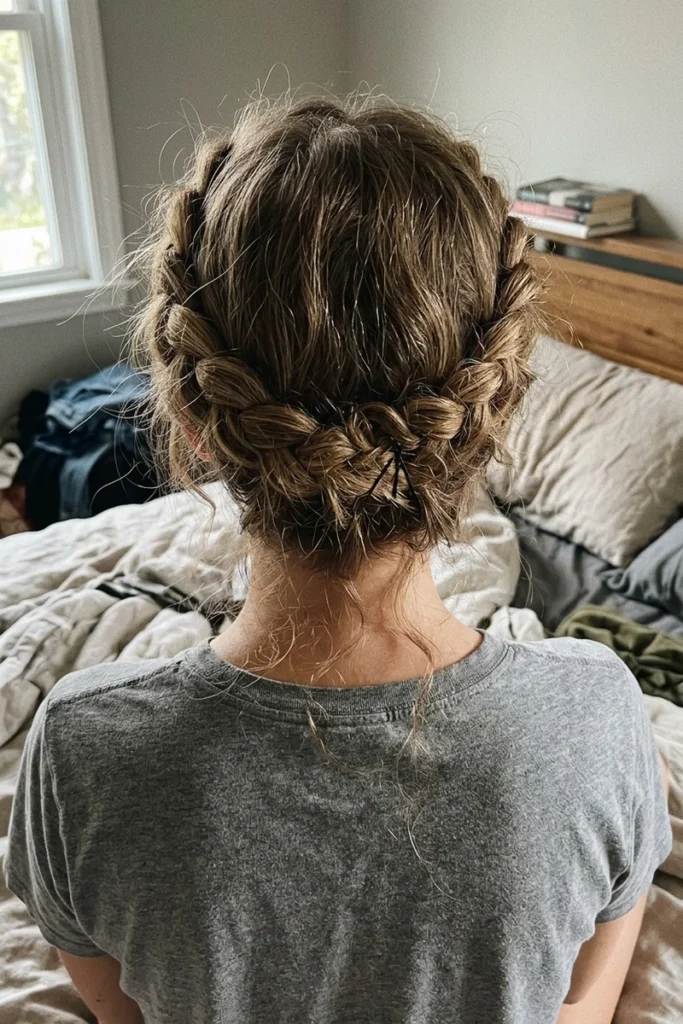
Braid loosely from the start rather than tightly, and after wrapping, pull gently at the edges of each row to widen it. Some pieces will slip loose around the hairline, and that’s the point — this version is meant to look effortless rather than polished, and it holds up better on day-two hair than fresh, freshly washed hair, which tends to pull the loosened rows back into place.
8. Crown Braid with Bangs Left Out
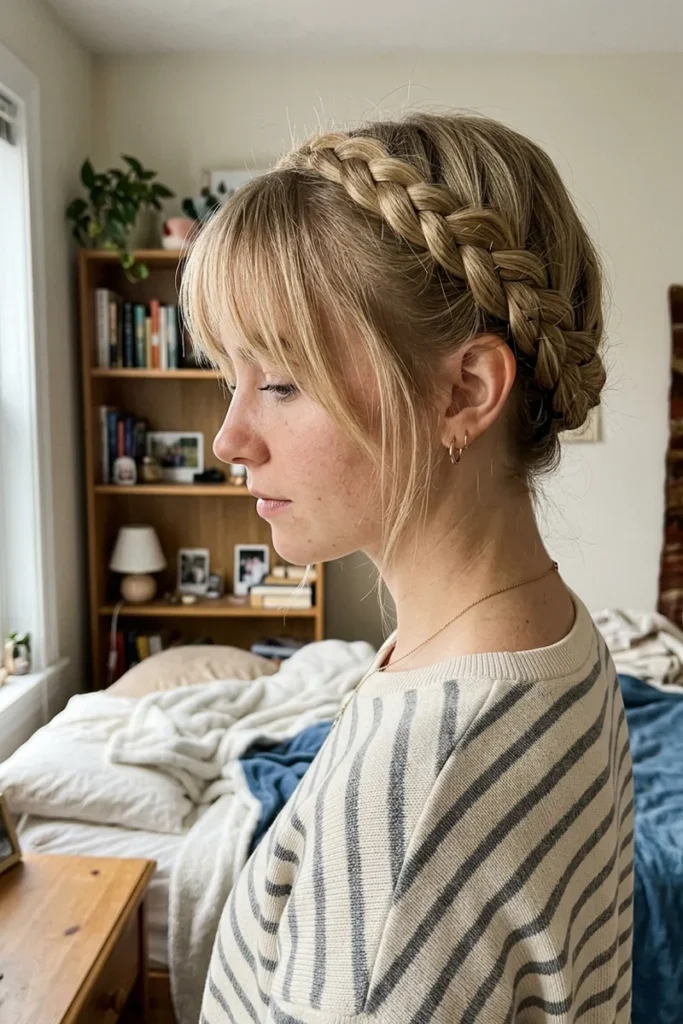
If you have bangs or face-framing pieces, there’s no need to braid them in. Start each braid an inch or so back from your hairline instead of right at it, leaving the front pieces down. It softens the whole look and avoids the slightly severe, pulled-back appearance a crown braid can have when every strand near the face is braided in.
9. Crown Braid for Thin Hair
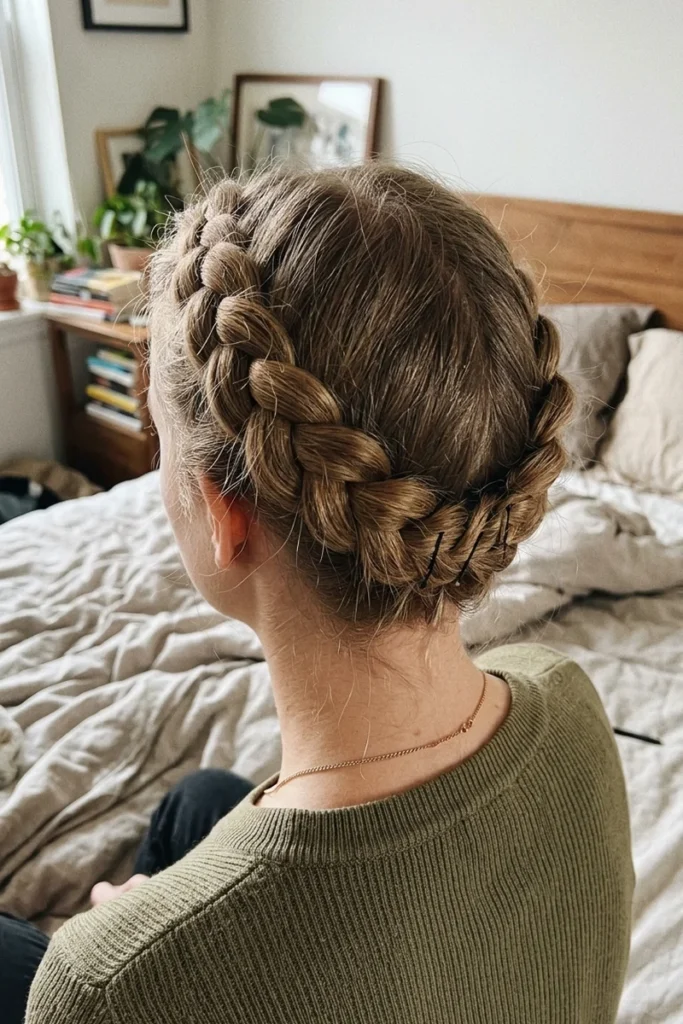
Fine hair is where a lot of crown braids fall apart visually, not because the technique is different, but because a thin braid wrapped around the head can look more like a headband than a crown. Backcomb the crown section lightly before you start braiding, and pull each row wider than feels natural once it’s wrapped — both add the visual bulk that thin hair doesn’t supply on its own.
10. Crown Braid for Curly Hair
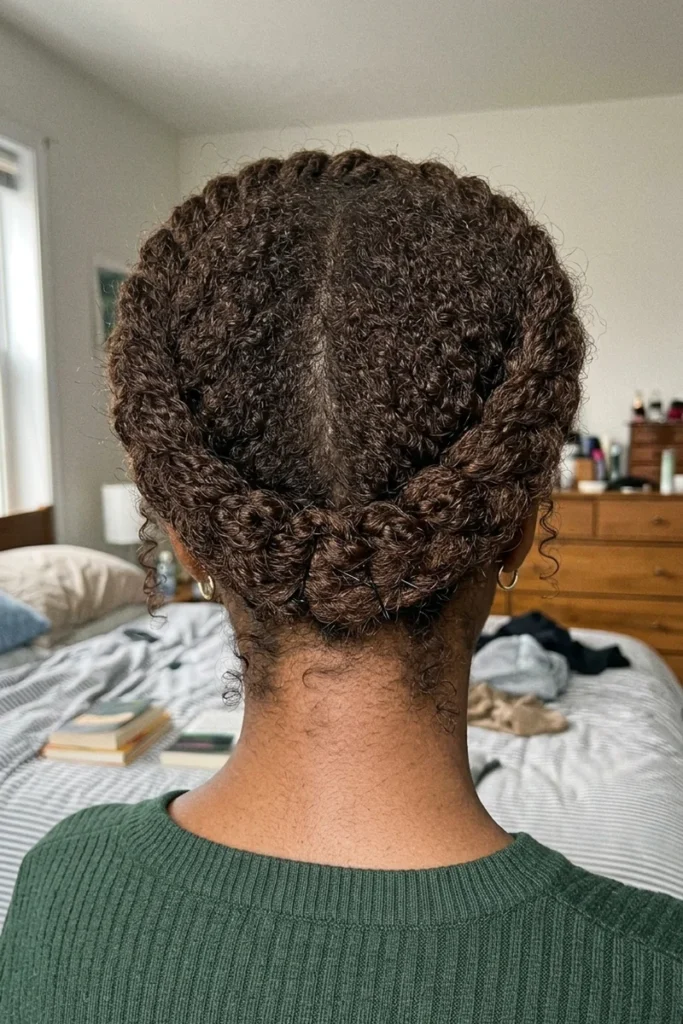
Curly hair actually holds the wrap better than straight hair does, since the texture grips and disguises small gaps between the braids. Braid on dry, detangled curls rather than wet ones — braiding wet curly hair straightens the pattern out, and you’ll lose the texture that made the style work once it dries. Our guide to curly hairstyles by curl type shows which styles suit your pattern.
11. Half-Crown Braid
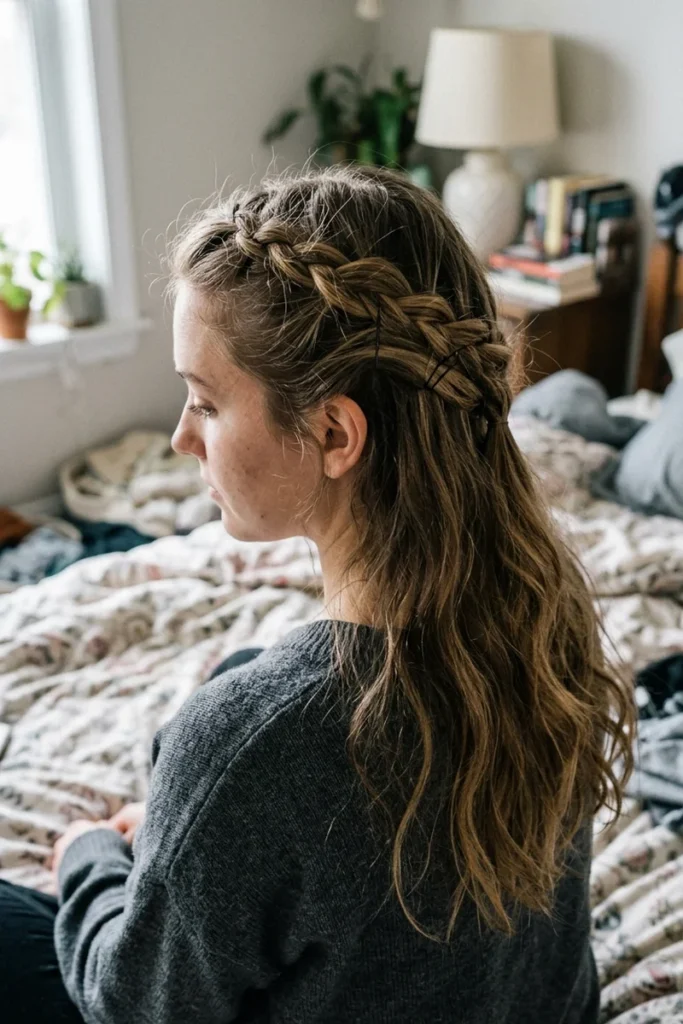
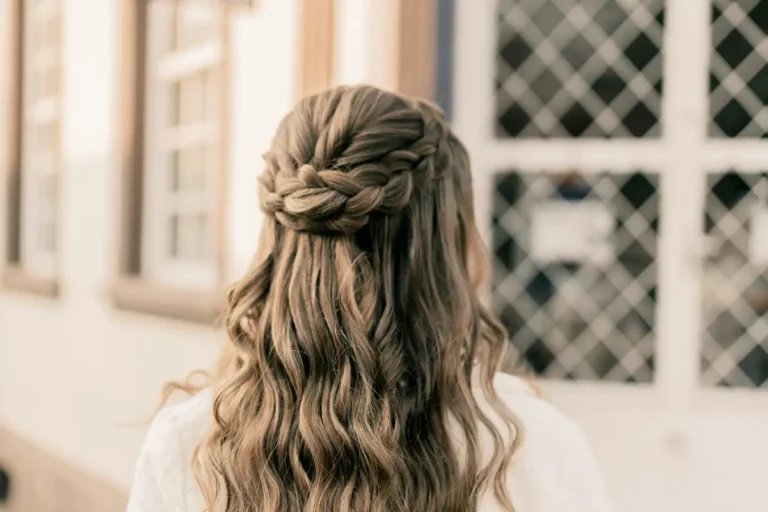
Rather than wrapping all the way around, braid just one side and cross it partway across the head, pinning it above the opposite ear instead of continuing all the way around. It gives you the shape of a crown braid on one side of the head while leaving the rest of your hair down, and it needs noticeably less length than a full wrap since you’re only braiding — and crossing — half the distance.
12. Crown Braid with Flowers or Pins
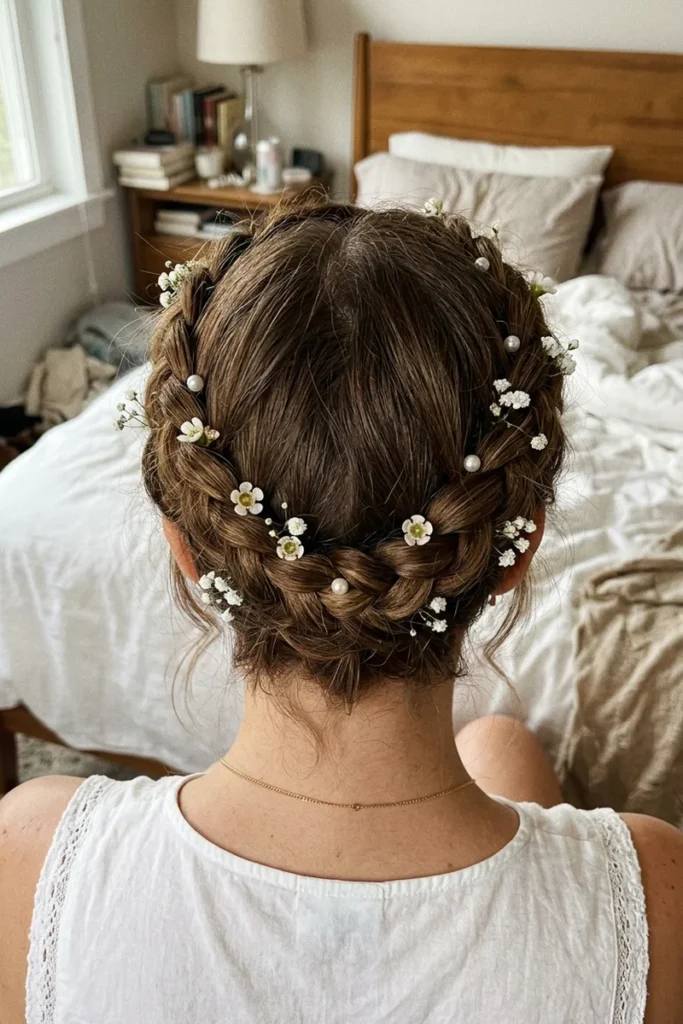
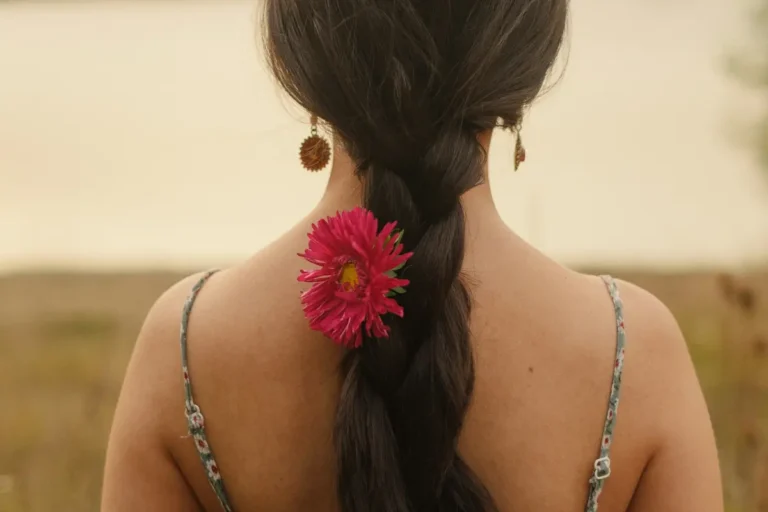
Once the crown is wrapped and pinned, tuck small flowers, pearl pins, or a thin hair vine along the braid itself rather than scattering them across loose hair. Because the braid is already secure, the accessories have something to anchor into and won’t slide out the way they would pinned into loose strands — which is exactly why this version shows up so often for weddings. It’s a popular choice for rustic and garden weddings too, alongside the other styles in our bridesmaid hairstyles by wedding theme.
13. Double-Row Crown Braid
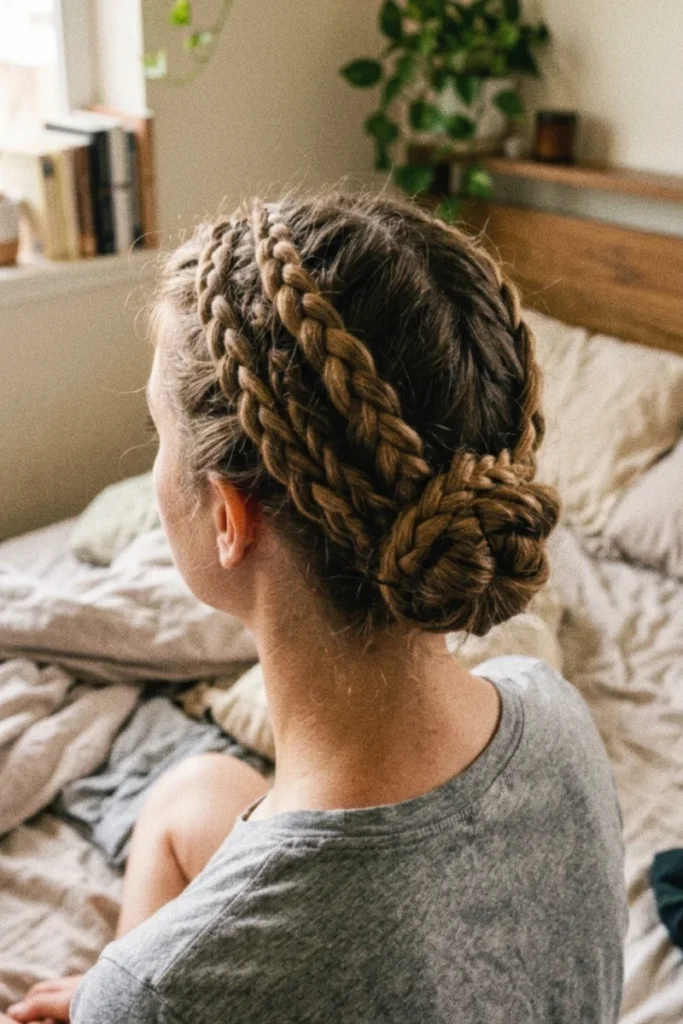
For hair with enough length and thickness to spare, braid two thinner braids on each side instead of one thicker one, and wrap all four ends into the same crown shape. It reads as more intricate than a standard crown and works well if you find a single braid on each side looks too plain for a formal occasion, though it does take noticeably longer to do.
14. Bridal Halo Braid
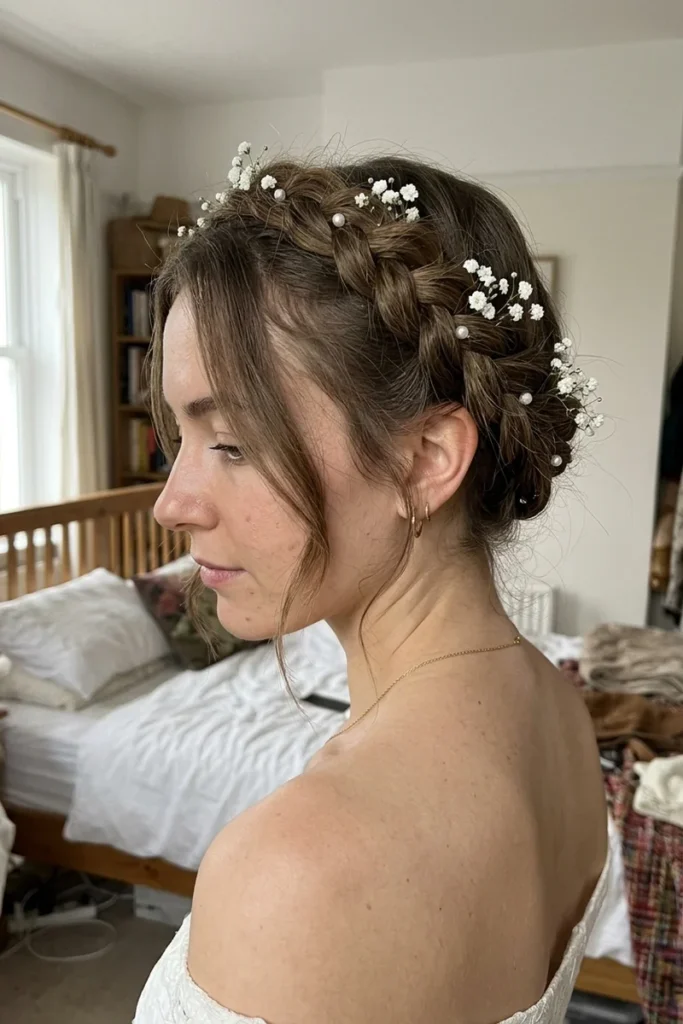
This is the single-braid halo from earlier, styled more deliberately: slightly looser braiding, a few soft face-framing pieces left out, and small florals or pins along the length. Because it only needs one continuous braid rather than two meeting in the back, it’s more forgiving on hair that’s a little shorter than the classic crown requires — useful information if you’re planning this for a wedding and aren’t sure your length will cooperate. For more ideas built around veils, long receptions, and wedding photos, see our guide to wedding hairstyles. If you’re pairing the braid with a veil, our guide to choosing and pinning a bridal updo shows where the comb should go.
15. Kids’ Crown Braid
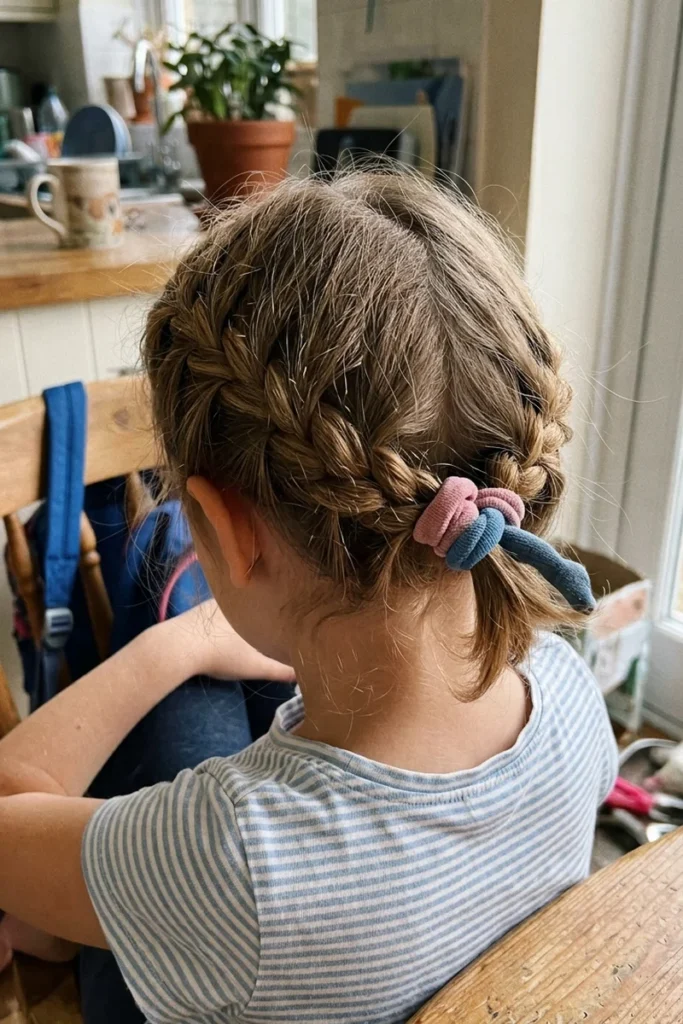
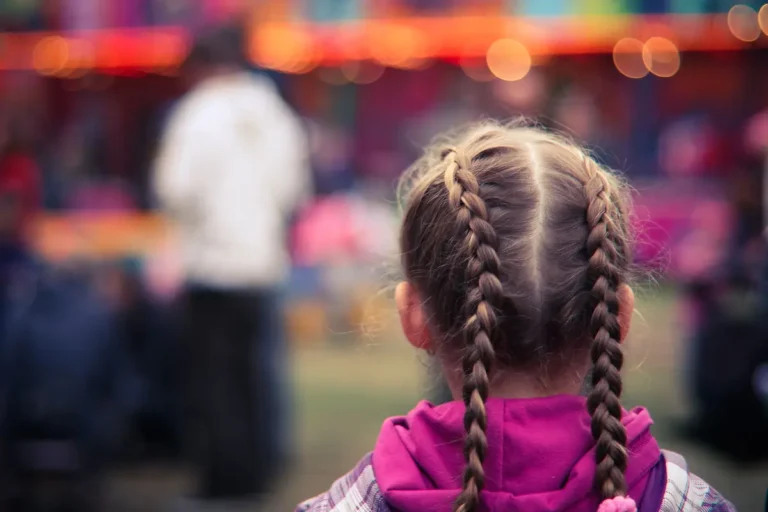
Braid looser than you would on adult hair, and use soft, snag-free elastics rather than tight ones to secure the ends before wrapping — children’s scalps are more sensitive to tension, and a crown braid pulled crown-tight for a full school day isn’t comfortable by the afternoon. It holds up well through recess and gym class, and it keeps hair fully off the face and neck, which is usually the actual goal for school hair rather than how polished it looks. You’ll find more quick options in our school hairstyles for kids.
FAQ
Do I really need mid-back length for a crown braid?
Only for the classic two-braid version wrapped fully around the head. Shorter versions — the mini crown, the half-crown, and the single-braid halo — all work on shorter hair, down to around collarbone length, by covering less of the head or using one braid instead of two.
What’s the difference between a crown braid and a halo braid?
A crown braid is usually two French braids that meet at the back of the head. A halo braid is one continuous braid — often a Dutch braid — that circles the head without a meeting point. They look similar from the front, which is why the terms get used interchangeably, but the technique underneath is different.
What are the different types of crown braids?
The most common types are the classic two-braid crown, the single-braid halo, the Dutch crown braid, the fishtail crown braid, and the half-crown. They differ in how many braids you use and how much of your head they cover: the classic crown needs the most length, while the halo, half-crown, and mini crown work on shorter hair. For weddings and special occasions, the bridal halo adds soft face-framing pieces and small florals or pins.
Will a crown braid work on layered hair?
Yes, though shorter layers around the face will slip out of the braid more easily than they would on blunt-cut hair. Leaving those short pieces out deliberately, as in the bangs-left-out version above, usually looks more intentional than fighting to keep them braided in.
How long does a crown braid last?
Because it’s pinned in multiple places rather than relying on one elastic, a crown braid typically holds better than a simple braid or ponytail — often through a full day of an event without needing to be redone. The pins are doing most of the work, so check that the ends are actually secured under the opposite braid rather than just tucked loosely.
Can I do a crown braid on myself without help?
The classic two-braid version is difficult to do solo since you’re pinning the ends at the back of your own head by feel. The half-crown and mini crown versions are more realistic to do yourself, since both the braiding and the pinning happen closer to the sides of your head, where you can see what you’re doing in a mirror.
Closing
The version most people picture when they hear “crown braid” is really just one option among several, and it happens to be the one with the strictest length requirement. If your hair doesn’t reach mid-back, start with the mini crown or the single-braid halo instead of ruling the style out — and if you’re comfortable with a standard French braid already, our 20 French Braid Hairstyles You Need to Try guide covers the technique this one builds on, including a full French braid crown for when your length does catch up.