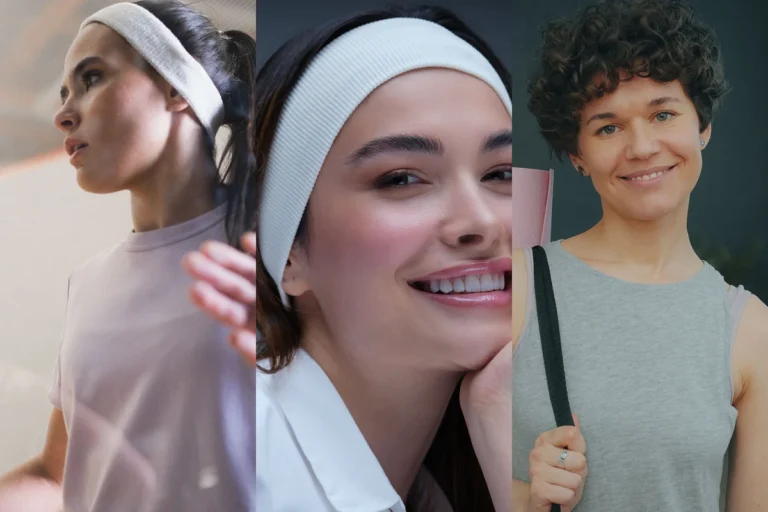
13 Hairstyles for Hats and Beanies, Sorted by Where the Hat Sits
Beanie hairstyles have to work twice: once when you put the hat on, and again when you take it off indoors. A style that looks great under a beanie can come out with a flat crown, a dent across the forehead and static at the ends. The fix starts with knowing where your hat presses, because a fitted beanie, a beret and a baseball cap each flatten a different part of the head.
The 13 beanie hairstyles and hat-friendly styles below are sorted by hat type, with curly and short-hair options at the end. Under each one, the “Hat off” note tells you what to expect when the hat comes off and how to fix it in under a minute. After the styles you’ll find a quick hat-off routine, a table of the most common hat-hair problems, and what to look for in a hat that is easy on your hair.
Where Each Hat Presses
Hair under the tightest part of the hat gets flattened; hair below it keeps its shape. Choose a style that keeps the volume, braids or knots below the pressure line.
| Hat | Where it presses | What gets flattened | Put the volume here |
|---|---|---|---|
| Fitted or cuffed beanie | All around the head, firmest at the cuff | Crown and a band across the forehead | Below the ears and over the shoulders |
| Slouchy beanie | Front and sides only | Front and sides, less at the back | At the back of the head and the lengths |
| Beret | A small circle on one side of the crown | One side of the top | On the opposite side and at the nape |
| Baseball cap | Forehead band and crown | Roots at the front and top | Through the back opening and below it |
| Bucket hat | Evenly around the crown | The whole top | At the ends, below the brim |
| Wide-brim hat | A ring around the crown | The top, hidden by the brim | At the nape and the lengths |
Fitted and Cuffed Beanies
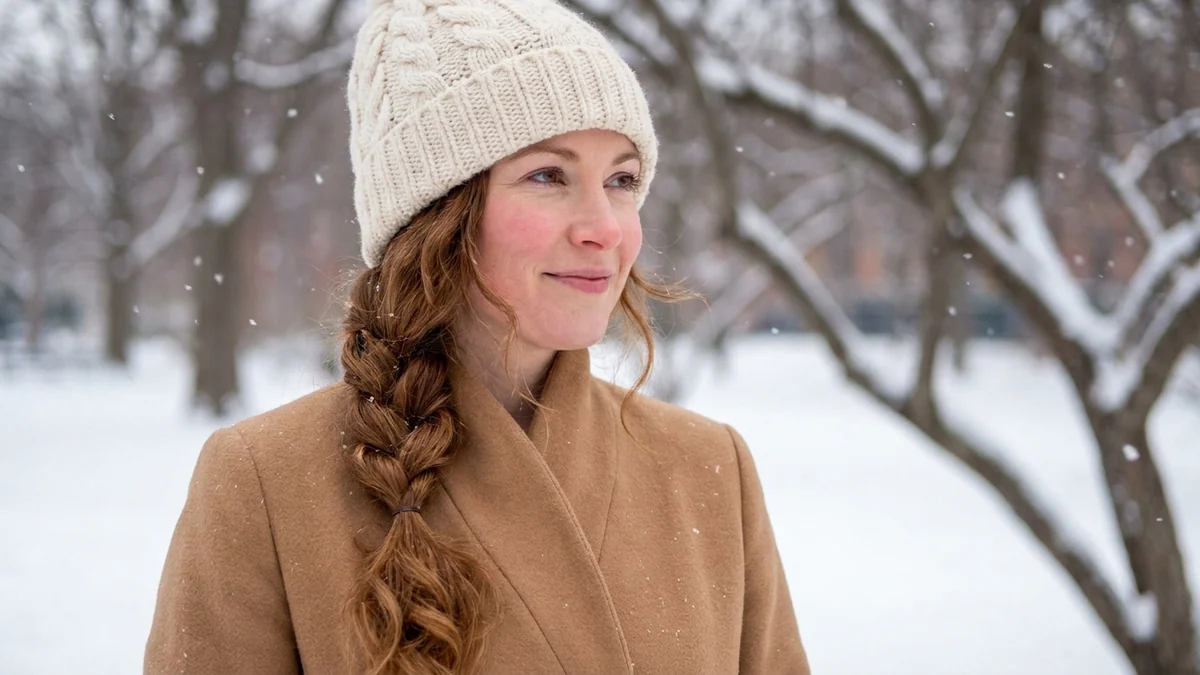
1. Low Side Braid Over the Shoulder
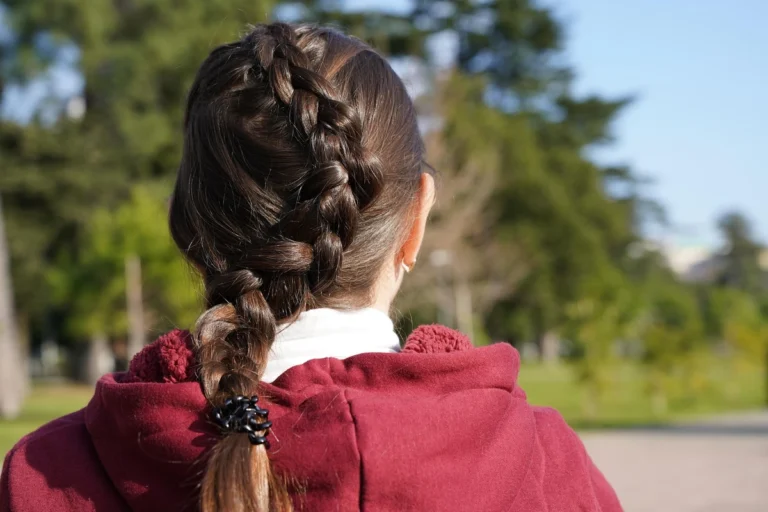
A fitted beanie flattens everything it covers, so the safest place for a style is below the cuff. Sweep all your hair to one side, start a loose three-strand braid just under the ear, and let it fall over the front of your shoulder. Because the braid begins below the hat, there is nothing for the beanie to crush, and the braid keeps your hair away from a scarf or coat collar.
For two low braids under a beanie instead, see the version in our Christmas party hairstyles.

Hat off: The braid looks the same; only the top is flat. Push your fingertips into the roots at the crown and lift for a few seconds to bring back some height.
2. Low Twisted Pigtails
Split your hair down the middle and twist each side loosely from just behind the ear down to the ends, then secure each twist with a soft elastic. Twists sit flatter than braids, so they fit comfortably under a snug beanie, and they take about two minutes. They work on shoulder-length hair and longer.
Hat off: Untwist them for soft, loose waves, or leave them in and smooth the part with your fingers.
3. Bangs Out, Cuff Above the Brows
Bangs pressed flat under a cuff dry into an odd shape. Style them first, let them cool completely, then put the beanie on so the cuff sits just above the bangs instead of on top of them. Curtain bangs can be swept out to each side under the cuff, framing the face. Our curtain bangs guide shows the round-brush routine.
Hat off: If the bangs have a crease, mist them lightly with water, then blow-dry them for 20 seconds with a round brush or your fingers.
Slouchy Beanies
4. Loose Waves, Set the Night Before
Waves set with heat in the morning tend to drop under a hat. Waves set overnight in braids hold better, because the texture is already formed and cooled. Loosely braid damp hair in two or three sections with a light mousse or texture spray, sleep on it, and take the braids out in the morning. A slouchy beanie leaves room at the back, so the waves fall freely below it.
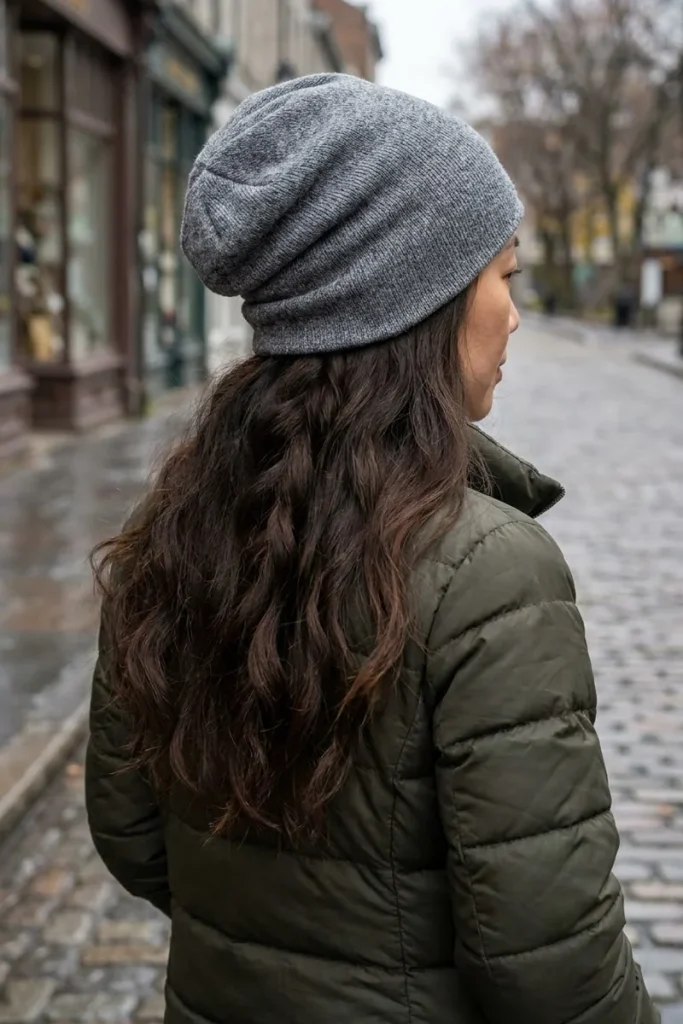
Hat off: Flip your head upside down and shake the roots with your fingers. Avoid brushing the waves, which turns them into frizz.
5. Half-Up Twist Hidden by the Slouch
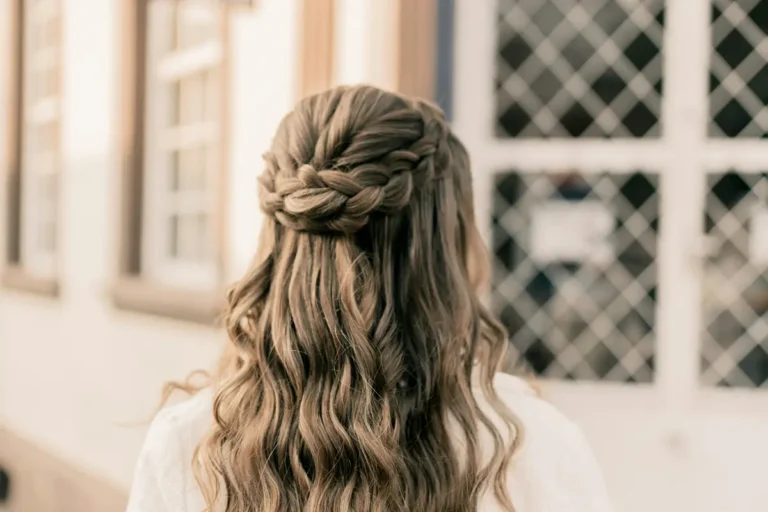
Take a small section from the temples, twist each side back and pin them together at the back of the head, just below the crown. The slouchy part of the beanie covers the pins, the twist keeps hair out of your face, and the rest of the hair stays down. Use small bobby pins crossed in an X so nothing pokes through the knit.
Hat off: The twist keeps the front tidy, so you don’t need to fix the top. Leave it in all day.
Berets
6. Deep Side Part With a Smooth Bob or Lob
A beret sits tilted on one side of the head. Make a deep side part on the opposite side, smooth the hair with a little cream, and set the beret over the side with less hair. The angle of the hat and the angle of the part balance each other, and the ends stay visible below. It works especially well on chin-length to collarbone hair; our bob haircut guide covers which bob lengths show the ends best.

Hat off: One side will be flatter than the other. Flip the part to the other side for a few minutes, then flip it back; the roots lift as they move.
7. Low Chignon Under a Beret
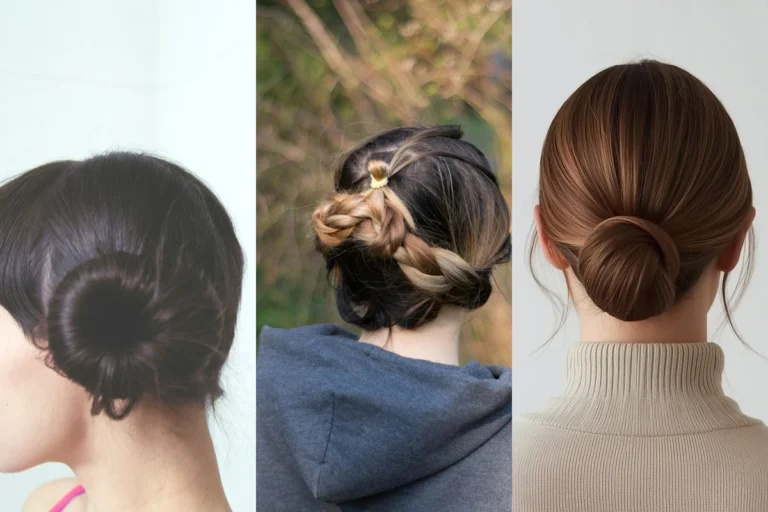
Twist all your hair into a low roll at the nape and pin it in place, then add the beret at an angle. The chignon sits well below the hat, so it isn’t squashed, and the look suits coats and evening plans. Our holiday updos for long hair show how to pin a chignon so it holds through the day.
Hat off: The bun stays as it was. Smooth any flyaways at the crown with a drop of hair oil on your palms.
Baseball Caps
8. Ponytail Through the Back Opening
Put the cap on first, then gather your hair and pull it through the gap at the back. Tying the ponytail before the cap goes on usually puts the elastic in the wrong place. Tie it just under the strap so the cap holds the base steady. For ways to keep a ponytail from sagging, see our ponytail hairstyles.
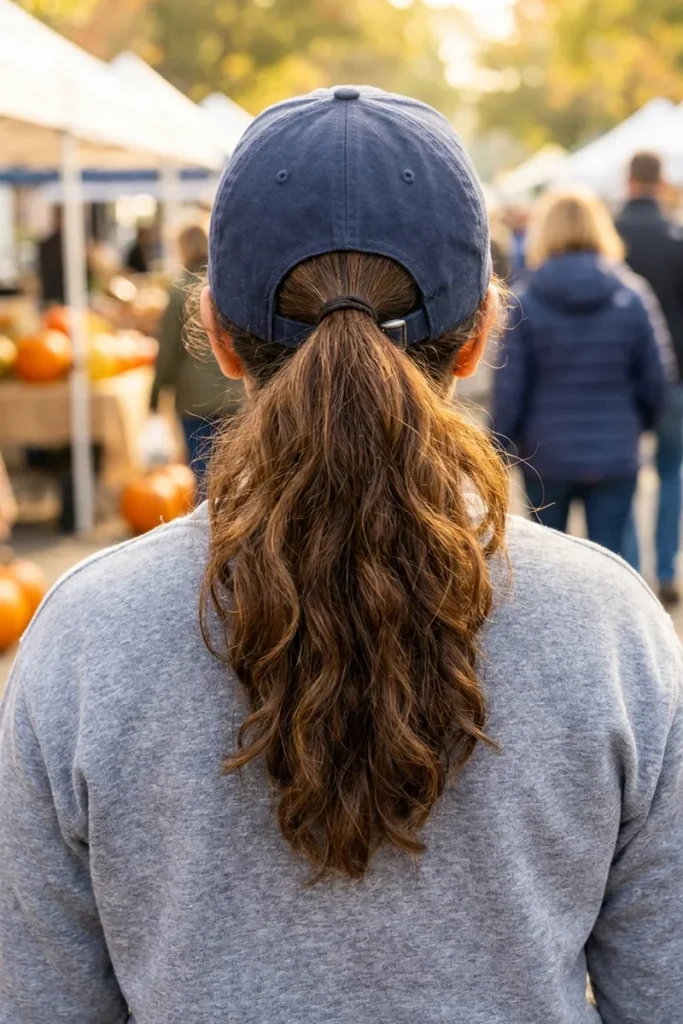
Hat off: The ponytail leaves a band across the forehead and flat roots. Take the ponytail down, dampen the band at the hairline with wet fingers, and dry it pushed in the opposite direction.
9. Two Low Braids Under a Cap
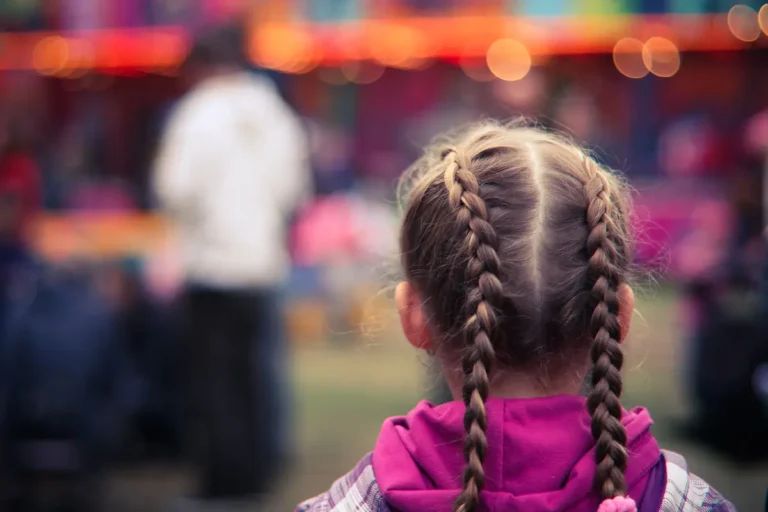
Two braids starting behind the ears sit neatly under a cap and stay put on windy or active days. Keep them loose at the hairline: the cap band already presses on the edges, and tight braids underneath add to the pull. For workout versions, see our athletic hairstyles.
Hat off: The braids hold their shape. Run a little leave-in conditioner along the hairline where the band sat.
Bucket Hats
10. Tousled Short Hair With Flipped Ends
A bucket hat covers the crown evenly, so the part of a bob or lob that shows is the ends. Curl or flip the ends outward with a flat iron, or scrunch in texture spray if your hair is wavy, and let the top lie flat under the hat. It’s a good choice for short hair that is too short to tie back.
Hat off: Scrunch the ends again and lift the roots at the crown with your fingertips. A light dry shampoo at the roots helps if the top feels flat or warm.
Wide-Brim Hats
11. Loose Low Bun Below the Brim
A wide brim rests on a ring around the crown, so a high bun pushes the hat up and off balance. Twist your hair into a loose bun at the nape instead, with a few pieces left out around the face. The brim shades the top of the head, so a flat crown doesn’t show while the hat is on.

Hat off: Leave the bun in and pull out a few more pieces at the front to soften the flat line from the hat.
Curly Hair and Short Hair
12. Twist-Out or Braid-Out Under a Satin-Lined Beanie
Wool and acrylic knits rub against curls and pull moisture from them, which shows up as frizz. A beanie with a satin or silk lining lets curls slide instead of catching. Wear a twist-out or braid-out that is fully dry, and pull the beanie straight down instead of twisting it on. Our curly hairstyles guide has twist-out and braid-out steps for each curl type.

Hat off: Fluff the roots with a pick or your fingers. Don’t brush or rake through dry curls; if a section is crushed, mist it with water and scrunch.
13. Pixie Pushed Forward Under a Beanie
Short hair brushed back under a beanie comes out pressed flat to the head. Push a pixie forward and slightly to the side before the hat goes on, with a little paste or cream on the fingertips, and let the front pieces show under the cuff. Our pixie cut guide covers products for each texture.
Hat off: Rub a pea-size amount of paste between your fingers and rough up the top. Short hair recovers fastest of all lengths.
The 60-Second Hat-Off Fix
This routine works for most lengths and styles. Keep a small comb, a mini dry shampoo and a hair oil in your bag during the colder months.
- Take the hat off by lifting it straight up, not dragging it back over the hair.
- Flip your head upside down and shake the roots with your fingertips for about ten seconds.
- Spray dry shampoo at the crown if the roots look flat or feel warm, then massage it in.
- Zigzag your part with the tip of a comb, or move it about half an inch from where it was. Roots lift when they move.
- Smooth static with a drop of hair oil or leave-in conditioner rubbed between your palms, then pressed lightly over the lengths.
Hat-Hair Problems and Fixes
| Problem | Usual cause | Fix |
|---|---|---|
| Flat crown | Volume sitting under the tightest part of the hat | Keep volume below the hat; flip and shake the roots after |
| Dent across the forehead | A firm cuff or cap band on styled hair | Dampen the line and blow-dry it in the opposite direction |
| Static and flyaways | Wool or acrylic hats plus dry indoor heating | Satin-lined hat, a drop of oil on the lengths, less brushing |
| Frizz at the nape | Coat collars and scarves rubbing the ends | Wear the hair in front of the coat, or braid the lengths |
| Sweaty, flat roots indoors | Keeping a warm hat on inside | Take the hat off when you come in; dry shampoo at the roots |
| Crushed curls | A rough knit and twisting the hat on | Satin lining, pull the hat straight down, fluff with a pick |
If static and frizz keep coming back all winter, our guide to frizz and hair porosity explains which routine fits your hair.
Choosing a Hat That’s Easy on Your Hair
- Look for a satin or silk lining. It cuts friction, static and frizz, and you can sew a satin band into a hat you already own.
- Pick the right size. A hat that leaves a red line on your forehead is too tight. A firm band pressing on the same spot every day rubs and pulls at the hairline.
- Put it on over dry hair. Damp hair under a hat stays wet much longer and dries flat in the shape of the hat.
- Wash knit hats regularly. Oil and product build up in the band and transfer back onto clean hair.
Beanie Hairstyles and Hat Hair FAQ
What hairstyle works best under a beanie?
The best beanie hairstyles sit below the cuff: low braids, low twists, a side braid or a low bun at the nape. Volume at the crown always gets flattened, so keep it in the lengths instead.
How do I keep my hair from going flat under a hat?
You can’t stop the hat from flattening the top, but you can choose where the volume sits. Wear the volume below the hat, and lift the roots after it comes off by flipping your head and shaking the crown with your fingertips.
Can I wear a beanie with wet hair?
It’s better not to. Wet hair stretches more easily, stays damp much longer under a hat and dries in the shape of the hat. If you have to go out, dry at least the roots first.
Can wearing hats cause hair loss?
A hat that fits comfortably doesn’t cause hair loss. A very tight band worn for long hours every day can rub and pull at the hairline. If you notice thinning at the temples or edges, choose looser hats and see a dermatologist. Our guide to hair breakage causes and fixes explains how to tell breakage from hair loss.
How do I wear a beanie with bangs?
Style the bangs first, let them cool, then set the cuff just above them so they show below the hat instead of being pressed flat under it.
How do I stop static under a wool hat?
Choose a satin-lined hat, smooth a drop of oil or leave-in conditioner over the lengths before you go out, and avoid brushing right after taking the hat off. Our winter hair care routine covers static and dry ends from the shower to bedtime.
Matching Hair to the Hat
Good beanie hairstyles start with where your hat presses: all over for a fitted beanie, one side for a beret, the forehead and crown for a cap, a ring around the top for a bucket or wide-brim hat. Keep the braid, bun or waves below that line, choose a satin lining if you can, and keep the 60-second fix in mind for when the hat comes off indoors.