Bridal Updo Styles: How to Choose, Pin and Keep One in Place All Day
Most bridal updo galleries sort styles by mood: romantic, classic, boho. That helps you find a photo you like, but it skips the three things that decide whether the updo will still look right at the last dance: how much hair you have, where your veil attaches, and what your dress does at the neck and back. The same bun that looks full on waist-length hair can look small and tight on shoulder-length hair, and a veil comb pushed into the wrong spot can drag a finished style loose before the first photo.
This guide starts with those three choices, then walks through ten bridal updos step by step, with how many pins each one takes and how long it holds. If you are still deciding between hair up, half-up or down, our guide to wedding hairstyles covers that choice first.
Choice 1: How Much Hair You Have
Every updo needs a minimum amount of hair to build its shape. Below that minimum, a stylist adds padding or clip-in extensions, or makes a smaller version of the style. Bring your real length and thickness to the trial, not the length you hope to have by the wedding.
| Your length | Updos that work without help | Needs padding or extensions for |
|---|---|---|
| Shoulder length | Low chignon, French twist, small twisted low bun | Full textured buns, braided crowns |
| Collarbone to bra strap | Almost every low or mid-height bun, side chignon, Dutch braid bun | Very large high buns on fine hair |
| Mid-back or longer | Every style, including large high buns and crown braids | Nothing, but heavy hair needs more pins and spin pins |
Thickness matters as much as length. Fine hair of any length often needs a small padding or a few clip-ins hidden inside the bun to look full in photos. Very thick, long hair has the opposite problem: its weight pulls pins loose, so the base needs to be tighter and more firmly anchored.
Choice 2: Where Your Veil Attaches
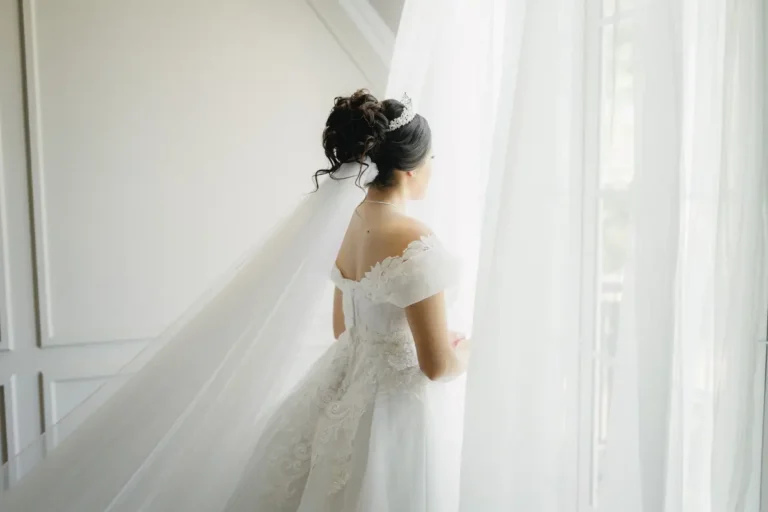
Decide on veil placement before the updo is built. The veil comb needs a firm section of hair to grip, and the bun’s position decides where that section can be.
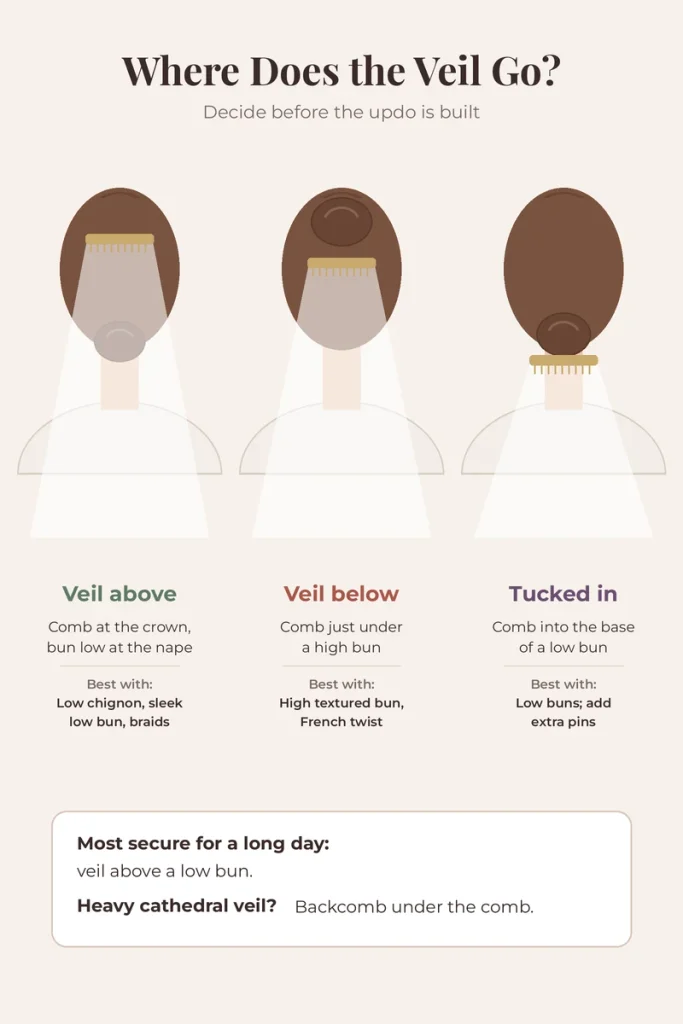
- Veil above the updo: the comb sits at the crown and the bun sits below it. This works with low chignons and low buns, and it is the most secure placement for a long day.
- Veil below the updo: the comb slides in just under the bun, so the veil falls from beneath it. This suits high and mid-height buns, and the spot needs a little backcombing so the comb has something to grip.
- Veil tucked into the bun: the comb goes straight into the base of a low bun. It looks seamless but puts the veil’s weight on the bun, so the bun needs extra pins.
- No veil: the updo becomes the focus, which leaves room for braids, a side placement or larger hair accessories.
Heavy cathedral veils need the most secure base; a short fingertip or elbow veil puts much less strain on the style. Bring your veil, or a piece of tulle of similar weight, to your trial.
Choice 3: Your Dress Neckline
| Neckline or back | Updo height | Good matches |
|---|---|---|
| Strapless or sweetheart | Low to mid | Low chignon, messy low bun with tendrils, braided crown |
| Off-the-shoulder | Low or high | Sleek low bun, high textured bun |
| High neck or lace collar | High | High textured bun, French twist, braided crown |
| Low or open back | Mid to high, off the nape | French twist, high textured bun, side chignon |
| One-shoulder | Side | Twisted side chignon |
| V-neck | Low to mid | Sleek low bun, Dutch braid low bun |
Ten Bridal Updos, Step by Step
The steps below assume hair that was washed the day before and curled or texturized on the morning, which gives pins far more grip than freshly washed hair. Under each style you’ll find the length it needs, the veil placement that suits it, roughly how many pins it takes and how long it holds before it needs a touch-up.
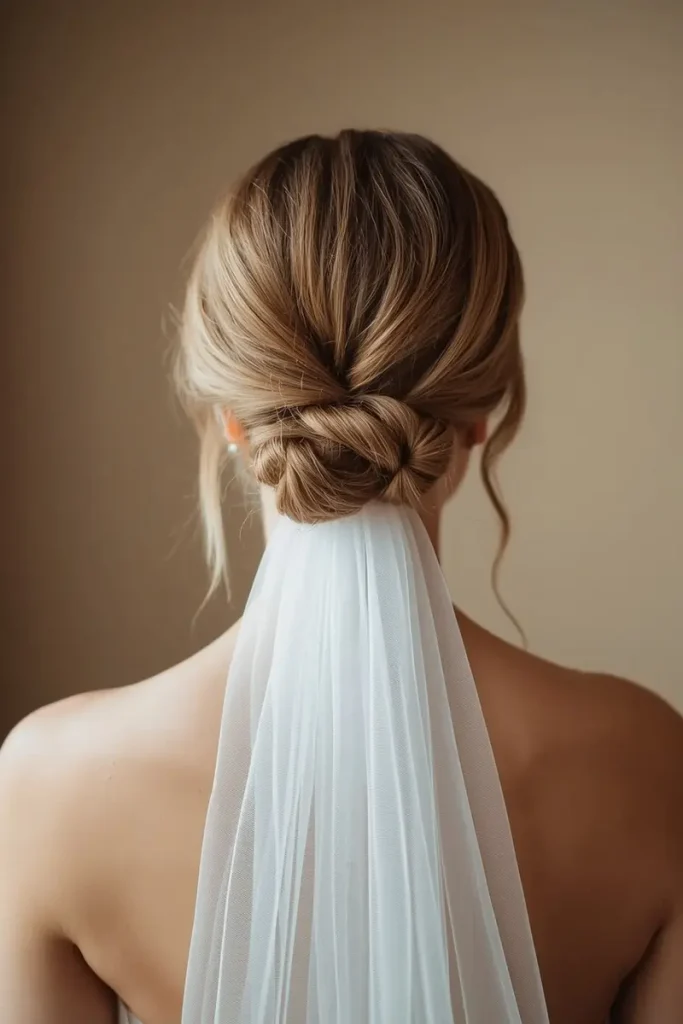
1. Classic Low Chignon
Hair length: shoulder and longer · Veil: above · Pins: 15–20 bobby pins · Holds: 12+ hours
A smooth, rounded bun at the nape. It holds well because it sits low, so gravity works with it, and it leaves the crown clear for a veil comb.
- Brush hair back and tie a low ponytail at the nape with a clear elastic.
- Twist the ponytail tightly from the base to the ends.
- Coil the twist around the elastic and pin the outer edge every inch, angling each pin toward the center of the bun.
- Tuck the ends under and lock them with two crossed pins.
- Mist with hairspray and smooth flyaways with a toothbrush.
2. Sleek Low Bun
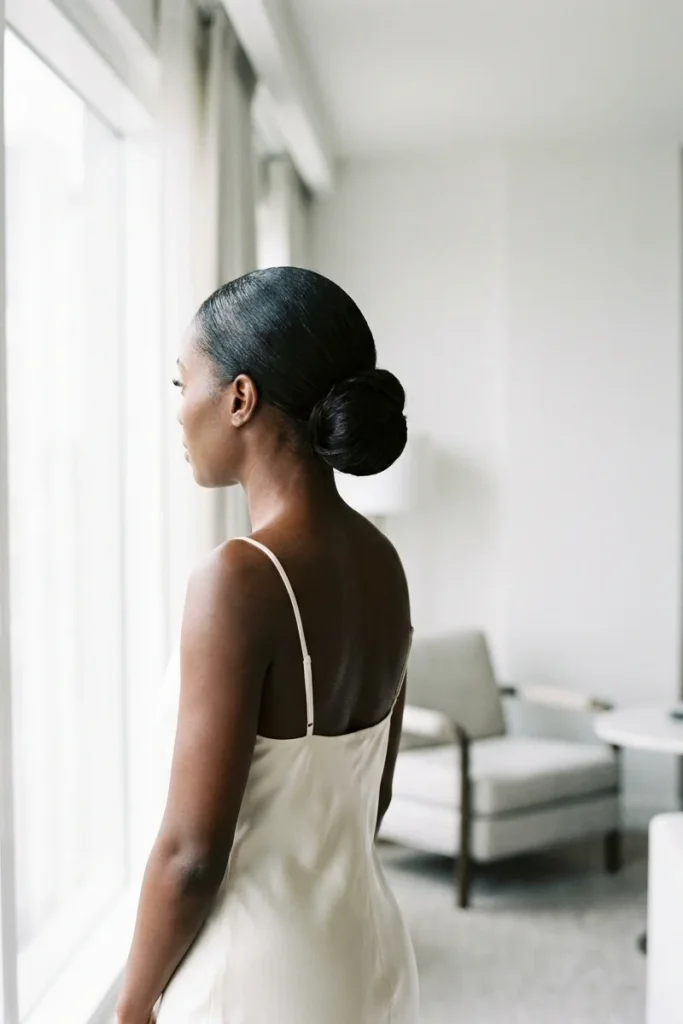
Hair length: shoulder and longer · Veil: above or tucked in · Pins: 10–15 bobby pins · Holds: 12+ hours
A modern, polished version of the chignon with a sharp center or side part. It suits straight hair and simple dresses, and it photographs cleanly from every angle.
- Blow-dry hair straight and make a clean center or deep side part.
- Apply a pea-sized amount of smoothing cream or gel along the hairline.
- Brush hair into a low ponytail with a boar-bristle brush and secure it tightly.
- Wrap the length into a flat, compact bun and pin it close to the head.
- Finish with a strong-hold hairspray and a drop of shine serum on the surface.
3. Romantic Messy Low Bun With Tendrils
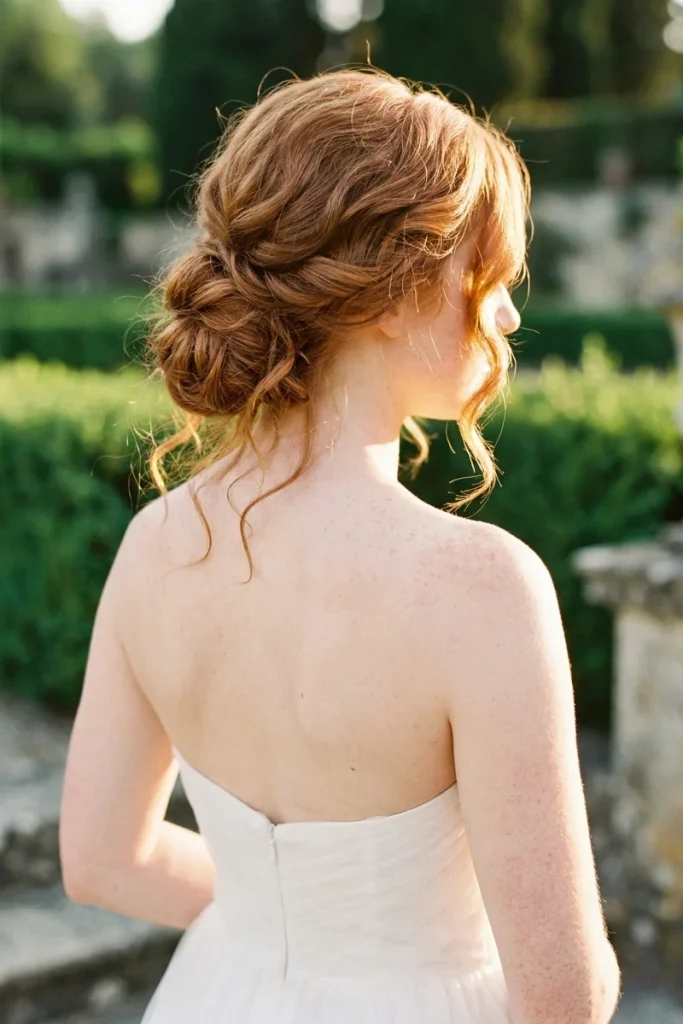
Hair length: collarbone and longer · Veil: above · Pins: 20–25 bobby pins · Holds: 10–12 hours
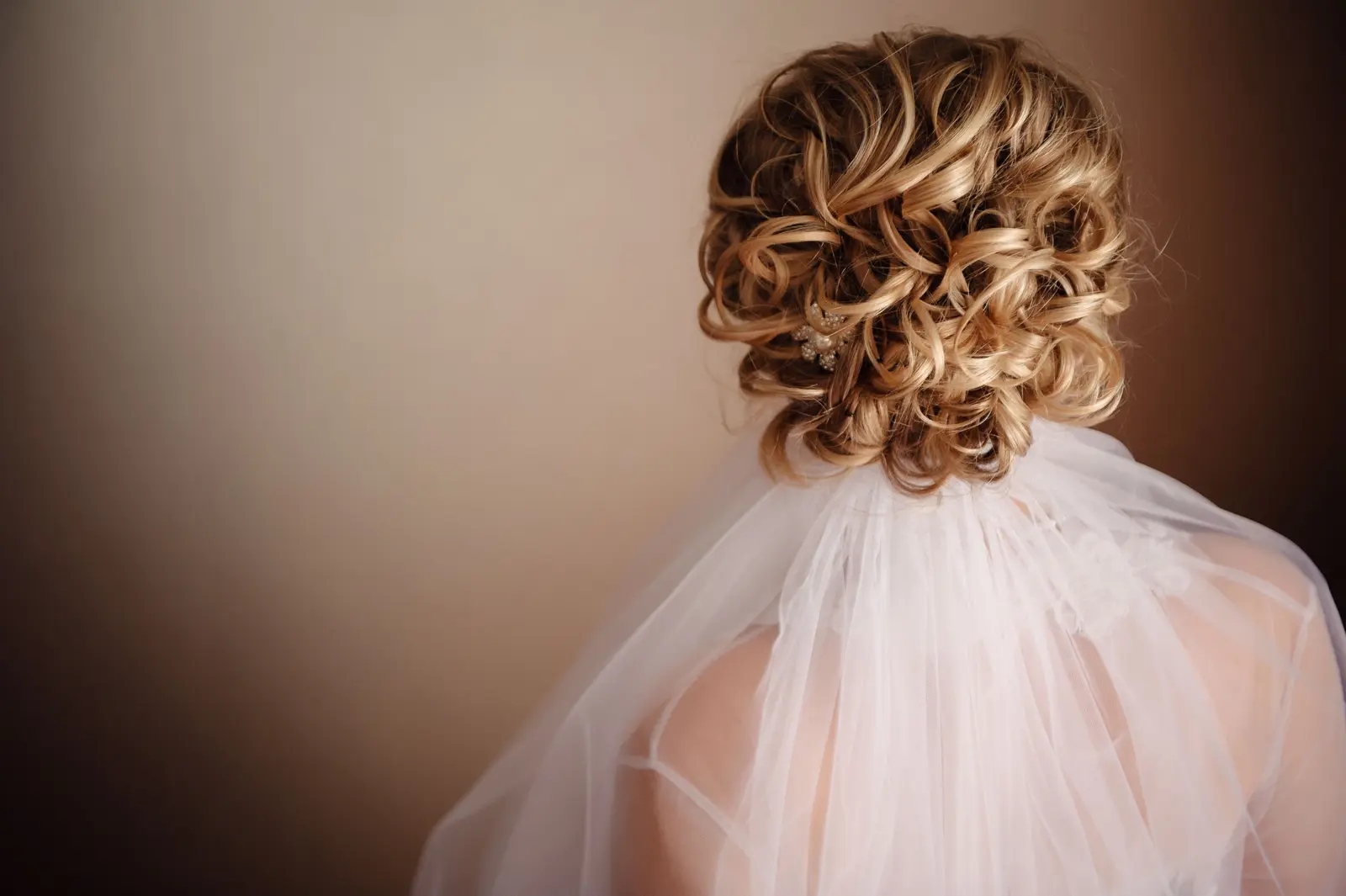
A soft, loose bun with curled face-framing pieces. It looks undone, but every loop is pinned, which is why it lasts through the reception.
- Curl all hair with a 1-inch iron and let the curls cool fully before brushing them out with your fingers.
- Leave two thin pieces out at each temple.
- Gather the rest into a loose low ponytail and pull a little volume at the crown.
- Take small sections of the ponytail, loop each one into a C-shape and pin it close to the base.
- Gently pull a few loops wider for texture, then re-curl the tendrils away from the face.
4. Twisted Side Chignon
Hair length: collarbone and longer · Veil: above, on the opposite side · Pins: 15–20 bobby pins · Holds: 10–12 hours
A bun placed just behind one ear, with the hair twisted toward it from the other side. It pairs naturally with a one-shoulder dress, with the bun on the same side as the strap or on the bare shoulder.
- Make a deep side part on the side opposite where the bun will sit.
- Starting at the part side, take two-inch sections and twist them back toward the bun side, pinning each twist behind the ear.
- Gather all hair into a low side ponytail behind the ear.
- Twist and coil the ponytail into a bun and pin it in place.
- Loosen the side twists slightly with your fingertips so they look soft rather than tight.
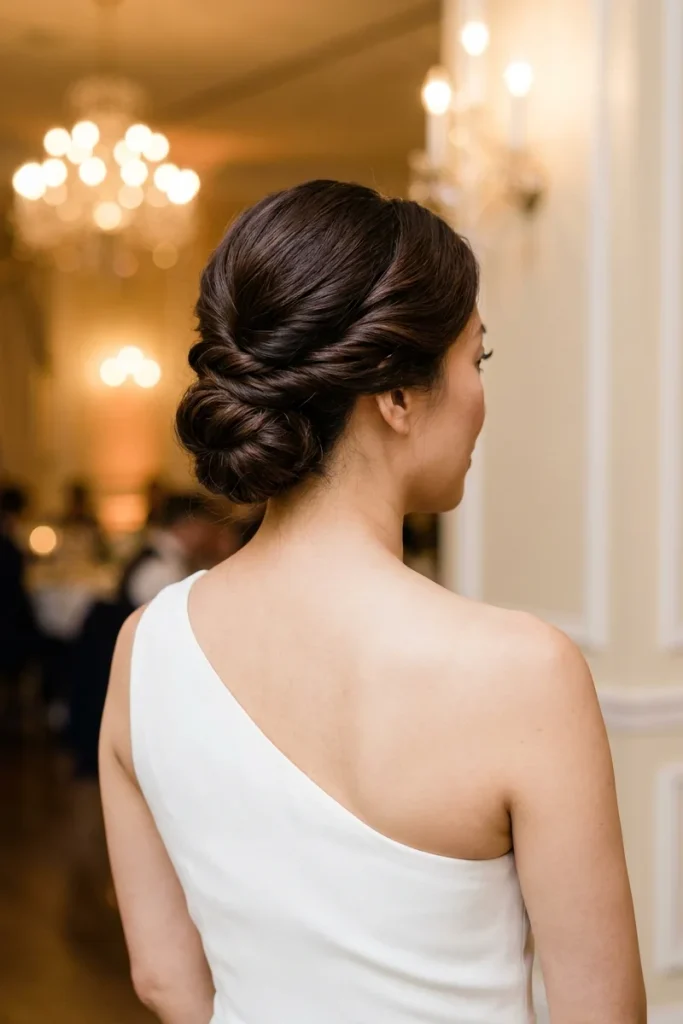
5. French Twist
Hair length: shoulder to mid-back · Veil: below or tucked in · Pins: 12–15 bobby pins plus 2 spin pins · Holds: 12+ hours
A vertical roll up the back of the head. It shows off a low-back or high-neck dress and works well on shoulder-length hair that is too short for a full bun.
- Spray texturizing spray through dry hair and lightly backcomb the crown.
- Brush all hair to one side and pin a vertical row of crossed bobby pins up the center of the back of the head.
- Gather the hair back across the row, twist it upward into a roll and tuck the ends inside.
- Pin along the seam of the roll, hiding each pin inside it.
- Screw two spin pins into the top of the roll for extra hold.
6. Braided Crown
Hair length: collarbone and longer · Veil: above or below, depending on where the braid ends · Pins: 15–20 bobby pins · Holds: 12+ hours, good for outdoor weddings
One or two braids wrapped around the head, sometimes finished into a small bun at the back. A firm braid resists wind better than loose pieces, so this is one of the best choices for an outdoor ceremony.
- Part hair down the center and Dutch braid each side from the temple toward the nape.
- Pull the outer loops of each braid to widen it.
- Lift the first braid across the back of the head and pin it along the opposite hairline.
- Lift the second braid over the top and pin it so the ends hide under the first braid.
- Add small pearl pins or flower pins along the braid once the shape is set.
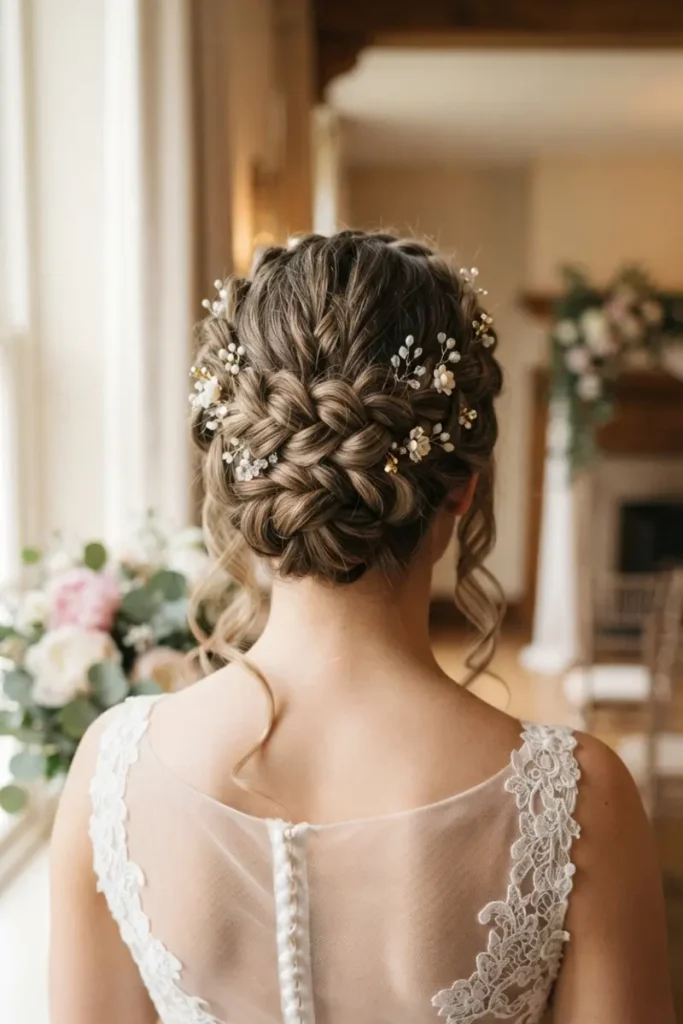
For more crown braid variations, including versions for thin and curly hair, see our guide to crown braid styles.
7. Dutch Braid Low Bun
Hair length: collarbone and longer · Veil: above · Pins: 15–20 bobby pins · Holds: 12+ hours
A braid running from the crown or one side into a low bun. The braid locks the hair at the back of the head, so the style stays neat even if you lean against a chair or a headrest.
- Start a Dutch braid at the crown, crossing strands under, and braid down to the nape.
- Tie the rest of the hair into a ponytail just under the end of the braid.
- Pancake the braid by gently pulling its outer loops.
- Twist the ponytail into a bun and pin it so it covers the elastic.
- Tuck any loose ends into the bun and set with hairspray.
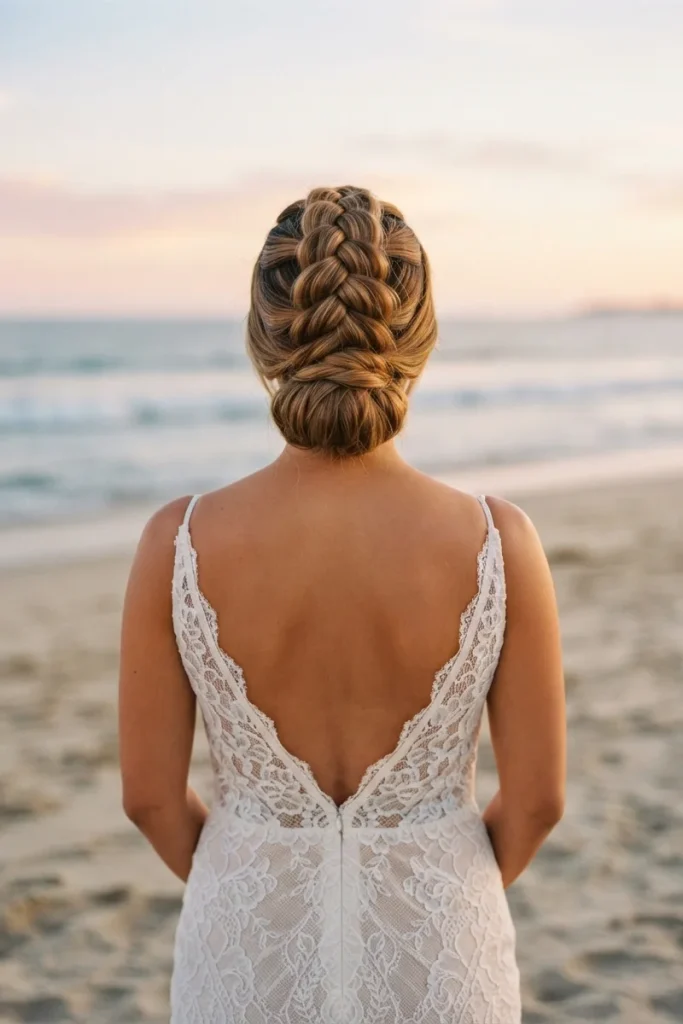
Our step-by-step guide to Dutch braid hairstyles covers the under-crossing technique in more detail.
8. High Textured Bun
Hair length: mid-back or longer, or extensions · Veil: below · Pins: 25–30 bobby pins plus 2–4 spin pins · Holds: 8–10 hours, plan a touch-up
A full bun at the crown with curled pieces and a few loose strands. It suits off-the-shoulder and high-neck dresses, and it needs the most hair of any style here.
- Curl all hair with a 1¼-inch iron and let it cool.
- Backcomb the crown lightly, then gather hair into a high ponytail at the crown.
- Divide the ponytail into five or six sections and loop each one around the base, pinning as you go.
- Add spin pins through the center of the bun to hold its weight.
- Pull a few curls free at the nape and temples, and pin the veil comb just under the bun.
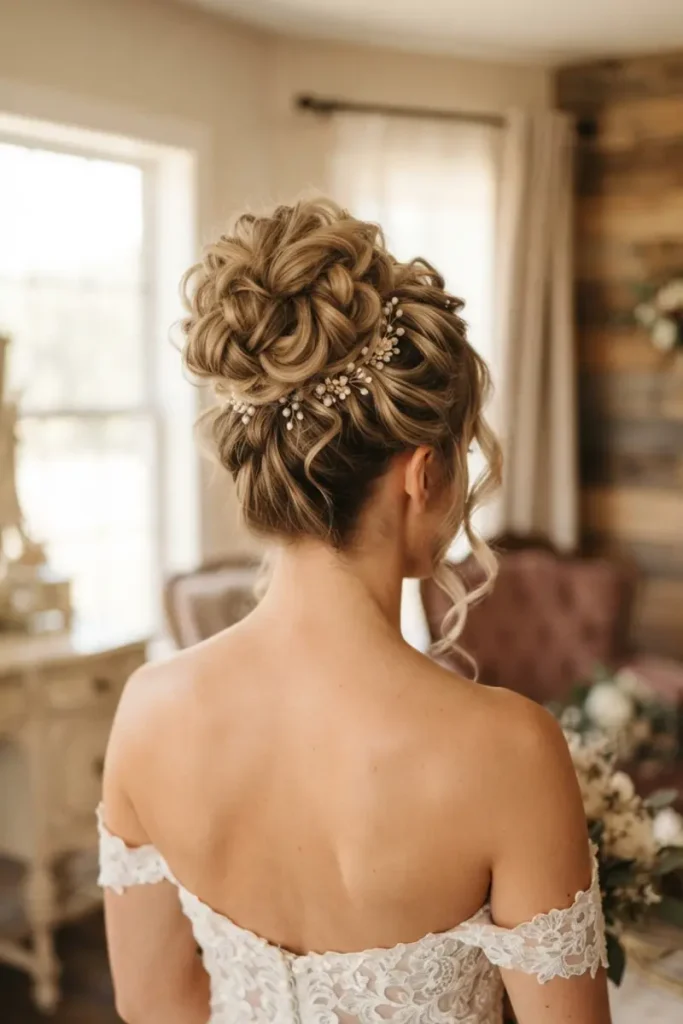
9. Shoulder-Length Bridal Updo
Hair length: chin to shoulder · Veil: above or tucked in · Pins: 20–25 bobby pins · Holds: 10 hours
Short hair can wear an updo; it just needs more sections and pins. This version uses twisted sections pinned into a low knot, with a small padding if the hair is fine.
- Curl hair with a 1-inch iron and spray texturizing spray all over.
- Split the back into three vertical sections: left, center and right.
- Twist the center section up and pin it into a small knot at the nape, over a small padding if you need fullness.
- Twist the left and right sections toward the knot and pin their ends around it.
- Pin up any short layers that fall out at the nape and finish with strong hairspray.
For more ways to put shorter hair up, see our guide to updos for short hair.
10. Curly or Natural Hair Bridal Updo
Hair length: any, measured stretched · Veil: below or tucked in · Pins: 15–20 bobby pins or U-pins · Holds: 12+ hours
A defined curly bun keeps your natural texture instead of straightening it. U-shaped pins hold curly hair better than bobby pins, because they slide in without crushing the curls.
- Define curls the day before with a curl cream or gel and let them dry fully.
- Smooth the edges with a soft brush and a little edge control or gel.
- Gather hair into a low or mid-height ponytail with a fabric-covered elastic.
- Shape the curls around the elastic into a rounded bun, pinning with U-pins.
- Add a satin ribbon, pearl pins or flowers along one side of the bun.
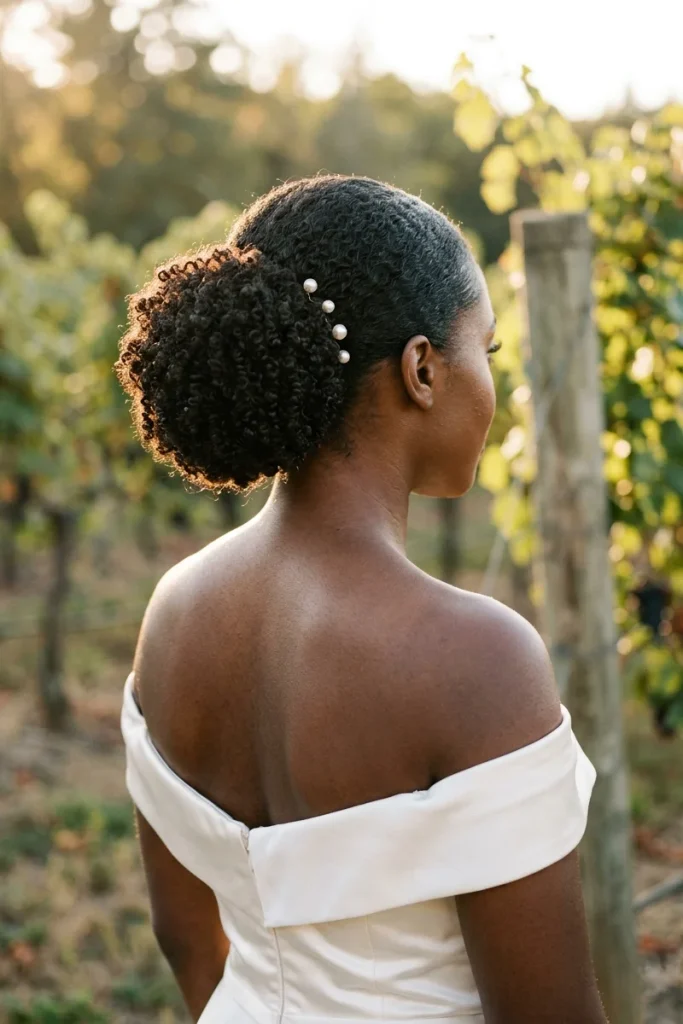
Our guide to curly hairstyles by curl type explains which products suit your curl pattern.
How to Pin an Updo So It Lasts All Day
Most updos fall because of how they are pinned, not because of the hair. Three habits make the biggest difference:
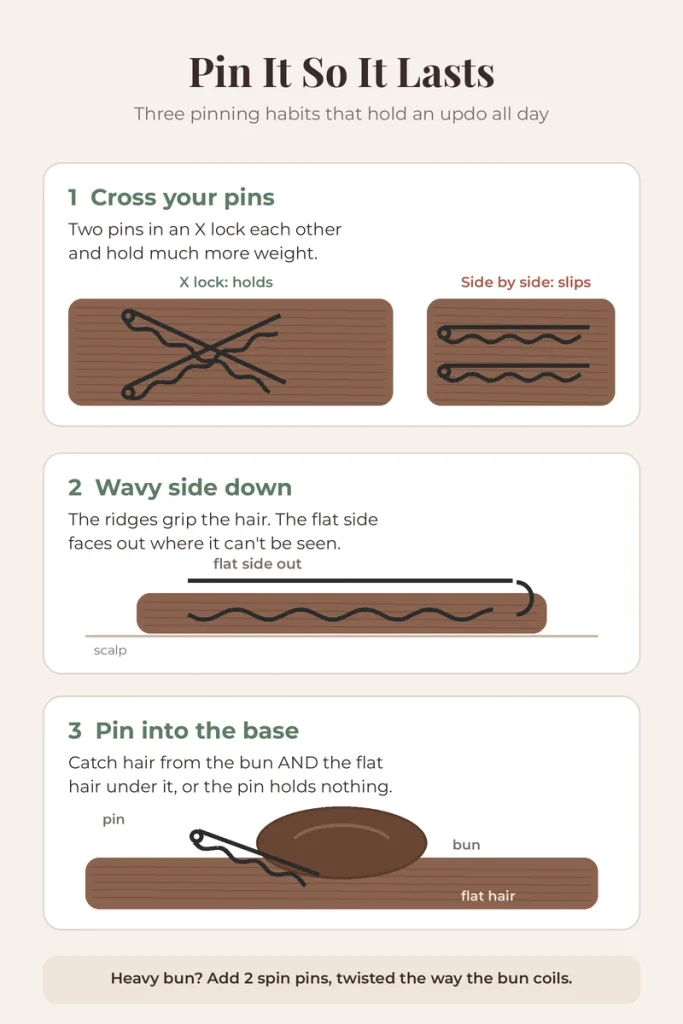
- Cross your pins. Slide one bobby pin in, then a second one over it in the opposite direction to form an X. The crossed pair locks in place and holds far more weight than two pins side by side.
- Wavy side down. The ridged side of a bobby pin grips the hair; the flat side should face out.
- Pin into the base. Each pin should catch hair from the bun and from the hair lying flat underneath it, or it holds nothing.
Spin pins, the small spiral pins, replace a handful of bobby pins in heavy buns. Twist them in clockwise in the same direction as the bun’s coil.
Your Bridal Hair Kit
| Item | What it does | Tip |
|---|---|---|
| Bobby pins matched to your hair color | Hold sections and lock the bun | Pack 20 extra for touch-ups |
| Spin pins | Hold heavy or high buns | Two to four are usually enough |
| U-pins | Shape curls and loose buns without flattening them | Best for curly and textured updos |
| Clear elastics | Secure the base ponytail | Hidden under the bun |
| Hair padding or a small donut | Adds fullness to fine or short hair | Match the color to your hair |
| Texturizing spray or dry shampoo | Gives clean hair grip | Spray before curling |
| Flexible and strong-hold hairspray | Sets curls, then the finished shape | Flexible first, strong at the end |
| Toothbrush or edge brush | Smooths flyaways along the hairline | Mist hairspray on the brush, not the hair |
Adding Flowers, Pearls and Other Accessories
Add accessories after the updo is fully pinned, never while you build it. Placing them last lets you see the shape and keeps them from loosening the base.
- Pearl or crystal pins: place them in a loose line along a braid or the edge of a bun, spacing them unevenly so they look scattered rather than lined up.
- Hair vine: bend it to follow the curve of the bun and pin it at both ends and the middle.
- Fresh flowers: choose sturdy blooms like baby’s breath, spray roses or orchids. Wrap the stems in damp cotton and cling film to keep them fresh, and pin them in once you are dressed.
- Tiara or headband: set it in front of the veil comb, with a few pins hidden behind each end.
- Ribbon: silk, satin or velvet ribbon wrapped around the base of a low bun suits simple and curly updos.
Your Bridal Hair Timeline
| When | What to do |
|---|---|
| 3–4 months before | Book your stylist and start a gentle hair routine |
| 6–8 weeks before | Hair trial, with your veil, dress photo and accessories |
| 3–4 weeks before | Last haircut (a light trim only) |
| 1–2 weeks before | Hair color or gloss, so it settles before photos |
| The day before | Wash and fully dry your hair; skip heavy conditioner on the roots |
| The morning | Arrive with dry, unwashed hair and a button-front shirt |
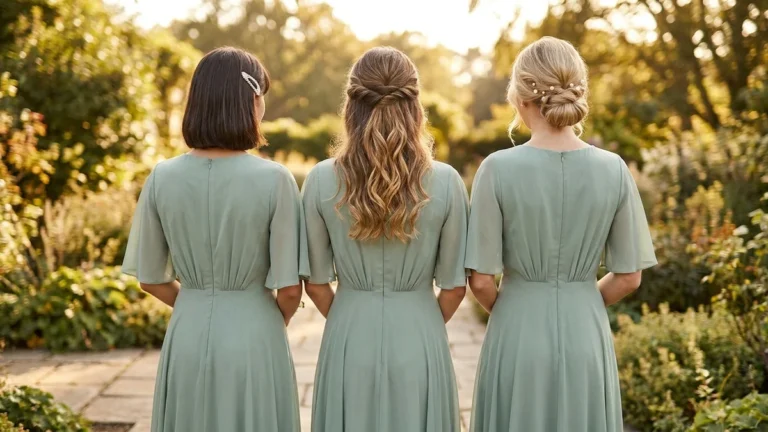
Take photos of your trial from the front, both sides and the back, and send them to your stylist before the wedding so the style can be repeated exactly. If you plan to trim before the big day, our hair trim schedule helps you time it. If your bridesmaids are booked with the same stylist, our guide to matching bridesmaid hair helps plan their looks and the morning schedule.
Keeping It in Place Through the Reception
- Humidity: use an anti-humidity spray before styling, and choose a sleek or braided updo over loose curls if the venue is warm and humid. Our guide to frizz and humidity control explains why some hair reacts more than others.
- Veil removal: ask your stylist to show someone in your bridal party how to take the comb out without pulling the bun.
- Dancing: crossed pins and spin pins at the base matter more than hairspray. A low or braided style moves less than a high bun.
- Touch-up kit: pack 10–15 bobby pins, a small hairspray, a toothbrush and a few spare flower pins in your clutch or with a bridesmaid.
Bridal Updo FAQ
What is the most secure bridal updo?
Low chignons, sleek low buns and braided styles hold the longest because they sit low and lock the hair close to the head. High textured buns carry the most weight and are the most likely to need a touch-up during the reception.
Can I wear a bridal updo with short hair?
Yes. Hair from chin to shoulder length can hold a twisted low knot or a French twist. A small padding or clip-in extensions add fullness, and more sections and pins keep shorter layers from falling out.
Should I wash my hair on my wedding day?
Most stylists prefer hair washed the day before. Freshly washed hair is slippery and doesn’t hold curls or pins as well. If your roots get oily quickly, wash the night before and use dry shampoo in the morning.
How many bobby pins does a bridal updo need?
A simple low bun takes 10–20 pins. Fuller or high buns can take 25–30 pins plus a few spin pins, depending on hair thickness. Always pack extras for touch-ups.
Should my veil go above or below the updo?
A veil above the updo suits low buns and is the most secure. A veil below the bun suits high and mid-height buns, so the bun stays visible. Decide before your trial so the stylist can plan where the comb will grip.
How far ahead should I do a hair trial?
Book your trial six to eight weeks before the wedding. That leaves time to change the style, order accessories or add extensions if needed.
Choosing Your Updo
Start with your hair length, decide where the veil goes, then check your neckline. Those three choices narrow ten updos down to two or three, and your trial picks the winner. If you’d rather keep part of your hair down, our guide to half up half down hairstyles includes bridal versions, and our braided bun styles show more ways to build a bun that stays put.