14 Ponytail Hairstyles, Grouped by How They’re Built
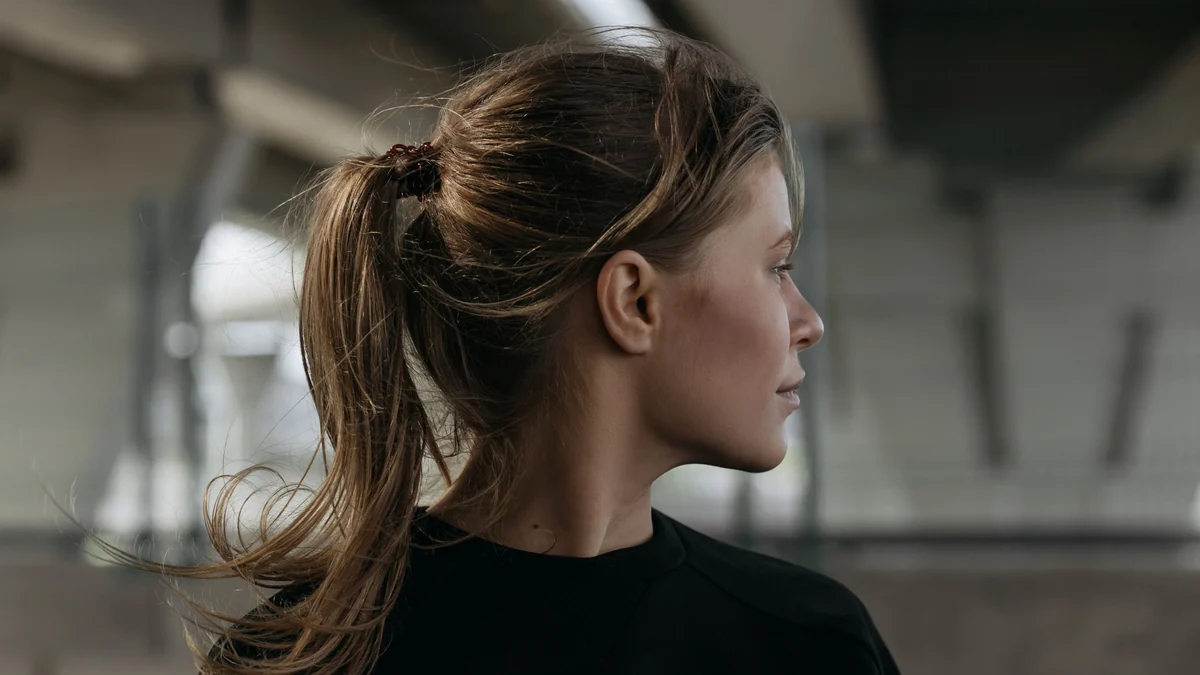
A ponytail takes less than a minute to tie, so the small choices are the ones people notice: where the elastic sits, what holds the base in place, and what happens to the length. A low ponytail with a wrapped base looks polished at a desk all day. The same hair pulled high with a loose elastic can look rushed by noon.
The 14 ponytails below are grouped by how they are built, starting with a single elastic and ending with braids worked into the base, so you can choose by the time you have. After the styles you’ll find a hair-tie guide, fixes for a ponytail that sags, dents or gives you a headache, and a few habits that keep daily ponytails easy on your hair.
Choose the Height
Height changes the look more than any accessory, and it also changes how hard the ponytail pulls. The higher the base and the heavier the hair, the more strain sits on the scalp.
| Height | Where the elastic sits | How it looks | Best for | Watch out for |
|---|---|---|---|---|
| Low | At the nape, just above the neckline | Calm and polished | Work, dinners, hats and hoods, long days | Can look flat on fine hair without a little lift at the crown |
| Mid | At the back of the head, level with the tops of the ears | Casual and balanced | Everyday wear, second-day hair | Slipping down through the day on smooth, freshly washed hair |
| High | At the crown | Lifted and sporty | Workouts, events, keeping hair off the neck | Headaches and tension at the hairline if it is tight or worn every day |
To find a high ponytail spot that looks lifted rather than perched, trace an imaginary line from your cheekbone up past the outer corner of your eye and over the head. Where that line meets the crown is a good place for the elastic.
One Elastic, Under Five Minutes
1. Sleek Low Ponytail With a Wrapped Base
This is the ponytail that looks finished with almost no effort. Brush the hair smooth with a boar bristle or paddle brush, choose a center part or a deep side part, and use a small amount of smoothing cream along the hairline if flyaways show. The detail that makes it look polished is hiding the elastic under a strand of your own hair.
- Brush the hair back to the nape and secure it with an elastic.
- Take a half-inch strand from the underside of the tail.
- Wrap it around the elastic two or three times.
- Pin the end underneath with a bobby pin pushed up into the base.
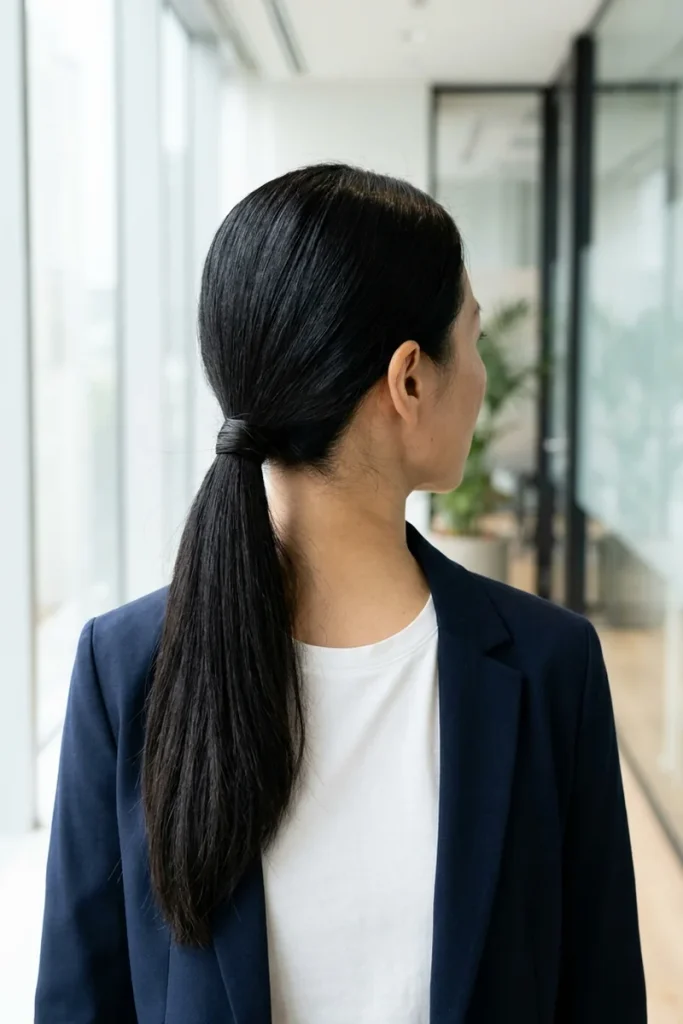
Secure it: Slide the bobby pin in against the direction of the wrap and through the elastic, so it locks in place instead of sliding back out.
2. Lifted High Ponytail
A high ponytail that hangs straight down from the elastic looks heavy. The lifted version sits up and fans out, and the trick is two bobby pins. After you tie the ponytail, push two pins under the base, pointing upward toward the crown, so they prop the tail away from the head. On thick or long hair, cross the pins in an X for extra support.
For a smooth finish without bumps, tip your head forward and brush the hair up toward the crown before you tie it. If you work out in this style, our guide to athletic hairstyles covers which ponytails survive high-sweat workouts.
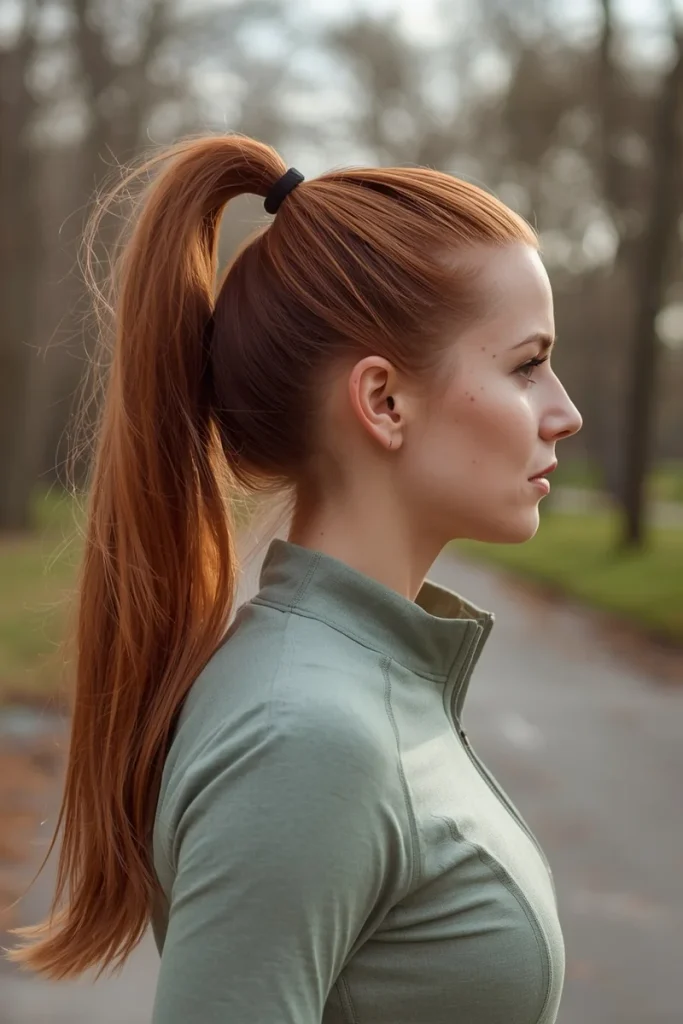
Secure it: Loop the elastic one extra time on fine hair, and choose a stronger bungee or hook elastic on thick hair, which grips without being wound tight.
3. Textured Mid Ponytail With Face-Framing Pieces
This one works best on second-day hair, which has more grip than freshly washed hair. Spray dry shampoo or texture spray at the roots, gather the hair with your fingers instead of a brush, and tie it at mid height. Then hold the elastic with one hand and gently pinch small sections at the crown upward with the other to soften the shape. Leave two thin pieces out at the temples and bend them with a flat iron or curling wand.
The loose pieces also solve a common problem with layered haircuts: shorter layers tend to fall out of a ponytail, and this style makes that look deliberate.
Secure it: Keep one hand on the elastic while you loosen the crown, so the base stays where you tied it.
4. Side Ponytail Over the Shoulder
Make a deep side part, sweep all the hair to one side and tie it just below the ear, so the length falls over your shoulder. The look is soft and works especially well with waves or curls. It sits comfortably under a wide-brimmed hat, and it suits a formal outfit when the elastic is covered with a ribbon or a decorative cuff.
Secure it: Place two or three bobby pins in an X where the hair crosses the back of the head, so the sweep stays tight instead of sagging toward the neck.
Two Sections, Five to Ten Minutes
5. Stacked Ponytail for Extra Length
Two ponytails tied one above the other make the length look longer and fuller than one ponytail can. Divide the hair horizontally from ear to ear. Tie the top section at the crown and the bottom section directly below it, then let the top tail fall over the lower elastic so the two read as one continuous ponytail. It works on medium to long hair and is a quick volume trick for fine hair.
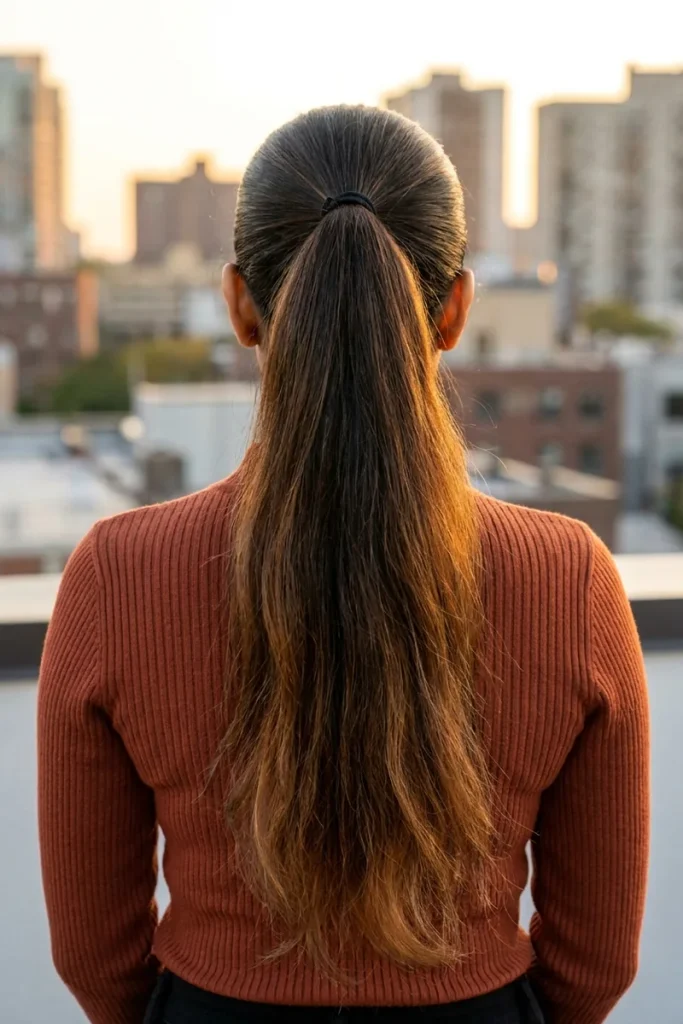
Secure it: Leave about a finger-width between the two elastics. If they sit too far apart, a gap shows; too close, and the top tail can’t hide the lower one.
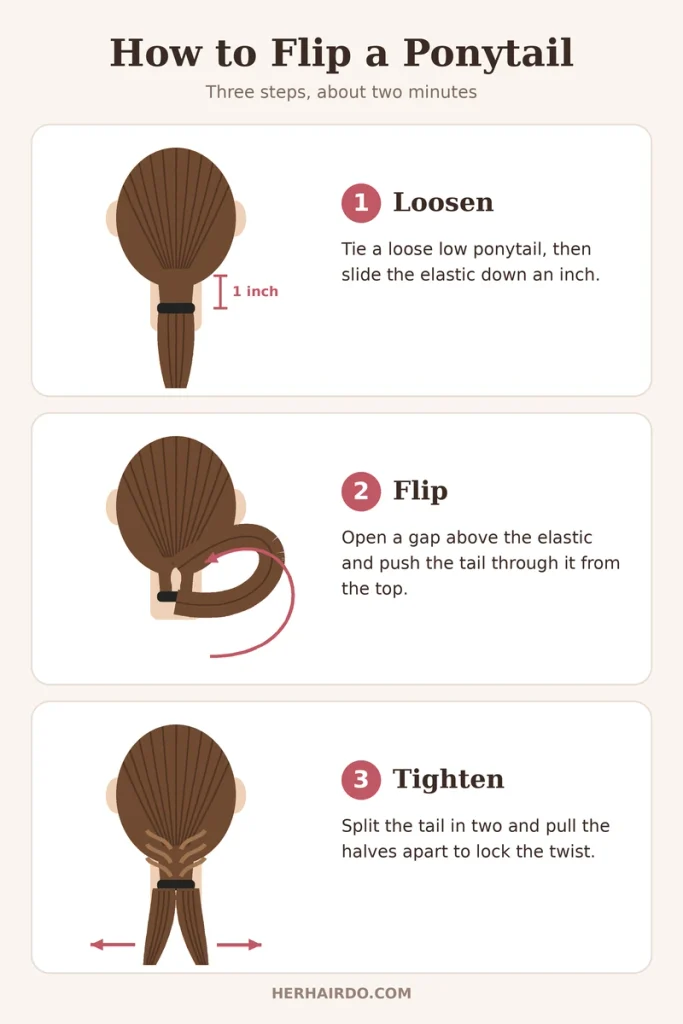
6. Flipped Low Ponytail
Also called a topsy-tail, this ponytail twists the hair on either side of the elastic so the base looks styled rather than tied. It also adds a little shape to hair that lies flat at the back of the head.
- Tie a loose low ponytail.
- Slide the elastic down about an inch.
- Push your fingers through the hair just above the elastic to make a gap.
- Flip the tail up and through the gap from the top.
- Split the tail in two and pull the halves apart to tighten.
For a knotted variation for parties, see the knotted low ponytail in our Christmas party hairstyles.
Secure it: Leave the elastic slightly loose before you flip. A tight elastic leaves no room for the tail to pass through, and pulling it through anyway snags the hair.
7. Crown-Lift Ponytail
Inspired by 1960s styling, this ponytail adds height at the crown before the hair is tied. Take a section at the top of the head, about two inches wide, and backcomb the underside gently at the roots. Smooth the top layer over it, pin the section in place, then gather the rest of the hair into a mid or high ponytail behind it. It suits hair that lies flat on top and looks good with a thin headband.
Take the backcombing out gently at the end of the day: work a wide-tooth comb or your fingers from the ends upward, with a little conditioner if the hair tangles.
Secure it: Pin the crown section with two crossed bobby pins before you gather the ponytail, so the lift does not collapse when you pull the rest of the hair back.
Elastics Down the Length
8. Bubble Ponytail
Tie a ponytail, then add small elastics every two or three inches down the tail and pull the hair between them outward to form round “bubbles.” It works on hair that reaches at least past the shoulders, and it holds best on hair with some texture. A smaller version is one of the easiest school hairstyles for kids, because it stays neat for a full day.
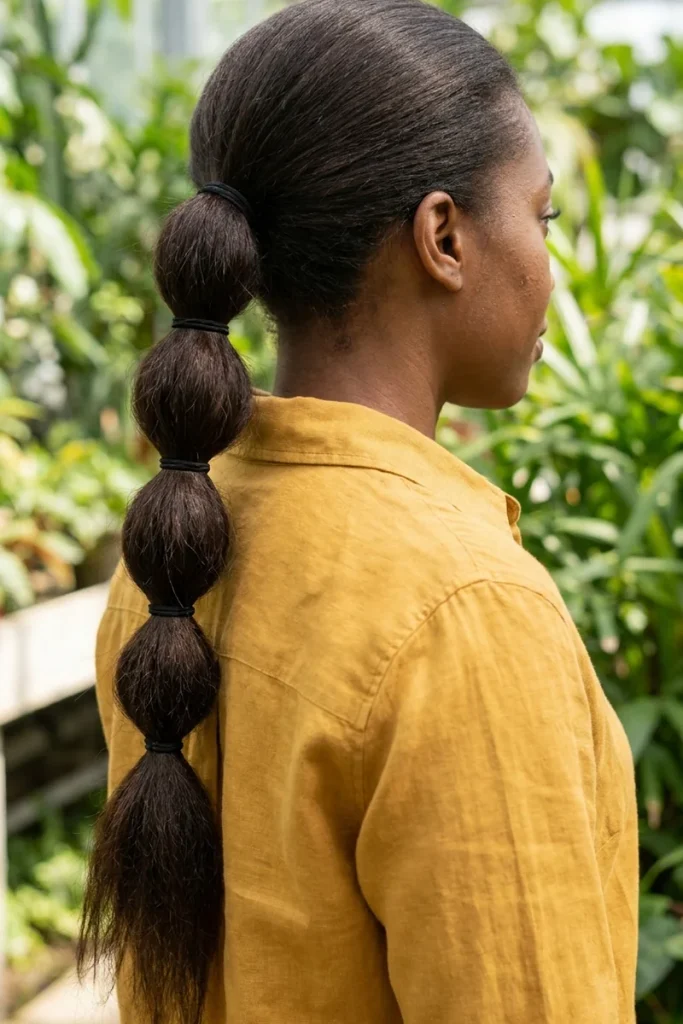
Secure it: Use clear or snag-free elastics and pull each bubble out from the sides only, not from the top, so the sections stay round.
9. Pull-Through Ponytail
This ponytail looks like a chunky braid, but it is built from elastics, so it holds on hair that is too slippery or layered for braiding.
- Tie a ponytail and divide the tail into an upper and a lower section.
- Tie the upper section with a small elastic about an inch below the base.
- Split that upper section in two, bring the lower section up through the middle, and hold it out of the way.
- Bring the two halves together underneath and tie them.
- Drop the lower section. It now becomes the upper section, so repeat down the tail.
- Pull the loops wider at the end.
Secure it: Keep the elastics the same distance apart. Uneven gaps are what make a pull-through look messy instead of braided.
10. Ribbon-Wrapped Ponytail
Tie a low or mid ponytail, knot a ribbon over the elastic, then criss-cross it down the tail and tie it near the ends. Velvet looks rich in autumn and winter, while satin or a thin silk scarf feels lighter in warm weather. Choose a ribbon two to three times the length of your ponytail. The same idea works for a wedding party; our bridesmaid hairstyles include a low ponytail with a velvet ribbon.
Secure it: Knot the ribbon over the elastic first, then wrap, so the criss-cross cannot slide down the tail.
Braids Built In
11. Dutch Braid Into a High Ponytail
A Dutch braid along the top of the head keeps bangs and short front pieces locked back, and the ponytail behind it carries the length. Start at the hairline, cross each strand under the middle rather than over, and stop at the crown, then tie all the remaining hair into a high ponytail. Our guide to Dutch braid hairstyles explains the under-cross technique step by step.
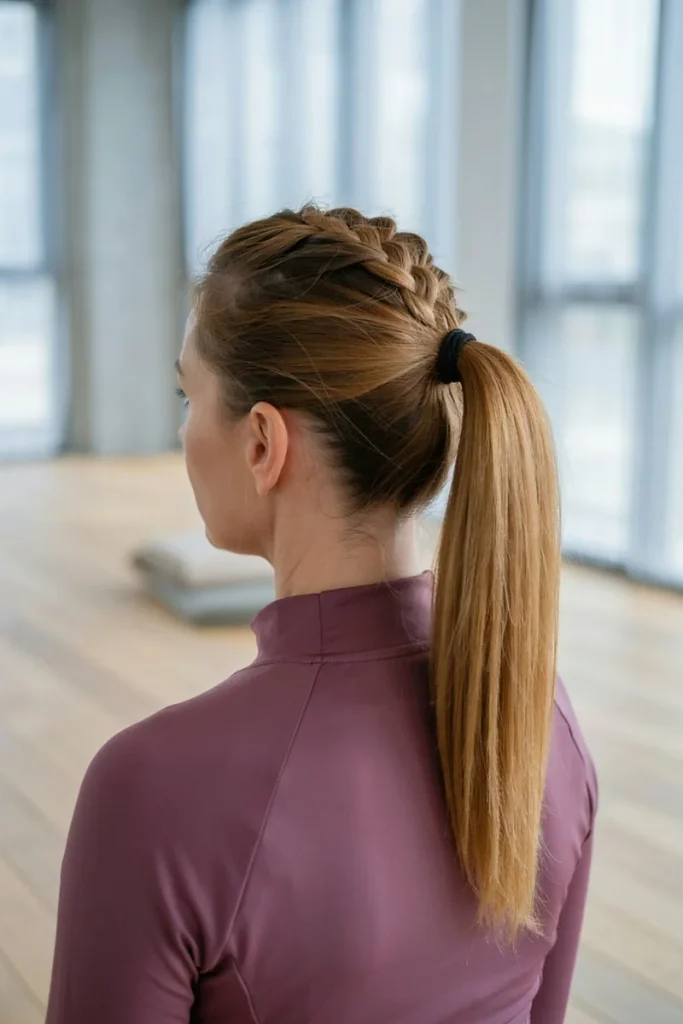
Secure it: Keep the tension even and firm through the middle of the head, but leave the first few stitches at the hairline relaxed. Repeated strain at the edges is what damages them.
12. Ponytail With a Fishtail Tail
Tie a low or mid ponytail, wrap the base, then braid the tail as a fishtail: split it into two sections and keep crossing a thin strand from the outside of one section to the inside of the other. A plain ponytail looks finished in about five minutes. If the fishtail is new to you, our fishtail braid guide walks through the two-strand method. On layered hair, a little texture spray stops shorter pieces from poking out of the braid.
Secure it: Tie the end with a clear elastic and loosen the braid from the bottom up, so pulling the edges wider does not open it near the base.
Curly Hair and Short Hair
13. Curly or Coily Ponytail
Brushing dry curls back into a ponytail breaks up the curl pattern and creates frizz, so gather the hair with your hands instead. For a defined curly ponytail, tie it while the hair is still damp after styling and let it dry in place, or gather dry curls loosely without combing through them. Coily hair can be gathered into a puff with a large satin scrunchie or a stretchy fabric headband pulled up from the neck. Our curly hairstyles guide covers products for each curl type and the pineapple method for keeping curls overnight.

Secure it: Use a large scrunchie or a fabric band rather than a thin elastic, and keep the edges soft instead of slicked tight.
14. Short-Hair Ponytail
Bob and lob lengths can still make a small ponytail at the nape or the back of the head. The challenge is the shorter pieces underneath, which slip out first. Spray texture spray at the nape before tying, use a small elastic, then pin escaping pieces up in a criss-cross with bobby pins. A small claw clip over the base hides any gaps. For other ways to wear short hair up, see our updos for short hair and short hair workout styles.
Secure it: Tie the ponytail slightly higher than the shortest hairs at your nape, so they can be pinned up into it instead of hanging below.
Which Hair Tie to Use
The tie affects how long a ponytail holds, whether it leaves a dent and how much it rubs the hair. Most people get the best results by keeping two or three types on hand.
| Hair tie | Grip | Best for | Skip it if |
|---|---|---|---|
| Fabric-covered elastic | Strong | Everyday ponytails on most hair | It has a metal joiner, which snags |
| Spiral (coil) tie | Medium, spreads pressure | Fewer dents, long days at home | You want a sleek, exact base |
| Silk or satin scrunchie | Gentle | Curly hair, fragile or color-treated hair | You want a polished, sleek finish |
| Clear mini elastics | Light | Bubble and pull-through sections, braid ends, short hair | You need to hold a thick tail on its own |
| Bungee or hook elastic | Very strong, adjustable | Thick or very long hair, high ponytails | Your hair is fine and grips easily |
| Ponytail cuff or decorative clip | Light, decorative | Covering the elastic for events | It is the only thing holding heavy hair |
When a Ponytail Sags, Dents or Hurts
| Problem | Usual cause | Fix |
|---|---|---|
| Slides down by midday | Freshly washed, slippery hair or an elastic that is too loose | Dry shampoo or texture spray at the base, one extra loop of the elastic, two pins propping the tail |
| Bumps over the crown | Hair brushed back with the head upright | Tip your head forward for a high ponytail or back for a low one, then brush and tie |
| Headache after an hour | A tight, high ponytail on heavy hair | Lower the base, loosen the elastic, or switch to a spiral tie |
| Dent when you take it down | A tight elastic in the same spot all day | Spiral tie or scrunchie; to remove a dent, dampen the area and dry it smooth |
| Short layers fall out | Layers shorter than the distance to the base | Leave them out on purpose, pin them in, or move the ponytail lower |
| Broken hairs at the elastic | Same spot every day, metal joiners or tying wet hair | Change the height daily, use snag-free ties, tie on dry hair |
Keeping Daily Ponytails Gentle on Your Hair
A ponytail is one of the simplest styles, but wearing the same tight one every day pulls on the same hairs in the same place. A few habits make a big difference:
- Change the height from day to day so the strain moves around.
- Tie hair when it is dry or nearly dry. Wet hair stretches more easily and is more likely to break.
- Take the elastic out by unrolling it, not by pulling it down the length.
- Sleep with a loose braid or a loose scrunchie instead of a tight ponytail.
- Keep the hairline relaxed, especially with high ponytails.
If you notice thinning at the temples or along the hairline, ease off tight styles and talk to a dermatologist, since ongoing tension can lead to traction alopecia. Our guide to hair breakage causes and fixes explains how to tell breakage from hair loss.
Ponytail FAQ
How do I make my ponytail look thicker?
Use texture spray before tying, try the stacked ponytail to add length and fullness, or lightly backcomb the underside of the tail. A clip-in ponytail extension is the quickest option if you want much more volume. For cut-based ways to add fullness, see our haircuts for thin hair.
Can wearing a ponytail every day cause hair loss?
A loose ponytail that changes height is generally fine. A tight ponytail worn in the same spot every day can cause breakage and, over time, traction alopecia along the hairline. Loosen the style and see a dermatologist if you notice thinning edges.
How long does hair need to be for a ponytail?
A small ponytail at the nape is possible from about chin length with some pinning. Most ponytails in this guide work best from shoulder length, and bubble and pull-through styles look best when the hair reaches past the shoulders.
How do I hide the elastic?
Wrap a strand of your own hair around it and pin the end underneath, tie a ribbon over it, or slide on a ponytail cuff. The flipped ponytail also hides the elastic inside the twist.
Why does my ponytail give me a headache?
Usually the ponytail is too tight, too high or holding heavy hair from one small point. Lower it, loosen the elastic, or spread the weight with a spiral tie or a stacked ponytail.
What is the best ponytail for working out?
A mid or high ponytail with a strong elastic, or a Dutch braid into a ponytail if you have bangs or short front pieces. Our athletic hairstyles guide matches styles to different workouts.
Picking Your Ponytail
Start with the height that fits your day: low for long hours and hats, mid for everyday wear, high for workouts and events. Then choose the build that matches your time, from a single wrapped elastic in two minutes to a Dutch braid into a ponytail in fifteen. Whatever you choose, a snag-free tie, dry hair and a different height each day will keep your ponytails comfortable and your hairline healthy.