
12 Short Wolf Cut Ideas, Sorted by Length
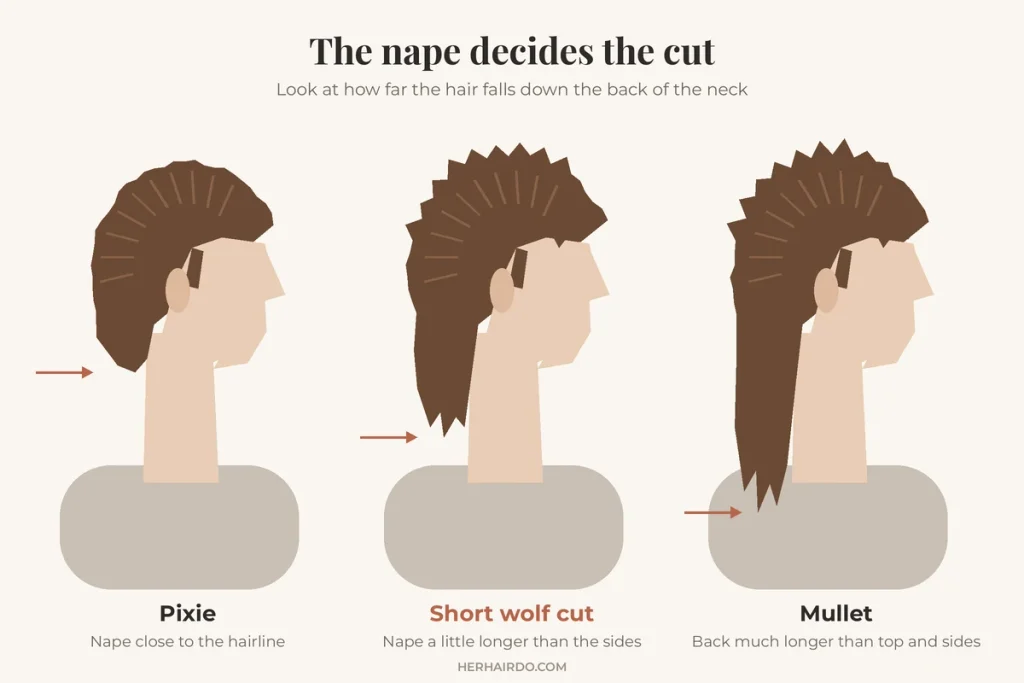
A short wolf cut gets judged by its crown: the choppy, lifted layers on top. But the part that decides which version you end up with sits at the back. Keep the nape close and you get a wolf pixie. Leave it a few inches longer than the sides and the cut turns into a wolf mullet. Everything else falls somewhere between.
The 12 cuts below are grouped by where the hair ends, from ear length to just above the shoulders. Each one notes how long it takes to style on a normal morning, because short hair with this many layers isn’t always the quick option it looks like. For a full look at wolf cuts at every length, see our wolf cut guide.
How Short Is a Short Wolf Cut?
| Length | Where the longest pieces end | Daily styling | Trim every | To reach shoulder length |
|---|---|---|---|---|
| Pixie / ear length | Around the ears, nape just past the hairline | 2–5 minutes | 4–6 weeks | About 14–18 months |
| Jaw to chin length | Between the jaw corner and chin | 5–10 minutes | 6–8 weeks | About 6–10 months |
| Neck length | Mid-neck, stopping above the shoulders | 5–10 minutes | 6–8 weeks | About 3–5 months |
Grow-out times assume hair grows about half an inch a month, so treat them as rough guides.
Pixie and Ear Length
1. Wolf Pixie
A wolf pixie starts as a pixie and borrows two wolf details: heavy, choppy layers at the crown and a nape left an inch or two longer than a classic pixie would allow. The sides stay short around the ears. The longer nape is what keeps it from looking like a standard crop, and it gives you something to grow from later. For classic pixie shapes, see our pixie cut guide.

Styling time: 2–3 minutes. Rub a pea-sized amount of styling cream between your palms, push the crown up and forward with your fingertips, and leave the nape alone.
2. Wolf Bixie
The bixie sits between a pixie and a bob, and the wolf version adds a sharper step from the crown to the length below. The top is cut short and choppy, while the sides fall to around mid-ear or a little lower. It suits anyone who wants the wolf shape but isn’t ready for the shortest sides.
Styling time: 3–5 minutes. Rough-dry with your fingers, then twist two or three crown pieces with a little texturizing spray so they separate.
3. Short Wolf Cut With Baby Bangs
Baby bangs sit well above the eyebrows, and on a short wolf cut they make the whole shape look intentional rather than grown-out. Keep them choppy and point-cut, not a blunt line, so they match the texture of the crown. This is a bold cut. It works best if you like your forehead visible and don’t mind bangs trims every two to four weeks.
Styling time: 3 minutes. Dry the bangs first while the rest is still damp. Flatten them with your fingers as they dry so they don’t flip up.
Jaw and Chin Length
4. Jaw-Length Wolf Cut With Curtain Bangs
Curtain bangs soften the most dramatic part of a wolf cut, the step between the crown and the length. Parted in the center and swept open to the cheekbones, they blend into the face-framing layers so the cut reads soft from the front and choppy from the side. It’s the easiest short wolf cut to wear to an office. For bang lengths and how to style them, see our curtain bangs guide.

Styling time: 5–8 minutes. Round-brush each side of the bangs away from your face, then scrunch the crown with texturizing spray once it’s dry.
5. Wolf Bob
A wolf bob keeps a bob’s outline at chin length but cuts choppy layers into the top third. From a distance, it looks like a bob with extra movement. Up close, the crown has the separated, lifted look of a wolf cut. If you like your bob but find it flat, this is the smallest step toward a wolf cut. More bob shapes are in our bob haircut ideas.

Styling time: 5 minutes. Blow-dry the length smooth with a paddle brush and leave the crown rough-dried so the two textures contrast.
6. Choppy Razor Wolf Cut for Thick Hair
Thick hair is where a razor earns its place. Razor-cut layers take out bulk and leave pointed, piecey ends, so a heavy head of hair drops into the wolf shape instead of puffing out sideways. This version keeps plenty of length at the jaw and puts most of the texture in the crown and around the face.

Styling time: 5–7 minutes. Air-dry most of the way, then finish the crown with a blow-dryer on low. A little lightweight cream on the ends keeps the razor texture from looking frayed.
7. Soft Wolf Cut for Fine Hair
On fine hair, the standard choppy wolf cut can leave the ends looking see-through. The soft version uses scissors with point cutting instead of a razor, puts fewer layers at the crown, and keeps the outline at the jaw fuller. You still get lift on top, but the bottom edge keeps enough weight to look like hair, not wisps. Our guide to haircuts for thin hair explains why the outline matters so much on fine strands.

Styling time: 5–8 minutes. Use mousse at the roots, rough-dry with your head upside down, then flip back and shape the crown with your fingers.
8. Korean-Style Short Wolf Cut
The Korean-style short wolf cut is softer than most Western versions. It pairs a rounded, layered crown with see-through bangs (thin enough to show a little forehead) and ends that curl gently inward, often called a C-curl. The overall shape is airy and neat instead of shaggy.

Styling time: 8–10 minutes. Blow-dry the ends around a medium round brush, curving them under. Dry the bangs flat and loosen them with your fingers so they stay sheer.
Neck Length (Just Above the Shoulders)
9. Short Wolf Mullet
This version leaves the nape noticeably longer than the sides, a few inches past where the jaw-length pieces end. That long back is the mullet part. The choppy crown and face-framing layers are the wolf part. Done softly, it looks modern rather than retro. Tell your stylist how long you want the back compared with the sides, because that one measurement decides how strong the mullet effect is.

Styling time: 5 minutes. Scrunch texturizing spray through the back so the nape looks piecey, not straight and flat.
10. Wavy Air-Dry Short Wolf Cut
Natural waves fill in a wolf cut on their own, which makes this one of the lowest-effort versions. The layers let each wave sit separately instead of pulling the whole length down into one heavy shape. It works best at neck length, where the waves have room to bend before they reach the shoulders.

Styling time: 2 minutes, plus drying time. Scrunch mousse or a light curl cream into soaking-wet hair and let it air-dry without touching it.
11. Curly Short Wolf Cut
Curly wolf cuts are best done dry, curl by curl, so the stylist can see where each curl lands before cutting. The layers remove weight from the top, which stops curls from forming a triangle shape with all the volume at the bottom. Match your products to your curl pattern with our curly hairstyles by curl type guide.

Styling time: 10 minutes, plus diffusing. Apply curl cream on wet hair, scrunch, and diffuse on low heat. Don’t touch the curls until they’re fully dry.
12. Short Wolf Cut With Dark Roots and Face-Framing Highlights
Color shows off a wolf cut’s layers. Leaving the roots darker and lightening only the face-framing pieces and a few crown sections makes each layer stand out, and the grown-out roots look planned rather than overdue. It’s also easier to maintain than all-over blonde on short hair that gets trimmed often.
Styling time: 5 minutes. Twist the lightened pieces with a little styling cream so the color sits on top of the texture.
Razor or Scissors? Match the Tool to Your Hair
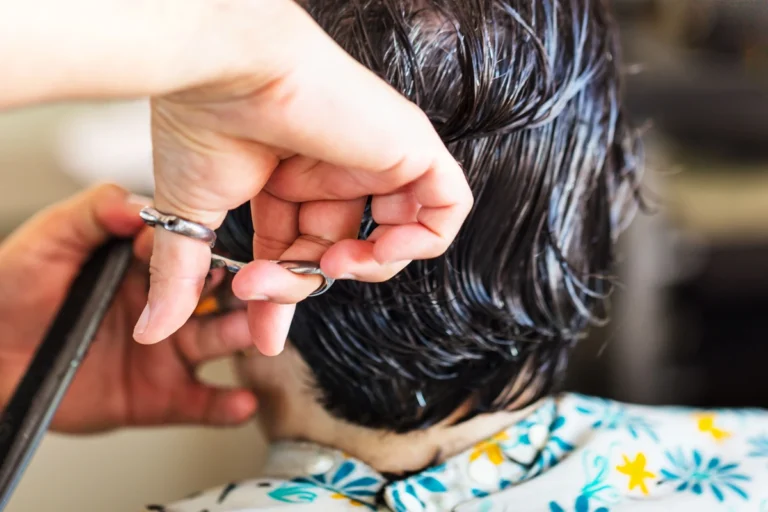
Many wolf cut guides say every version needs a razor. Not every hair type agrees:
- Fine or thin hair: Scissors with point cutting. A razor tapers each end to a point, and fine ends look sparse fast.
- Medium, straight or wavy hair: Either works. A razor gives a choppier, more piecey finish; scissors give a softer one.
- Thick hair: A razor removes bulk well and helps the layers fall into shape.
- Curly hair: Scissors, on dry hair. Razor cutting can leave curls frizzy and uneven.
Short Wolf Cut, Short Shag or Mullet?
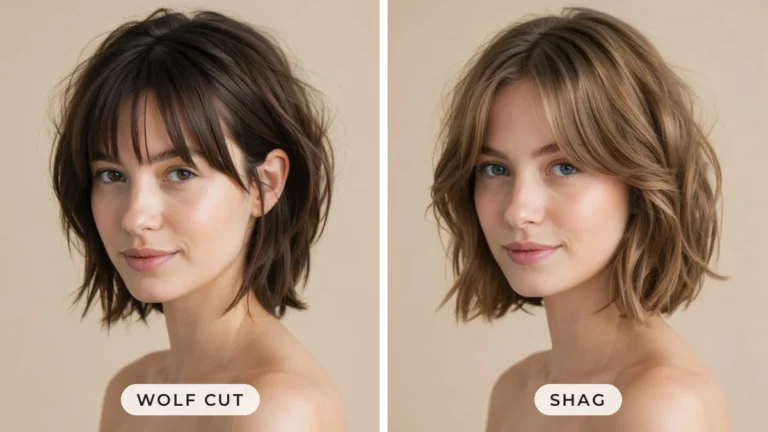
A short shag spreads its layers more evenly and keeps a softer outline. A short wolf cut stacks the choppiest layers at the crown, then drops off sharply, with a slightly longer nape. A mullet makes the back much longer than the top and sides. For a side-by-side breakdown, see short wolf cut vs shag.
Growing Out a Short Wolf Cut
Months 1–3: Trim the crown layers to keep the shape, but let the nape and sides grow. Skip any trim that takes length off the back.
Months 4–6: The sides catch up with the nape, and the cut starts to look like a shaggy bob. Ask your stylist to cut the crown layers a little longer each time instead of keeping them short.
Months 6–10: Even out the back and sides into one length. From here, it can become a shag, a layered lob or a one-length cut. Curtain bangs help bridge the awkward months if your face-framing pieces are growing at different speeds.
For trim timing at each stage, see how often to trim your hair.
FAQ
Can you get a short wolf cut without bangs?
Yes. Ask for longer face-framing layers that start around the cheekbone instead of bangs. The crown still carries the wolf shape, and you skip the frequent bang trims.
Does a short wolf cut work with glasses?
It can. Cuts with height at the crown and layers that end below the frames, like the wolf bob or jaw-length curtain-bang version, keep the hair from crowding your glasses. Very short baby bangs can sit close to the top of the frames, so try them with your glasses on before committing.
Can a short wolf cut look polished for work?
Yes. Blow-dry the length smooth and keep the crown texture light. The wolf bob and jaw-length cut with curtain bangs look the most polished when styled sleek.
Should you cut a short wolf cut at home?
It’s better left to a stylist. The crown layers and the length difference at the nape are hard to see and balance on your own head. Trimming bangs between appointments is fine if you cut vertically into the ends instead of straight across.
Bottom Line
The nape decides the cut: close for a wolf pixie, longer for a wolf mullet, and somewhere in between for everything else. Match the cutting tool to your hair, and plan your trims around the length you want to reach next.