
12 Burgundy Hair Color Ideas, Matched to Your Starting Shade
Burgundy sits between red and purple, and that is why two people can ask for “burgundy” and leave the salon with very different hair. One gets a deep wine that reads almost brown indoors. The other gets a bright berry red that glows in the sun. The shade name is only half the answer.
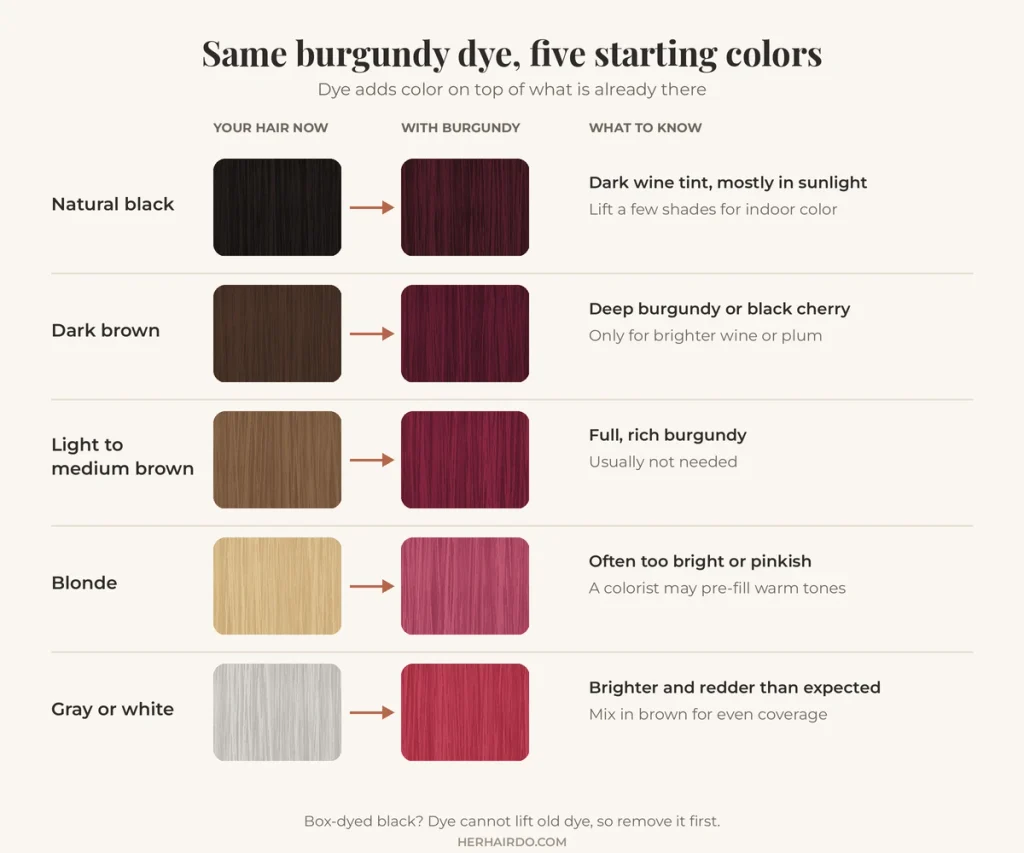
The other half is the color you start with. Hair dye adds pigment on top of what is already there, so the same burgundy formula turns out darker on black hair and brighter on light brown. Start with the table below to see what your base can do, then pick from the 12 shades and placements that follow. Each one notes what it fades to, because burgundy changes faster than most colors.
What Burgundy Looks Like on Your Starting Color
| Your hair now | Burgundy without bleach | When you need lightening |
|---|---|---|
| Natural black | A dark wine tint that shows mostly in sunlight | For visible burgundy indoors, the base needs lifting a few shades first |
| Dark brown | Deep burgundy or black cherry, clearly visible in daylight | Only for brighter wine or plum shades |
| Light to medium brown | Full, rich burgundy | Usually not needed |
| Blonde | Often too bright or pinkish on the first try | No lightening, but a colorist may add warm pigment first so the result is even |
| Gray or white | Brighter and redder than the swatch | No, but gray resists color, so a brown is often mixed in for coverage |
| Box-dyed black | No visible change | Dye does not lift old dye; the black needs removing or lightening first |
Red-Leaning or Violet-Leaning?
Every burgundy leans one way. Violet-leaning shades (plum, black cherry, classic burgundy) tend to flatter cool undertones, where veins on the inner wrist look blue or purple. Red-leaning shades (mahogany burgundy, burgundy brown) tend to suit warm undertones, where veins look green. If you can’t tell, the undertone question in our face shape calculator walks you through it, and our hair color ideas guide covers how undertone affects every shade family, not only reds.
Neutral undertones can wear either lean. In that case, choose by upkeep: violet-leaning burgundy fades more noticeably than red-brown versions.
All-Over Burgundy Shades
1. Black Cherry
Black cherry is the darkest burgundy: nearly black in shade, with a red-violet shine that shows when light hits it. It is the easiest burgundy to wear on very dark hair because it needs little or no lightening, and it grows out softly against dark roots. If your workplace or family is wary of red hair, this is the quietest way in.

Fades to: a dark red-brown. The shine goes first, so a gloss every four to six weeks brings it back.
2. Classic Burgundy
Classic burgundy is the balanced version, about equal red and violet, at a medium-dark depth. It reads clearly as burgundy in any light, not as brown or red. On dark brown hair it may need a small amount of lift to look this rich; on light brown hair it takes without lightening.

Fades to: a pinkish red-brown, especially at the ends where hair is more porous.
3. Merlot
Merlot leans slightly brown and a little warmer than classic burgundy, like red wine held up to the light. It looks rich without being loud, which makes it a common first step for people moving from brown. It also suits warm and neutral undertones that find violet shades too cool. For other deep shades that suit the colder months, see our winter hair color ideas.
Fades to: a warm copper-brown.
4. Burgundy Brown
Burgundy brown is a brunette with a burgundy tint. Indoors it reads as brown; in sunlight it turns wine-colored. It is the lowest-commitment option on this list, since regrowth barely shows on brown hair, and it is the shade most likely to pass a strict dress code.
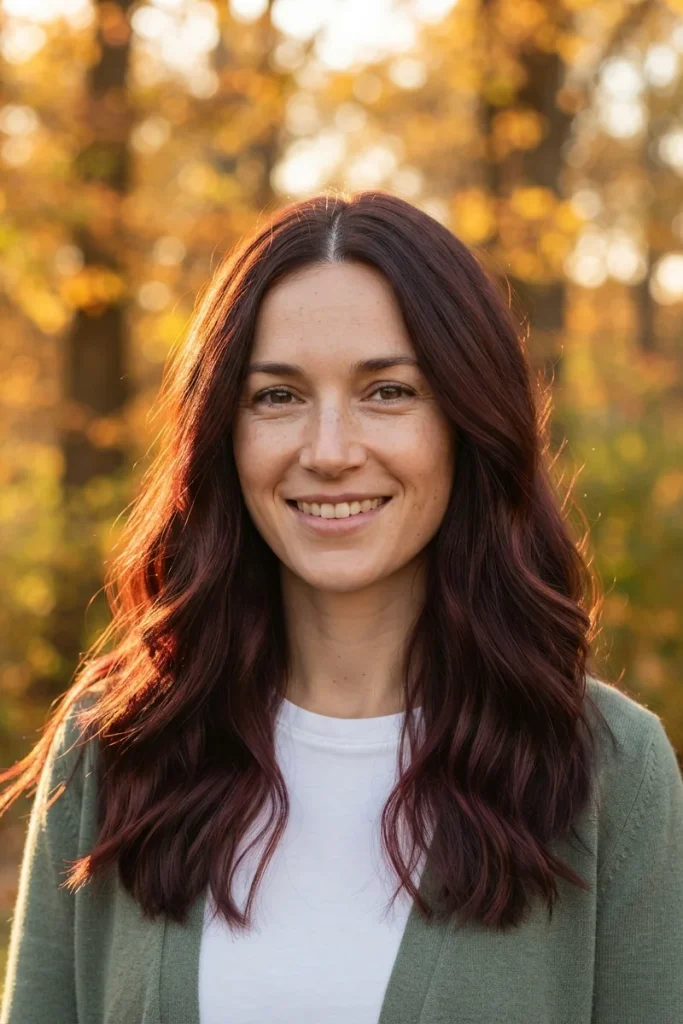
Fades to: a warm medium brown, which most people find easy to live with between appointments.
5. Plum Burgundy
Plum burgundy pushes the violet further, toward the color of ripe plums. It is striking on cool undertones and on darker skin tones, where the violet shows up clearly. On very light or pink-toned skin, it can look harsh unless it is kept deep.
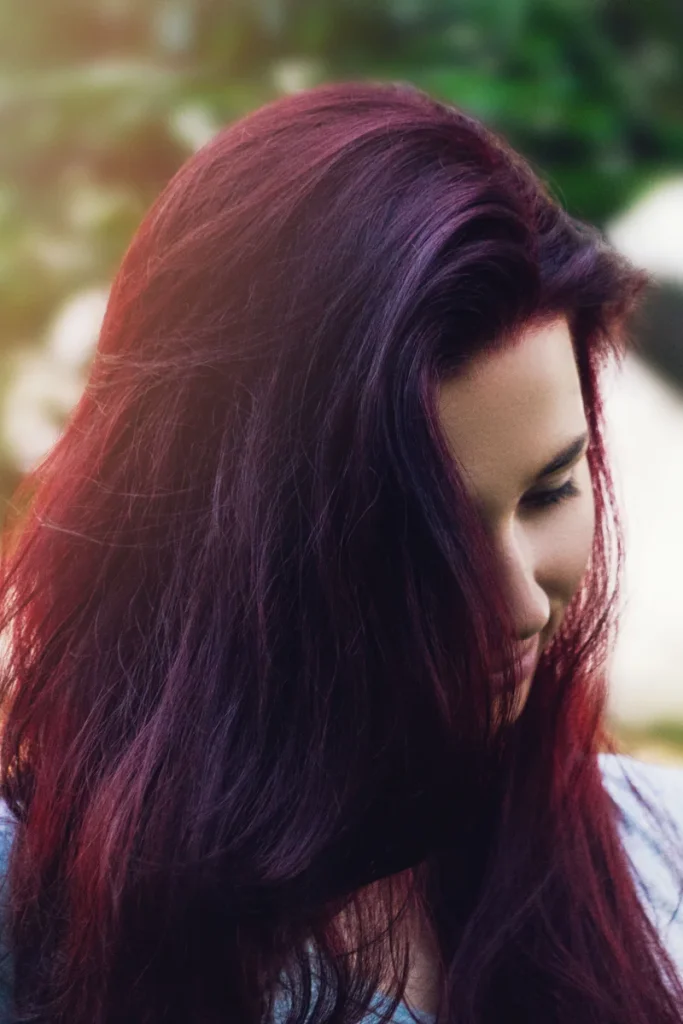
Fades to: a dusty mauve-brown. Violet pigment washes out faster than red, so plum shifts sooner than other shades here.
6. Mahogany Burgundy
Mahogany burgundy mixes burgundy with red-brown wood tones. It is the warmest shade in the family and suits warm and olive undertones that look sallow next to cooler wines. It also holds up well on hair with natural warmth, because the fade blends with what is already there.
Fades to: a reddish chestnut.
Dimensional Burgundy
Placed color shows burgundy without covering every strand, which means less regrowth and fewer touch-ups.
7. Burgundy Balayage on Dark Brown
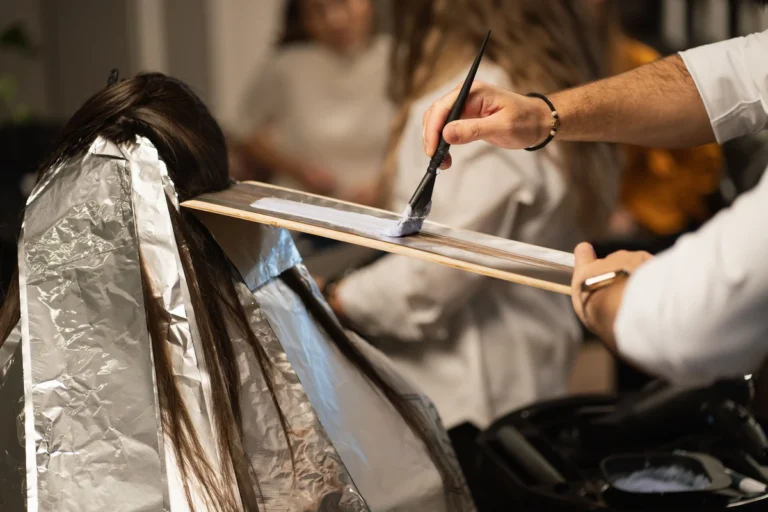
Burgundy is painted onto the mid-lengths and ends, leaving natural dark roots. The ends are usually lightened first so the burgundy shows up, then toned. It grows out without a hard line, so many people go three to four months between appointments. Balayage shows best on hair past the shoulders. See our balayage hair color ideas for how placement changes on different base colors.
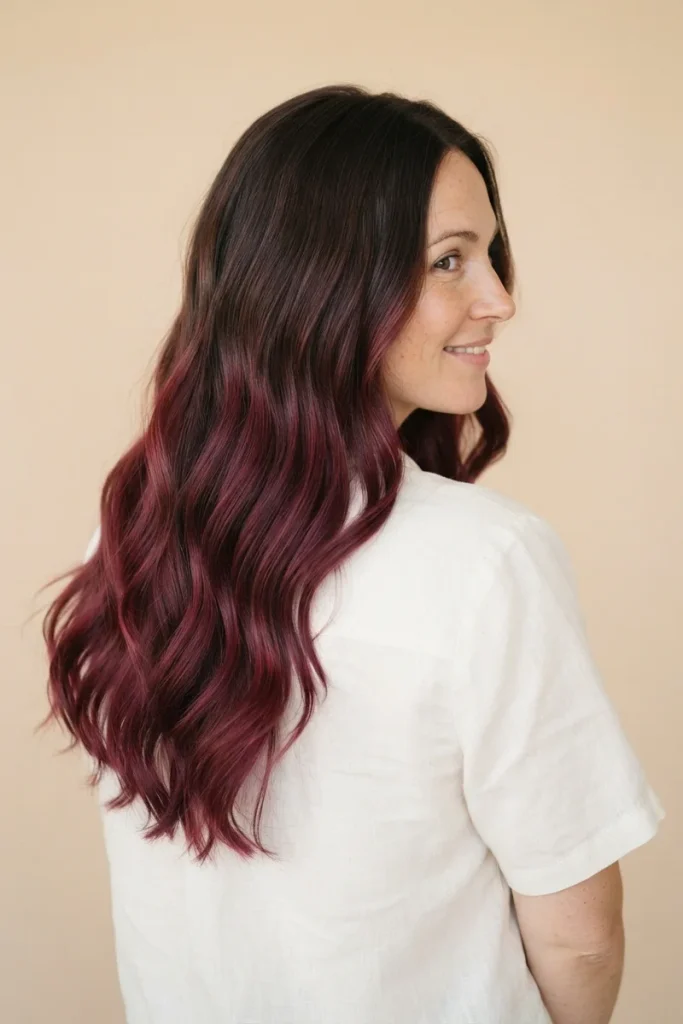
Fades to: a warm, copper-tinted brown at the ends. A toning gloss between balayage appointments keeps the burgundy reading as wine rather than orange.
8. Burgundy Money Piece and Highlights
A burgundy money piece colors only the two front sections around the face. Add a few fine highlights through the top and the color looks intentional from every angle. It is a good way to test burgundy near your skin before committing to all-over color.
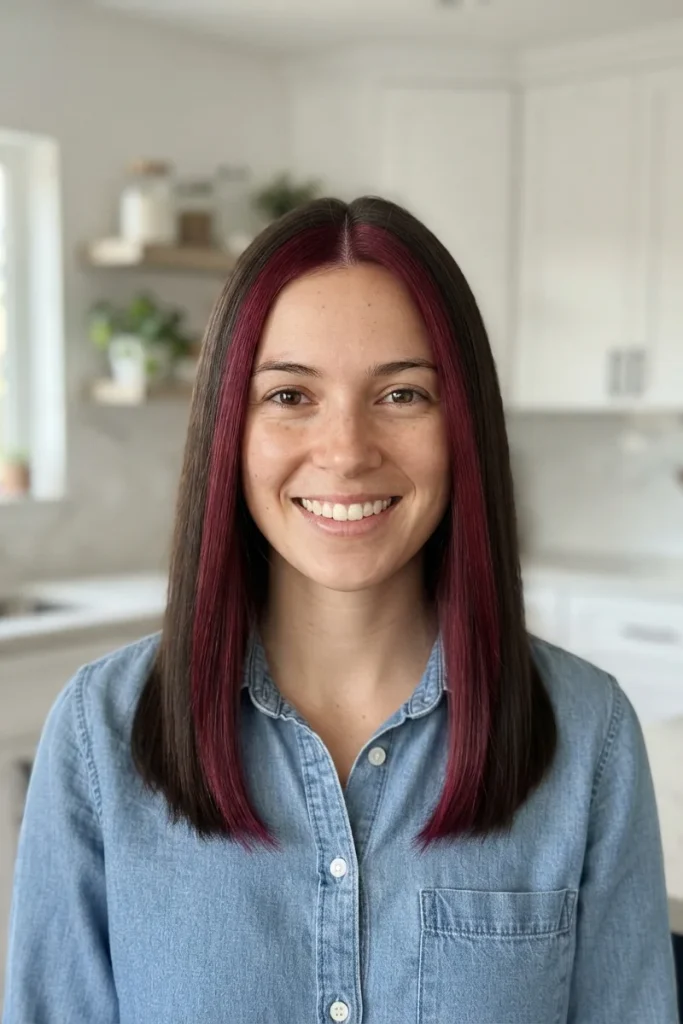
Fades to: pinkish red. Because these pieces are pre-lightened, they fade faster than the rest of your hair.
9. Burgundy Lowlights in Brown Hair
Lowlights weave darker burgundy strands through light or medium brown hair. They add depth instead of brightness, so the overall effect is richer brown with flashes of wine. No lightening is needed when the burgundy is darker than your base.
Fades to: a soft auburn that blends into the brown.
10. Burgundy Root Melt
A root melt keeps the roots dark brown or black and blends them down into burgundy lengths, with no visible line where the color changes. It looks deliberate even as your hair grows, and it suits people whose natural color is very dark.

Fades to: a red-brown on the lengths while the roots stay dark, so the contrast softens over time.
11. Peekaboo Burgundy Underlayer
Peekaboo color goes only in the lower layer of hair, under the top section. It is hidden when your hair is down and shows when you tuck it behind your ears or wear a ponytail. It is one of the few ways to try a bright burgundy without it showing at work.
Fades to: a reddish brown underneath. Since the underlayer gets less sun, it often lasts longer than other placements.
Burgundy on Gray Hair
12. Burgundy for Gray Coverage
Gray hair takes red pigment readily, so burgundy on gray often comes out brighter than expected. Colorists usually mix burgundy with a natural brown to cover gray evenly and keep the shade wearable. On mostly white hair, a sheer burgundy gloss gives a soft rosy tint instead of full color. If you are deciding whether to color gray at all, our guide to gray hair cuts and care covers how gray hair behaves differently.
Fades to: a rosy red at the roots and temples, where gray is most resistant.
Semi, Demi or Permanent?
| Type | How long it lasts | What it does | Best for |
|---|---|---|---|
| Semi-permanent | About 4–8 washes | Adds color only; no developer, no lift | Testing burgundy on light brown, blonde or gray hair |
| Demi-permanent | About 12–24 washes | Low developer; adds color and shine, little or no lift | Burgundy brown, black cherry, refreshing faded color |
| Permanent | Grows out; red tones still fade | Can lighten slightly and add color in one step | Classic burgundy on dark brown, gray coverage |
Box dye can work for burgundy brown or black cherry on virgin brown hair. For balayage, money pieces, gray coverage, or anything that needs lightening, a salon is the safer choice, because uneven lightening under red shows as patchy orange or pink.
Keeping Burgundy From Fading
Red and violet tones fade faster than browns, so burgundy needs a little more care than most colors:
- Wait about 72 hours before the first wash so the color can settle.
- Wash with cool or lukewarm water. Hot water opens the cuticle and lets color escape.
- Use a sulfate-free shampoo and wash less often; dry shampoo helps between washes.
- Use a burgundy or red color-depositing conditioner once a week to top up the shade.
- Apply heat protectant before blow-drying or flat ironing. Our heat damage guide explains why heat strips color as well as moisture.
- Cover your hair in strong sun, and book a gloss every four to six weeks.
Avoid purple shampoo on burgundy. It is made to cancel yellow in blonde hair and can leave red shades dull and muddy.
Getting Out of Burgundy
Red pigment is stubborn, so plan the exit before you go in. You have three options:
- Let it fade and cover with brown. The gentlest route. A colorist can add a brown with a slight green or ash tone to neutralize leftover red.
- Use a color remover. Removers break down permanent and demi-permanent dye without bleach. They often leave hair warmer than expected, so a toner usually follows.
- Lighten at a salon. Bleaching over burgundy at home tends to leave orange or pink patches, and repeated lightening raises the risk of breakage. See our guide to hair breakage causes and fixes if your hair already feels fragile.
FAQ
Do you need bleach for burgundy hair?
Not usually on light or medium brown hair, or for darker shades like black cherry and burgundy brown on dark brown hair. Natural black hair needs some lightening for burgundy to show indoors, and box-dyed black needs the old color removed first.
Does burgundy suit every skin tone?
Most skin tones can wear some version of burgundy. The key is the lean: violet-leaning shades tend to suit cool undertones, and red-brown shades tend to suit warm and olive undertones. Depth matters too; deeper shades are more forgiving on very fair skin.
How long does burgundy hair color last?
Semi-permanent burgundy lasts about four to eight washes, and demi-permanent about 12 to 24. Permanent burgundy grows out instead of washing out, but the red tone still fades within four to six weeks without care, so most people refresh it with a gloss or color-depositing conditioner.
Can you put burgundy over box-dyed black hair?
Not directly. New dye cannot lighten old dye, so burgundy over box-dyed black looks the same as before. The black needs a color remover or careful lightening first, ideally at a salon.
Is burgundy the same as wine or maroon hair?
They are close. Wine and merlot usually describe a slightly warmer, browner burgundy. Maroon is a darker, browner red with less violet. Burgundy itself sits in the middle, with red and violet in balance.
What color does burgundy hair fade to?
On dark or natural bases, burgundy usually fades to red-brown or soft auburn, while plum shades fade to a dusty mauve-brown. On lightened pieces like balayage or a money piece, it fades faster, toward copper-brown or pinkish red. Washing in cooler water with a color-safe shampoo slows the fade.
Bottom Line
Pick your burgundy by your starting color first and your undertone second. Go deeper if you want low upkeep, brighter if you can commit to glosses and cool water, and plan how you will grow it out before the first appointment.