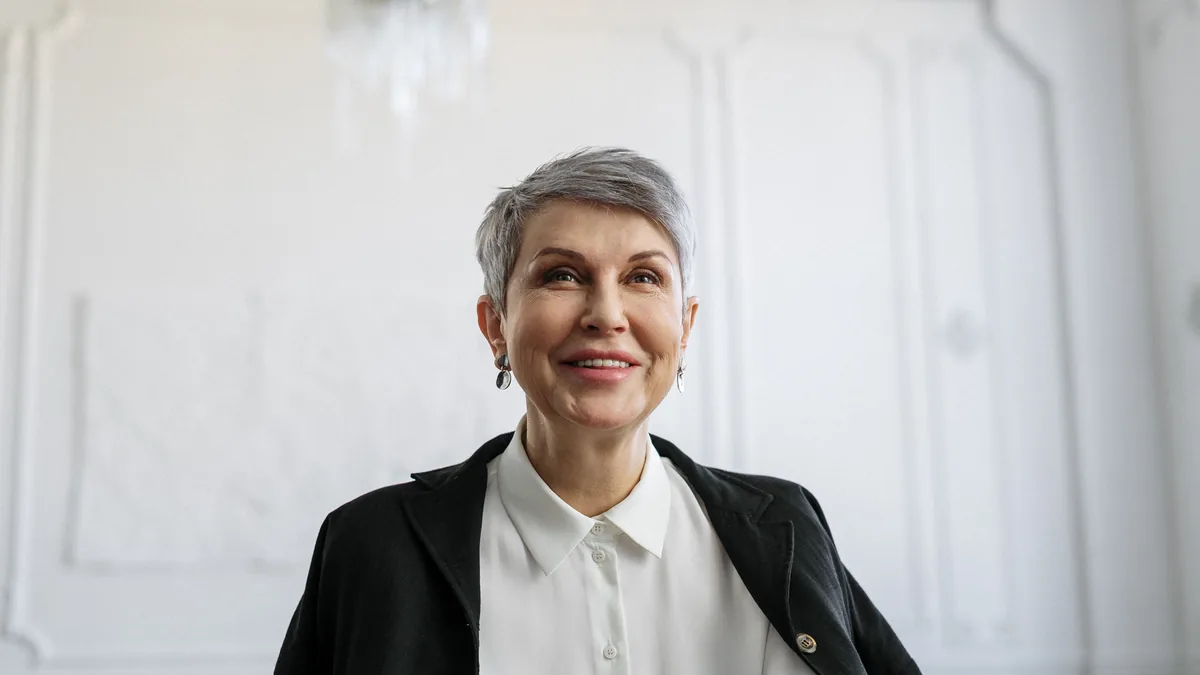
15 Flattering Pixie Cuts for Women Over 50
A pixie cut after 50 isn’t about giving up on your hair. For many women, it’s the moment their hair finally starts working with them instead of against them. Hair often changes with age: it can become finer, lose some density at the crown, turn gray or silver, or shift in texture from straight to wavy or wiry. Long hair tends to show all of those changes at once, while a well-cut pixie can hide thinning, show off silver beautifully, and cut your morning routine down to a few minutes.
The 15 pixie cuts below are grouped by what your hair is doing right now, whether it’s finer than it used to be, going gray, changing texture, or simply ready for something easier. Each one explains who it suits, why it works after 50, and what to tell your stylist so you leave the salon with the cut you actually wanted.
Before You Start: The Two Decisions Behind Every Pixie Cut Over 50
First, how has your hair changed? The right pixie depends less on your age and more on what your hair is doing today. If it has become finer or thinner at the crown, you need a cut that builds volume on top. If it has gone gray, you want a shape that shows off silver rather than fighting it. If the texture has changed, a cut designed for your old hair may not behave the way you expect. Take an honest look at density, texture, and color before you choose.
Second, how much styling time do you want to spend? Some pixies look finished after a quick towel-dry and a little product. Others need a blow-dryer and a round brush every morning to look polished. Neither is better, but choosing a cut that matches your real routine is what makes a pixie feel easy rather than frustrating. If you’re still deciding on the overall shape, our guide to pixie cuts that suit your face shape and texture covers the basics, and our guide to choosing a haircut for your face shape explains how to balance your features.
Once you’ve answered those two questions, find the section below that matches your hair.
For Fine or Thinning Hair
Fine hair and hair that has thinned at the crown are among the most common reasons women over 50 choose a pixie. The right short cut removes the weight that pulls fine hair flat and uses layers to create the look of more hair.
1. Textured Crop With Piece-y Bangs
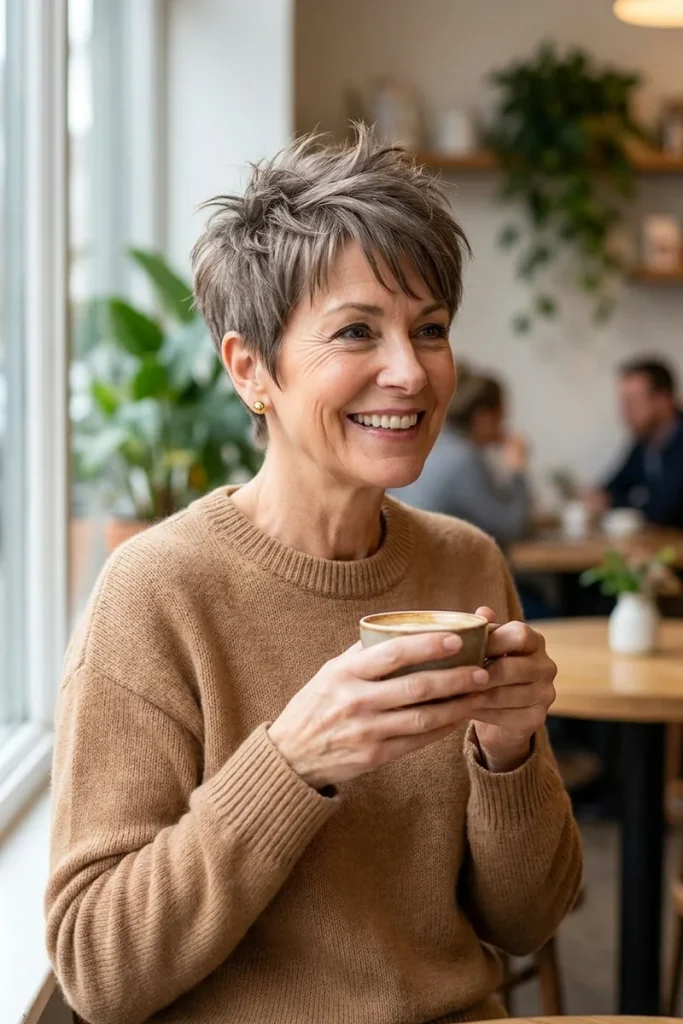
A textured crop is one of the most forgiving pixies for fine hair. The hair on top is cut into short, choppy pieces that stand up and separate, so the eye reads texture and movement rather than scalp. Piece-y bangs soften the forehead and draw attention to your eyes, which is especially flattering if you want a fresh, youthful look without anything severe. It works well on oval, heart-shaped, and long faces.
This cut shines with very little effort. Rub a small amount of texturizing paste or light pomade between your fingers and work it through the top, twisting a few pieces for definition. Because the hair is short and light, it dries quickly and holds its shape through the day. If your hair has thinned, the separated texture on top is far more flattering than a smooth, flat finish.
Stylist tip: Ask for point-cutting on top so the ends are soft and piece-y rather than blunt.
2. Layered Pixie With Crown Volume
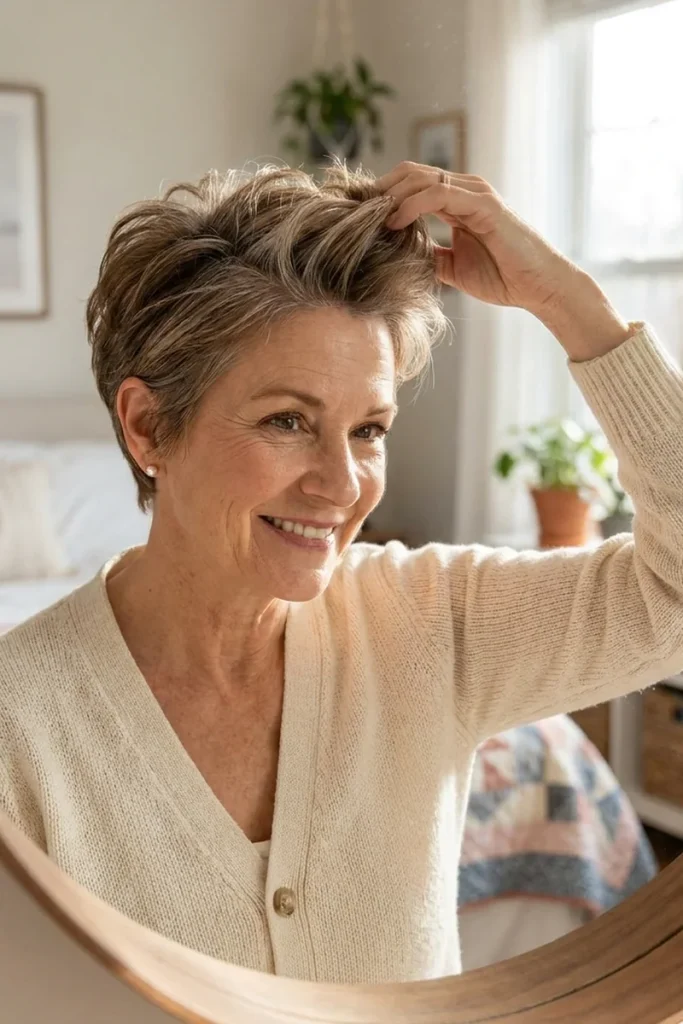
If your hair has become thinner at the crown, this is the pixie built to solve that problem. The layers are cut shorter at the crown and slightly longer around them, which gives the top of your head natural lift and roundness. The result looks fuller and more balanced, especially from the side, where a flat crown is most noticeable.
To style it, blow-dry the crown section upward with your fingers or a small round brush, then flatten the sides gently with your palms. A light volumizing mousse at the roots helps the lift last all day. This shape is especially flattering on round and square faces, since the height on top elongates your face.
Stylist tip: Mention exactly where your hair feels thinnest. The stylist can place the shortest layers there for the most lift.
3. Feathered Pixie With Soft Sideburns
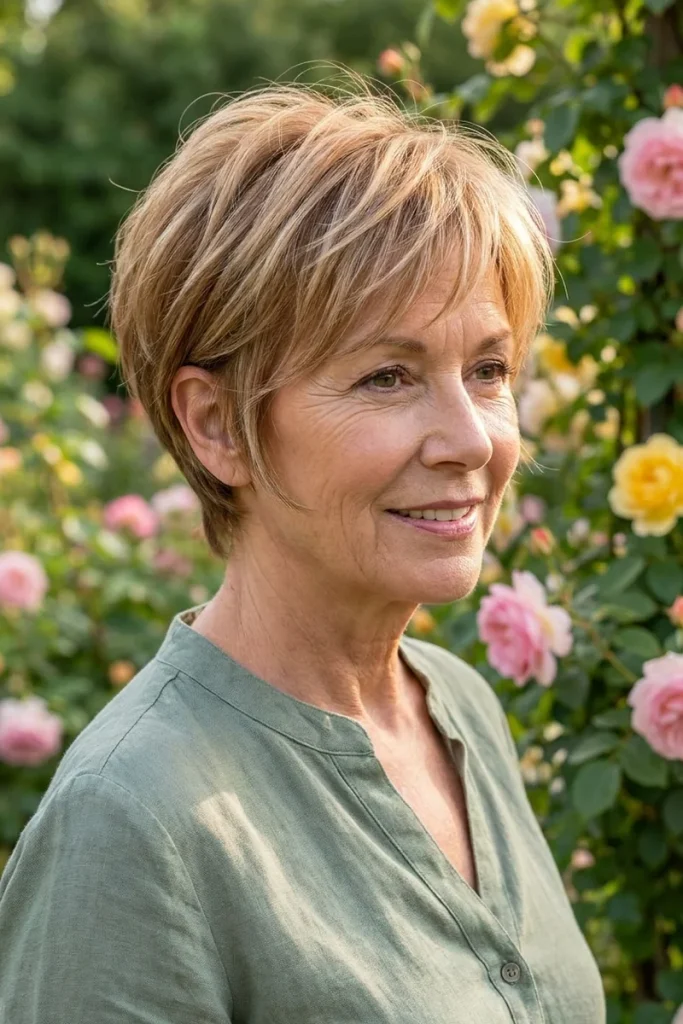
A feathered pixie has soft, wispy edges around the ears and neck instead of a sharp, clipped outline. That softness makes it one of the most gentle, feminine pixies on this list, and it’s especially flattering if you worry that short hair will look too harsh. The feathered sideburns frame the cheekbones and soften a strong jawline.
Because the edges are wispy rather than blunt, this cut also grows out gracefully, so it can go a little longer between trims without looking untidy. Style it by blow-drying the hair forward and slightly toward your face, then pinching a few feathered pieces with a little wax. It works on fine to medium hair and suits most face shapes.
Stylist tip: Ask for the sideburns and nape to be feathered with thinning shears or a razor rather than cut straight across.
For Gray and Silver Hair
Gray and silver hair often has a coarser, wirier texture than pigmented hair, and it can look dull or yellow without the right care. A pixie shows off silver beautifully because the whole color is visible at once, with no faded ends or old color hanging below.
4. Tapered Silver Pixie
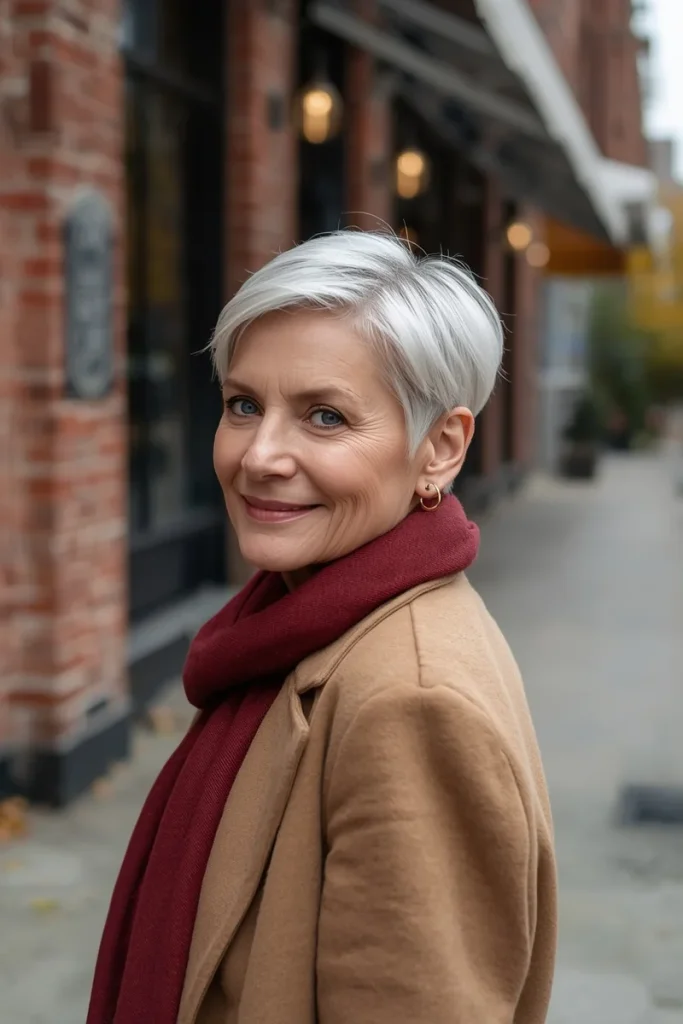
A tapered silver pixie is short and close at the nape and sides, with a little more length on top. It’s clean, modern, and confident, and it makes silver hair look deliberate rather than accidental. The tapered shape also controls the coarser texture that gray hair often has, since shorter hair has less room to frizz or stick out.
To keep silver bright, use a purple shampoo about once a week to cancel out yellow tones, and ask your colorist about a silver or violet toner if your gray looks brassy. Because gray hair behaves differently from pigmented hair, our guide to gray hair cuts and care explains the full routine, from cutting to toning.
Stylist tip: Ask for a soft taper at the nape rather than a sharp buzzed line. It looks more polished as it grows.
5. Salt-and-Pepper Blended Pixie
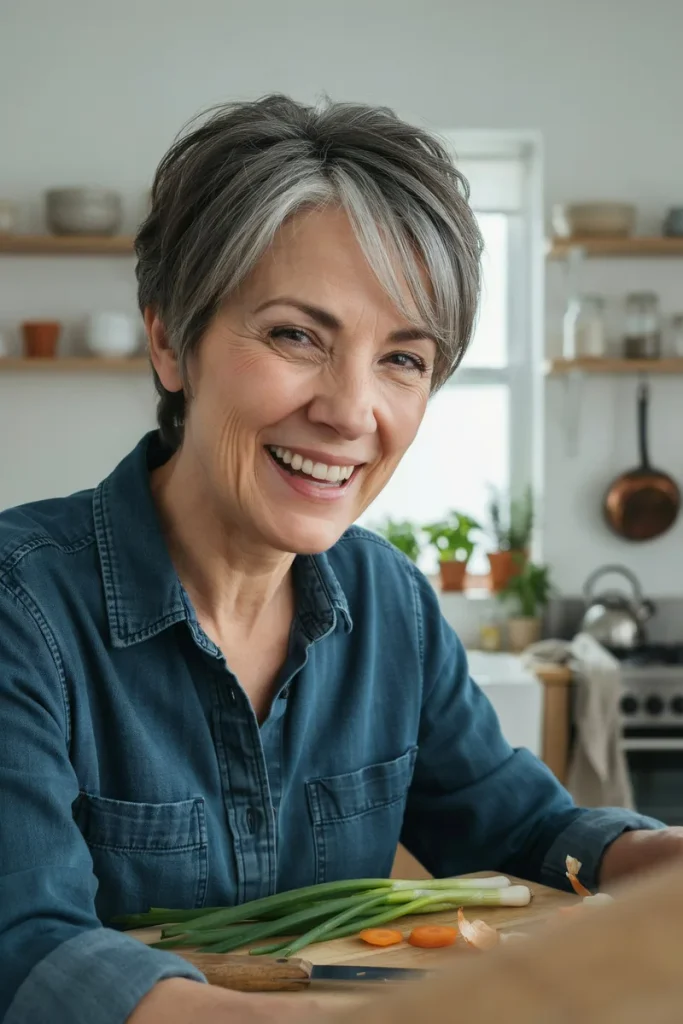
If you’re partway through going gray, a pixie is one of the best ways to make the transition look intentional. Salt-and-pepper hair, a mix of darker strands and silver, has natural dimension, and a short cut shows it off as a beautiful blended color rather than a line of regrowth. This is a great choice if you’ve decided to stop coloring and want to skip the awkward grow-out phase.
Many women use a pixie cut as a fresh start: cutting short removes most of the previously colored hair at once, leaving mostly your natural color. If you’d like a softer blend while the gray comes in, gray blending with a few fine lowlights can help, and our hair color ideas guide explains how gray blending works.
Stylist tip: Tell your stylist you’re growing out color, so they can plan the cut to remove as much old color as possible.
6. Platinum Spiky Pixie

For a bold, modern look, a spiky pixie in bright platinum or icy silver is striking and full of energy. The short, lifted pieces on top look playful and youthful, and the bright color lights up your face. It’s best for women with naturally white or very light gray hair, or anyone who loves a dramatic change.
Style it with a small amount of strong-hold wax or paste, pushing the top pieces up and slightly forward. Keep the sides short and neat so the spikes look intentional. Bright silver can pick up yellow tones from heat and hard water, so a weekly purple shampoo is especially important for this shade. Our guide to winter hair color ideas has more tips on keeping icy silver bright.
Stylist tip: Ask for the top to be cut slightly longer than you think you need. Spikes need length to stand up.
For Easy, Low-Maintenance Everyday Wear
These pixies are for anyone who wants short hair that looks good with the least possible effort. They’re shaped to fall into place on their own and still look polished.
7. Wash-and-Go Tousled Pixie
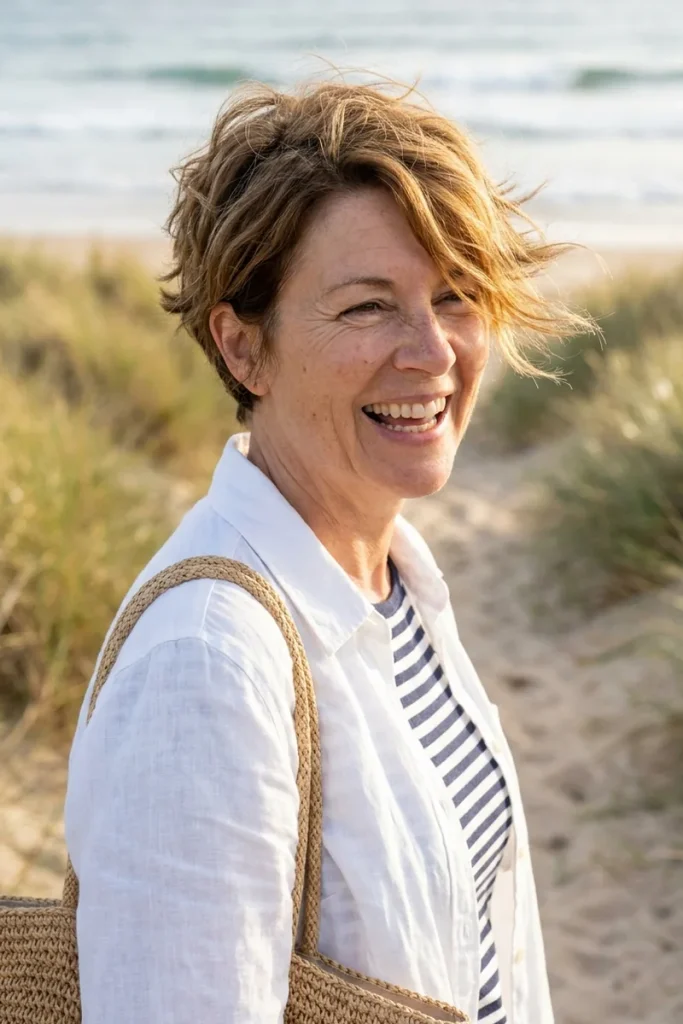
This is the pixie for busy mornings. The layers are cut to fall naturally, so after washing you only need to towel-dry, add a little product, and tousle it with your fingers. The slightly messy finish looks relaxed and modern, and it hides the small cowlicks and uneven growth patterns that can become more noticeable with age.
A light cream or styling lotion is all you need. Scrunch it through damp hair and let it air-dry, or rough-dry it with a blow-dryer for a few minutes. It works on straight, wavy, and fine to medium hair, and suits most face shapes.
Stylist tip: Ask your stylist to cut it dry or check it dry at the end, so the shape works with how your hair naturally falls.
8. Longer Side-Swept Pixie

If a very short pixie feels like too big a step, a longer pixie with side-swept bangs is a gentle place to start. It keeps enough length on top to sweep across your forehead, which softens your features and gives you more styling options. It’s an especially flattering choice if you have a high forehead or want to soften fine lines.
Style it by blow-drying the top in the direction you want it to fall, then smoothing the bangs to the side with a small round brush. You can wear it sleek for a polished look or tousled for something more casual. Before using hot tools, apply heat protectant to damp, towel-dried hair rather than soaking-wet hair. Our heat damage repair and prevention guide explains why that matters.
Stylist tip: Ask for longer layers on top and a soft side part, so the bangs sweep naturally without needing heavy styling.
9. Rounded Ear-Length Pixie
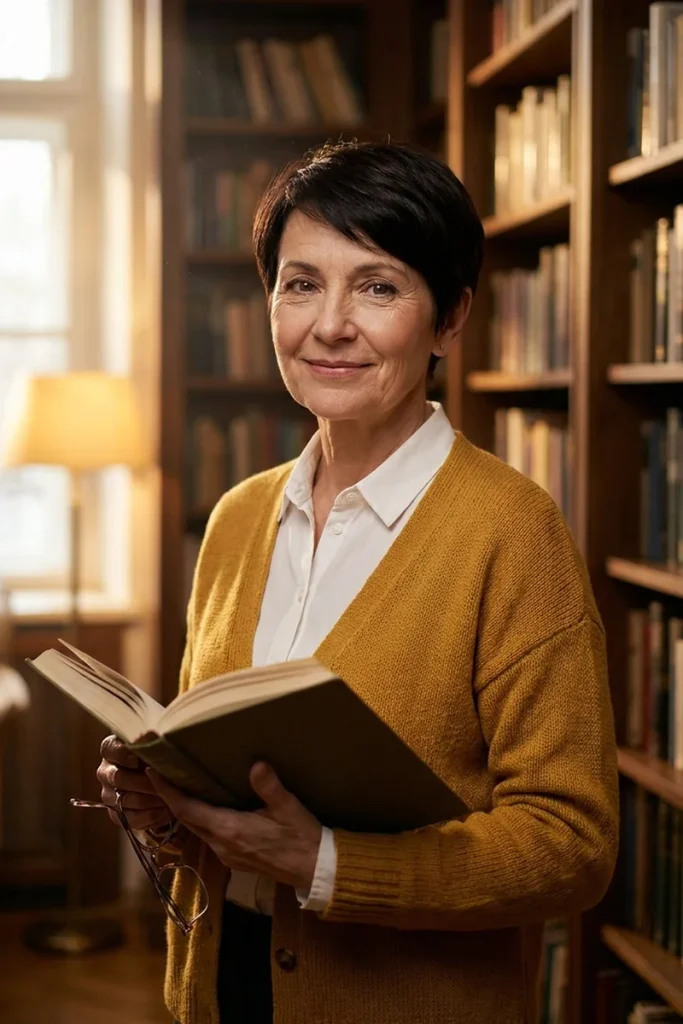
A rounded pixie sits around the ears with a soft, curved outline that follows the shape of your head. It’s classic, elegant, and very easy to wear, and it suits women who want a timeless look rather than something edgy. The rounded shape adds softness to angular faces and looks especially good on thick or straight hair.
Because the shape is built into the cut, styling is simple: blow-dry with your fingers, smoothing the hair down and around the head, and finish with a drop of shine serum. This cut looks polished for work, weddings, and everyday life alike.
Stylist tip: Ask for weight to be removed from inside the cut if your hair is thick, so it lies smooth rather than puffy.
For Curly and Wavy Hair
Many women find their hair becomes wavier or curlier with age. A pixie cut designed for curls lets that texture become a feature instead of a problem.
10. Curly Pixie With a Tapered Nape

A curly pixie keeps more length on top so your curls have room to form, while the nape and sides are tapered short and neat. The contrast looks intentional and polished, and it keeps curls from becoming a round, triangular shape. It works beautifully on natural curls of any color, including silver.
Curls are shaped while wet, so apply your products to soaking-wet hair, scrunch, and let it dry without touching it. The right products depend on your curl pattern, and our guide to curly hairstyles by curl type explains which to use and how to avoid frizz.
Stylist tip: Look for a stylist who cuts curls dry, curl by curl. It gives the most predictable shape.
11. Soft Wavy Pixie

If your hair has a natural wave, a soft wavy pixie lets that movement shine. The layers are cut to encourage the wave rather than flatten it, creating a relaxed, romantic shape that looks effortless. It’s a lovely choice for women whose hair has recently become wavier or coarser, since the short length keeps the texture under control.
Scrunch a light mousse or curl cream through damp hair, then air-dry or diffuse on low heat. Avoid brushing once it’s dry, since that can turn waves into frizz. This pixie suits oval, heart-shaped, and long faces especially well.
Stylist tip: Ask for longer layers on top so the waves have enough length to bend.
Polished and Modern Pixies
These pixies are for women who want their short hair to feel stylish and current, with a little more shape or edge.
12. Sleek Side-Part Pixie
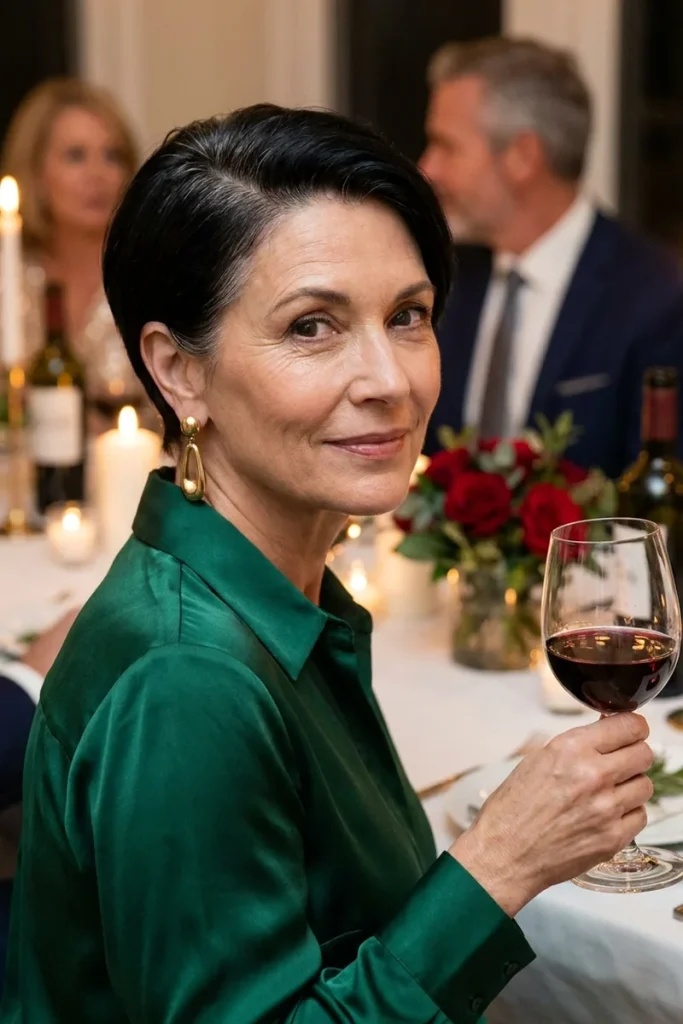
A sleek side-part pixie is smooth, glossy, and sophisticated. The deep side part and polished finish give it a classic, elegant feel that looks right in a boardroom or at a dinner party. It’s especially flattering if you have strong features or love a tailored, put-together look.
Blow-dry the hair smooth with a small round brush, following your side part, and finish with a little shine serum or light hairspray. This shape works best on straight or slightly wavy hair and on medium to thick density.
Stylist tip: Ask your stylist to cut the part in, so the hair naturally falls to the side you prefer.
13. Bixie for Easing Into Short Hair
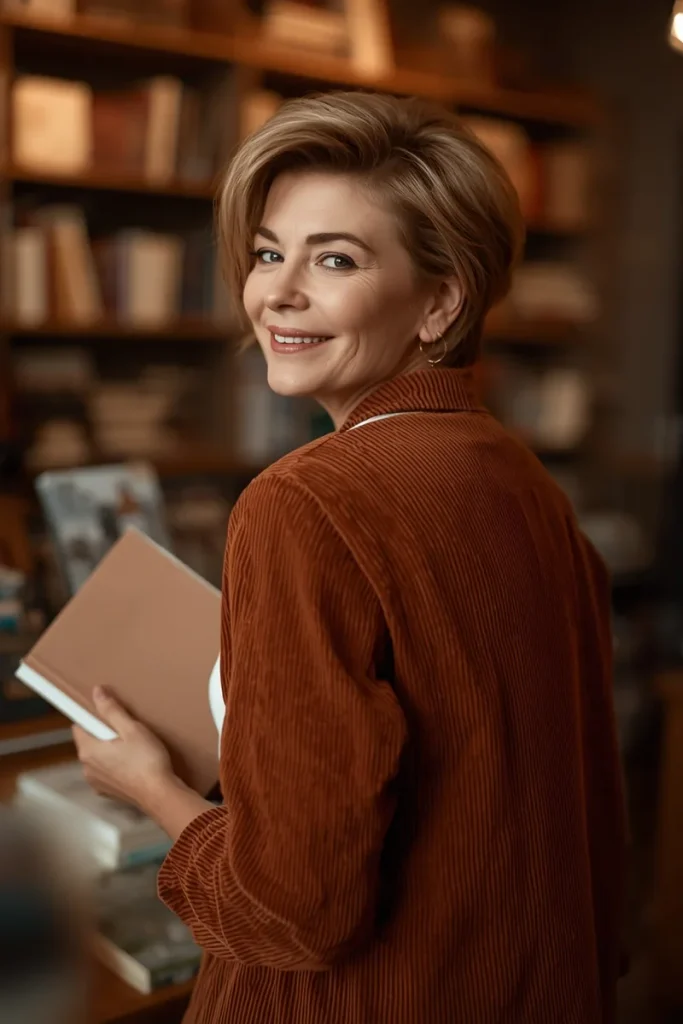
A bixie sits between a pixie and a bob, landing around the jaw or ear with soft layers. It’s perfect if you’re moving from longer hair and aren’t ready for a full pixie yet. It keeps enough length to tuck behind your ears but has the lightness and ease of a short cut.
The bixie is also a smart choice if you might grow your hair out later, since it transitions easily into a bob. If you’re coming from longer hair, our guide on cutting long hair into a bob explains what to expect from a big change, and our bob haircut ideas show where a bixie can go next.
Stylist tip: Ask for soft, internal layers so the bixie moves rather than sitting as one solid shape.
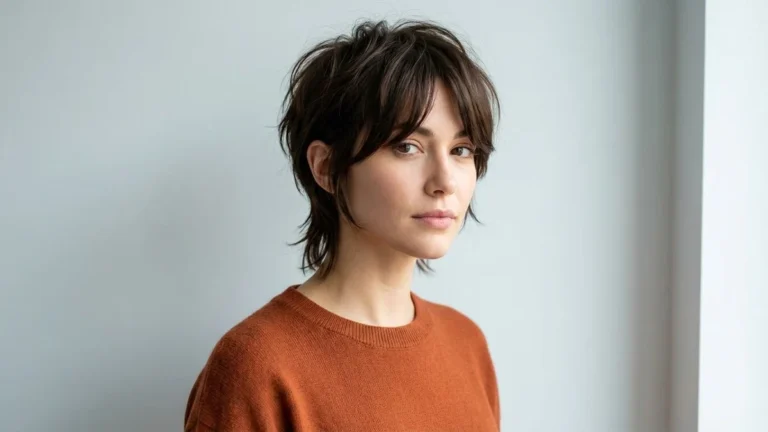
14. Shaggy Pixie

A shaggy pixie has choppy, layered pieces all over, with a slightly undone, lived-in finish. It feels youthful and fun without trying too hard, and the texture hides thinning spots well. It’s a great option if you love a relaxed, modern look.
Style it with a light texturizing spray and your fingers, scrunching and twisting a few pieces. The more you leave it a little messy, the better it looks. For more shag-inspired styles, including the shag pixie and shaggy bixie, see our guide to shag haircuts.
Stylist tip: Ask for a razor or point-cut finish so the layers look soft and blended instead of stepped.
15. Asymmetrical Pixie
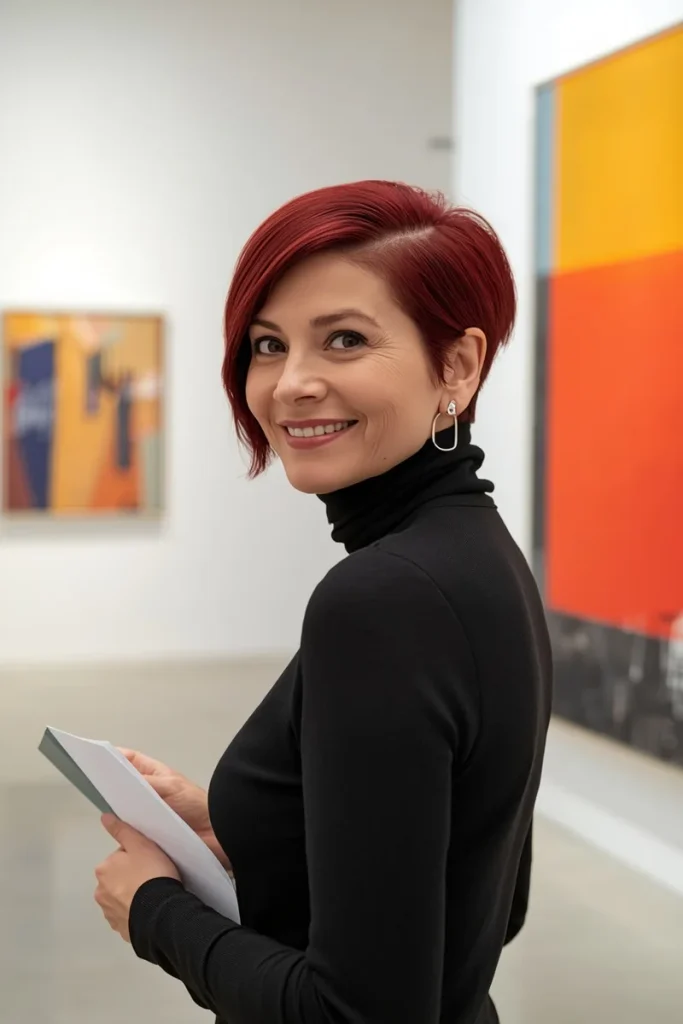
An asymmetrical pixie has one side longer than the other, often with longer bangs sweeping across the face. It’s bold, artistic, and eye-catching, and the long side draws attention to your eyes and cheekbones. It’s especially flattering on round and square faces, since the diagonal line creates length.
Blow-dry the longer side smooth and let it fall across your face, keeping the shorter side neat and close. A little shine serum on the longer pieces keeps them glossy. This cut makes a great statement, especially paired with bright silver or a rich color.
Stylist tip: Decide which side you want longer based on your natural part and your best angle in photos.
Frequently Asked Questions
Is a pixie cut flattering for women over 50?
Yes. A well-chosen pixie can be one of the most flattering cuts after 50, because it draws attention to your eyes and cheekbones, adds volume where hair has thinned, and shows off gray or silver beautifully. The key is choosing a shape that matches your face, your hair’s current texture, and your routine.
What is the best pixie cut for fine or thinning hair?
A textured crop, a layered pixie with crown volume, or a shaggy pixie are the best choices. All three use short, piece-y layers that make fine hair look fuller. Avoid very sleek, flat pixies if your hair has thinned, since they can make the scalp more visible.
How often does a pixie cut need to be trimmed?
Most pixies look best with a trim roughly every four to six weeks, since even a small amount of growth changes the shape of very short hair. Softer, longer, or feathered pixies can usually go a little longer between appointments.
Can I use a pixie cut to grow out my gray hair?
Yes. A pixie is one of the fastest ways to transition to natural gray, because it removes most of the previously colored hair at once. A salt-and-pepper or tapered silver pixie makes the change look deliberate.
Want more short hair ideas? Our guide to pixie cuts that suit your face shape and texture covers 16 more pixie styles, our gray hair cuts and care guide explains how to keep silver bright, and our updos for short hair show how to dress up short hair for special occasions. Not ready to go that short? Our bob haircuts for women over 50 keep a little more length. For quick ways to style short hair on busy mornings, see our easy hairstyles for women over 60.