Pixie Cuts That Actually Suit You: A Face-Shape and Texture-First Guide
Search “pixie cut” and you’ll find the same thing sixty times over: a wall of photos, no real logic connecting one to the next. Somewhere in that wall is a version that would genuinely work on your head — but scrolling for it is a gamble, because the photo that catches your eye and the cut that suits your face shape aren’t always the same thing. A pixie is unforgiving in a way longer hair isn’t. There’s no length left to hide behind, so the decision that actually matters isn’t which photo looks coolest — it’s which combination of face shape, hair texture, and daily effort you’re realistically working with.
This guide skips the flat gallery approach. Instead, it groups pixie variations by the thing that should be driving your choice: what shape flatters your face, what your hair’s natural texture can support without a fight, and how much time you actually want to spend on it each morning.
Before You Book: Three Things to Get Honest About
Your face shape, not just your favorite celebrity’s. A pixie that looks incredible on someone with an oval face and strong cheekbones can look completely different on a round or square face — not worse, just different, and worth planning for rather than discovering after the cut.
What your hair does when you don’t touch it. Fine, thick, curly, and straight hair all respond to the same pixie shape in different ways. A cut built to add volume to fine hair can look flat and stringy on thick hair, and the reverse is just as true.
Your actual morning routine, not your aspirational one. Some pixies are genuinely wash-and-go. Others need a diffuser, a flat iron, or styling product every single day to look intentional instead of accidental. Be honest about which one you’ll keep up with three months from now.
Matched to Face Shape
1. Classic Crop — Built for Oval Faces
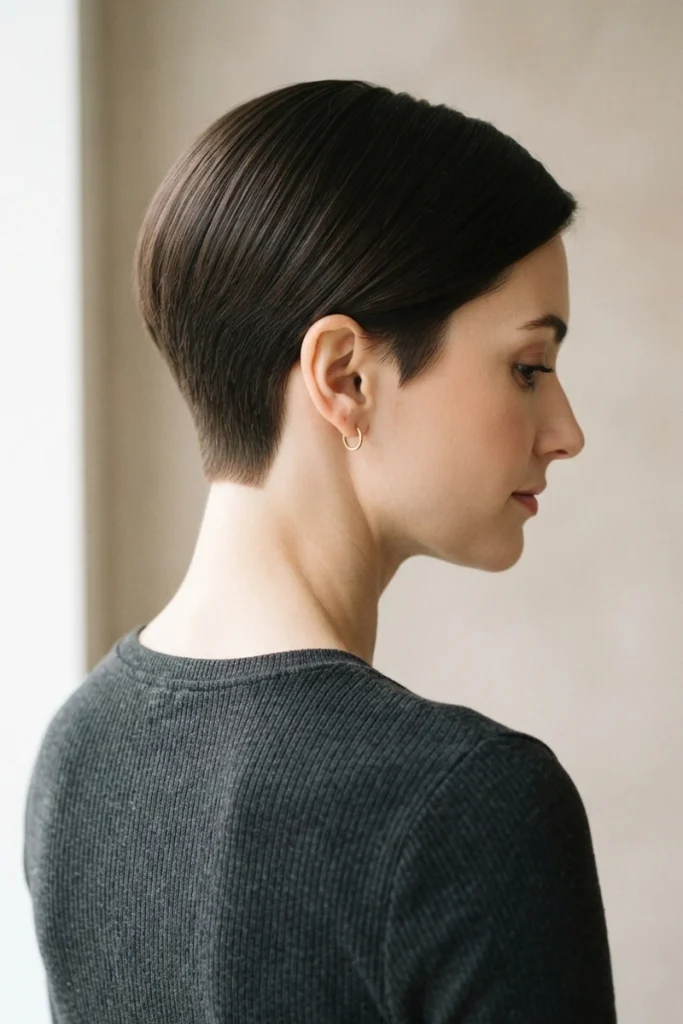
What it is: Short, close-fitting sides and back with one to two inches on top, minimal texture, and a smooth silhouette that follows the shape of the head.
Oval faces are the one shape where almost any pixie works, but the classic crop is the version that shows that off best — there’s nothing about the cut fighting the face, just clean lines doing exactly what they’re supposed to. It’s the pixie people picture when they picture “a pixie,” which is part of why it photographs so well and ages so gracefully.
Tell your stylist: “Keep about two inches on top, taper the sides close, and point-cut the ends so it’s not perfectly blunt. I want my ears visible.”
2. Textured Height-on-Top Pixie — Built for Round Faces
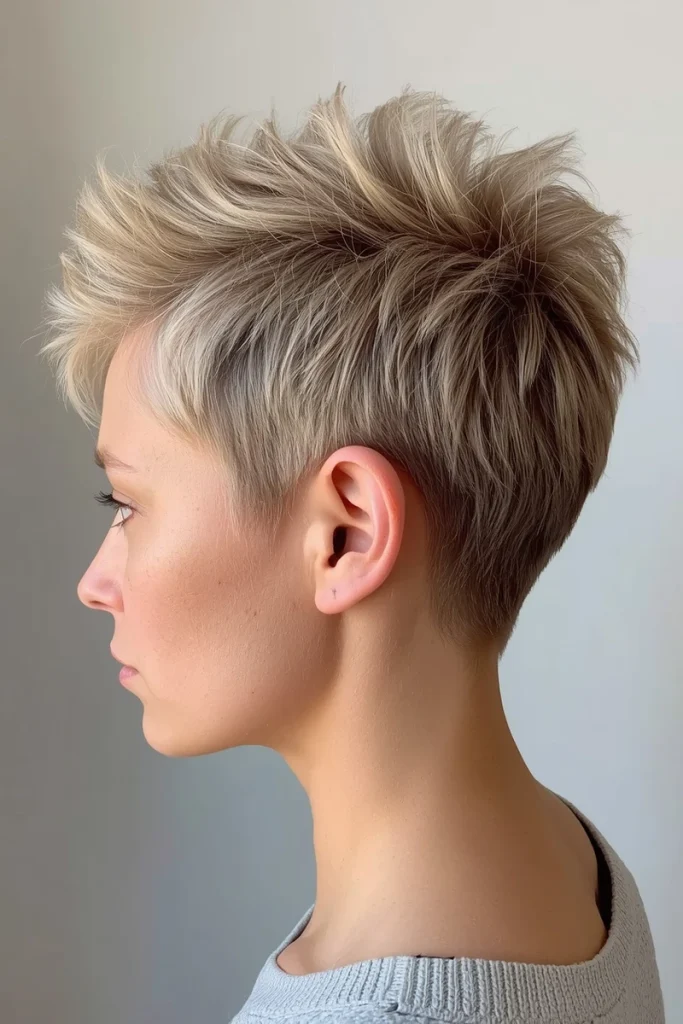
What it is: Extra length and layering concentrated at the crown, styled upward and outward rather than flat, with tapered sides that stay close to the head.
Round faces benefit from height more than width, and this cut is essentially built around that one principle. The added lift at the crown visually elongates the face while the tapered sides avoid adding bulk where the face is already fullest — a combination that’s easy to get wrong without a stylist who’s thinking about it deliberately.
Tell your stylist: “Build height and texture through the crown, keep the sides tapered tight, and use a deep side part instead of a center part.”
3. Side-Swept Fringe Pixie — Built for Square Faces
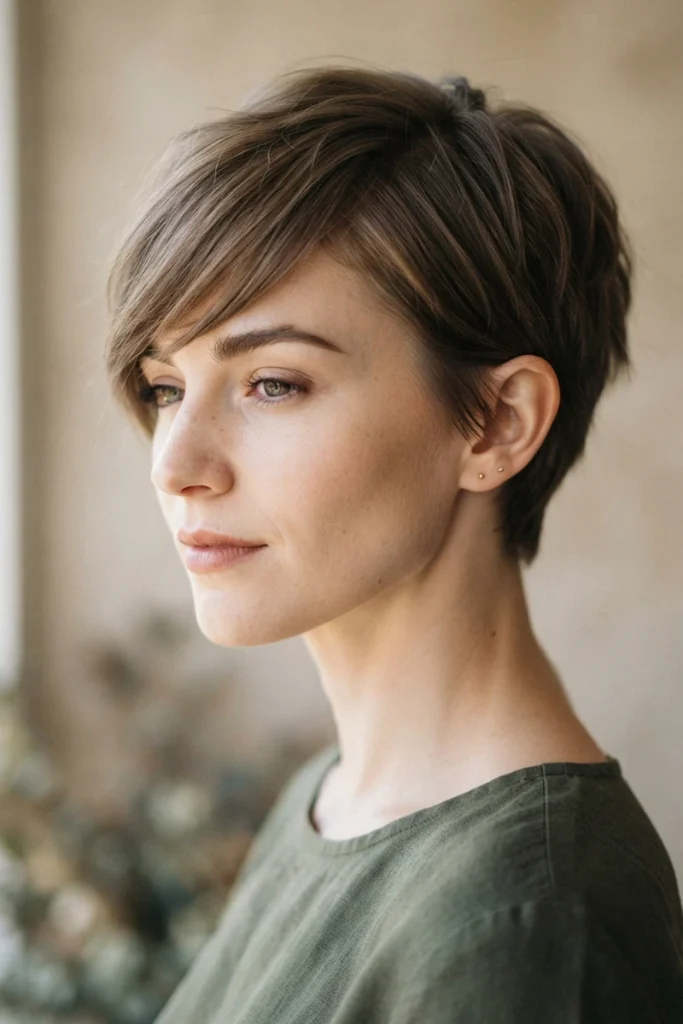
What it is: A soft, angled fringe swept to one side, paired with a pixie that keeps some softness through the crown rather than a sharp, geometric shape.
Square faces already have strong, defined bone structure, and a pixie can either play that up or work against it depending on the fringe. A straight-across, blunt fringe tends to emphasize the squareness of the jaw and forehead; an angled, side-swept fringe breaks that symmetry and softens the overall look without hiding the jawline entirely.
Tell your stylist: “I want the fringe angled and swept to one side, not straight across, and some softness left through the top so it’s not too geometric.”
4. Longer-on-Top Pixie — Built for Heart-Shaped Faces
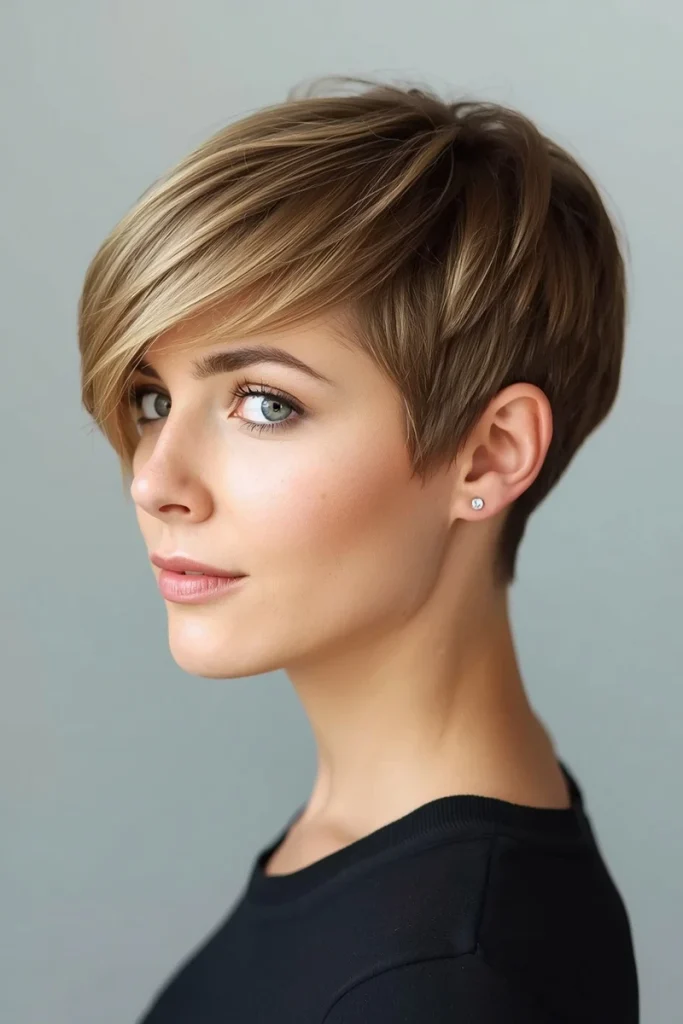
What it is: More length and movement on top than a classic pixie, with pieces styled to fall forward and soften the temple area, tapering shorter toward the jaw.
Heart-shaped faces are widest at the forehead and narrow toward the chin, so the goal is balancing that width rather than adding to it. Extra length on top, especially around the temples, draws attention downward and softens the forehead-to-chin taper that defines this face shape.
Tell your stylist: “Leave more length through the crown and temples than a standard pixie, and taper it shorter as it moves toward my jaw.”
Matched to Hair Texture
5. Diffused Curly Pixie
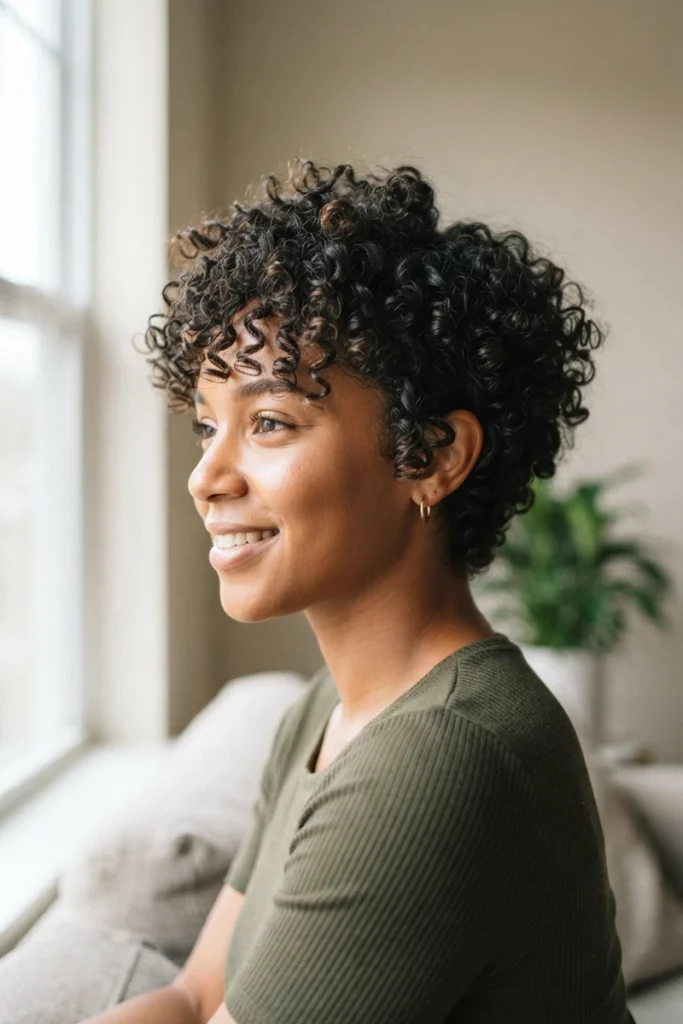
What it is: A pixie cut dry, curl by curl, rather than wet and pulled straight — the same logic that prevents an uneven “triangle” shape on longer curly cuts applies here too, just at a shorter length.
Curly hair springs up once it dries, and a pixie cut wet will almost always sit differently than expected once the curl pattern sets. Cutting dry lets the stylist see exactly how each section will actually fall, which matters even more on short hair where there’s very little length to correct a miscalculation.
Tell your stylist: “Please cut this dry, not wet, so you can see how my curl pattern actually falls before you commit to the length.”
6. Tousled Wavy Pixie
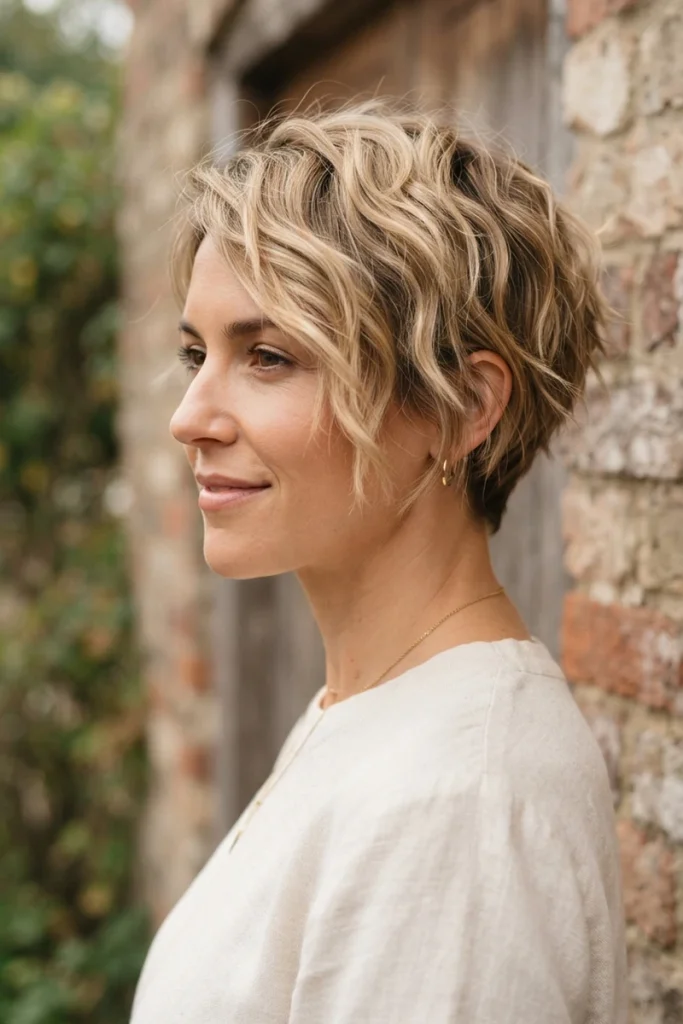
What it is: Soft, undefined layers through the top that work with a natural wave pattern instead of cutting across it, designed to be finger-styled rather than brushed smooth.
Wavy hair sits somewhere between straight and curly, and pixies built for either extreme tend to fight it. This version leaves enough movement in the layering that the natural wave shows through, rather than forcing the hair into a shape it doesn’t want to hold on its own.
Tell your stylist: “Keep the layers soft, not sharply defined, so my natural wave pattern still shows once it dries.”
7. Sleek Straight Pixie
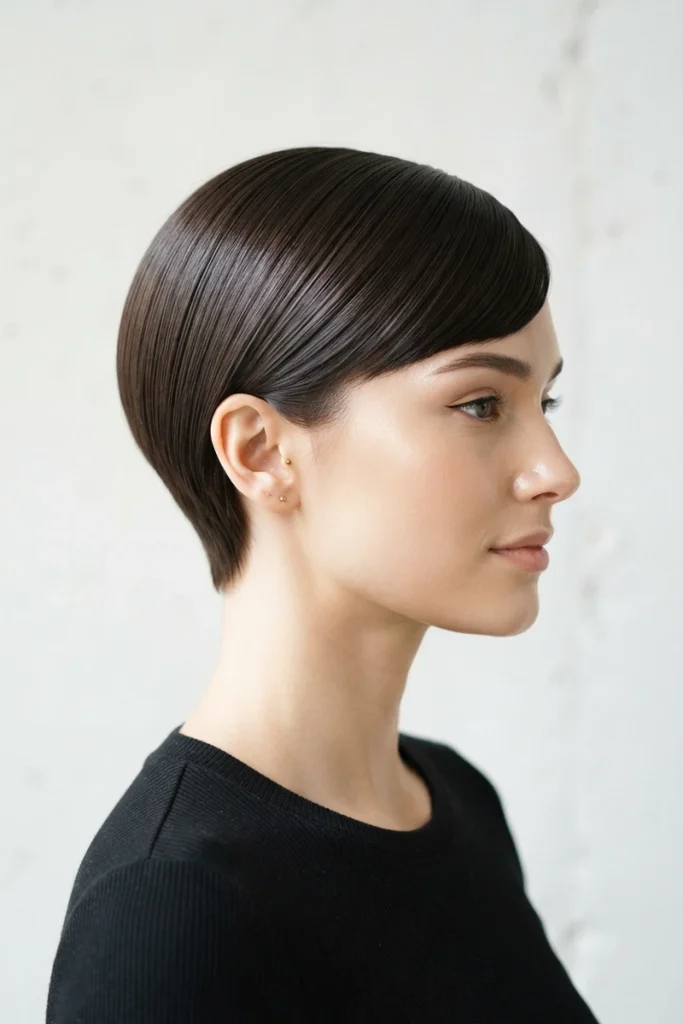
What it is: A smooth, close-to-the-head silhouette with minimal texturizing, designed to look polished with just a flat iron or blow-dry rather than fighting for volume.
Straight hair doesn’t need help holding a shape, so a pixie built for straight hair leans into that — clean lines, a glossy finish, and very little separation between sections. It’s the lowest-effort version to style day to day, provided the hair is genuinely straight to begin with.
Tell your stylist: “Keep this smooth and close to the head rather than heavily texturized — I want it to look polished without much daily effort.”
8. Volumizing Pixie for Fine Hair
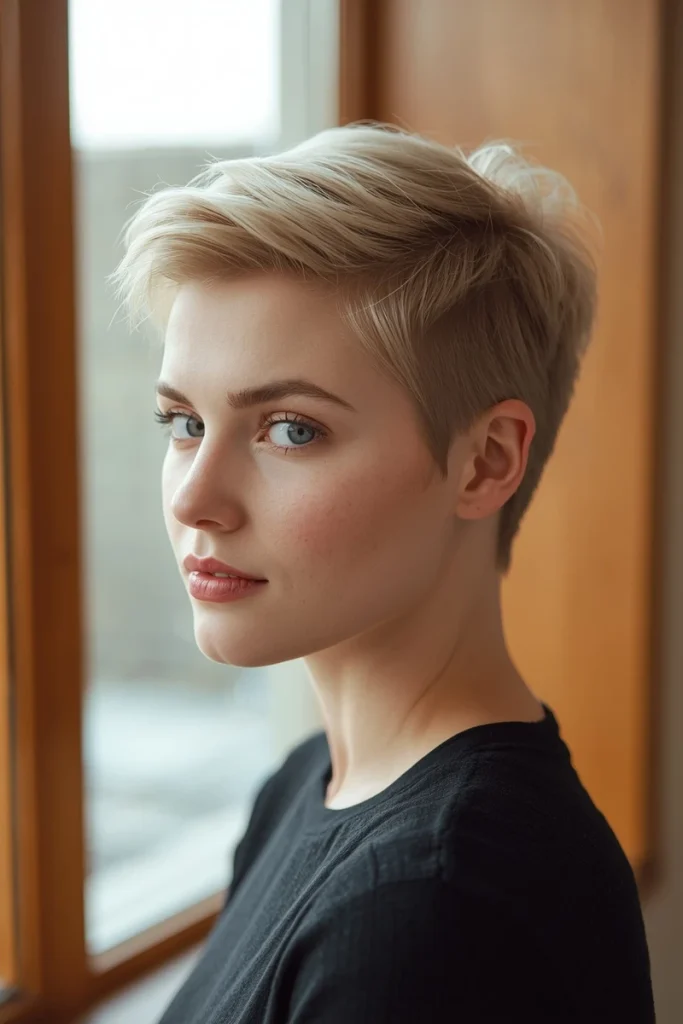
What it is: Shorter layers cut at a higher elevation angle through the crown specifically to create lift, since fine hair can’t fake volume the way thicker hair can.
Fine hair is the texture most likely to look thin or flat in a pixie if the cut doesn’t actively build volume into the shape itself. This version relies on the angle of the cut, not styling products, to do the heavy lifting — meaning the volume is baked into the haircut rather than something you have to recreate every morning.
Tell your stylist: “My hair is fine, so please cut the crown at a higher elevation for built-in lift rather than relying on me to add volume with product.”
Matched to Maintenance Commitment
9. Low-Maintenance Tapered Pixie
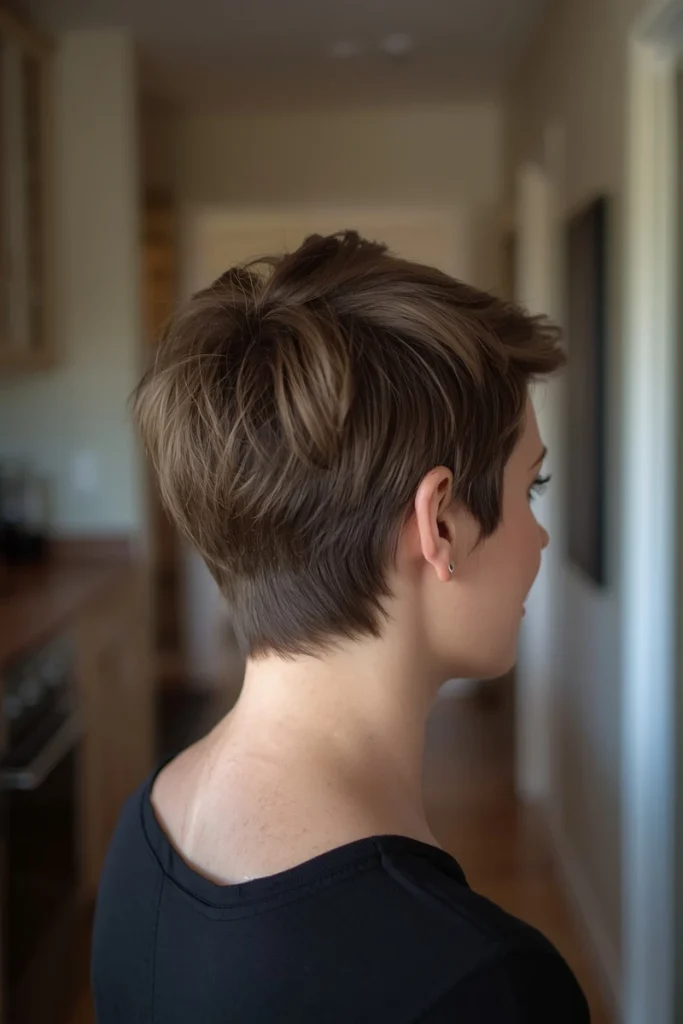
What it is: Close-tapered sides and back with soft, minimal layering on top — a shape that grows out cleanly and doesn’t rely on daily styling to look finished.
This is the version to ask for if your actual routine is closer to “towel dry and go” than “fifteen minutes with a diffuser.” The taper keeps the neckline sharp between trims, and the simplicity of the top layering means there isn’t much that can go wrong on a lazy morning.
Tell your stylist: “I want this to look intentional even on days I don’t style it — keep the top simple and the taper clean.”
10. High-Contrast Undercut Pixie
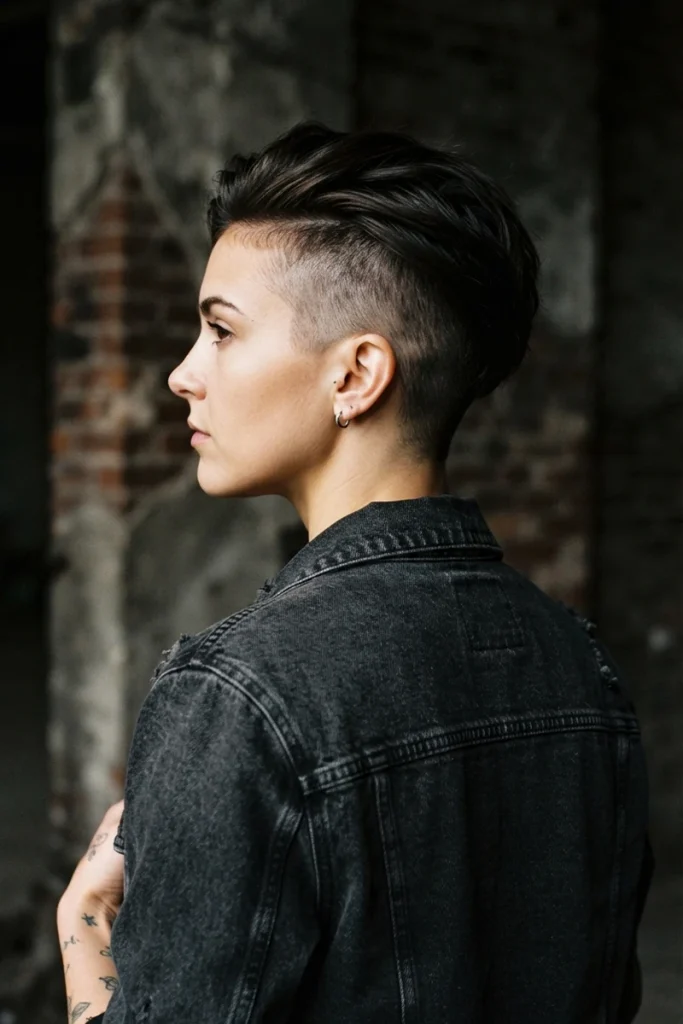
What it is: Sides and back shaved or clippered very short — often a number 2 or 3 guard — against three to four inches of length left on top for dramatic contrast.
This is the version with the widest range of daily looks packed into one haircut: sleek and slicked back one day, tousled and textured the next, with the shaved sides visible whenever the top is pulled up or back. It’s not necessarily low-maintenance day to day, but it’s low-commitment in the sense that regrowth on the sides is easy for a barber to clean up between full salon visits.
Tell your stylist: “Clipper the sides and back to a number 2 or 3, and leave three to four inches of length through the top for contrast.”
11. French Crop
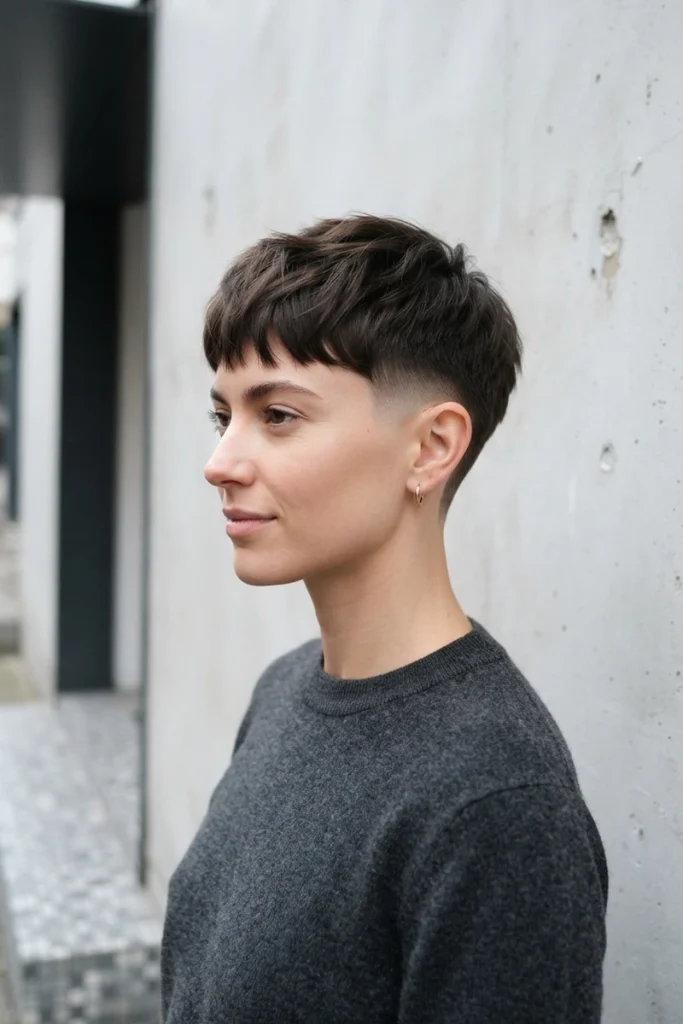
What it is: A tight clipper taper on the sides blending into a slightly longer, textured top, with thinning scissors used to remove bulk rather than length.
The French crop’s whole appeal is how little it asks of you day to day — a small amount of pomade for a sleek finish, or a texturizing spray if you want more separation, and that’s genuinely the full routine. It’s closer to a men’s crop translated for longer top length, which is part of why it reads as effortlessly put-together rather than deliberately styled.
Tell your stylist: “I want a clean clipper taper on the sides and thinning through the top to remove bulk — I don’t want to style this heavily every day.”
12. Shaggy Wash-and-Go Pixie
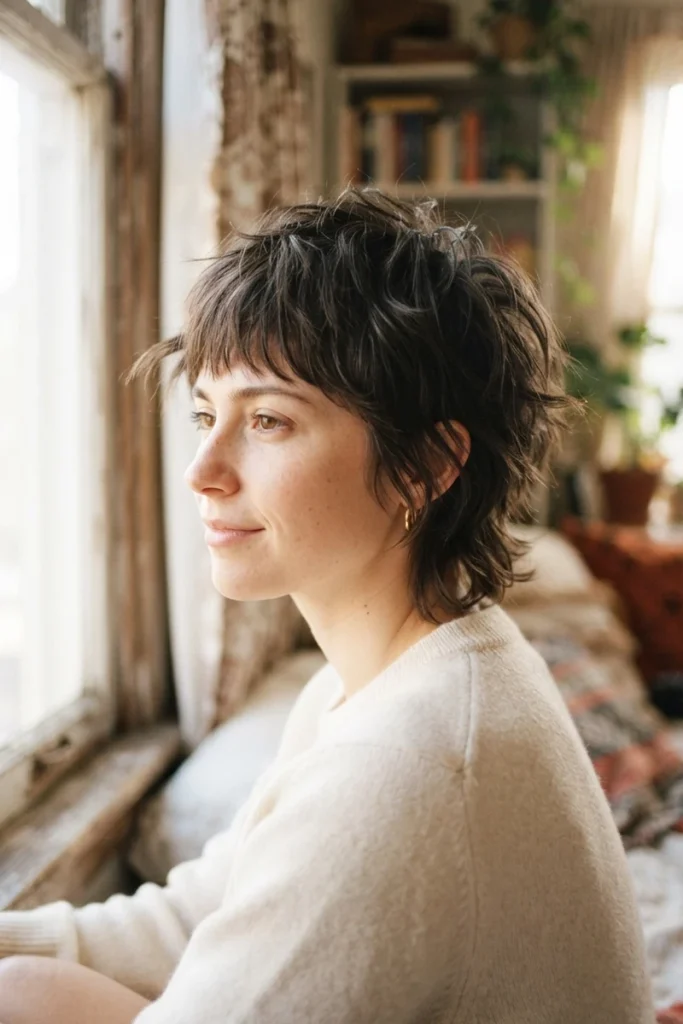
What it is: Uneven, choppy layers throughout with a wispy fringe, cut specifically to look good air-dried rather than styled smooth.
Where a lot of pixies need a tool to look finished, this one is built around the opposite goal: cut dry or with the natural fall in mind, so the “undone” texture is already there when you step out of the shower. It’s the closest thing to a genuinely no-effort short cut, provided you’re comfortable with texture over polish.
Tell your stylist: “Cut this with texture and unevenness built in — I want it to look finished when I just towel-dry and leave it.”
Statement Cuts and Growing-Out Options
13. Asymmetrical Pixie
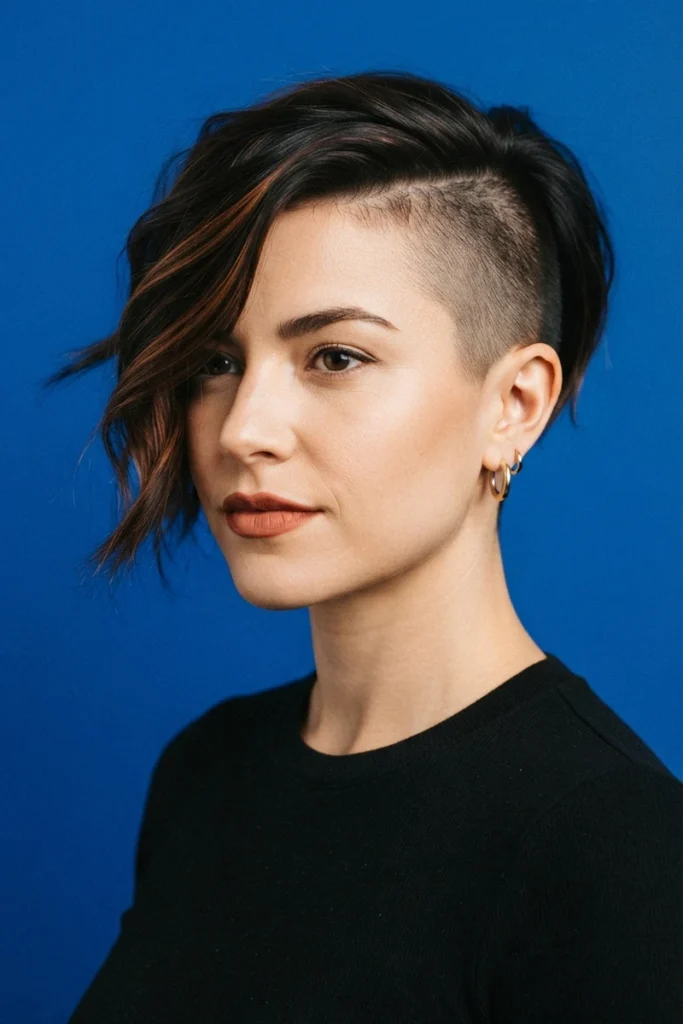
What it is: Noticeably different lengths on each side — sometimes just an inch or two of difference, sometimes one side buzzed short against a longer, sweeping section on the other.
This is the version for anyone who wants the cut itself to do the talking rather than relying on color or styling to add interest. The imbalance draws the eye deliberately, and because it’s asymmetrical by design, minor growth between trims tends to read as intentional rather than sloppy.
Tell your stylist: “I want a clear, visible length difference between the two sides — not subtle, closer to dramatic.”
14. Bixie — the Bridge Between Pixie and Bob
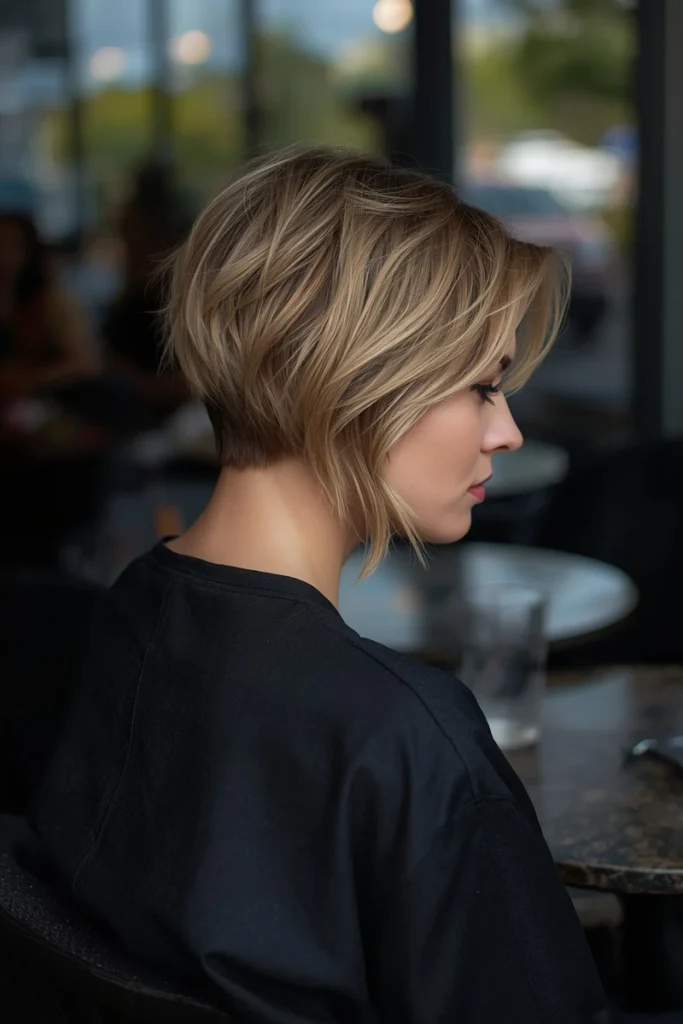
What it is: A length that sits below the ears but above the jaw, with a textured rather than blunt perimeter, landing intentionally between a pixie and a bob.
The bixie solves a specific problem: growing a pixie out without going through the awkward in-between stage where it’s too long to be sharp and too short to style like longer hair. It’s also a legitimate destination cut on its own, not just a stopover, for anyone who wants more length to work with than a true pixie offers.
Tell your stylist: “I want a pixie-length cut that’s longer than my ears but shorter than my jaw, with a textured perimeter — not blunt, something between a pixie and a bob.”
15. Curtain Bang Pixie

What it is: A pixie with the fringe grown slightly longer and center-parted, swept to both sides rather than left as a full, blunt fringe.
This version softens a pixie considerably, especially for anyone who finds a full, blunt fringe too severe against short hair. The curtain shape also gives you a built-in growing-out option for the fringe itself later, since it already blends outward instead of ending in a hard line.
Tell your stylist: “Leave my fringe a little longer and cut it to part in the middle and sweep to both sides, rather than a full blunt fringe.”
16. Money-Piece or Color Pixie
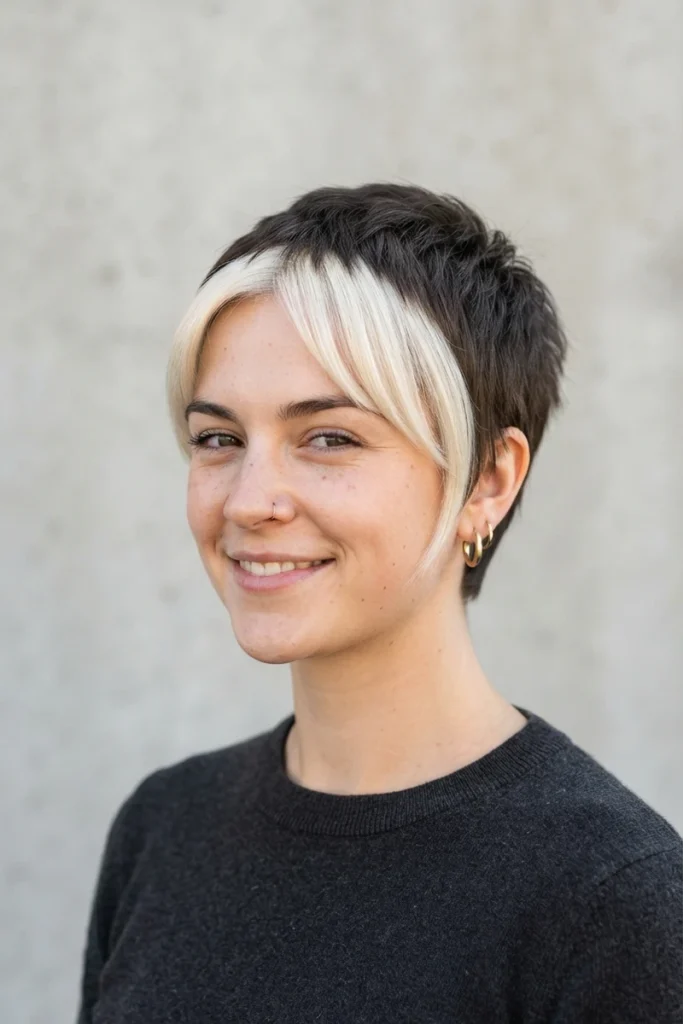
What it is: A pixie cut paired with bold, concentrated color — usually a lightened panel near the face — rather than color that’s blended evenly throughout.
On a pixie, there’s very little hair for color to work with, so placement matters more than it would on longer styles. Concentrating the lightened piece right where it frames the face makes the contrast do more visual work per strand than an all-over color change would on the same amount of hair.
Tell your stylist: “I want a concentrated lightened panel right at the front, framing my face — not blended evenly through the rest of the cut.”
Pixie Cut FAQs
How do I know if a pixie cut will actually suit my face shape?
Oval faces can wear almost any pixie variation without much risk. Round faces generally do better with height built into the crown rather than an all-over close crop, square faces benefit from a softer, angled fringe instead of a blunt one, and heart-shaped faces usually look most balanced with extra length left through the temples. If you’re unsure of your face shape, a stylist can usually tell you in under a minute during a consultation.
How long does it take to grow out a pixie cut?
Most people go through an awkward stage somewhere between three and six months, depending on how fast their hair grows and how short the original cut was. Regular trims during this stretch — even though it feels counterproductive — actually make the process faster and less awkward, since they keep the shape intentional instead of just letting everything grow at different rates.
Can fine or thick hair both work with a pixie cut?
Yes, but the cutting approach is different for each. Fine hair needs elevation and angle built into the cut itself to create volume, since there’s no natural thickness to rely on. Thick hair usually needs the opposite — thinning or texturizing to remove bulk so the shape doesn’t end up looking heavy or helmet-like.
How often does a pixie cut need to be trimmed?
This depends heavily on the style. Precise, structured cuts like the classic crop or French crop usually need a trim every four to six weeks to keep their shape sharp. Looser, shaggier, or more textured versions can often stretch to six or eight weeks, since a slightly grown-out look is part of the intended style rather than a sign it needs attention.
Closing
A pixie cut works best when the decision starts with your face shape and hair texture, not the photo that happened to catch your eye first. Bring your stylist a clear picture, name the maintenance level you’re actually willing to commit to, and be specific about length on top versus the sides — that combination is what separates a pixie that looks intentional from one that just looks short. For more short and mid-length inspiration, browse our Bob Haircut guide, or see how layering technique shapes longer cuts in our Layered Haircuts guide.