
Cutting Long Hair Into a Bob: What to Expect Before, During, and After
Going from long hair to a bob changes more than your reflection. Your head feels lighter, your neck feels cold, your products suddenly feel too heavy, and the first look in the mirror can feel like a stranger looking back. None of that means the cut was wrong. Here is what cutting long hair into a bob is like, stage by stage, and what to do at each one.
| When | What usually happens | What to do |
|---|---|---|
| Before booking | Doubts about length and style | Choose blunt or textured and a length; plan your styling time |
| In the chair | 30 to 45 minutes; the length often comes off in one go | Ask the stylist to talk you through it |
| First hour | Shock, laughing or tears, even if you like it | Do not judge the salon blow-dry |
| First week | Old products too heavy, neck feels exposed | Style it yourself several times |
| Weeks 1 to 2 | Uneven pieces may show up at home | Book a small adjustment if needed |
Before You Book
Decide the shape
A blunt bob has one sharp line at the ends and looks fuller; a textured bob has soft, broken-up ends and more movement. They need different amounts of styling, so choose before you are in the chair. Our blunt vs textured bob guide compares them side by side.
Decide the length
Jaw length, chin length and shoulder length all look different on different faces. Our face shape haircut guide helps you pick. If you are unsure, ask for the longer option first: a bob can always be taken shorter at a second appointment, but not the other way round. Wavy and curly hair springs up when it dries, so it needs to be cut longer than the length you want.
Be honest about mornings
Tell the stylist how long you spend on your hair. A bob built to be blow-dried every day looks flat if you air-dry, and a bob built for air-drying can look shapeless if you straighten it.
Consider donating the length
If your hair is long enough, some charities that make wigs for people with hair loss accept donated ponytails. Requirements differ, often a minimum of about 8 to 14 inches, clean and dry, sometimes with limits on colored or gray hair, so check the charity’s current rules first and tell your stylist before the first cut. They will section the hair into ponytails and cut above the elastics.
In the Chair
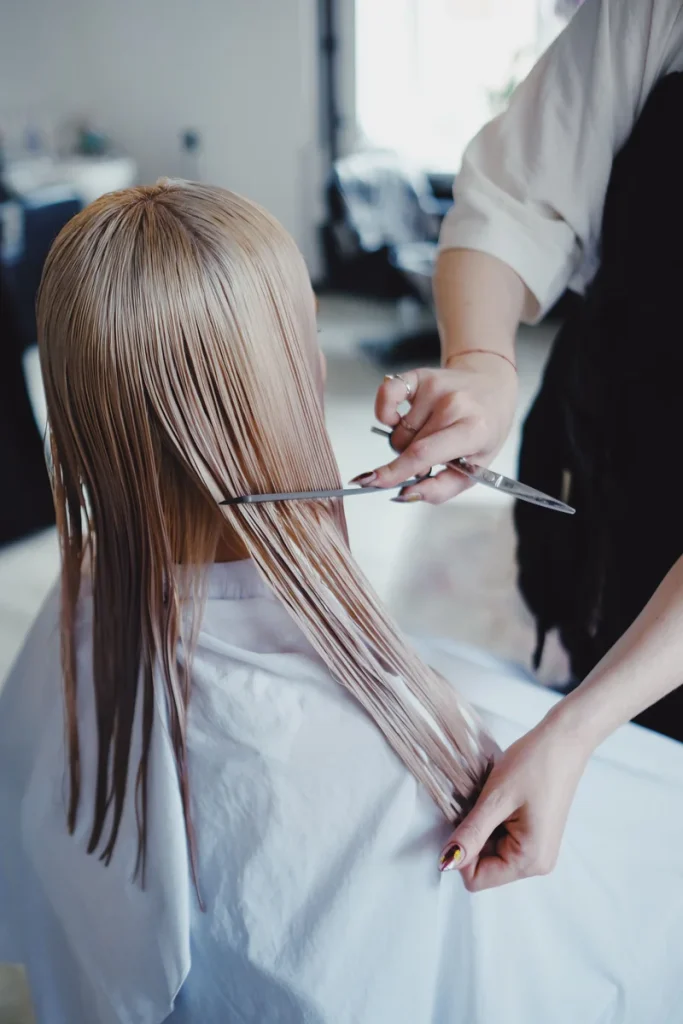
Many stylists gather the length into a ponytail or several sections and take most of it off first, then shape the bob. Others cut section by section. A simple bob usually takes 30 to 45 minutes; layers and texturizing add time. The amount of hair on the floor tends to look bigger than you expect.
It helps to say something like this before the scissors come out:
“This is my first time cutting my hair this short. I’ve had long hair for [how long]. I’m thinking [blunt / textured] at about [jaw / chin / shoulder] length, and I usually have [X minutes] for my hair in the morning. I’m nervous about the length, so please talk me through it as you go.”
A stylist who knows it is a big change for you will usually check in more along the way.
The First Look in the Mirror

Many people feel a jolt of shock when they first see a big length change, even when they asked for exactly that cut. Laughing, tearing up or just staring are all common. You are seeing more of your face and neck than you have in years, so of course it looks unfamiliar.
Two things to keep in mind. First, the salon finish is usually a sleek blow-dry that may look nothing like how you will wear it. Second, plenty of people who panic in the chair love the cut a week later. Wait until you have styled it yourself before deciding.
Things That Feel Different
- Your neck feels exposed, especially in cold weather or air conditioning. Most people stop noticing within a couple of weeks.
- Your hair moves more. A bob swings and flips when you turn your head, where long hair hung heavy and still.
- Washing and drying take far less time. Many people find this the best part.
- You need much less product. A pea-sized amount on a bob does what a palmful did on long hair.
- Your hair ties and clips no longer fit. Small elastics, mini claw clips and pins replace the big ones.
The First Week at Home

Wash and style it yourself several times before you judge it. The routine you used on long hair rarely transfers: heavy creams can make a bob flat and greasy, and the way you dried long hair may push the ends out at odd angles. If you want to skip daily heat, our no-heat bob styling guide covers air-dry methods by hair type.
If you miss putting your hair up, a short ponytail, half-up twist or small clip still works on most bobs.
If Something Is Not Quite Right
Hair falls differently after a few washes at home than it did in the salon. A piece that looked even in the chair can stand out a week later. That is common and easy to fix with a small adjustment. Many salons offer a free touch-up within a week or two of a new cut; ask about the policy when you book so you know your window.
Go back with specifics: which side, which piece, and how it looks after you style it, ideally with a photo.
FAQ
Is it normal to regret a bob right after the cut?
Yes, a moment of panic is very common and does not predict how you will feel later. Give it at least a week of styling it yourself.
How long does it take to get used to a bob?
Most people feel settled within two to three weeks, after a few wash days and once they have found a new routine.
Should I cut it all at once or go shorter gradually?
One cut is fine if you are sure. If you are not, go to shoulder length first and take it to a bob a few weeks later. You get used to the change in two steps.
How much hair can I donate?
It depends on the charity, and many ask for at least 8 inches or more. Check their current rules on length, color and condition before your appointment.
What if I hate the length?
Hair grows back, roughly half an inch a month on average. Our guide to growing out a bob covers the stages and how to make each one look intentional.
Still choosing a style? Our bob haircut guide covers the main bob shapes to discuss with your stylist.