
Gray and Silver Hairstyles: Which Cut and Care Routine Actually Works for Your Hair
Gray hair behaves differently from pigmented hair in ways that most style guides skip right over. It isn’t just “the same hair without color” — the loss of melanin actually changes the structure of the hair shaft itself, which is why gray strands often feel coarser, wirier, and more resistant to styling than the hair around them once did. That single fact explains almost everything about why certain cuts, certain products, and certain styling habits work dramatically better on gray hair than others, and why copying a photo without understanding your own texture and stage of transition usually leads to disappointment.
This guide breaks gray and silver hairstyles down by what actually matters: your hair’s natural texture, whether you’re fully gray or still transitioning, and the specific product routine that keeps silver hair looking bright instead of dull or brassy.
Why Gray Hair Needs a Different Approach
Melanin doesn’t just add color to hair — it also contributes to the hair’s flexibility and its ability to reflect light evenly. As melanin production slows and hair grows in gray, the strand often develops a slightly different protein structure that makes it feel rougher to the touch and less able to hold a curl or style the way pigmented hair did. This is also why gray hair tends to look duller under artificial light unless it’s specifically cared for — without melanin’s natural light-reflecting qualities, gray hair depends much more heavily on the smoothness of the cuticle layer to look shiny rather than flat.
Gray hair is also more prone to a yellow or brassy cast over time, and this comes down to basic color theory rather than a flaw in the hair itself. White light is made up of all colors, and completely colorless hair would reflect all of them evenly. Real gray hair isn’t perfectly colorless, though — environmental exposure, hard water minerals, and product buildup all deposit warm, yellow-toned residue onto the hair shaft, and because gray hair has no melanin to visually compete with that residue, the yellow tint becomes far more noticeable than it would on pigmented hair. This is precisely why purple and blue toning shampoos work: purple and yellow sit opposite each other on the color wheel, so a purple-tinted product neutralizes yellow tones on contact, keeping silver hair looking icy and bright instead of dingy.
Cuts for Straight and Fine Gray Hair
Straight, fine hair is the texture most likely to show every bit of unevenness in a gray transition, because there’s no natural wave or curl to disguise where the gray growth meets the remaining pigmented ends. It’s also the texture where cut choice matters most for creating the illusion of volume, since gray hair’s coarser individual strands don’t automatically translate into a fuller-looking head of hair.
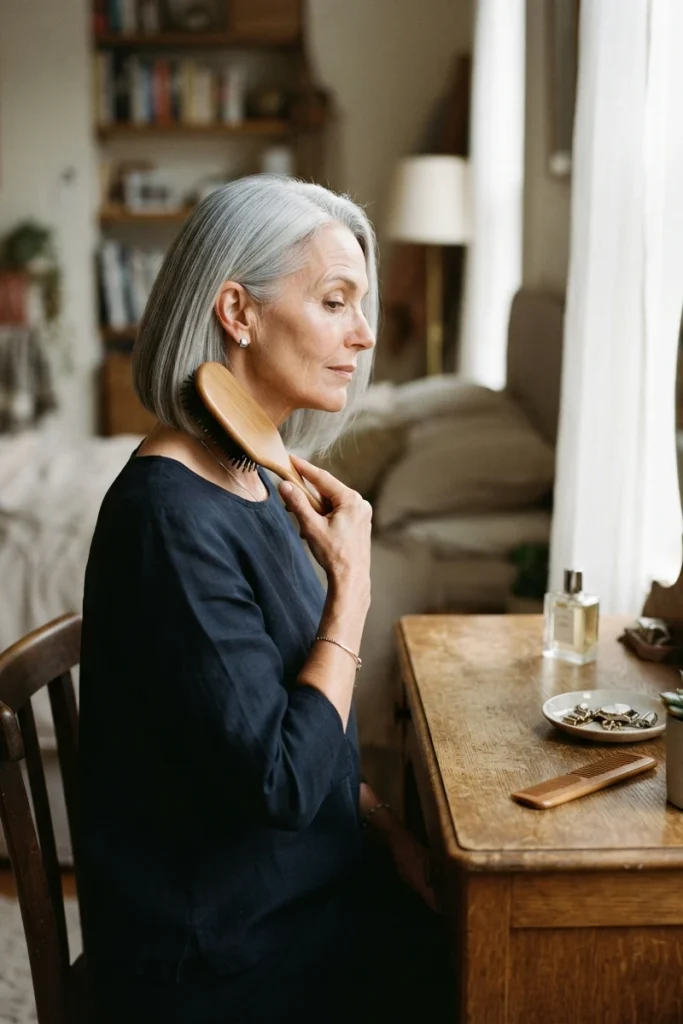
Silver pixie cuts work exceptionally well here because the short length eliminates the need to manage any color transition at all — once you’re cropped this short, you’re essentially starting fresh with a uniform, low-maintenance canvas. Sleek chin-length bobs styled smooth and straight showcase the natural shine of healthy gray hair, though this look depends heavily on a good glossing treatment and heat protectant, since gray hair’s altered cuticle structure means it needs more help holding shine than it once did. For women who want more length, a layered cut with face-framing pieces adds movement without requiring the dramatic cut a pixie demands, and the layering itself helps disguise the crown-area thinning that becomes more common with age.
Cuts for Wavy and Curly Gray Hair
Natural texture is a genuine advantage when it comes to gray hair, because waves and curls create their own dimension and light-catching variation that straight gray hair has to work much harder to achieve. The mixed tones that naturally occur in a salt-and-pepper transition — some fully white strands, some still holding pigment — read as intentional, textured dimension on wavy or curly hair in a way that can look more like uneven patchiness on straight hair.
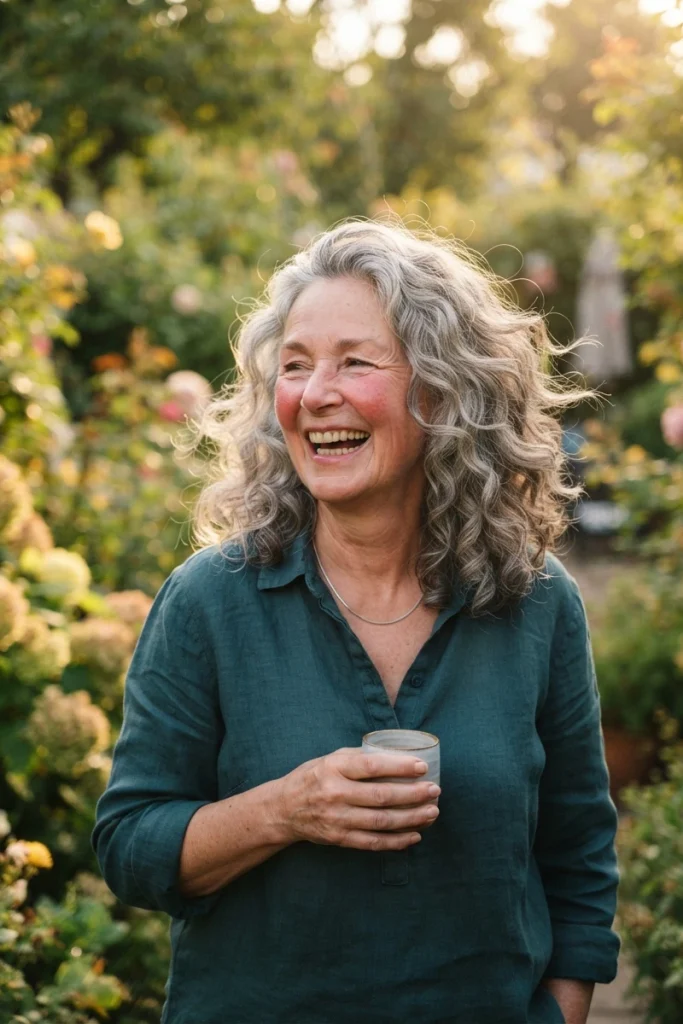
A curly gray crop that’s cut specifically to follow the natural curl pattern, rather than forced into a uniform shape, tends to look the most effortlessly polished, but this only works when the stylist cuts the hair dry, curl by curl, the same principle that applies to curly cuts at any age. Wavy shoulder-length styles paired with a lightweight sea salt spray let the natural texture do most of the styling work, which matters more on gray hair than most textures since over-styling with heat tends to accelerate the dryness and coarseness gray strands are already prone to. For those further along in a salt-and-pepper transition, leaning into loose, voluminous curls rather than fighting for uniform color creates a look that reads as a deliberate style choice rather than an in-between stage.
Navigating the Gray Transition (Without the Awkward Grow-Out Phase)
The single biggest reason people abandon a gray transition partway through isn’t the color itself — it’s the visible line where new gray growth meets old, dyed ends, sometimes called the “skunk stripe” effect. There are two realistic ways to manage this, and which one makes sense depends on how much patience and salon time you’re willing to invest.
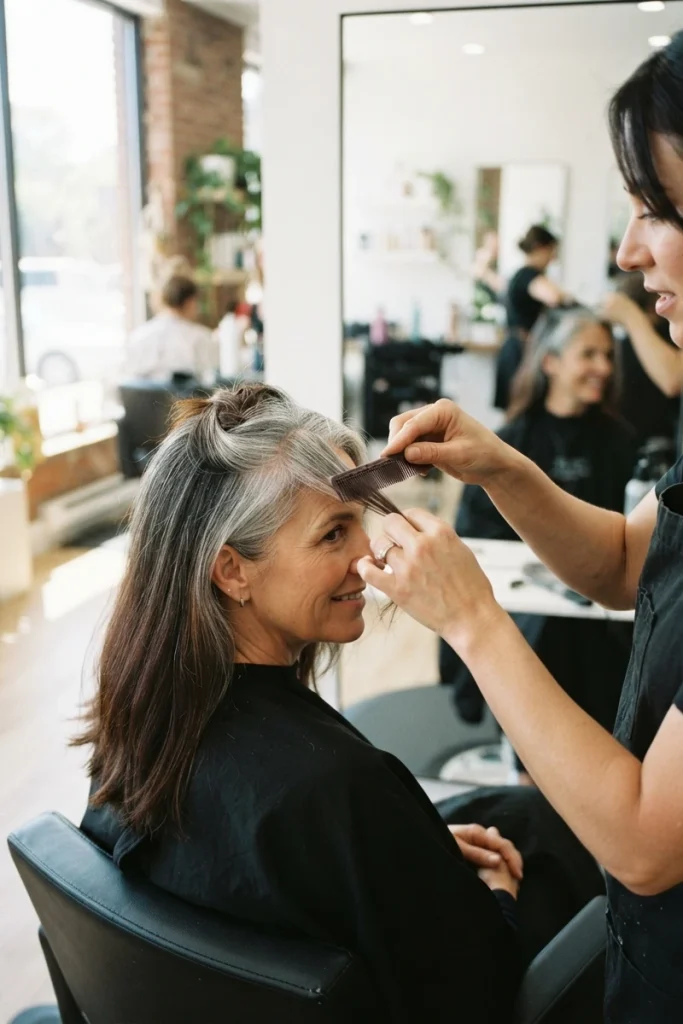
The first approach is a full transitional cut, essentially cropping the hair shorter and shorter over several appointments to stay just ahead of the demarcation line until all the dyed length has been cut away. This is the fastest route to a fully gray head of hair, but it requires being comfortable with significantly shorter hair for a period of months. The second approach is blending through highlights or lowlights, where a colorist weaves in silver, white, or ash tones that intentionally mimic the look of natural gray growth, softening the line between old color and new growth so gradually that it becomes difficult to spot. This route preserves length throughout the transition but requires more frequent colorist visits and, ultimately, more cost than simply waiting out a cut-based transition.
Either way, the transition period is when gray hair most needs deep conditioning, since the hair going through this phase is often a mix of chemically processed ends and structurally different new growth, both of which are more prone to dryness than mature, fully gray hair that’s had time to establish a healthy routine.
The Toning and Maintenance Routine That Actually Matters
Whether you’re fully silver or still transitioning, the products that keep gray hair looking bright rather than dull come down to two core habits. A purple or blue toning shampoo, used once or twice a week rather than every wash, keeps yellow and brassy tones neutralized without over-toning the hair into an artificial lavender or blue cast, which is the most common mistake with these products. Between toning washes, a weekly deep conditioning treatment addresses the coarser texture and increased porosity that come with the loss of melanin, since under-moisturized gray hair is what actually causes the dull, straw-like appearance people often blame on the gray color itself rather than on dryness.
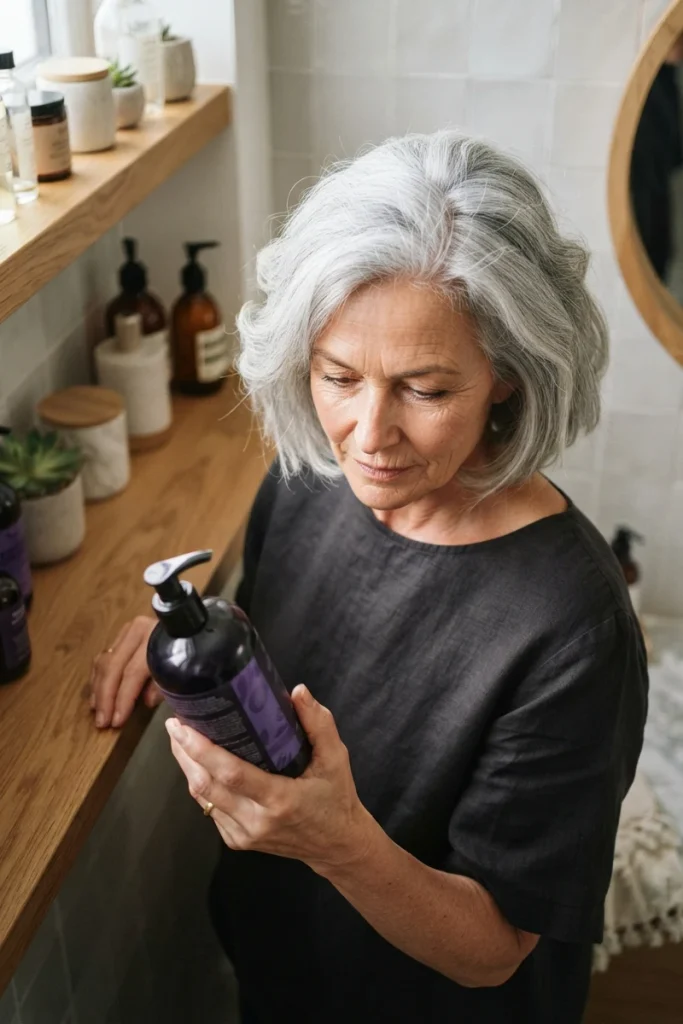
Heat styling deserves a slightly different approach on gray hair too. Because the altered protein structure makes gray strands somewhat more fragile, a heat protectant isn’t optional the way it might be on younger, pigmented hair — skipping it accelerates the coarse, brittle texture that already makes gray hair harder to style smoothly.
Frequently Asked Questions
Does gray hair need different products than pigmented hair?
Not entirely different, but gray hair generally benefits from products aimed at dryness and shine, since the loss of melanin changes both the hair’s moisture retention and its ability to reflect light evenly. Purple or blue toning shampoo is the one genuinely gray-specific addition most people need.
Why does my gray hair turn yellow?
This happens because gray hair has no melanin to visually mask the warm-toned residue that builds up from environmental exposure, hard water, and certain styling products. Purple and blue toning shampoos counteract this using basic color theory — purple neutralizes yellow because the two sit opposite each other on the color wheel.
Is it better to cut off dyed length or blend gray in with highlights?
It depends on your priorities. Cutting the dyed length off in stages reaches a fully gray result faster but requires being comfortable with shorter hair for a period. Blending through highlights preserves length throughout the transition but takes longer and costs more in ongoing colorist visits.
Does gray hair really feel different, or is that just a myth?
It’s a real, measurable change. The loss of melanin alters the protein structure of the hair shaft, which is why many people notice their gray hair feels coarser or wirier than their pigmented hair once did, even on the same head.
The Real Takeaway
Gray and silver hair isn’t simply pigmented hair with the color removed — it has its own texture, its own tendencies toward dryness and yellowing, and its own list of cuts that flatter it best. Once you understand why those differences exist, choosing a cut and a care routine stops being about copying a photo and starts being about working with the hair you actually have now, coarser texture, altered shine, and all.
For more on keeping textured or transitioning hair healthy between salon visits, browse our full hair care tips library.