20 French Braid Hairstyles You Need to Try
The French braid is the most useful braid there is — everything else on this list is really just a French braid dressed up differently. Once you can do the basic technique, you can turn it into a ponytail, a crown, a bun, a half-up style, or something bridal, just by changing what you do at the end. Below are twenty ways to wear it, grouped roughly from simplest to most involved, so you can find the one that matches your hair, your skill level, and your occasion.
If you flip that one crossing direction — under instead of over — you get the Dutch braid’s raised, three-dimensional look instead. See our Dutch Braid Hairstyles guide for the full breakdown.
Before You Start: A Quick Refresher
If you haven’t French braided before, the short version is this: take a small section at the crown, split it into three, and cross the outer strands over the middle one as usual — but each time you cross a strand over, pick up a little extra hair from the side before you cross it. That’s what pulls the braid flat against the head instead of letting it hang free. Keep the sections you add even and small; uneven pickups are the single biggest reason home French braids look lumpy. Once you reach the nape, finish it as a normal three-strand braid.
With that in mind, here are twenty ways to take it further.
1. Classic French Braid Ponytail
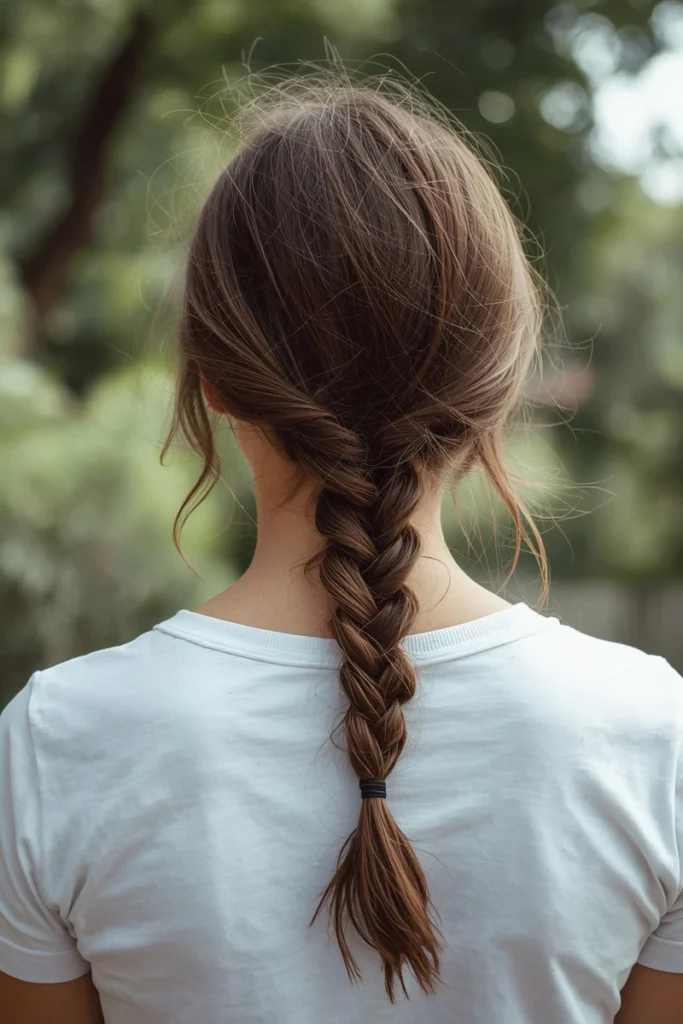
The easiest way to dress up a ponytail. French braid from the crown down to the point where you’d normally tie a ponytail, then secure the rest of your hair in a regular tie and let it hang, or keep braiding to the ends. It hides grease at the roots better than a plain ponytail and holds through a full workday.
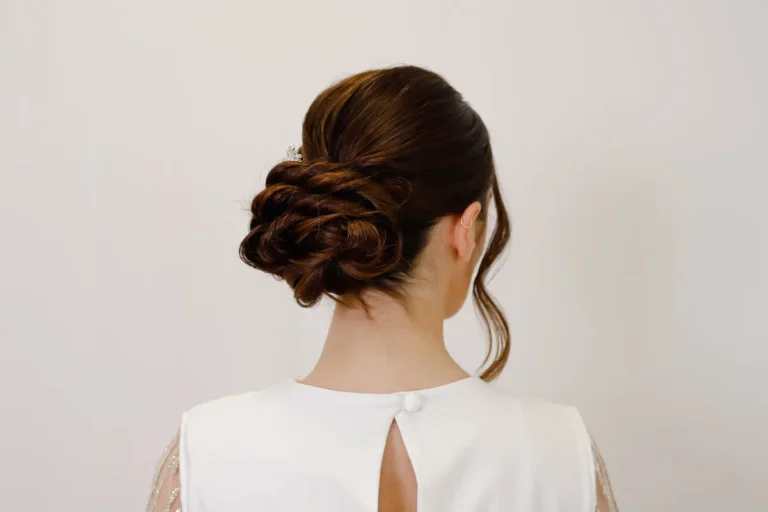
2. French Braid Into a Bun
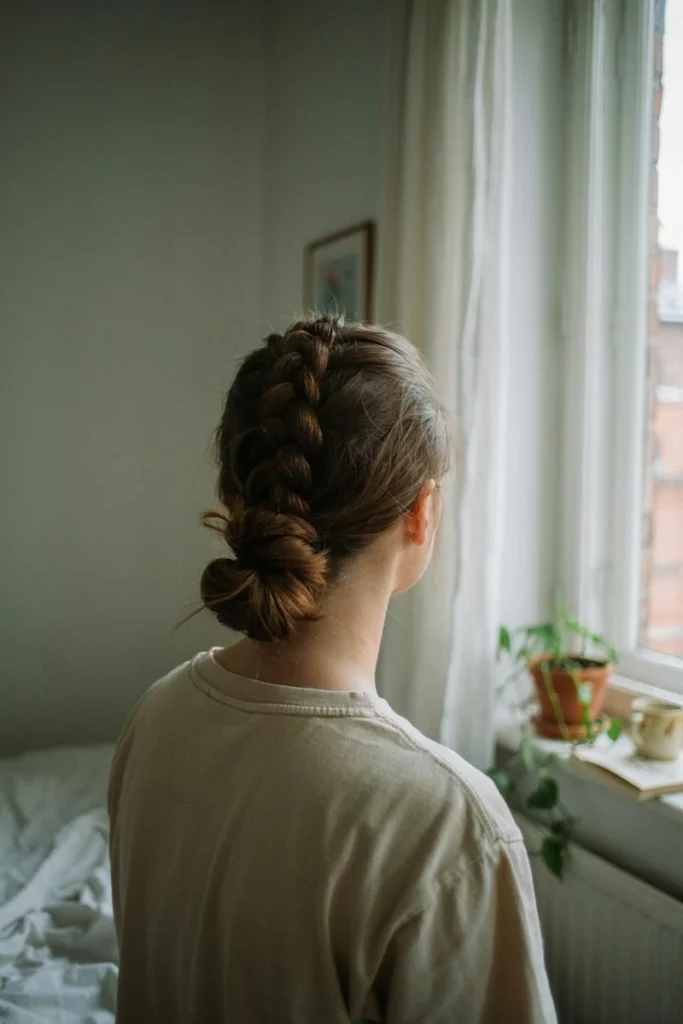
Braid as normal, then instead of tying off the ends, coil the tail into a bun and pin it. The braided section adds texture and structure, so the bun needs fewer pins than a smooth one and holds up through a long event without slipping.
3. Side French Braid
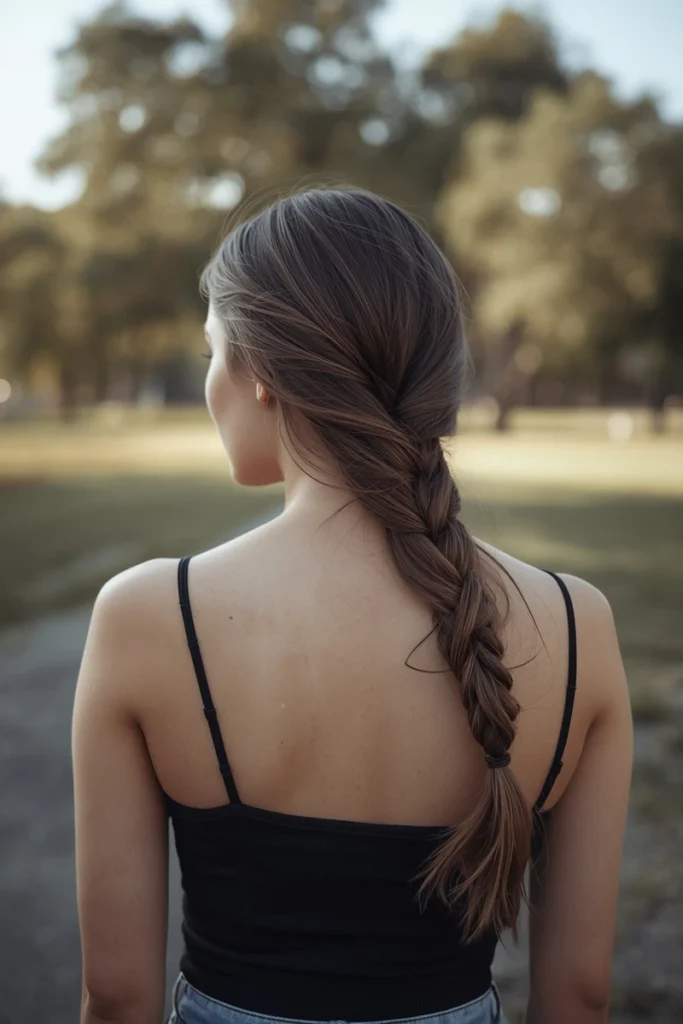
Start the braid slightly off-centre instead of at the middle of the crown, and let it travel diagonally down to rest over one shoulder. It softens the face on that side and is a good option if you part your hair to one side anyway, since the braid follows your natural part.
4. French Fauxhawk (Braided Mohawk)
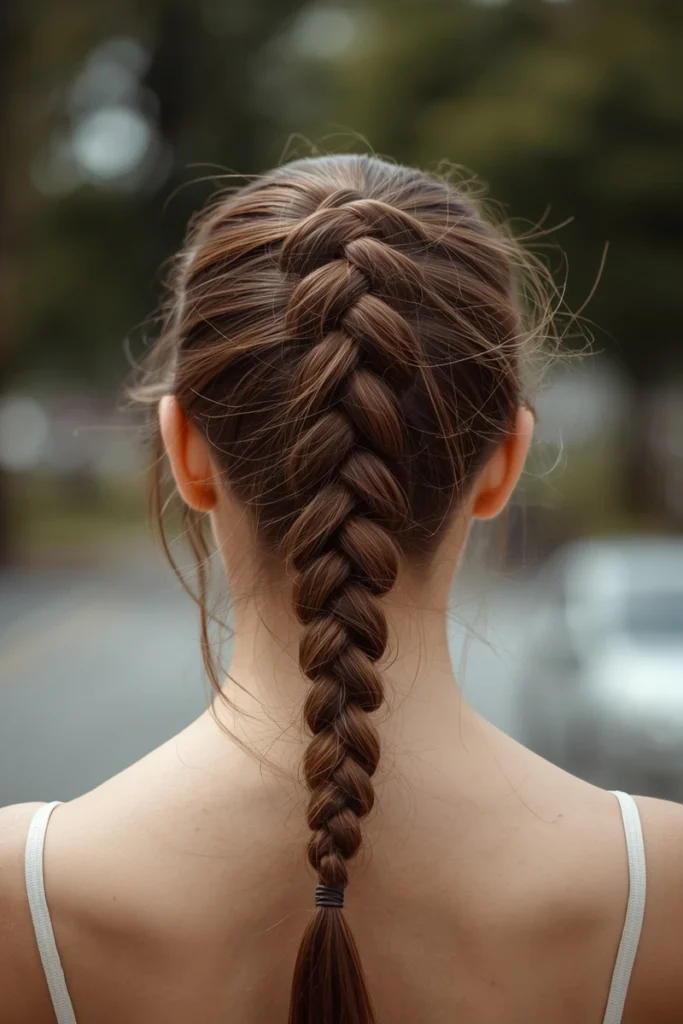
A single French braid worked straight down the centre of the head, with the sides left smooth or slightly teased for contrast. Pulling small sections tight as you go keeps the braid raised so it reads as a mohawk shape rather than a flat centre braid. It’s a strong, slightly edgier option for festivals or workouts.
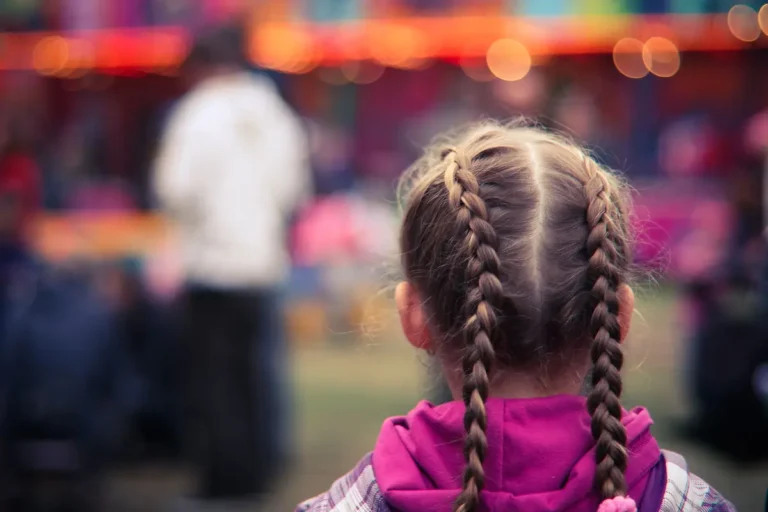
5. Double French Braids (French Pigtails)
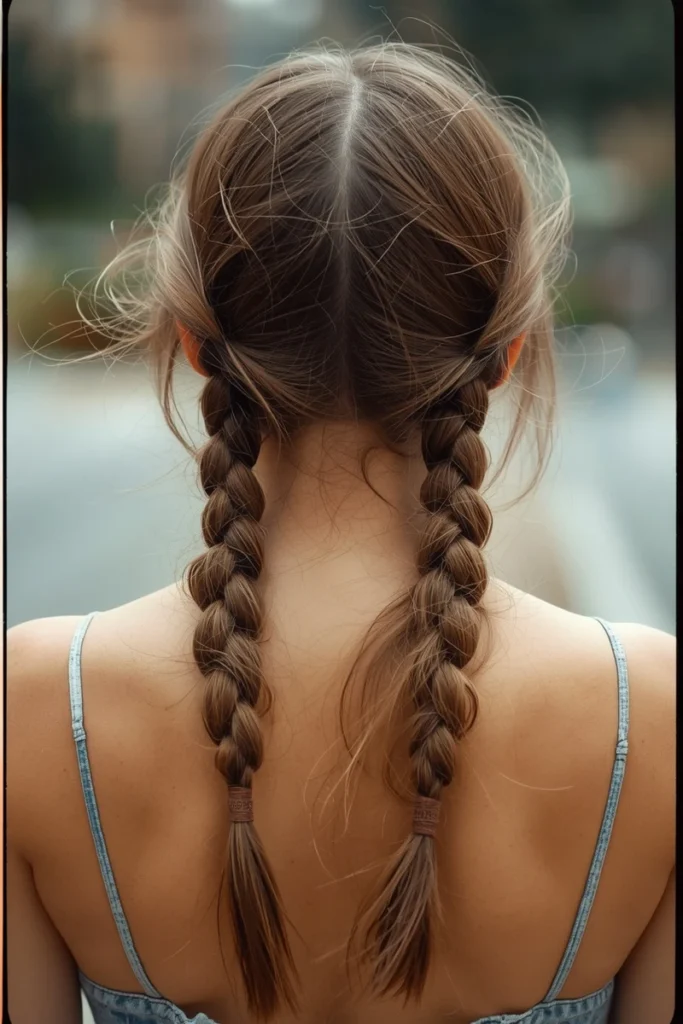
Part down the centre and French braid each side separately. This is the most secure option for sport or travel because the weight is split evenly, and it’s the easiest French braid style to do on yourself, since you only have to reach the side of your head rather than the back.
6. French Braid with Curled Ends
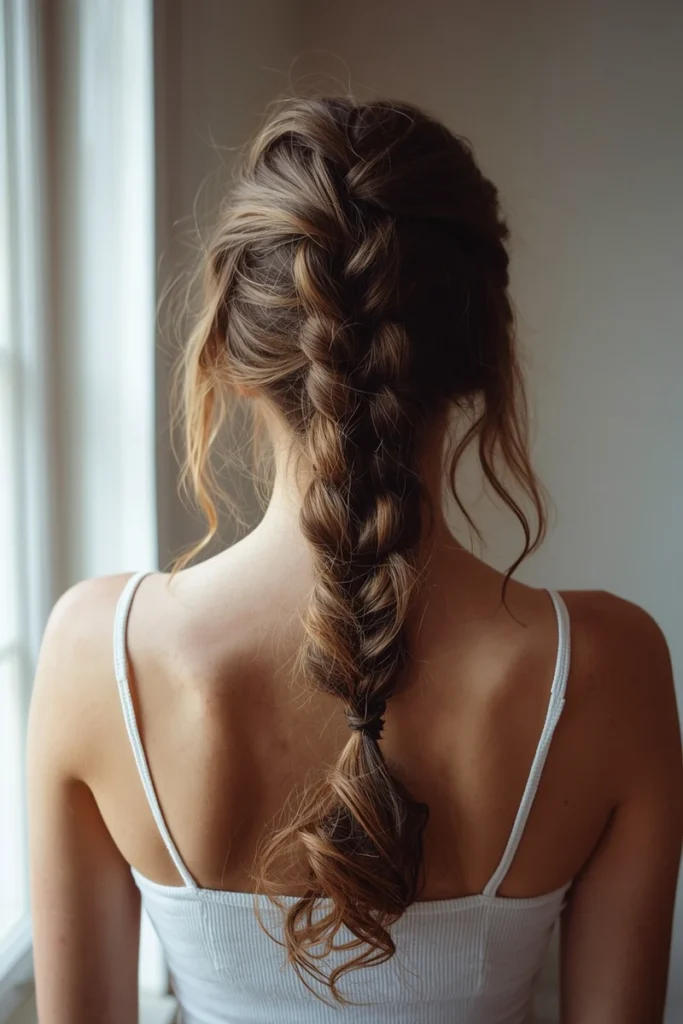
Braid the top section as usual, but leave a few inches loose at the bottom and curl them with a wand after you’ve secured the braid. It’s a good middle ground between a full braid and loose hair, and it photographs particularly well for evening occasions.
7. French Waterfall Braid
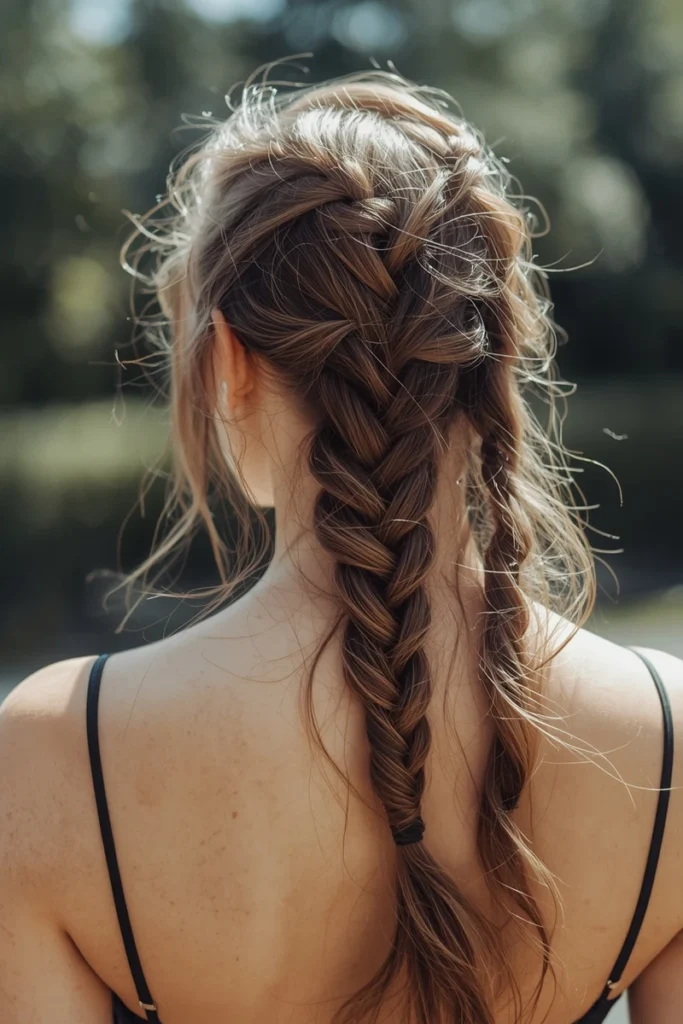
A French braid where, instead of picking up a new strand from the side each time, you drop the bottom strand and let it fall loose while picking up a new one from the top. The result looks like a braid resting on top of loose, flowing hair. It needs some practice to keep the released strands even, but it’s one of the most photographed braid styles for a reason.
8. Boho French Braid
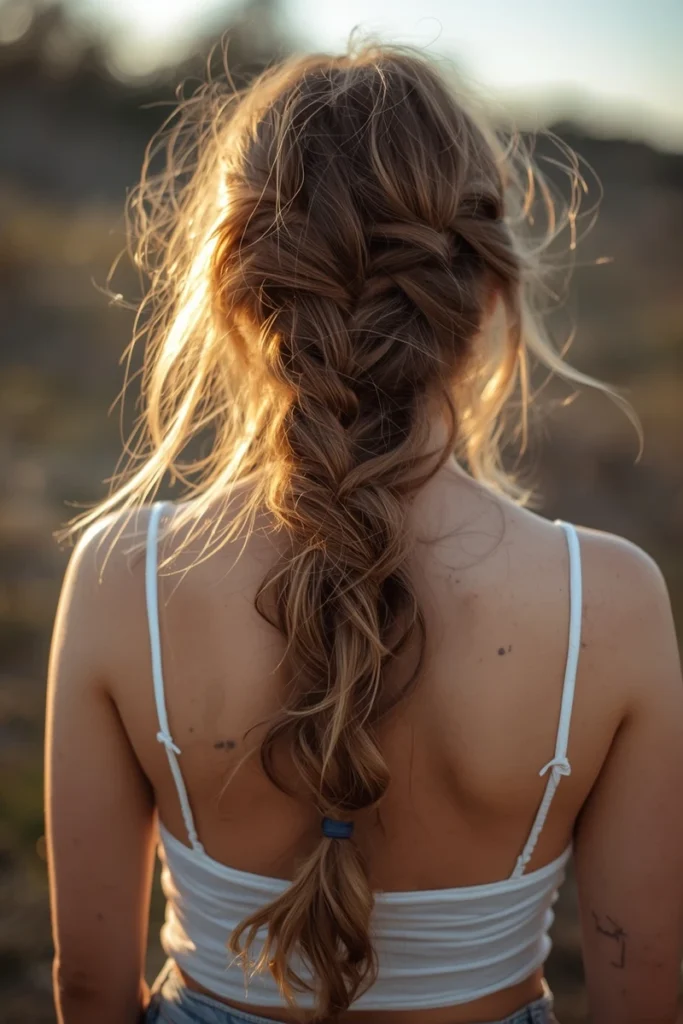
Braid loosely and, once finished, gently pull at the edges of each row to widen it and soften the shape. Texture spray beforehand makes this easier, since freshly washed, very smooth hair tends to fall back into a tight braid when you try to loosen it. Best on day-two or day-three hair.
9. Front French Braid (Braided Bangs)
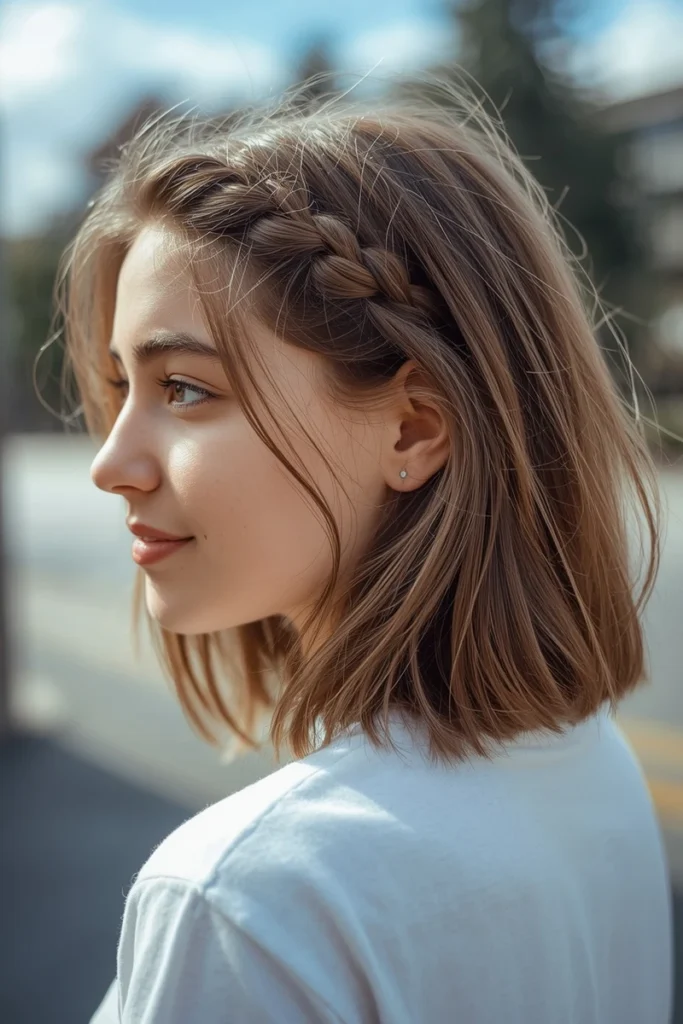
A short French braid across the front hairline, pinned back behind one ear, with the rest of your hair left down. It’s a practical way to keep hair out of your face without committing to a full braid, and it works even on hair too short to braid all the way down.
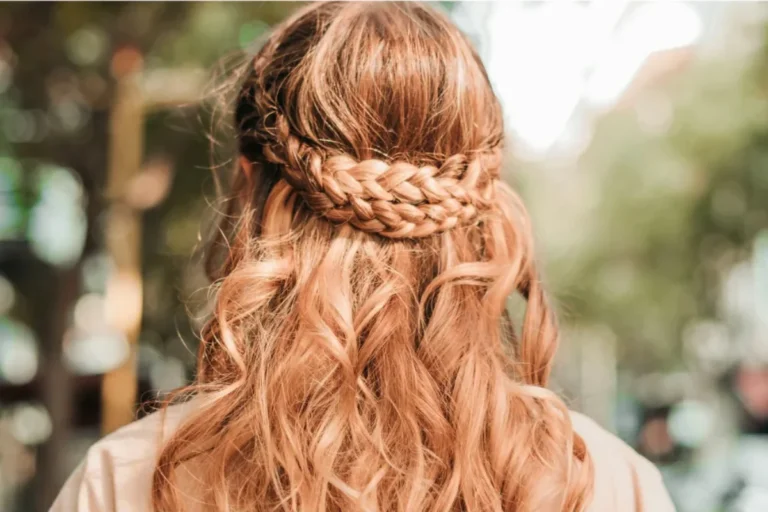
10. Half-Up French Braid
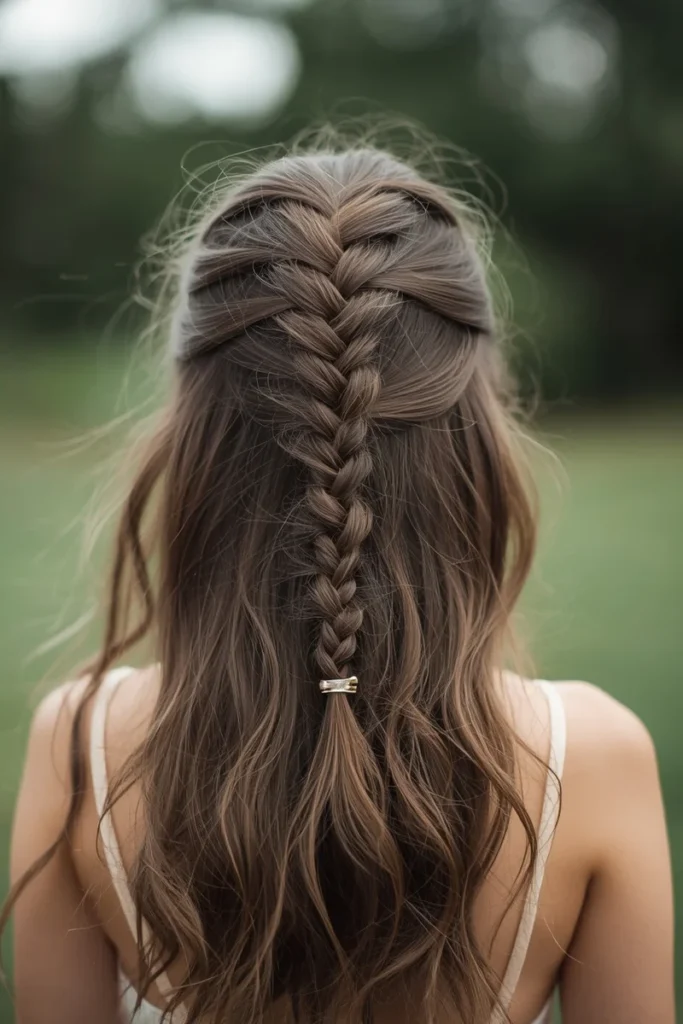
French braid just the top section of your hair and pin it at the back, leaving the rest down. It gives you the shape of an updo while keeping your length visible, and it looks better on wavy or curly hair, where the loose section underneath has some movement rather than falling flat.
11. French Braided Headband
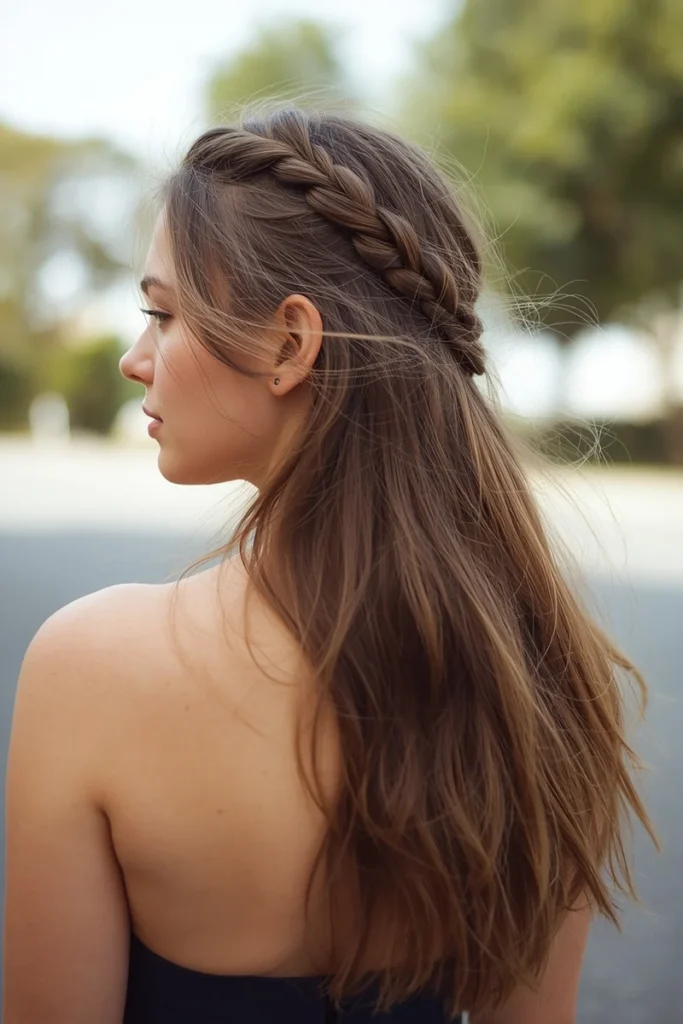
Take a section from one side of your hairline, French braid it across the crown to the other side, and pin the end so it sits like a headband. The rest of your hair stays down. It’s a simple way to add detail to loose hair without any bulk at the back.
12. French Braid Crown
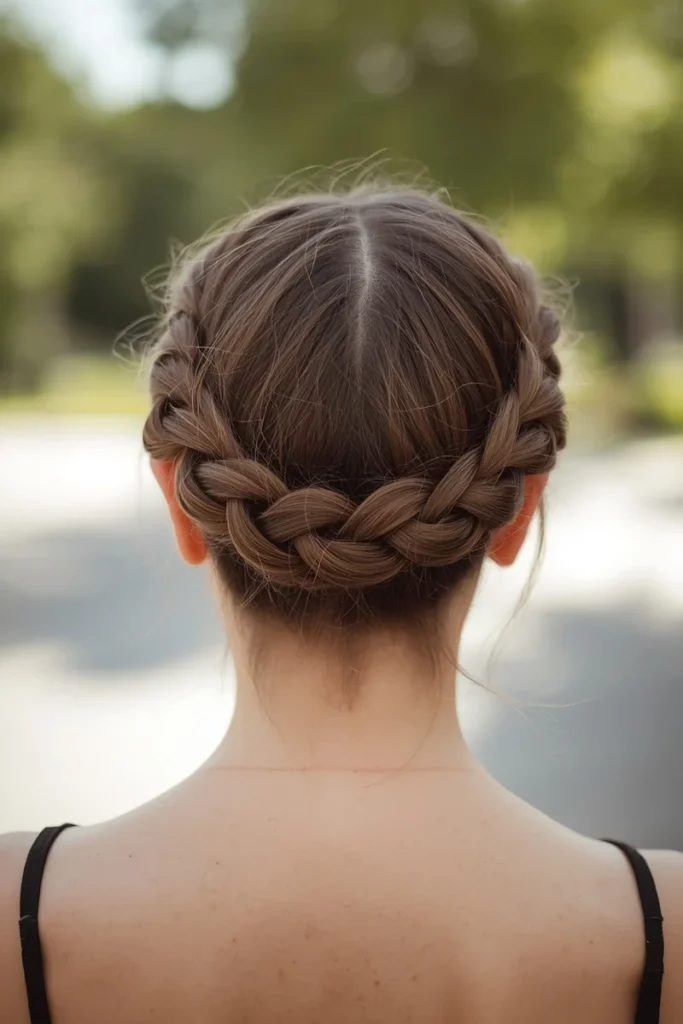
Part your hair down the middle, French braid each side, then bring both braids around the back of the head and pin the ends so they meet, tucking them out of sight. This needs length below mid-back to look right — shorter hair won’t reach far enough around — but it’s the most formal option on this list and holds for a full event.
For more ways to wear this shape — including versions that don’t need mid-back length — see our 15 crown braid and halo braid styles guide.
13. French Braid Ponytail with Volume
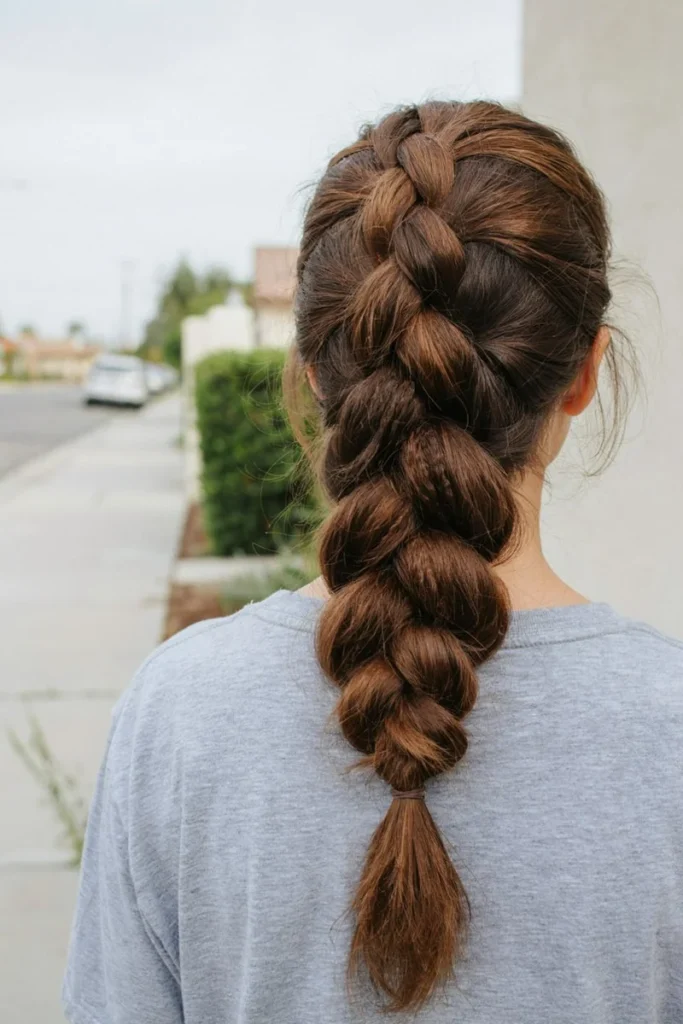
The same technique as the classic French braid ponytail, but after braiding, gently pinch and pull each row wider to add volume before tying off the ponytail. It reads as fuller and more deliberate than a tight braid and suits fine hair especially well, since the pulled rows make it look thicker.
14. French Braid for Short Hair
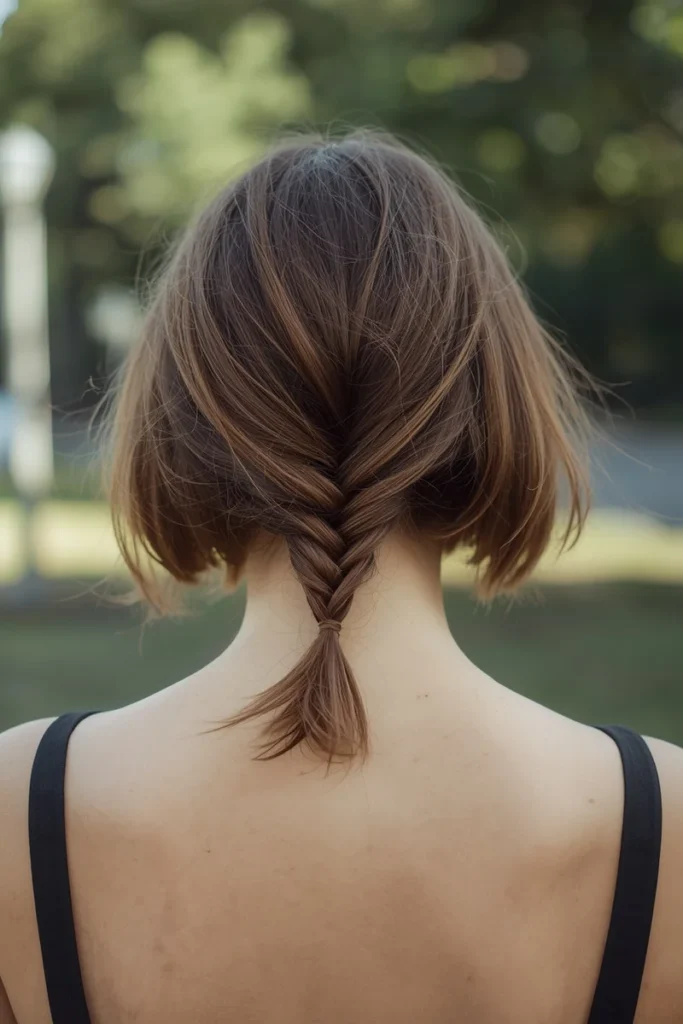
On hair around chin-to-shoulder length, a full French braid down the back isn’t possible, but a short braid from the crown to just behind the ear works well, either pinned off to the side or left to blend into the rest of your hair. Bobby pins matched to your hair colour keep it from looking obviously pinned.
15. French Braid for Curly Hair
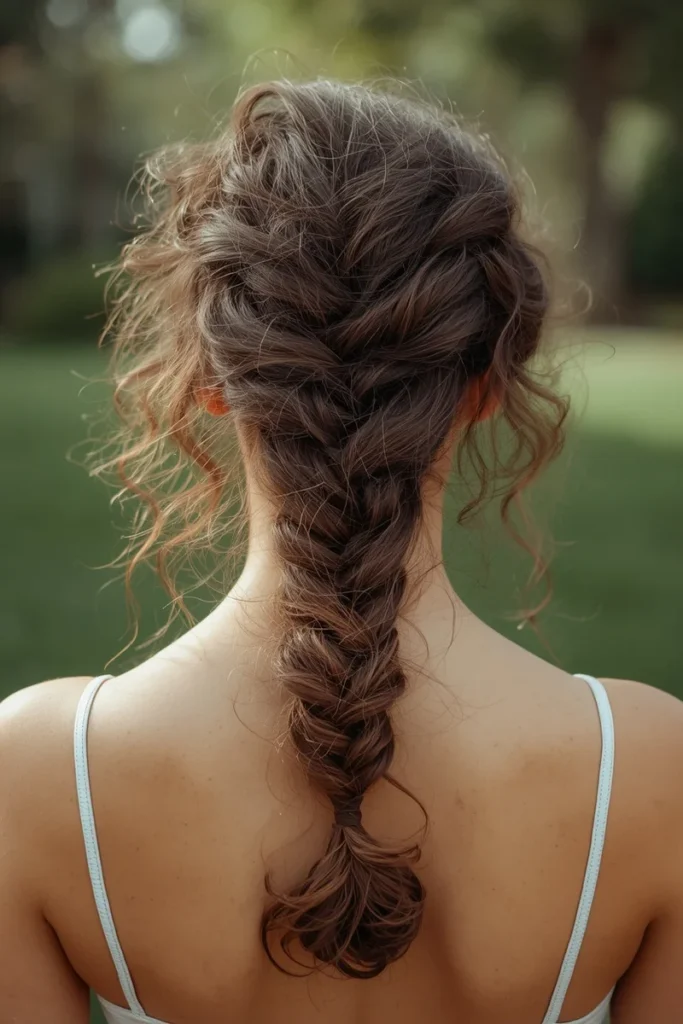
Curly hair holds a French braid especially well because the texture itself grips and hides small inconsistencies in the rows. Braiding on dry, detangled curls rather than wet hair keeps the curl pattern intact once you take the braid out, and a touch of styling cream on the sections beforehand makes them easier to control.
16. French vs Dutch Braid: When to Switch
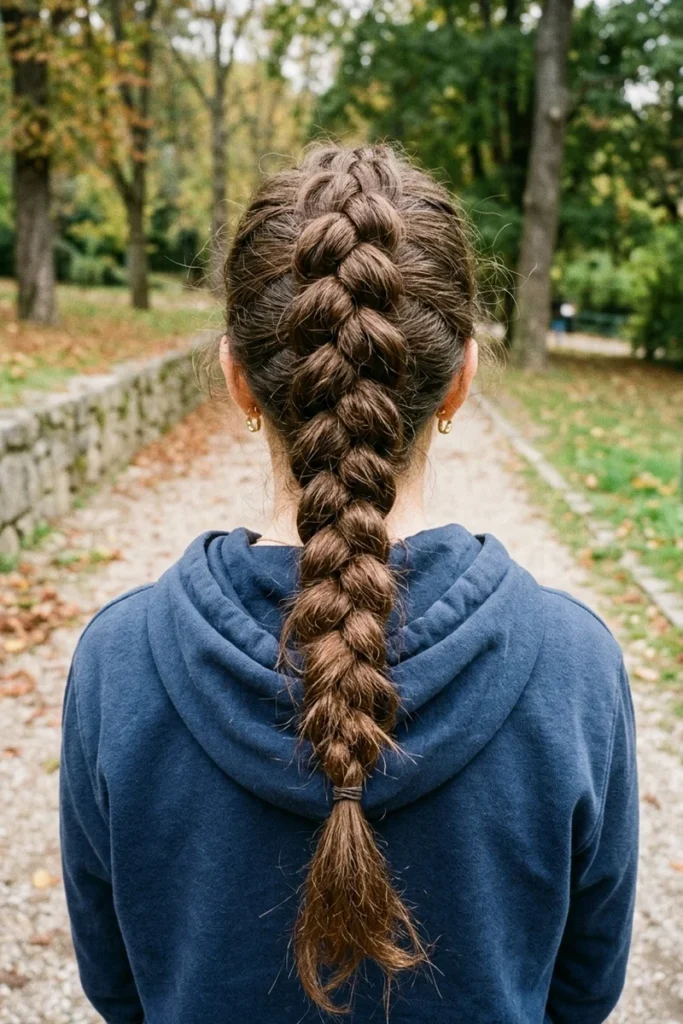
Worth knowing even if you don’t wear it: cross the strands under the middle piece instead of over, and the braid sits raised on top of the hair rather than flat against it — this is actually a Dutch braid, not a French braid, and it’s the style people usually mean when they say “reverse French braid.” It’s a good option if your hair is fine, since the raised weave makes it look thicker.
17. Bridal French Braid
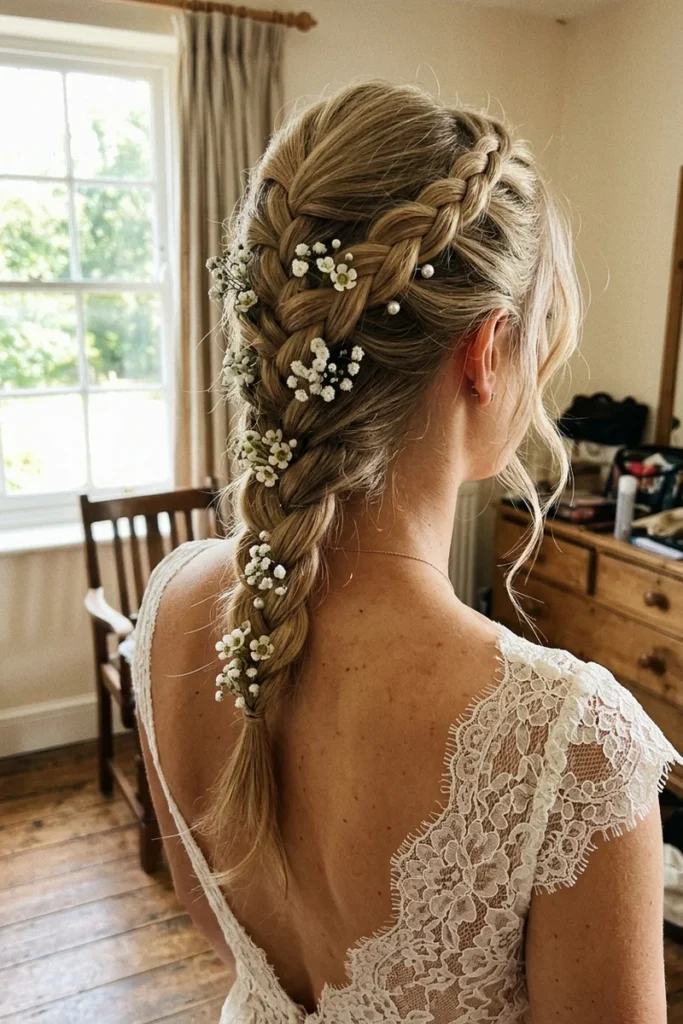
A French braid crown or French braid into a low bun, finished with small pins, florals, or a delicate hair vine. Because it’s anchored along its whole length, it holds through a full day of photos and dancing without needing a touch-up, which is exactly what a bridal style needs to do.
18. French Braid with Accessories
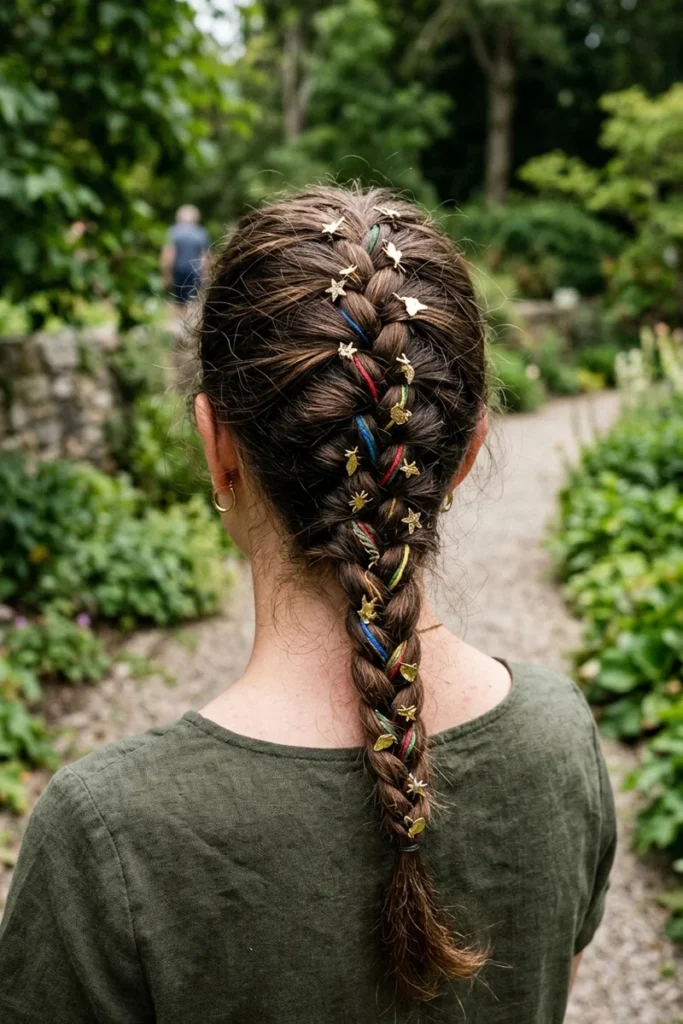
Weave a thin ribbon in alongside one of the three sections as you braid, so it travels down the length of the braid rather than sitting on top of it. Small hair beads or clips along the part do a similar job. It’s a quick way to make an otherwise plain braid look finished for a festival or party.
19. Kids’ French Braid
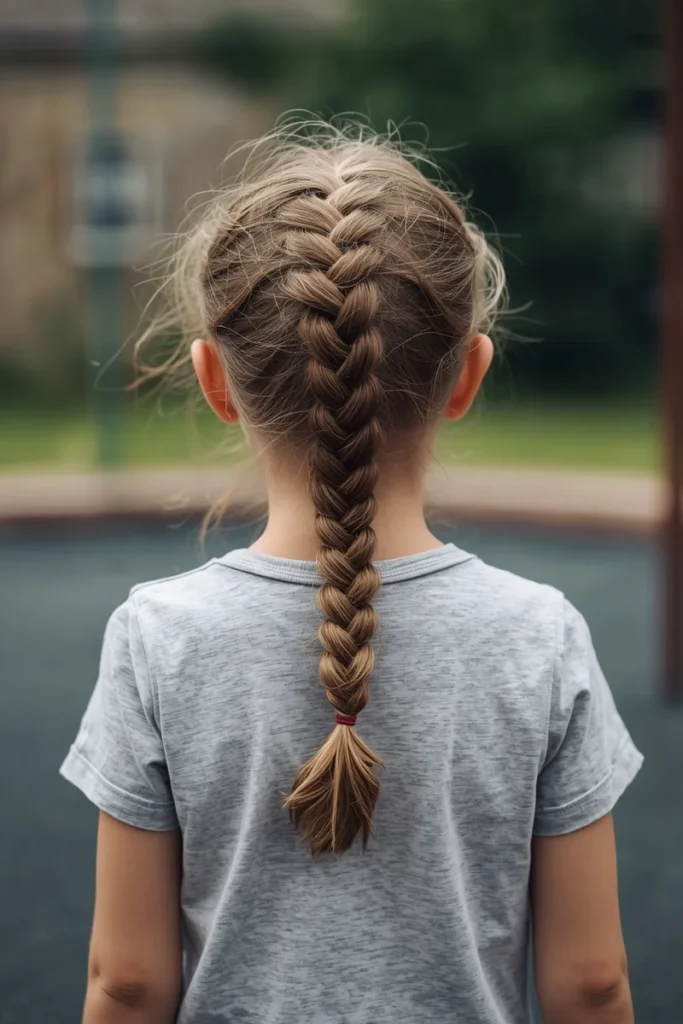
The same technique as the adult version, but braided a little looser and secured with a soft, snag-free elastic rather than a tight one, since children’s hair and scalps are more sensitive to tension. It holds up well through a full school day or sports practice.
20. Messy Second-Day French Braid
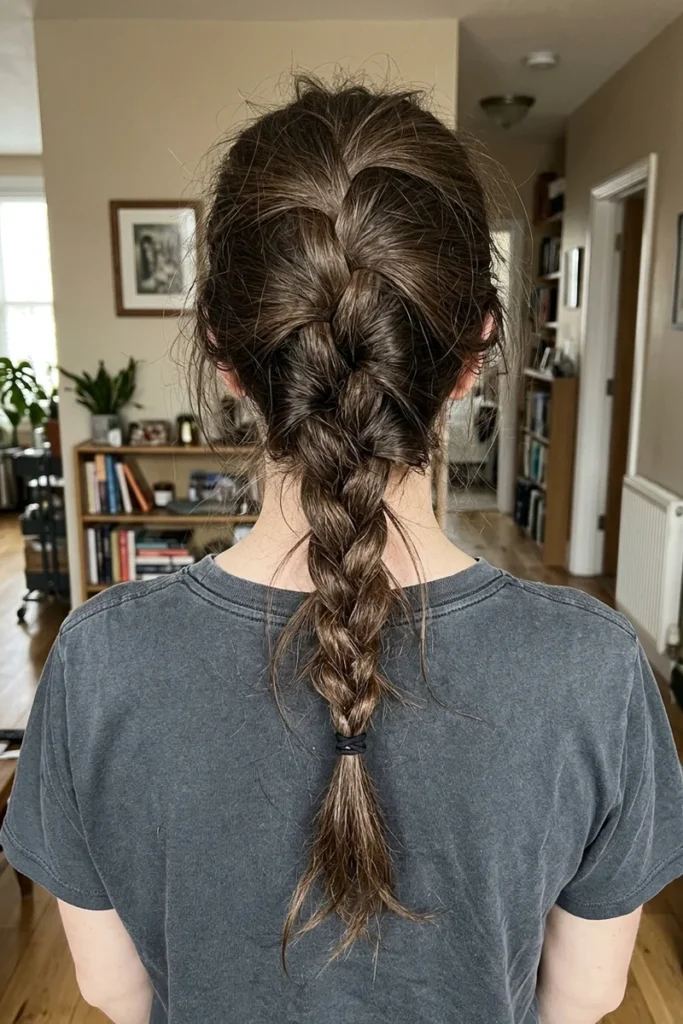
French braids actually look better on hair that isn’t freshly washed, since the slight grip of day-old hair holds the rows in place better than freshly washed hair, which tends to slip. If you’re braiding on wash day, a little dry shampoo or texture spray at the roots first will help the braid hold its shape longer.
FAQ
What’s the difference between a French braid and a Dutch braid?
In a French braid, you cross each strand over the middle strand, which pulls the braid flat against the head. In a Dutch braid, you cross each strand under the middle strand instead, which makes the braid sit raised on top of the hair. The technique of adding hair as you go is the same for both.
How do I stop my French braid from looking bumpy?
Bumpy French braids almost always come from uneven sections — picking up too much hair on one crossover and too little on the next. Keep the sections you add small and roughly the same size each time, and keep tension consistent as you go.
Can I French braid my own hair by myself?
Yes, though it takes more practice than braiding someone else’s hair, since you’re working by feel at the back of your head. Starting with double French braids (each one only reaching the side of your head) is much easier to learn on yourself than a single centre braid.
How long does a French braid last?
Because it’s anchored along its whole length, a French braid typically holds through a full day and often looks fine into a second day, especially if you sleep in a silk scarf or on a silk pillowcase to reduce friction.
What hair length do I need for a French braid?
Most of the styles on this list work from shoulder length. The French braid crown is the exception and needs hair below mid-back, since the braids need to reach all the way around the head.
Closing
Once the basic French braid feels automatic, everything else on this list is just a variation on where you start it, how loose you leave it, and what you do with the ends. Start with a plain French braid ponytail, then work up to the crown or bridal versions once you’re comfortable — and if you haven’t already, our 10 Easy Braided Hairstyles for Everyday Wear guide covers the other braid basics this one builds on. And if you’re looking to gather that length up instead of leaving it down, our Bun Hairstyles guide covers 15 ways to build one, including a braided spiral version that starts exactly where this braid leaves off.