Wedding Hairstyles Planned Around Your Veil, Venue and a Long Day
Wedding hairstyle guides almost always sort styles the same way: romantic versus sleek, boho versus classic, soft versus polished. It’s an easy way to browse a gallery, but it quietly skips the question that actually determines whether your hair survives your own wedding day. A bridal hairstyle isn’t really defined by its mood — it’s defined by what it has to hold up against. A veil needs a specific attachment point built into the hair before the last pin goes in. A twelve-hour day of ceremony, photos, dinner, and dancing needs a foundation that doesn’t rely on the hair’s own texture to stay put. A reception look that’s meant to change halfway through the night needs to be built removable from the start, not just “undone” by hand later. None of that shows up in a gallery sorted by vibe.
That’s really the difference between a bridal hairstyle that looks good in the morning and one that still looks good at midnight: whether the person who built it thought about what the style needed to survive, not just what it needed to look like in a single photo. Below are 15 wedding hairstyles, each organized around a specific bridal constraint — a veil, a dress cut, a schedule change, a climate, a full night of movement — so you can pick the technique that actually holds up against your day, not just the one that photographed well on someone else’s.
What Your Wedding Hair Has to Survive: The Three Decisions Behind Every Bridal Hairstyle
1. What does this style have to survive? A wedding day isn’t one moment, it’s several hours of very different physical demands — sitting through a ceremony, standing for photos in the sun, hugging dozens of relatives, then dancing for half the night. A hairstyle that looks flawless for the first hour of photos but was never built to survive hour six is a common and entirely avoidable disappointment. Decide what the day actually demands of your hair before you decide what you want it to look like.
2. Does the style need to change mid-event? Many brides want one look for the ceremony and a different, looser look for the reception — hair down for the first dance after wearing it up all afternoon, for example. If that’s the plan, the ceremony style has to be built with that transition in mind from the very first pin, using a structure that can be removed cleanly in minutes. Trying to improvise that transition on the day, without having planned the base for it, is how updos end up half-collapsed instead of intentionally transformed.
3. What does the style have to physically accommodate? A veil comb needs a specific pocket of hair to grip. A very open-backed dress needs the nape left visually clear. A crown or headpiece needs room at a specific point on the head, not wherever the bun happens to land. These aren’t finishing touches — they change where and how the entire style has to be built, and skipping this decision is the single most common reason a beautiful updo doesn’t work with the dress or accessory it was paired with.
Quick Match: Which Style Fits Your Wedding Day
If you already know the main challenge your hair has to survive, use this table to jump to the styles worth looking at first.
| Your main challenge | Start with |
|---|---|
| Wearing a veil | #1 Veil-Engineered Low Chignon, #9 Low-Back Dress Nape Bun |
| A long day, 10+ hours | #2 Twelve-Hour Braided Crown, #15 Dance-Floor-Secure Finish |
| Different looks for ceremony and reception | #3 Convertible Ceremony-to-Reception Updo |
| Outdoor or humid venue | #6 Humidity-Proof Structured Twist, #13 Weather-Contingency Updo |
| Thin or shorter hair | #7 Extension-Blended Half-Up |
| High neckline | #10 High-Neckline Crown Updo |
| Head covering or dupatta | #12 Head-Covering-Compatible Low Twist |
| Flowers in the hair | #14 Floral-Crown Structural Half-Up |
| Lots of photos, little movement | #4 Camera-First Sleek Twist |
1. Veil-Engineered Low Chignon
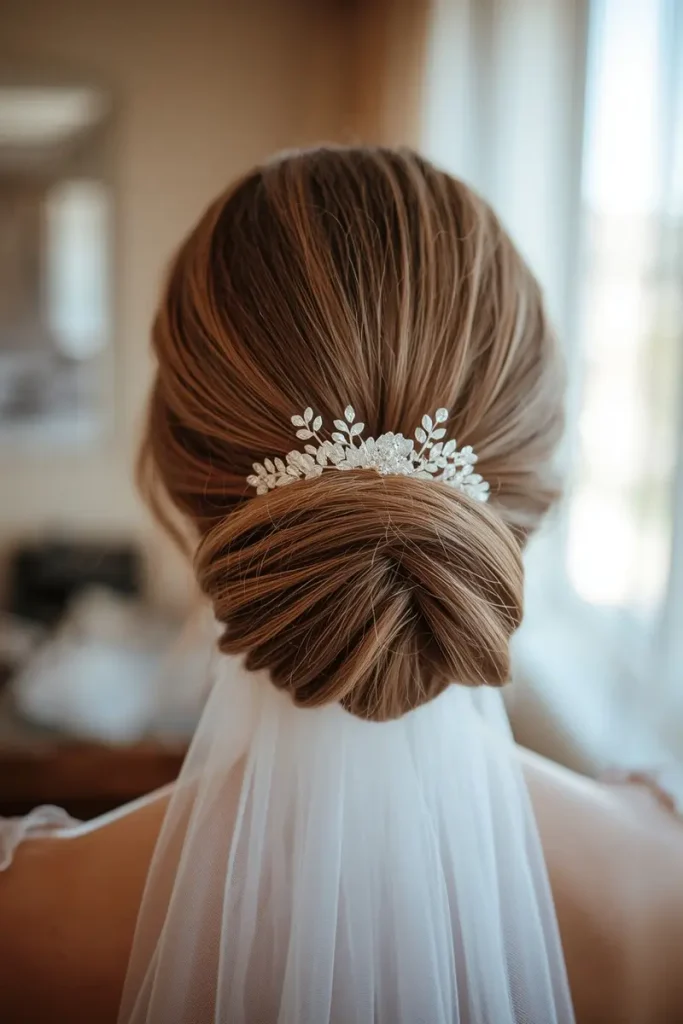
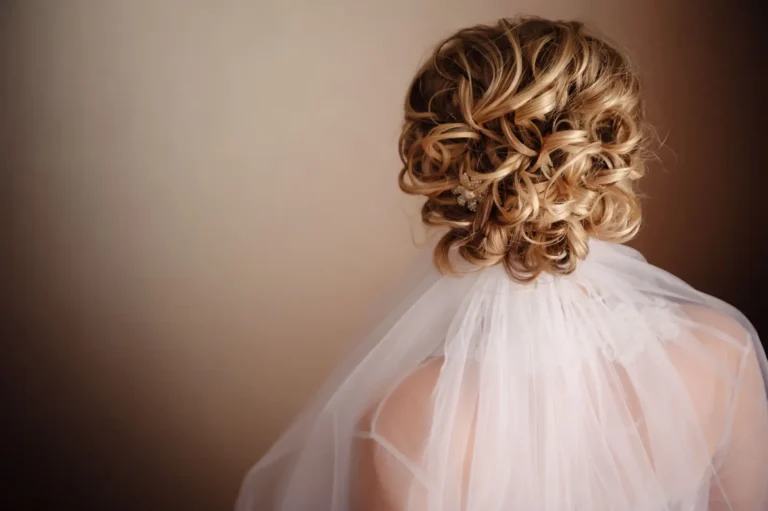
Most veil problems aren’t about the veil at all — they’re about the hairstyle never having left it anywhere secure to attach. This style is built with that constraint solved from the first step: as the low chignon is formed at the nape, a small structured pocket of hair is deliberately left slightly looser and higher than the rest of the coil, specifically sized and positioned for a veil comb to slide into and grip against dense, pinned hair on both sides rather than into a single thin section that can slip loose under weight. The chignon itself is finished and pinned only after the veil pocket is set, not before, because building the smooth coil first and trying to wedge a comb in afterward is exactly how a veil ends up drooping by the ceremony’s second hour. The defining detail here isn’t the chignon’s shape at all — it’s that the veil’s anchor point was part of the construction plan, not an afterthought layered on top of a finished hairstyle. For step-by-step pinning of ten updos and where the veil comb should sit, see our guide to bridal updo styles.
2. Twelve-Hour Braided Crown
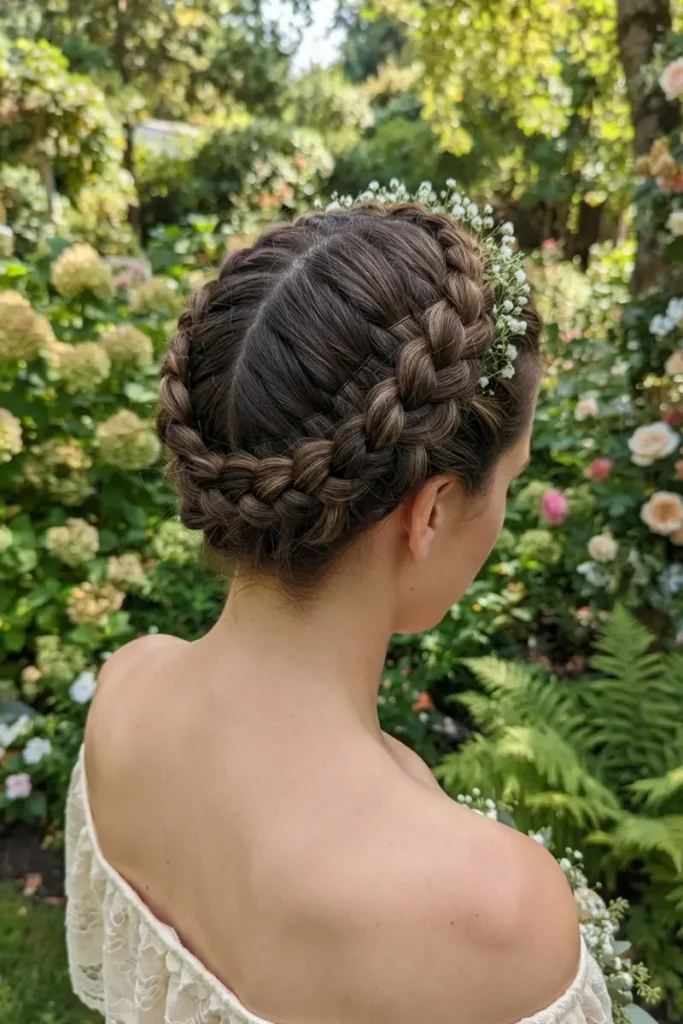
This style exists to answer one specific problem: most romantic-looking bridal styles are built to look good for an hour of photos, not for the twelve or more hours a wedding day actually runs. A braided crown solves this by relying on the braid’s own woven tension for structure rather than on pins alone — the braid is worked tightly from the front hairline all the way around the crown of the head, with each section pulled taut enough that the finished braid itself resists loosening even before a single pin is added. Pins are then used only to anchor the braid flat against the scalp, not to hold the shape together, which is the opposite of how a pinned-only style works and is exactly why this mechanism survives a ceremony, an outdoor cocktail hour, a sit-down dinner, and dancing without a single mid-day fix. Choose this style specifically when the day is long and touch-up time will be limited, not because it photographs a particular way. Our crown braid styles include versions for hair shorter than mid-back.
3. Convertible Ceremony-to-Reception Updo
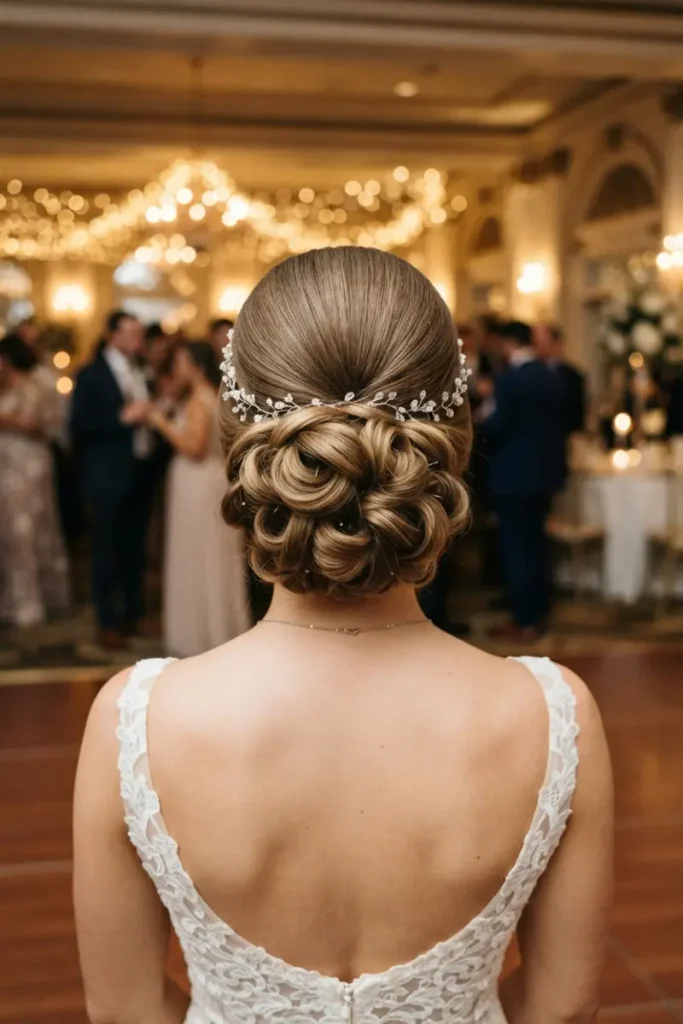
Brides who want an elegant updo for the ceremony and softer, hair-down waves for the reception often assume this just means “taking the pins out later,” but that only works if the updo was built with the transition planned from the start. This style is constructed as a full formal updo on top, but the underneath section is deliberately left in large, loosely pinned sections rather than tightly woven into the main structure — meaning a small, specific set of pins can be pulled to release nearly all of the hair into soft waves within a couple of minutes, without unraveling or flattening the top section that stays in place for photos with a headpiece or veil. The mechanism that makes this work is sequencing: the stylist has to know during construction which pins are “release pins” and which are structural, because pulling the wrong ones collapses the whole updo instead of transforming it cleanly.
4. Camera-First Sleek Twist
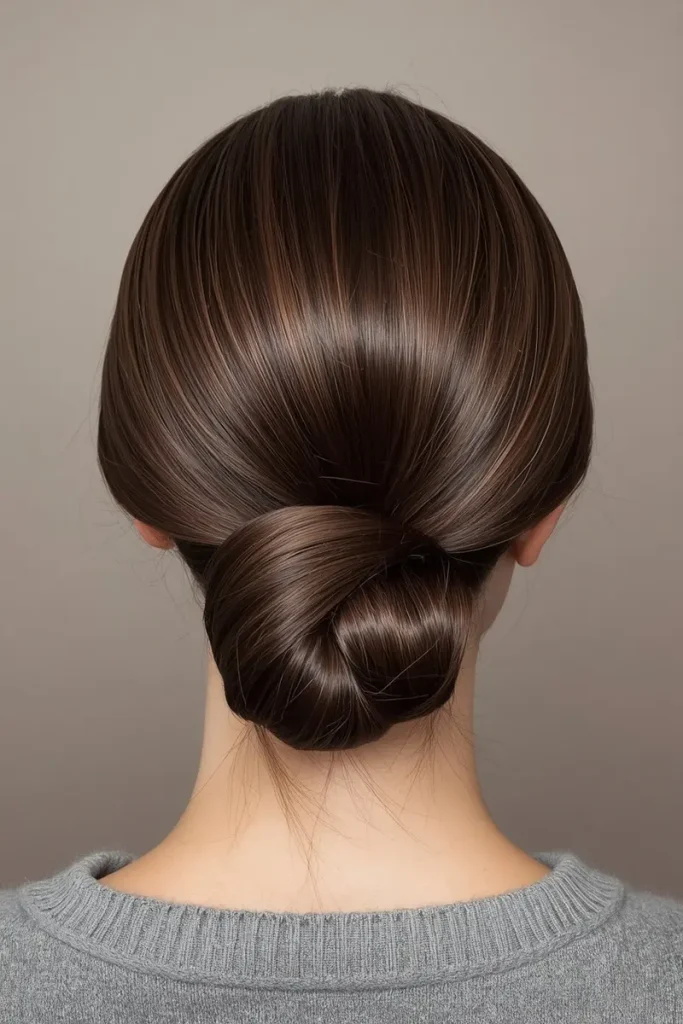
A wedding day involves being photographed from more angles, in more lighting conditions, and for more consecutive hours than almost any other single-day event, which changes what “looking good” actually means for a hairstyle. This twist is built specifically for that: the base is smoothed with product before twisting rather than after, so the surface reflects light evenly instead of catching stray flyaway under flash photography, and the twist itself is kept perfectly symmetrical from crown to nape so that the shape reads the same whether it’s photographed head-on, in profile, or from behind during the ceremony. The trade-off is that this mechanism takes noticeably more prep time than a looser style, because every stray piece that would be invisible in person becomes visible under a camera flash — this is a style built for the photographs as much as for the day itself.
5. Trial-to-Wedding-Day Reproducible Updo
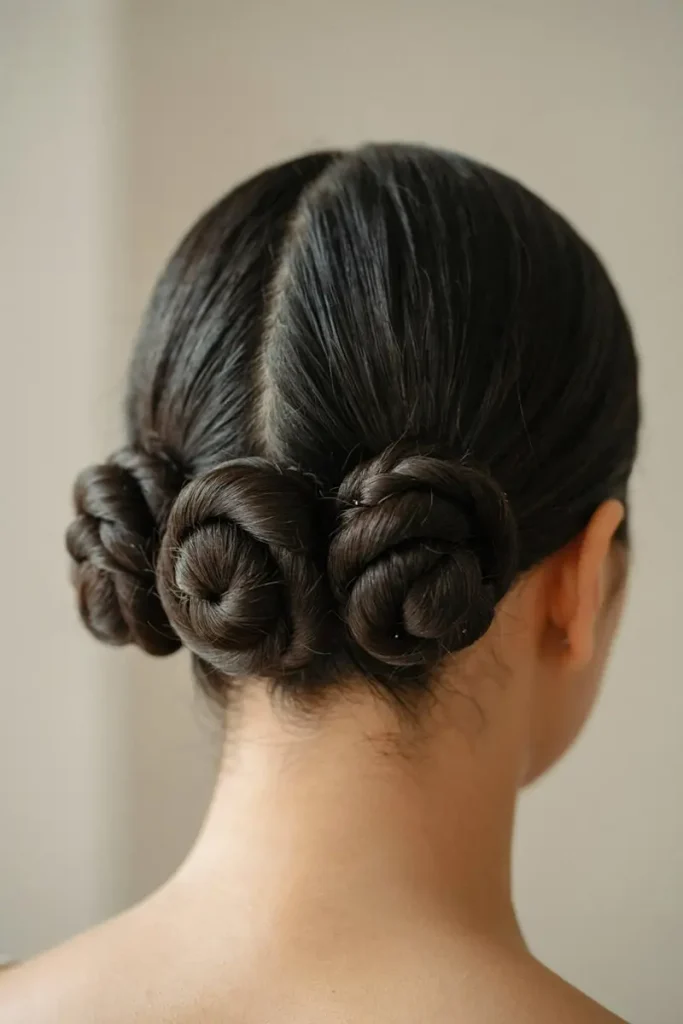
This style solves a problem that has nothing to do with how the hair looks and everything to do with how it gets built twice, weeks apart, by the same person, with the same result required both times. The mechanism is built from large, clearly defined sections rather than dozens of small improvised pieces, specifically so that the exact sectioning, twist direction, and pin placement can be written down or photographed during the trial and followed step-by-step on the wedding morning itself, when nerves and a tighter schedule make improvisation risky. Reject any bridal updo built from intricate, freeform pinning that “just comes together” in the stylist’s hands during the trial — if it can’t be documented and repeated exactly, it’s the wrong choice for a day where it only gets one real attempt.
6. Humidity-Proof Structured Twist
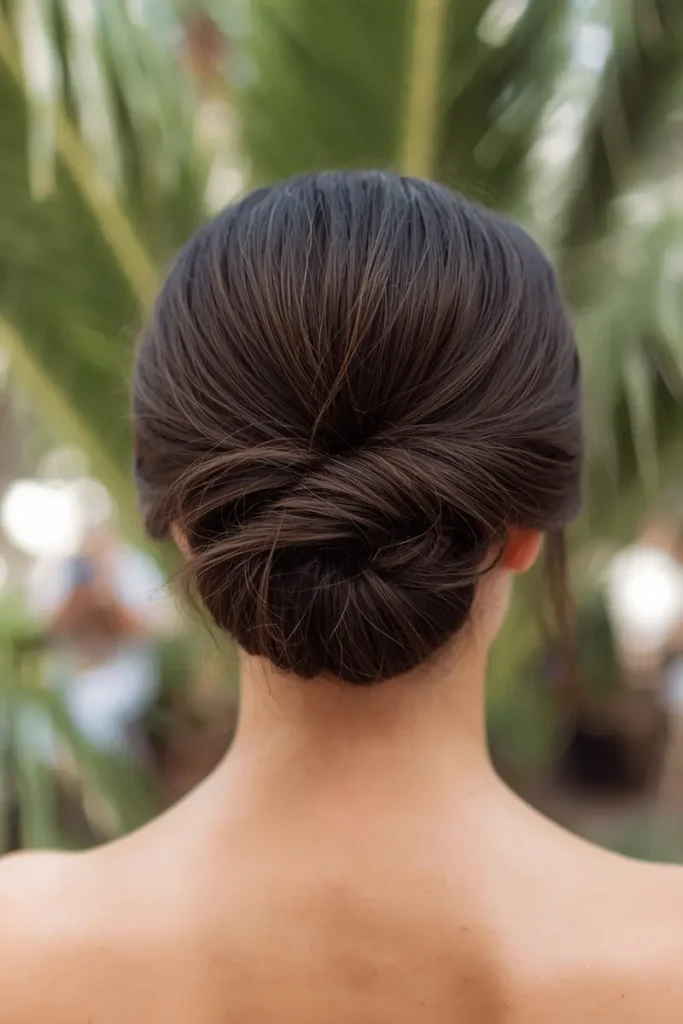
Outdoor and destination weddings introduce a constraint most bridal styles simply aren’t built for: hours of heat and humidity that will loosen a style relying on the hair’s own natural texture to hold its shape. This twist is built around a heavier pre-treatment than most bridal styles need — a strong-hold product worked through damp hair before any twisting begins — combined with a tighter, more compact twist than the same mechanism would use indoors, because a looser twist that looks elegant in an air-conditioned venue will visibly relax within an hour in outdoor heat. The defining trade-off is that this style depends on product and structure rather than texture, which makes it noticeably less “undone” looking than a similar twist built for an indoor, climate-controlled reception — a fair exchange for a style that still looks intentional at the end of an outdoor ceremony instead of half-collapsed. Our frizz and humidity guide explains how to prep hair the week before.
7. Extension-Blended Half-Up
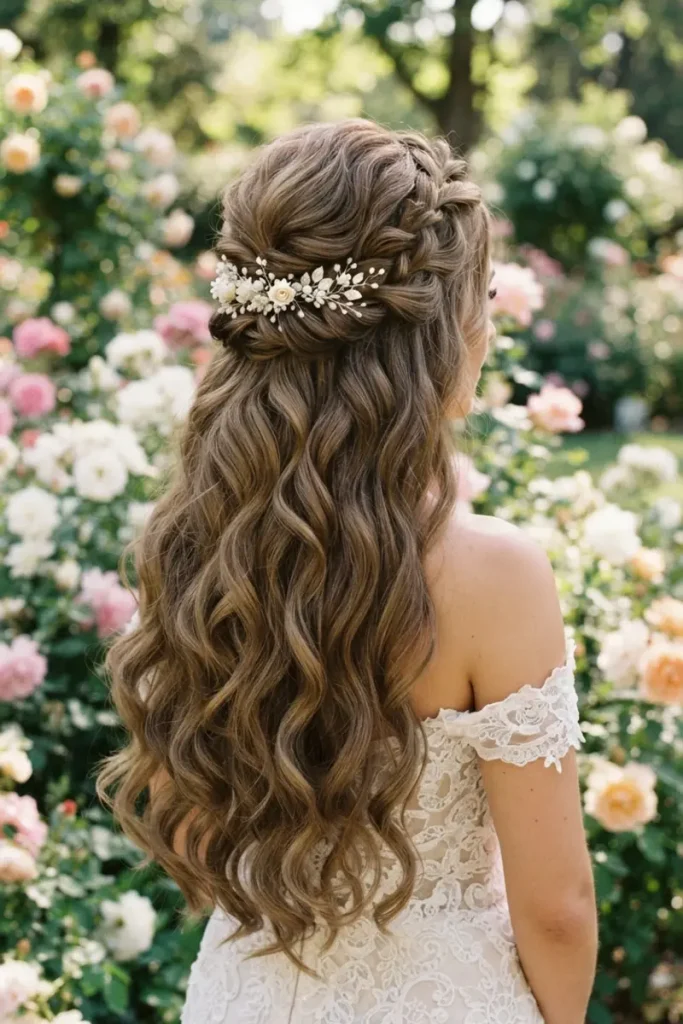
Brides wanting extra length or volume for their wedding day face a specific mechanical problem a normal half-up style doesn’t have to solve: hiding where natural hair ends and an extension begins, especially in a style that will be seen from every angle for hours. This mechanism sections the natural hair first, clips or wefts the extensions in beneath the crown rather than at the very base of the skull, and then blends the two by pulling small sections of natural hair back over the weft lines before styling the half-up twist or pin over the top. The order matters here — extensions placed after the half-up is already styled almost always show a visible seam at the back, while extensions placed and blended before the final style disappear into the finished look entirely.
8. Bridal-Party Match-Ready Style
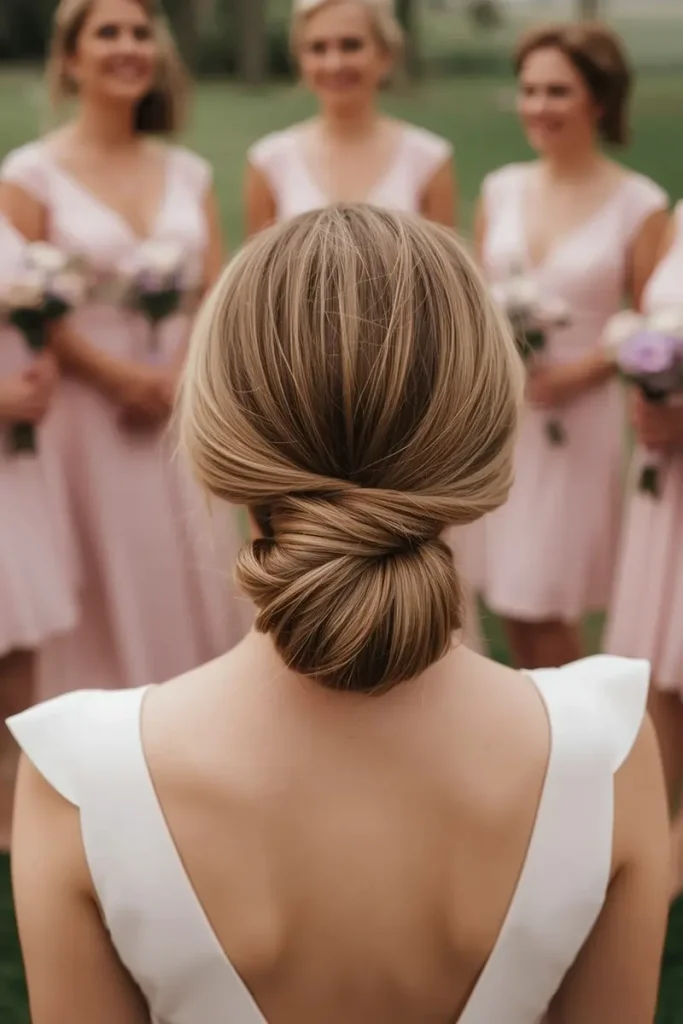
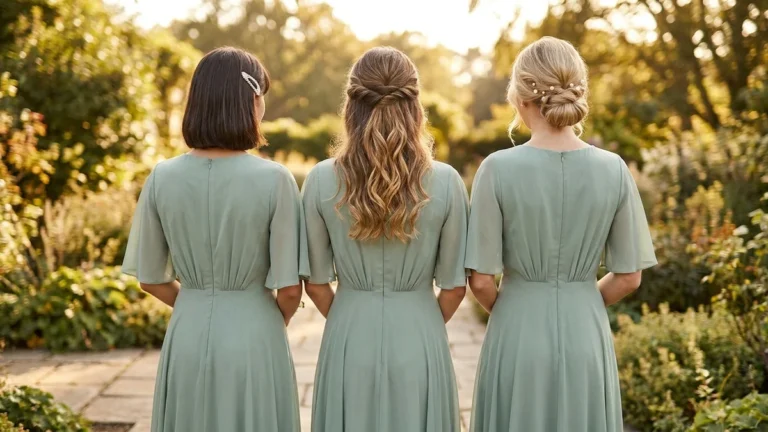
A bride’s own updo can take as long as it needs to, but a style meant for an entire bridal party has a different, often overlooked constraint: it has to be fast and consistent enough for one stylist to recreate on five, eight, or more people within a tight pre-ceremony timeline, on hair of noticeably different lengths and textures. This mechanism deliberately avoids anything requiring fine motor precision or long processing time — a simple twist-and-pin structure that adapts easily to shorter or thicker hair without needing a different technique for each person — specifically so the whole group can be finished on schedule without the last person’s hair being visibly rushed compared to the first. If the group has very different hair lengths, our bridesmaid hairstyles guide shows three ways to keep everyone coordinated without forcing one style on all of them.
9. Low-Back Dress Nape Bun
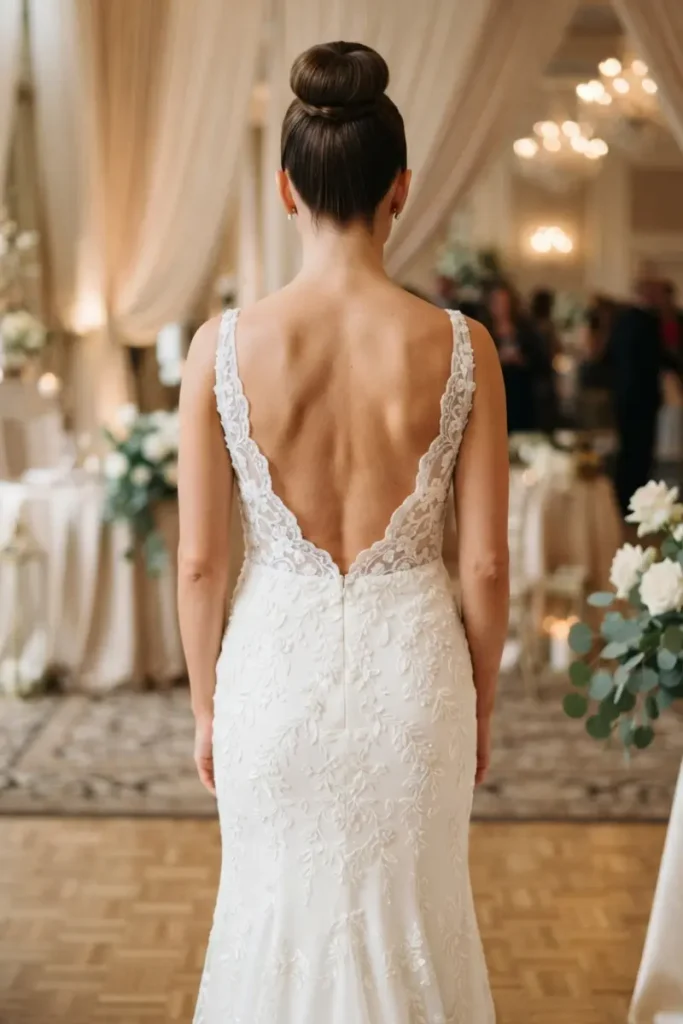
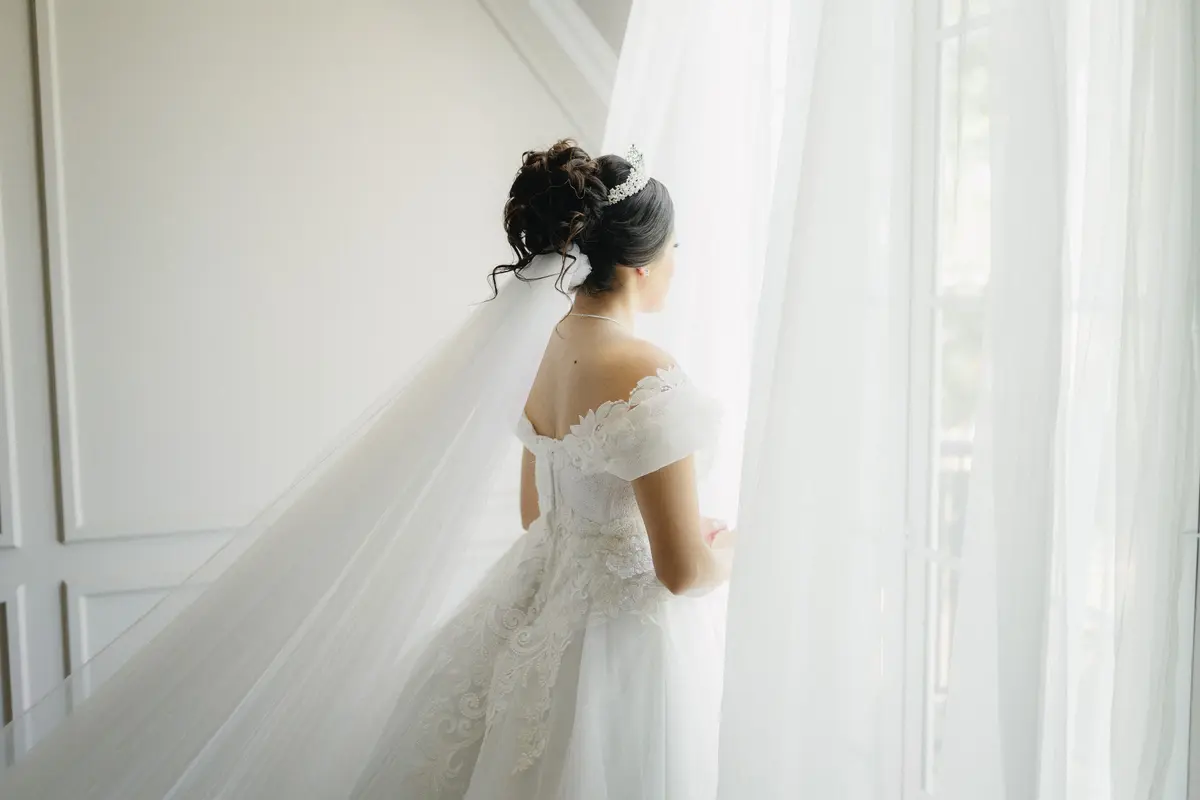
An open or low-backed wedding dress creates a specific problem most bun placements ignore: a standard low bun sits directly over the exact area the dress is designed to show off. This style solves it by building the bun noticeably higher and tighter against the head than a typical low bun, positioned just above where the dress’s back detail begins rather than centered at the natural nape, so the gown’s open back stays completely unobstructed from every photo angle. The mechanism itself — a twist-and-wrap or braided spiral — isn’t what makes this style different; the placement decision is, and it’s one that has to be made before the first section of hair is even gathered, not adjusted afterward.
10. High-Neckline Crown Updo
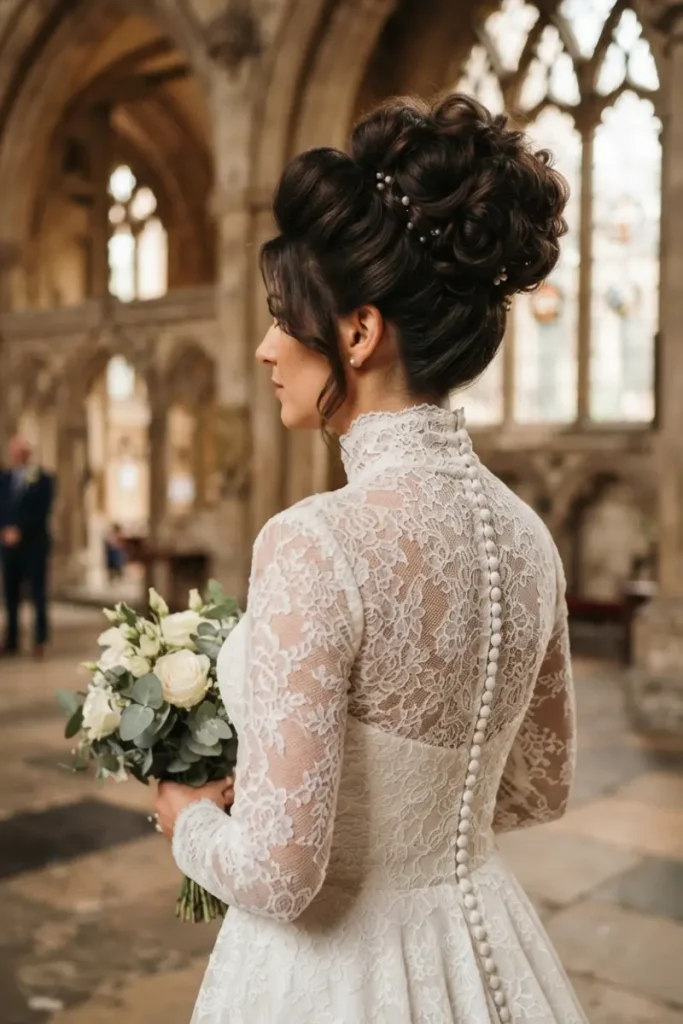
A high or heavily structured neckline — a mandarin collar, a high lace bodice, or a structured halter — competes visually with any hairstyle that sits low and close to the neck, which is the opposite problem the previous style solves. This updo is deliberately built high on the crown, well above the collar line, using a woven or twisted base with enough height and volume to balance a structured neckline rather than disappearing beneath it. The defining trade-off is proportion: this mechanism intentionally adds visual height and volume that would look overdone with a plain or low neckline, which is exactly why it’s paired specifically with structured, high-necked gowns rather than offered as a universal formal option.
11. Second-Day Undone Re-Style

Multi-day wedding celebrations — a ceremony one day and a reception, brunch, or second event the next — create a constraint most single-day bridal guides never address: how to turn yesterday’s structured, product-heavy updo into something that looks intentional the next day without a full rewash. This mechanism starts by removing only the structural pins from the previous day’s style rather than brushing it out completely, then working a small amount of dry shampoo or texturizing spray through the roots and finger-combing the remaining waves or bends left behind by the original updo into a looser, second-day texture. The reason this works where a full brush-out fails is that yesterday’s pinned sections leave built-in wave and volume that a fresh wash-day style doesn’t have — the mechanism is repurposing that leftover structure, not starting over.
12. Head-Covering-Compatible Low Twist
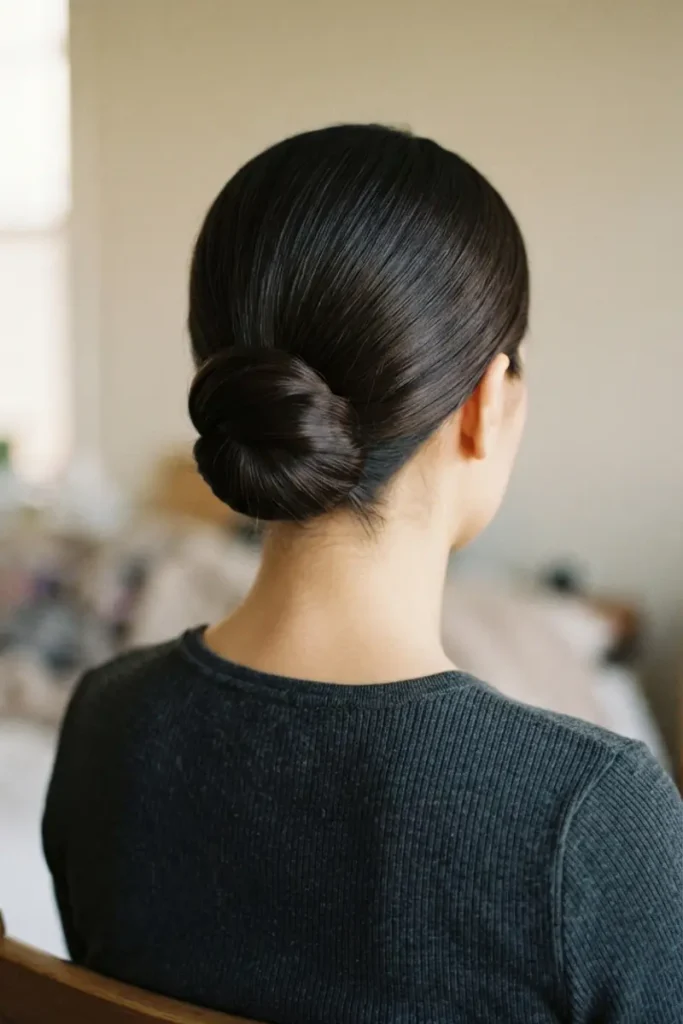
Styles meant to sit under a hijab, mantilla veil, or other head covering face a constraint most bridal updos don’t: any added height or volume at the crown creates visible bulk and an uneven silhouette once the covering is placed over it. This twist is deliberately built flat and low, close to the head rather than voluminous, with the twist tension kept tight enough to hold shape without needing the height a typical bridal updo relies on for visual impact. The defining detail is what’s absent rather than what’s added — no backcombing, no crown volume, no loose face-framing pieces — because every one of those typical bridal-updo elements becomes a visible lump or shadow under fabric instead of a flattering detail.
13. Weather-Contingency Adaptive Updo
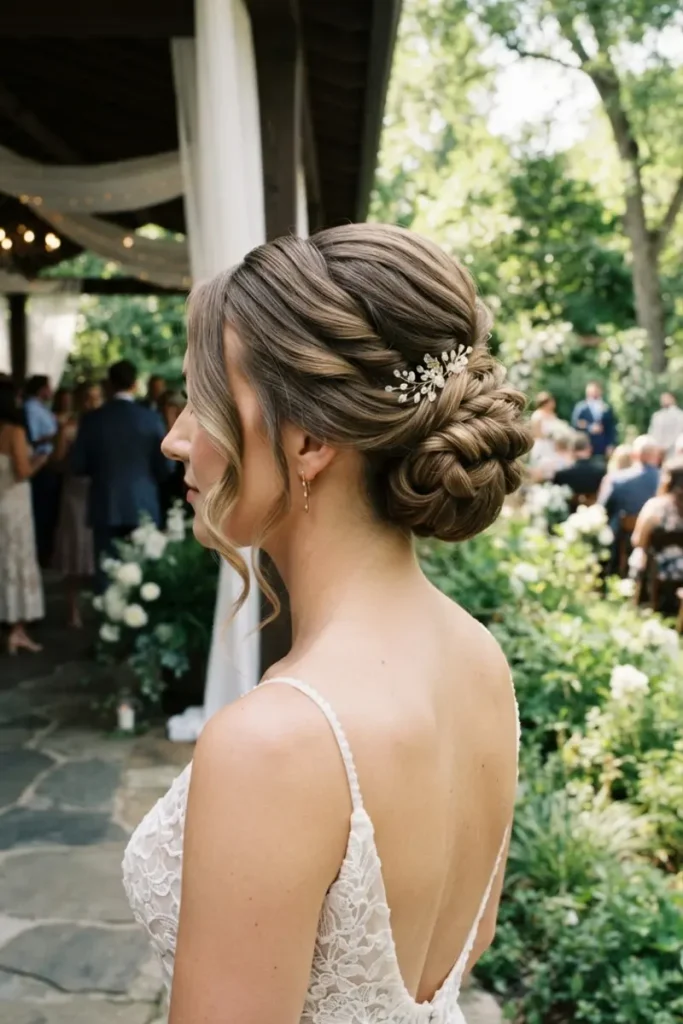
Outdoor ceremonies with an indoor backup plan create a scheduling problem that’s really a hairstyling problem in disguise: the bride often doesn’t know until the morning of whether her hair needs to survive direct sun and humidity or a climate-controlled ballroom, and building two entirely different styles isn’t realistic. This mechanism splits the difference deliberately — it uses the tighter, more product-set structure of a humidity-proof style as its base, but leaves the finishing touch (a few face-framing pieces, or the tightness of the final tuck) adjustable in the last few minutes depending on the actual weather that morning. The result is a style that holds up fine outdoors if needed, but can be finished slightly softer indoors without having to rebuild the entire updo from scratch after a last-minute venue change.
14. Floral-Crown Structural Half-Up
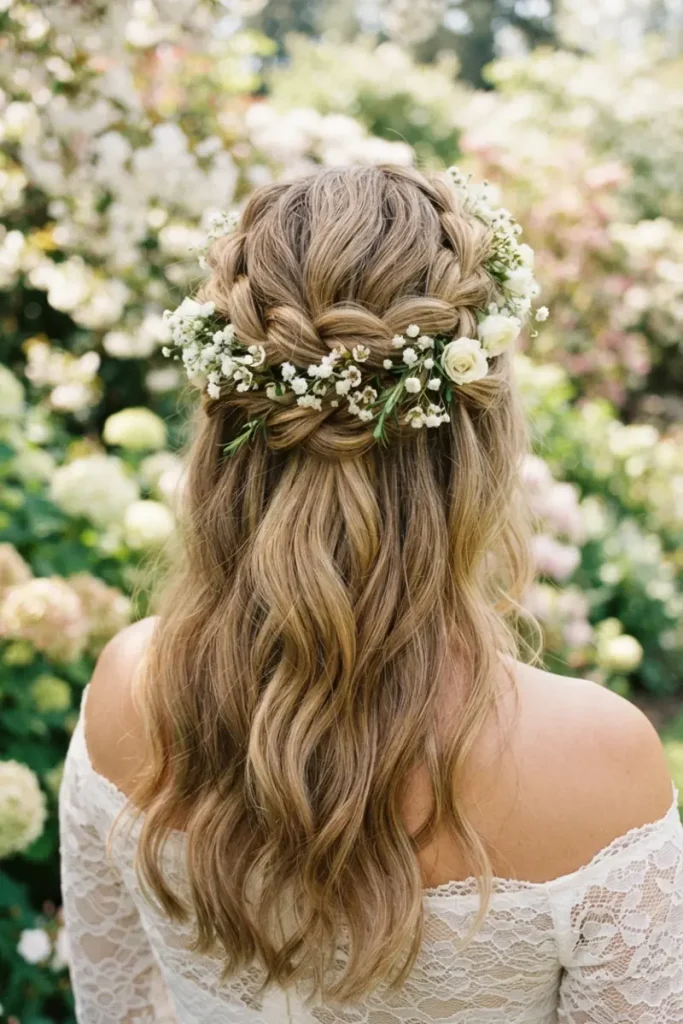
Unlike a floral hairpiece or crown added on top of a finished hairstyle, this mechanism weaves small flowers directly into the crown section of hair as the half-up style is being sectioned and pinned, rather than tucking them in afterward. A few strands are gathered, a flower’s stem is laid against the scalp along the parting, and the next section of hair is pinned directly over it — repeating this across the crown before the rest of the half-up is finished — so the florals become physically anchored by the hair’s own structure instead of relying on wire, comb, or clip hardware that can slip during a long day. This is a meaningfully different mechanism from a bridal bun with woven florals, since it applies to an open, half-up crown section rather than a fully gathered coil, and it holds up differently as a result — closer to the scalp, and considerably harder for a stray flower to work loose from. For a braided base, our French braid hairstyles show how to anchor flowers into the weave.
15. Dance-Floor-Secure Reception Finish
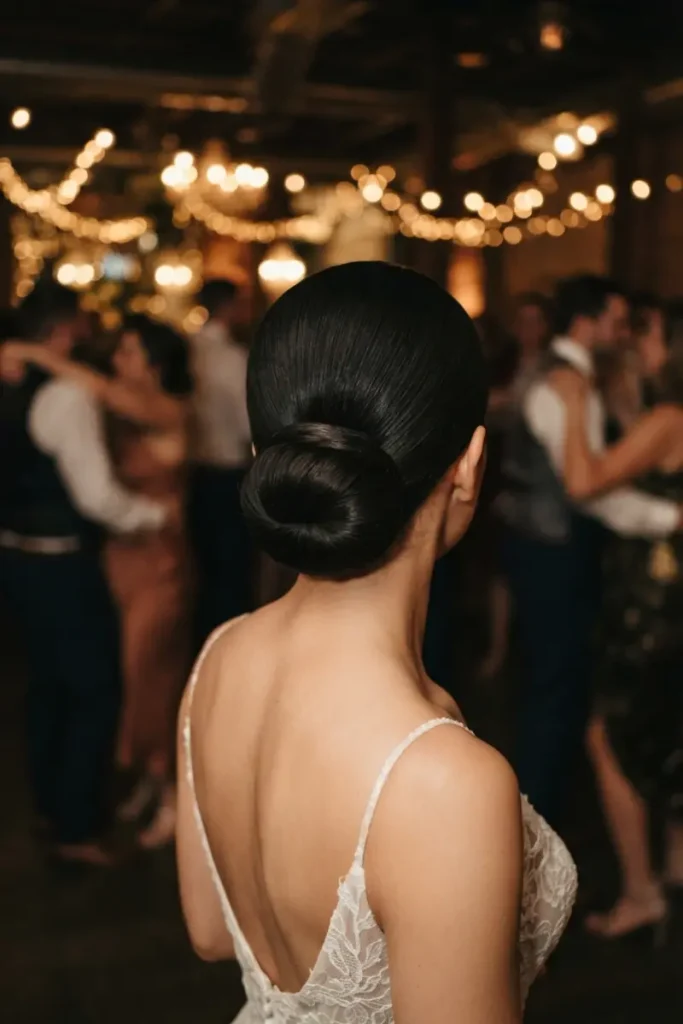
A style built to survive photographs and dinner doesn’t automatically survive several hours of dancing, hugging, and movement afterward, which is a distinct enough constraint to deserve its own mechanism. This finish deliberately tucks every loose end and pin flat and low against the head, avoiding any dangling pieces, loose tendrils, or raised elements that could catch on jewelry, a partner’s hands, or a dress zipper during dancing — essentially the opposite priority from a camera-first style built to look elaborate from a distance. The trade-off is visual complexity: this mechanism intentionally looks simpler and lower-profile than most formal updos, because every extra loose piece that adds romantic detail in a photo is also one more thing that can come undone on a crowded dance floor at 11pm.
Wedding Hairstyles for Short Hair
Most of the styles above assume shoulder length or longer, but a bob or pixie can still look bridal. The trick is to work with the cut instead of trying to fake an updo it can’t hold:
- Bob length: a polished side part with soft waves and a jeweled clip, or a low twisted half-up pinned at the back. A tucked low roll can look like an updo from the front. Our updos for short hair show how.
- Pixie or very short hair: smooth, glossy texture with a statement comb, headband or a short birdcage veil works better than adding pieces.
- Growing-out length: clip-in extensions blended at the back can give enough length for a small low bun on the day.
Book your last trim two to three weeks before the wedding so the cut has time to soften and doesn’t look freshly chopped in photos.
FAQ
Should my wedding hairstyle match my dress, my venue, or the season?
All three matter, but they solve different problems: your dress cut affects where the style needs to sit (nape, crown, or high on the head), your venue and season affect whether it needs to survive heat and humidity, and neither of those has much to do with matching a general “theme” — build for the practical constraints first and the aesthetic will follow.
How far in advance should I do a hair trial, and does it matter which stylist does my wedding day?
A trial is only useful if the exact technique can be repeated later, which is why a reproducible, well-documented style matters more than an elaborate one-off. Ideally the same stylist who did your trial does your wedding day, since a documented technique still depends on someone who remembers the specific sectioning and tension used.
What if I don’t know whether my outdoor ceremony will move indoors?
Choose a style built with a humidity-resistant structural base that can still be finished softer indoors, rather than planning two completely separate hairstyles — trying to build an entirely different updo last-minute is far riskier than adjusting the finishing touches on one flexible base.
Can my whole bridal party wear the same updo if everyone’s hair is different?
Yes, but only if the style itself is simple enough to adapt to different lengths and textures without changing the technique — an intricate, precision-dependent updo that looks perfect on one hair type often doesn’t translate cleanly to the rest of the group within a tight timeline.
Do I need a completely different hairstyle for the ceremony versus the reception?
Not necessarily — if you want your look to change, the ceremony style needs to be built with that transition planned into its structure from the start, using deliberately placed release points, rather than trying to improvise a change to a style that was never built to come apart cleanly.
Closing
A wedding hairstyle isn’t really one decision about how you want to look — it’s several decisions about what your specific day is going to put your hair through, made before a single section is pinned. If several of these styles pointed you toward a bun as your base, our Bun Hairstyles guide breaks down the construction mechanisms behind them in more depth. If a mid-event transformation from updo to hair-down is part of your plan, our Half Up Half Down Hairstyles guide covers the securing mechanisms that make that kind of change possible. And if a braided crown or braided bun caught your eye for its all-day hold, our Braided Bun guide goes further into which braiding techniques hold up longest under real movement.