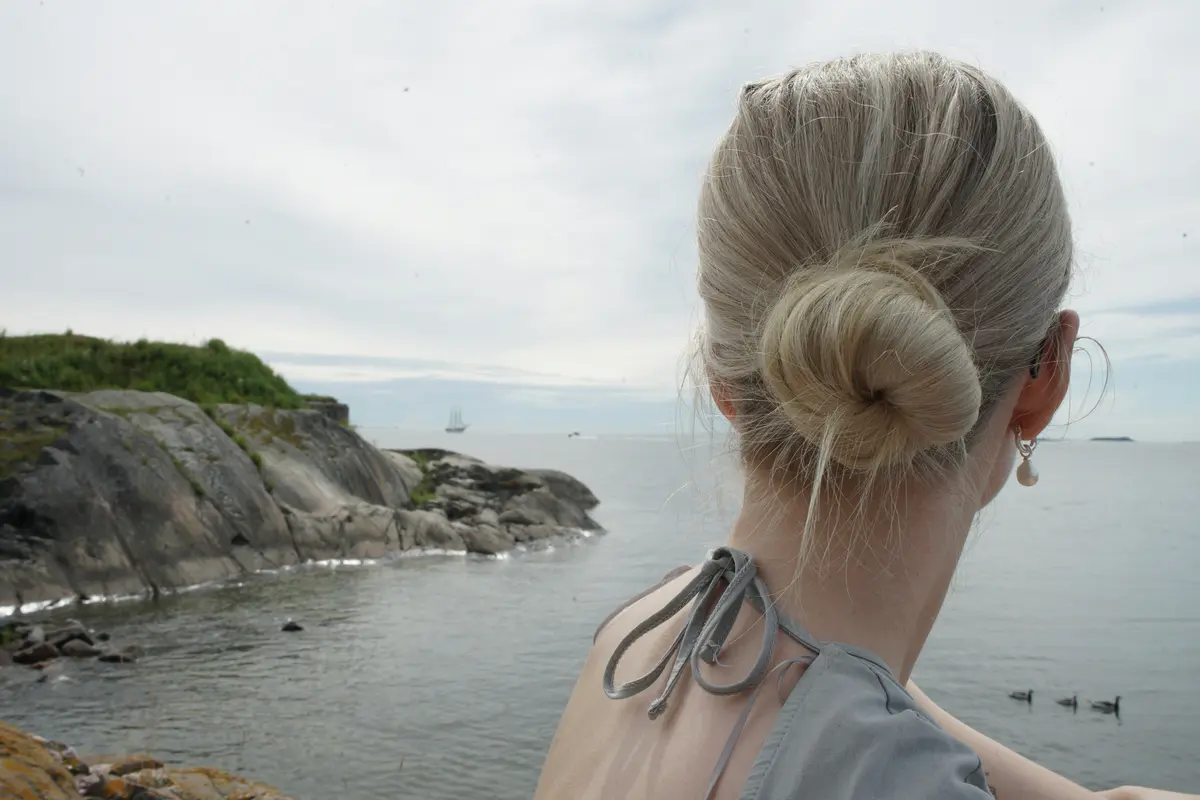
Bun Hairstyles by Build Method: 15 Ways to Make a Bun
Bun hairstyles get treated like one style with different moods attached to it — sleek bun, messy bun, romantic bun — as if the mood is the only thing that changes. It isn’t. What actually separates one bun from another is how the bun itself gets built. A twisted-and-wrapped bun, a braided-and-spiraled bun, and a bun formed around a sock or donut are three completely different construction methods, and each one produces a shape, texture, and hold that the others can’t replicate no matter how you accessorize them. Once you understand which build method you’re using, the “mood” — sleek or messy — is just a matter of how tightly you finish it, not a separate style.
That’s the real decision behind every bun: not what to call it, but how to physically construct it. Below are 15 bun hairstyles, each one built around a distinct construction mechanism, so you can pick the technique that actually matches the shape you want — not just the aesthetic you’re chasing. If none of these hold on hair that’s too short for a proper bun, our Updos for Short Hair guide covers techniques built for bob, lob, and shoulder-length hair instead.
Before You Start: The Two Decisions Behind Every Bun
1. Which build mechanism will you use? This is the part most tutorials skip past. Twisting a ponytail and coiling it around its base is a completely different technique from pulling hair through a foam donut, and both are different again from braiding the ponytail first and spiraling the braid. The mechanism you choose determines the bun’s texture, how long it holds, and how much volume it has — no amount of pinning afterward changes that.
2. How tight or loose will you finish it? The same build mechanism can look sleek and formal or soft and undone depending on tension alone. A twist-and-wrap bun pulled tight with gel reads as polished; the identical twist-and-wrap done loosely with pieces tugged out reads as relaxed. Decide your finish before you start, because tightening a bun after it’s built usually means redoing it.
1. Twist-and-Wrap Bun
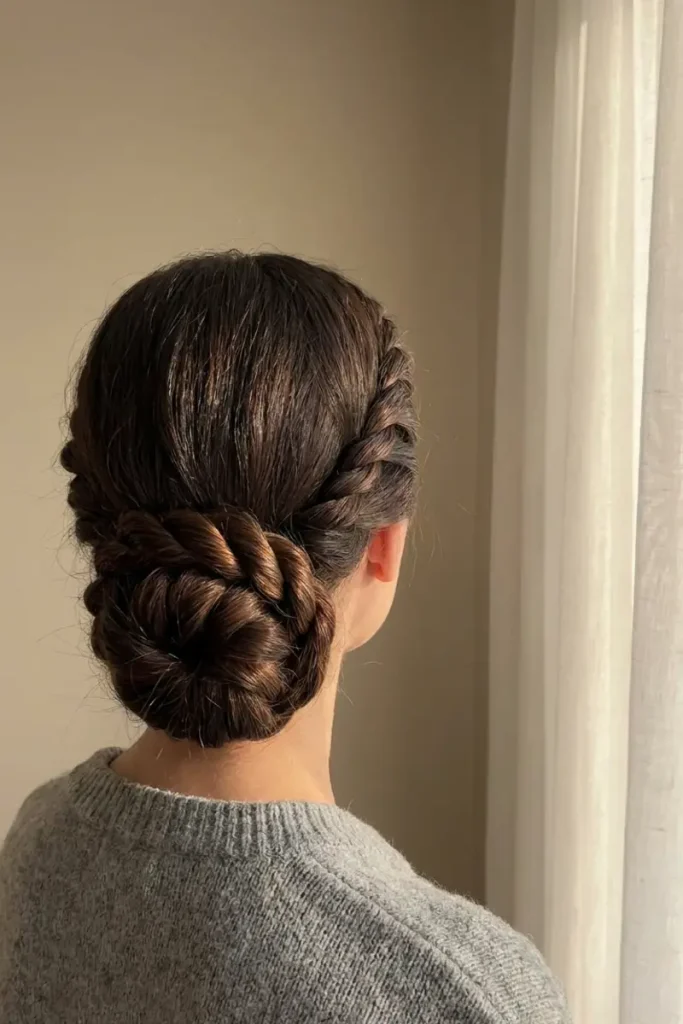
This is the foundational bun mechanism nearly every other style borrows from: gather the hair into a ponytail, twist the full length in one direction until it kinks on itself, then wrap the twisted rope around the base of the ponytail and pin the tail underneath. The twist is what gives it shape — without twisting first, the wrapped hair just collapses into a flat coil instead of holding a rounded form. Reject any tutorial that skips the twist step; that’s a wrap, not a twist-and-wrap, and it won’t hold structure past an hour.
2. Sock or Donut Bun
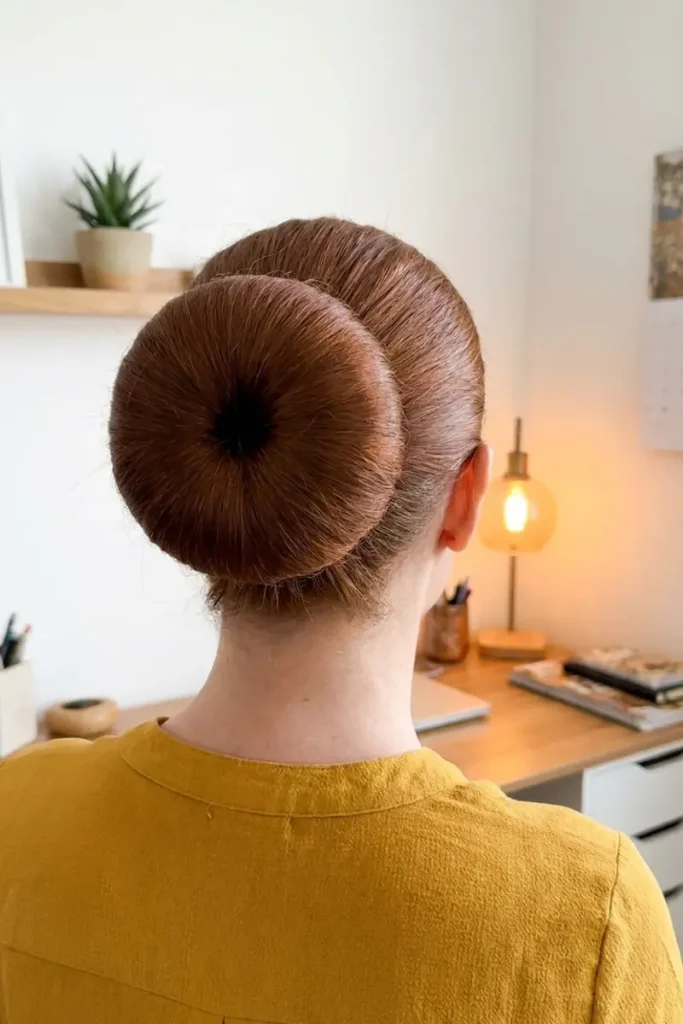
Here the bun’s shape comes from an internal foam form, not from the hair’s own tension. Pull a ponytail through the center hole of a bun donut (or a cut-open sock), spread the hair evenly around the form to conceal it completely, then secure the loose ends by wrapping them around the base. Because the shape is pre-built by the donut rather than created through twisting, this mechanism gives the most uniform, symmetrical bun of any method here — and it’s the only one that reliably works on hair too thin to fill out a bun on its own.
3. Braided Spiral Bun
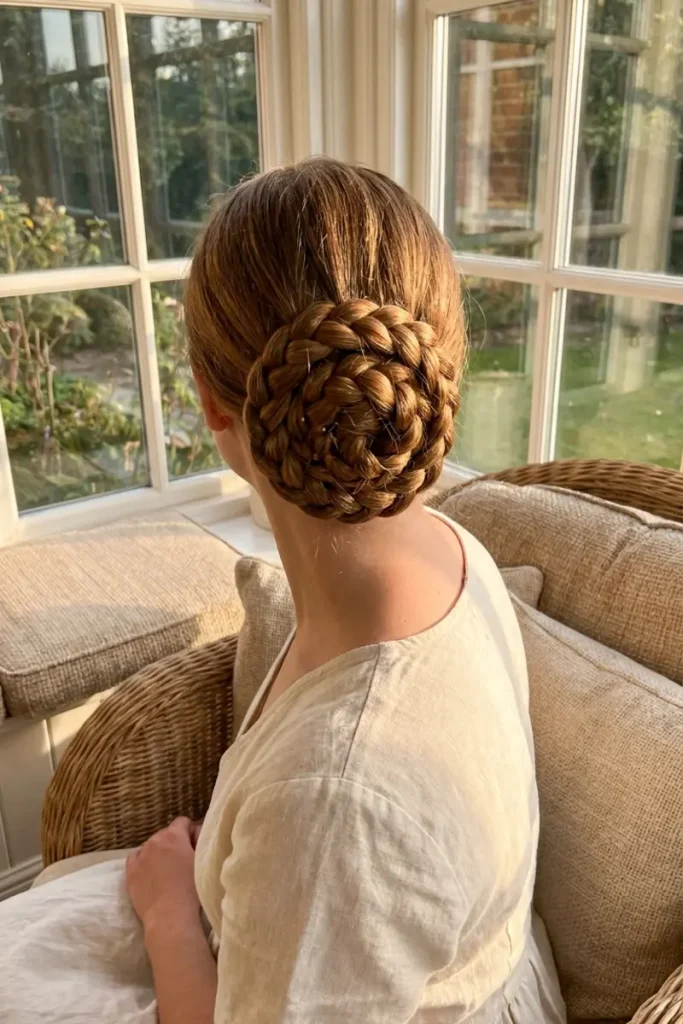
Braid the gathered ponytail first — a simple three-strand braid works — then coil the entire braid into a spiral at the base and pin it flat, like coiling a rope into a disk. The braid’s texture stays visible through the whole bun instead of disappearing into a smooth surface, which is what separates this from a twist-and-wrap: you’re spiraling a textured rope, not a smooth one. This mechanism holds exceptionally well for all-day wear since the braid itself resists slipping even before the pins go in.
4. Bubble Bun
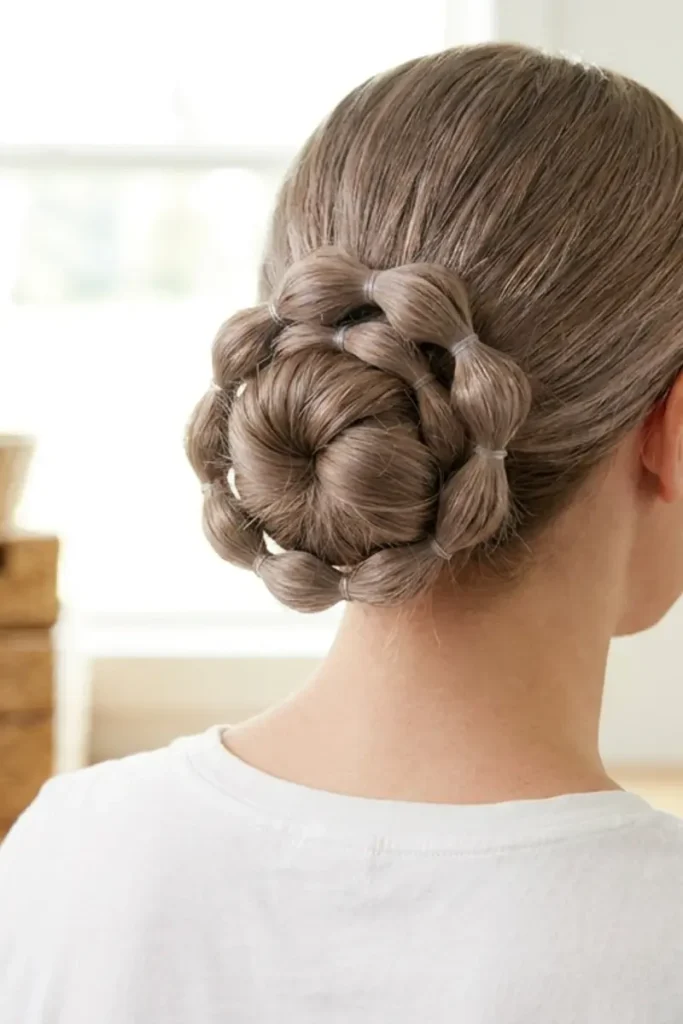
Section the ponytail with small elastics spaced evenly down its length to create a series of bubble segments, then coil the entire segmented ponytail into a bun shape and pin it in place. The bubbles stay visible as distinct rounded sections within the bun’s silhouette rather than blending into one smooth mass — this is the one build mechanism on this list where the securing elastics are meant to remain part of the visible texture, not hidden.
5. Figure-Eight Wrap Bun
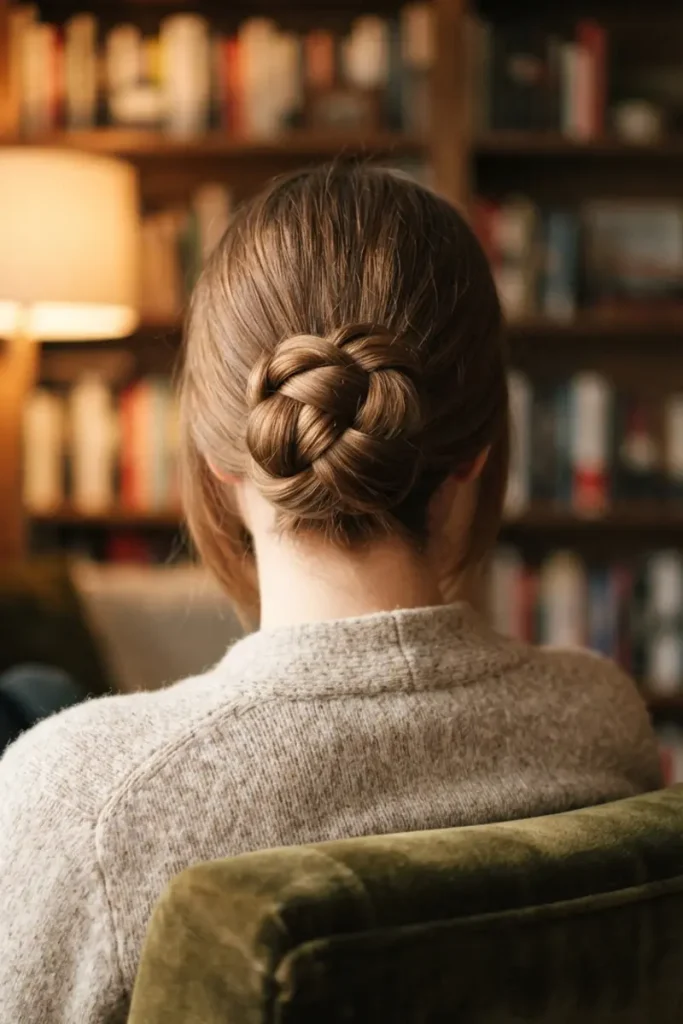
Instead of coiling in one continuous direction, this mechanism divides the ponytail into two sections and wraps them around each other in a figure-eight motion before tucking both ends under the crossing point. The crisscross pattern this leaves is the defining detail — a plain twist-and-wrap has no such interlocking pattern, since it’s one continuous spiral rather than two sections crossing each other.
6. Pancake Wrap Bun
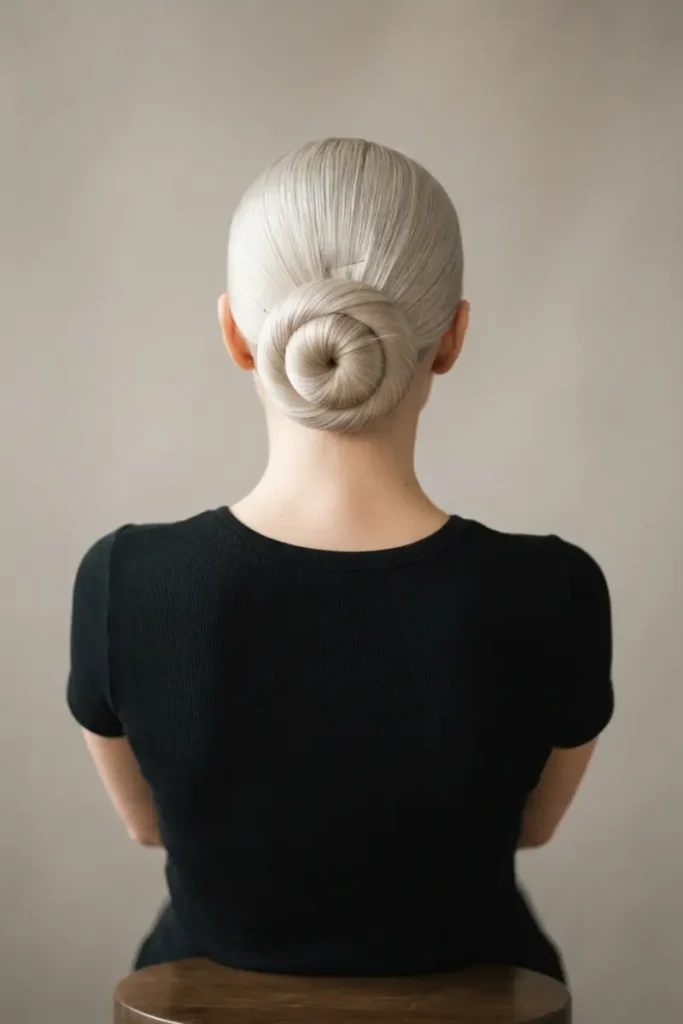
This produces the flattest, lowest-profile bun of any method here. Rather than twisting the ponytail into a rope before wrapping, you fan the hair out flat and spiral it against the head like coiling a flat ribbon rather than a rope — no twist, no volume built up, just a smooth flat disk. It’s the right choice specifically when a rounded, voluminous bun would look bulky, such as under a hat or veil.
7. Crown-Wrap Into a Bun
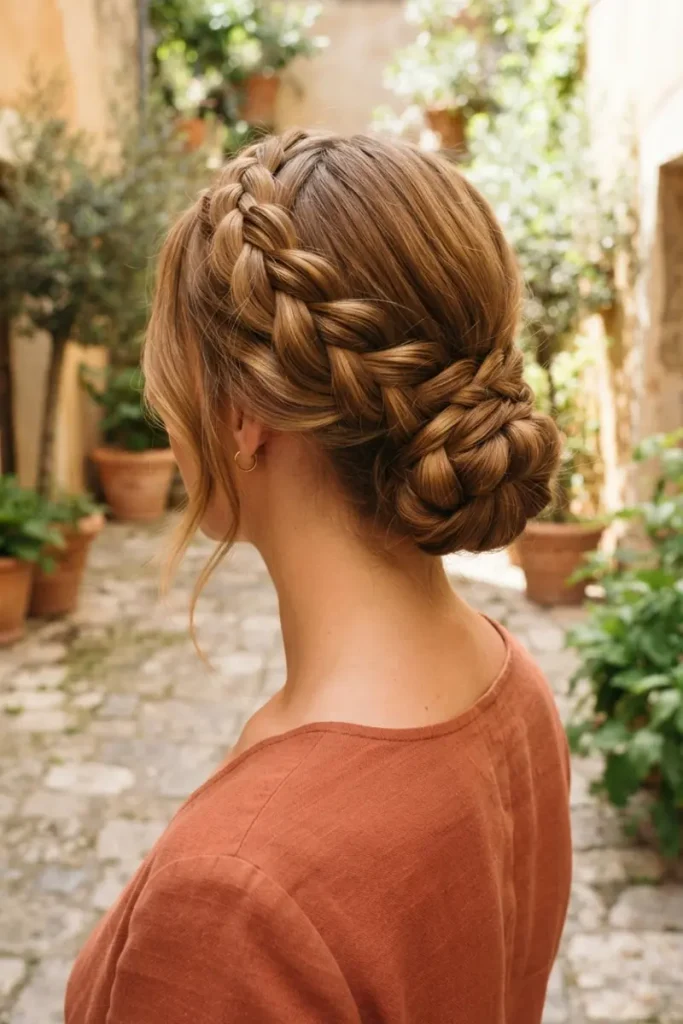
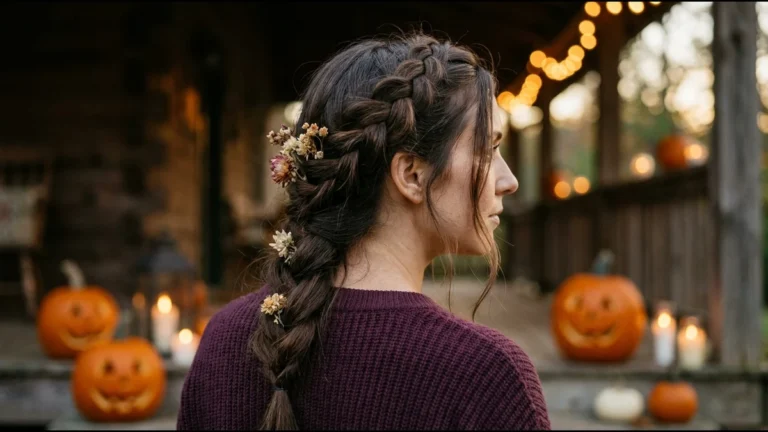
A braid starts at one temple, wraps around the crown of the head like a halo, and instead of ending loose, the tail feeds directly into a low bun at the nape rather than being pinned separately. The defining detail is that the crown braid and the bun are one continuous piece of hair with no break between them — reject any version where the braid and bun look like two separate elements pinned near each other rather than one flowing into the other.
8. Chignon Fold Bun
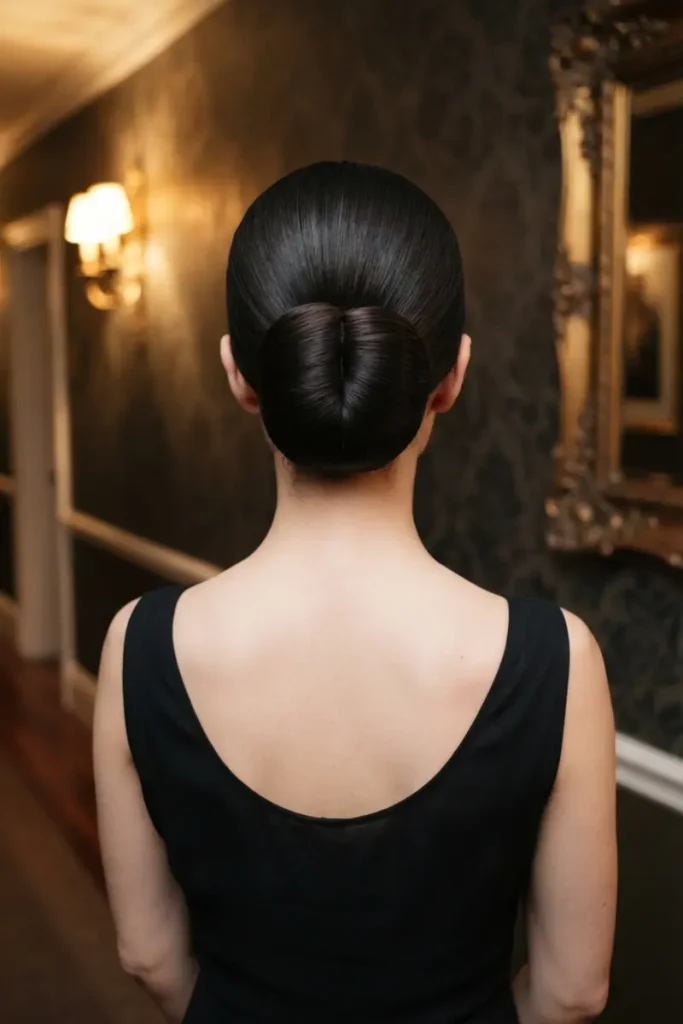
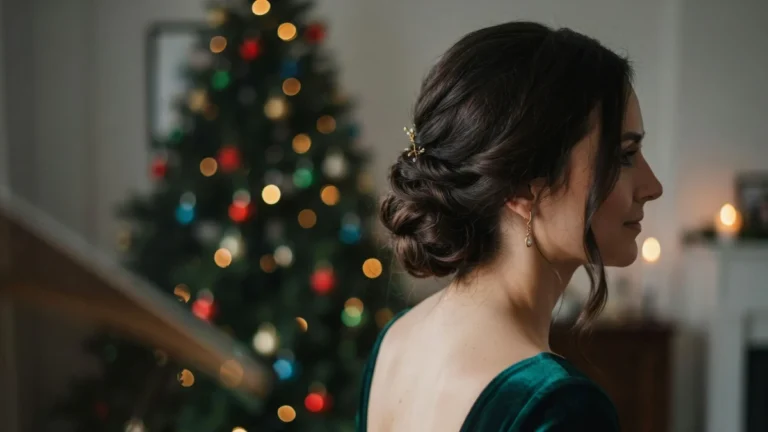
This is a genuinely different motion from every twist-based bun above: instead of twisting and coiling, you fold the gathered hair upward and tuck it under itself, rolling it into a loop against the head the way you’d fold and tuck a scarf rather than spiral a rope. The result sits flatter against the head than a twist-and-wrap and has a distinct folded seam rather than a spiral pattern — this is the classic French roll mechanism, and it’s the hardest of these to master because the fold has to stay tucked without a visible gap.
9. Two-Strand Criss-Cross Bun
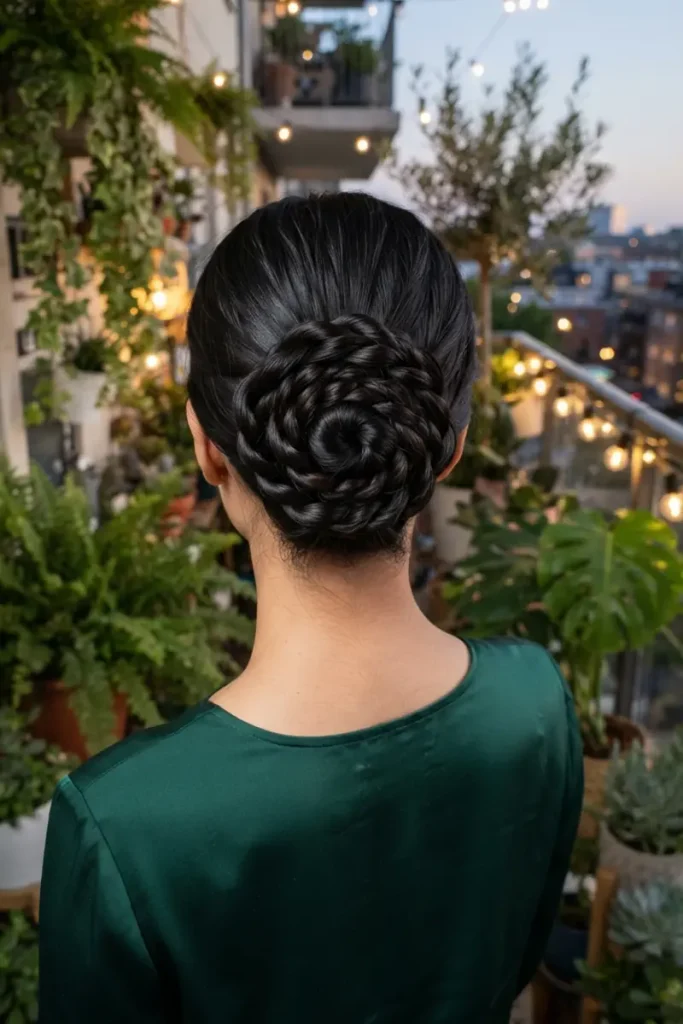
Two separate twisted strands, rather than one continuous twisted rope, cross over each other repeatedly as they’re wrapped toward the center, then both ends tuck in together. Unlike the figure-eight wrap, which crosses just once before tucking, this mechanism crosses the two strands multiple times as they spiral inward, creating a woven look across the whole surface of the bun rather than a single crossing point.
10. Loop-Through Bun
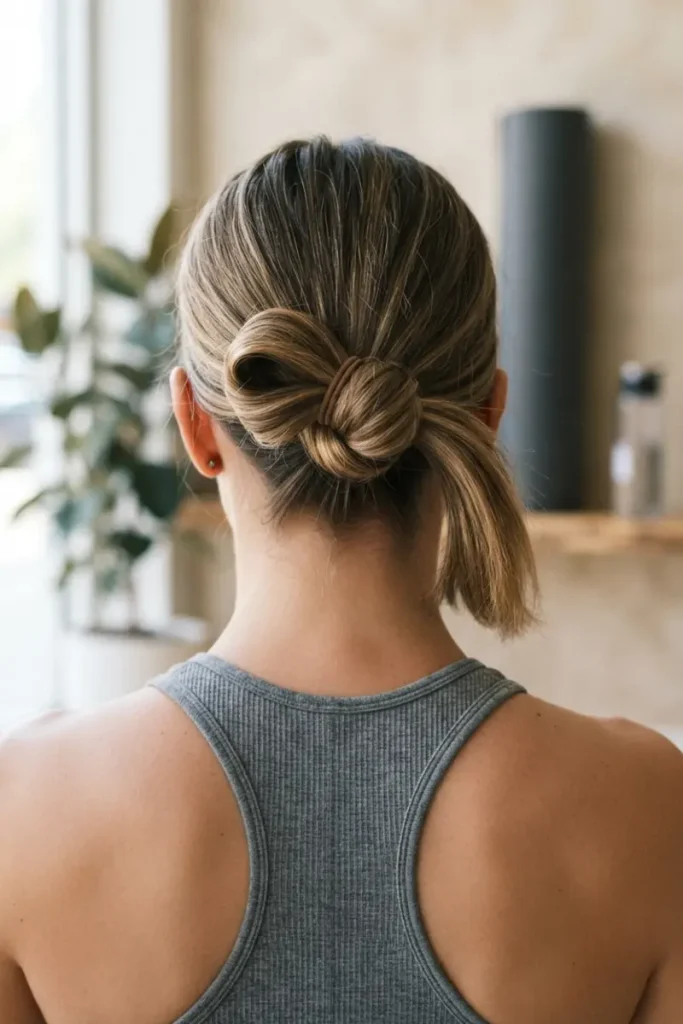
Instead of a ponytail elastic securing hair at the base, the hair is looped halfway through the elastic — pulled through but not all the way — leaving a folded loop on one side and a tail on the other. The tail then wraps around the loop and tucks in. This mechanism starts from a completely different anchor point than every twist-based bun: there’s no twisting at all, just a loop-and-wrap, which makes it the fastest bun to build on this entire list.
11. Space Buns
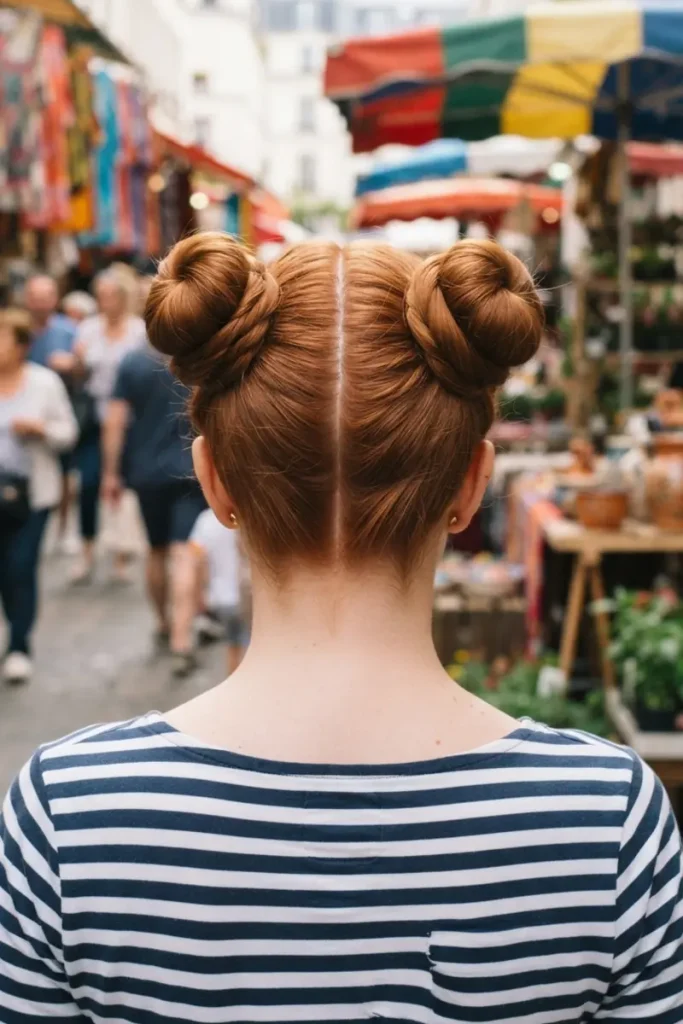
The build mechanism here is really about duplication and symmetry rather than a new individual technique: the hair is center-parted into two equal sections, and each section gets its own twist-and-wrap (or braided spiral, or loop-through) bun built independently on either side of the head. What makes space buns their own category rather than “two twist-and-wrap buns” is that any asymmetry between the two sides reads immediately, so the mechanism demands matching tension and matching technique on both sides — something a single bun never has to account for. Pinch the tops of both buns into points and they become cat ears; our Halloween hairstyles show how.
12. Low Sleek Wrap Bun for Straight Hair
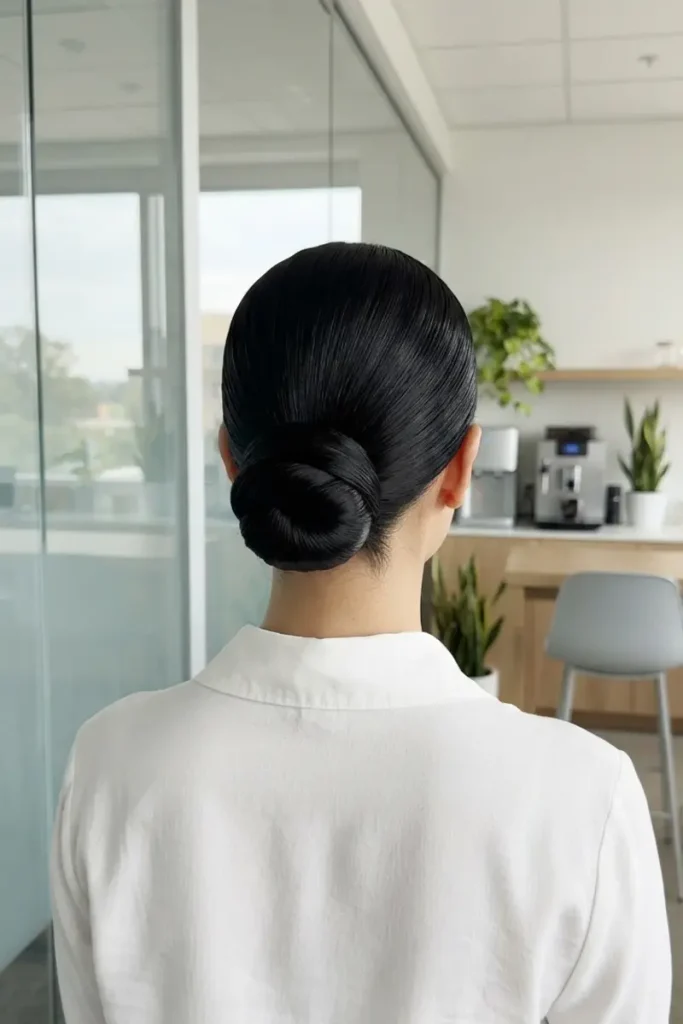
On straight hair, the twist-and-wrap mechanism needs an extra step the other hair textures don’t: smoothing product applied before twisting, since straight hair has no natural texture to grip the twist and will slip loose without it. The twist itself stays tighter and the wrap sits flatter against the head than the same mechanism on wavy or curly hair, producing the glass-smooth finish straight-haired buns are known for.
13. Pineapple-Style High Bun for Curly Hair
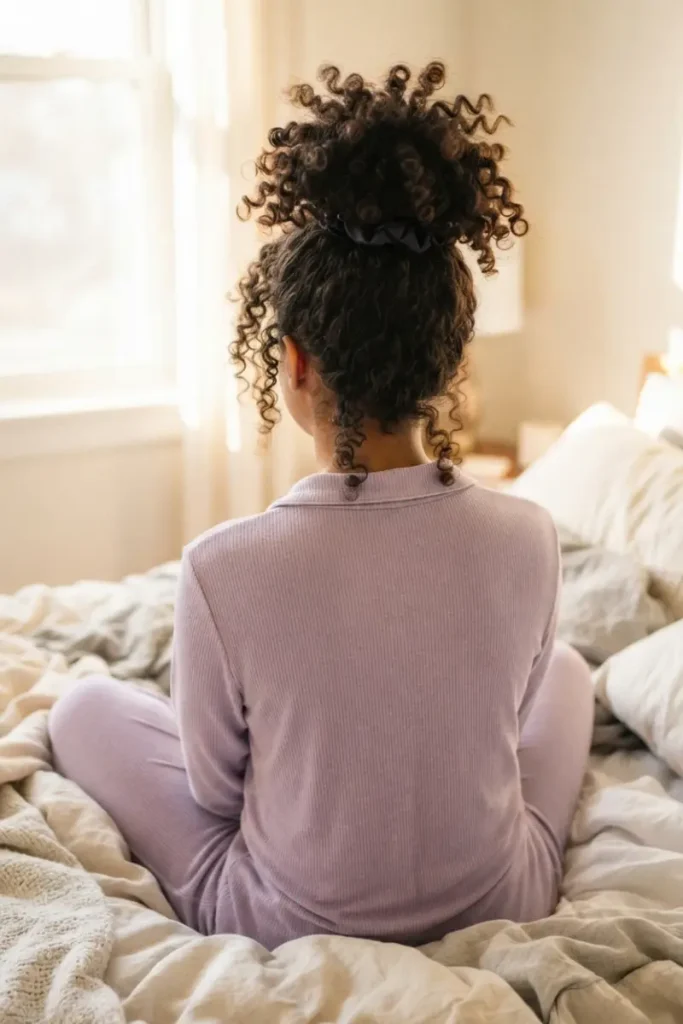
This mechanism is built to preserve curl pattern rather than smooth it away, which changes the technique entirely: hair is gathered loosely at the crown with minimal tension — no twisting, no tight wrapping — and the ends are simply scrunched upward into a loose knot rather than coiled flat. Reject any curly-hair bun tutorial that involves twisting the length tightly; that mechanism stretches out the curl pattern instead of preserving it, which defeats the point.
14. Bridal Bun With Woven Florals
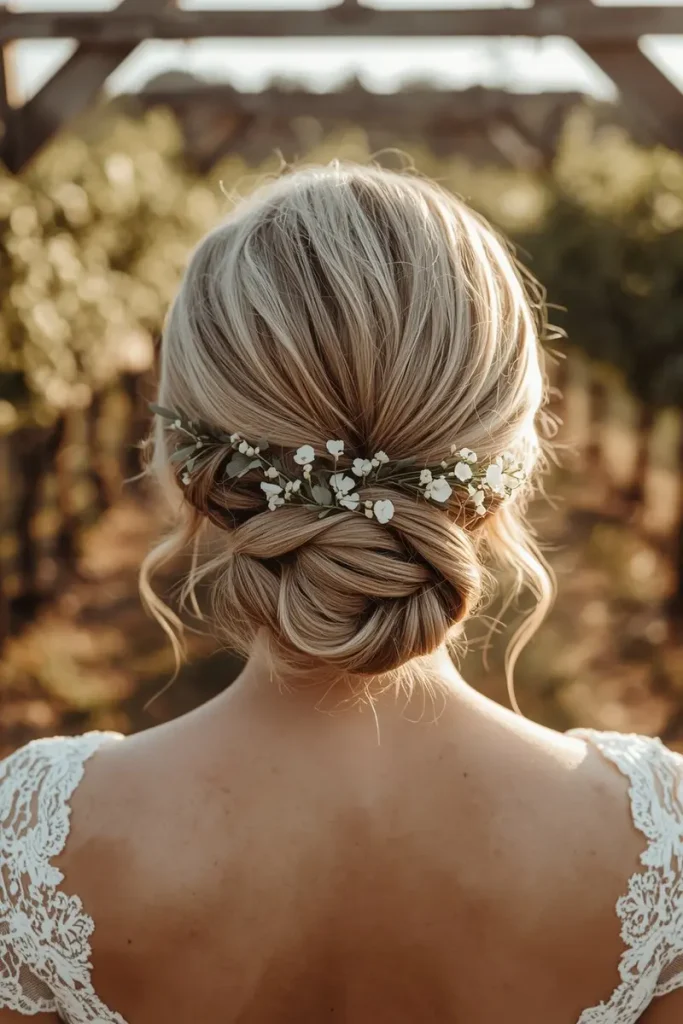
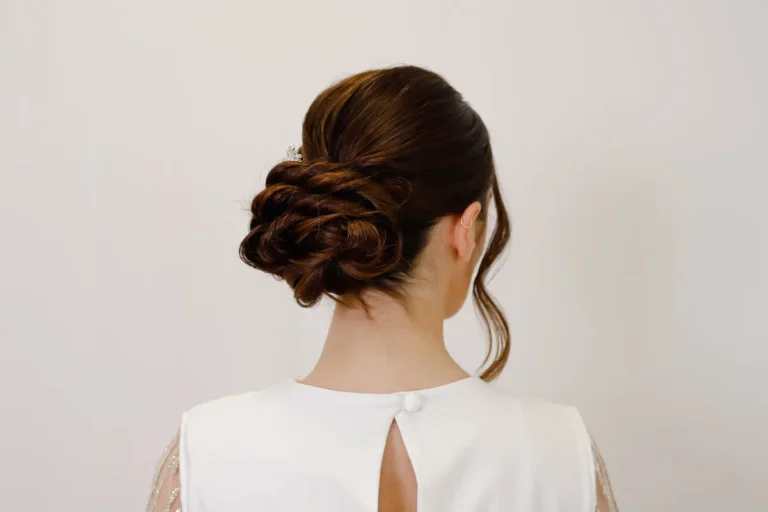
The build mechanism is a standard braided spiral or twist-and-wrap bun, but the florals are threaded into the crossings and gaps of the wrap itself as it’s being built, not added afterward on top of a finished bun. This means the flowers become structurally part of the wrap — tucked between the coils rather than pinned onto the surface — and it’s the sequencing that matters here: build a few coils, tuck in a stem, continue coiling, repeat.
15. Twist-Tuck Bun for Short or Bob-Length Hair
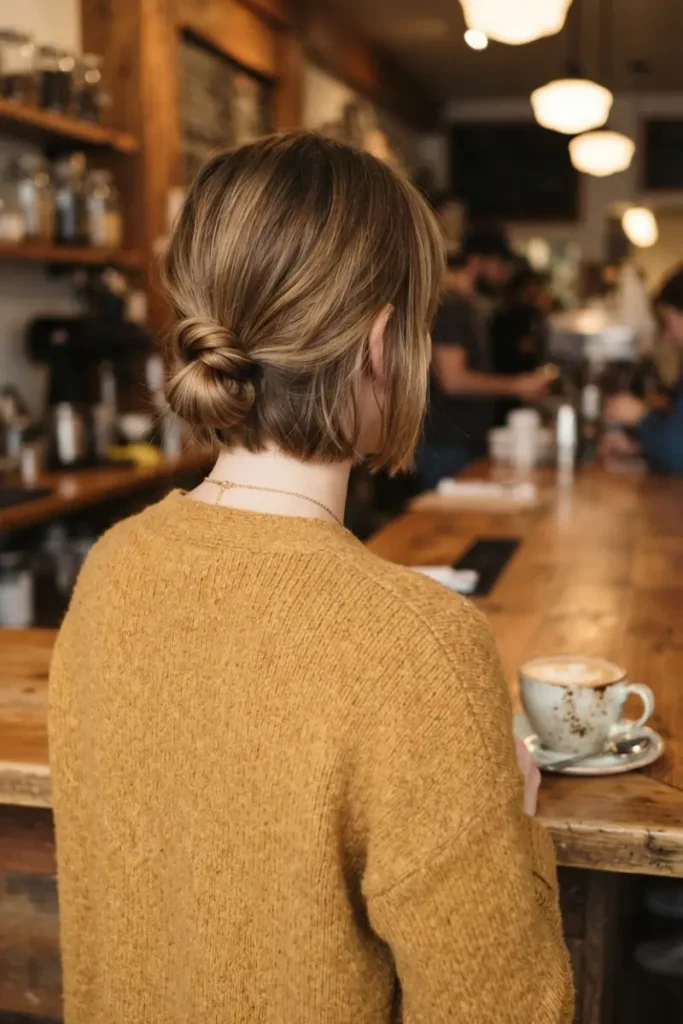
Short hair doesn’t have enough length to twist into a full rope and coil into a traditional bun, so this mechanism compresses the same twist-and-wrap logic into a much smaller motion: the hair is gathered into a low, small ponytail, given one tight twist, and immediately tucked under itself against the head rather than wrapped in a full spiral. The result is a compact knot rather than a rounded bun — the defining trade-off of building a bun on hair that’s simply too short for the full-length version.
FAQ
Does a messy bun use a different technique than a sleek bun?
Not necessarily. Most messy buns use the same twist-and-wrap or loop-through mechanism as a sleek bun — the difference is finishing tension and how many pieces get pulled loose afterward, not a different construction method.
Which bun mechanism holds up best for a full day?
Braided spiral and bubble buns tend to hold the longest because the hair’s own texture (from the braid or the segmented elastics) resists slipping even before pins are added, unlike a smooth twist-and-wrap that relies on the twist alone.
Can I use a sock or donut bun on short hair?
Only if the hair reaches at least to the shoulders. Shorter hair won’t have enough length to spread around the form and conceal it, which is why short hair generally needs the twist-tuck mechanism instead.
Do space buns have to match exactly on both sides?
They don’t have to be identical, but noticeable mismatches in size or tightness are more visible in space buns than in any single-bun style, since the two sides sit side by side for direct comparison.
What’s the actual difference between a chignon and a regular bun?
A chignon uses a fold-and-tuck motion rather than a twist-and-coil motion, which is a different mechanism entirely, not just a different name for the same technique.
Closing
However you build it, a bun comes down to picking the mechanism that matches the shape, hold, and hair type you’re actually working with — not just the finished look you saw in a photo. If you’re drawn to the braided spiral or crown-wrap versions here, our French Braid Hairstyles and Dutch Braid Hairstyles guides cover the braiding techniques those buns are built on. And if a bun feels like more structure than you want, our Half Up Half Down Hairstyles guide covers securing mechanisms that leave length down instead of gathering it all up. For party-ready versions, see our holiday updos for long hair.