Festive Hairstyles for Every Kind of Event, From Office Party to Black Tie
Festive hairstyles get chosen the wrong way almost every time — someone screenshots a look off Pinterest, walks into the salon or bathroom mirror with it, and hopes for the best. The problem is that a hairstyle that photographs beautifully at the start of a two-hour cocktail hour can be a completely wrong choice for a wedding reception that runs past midnight, and a look built for a slicked-back gala moment will fall apart the second you step outside into cold, damp air. The style itself matters less than two things you’re not usually told to think about first.
Those two things are what actually decide whether a festive hairstyle survives the night: how formal the event really is, and how much time and movement the style has to hold up under. Get those two right first, and almost any style on this list will work for you. Skip them, and even the most beautiful updo can end up half-collapsed by 9 p.m. Working with very long hair? Start with our holiday updos for long hair, which include the prep that stops heavy hair from slipping.
Before You Start: The Two Decisions Behind Every Festive Hairstyle
Dress code and formality level. A casual holiday get-together and a black-tie gala call for genuinely different hair architecture, not just a fancier version of the same style. Casual festive occasions can carry texture, movement, and a slightly undone finish — that’s part of the appeal. Formal and black-tie events read differently: they want cleaner lines, more structure, and finishes (like a slick-back or a sculpted set) that would look overdone at a casual party but look intentional under chandelier lighting and camera flashes.
How much time and movement the style has to survive. A two-hour cocktail party where you’re mostly standing and talking asks very little of your hair. A prom night with hours of dancing, a wedding reception with a full dance floor, or an outdoor NYE event in the cold all ask a lot more — from pins that need to actually hold under motion, to hair that won’t get static or frizz in dry heated air or cold outdoor air. The best festive hairstyle is the one built for the specific number of hours and the specific kind of movement your event actually involves, not just the one that looks best in a still photo.
Festive Hairstyles by Occasion
The clearest way to match a festive hairstyle to your event is by occasion type, since formality and expected wear-time both track closely with what kind of event you’re actually attending. Below, styles are grouped from most casual to most formal.
Low-Key Festive
These are for casual holiday gatherings, Friendsgiving, casual NYE at someone’s apartment — events where you want to look pulled-together without looking like you spent an hour on your hair.
If your gathering is a full Thanksgiving day, with cooking, family photos, and maybe a backyard football game, our guide to Thanksgiving hairstyles sorts 15 styles by how your day actually looks.
1. Half-Up Twisted Crown
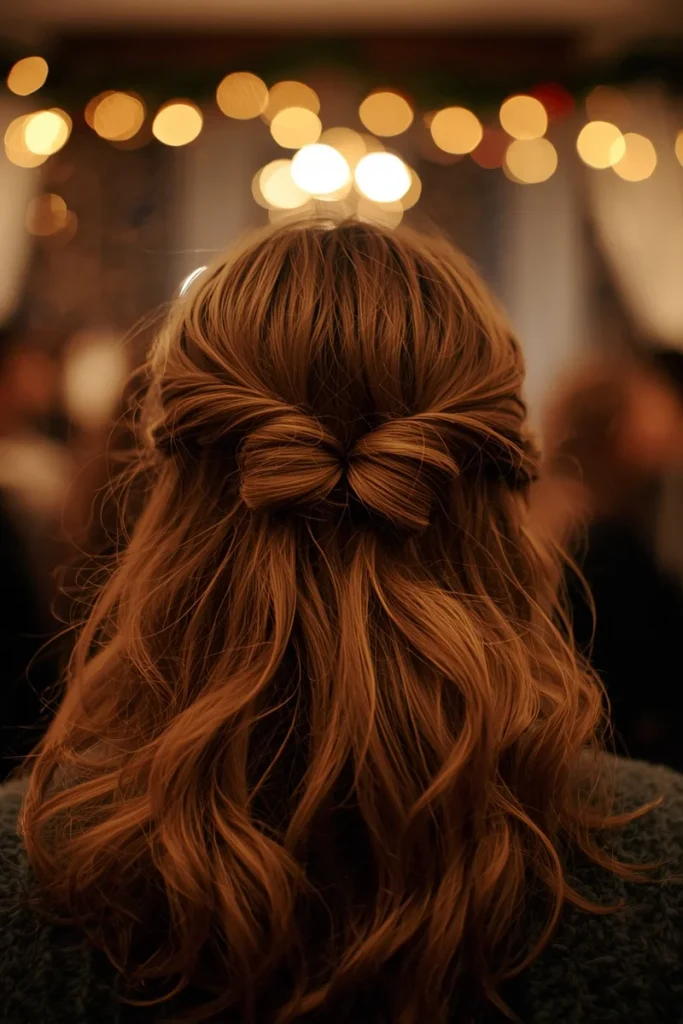
This style is built by taking two small sections from each side above the ear, twisting each one back toward the crown, and pinning them to meet at the center-back of the head, leaving the rest of the hair down. Unlike a full braided crown, which needs your whole perimeter woven and pinned, this only asks for two twists, which is why it holds for hours of casual movement without needing a touch-up. Best for: casual gatherings where you still want your hair off your face for eating and talking.
2. Low Ribboned Ponytail
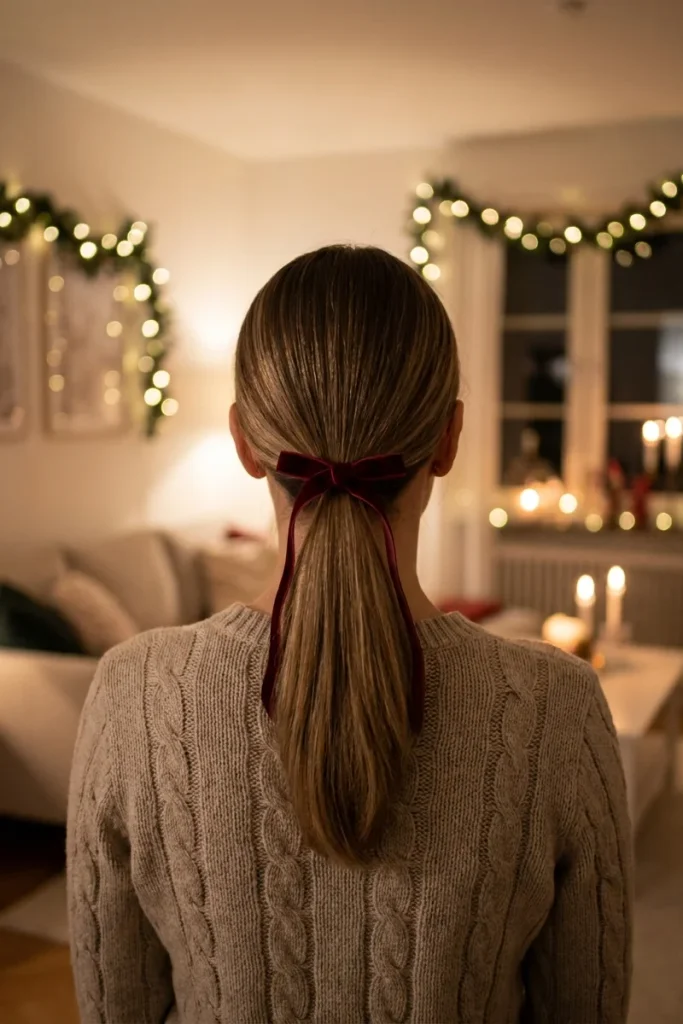
Gather the hair into a low ponytail at the nape, smooth the crown with a comb, and wrap a length of ribbon around the base instead of a plain elastic, finishing in a small bow or tucked knot. Where the half-up twist keeps most of your hair loose, this style pulls everything back, which makes it the better choice if you’d rather your hair stay completely out of your face for the whole event. Best for: low-maintenance festive polish, especially with an outfit that already has color or pattern doing the work.
3. Textured Lob Waves
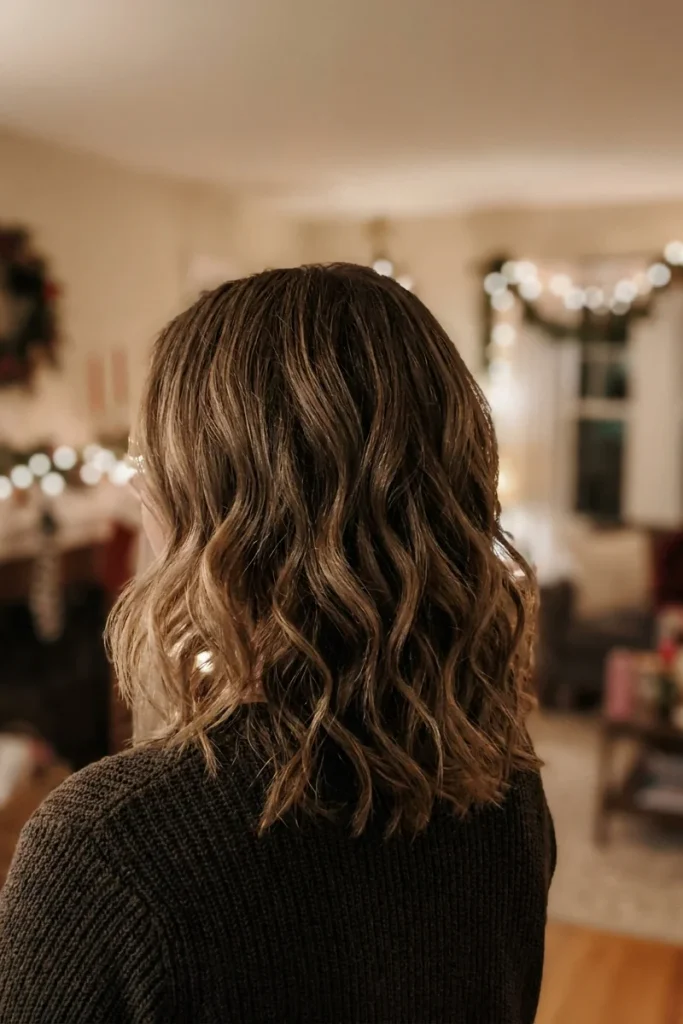
Using a curling wand on alternating directions section by section, then raking fingers through once cool to break up the curl pattern, this style works specifically on lob-length hair (shoulder to collarbone) where the weight of the hair naturally relaxes tight curls into loose waves within the hour. Longer hair holds the curl shape too rigidly for this effect and shorter hair won’t have enough length to wave, which is why this one is length-specific rather than universal. Best for: anyone with a lob who wants texture without any actual updo work.
4. Side-Swept Braid with Accessory
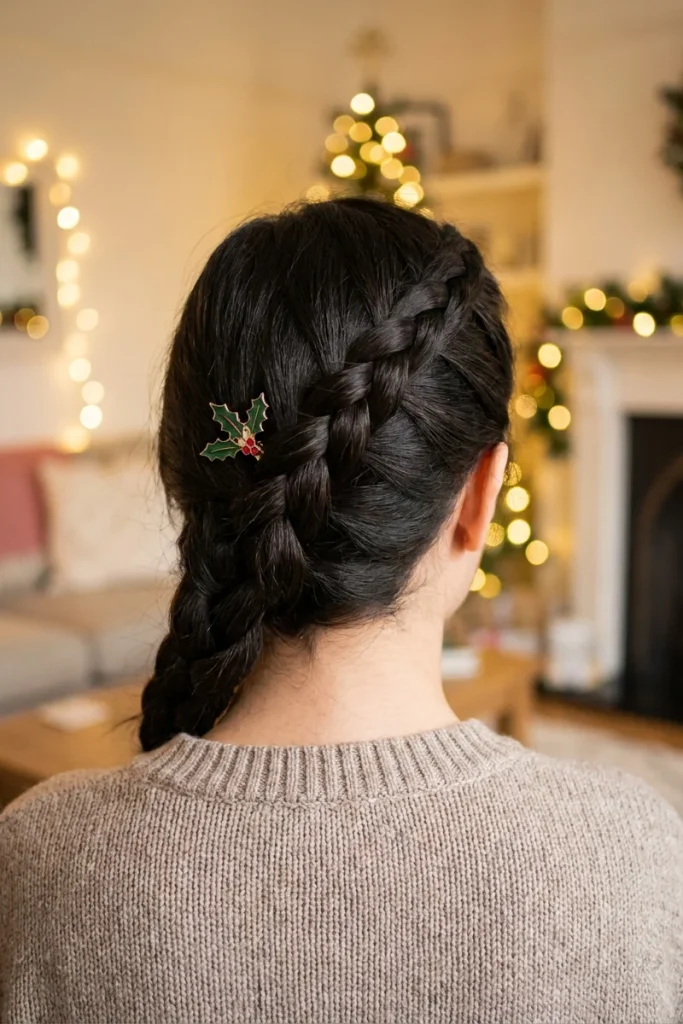
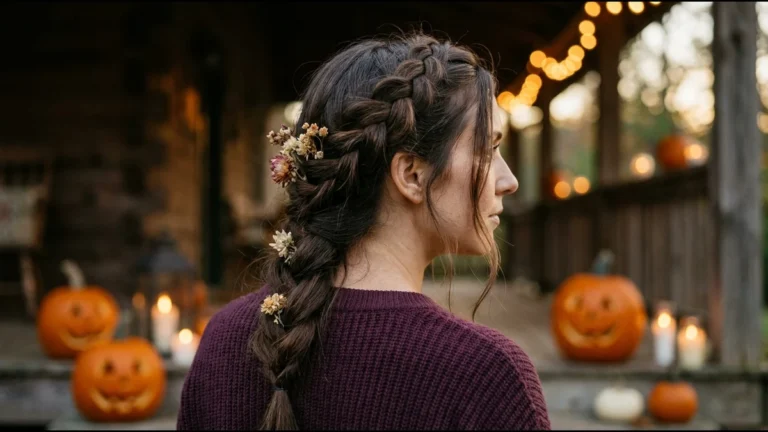
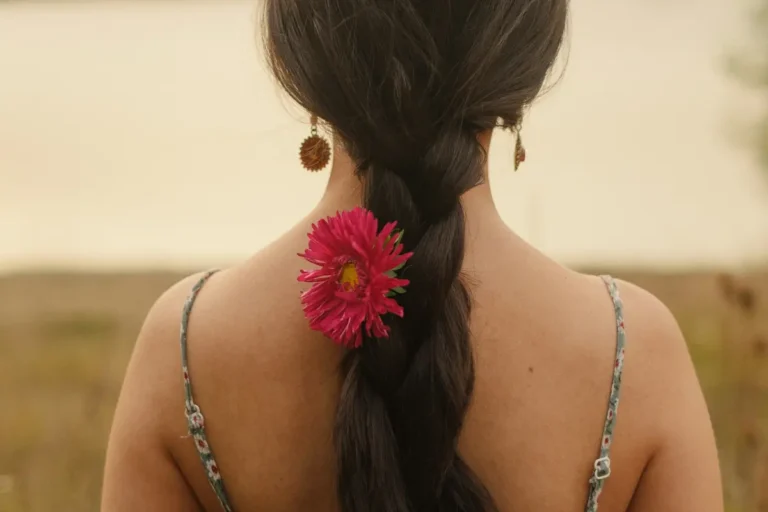
A three-strand or fishtail braid is worked from behind one ear diagonally across the back of the head, secured at the opposite side, then a seasonal clip or pin is added at the point where the braid crosses the crown. Compared to the twisted crown, a braid holds its shape far longer under warmth and movement because the strands are interlocked rather than just twisted, so this is the better pick if the gathering runs long or gets physically active (kids, dancing in the kitchen, that kind of thing). Best for: longer casual events where you need the style to genuinely last.
Prom & Formal Dances
Prom and other formal dances need a style built to survive hours of continuous dancing, heat, and photos taken at every angle — this is where pin security actually matters.
5. Classic Prom Updo (Twisted Chignon)
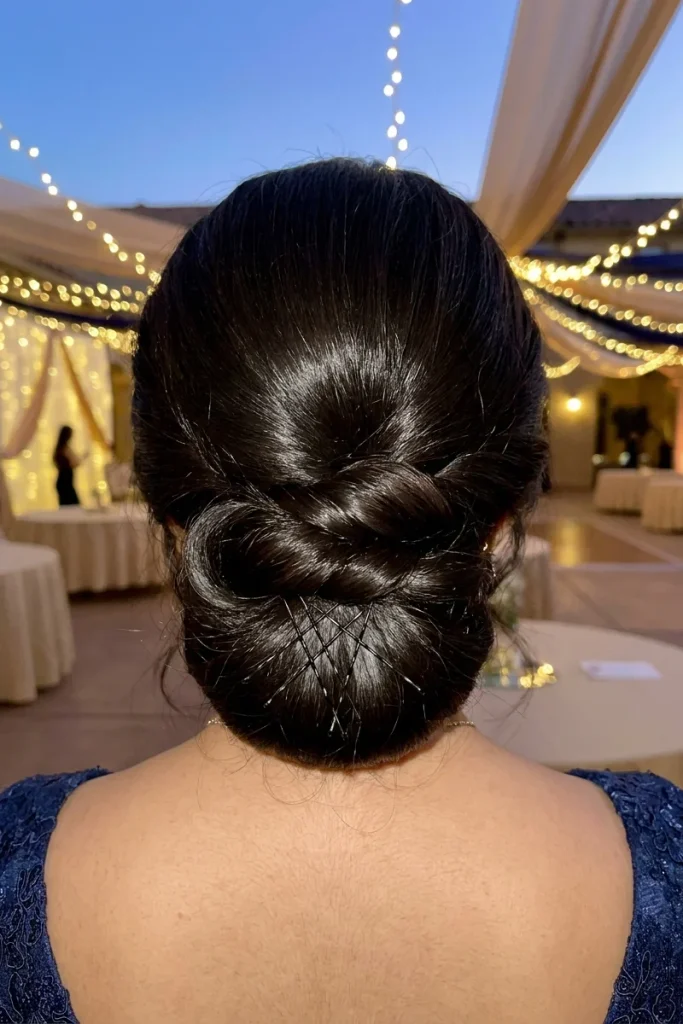
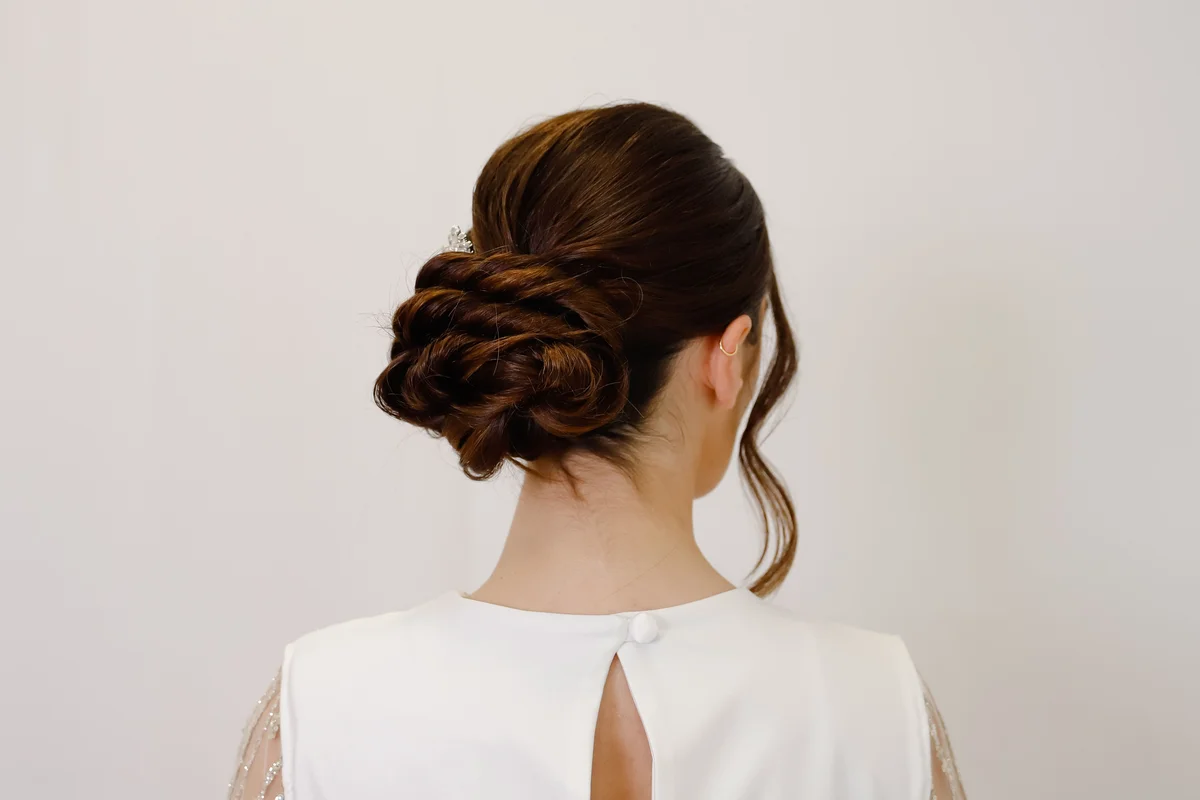
The hair is gathered into a low ponytail, twisted as one section, then wrapped around itself into a knot at the nape and pinned in a cross pattern through the base of the twist — the cross-pattern pinning is what keeps this from loosening under a full night of head movement, unlike a single-pin bun. Best for: anyone who wants a timeless, photo-ready prom look that won’t need a mid-dance repair.
6. Waterfall Braid Half-Up
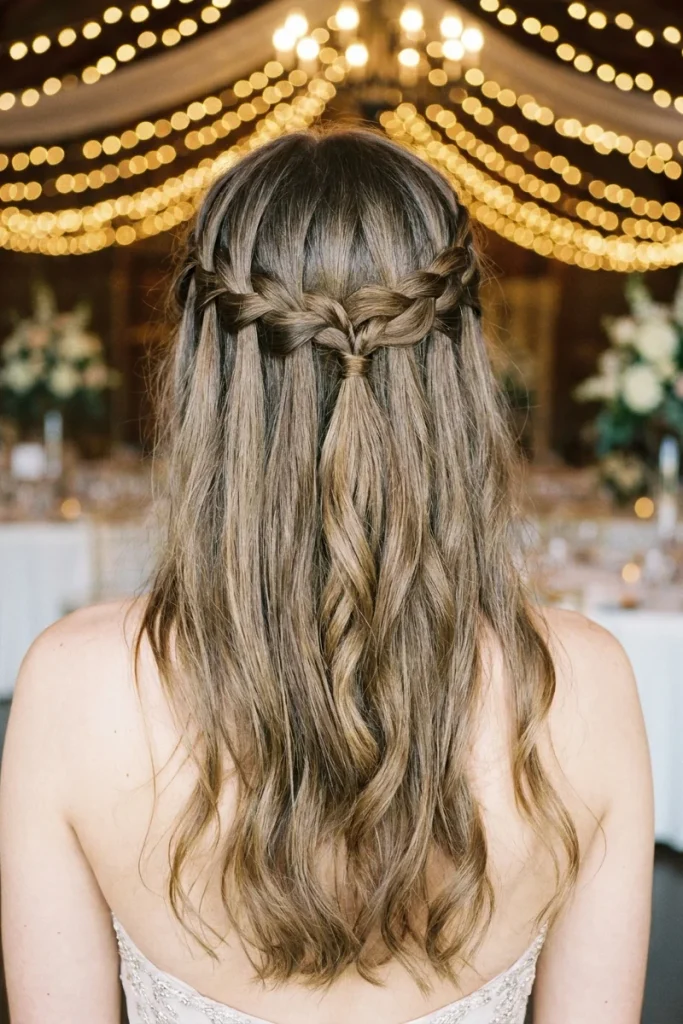
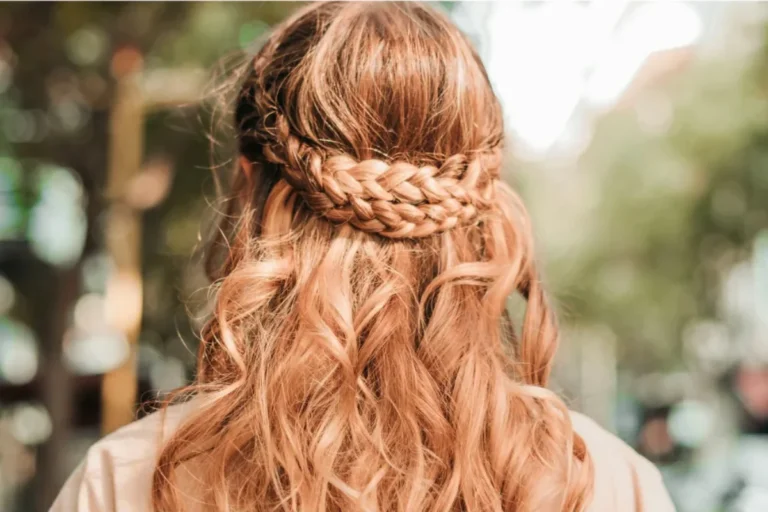
A waterfall braid is worked horizontally across the back of the head, dropping a strand at each pass instead of incorporating it, so the released sections cascade down while the braid itself stays anchored. Where the classic chignon puts all your hair up, this keeps length down and flowing, which makes it the pick if your dress has a low or open back you want visible. Best for: dresses where you want length left down but still want deliberate styling near the crown.
7. Sleek High Ponytail with Wrap
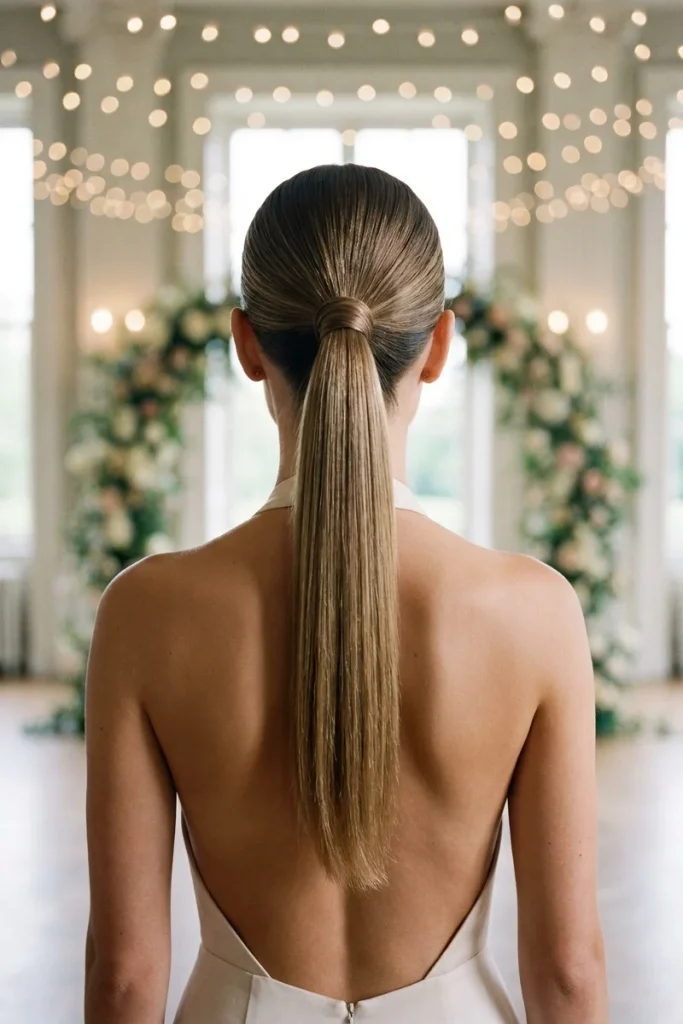
Hair is brushed straight back with gel or smoothing serum, gathered high at the crown, and a small section is wrapped around the base elastic to hide it, finished with a flat iron pass on the ponytail itself for a glass-like finish. Compared to the textured, undone quality of casual styles, this one is deliberately sleek and graphic — it reads more formal specifically because of the smoothness, not the height. Best for: structured, modern gowns and anyone who wants their hair to look architectural rather than romantic.
8. Voluminous Curled Blowout
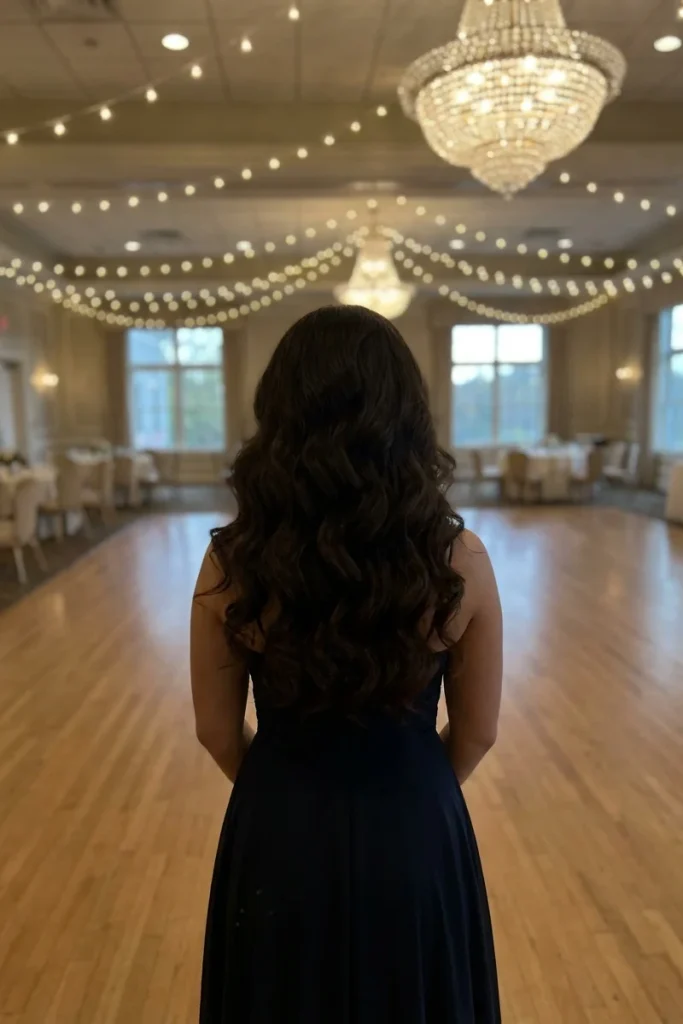
Large-barrel curls are set section by section, brushed out once cool with a paddle brush to loosen them into one continuous wave, then hairsprayed at the roots for lift. Unlike the lob waves in the casual section, this is built for any hair length and uses a bigger barrel specifically to hold volume through hours of dancing rather than settling into soft waves within the hour. Best for: anyone who wants hair left down but with real body and movement that survives dancing.
9. Braided Halo Crown
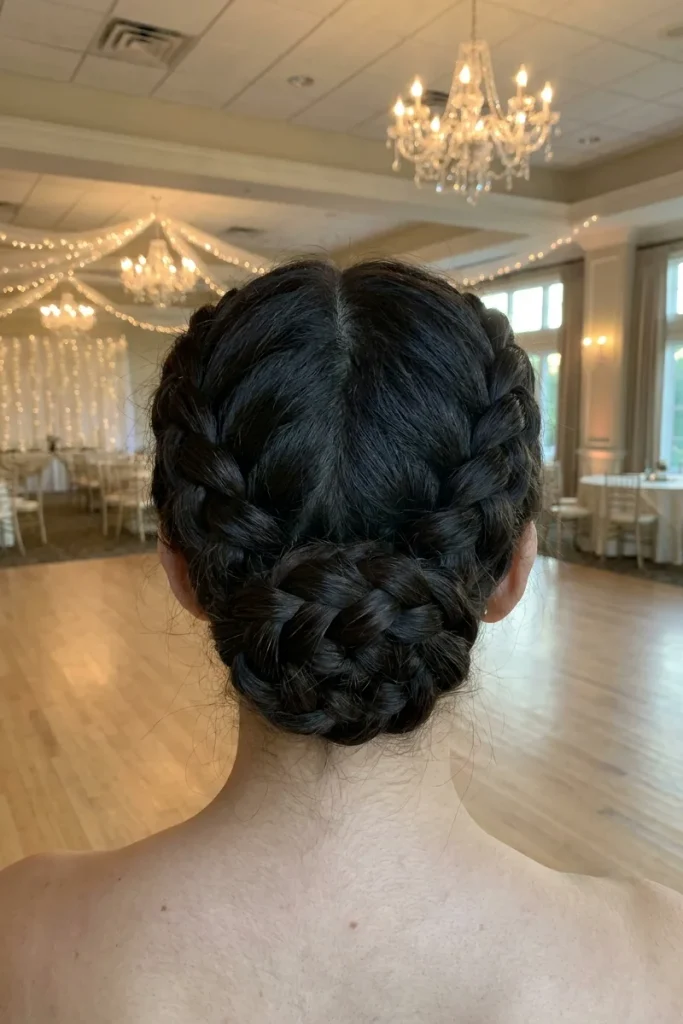
Two Dutch braids are started at the front hairline on each side, worked back and around the head, and pinned to meet and overlap at the back like a crown sitting on top of the head rather than around it. This sits higher and more structured than the half-up twisted crown from the casual section — that difference in height and structure is exactly what separates a casual look from a formal one built from the same basic idea. Best for: prom looks that want a romantic, storybook quality without any hair left loose.
Wedding-Adjacent: Guest & Mother-of-the-Bride
Wedding guest hair and mother-of-the-bride hair share the same brief: elegant enough for formal wedding photos, but comfortable enough to wear through a ceremony, a reception, and often a long car ride in between. if you’re the bride rather than a guest, our guide to bridal and wedding hairstyles sorts 15 styles by what your day actually has to survive, from veils to the dance floor.
10. Soft Low Bun
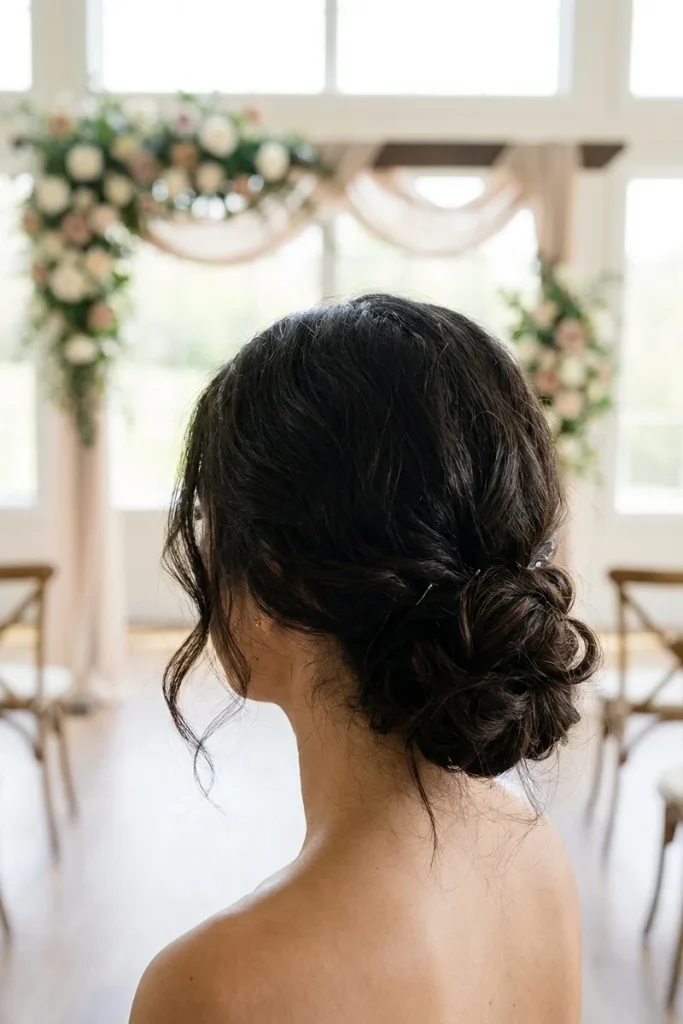
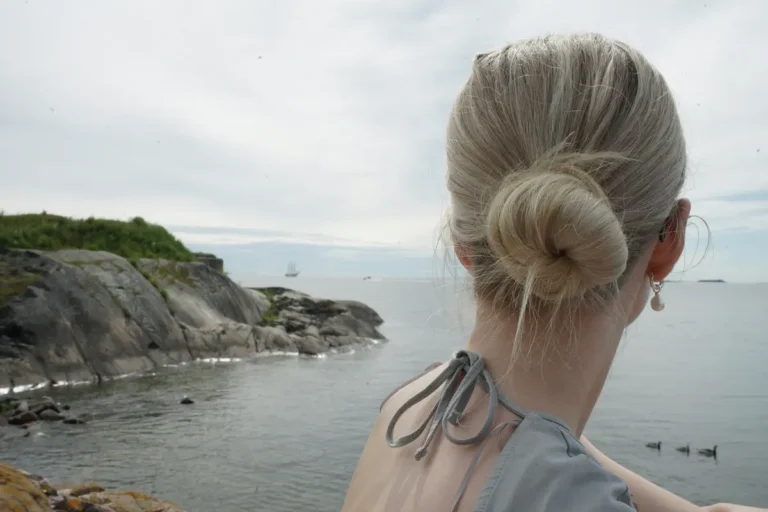
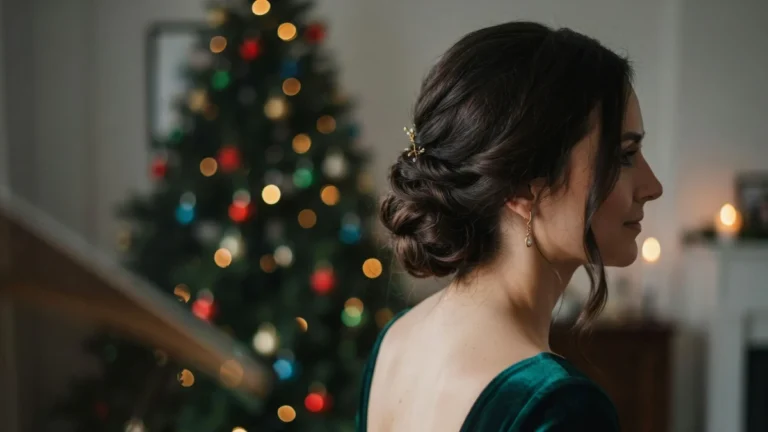
Hair is gathered low at the nape, loosely twisted rather than tightly wound, and pinned into a bun with a few pieces deliberately pulled loose around the face before the whole thing gets a light mist of texturizing spray. The looseness here is intentional and is what separates this from a formal chignon — a wedding guest bun is meant to look effortlessly undone, not architecturally precise. Best for: outdoor or garden-style weddings where a softer aesthetic fits the setting.
11. Side-Parted Finger Waves
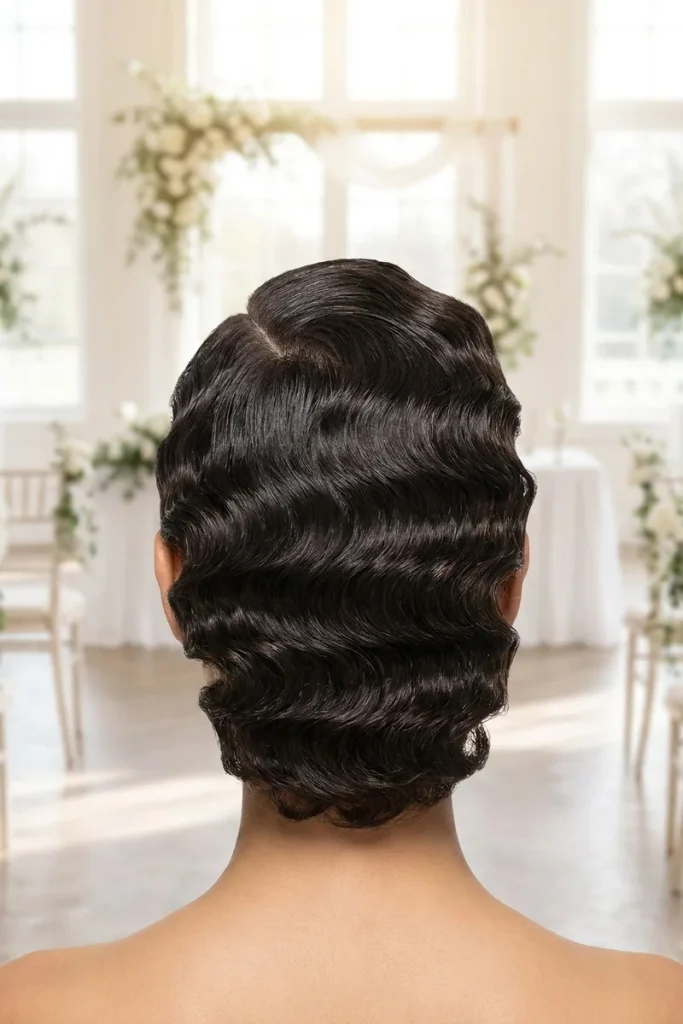
A deep side part is set, then S-shaped waves are pinned into place section by section with flat clips while the setting product dries, creating a defined, vintage wave pattern close to the scalp. This is a flatter, closer-to-head style than the loose waves used elsewhere on this list, which is exactly why it works well under a fascinator or small hat, a detail that matters specifically for mother-of-the-bride styling. Best for: formal daytime weddings and anyone planning to wear a hat or fascinator.
12. Structured French Twist
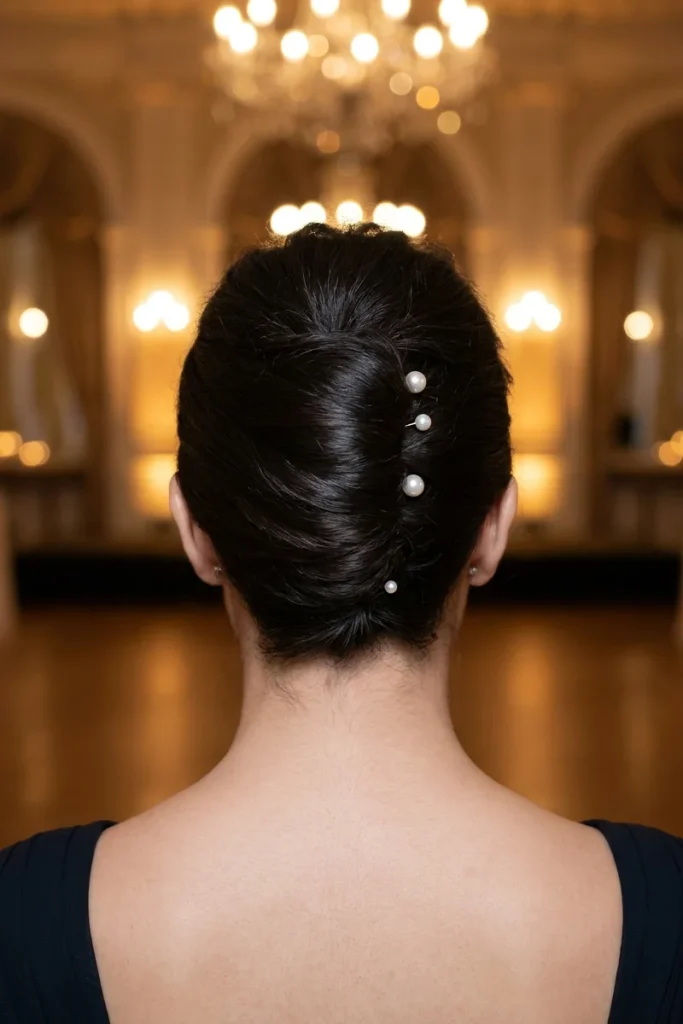
Hair is smoothed to one side, rolled inward along the back of the head, and pinned vertically along the seam from base to crown, with the top gently teased before smoothing for lift. Compared to the soft low bun, this reads noticeably more formal because of the vertical structure and smooth finish, making it a better fit for black-tie or evening wedding receptions than for a casual daytime ceremony. Best for: formal evening weddings, especially with a fitted, structured gown.
13. Loose Chignon with Face-Framing Pieces
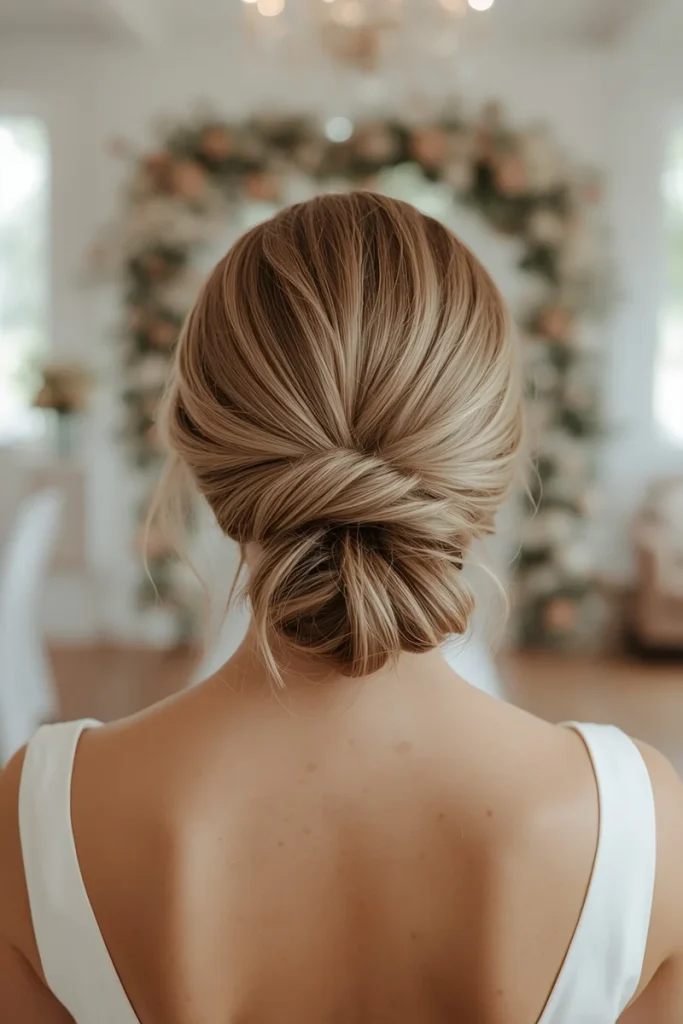
The hair is gathered at the nape, twisted loosely into a low knot, and two face-framing pieces are pulled forward and curled separately after the chignon is pinned, softening the line around the face. This is essentially a compromise between the soft low bun and the structured French twist — closer to the head than the bun, but softer around the face than the twist — which is why it’s the most versatile pick if you’re not sure how formal the wedding will actually feel. Best for: guests unsure of the exact dress code who want a middle-ground look.
Black-Tie & Peak Glam
Black-tie events, galas, and dressed-up New Year’s Eve parties are where hair is expected to look the most deliberate — sleek, sculpted, and clearly the product of real technique rather than something left to fall naturally.
14. Sleek Slicked-Back Bun
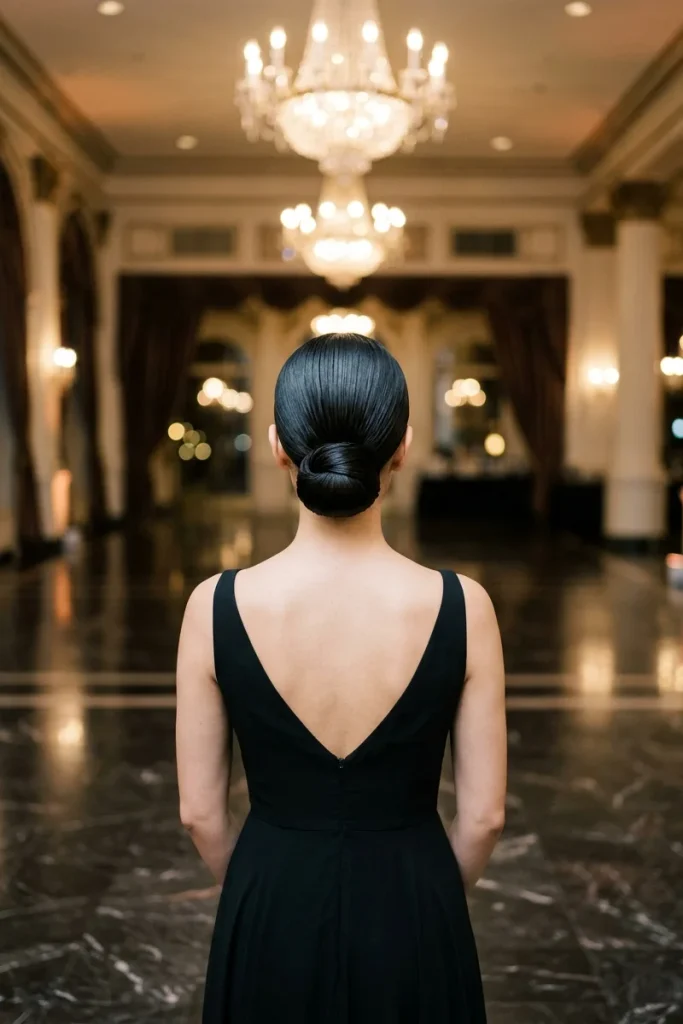
Gel is worked through damp hair, combed straight back with zero parting, gathered into a low bun, and the surface is smoothed flat with a fine-tooth comb before setting with hairspray for a glass-like finish with no flyaways. This is the most structured, most deliberately unnatural-looking style on this entire list, which is exactly the point at black-tie events — the sleekness itself reads as effort and intention under evening lighting. Best for: minimalist black gowns and anyone who wants their hair to look sculptural rather than soft.
15. Vintage Hollywood Waves
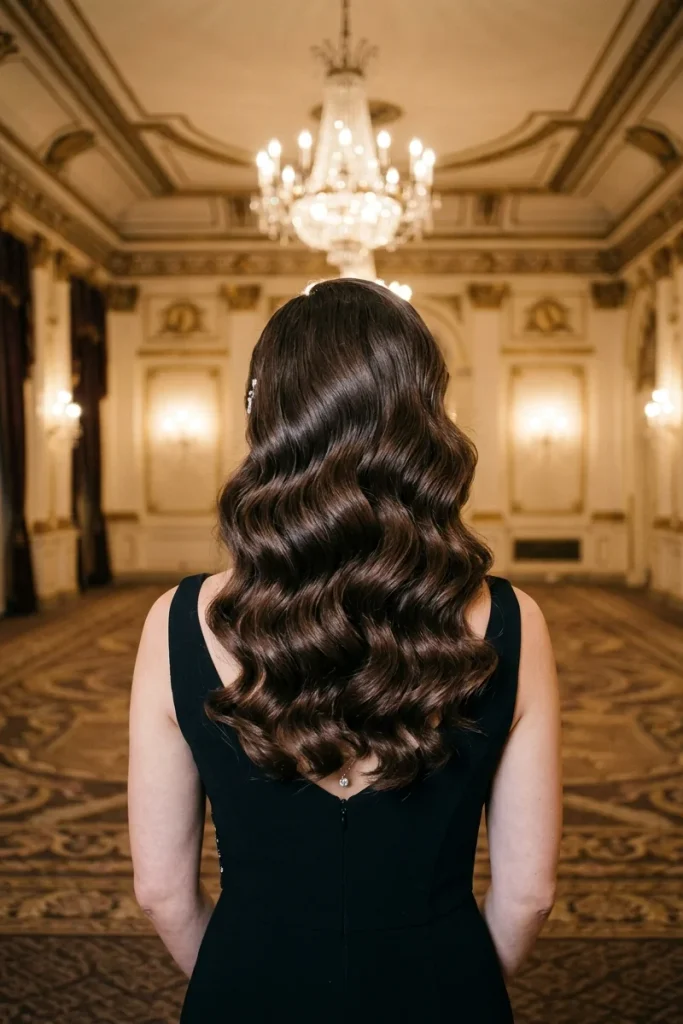
Deep, defined waves are set with a curling iron held vertically, pinned flat to cool in their S-shape, then brushed out gently and set close to the head with pins at the deepest points of each wave. Where the finger waves used for daytime weddings sit flatter and closer to the head throughout, Hollywood waves are set larger and brushed out fuller, giving them more movement and glamour under evening light. Best for: old-Hollywood-inspired gala looks and anyone in a fitted, formal gown.
16. High Sculpted Ponytail with Gel
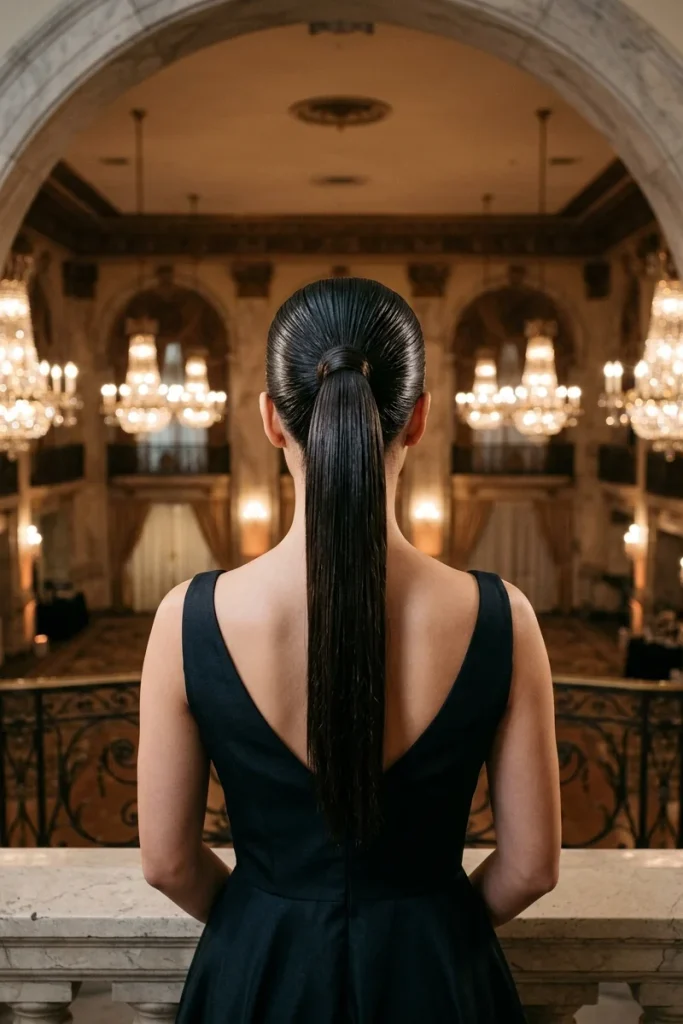
Similar in base structure to the sleek high ponytail used for prom, but built with heavier gel and a comb-through for an even more polished, almost wet-look finish, then the ponytail itself is straightened bone-straight rather than left with any wave. The difference from the prom version is entirely in finish weight — more product, more precision — which is what pushes this from “formal” into genuinely black-tie territory. Best for: statement jewelry and gowns with dramatic necklines that deserve a clean, unobstructed neckline.
17. Statement Braided Updo with Jewels
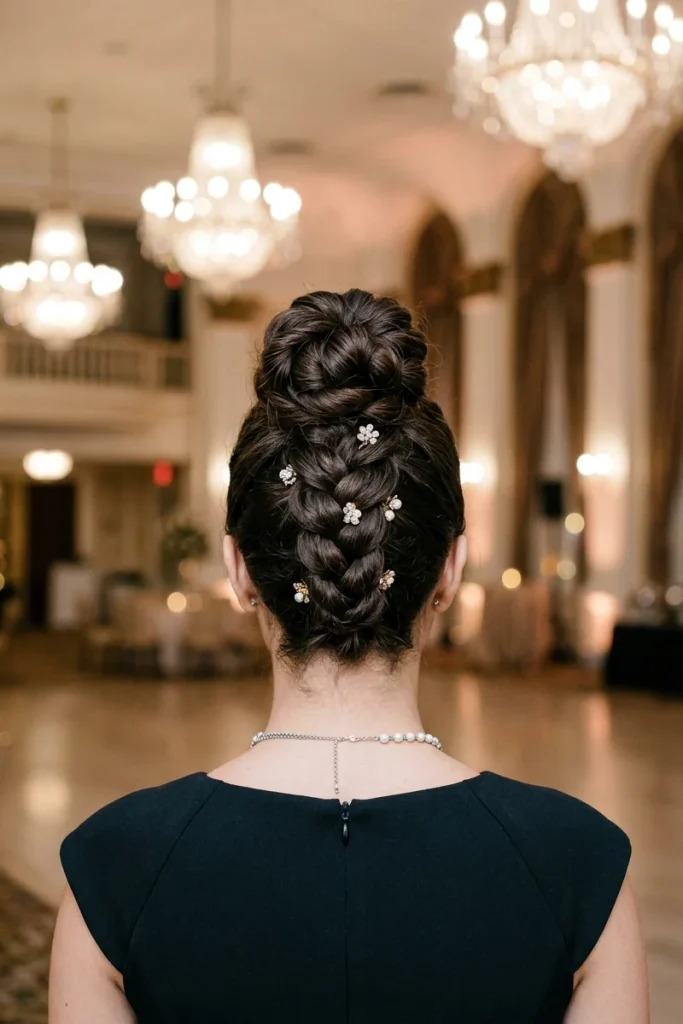
A thick Dutch braid is worked from the nape upward into a coiled bun at the crown, and small decorative pins or hair jewelry are worked into the gaps of the braid once it’s pinned in place. Compared to the braided halo crown from the prom section, this sits higher and is deliberately embellished rather than left plain, which is the detail that moves it from a romantic prom look into genuine gala-level statement hair. Best for: galas and NYE parties where you want your hair itself to function as a visible accessory.
FAQ
How do I keep festive hairstyles from falling out while dancing?
Cross-pin any bun or twist rather than using a single pin straight down — pinning in an X pattern through the base of the style distributes the hold across two directions instead of one, which is the main reason updos loosen under movement.
What’s the best festive hairstyle for outdoor winter events?
Styles with fewer loose, flowing sections tend to hold up best in cold, dry air, since wind and static affect loose hair far more than hair that’s pinned close to the head — a structured bun or twist will survive an outdoor NYE gathering better than a full curled-and-down look.
Can I do a black-tie style with second-day hair?
Yes, and slicked-back or heavily-gelled styles like the sculpted bun or ponytail actually benefit from second-day hair, since the natural oils help the hair hold flat and smooth without fighting the product.
How early should I plan a mother-of-the-bride style if I’m wearing a fascinator?
Choose the hairstyle first and confirm it works flat against the head at the point of attachment before buying the fascinator, since not every style — particularly anything with height at the crown — leaves a clean base for securing one.
What’s the difference between prom hair and wedding guest hair if both are formal?
Prom styles are generally built to survive hours of continuous dancing above all else, while wedding guest styles are built more around holding a photo-ready shape over several hours of standing, sitting, and moving between spaces — the wear pattern, not the formality, is what actually separates the two.
Bottom Line
The right festive hairstyle was never really about the photo you’re copying — it’s about matching the formality of your event and the number of hours (and kind of movement) your hair actually has to survive. Once those two decisions are made, picking from the styles above becomes a lot easier, and the result holds up long after the first photo is taken. If you’re building out a full wedding-season look, our Bridal Updo Styles guide breaks down structure by veil and hair length, our Athletic Hairstyles guide is worth a look if your event involves any real physical movement, and our Bun Hairstyles guide covers bun variations in far more depth than any single style here. For costume parties, our guide to easy Halloween hairstyles builds 14 looks from the same buns, braids and waves.