Updos for Short Hair: Bob, Lob and Shoulder-Length Ideas
Most updo guides assume you have enough hair to gather into a real bun — which is exactly the problem if you’re working with a bob, a lob, or hair that only just reaches your shoulders. Short hair doesn’t have less potential for an updo; it just has fewer mechanisms available, since there’s often not enough length for a traditional twist-and-wrap to hold.
The real question isn’t which updo looks prettiest in a photo — it’s how much length you actually have to work with, because that determines which construction methods are even possible, and what you need the style to survive once you’re out the door.
What Length Changes About an Updo: The Two Decisions Behind Every Short-Hair Updo
1. How short is your hair, actually? A chin-length bob has almost no length to gather — the only real options are pinning sections flat or faking height with backcombing. A lob resting at or past the collarbone has just enough to work with small twists, mini buns, or a low gathered knot. Shoulder-length hair has enough for most of what a longer-hair updo guide would recommend, just built in miniature. Match the style to the length you have today, not the length you’re growing toward.
2. What does the updo need to survive? An everyday updo for running errands just needs to hold through a few hours without much fuss. A special-occasion updo — a dinner, a night out, photos — needs to hold through hours of movement and still look intentional at the end of the night. Building a quick everyday style for an event, or an elaborate special-occasion style for a Tuesday, is why so many short-hair updos either fall out too fast or take longer than the day calls for.
Bob / Chin-Length
At this length, there’s barely enough hair to gather at all, so these mechanisms rely on pinning, backcombing, or faking the appearance of more length rather than a true wrap-and-tuck.
1. Pinned-Back Faux Bun
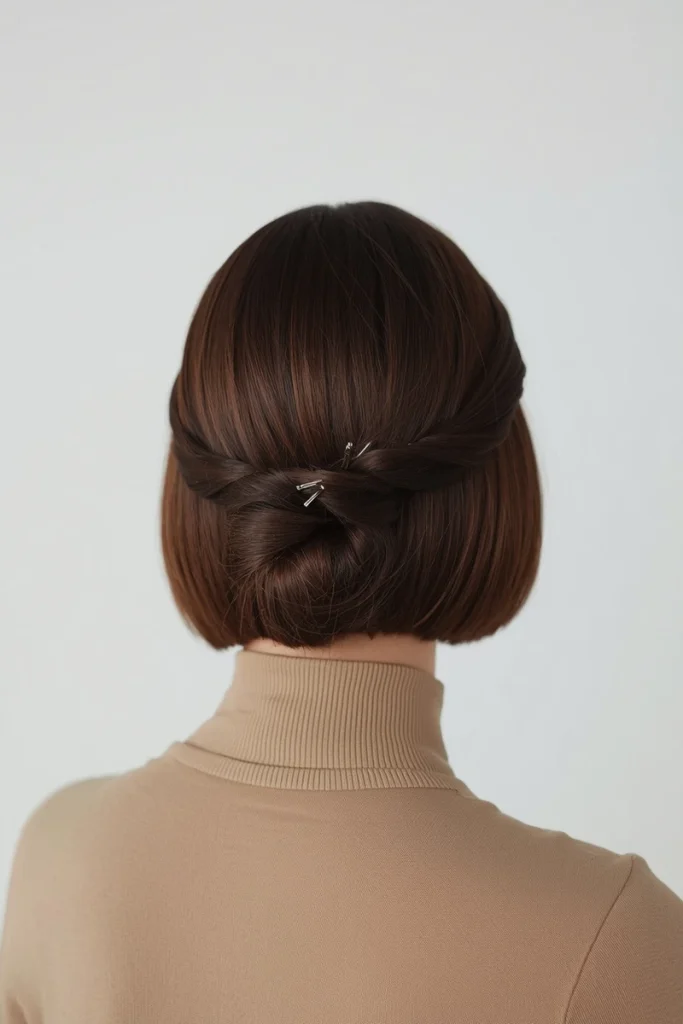
The sides and back sections smoothed back and pinned flat against the head in a cluster at the nape, creating the visual impression of a small bun without actually having enough length to wrap one. Bobby pins crossed in an X pattern at multiple points hold the illusion in place since there’s no actual gathered hair providing its own tension. Best for: the shortest bobs, when a real bun genuinely isn’t possible yet.
2. Backcombed Half-Updo
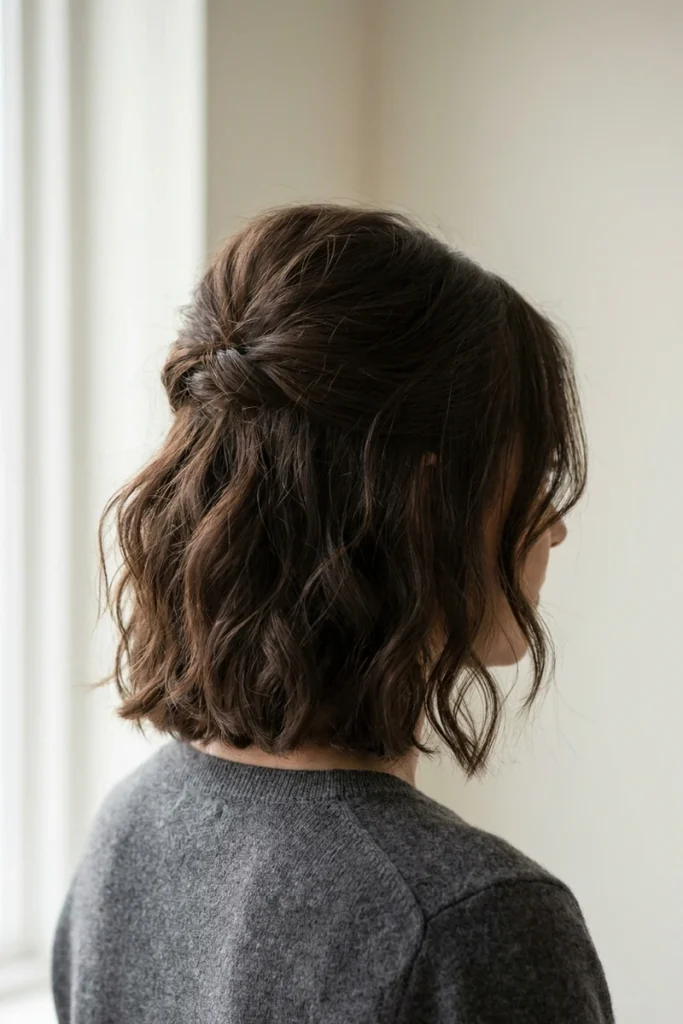
The crown section backcombed for volume, then swept back and secured with pins, while the rest of the bob stays down. Backcombing creates texture and lift at the root, which gives the illusion of an updo’s structure even though most of the hair is still hanging loose. Best for: adding polish to a bob without needing enough length for a full gather.
3. Twisted Side Pin
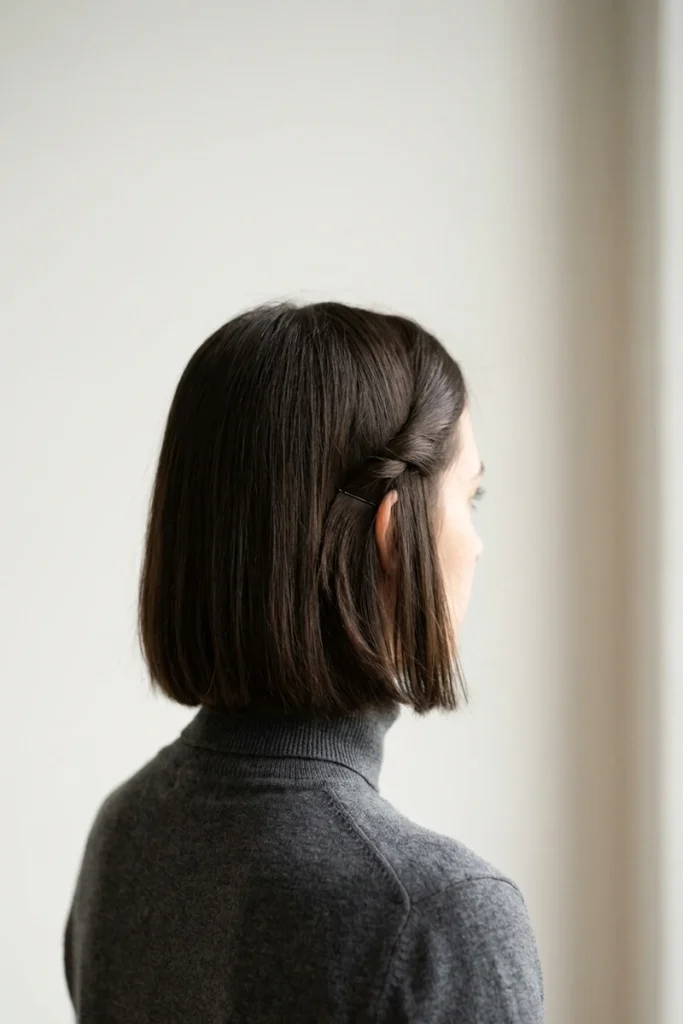
A section from one side twisted toward the back and pinned near the nape, with the rest of the bob left down or tucked behind the ear. The twist itself creates enough tension to hold without needing a second anchor point, which matters at chin-length where there’s rarely enough hair for a two-point structure. Best for: a quick way to get hair off one side of the face without committing to a full updo.
4. Bobby-Pinned Finger Waves Updo
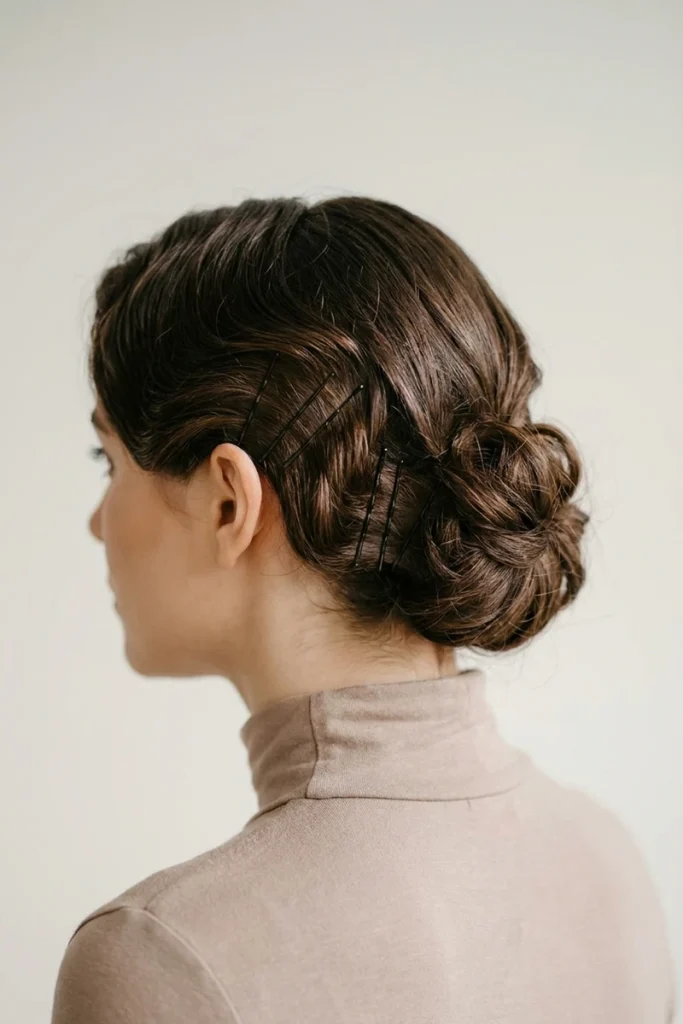
Damp hair set into finger waves close to the scalp, then the ends tucked and pinned flat once dry, creating a vintage-inspired low profile that doesn’t rely on length at all. The waves themselves are the structure — there’s no bun or gather required, which is what makes this one of the only true “full updo” options at chin-length. Best for: a special occasion where a bob needs to look deliberately done, not just pinned out of the way.
Lob / Collarbone-Length
A lob has just enough extra length for small-scale versions of real updo mechanics — mini buns, small twists, and low knots become possible, even if they’re built in miniature compared to a longer-hair version.
5. Low Twisted Knot
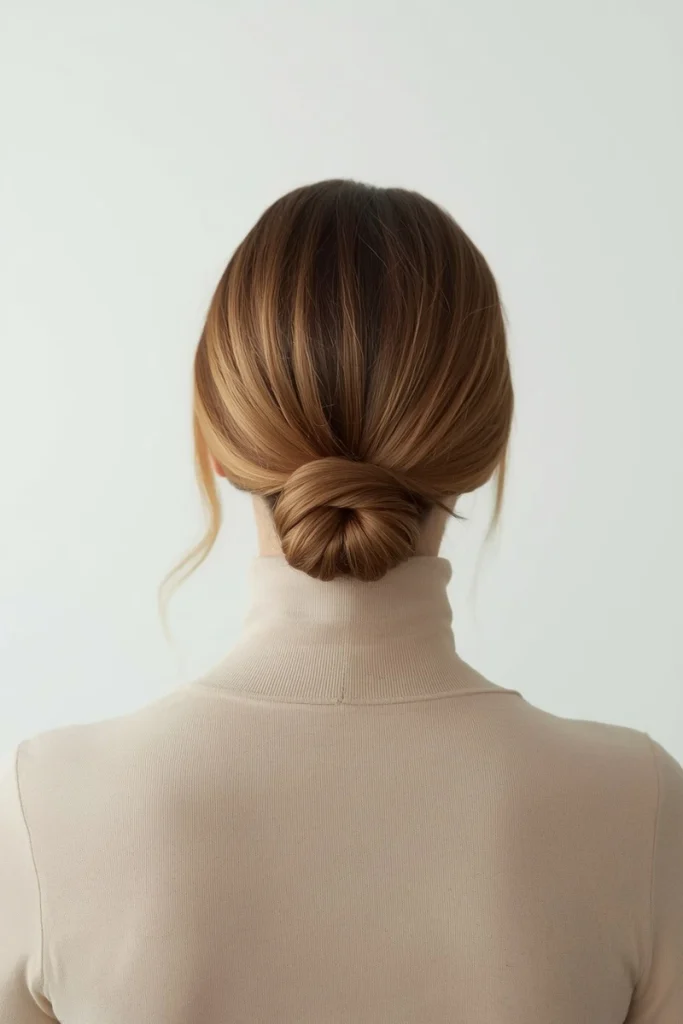
Hair gathered at the nape, twisted into a rope, then wrapped around its own base to form a small, low knot — smaller and tighter than a longer-hair bun would allow, but a genuine wrapped structure rather than a pinned illusion. The twist itself provides the grip needed to hold the wrap in place with minimal pins. Best for: an everyday updo that actually functions like a bun, just scaled down.
6. Half-Up Twisted Crown
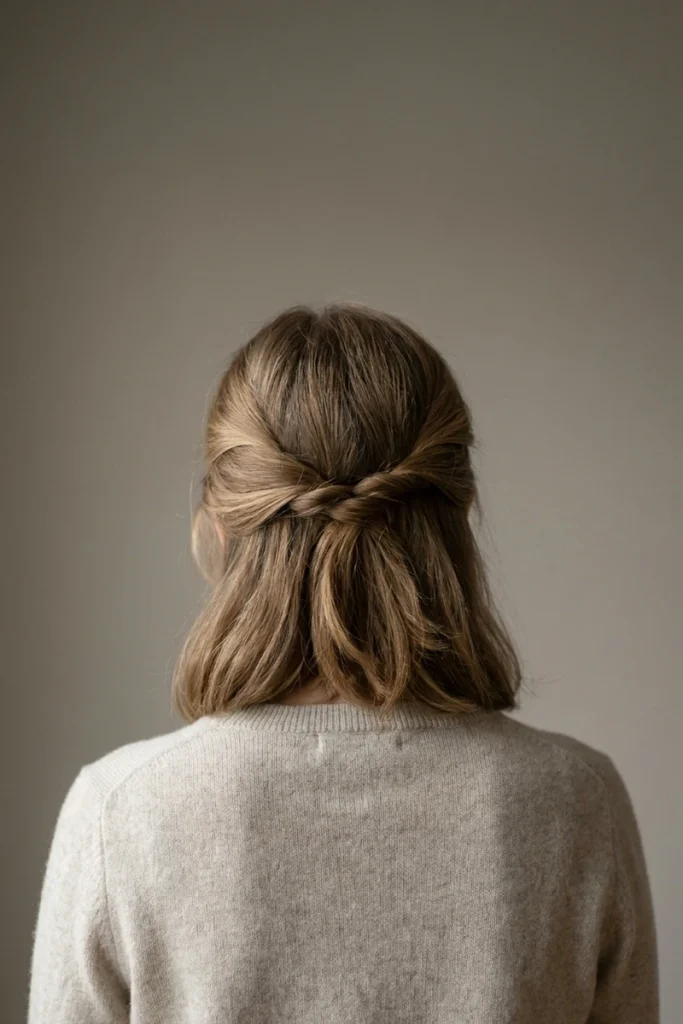
The top and side sections twisted back from each side and pinned at the crown, with the length underneath left down. Twisting the sections before pinning adds grip that a plain half-up gather doesn’t have, which helps at collarbone length where there isn’t much hair weight to hold a simple ponytail-style half-up in place. Best for: softening a lob for daytime without needing to gather all of it.
7. Low Chignon with Bobby Pin Grid
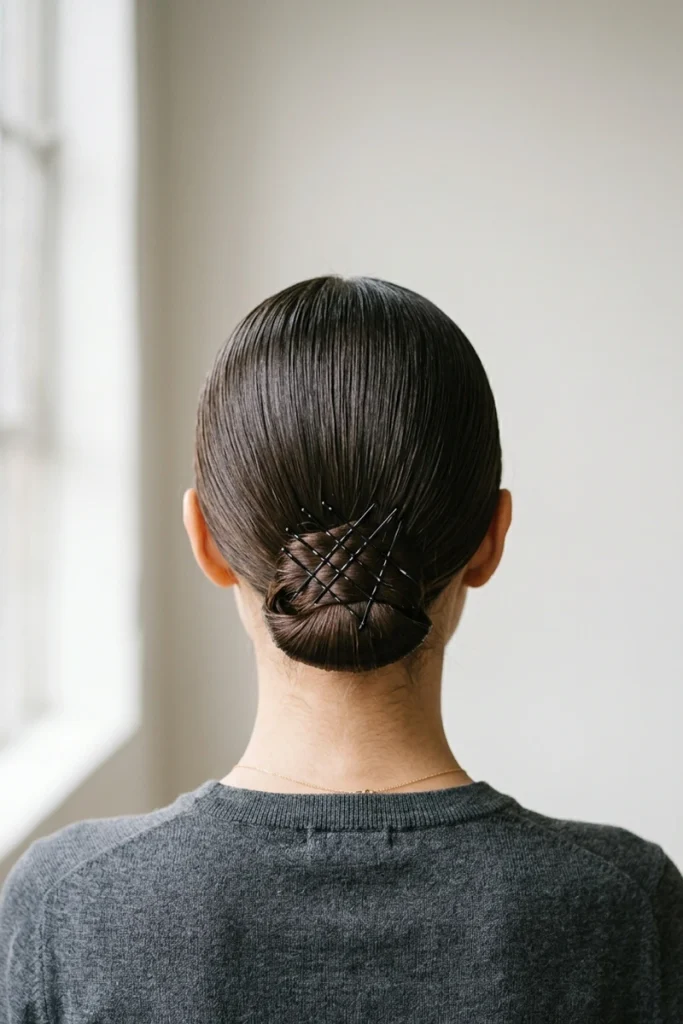
Hair smoothed into a low, flat knot at the nape and secured with a grid of bobby pins placed in a crosshatch pattern rather than just one or two pins. The pin grid is what makes this hold at lob length — a single pin isn’t enough grip for hair this short, but a full grid distributes the tension across more points. Best for: a polished, low-key updo for work or a daytime event.
8. Braided Low Bun
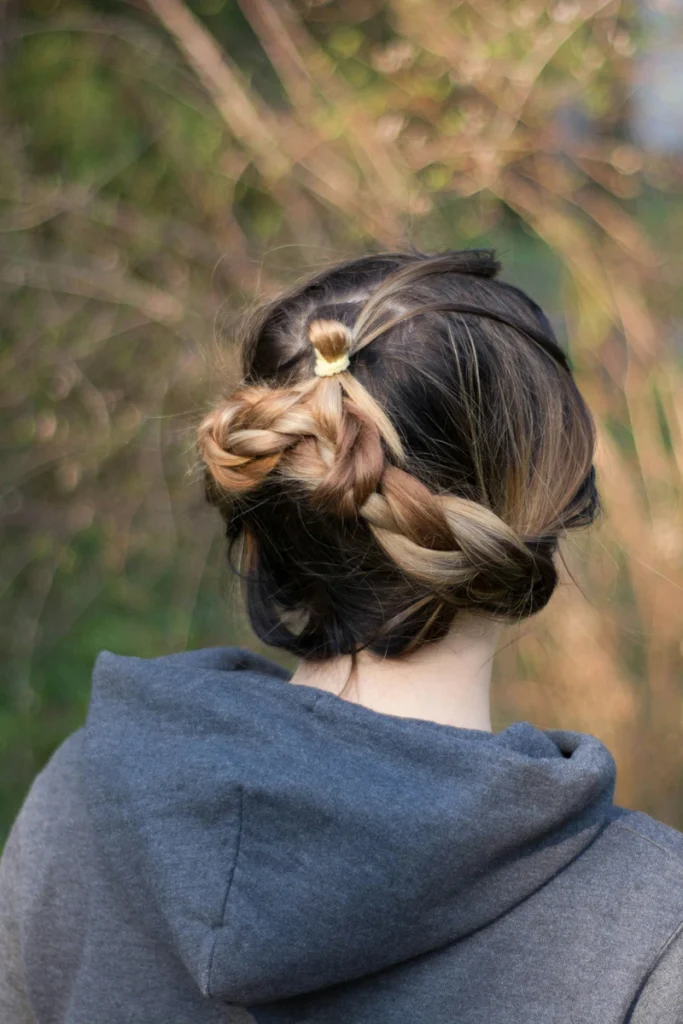
A single braid worked from the nape down, then coiled and pinned into a small bun instead of left hanging. The braid itself adds the bulk and texture needed to make a lob-length bun look intentional rather than skimpy, since collarbone-length hair alone often isn’t enough to fill out a bun on its own. Best for: an updo that needs to look more finished than a plain twisted knot, without much extra styling time.
Shoulder-Length
Right at shoulder length, most of what a longer-hair updo guide recommends becomes genuinely possible — just built with less margin for error than longer hair allows.
9. Classic Low Bun
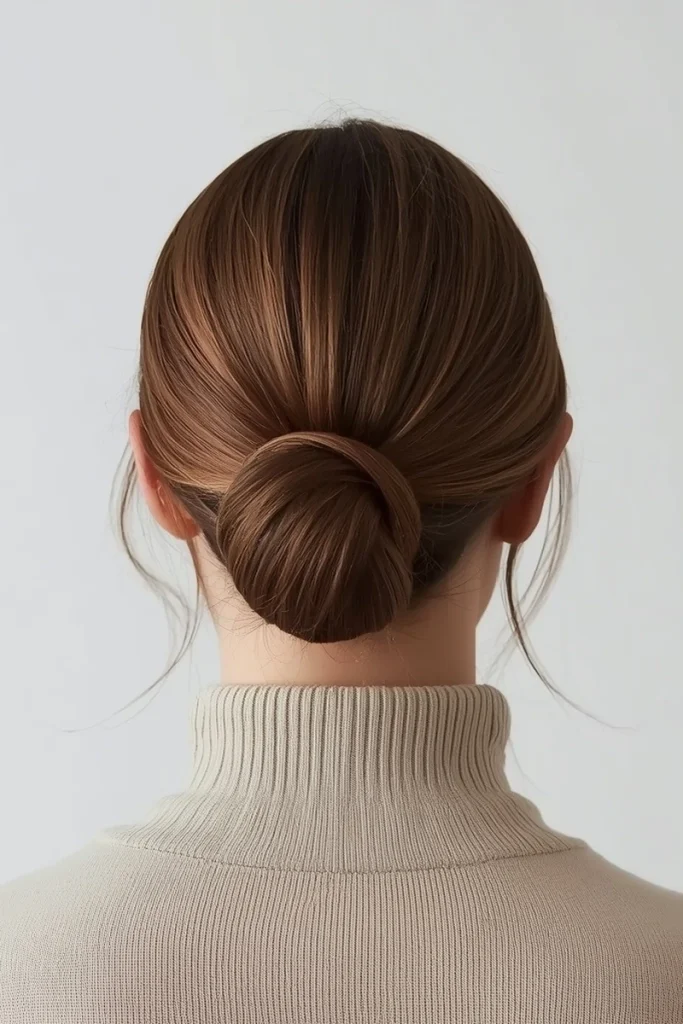
Hair gathered into a low ponytail at the nape, twisted, and wrapped fully around its own base into a real bun — the first length in this guide where a traditional bun construction works close to how it would on longer hair. Best for: a dependable everyday updo that doesn’t need a workaround.
10. Braided Crown Wrap
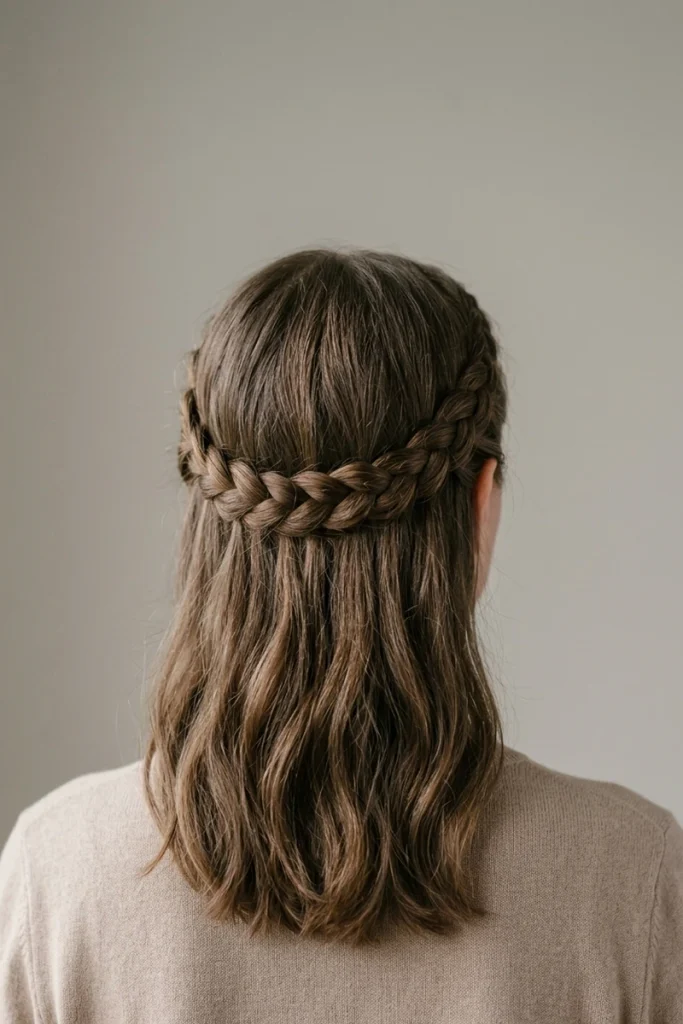
Two small braids worked from each side of the front hairline back toward the nape, then wrapped around a low bun or knot to create a crown-like finish. Shoulder-length hair has just enough for the braids to reach all the way around without running out of length halfway. Best for: a special-occasion updo that reads as more elaborate than the effort it actually takes.
11. Twisted Updo with Face-Framing Pieces
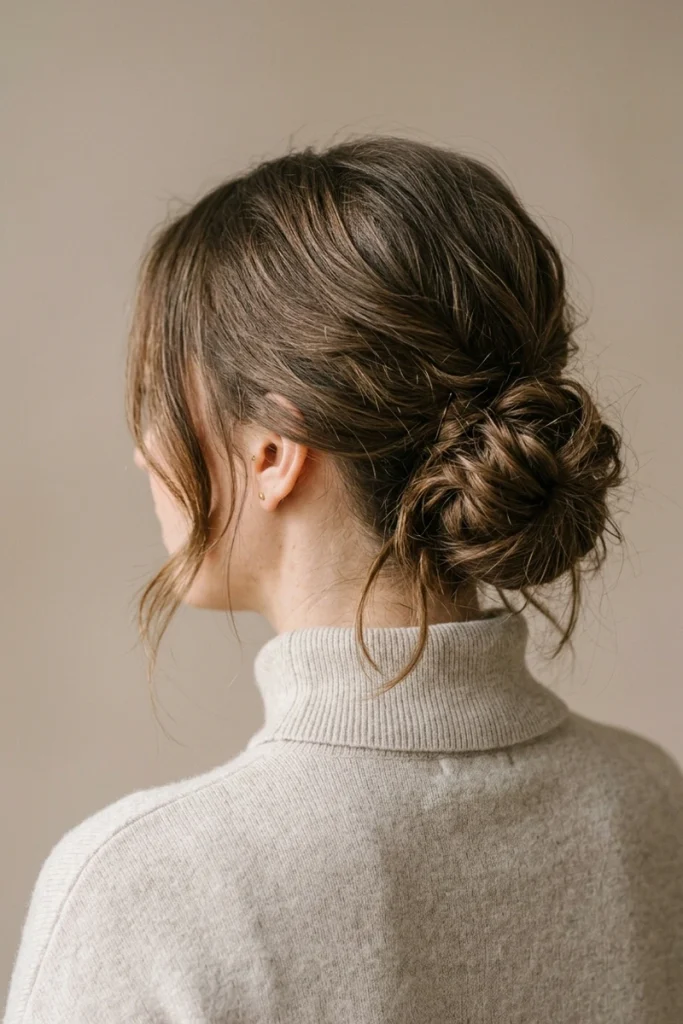
The main sections gathered and twisted into a low updo while a few shorter face-framing pieces are deliberately left out at the front. Leaving pieces out is what makes this work at shoulder length — it hides the fact that there isn’t quite enough hair to pull every strand back cleanly, which would look sparse rather than intentional. Best for: a soft, undone-looking updo for photos or an evening out.
12. Sleek Low French Twist
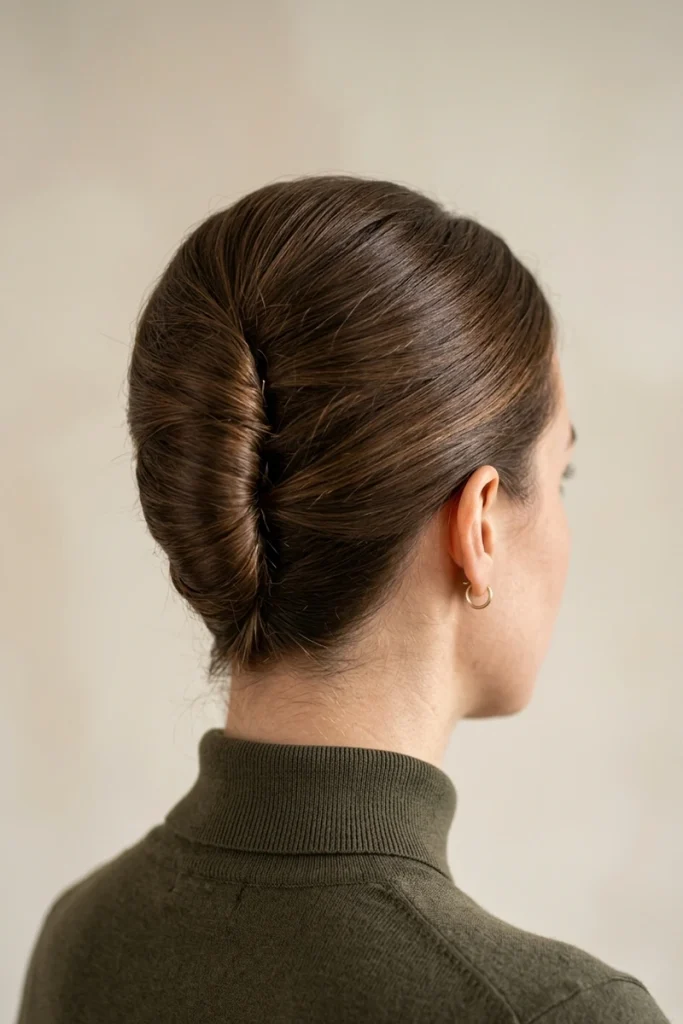
Hair smoothed back and rolled into a vertical twist at the back of the head, pinned along the seam to hold the roll in place. The French twist depends on smooth tension along the roll rather than bulk, which is why it’s one of the few classic updo mechanisms that translates well to shoulder length without needing extensions or heavy backcombing. Best for: a formal, polished updo when the occasion calls for something more structured than a bun.
FAQ
My hair is too short for any bun to look full. What actually helps?
A braid worked into the bun before wrapping adds visible bulk and texture, which fills out a small bun far more than smoothing the same amount of hair straight into a twist. Backcombing the section lightly before gathering also helps, since it adds volume at the root that carries through into the finished shape.
What’s the fastest way to keep a bob or lob out of my face without a full updo?
A half-up section, twisted rather than left as a plain gather, holds better and looks more finished than a simple half-up ponytail — the twist adds grip that short hair’s lighter weight doesn’t provide on its own.
How do I keep a short-hair updo from sliding out by the end of the day?
Use more pins than feels necessary, placed in a crosshatch or grid pattern rather than a single pin or two — short hair has less weight to hold pins in place through its own tension, so the pins themselves need to do more of the work. A light texturizing spray before styling also gives strands something to grip against.
Can I actually get an updo with a chin-length bob, or should I wait until it grows out?
A full “everything gathered up” updo genuinely isn’t possible at chin-length — there just isn’t the hair to do it. But pinned-back styles and finger-wave updos achieve the same polished, off-the-face look without needing length, so a bob doesn’t have to sit out of updo styling entirely.
Do these updos work on second-day or unwashed hair?
Better than on freshly washed hair, in most cases — second-day hair has more natural texture and grip, which helps twists and pins hold, especially at shorter lengths where there’s less hair weight helping the style stay put. A light dry shampoo at the roots before styling can help even more.
What’s the difference between these and the styles in your regular updo guides?
Our Bun Hairstyles and Half Up Half Down Hairstyles guides assume enough length for a standard gather-and-wrap. Everything here is built specifically for hair that doesn’t have that much length yet, using pinning, backcombing, and scaled-down mechanics instead.
Bottom Line
An updo doesn’t need long hair to work — it needs a mechanism that’s actually built for the length you have. If you’re working with more length than covered here, our Bun Hairstyles guide covers the full range of bun techniques, and our Half Up Half Down Hairstyles guide covers securing mechanisms for longer hair. And if you’re also thinking about how your short hair holds up during workouts specifically, our Short Hair Workout Styles guide covers that angle in more depth.