Short Hair Workout Styles for Pixies, Bobs and Lobs
Most workout hairstyle guides are written for hair long enough to braid or pull into a ponytail — which is no help if you’re working with a pixie, a bob, or a lob that’s still too short to gather properly. Short hair doesn’t have less to think about during a workout; it just has fewer mechanisms available to solve the same problem, since there’s often not enough length for a braid to grip or a ponytail to hold.
The real question with short hair isn’t which style looks cutest in a mirror selfie — it’s how much length you actually have to work with, because that determines which mechanisms are even possible, and what you actually need that style to do once you start moving. For non-workout occasions where you want something more polished, our Updos for Short Hair guide covers 12 techniques built for the same length constraints.
Before You Start: The Two Decisions Behind Every Short-Hair Workout Style
1. How short is your hair, actually? A pixie that sits above the ears has almost no length to gather at all, so the only real options are pushing hair back or pinning it flat. A jaw-length bob has just enough to work with for small twists, mini braids, or a very short ponytail. A lob resting at or past the collarbone has enough length for most of the mechanisms a longer-hair guide would recommend, just in miniature. Match the style to the length you have today, not the length you’re growing toward.
2. Do you need hair out of your face, or fully secured for high movement? A slow yoga class just needs hair off your forehead — a headband solves that in five seconds. A HIIT class or a run needs hair that won’t work loose or flop into your eyes with every stride, which takes an actual anchoring mechanism, not just a push-back. Deciding this first saves you from underbuilding a style for what you’re about to do.
Pixie Length (Above the Ears)
At this length, there’s rarely enough hair to braid or gather into anything. Every style here works by controlling the hair against the scalp instead of collecting it away from it.
1. Simple Headband Push-Back
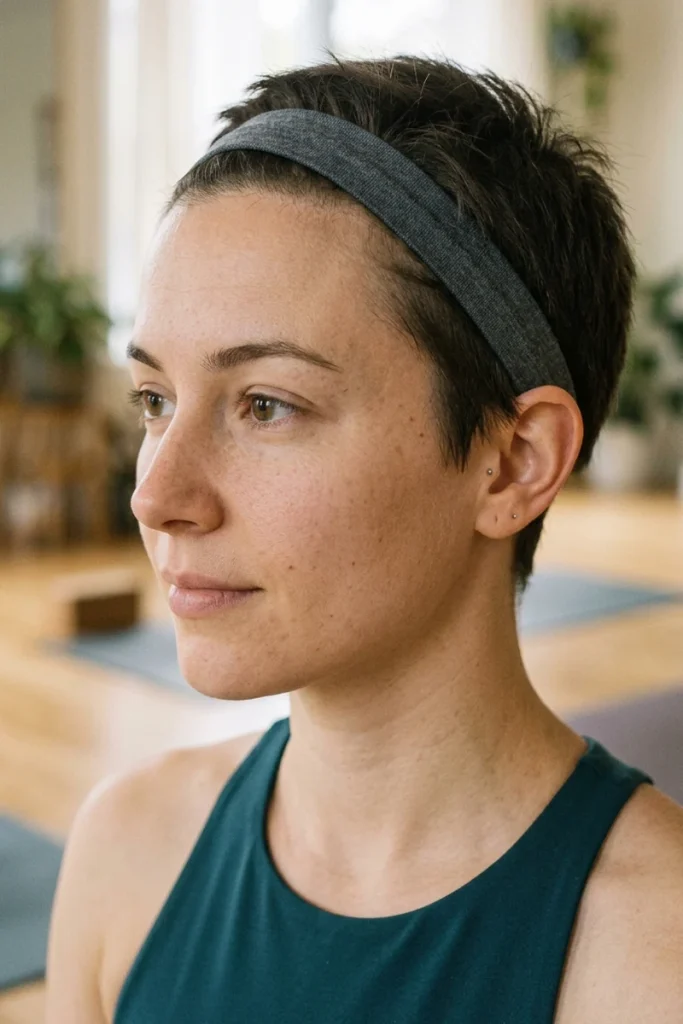
A stretch or elastic headband placed just behind the hairline, pushing all the top hair back and off the forehead. There’s nothing to secure at pixie length beyond keeping hair away from the eyes, and a headband does that instantly without needing any length to work with. It won’t do anything for sweat at the hairline itself, but it solves the one real problem pixie length actually has during a workout. Best for: yoga, walking, or any low-sweat session where the only issue is hair falling forward.
2. Bobby Pin Sweep
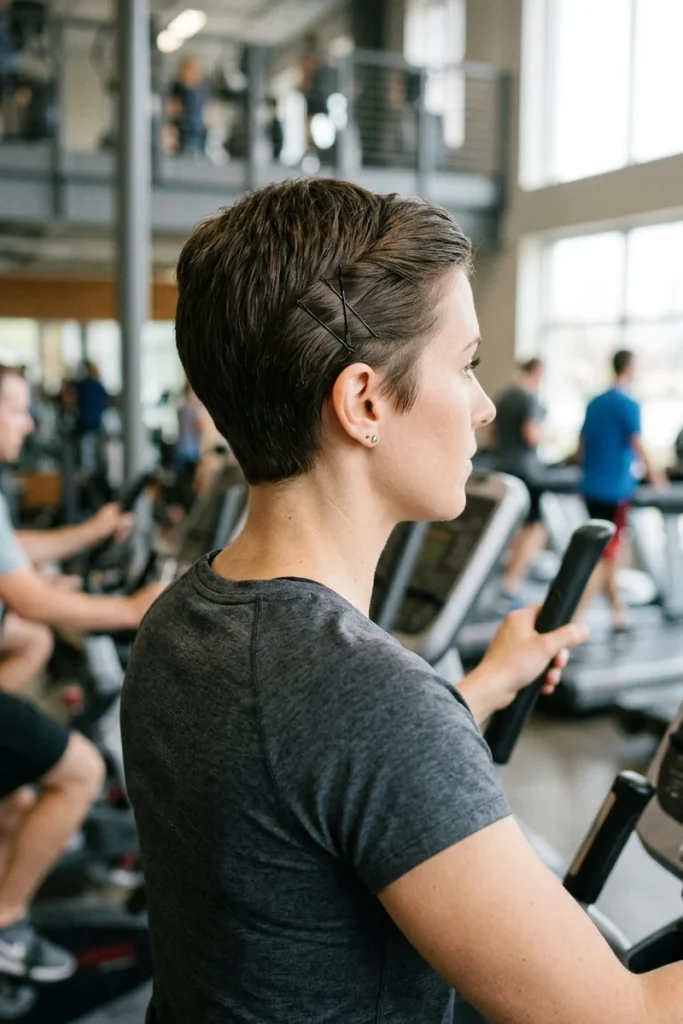
The front section combed to one side and pinned flat against the head with two or three crossed bobby pins, rather than left loose. Crossing the pins in an X pattern gives them something to grip against instead of just resting on smooth hair, which is why a single straight pin slips out within minutes while a crossed pair holds through real movement. Best for: strength training or cardio machines where a headband would slip but there’s still not enough length to braid.
3. Texturizing Paste Slick-Back
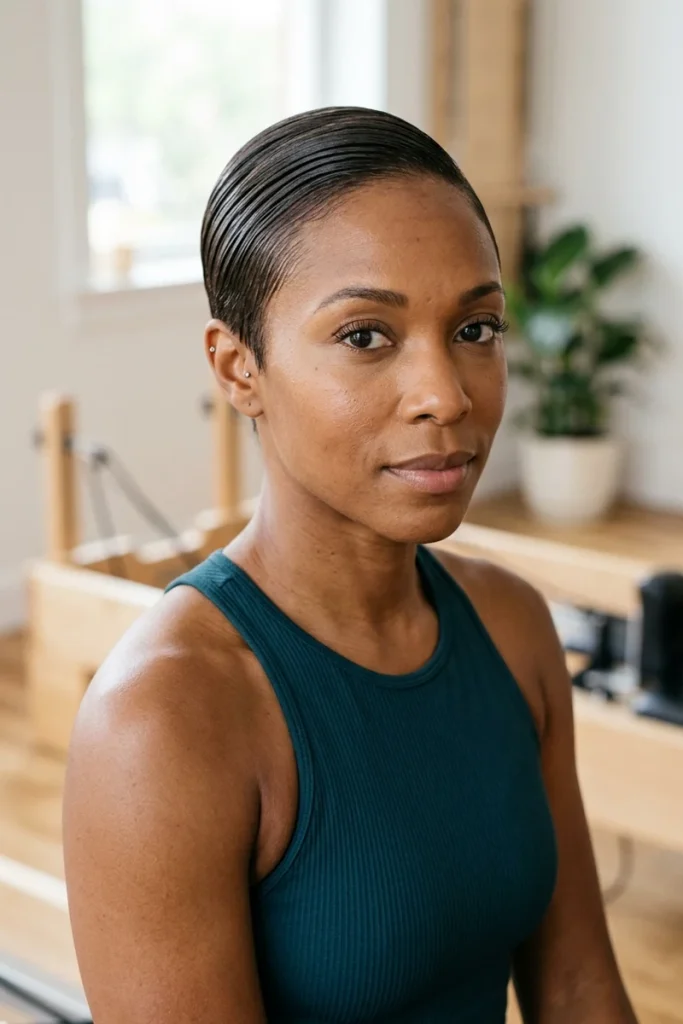
A small amount of texturizing or working paste combed through damp or dry hair and smoothed straight back off the face, with no clips or bands at all. The paste is doing the entire job here — adding enough grip between strands that hair stays where it’s placed instead of falling forward, which matters at pixie length since there’s no elastic or pin point to rely on. Reapply after showering; it doesn’t survive water. Best for: short, low-sweat sessions where you want a clean look with zero accessories.
4. Sweatband Wrap
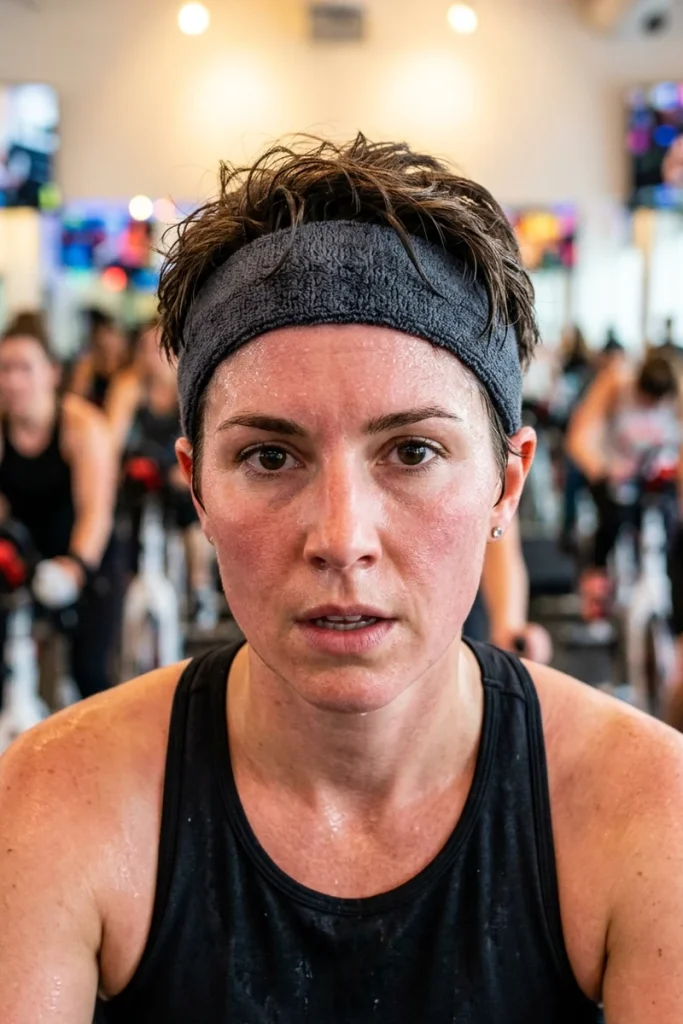
A terry-cloth or moisture-wicking sweatband worn low across the forehead rather than pushed back like a fashion headband. Unlike a decorative headband, its job is absorbing hairline sweat directly rather than just holding hair back, which is the actual failure point at pixie length — there’s so little hair to manage that sweat dripping into your eyes becomes the bigger problem. Best for: running or any high-sweat cardio where hairline sweat is the real complaint, not hair movement.
Bob / Jaw Length
There’s enough hair here for very small mechanisms — mini twists, short braids, tiny ponytails — even if nothing on this list would work at pixie length.
5. Mini French Braid Front Section
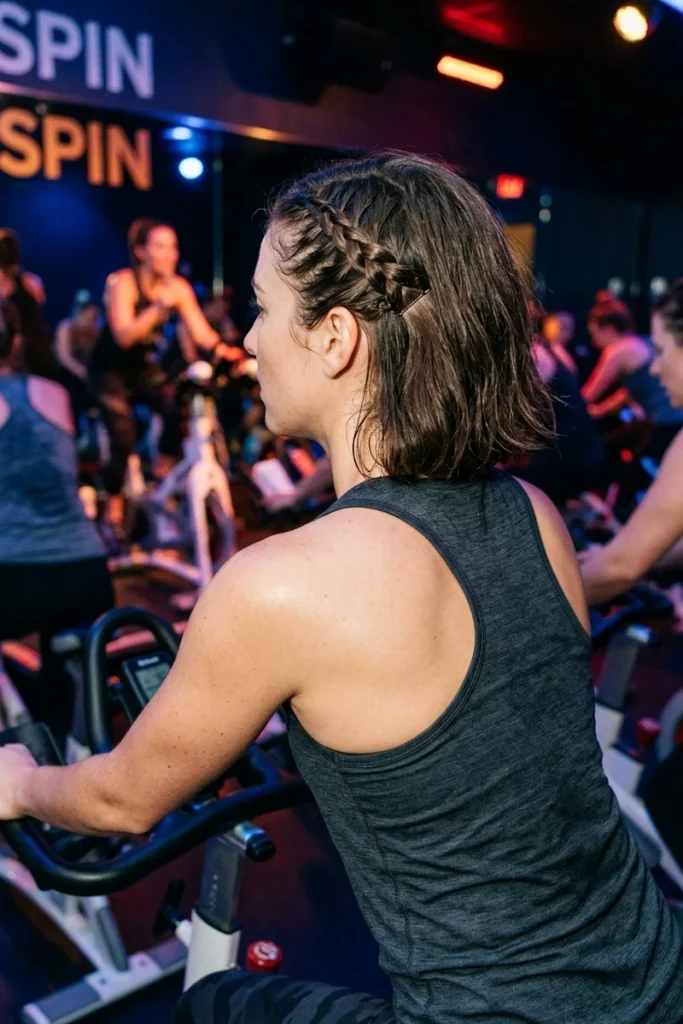
A single small French braid worked from the front hairline back to just behind the ear, then pinned flat, with the rest of the bob left down. Picking up sections as the braid progresses anchors it to the scalp the way a plain twist can’t, so it holds through more movement than pixie-length options allow, even though the braid itself only spans a few inches. Best for: dance cardio or spin, where hairline movement is the main issue.
6. Half-Up Twist with Clip
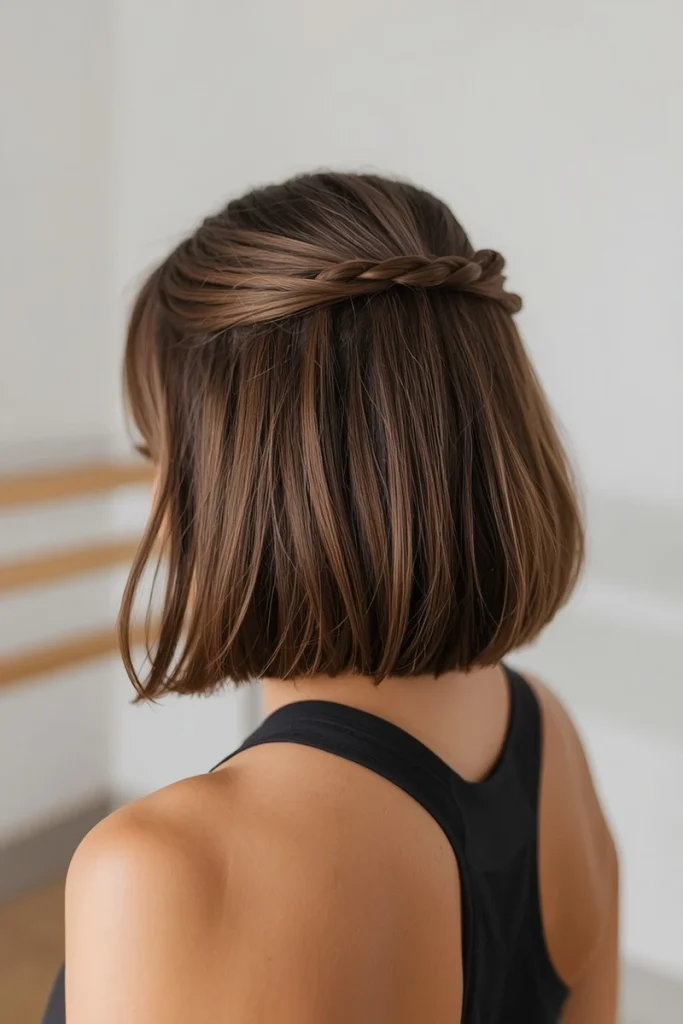
Two small sections twisted back from each temple, crossed, and secured at the crown with a small clip rather than a full elastic. The twist adds grip at the clip point that plain hair wouldn’t have, which is why this holds through more bounce than a bobby-pin sweep, without needing enough length for a real braid. Best for: barre, light weights, or a studio class.
7. Tiny Low Ponytail
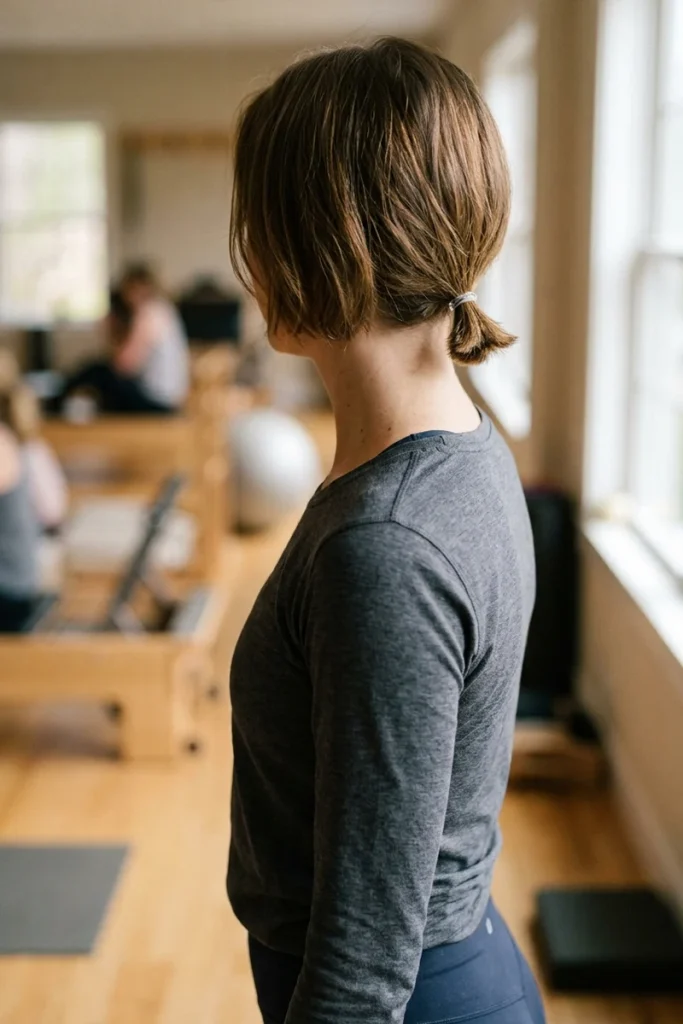
If your bob just reaches past the jaw, gather everything into the smallest low ponytail it allows, secured close to the nape. It’s the same single-elastic mechanism as any ponytail, just working with less length, which means it holds slightly less securely than a longer ponytail would — expect a slightly looser finish, not a failure of the mechanism itself. Best for: Pilates or a slow flow where nothing is testing the elastic hard.
8. Two-Strand Twist Pinned Back
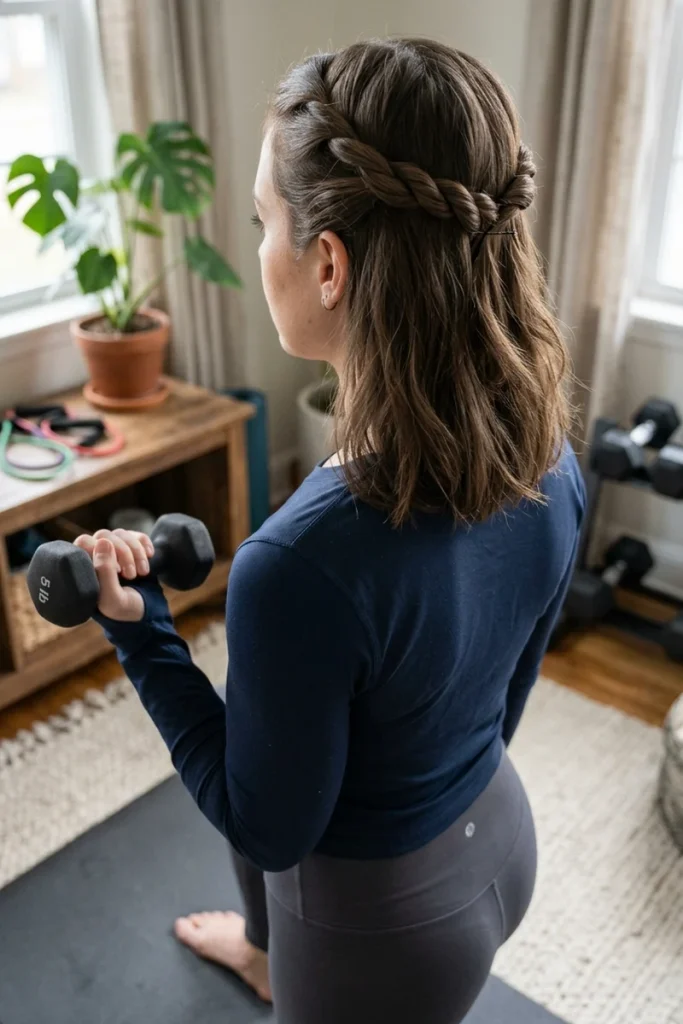
The whole front section divided into two thick strands, twisted around each other once, and pinned flat against the crown. It’s a faster mechanism to build than a braid and needs less length to work, since a twist only needs the strands to wrap around each other rather than cross over a third strand. Best for: a quick home workout where you don’t want to spend time braiding.
9. Wide Headband with Tucked Ends
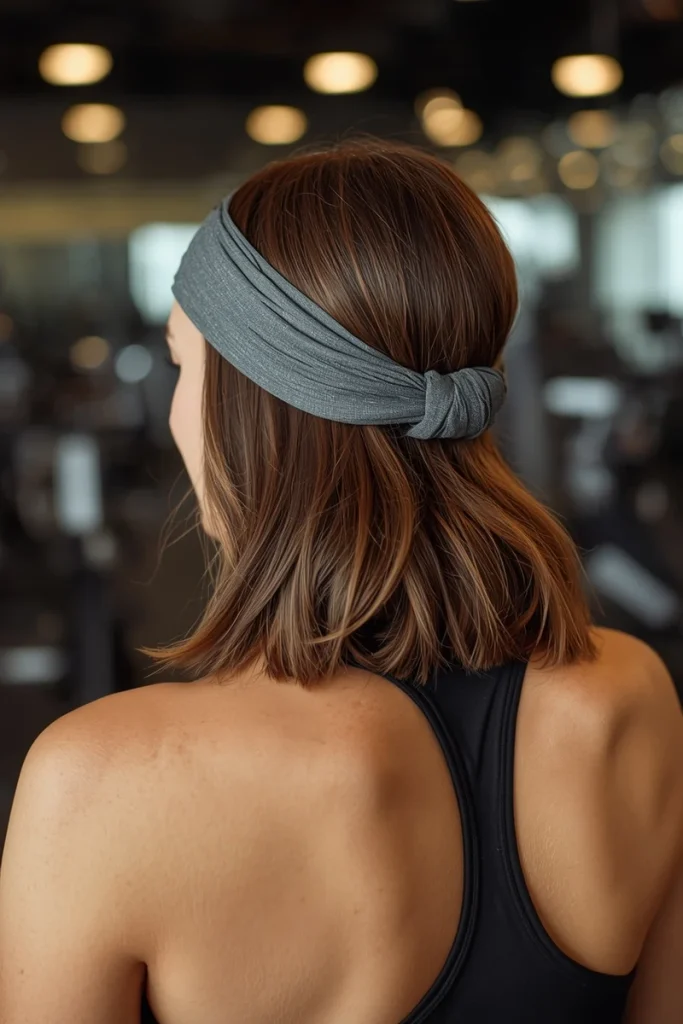
A wider fabric headband placed at the hairline, with the shorter face-framing pieces tucked up and under it rather than left hanging loose. Tucking the ends under the band does real work here — it’s the difference between hair staying contained and those same pieces working free within the first few minutes of movement. Best for: cycling or rowing, where a plain headband alone tends to let shorter pieces escape.
Lob / Collarbone Length
At this length, most of the mechanisms from a longer-hair guide become possible, just in smaller versions. This is the length where you start having real options instead of workarounds.
10. Low Ponytail with Pinned Baby Hairs
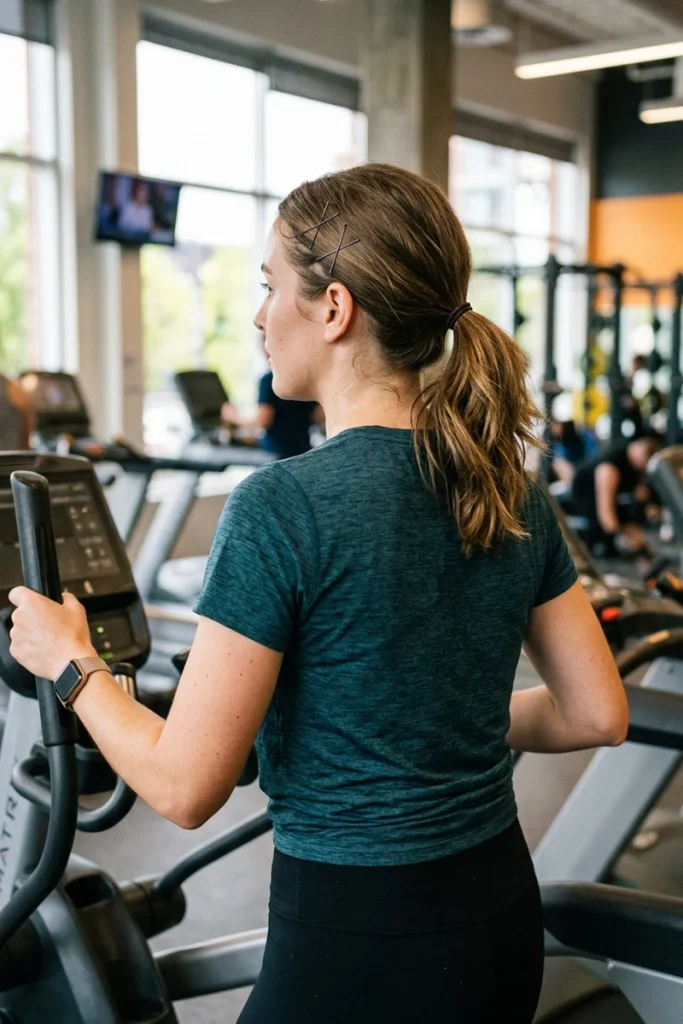
A standard low ponytail, finished with two bobby pins crossed at the hairline to catch the shorter face-framing pieces that are too short to reach the elastic. The ponytail itself works exactly as it would on longer hair; the pins are solving the specific lob-length problem of front pieces that don’t quite make it into the gather. Best for: running or elliptical sessions under 45 minutes.
11. Mini Space Buns
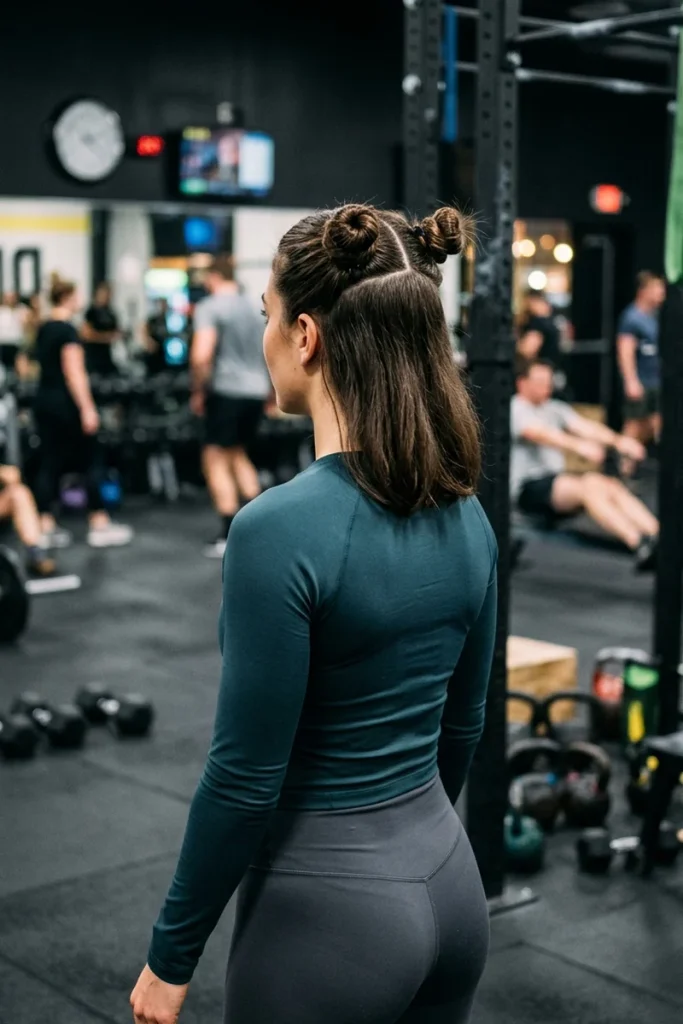
Hair center-parted and gathered into two small buns, one on each side of the crown, using the same wrap-and-secure mechanism as full-size space buns. Splitting into two smaller sections means each bun needs less length to form than a single low bun would, which is why this works at lob length when a classic bun sometimes doesn’t quite gather cleanly. Best for: HIIT or circuit training with a lot of movement.
12. Half-Up Braid
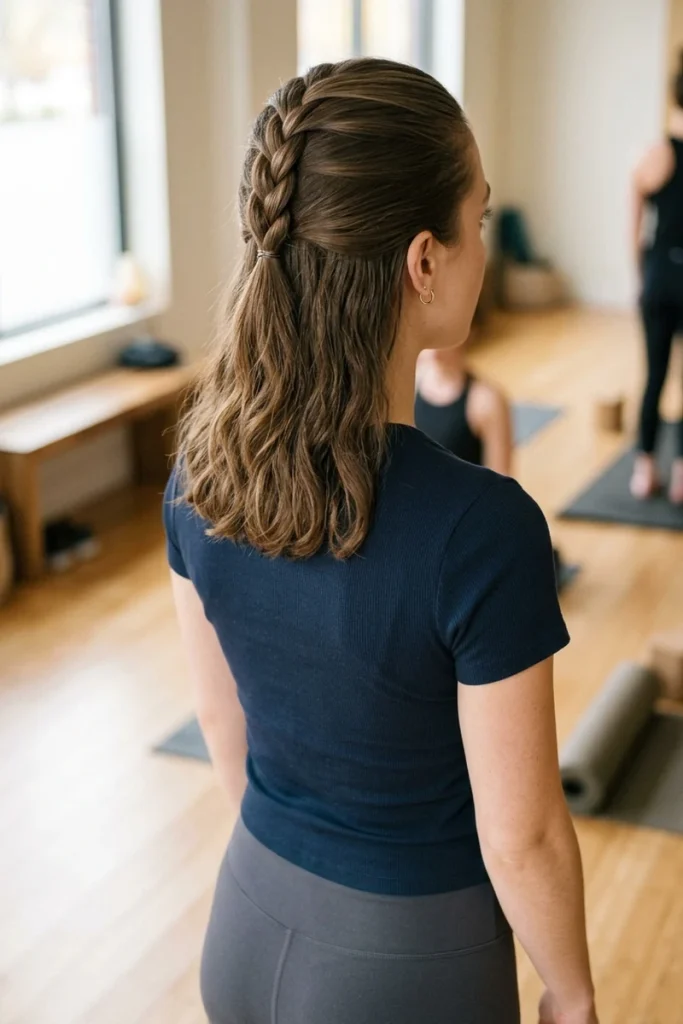
The top section braided in a simple three-strand braid and secured at the crown, with the remaining lob-length hair left down. Because only the top section needs to be long enough to braid, this works even when the rest of the hair is too short to include, unlike a full braid that needs length all the way to the ends. Best for: a studio class or yoga session where you want a bit more structure than a plain half-up clip.
13. Braided Headband Wrap
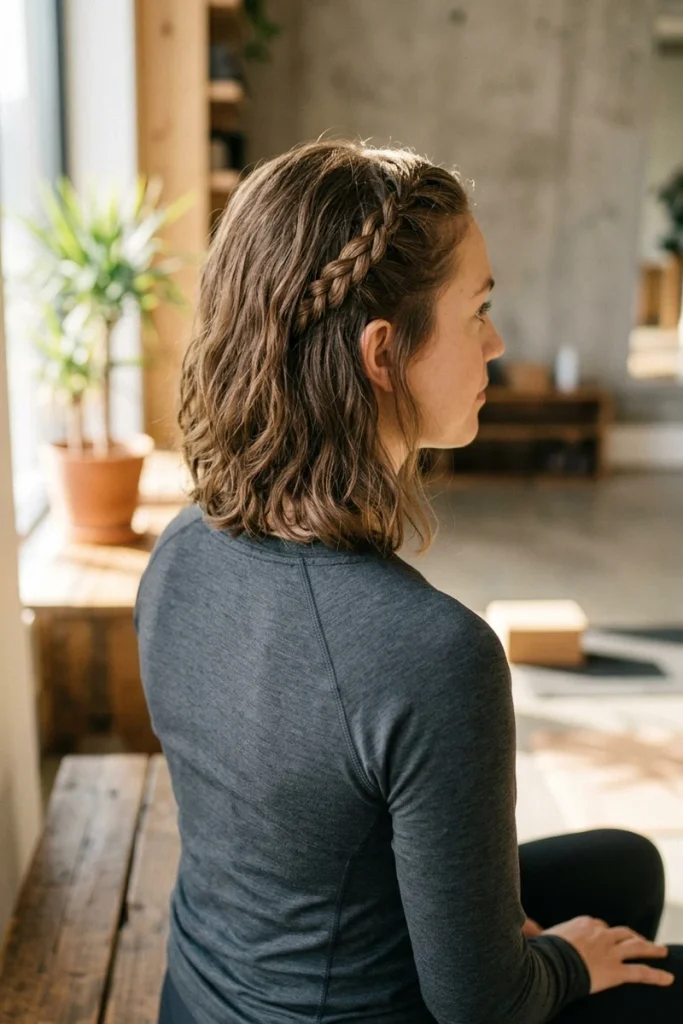
A thin braid worked along the hairline from temple to temple, sitting like a headband instead of hanging loose, with the rest of the hair either down or in a small low gather. The braid is doing double duty — decorative and functional — since it holds the front section back the way an actual headband would, without needing an accessory at all. Best for: longer studio sessions where you want the look to hold from warm-up through cool-down.
14. Twisted Low Bun
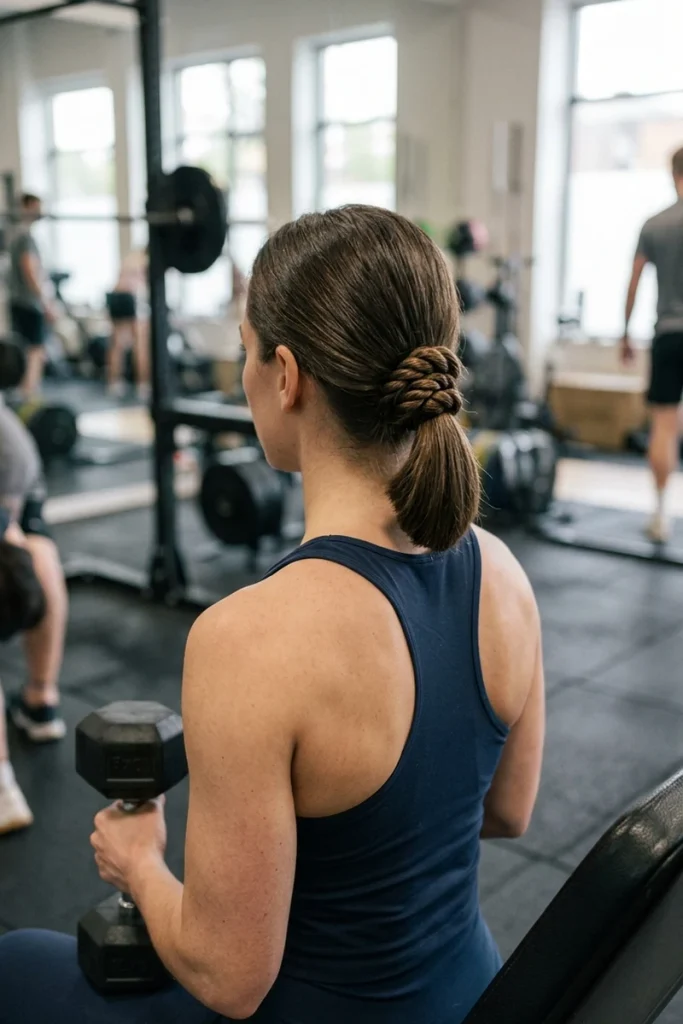
The gathered ponytail twisted into a rope and wrapped around its own base, the same mechanism as a longer-hair twisted bun, just working with less overall length. At lob length the bun sits smaller and closer to the head than it would on longer hair, which actually works in its favor for workouts — less bulk means less weight pulling on the base as you move. Best for: strength training or seated exercises like rowing.
FAQ
Can you actually French braid or Dutch braid short hair?
At bob length and up, yes — a mini version worked over a shorter span, usually from the front hairline back to behind the ear rather than the full length of the head. Below bob length, there usually isn’t enough hair for the braid to pick up new sections properly, which is why pixie-length styles rely on twists and pins instead.
What do I do with hair in the awkward in-between grow-out stage?
Treat it as whichever category it’s closer to rather than waiting for a “long enough” length. A grow-out that’s technically bob-length but still feels short usually does better with a bob-length mechanism attempted small than with a pixie-length workaround that leaves length dangling loose.
Why does sweat seem more noticeable with short hair?
There’s less hair to absorb and distribute moisture, so sweat that would disappear into longer hair shows up as visible dampness at the roots and hairline instead. This isn’t a sign anything is wrong with the style — it’s just less hair doing the same job of managing the same amount of sweat.
What actually helps short hair hold through a workout?
A texturizing paste or working cream gives strands something to grip against, which matters more at short lengths since there’s less hair mass creating natural friction. A strong-hold hairspray on top of pins or clips helps more than it would on longer hair, since short hair has fewer contact points to keep a pin from sliding.
Are there swim-friendly options for short hair?
A sweatband or swim cap handles most pixie and bob lengths without needing a style underneath at all, since there usually isn’t enough hair to actually get in the way underwater. At lob length, a low ponytail or twisted bun tucked fully under a cap works the same way it would on longer hair, just with less length to tuck.
Bottom Line
Short hair isn’t working with less of a problem during a workout — it’s working with fewer mechanisms to solve the same one, which is why matching the style to your actual length matters more than it does with longer hair. If your hair has grown past lob length and you want the full range of mechanisms, our Athletic Hairstyles guide covers 20 builds organized by workout type instead of hair length. And if you’re working on the braids these styles borrow from, our French Braid Hairstyles and Bun Hairstyles guides cover the base techniques in more detail.