School Hairstyles for Kids That Last Through Recess and PE
Most kids’ hairstyle guides are picked for how cute they look in the drop-off photo, not for what they need to survive between 8am and 3pm. A style that looks perfect walking into class can be half-undone by the time the monkey bars are done with it — not because it was styled wrong, but because it was never built to handle that much movement in the first place.
The real question isn’t which style is cutest — it’s what today actually demands from the hair, and how much time you actually have to build it. Those two things decide which mechanism holds up, not the style itself.
Before You Start: The Two Decisions Behind Every School Hairstyle
1. How much movement is today actually going to involve? A quiet classroom day with story time and worksheets barely tests a hairstyle at all — almost anything holds. A PE day, recess-heavy schedule, or field day puts real strain on the hair: running, hanging upside down, tumbling. Building a low-movement style for a high-movement day is why so many kids come home with hair half out of its clip by lunchtime.
2. Who’s doing the hair, and how much time is there? A rushed weekday morning with a bus to catch calls for something that takes under two minutes and doesn’t need much skill. A weekend, or a night-before session, opens up styles that take longer to build but are designed to last two or three school days without a full redo. Matching the style to the time you actually have — not the time you wish you had — is what keeps mornings from turning into a fight.
Quick & Low-Maintenance (Everyday, Low-Activity Days)
These styles trade holding power for speed. They’re built for classroom days where the hair isn’t being tested by much beyond sitting at a desk and walking to the bus.
1. Simple Half-Up Clip
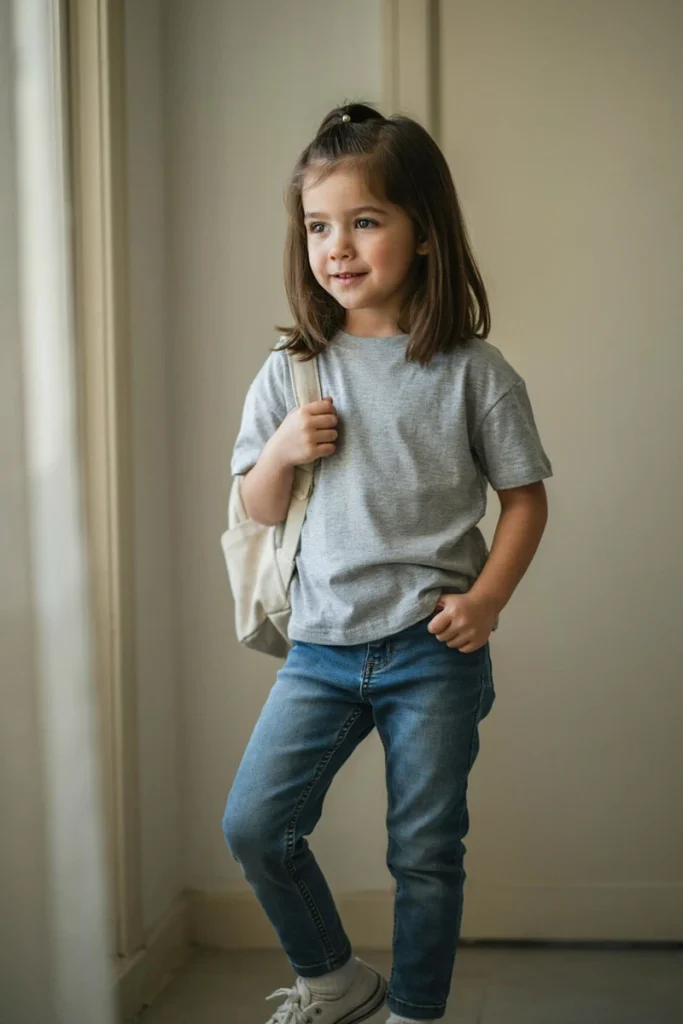
A small top section gathered at the crown and secured with a single snap clip, with the rest of the hair left down. There’s nothing to braid or twist — the clip is doing the entire job of keeping hair out of the eyes, which is the one thing a low-activity day actually requires. It won’t survive tumbling or running, but it doesn’t need to. Best for: quiet classroom days, library time, or any morning where you’re out the door in under a minute.
2. Low Ponytail with Elastic
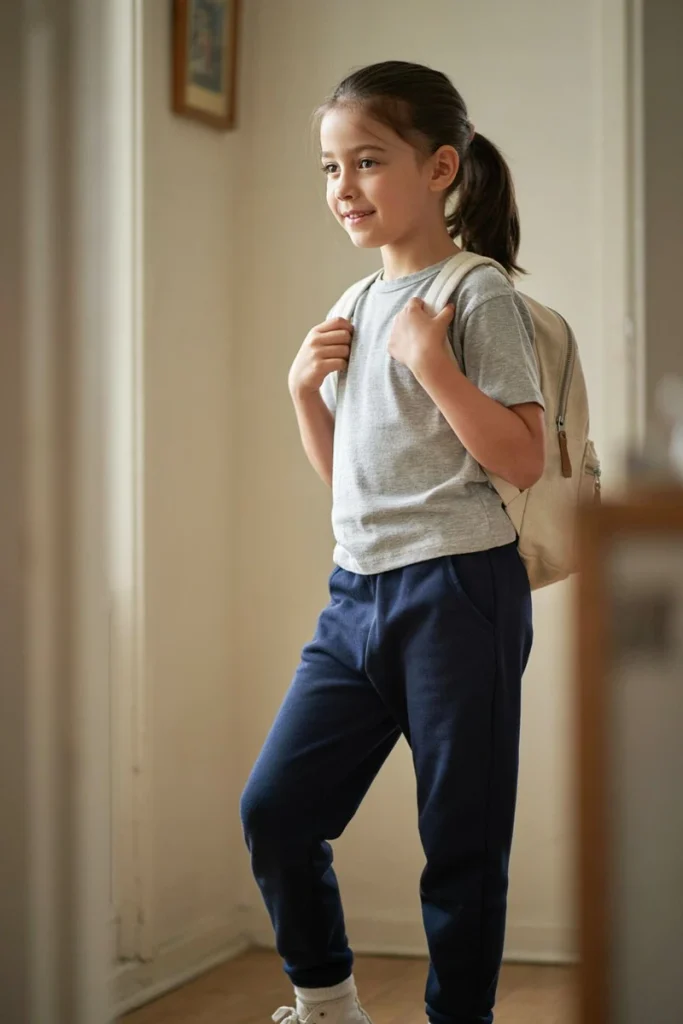
All the hair gathered into a single ponytail at the nape and secured with one elastic — no sectioning, no braiding. It’s the fastest full-hair-control mechanism on this list, though a single elastic is also the first thing to slip once real movement starts, which is why it stays in the low-activity group rather than the PE-day one. Best for: desk-based days or a quick after-school pickup when the morning ran long.
3. Double Braided Pigtails (Basic)
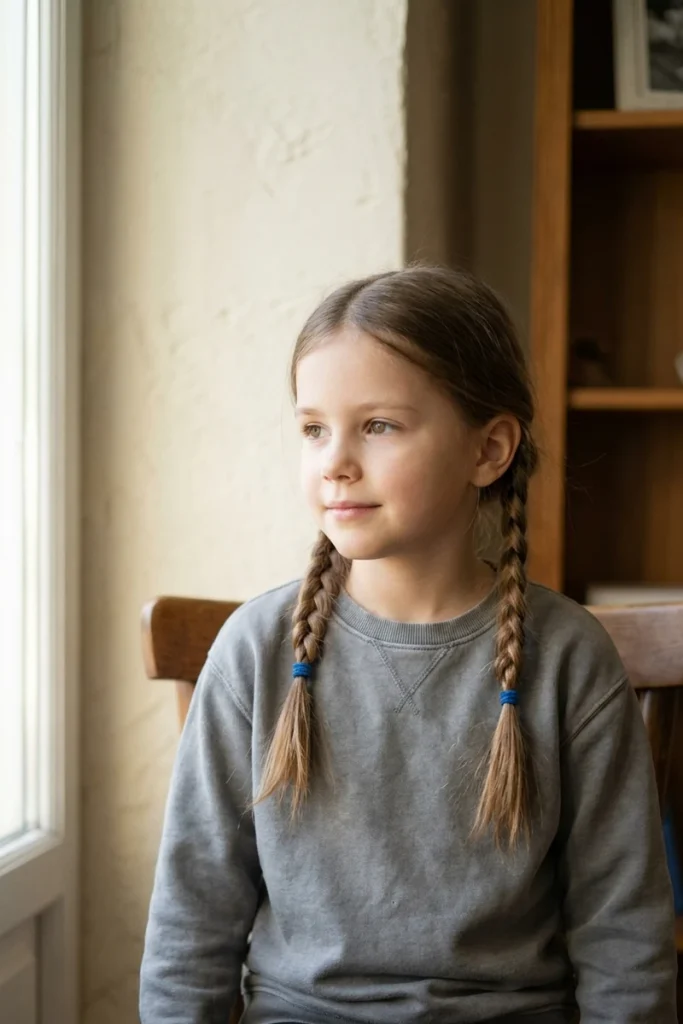
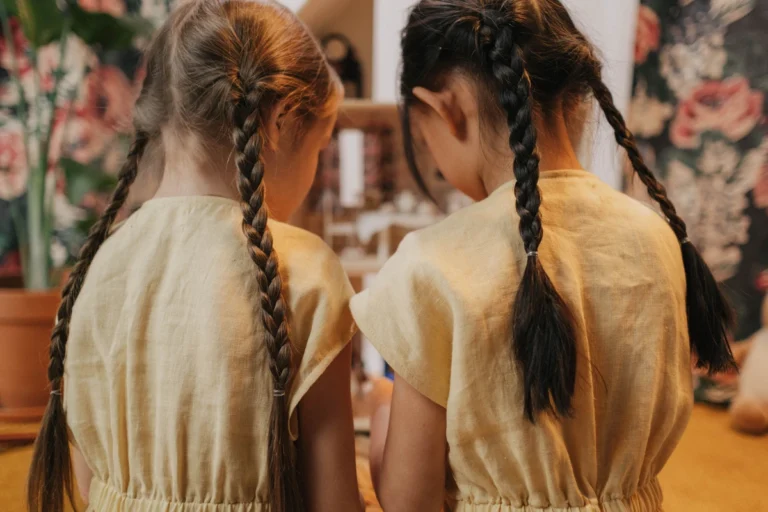
Hair parted down the middle into two sections, each gathered into a simple three-strand braid rather than left as loose ponytails. Braiding the length — even without picking up sections from the scalp — gives each pigtail more structure than a plain ponytail, so it holds its shape a little longer through the day without needing to be tight or anchored at the root. Best for: an everyday look that needs to last through lunch without a redo, but isn’t being tested by recess sprints.
4. Bobby-Pinned Side Sweep
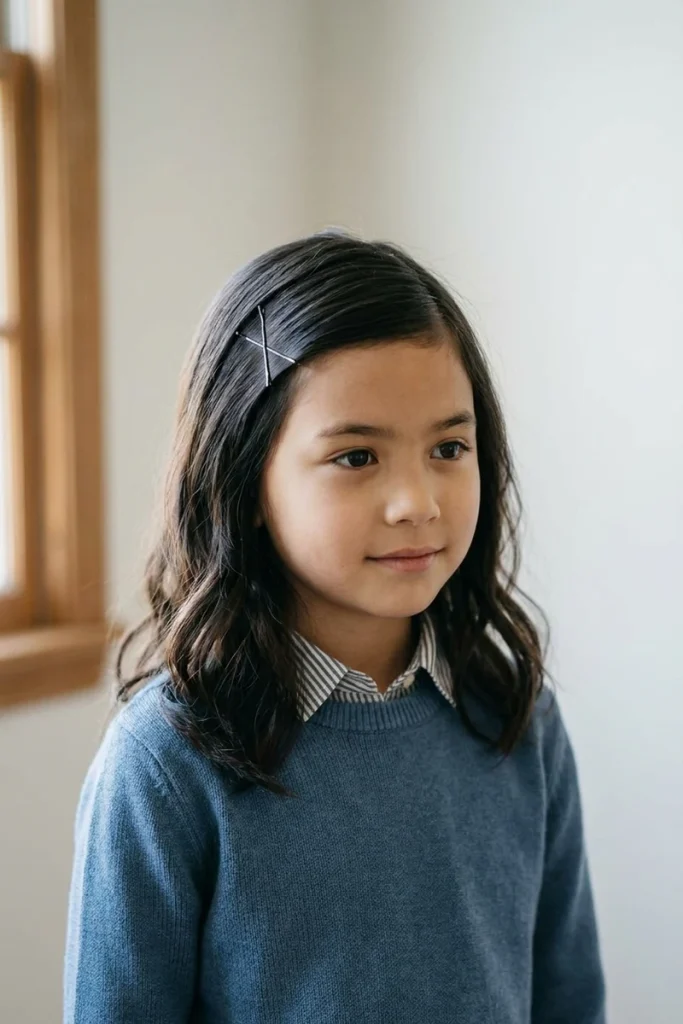
The front section combed to one side and pinned flat with two crossed bobby pins, with the rest of the hair down. Crossing the pins gives them something to grip against instead of resting loose on smooth hair, which is why they hold through a normal school day even though nothing else about the style is secured. Best for: younger kids who won’t tolerate a full updo, or a fast fix for hair that keeps falling in the eyes.
PE Day / High-Movement Days
Running, climbing, tumbling, and sports gear all test a hairstyle the same way athletic hair gets tested in adults — the mechanisms here anchor closer to the scalp instead of relying on a single point of tension.
5. Two Tight Braids
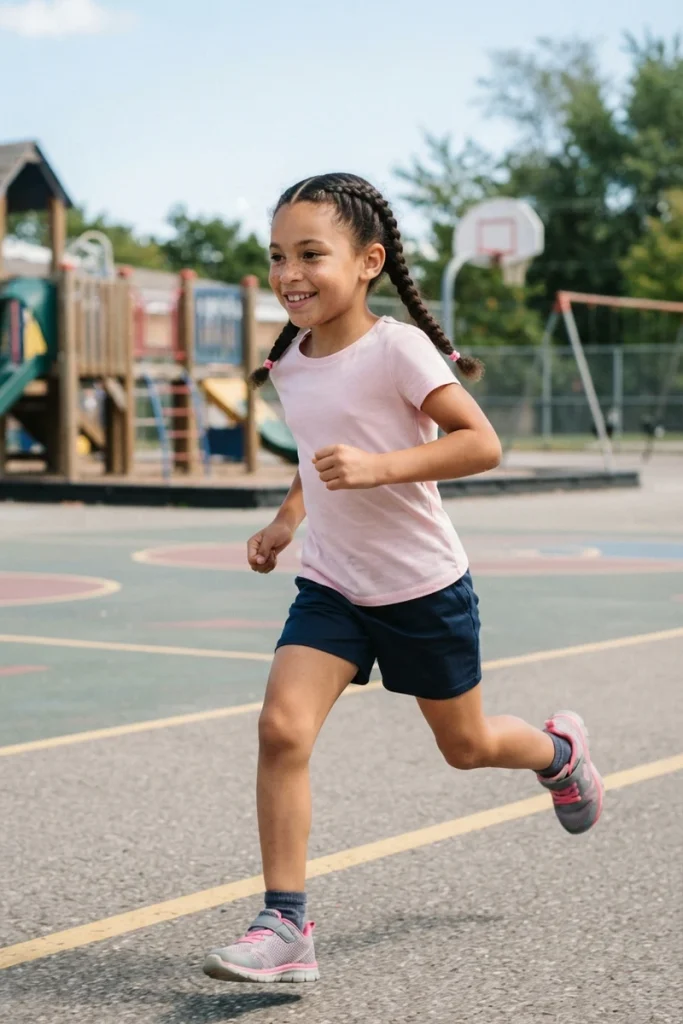
Hair parted down the middle and each side braided tightly and close to the scalp from just below the part, rather than left loose like the basic version. Braiding tight and close means there’s minimal loose length to work free during running or hanging upside down, which is exactly what a plain braided pigtail can’t promise. Best for: recess, playground days, or any morning where the hair needs to survive without a single check-in.
6. French-Braided Pigtails
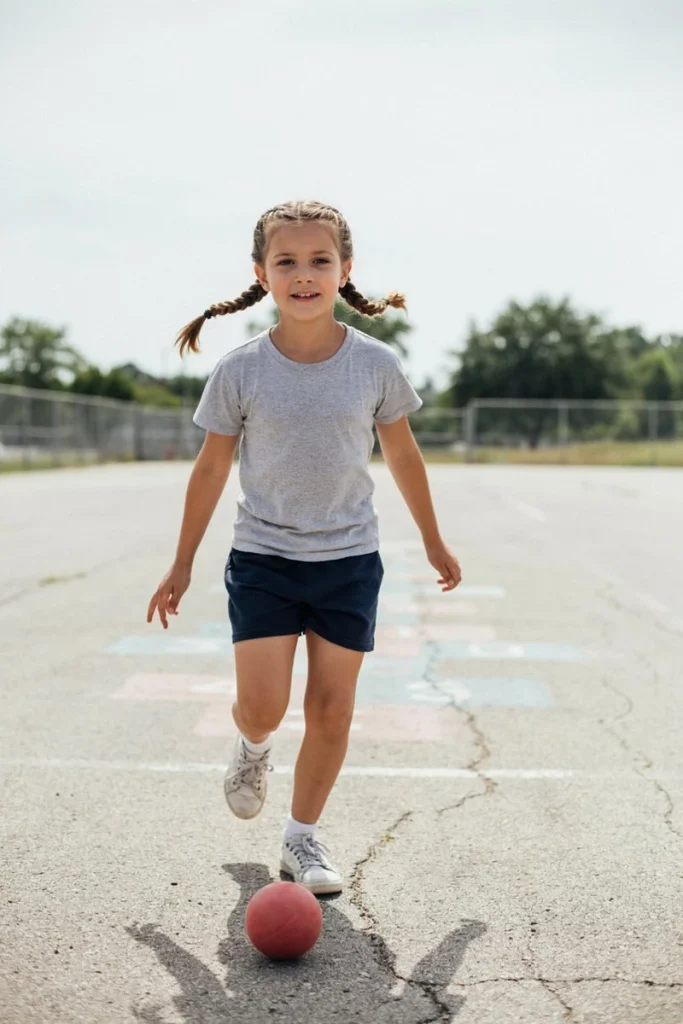
Two French braids — picking up new sections from the scalp as each braid progresses — worked from each side of the front hairline down to the nape, then secured with small elastics. Picking up sections as you go anchors the braid to the scalp itself, not just the ends, which is why this holds through far more movement than a basic braid built from a low starting point. Best for: PE days, field day, or any day with sustained running.
7. High Braided Ponytail
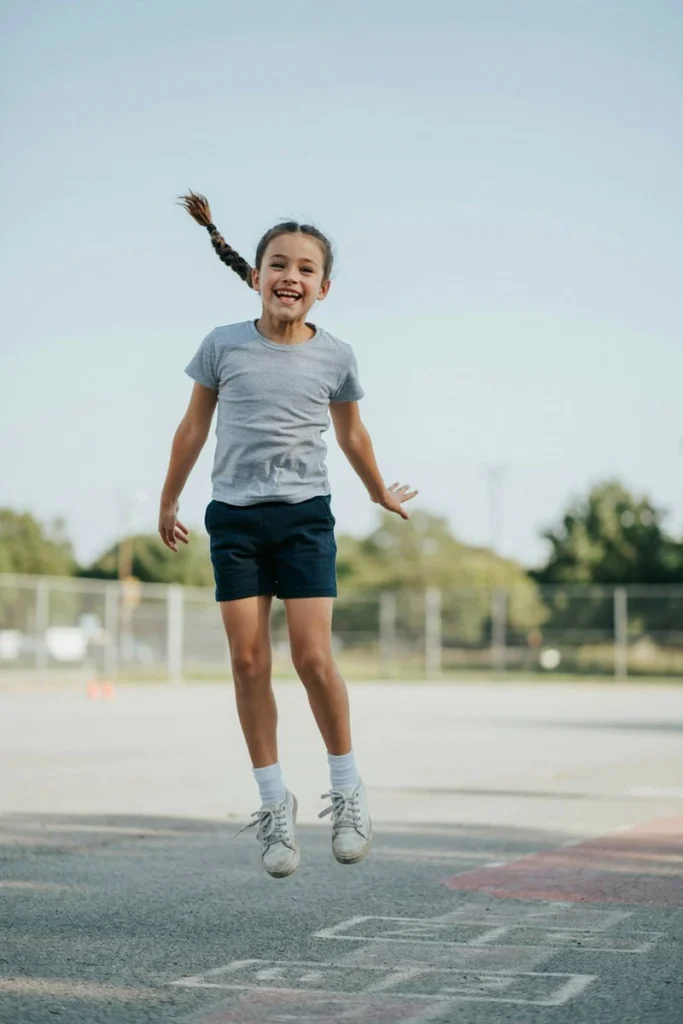
Hair gathered into a high ponytail first, then the ponytail itself braided from the elastic down to the ends. Starting from an already-secured ponytail means the braid is reinforcing the gather rather than replacing it, so it keeps its shape through jumping and bouncing even after a few flyaways start to show. Best for: gymnastics, dance class, or any activity involving a lot of up-and-down movement.
8. Space Buns
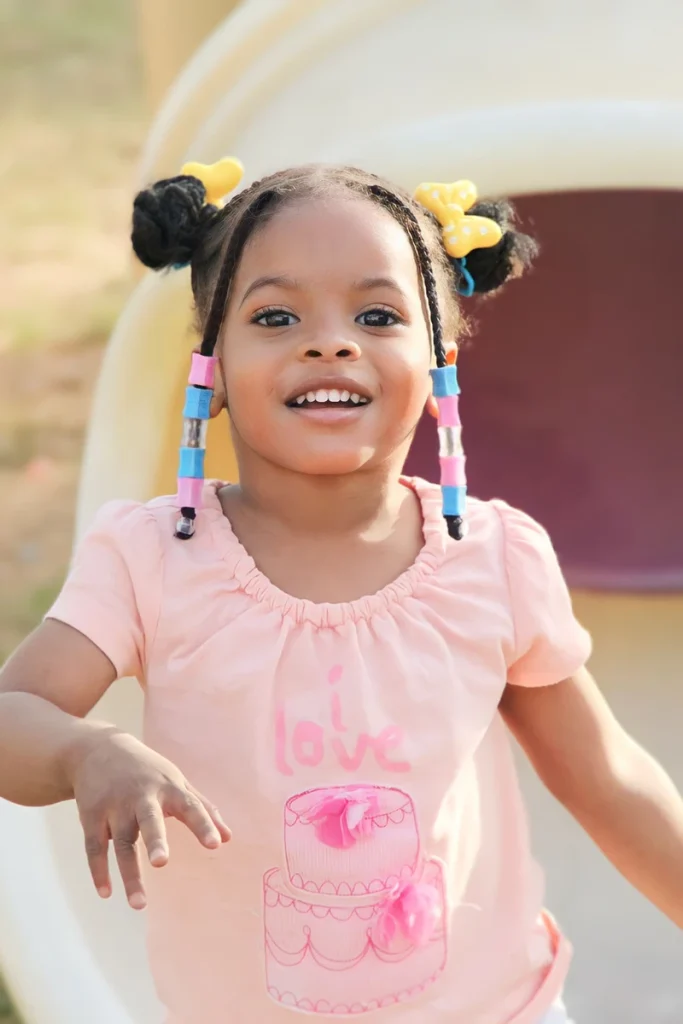
Hair center-parted into two sections, each twisted or braided and wrapped into a small bun secured close to the head on either side of the crown. Splitting the hair into two smaller buns means each one carries less weight and sags less than a single large bun, and there’s no loose ponytail tail left to catch on playground equipment. Best for: monkey bars, climbing structures, or any day where something could grab loose hair.
Multi-Day Durability (Built to Last the Week)
These take longer to build but are designed to survive from a Monday morning styling session through Friday, with minimal daily upkeep — the trade for a busy week is more time spent once instead of a little time spent every day.
9. Cornrows
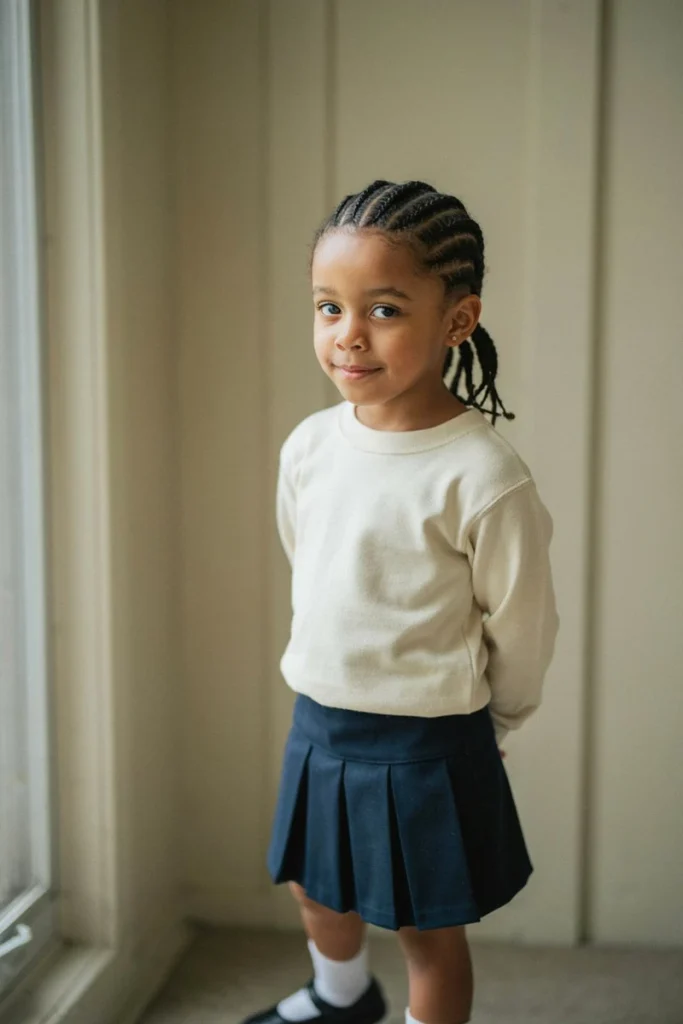
Hair braided directly against the scalp in straight or curved rows, rather than braided loose and away from the head. Sitting flat against the scalp is what gives cornrows their multi-day hold — there’s no raised structure to loosen or frizz out the way a regular braid eventually does, so they can genuinely last most of a school week with light touch-ups. Best for: parents who want one weekend styling session to cover the whole week.
10. Dutch Braid Crown
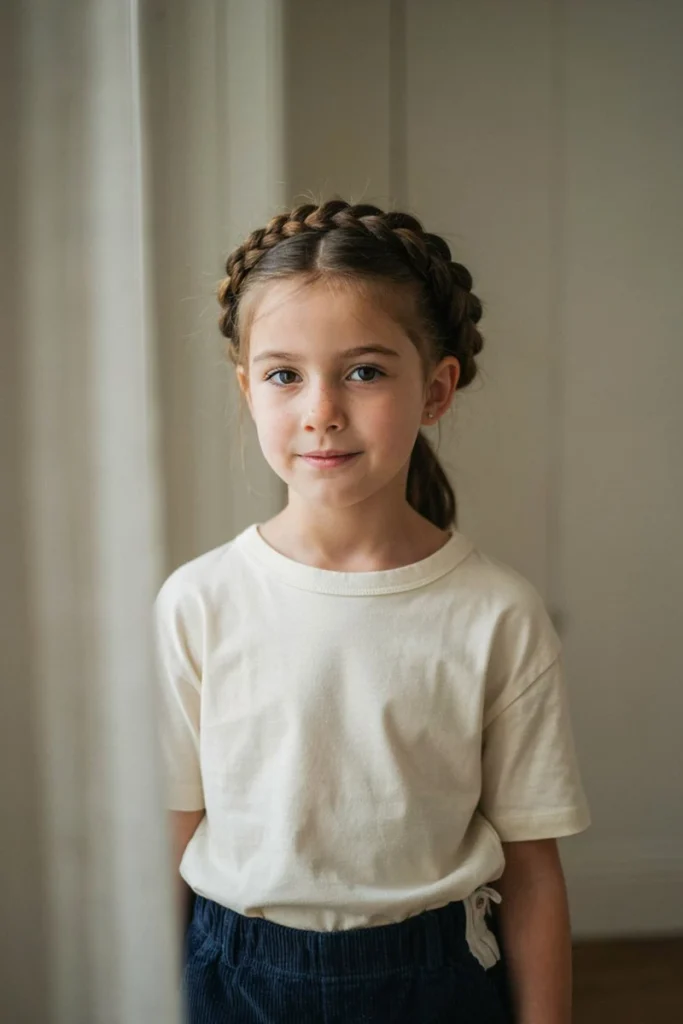
A Dutch braid — the kind that sits raised on top of the hair rather than sunk into it — worked around the head like a halo and secured at the nape, with any remaining length left in a low ponytail or tucked under. Because the braid is worked underneath sections instead of over them, it holds its raised shape for days instead of flattening out the way a French braid crown eventually does. Best for: picture week, or any stretch where the style needs to look intentional every single day, not just on day one.
11. Box Braids into a Ponytail or Pigtails
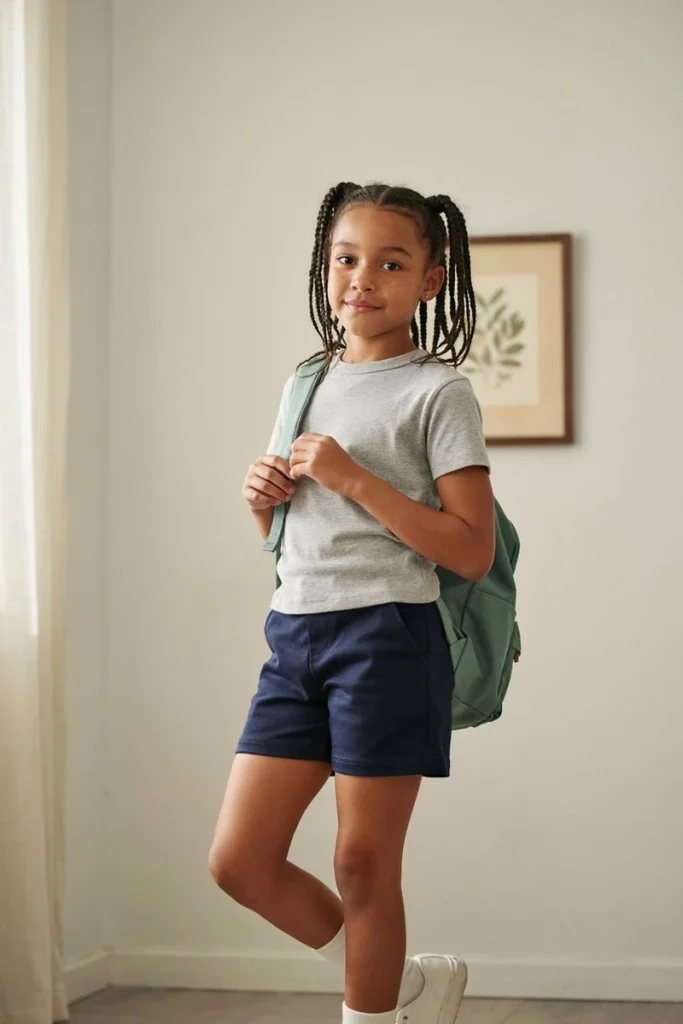
Small, individually sectioned braids — built with the same technique as adult box braids, just sized to the child’s hair — gathered into a ponytail or split into two pigtails once they’re all done. The individual braids themselves are what create the multi-day durability; the ponytail or pigtail grouping is just a fast way to change the daily look without touching the braids underneath. Best for: families who braid on the weekend and want the freedom to restyle the gathering (ponytail one day, pigtails the next) without rebraiding.
12. Double French Braids into Low Buns
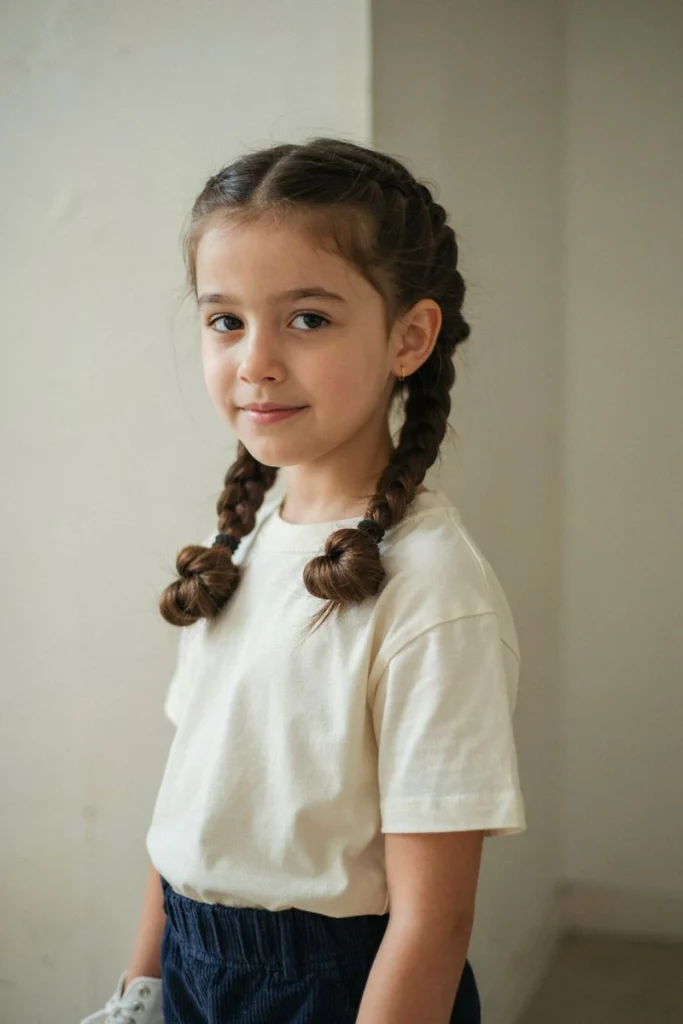
Two French braids worked from the front hairline to the nape, same as the PE-day version, but finished by wrapping each braided tail into a small bun instead of leaving it loose. Tucking the ends into a bun removes the one part of the style — the loose braid tail — that would otherwise fray and loosen first, which is what lets this version stretch across multiple days where the plain pigtail version is built for a single active day. Best for: a style that needs to handle both a high-movement day and still look neat two days later.
FAQ
My kid’s hair is too fine or slippery for braids and pigtails to hold. What actually works?
Fine, slippery hair loses grip at every point a normal style relies on, so the fix is adding texture before you start rather than fighting it after. A light texturizing spray or a small amount of styling cream combed through damp hair gives strands something to catch against, which matters more for fine hair than for any other hair type on this list.
Is it safe to braid a young child’s hair tightly every day?
Tight styles worn constantly at the same tension point, especially right at the hairline, can contribute to hair breakage and tension over time, so it’s worth alternating between tighter multi-day styles and looser everyday ones rather than keeping the same tight style in place continuously. If a child says a style hurts beyond normal snugness, or you notice thinning at the hairline, that’s a sign to loosen the tension or switch to a different mechanism for a while.
What actually holds through a recess without any check-ins during the day?
Anything anchored at the root — a French braid, cornrows, or a braided ponytail — outlasts anything relying on a single elastic or clip, because root-level anchoring means there’s no single point where the whole style can come loose at once. A plain ponytail or half-up clip depends entirely on one point holding, which is exactly what gets tested hardest during unsupervised playground time.
How do I speed up mornings when we’re always running late?
Keep the multi-day styles for weekend or the night before, so a rushed morning only ever needs a quick redo — smoothing flyaways or refreshing a ponytail — rather than building a full style from scratch. Pre-parting the hair the night before, even without fully styling it, also cuts real time off a rushed morning.
Are there swim-friendly options for after-school swim lessons?
Cornrows or box braids handle pool water well since the braids themselves don’t need to stay dry the way a loose style does, and they dry back into the same shape rather than frizzing out. For a simpler option, two tight braids tucked fully under a swim cap work the same way, just with less length to manage under the cap.
What’s the fastest style that still survives more than a quiet desk day?
Space buns are the best trade-off on this list — they take barely longer to build than a basic ponytail, but the double-anchor structure and lack of a loose tail mean they hold through far more movement than their build time would suggest.
Bottom Line
A school hairstyle isn’t judged by how it looks at drop-off — it’s judged by what’s left of it at pickup, which is why matching the style to the actual day (and the actual time you have) matters more than picking the cutest option. If you’re building any of the braided styles here from scratch, our French Braid Hairstyles guide covers the base technique in more detail. For more everyday options beyond school specifically, our Kids Hairstyles guide is a broader starting point, and if you’re looking for something more festive, our Christmas Hairstyles for Kids guide covers the holiday-specific versions of several of these mechanisms.